Barn Record Ashford
RETURN TO ‘FIND BARNS’- Building Name (Common)
- n/a
- Building Name (Historic)
- n/a
- Address
- 38 Pumpkin Hill Road, Ashford
- Typology

- Overview
-
Designations
n/a
Historic Significance
Architectural description:
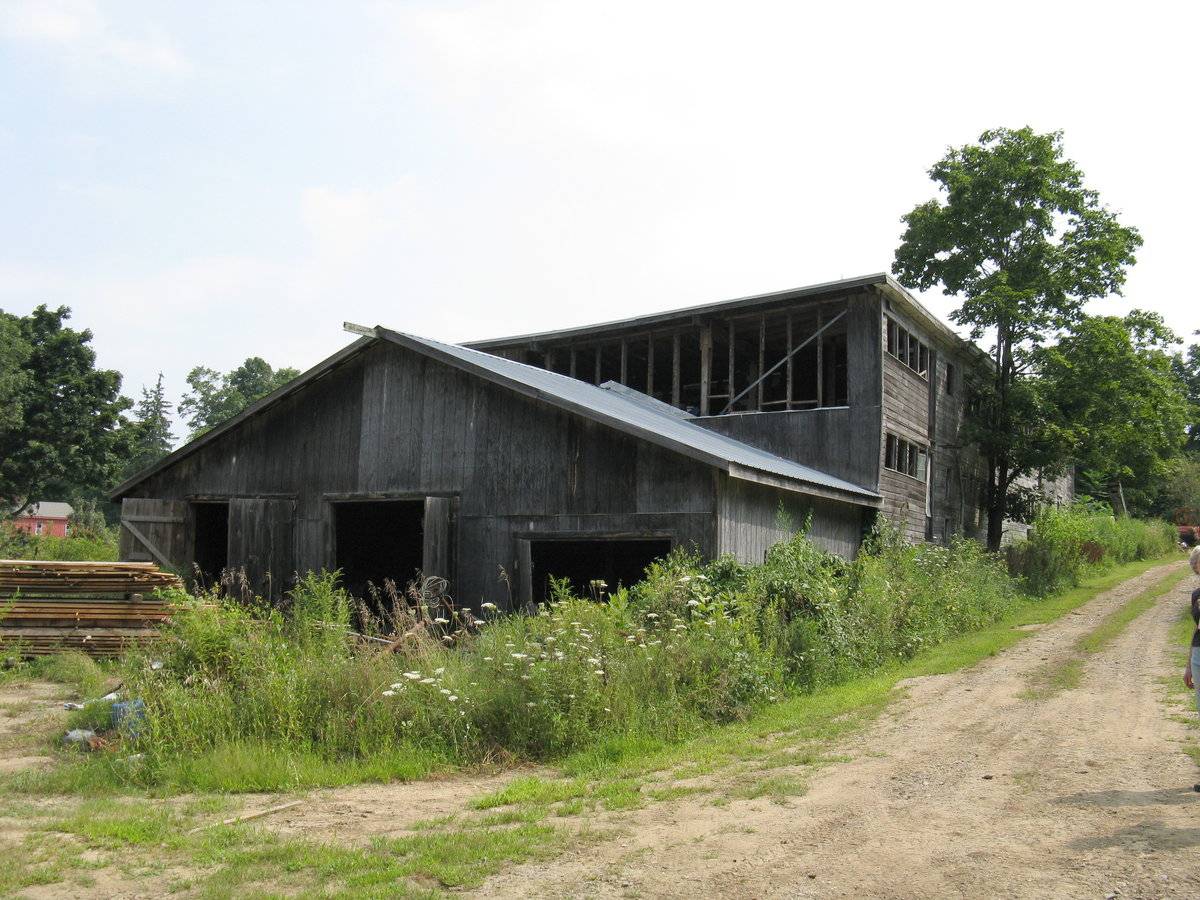
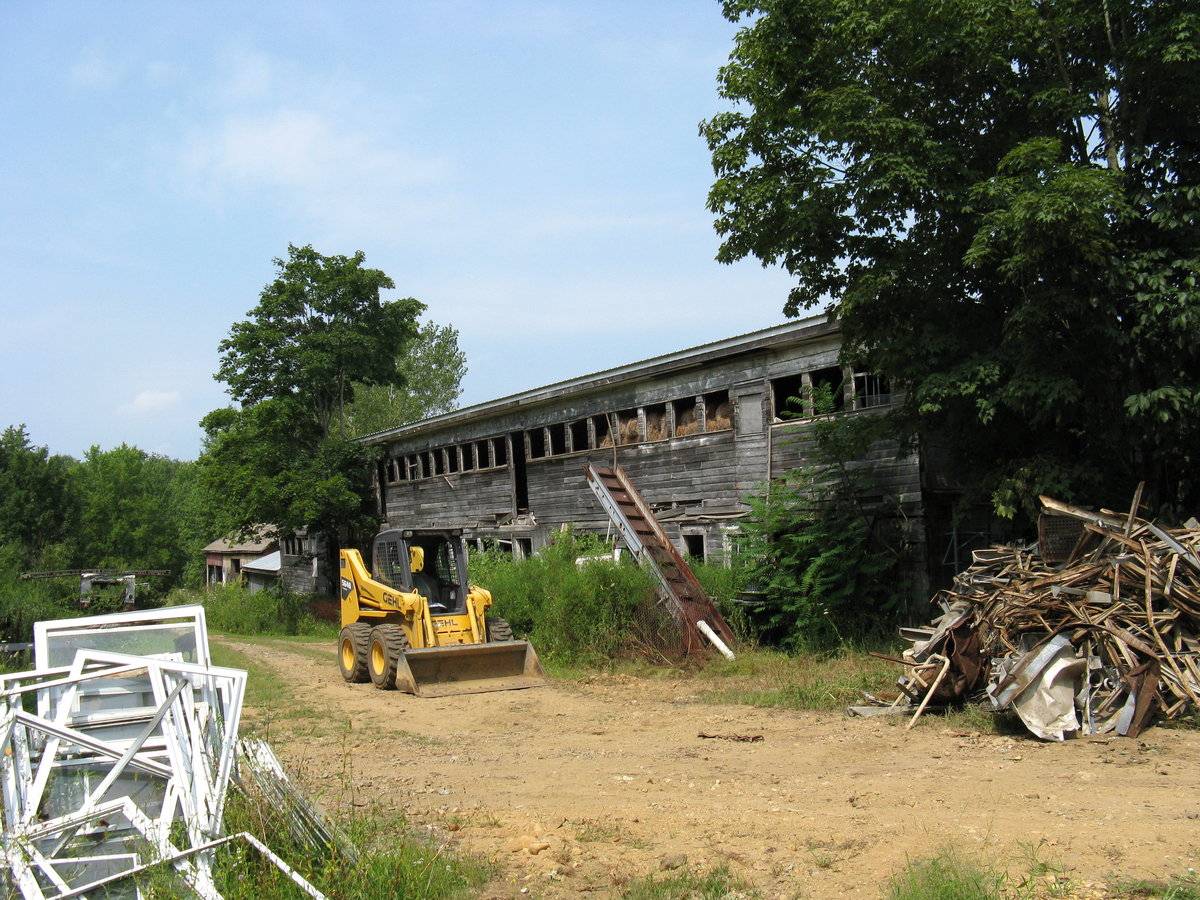
This is a 2-story structure with a flat or very low-pitched shed roof and a gable-roofed addition. The barn is oriented with its long side facing south and its ridge line running east-west (perpendicular to Pumpkin Hill Road). The south, or front facade has rows of strip windows on each level, currently openings without glazing. The second level has groupings of four, nine, eight and three windows alternating with door openings and one pass-through door on the eastern-most end. The lower level has groupings of four windows on the western-most end with a pass-through door in-between. To the right of the door are two windows openings, one above the other. The center and eastern-most end of the lower level are not clearly visible. There are a couple windows on the front (south) facade that still have six-paned sashes. The gable-roofed addition is off of the west facade of the main structure. The west gable-end of the addition has three pairs of hinged doors evenly spaced on the facade. The barn has un-painted clapboard and vertical siding with a tin roof.
Historical Significance:
Poultry farming grew in popularity during the second half of the 19th century, and by the early 20th century most farms had small chicken coops. These lightly-built structures often feature a gabled or shed roof and large windows on the south side. Often chicken coops have a small stove and chimney for heat to protect young chicks during cold weather. Small openings near the ground provide the fowl with access to the yard. Inside are nesting boxes for the laying hens. During the 1930s and 1940s, poultry farming was adopted by many farmers in New England as a replacement for dairy farming.
By the 1930s, large two-and three-story poultry barns were being built for raising broilers and capons for meat and pullets for eggs. These often have a shallow-pitched gable or shed roof and many windows on the south side, which are often covered with wire mesh. Mineral-surfaced asphalt paper or shingles typically cover the roof and walls. Housing thousands of birds, these large structures became virtual factories, with automatic, clock-activated feeders and waterers to reduce labor.
Field Notes
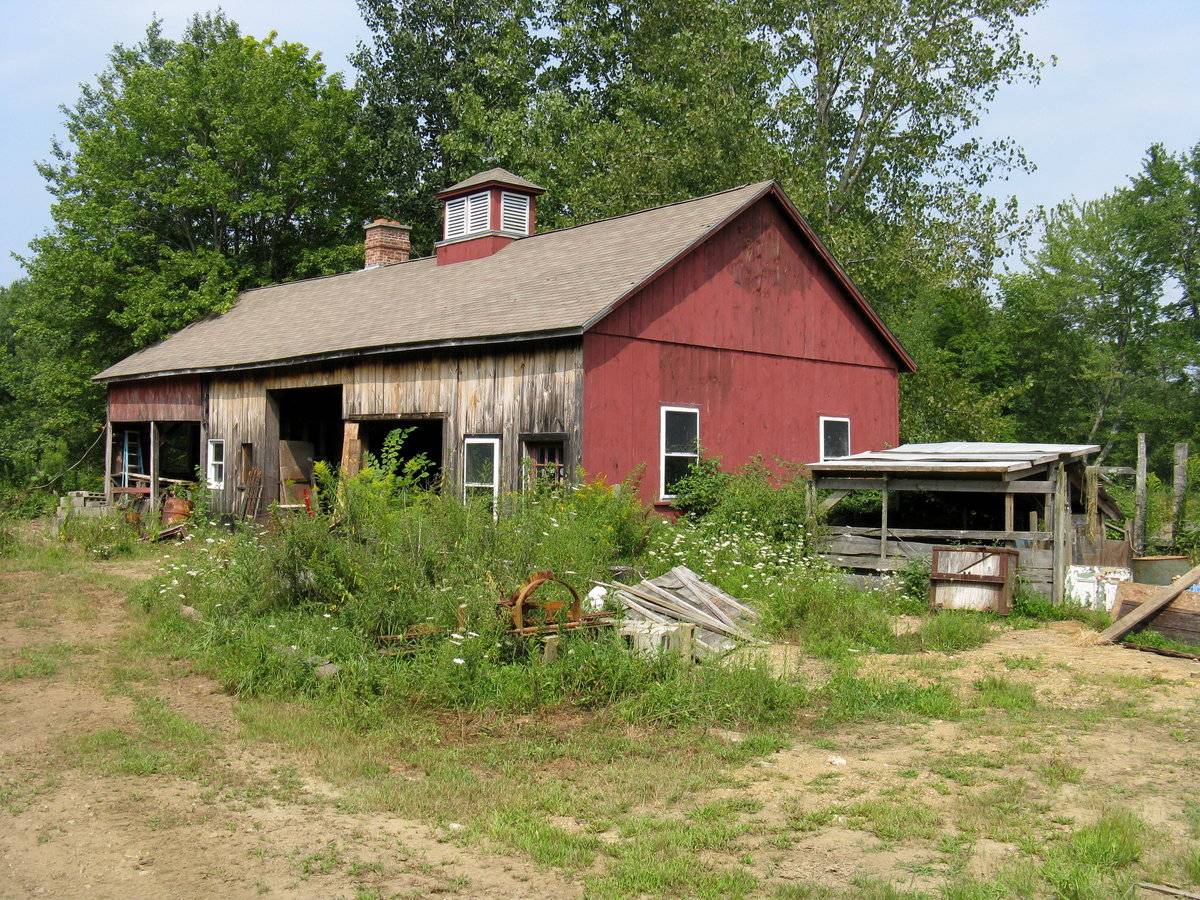
Chicken coop and Barn located on property. Barn 1: Originally situated on Spring Hill in Mansfield, Ct, this barn was disassembled by the current owner and reassembled in its present location.
- Use & Accessibility
- Environment
Related features
Environment features
Relationship to surroundings
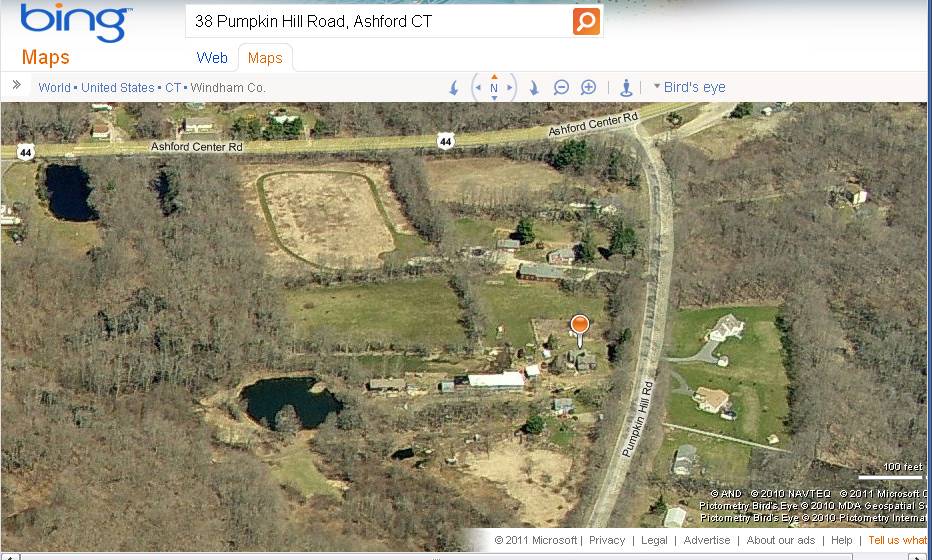
The property is located on the west side of Pumpkin Hill Road, a short distance south of its intersection with US Route 44, Ashford Center Road, historically the main route between Boston and Hartford. Today it is an area of old farm pastures, second growth woodlands, and some 20th-century homes. The commercial and municipal services of Ashford are ranged loosely along Route 44 to the west and east of Pumpkin Hill Road. The area is rural, with some agriculture continuing and scattered 20th-century residential development. This property extends westward from its road frontage. A cape-style house is located closest to the road, with the large chicken coop to the west and a small barn further to the west. Grade slopes down toward the west and there is a small pond to the west of the barn. North of the chicken coop and barn is an open field; to the west are wooded areas.
- Typology & Materials
-
Building Typology
Materials
Structural System
n/a
Roof materials
Roof type
Approximate Dimensions
barn 620 square feet, coop 2160 square feet, shed 375 square feet, shed 108 square feet.
- Source
-
Date Compiled
03/09/2010
Compiled By
T. Levine and S. Lessard, reviewed by CT Trust
Sources
Photographs by Joseph Szalay - 09/17/2009
Town of Ashford Assessor’s Record: Account number 00117500, 36/E/18//, barn 620sf, coop 2160sf, shed 375sf, shed 108sf. Date given 1890.
Aerial Mapping:
http://maps.google.com
http://www.bing.com/maps accessed 6/08/2011.Sexton, James, PhD, Survey Narrative of the Connecticut Barn, Connecticut Trust for Historic Preservation, Hamden, CT, 2005, http://www.connecticutbarns.org/history.
Visser, Thomas D., Field Guide to New England Barns and Farm Buildings, University Press of New England, 1997.
- PhotosClick on image to view full file
-