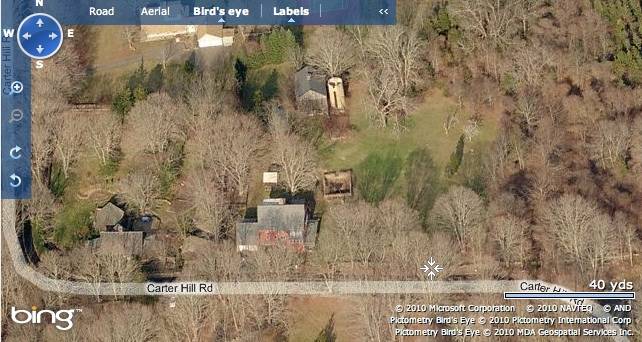
Barn Record Clinton
RETURN TO ‘FIND BARNS’- Building Name (Common)
- Carter Farm
- Building Name (Historic)
- Carter Farm
- Address
- 52 Carter Hill Road, Clinton
- Typology

- Overview
-
Designations
n/a
Historic Significance
Architectural Description:
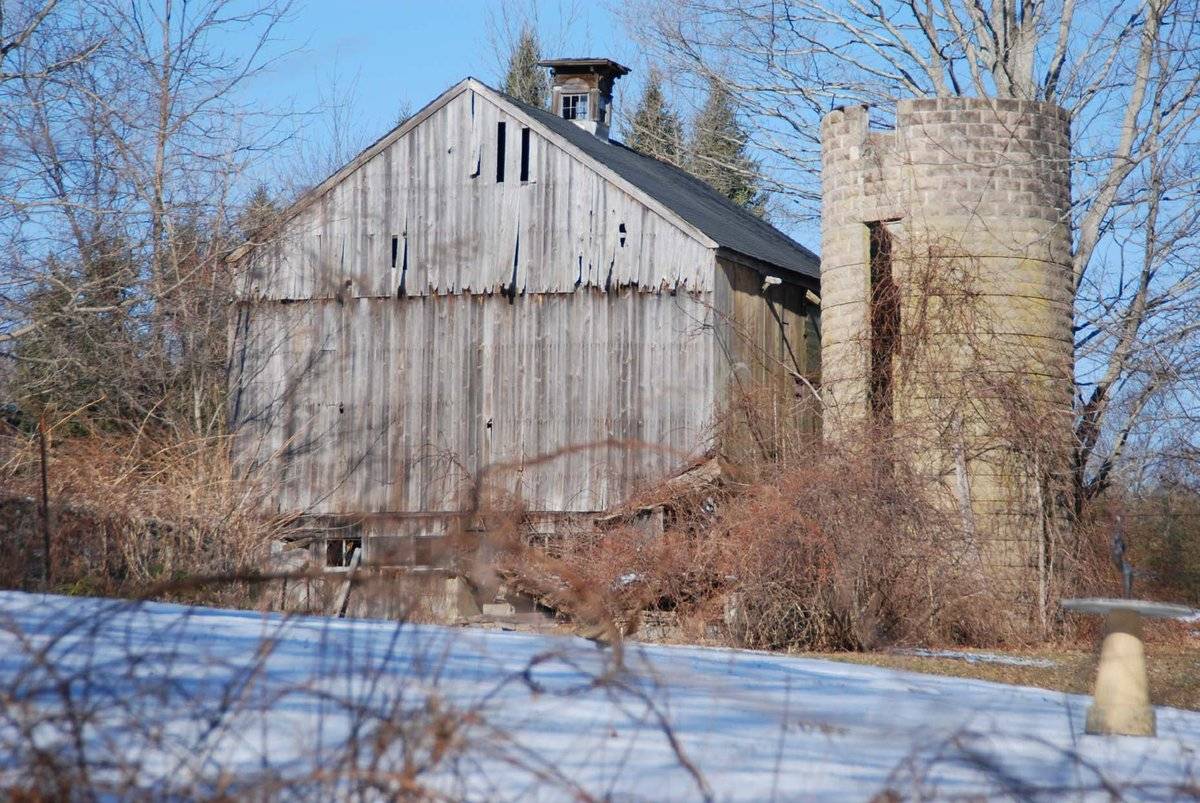
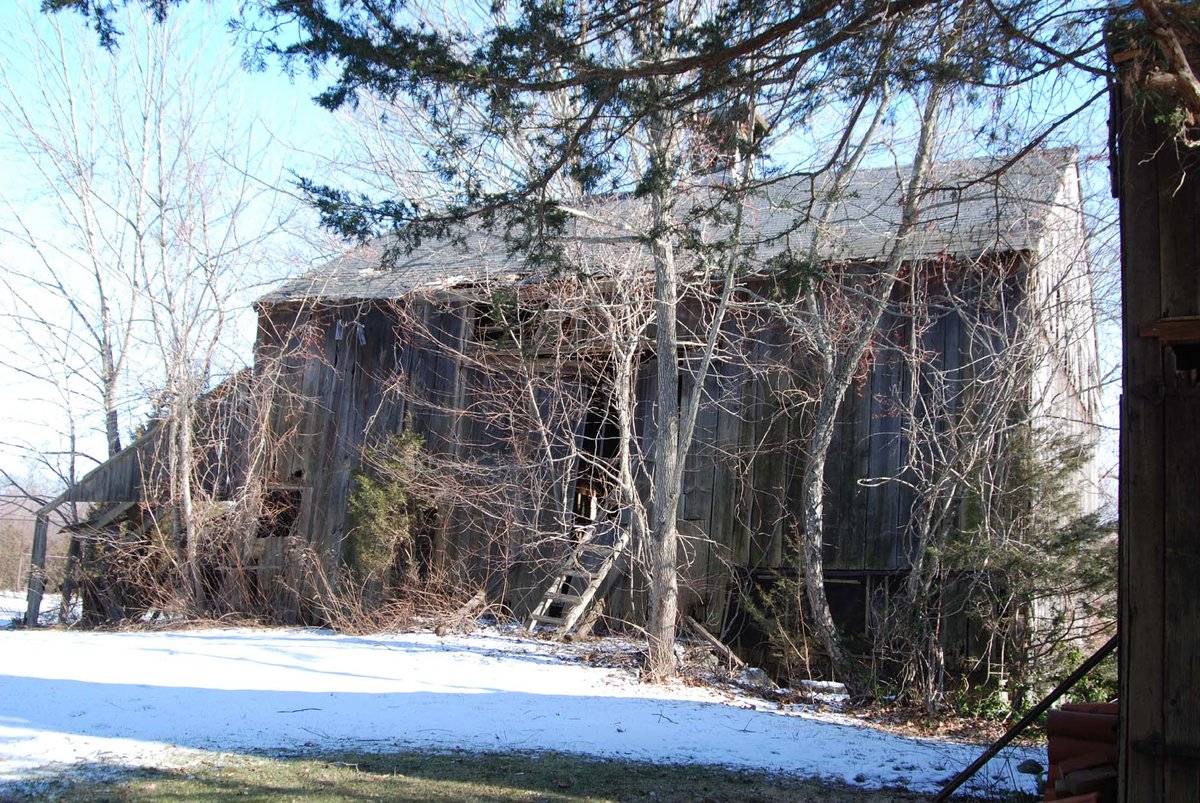
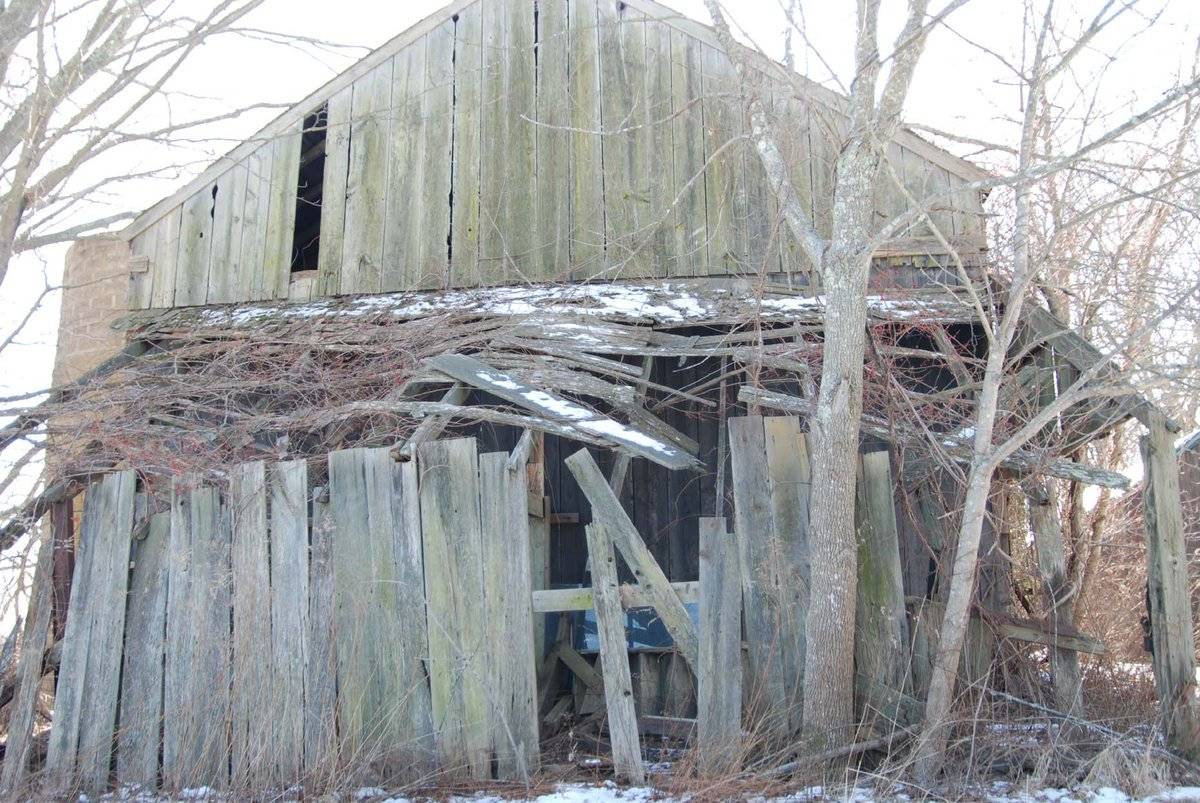
This is a 1 ½-story bank barn that faces south with its ridgeline running north-south, perpendicular to Carter Hill Road. The barn has both an eave entrance and a gable entrance on the basement level. Because of severe deterioration it is unclear where the now hybrid barn’s entrance originally was.
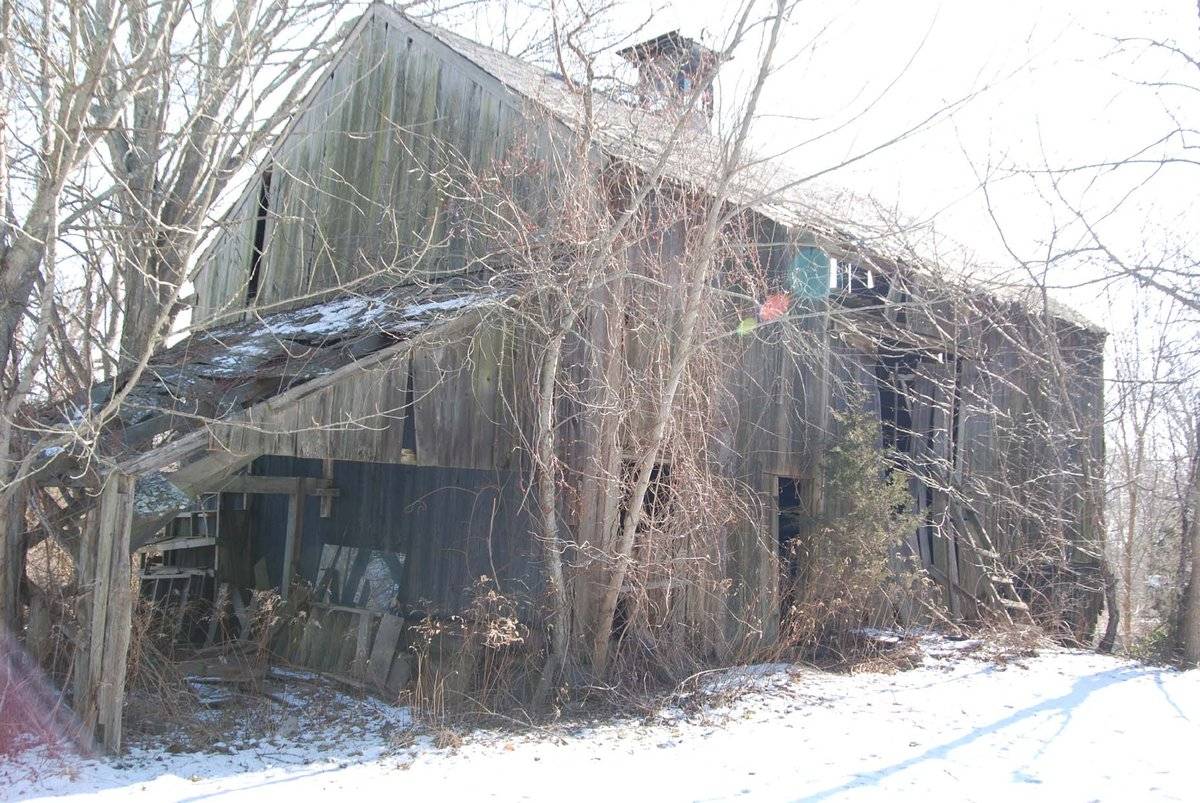
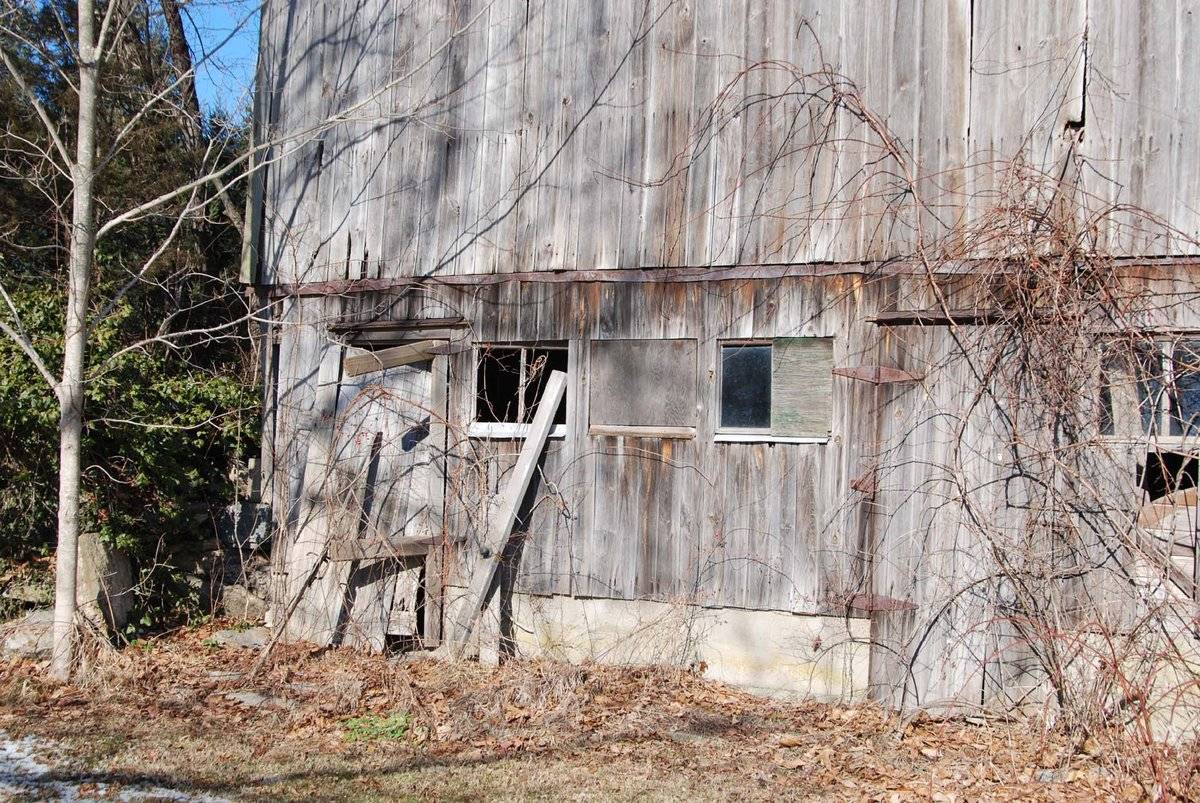
The south gable-facade has a series of windows on the basement level. Above the basement the first floor and attic gable are blank. The grade slopes down toward the south, exposing the entire basement level on the south gable-facade. A fieldstone retaining wall projects south, flush with the west eave-facade. The north gable-facade has a shed-roofed addition in deteriorated condition. The top of the shed-roofed addition’s roof is attached just below the girt line of the main barn’s north gable-facade.
The west eave-facade appears likely to have held the main entry door in the center of three bays. In the north (left) bay are two pass-through door openings.
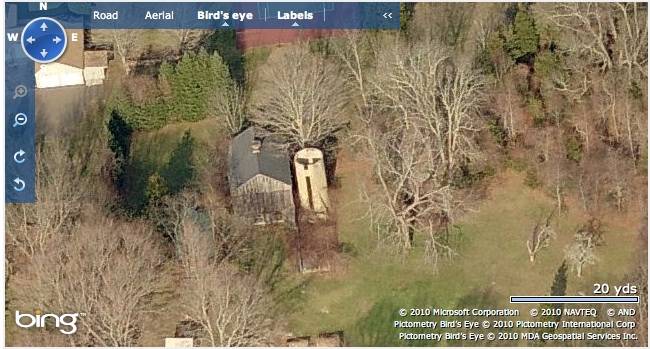
A silo built of concrete block masonry with steel cable ties, is located just off the southern-most end of the east eave-facade. Its roof and access doors are missing. The barn has unpainted vertical siding that is painted red in select locations. The roof has asphalt shingles.
Historical Significance:The oldest barns still found in the state are called the “English Barn,” “side-entry barn,” “eave entry,” or a 30 x 40. They are a simple building with rectangular plan, pitched roof and a door or doors located on one or both of the “eave” sides of the building based on the grain warehouses of the English colonists’ homeland. The New England barn or gable front barn was the successor to the English barn and relies on a gable entry rather than an entry under the eaves. The gable front offers many practical advantages. Roofs drain off the side, rather than flooding the dooryard. Although it was seen by many as an improvement over the earlier side entry English Barn, the New England barn did not replace its predecessor but rather coexisted with it. In this case, both an eave entry and a gable entry are used. The 19th century would see the introduction of a basement under the barn to allow for the easy collection and storage of a winter’s worth of manure from the animals sheltered within the building. The bank barn is characterized by the location of its main floor above grade, either through building on a hillside or by raising the building on a foundation. This innovation, aided by the introduction of windows for light and ventilation, would eventually be joined by the introduction of space to shelter more animals under the main floor of the barn.
Field Notes
This is the one I emailed you about. It was the origonal barn for the Carter Farm and is in terrible disrepair however it is tricked out with any number of interesting features including built in floor scale whose weights are loaded via a door in the stairwell. It has an interesting ladder like series of pegs to access the grain traps? and cribs in the lower level that suggest holding pens or a slaughter area. There is a corn crib on the property as well as a stone silo and several other small out buildings. I understand the woman next door did extensive research on the barns as she owns the orig house to the property. This one is well worth the trouble and made my day!
- Use & Accessibility
Use (Historic)
Use (Present)
Exterior Visible from Public Road?
Yes
Demolished
n/a
Location Integrity
Unknown
- Environment
Related features
Environment features
Relationship to surroundings
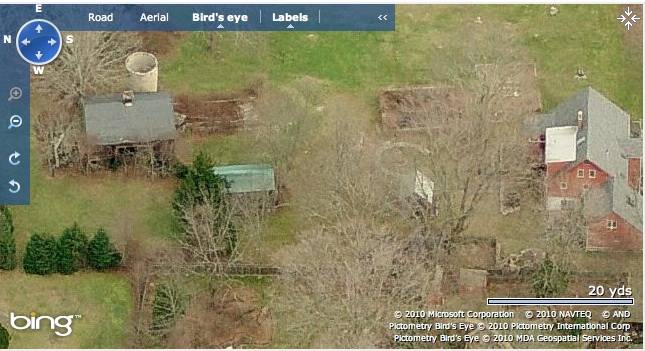
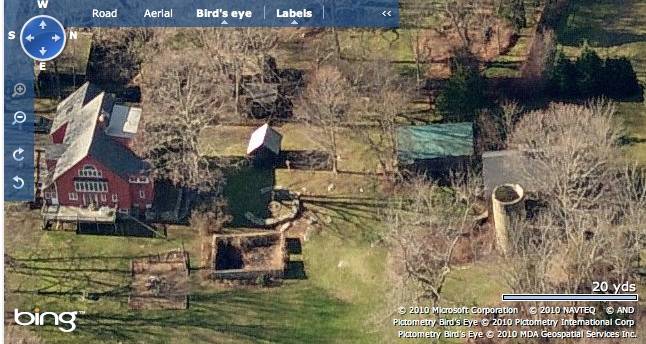
The barn has both eave and gable-entrances on the south gable-facade’s basement level or the west and east eave-facades. The ridge line runs north-south perpendicular to Carter Hill Road. The associated house is situated towards the front of the property, directly off the street. The barn is approximately north of the associated house and set back on the property. Surrounding woodland areas and open land is southeast of the barn. A stone wall projects south off of the southern-most corner of the west eave-facade. It functions as a retaining wall to support the grade and expose the south gable-facade’s basement level. Southwest of the barn there appears to be some scattered buildings. A stone silo is on the southern-most end of the east eave-facade.
- Typology & Materials
-
Building Typology
Materials
Structural System
n/a
Roof materials
Roof type
Approximate Dimensions
SHD1--SHED FRAME (132 S.F.) , BRN1--BARN - 1 STORY ( 594 S.F.), BRN3--1 STORY W/LOFT (980 S.F.)
- Source
-
Date Compiled
07/13/2010
Compiled By
S. Lessard and T. Levine, reviewed by CT Trust
Sources
Assessors Online Database: Account Number: M0413900, MBLU: 73/ 44/ 5/ / /.
Link to photo:http://www.visionappraisal.com/photos/ClintonCTPhotos//00/00/27/56.jpg. http://data.visionappraisal.com/ClintonCT/findpid.asp?iTable=pid&pid=5435. (7/14/2010).Photographs and field notes by JoAnna Chapin (joannachapin13@gmail.com)- 2/4/2010
Sexton, James, PhD; Survey Narrative of the Connecticut Barn, Connecticut Trust for Historic Preservation, Hamden, CT, 2005, http://www.connecticutbarns.org/history.
Visser, Thomas D.,Field Guide to New England Barns and Farm Buildings, University Press of New England,1997. - PhotosClick on image to view full file
-