Barn Record Southington
RETURN TO ‘FIND BARNS’- Building Name (Common)
- Rogers Orchards (Part 1 of 3) - Farm Store
- Building Name (Historic)
- Rogers Orchards Farm Store
- Address
- 336 Long Bottom Road, Southington
- Typology
- Overview
-
Designations
Historic Significance
Architectural description:
Barn I:
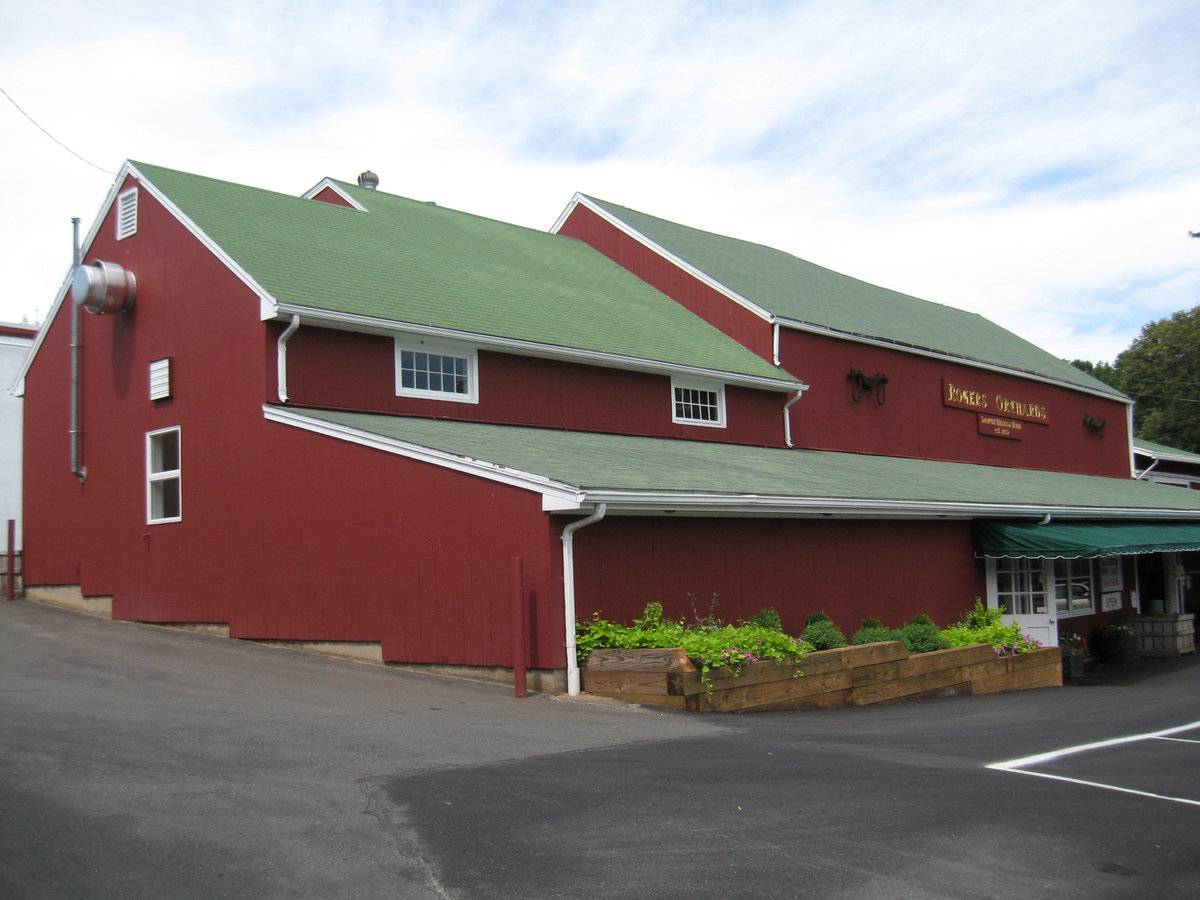
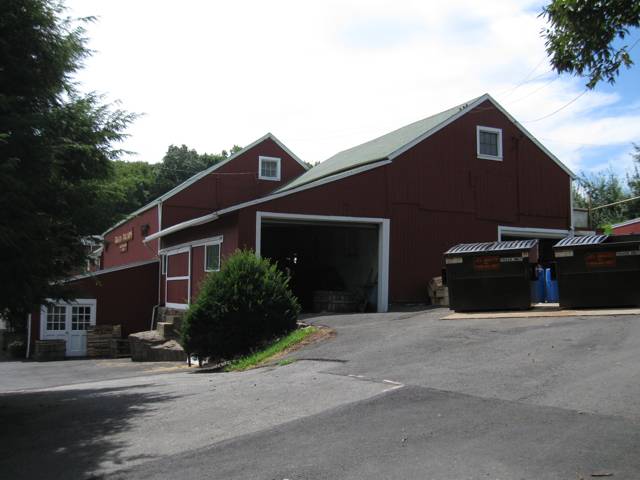
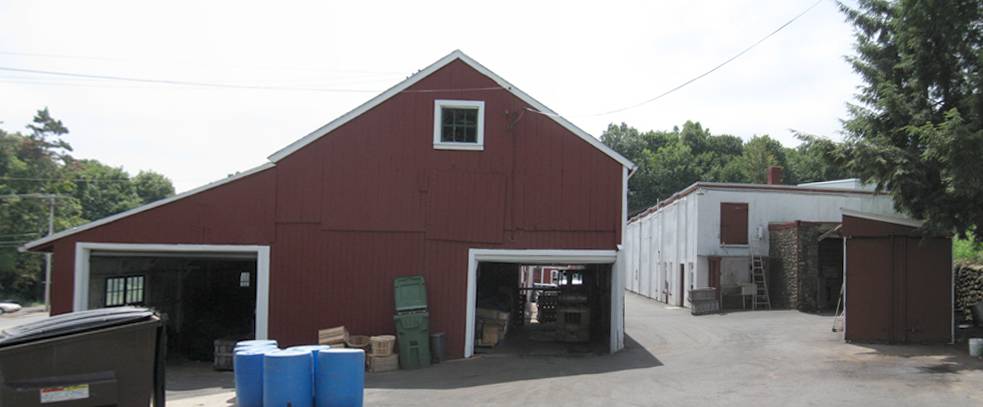
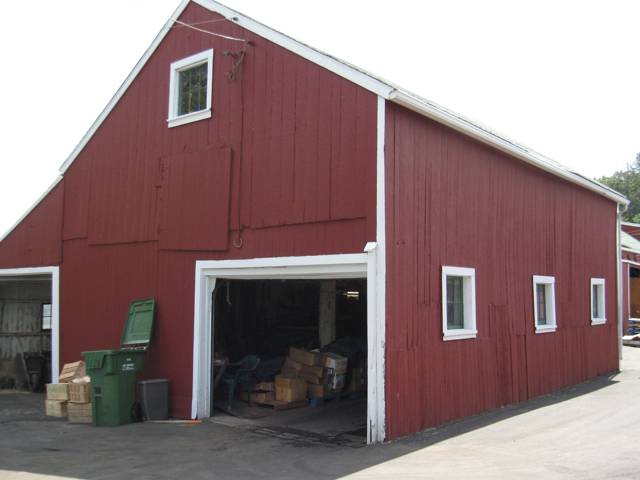
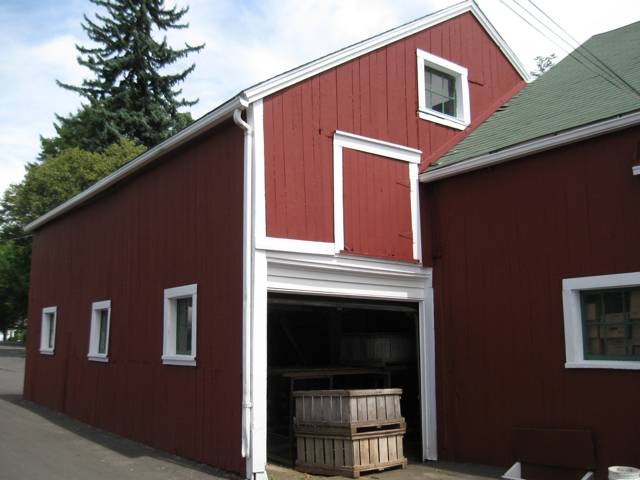
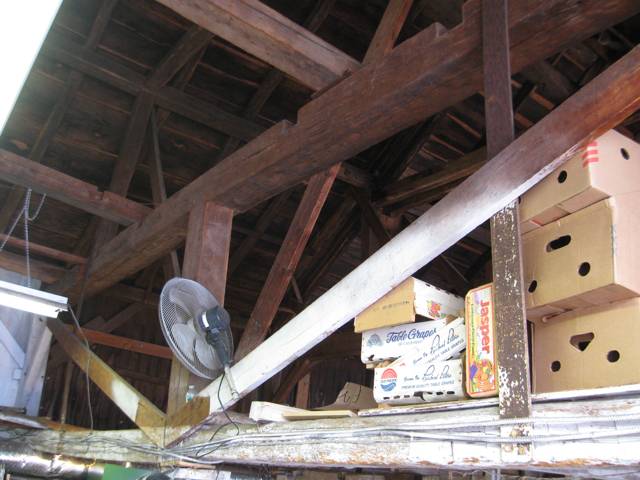
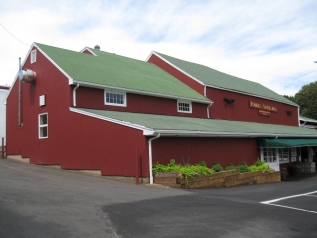
This is a 1 ½-story gable-roofed post-and-beam bank barn structure with its ridge-line oriented north-south. The west, uphill, eave-side was the original primary entry; the barn consists of a six-bay arrangement with two pairs of sliding doors at the center of each grouping of three bays. There is a small stable-type window in each of the outer flanking bays. These doors are currently accessed by a paved driveway for loading produce to be sorted and sold in the retail level.
The south gable-end has an attached 1 ½-story gable-roofed addition; its ridge aligns with the main block at a slightly lower elevation. This addition has a shed dormer at the west eave-side, with two doors at the main ground level and a hay door above. The south gable-end has one window off-center toward the right (east).
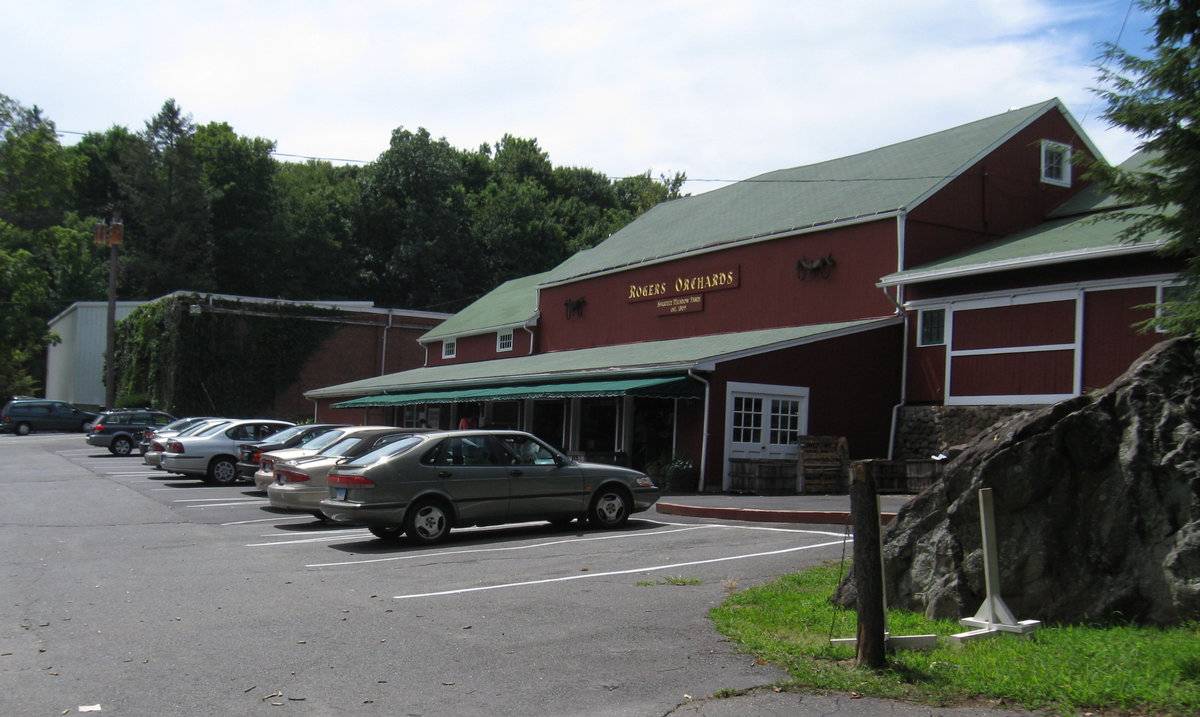
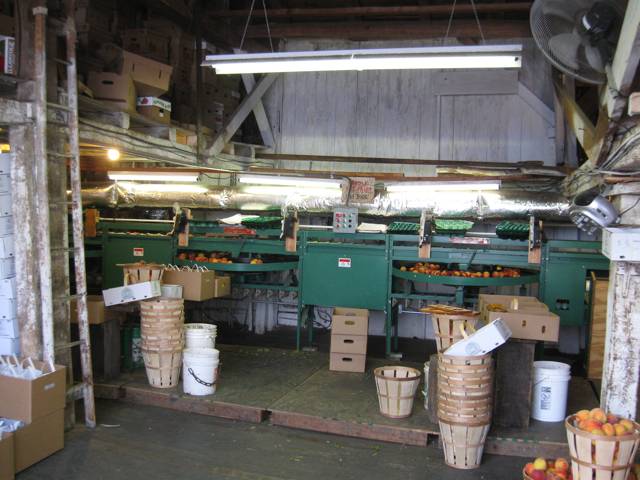
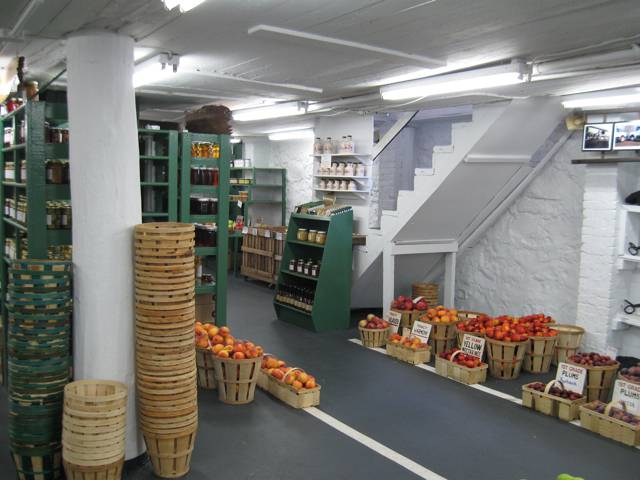
The east side has a full-width shed addition at the basement level across both the main block and the south addition, and is used as the retail store for the orchards. The south section of the east eave wall is closed in, and the northern section has a series of doors and windows into the retail store.
The north gable-end is attached to Barn II, which is off-set toward the west. In the attic gable above the roof of Barn II, there is a six-pane attic window.
Barn II:
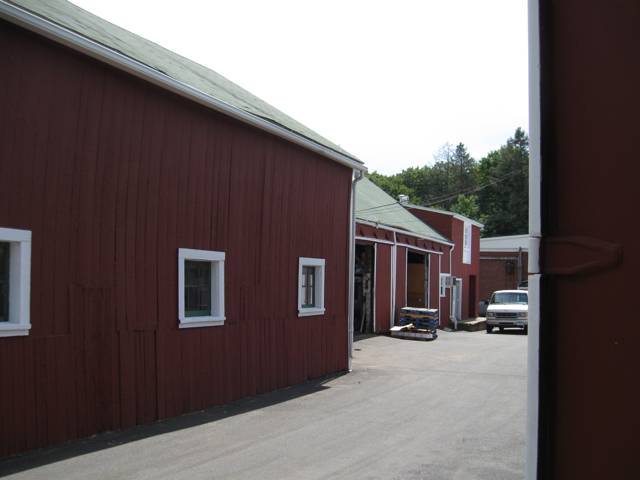
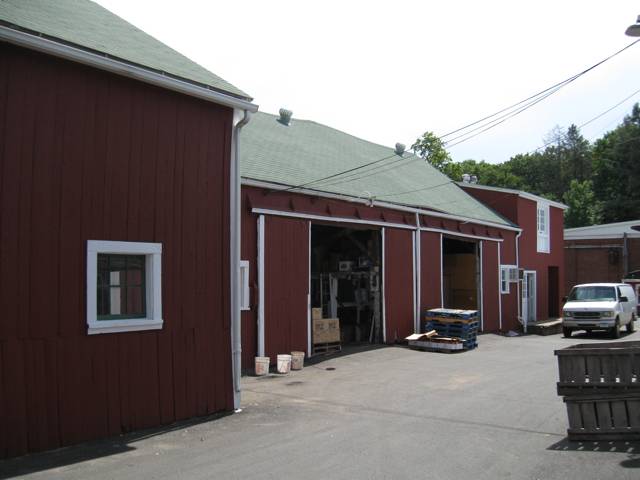
This is a 1 ½-story gable-roofed secondary structure attached at the north end of Barn I, but offset toward the west. The west eave-side has a series of three stable windows. The east eave-side has a shed addition. The east eave-side has a sliding door at the south (left) portion, opening in mid-air above the lower grade, and a six-pane window to the right.
The north gable-end has two overhead garage doors. The left (east) opening is in the shed addition and is at a lower floor elevation than the right (west opening) which is off-center to the right in the gable-end. The south gable-end has a corresponding opening where it projects out beyond the west wall of the main block. There is a hay door above, and there is a six-pane attic window in the peak of both south and north gable-ends.
Both Barns I and II are sided with vertical flush boards painted red with white trim, and have asphalt shingle roofs.
Barn III:
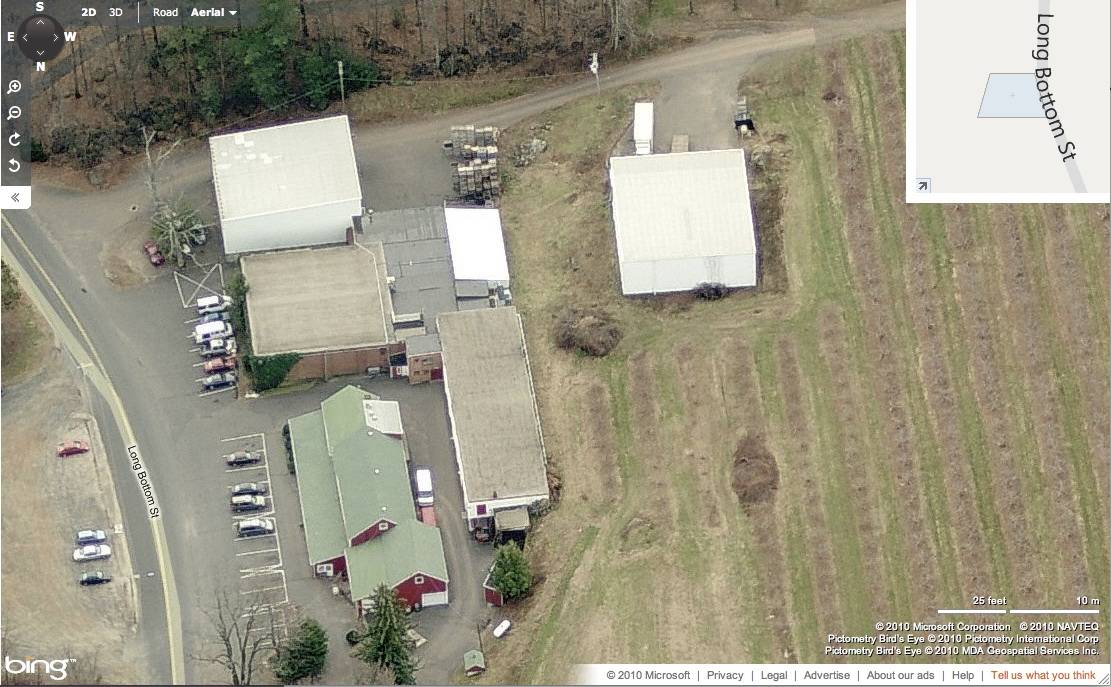
This is square flat-roofed one-story brick masonry warehouse building for apple storage under climate-controlled conditions. It has few openings. Flat-roofed masonry additions have been constructed wrapping around the west and south sides, and overhead garage doors in these give access to the storage building. The brick walls sit on a cobblestone foundation.
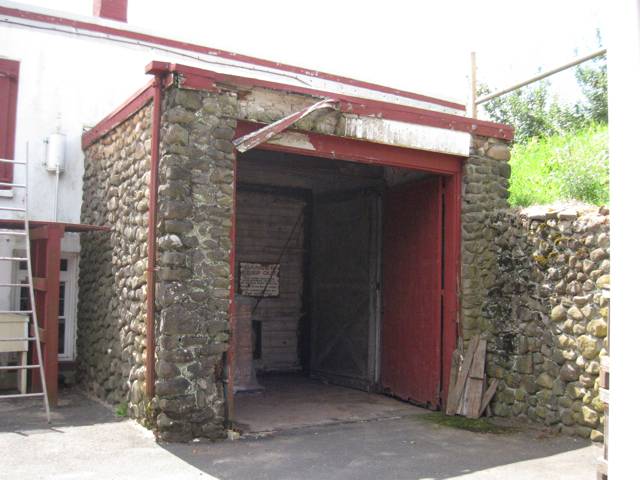
To the north of this building and west of Barn I, set into the slope of the hill to the west, there is a long concrete masonry structure which is attached to Barn III at its south end. At the north end there is a small cobble-stone structure with a garage door opening and a matching cobble-stone masonry retaining wall extending northward.
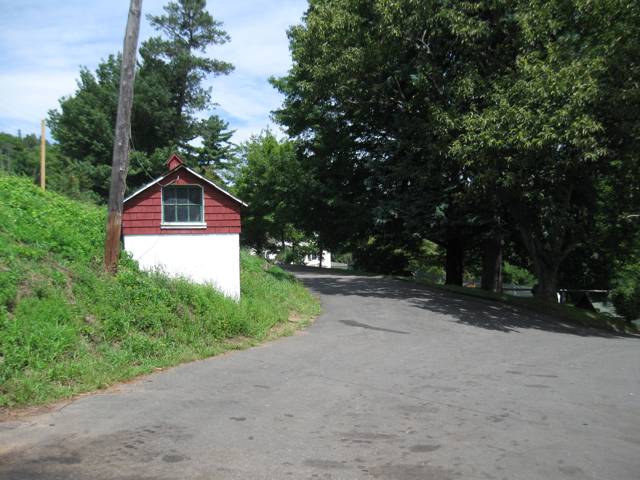
Two additional flat-roofed storage buildings are located south and west of Barn III.
Historical significance:
Barn I:
The oldest barns still found in the state are called the “English Barn,” “side-entry barn,” “eave entry,” or a 30 x 40. They are simple buildings with rectangular plan, pitched gable roof, and a door or doors located on one or both of the eave sides of the building based on the grain warehouses of the English colonists’ homeland. The name “30 by 40” originates from its size (in feet), which was large enough for 1 family and could service about 100 acres. The multi-purpose use of the English barn is reflected by the building’s construction in three distinct bays - one for each use. The middle bay was used for threshing, which is separating the seed from the stalk in wheat and oat by beating the stalks with a flail. The flanking bays would be for animals and hay storage.
The 19th century saw the introduction of a basement under the barn to allow for the easy collection and storage of a winter’s worth of manure from the animals sheltered within the building. The bank barn is characterized by the location of its main floor above grade, either through building into a hillside or by raising the building on a foundation.
This innovation, aided by the introduction of windows for light and ventilation, would eventually be joined by the introduction of space to shelter more animals under the main floor of the barn.The English barn could be enlarged by joining two three-bay structures end-to-end, as in this example. Each of the three-bay modules has its own barn doors in the central bay.
Barn II:
This secondary structure has the general form of a New England barn on a small scale, or of a toolshed or workshop.
Barn III:
With new developments in storage methods, fruit production was no longer seasonal. The first technological improvement was the use of controlled temperature and humidity to store fruit after the harvest. For example, a warehouse for this purpose was built in 1926 at Rogers Orchards in Southington. A more modern storage plant, utilizing an oxygen reduction atmosphere to retard ripening, was constructed [at Rogers Orchards] in 1984. Following the harvest, the building is sealed and the oxygen content is reduced to three percent.
Historical background:
Originally part of the town of Farmington, Southington’s first settlement occurred in 1598, when Samuel Woodruff of Farmington built a home (no longer standing) near the modern intersection of Pleasant and Woodruff Streets. Other settlers came north from New haven and Wallingford. The earliest homes are documented in the “Colonial Houses of Southington Thematic Resource.” In 1779 Southington incorporated. The town continued to grow, thanks to increased travel and prosperity along the New Haven Path, although population remained moderate.
Farming was the basis of the Southington economy throughout the 19th century, leaving its mark in the remaining barns scattered throughout the town. As the soil became exhausted, farming diminished, with the exception of orchards in the hills in the east side of the town and industry began to increase.
Elijah Rogers (1861-1949), the first member of this family to operate a farm in the [area], was the son of James and Mary Horsford Rogers of England, who came to Simsbury i n 1857. In 1888, Elijah Rogers purchased the farm owned by Horatio Dunham at the foot of Shuttle Meadow. He married Sarah F. Merriman, the daughter of Josiah and Anna Merriman. Josiah Merriman was the grandson of Anson Merriman (1786-1853), the second owner of the Ebenezer Evans House. Josiah established the first orchard in the [area] about 1850 on the land behind the house and across Andrews Street to the east. The Merriman family also probably owned the property on Mine Hollow Road to the northwest. Both Merriman properties eventually became part of the Rogers Farm through inheritance. Two children were born to Elijah and Sarah Rogers: Ruth L. (1892-7) and Harold M. (1894-1980). For the first 40 years, the Rogers farm combined dairy farming with pomiculture; Elijah was the first orchardist in the state to successfully cultivate peaches. He abandoned the dairy business to concentrate solely on the growing of fruit in 1921 (Cunningham, Section 8, page 1).Field Notes
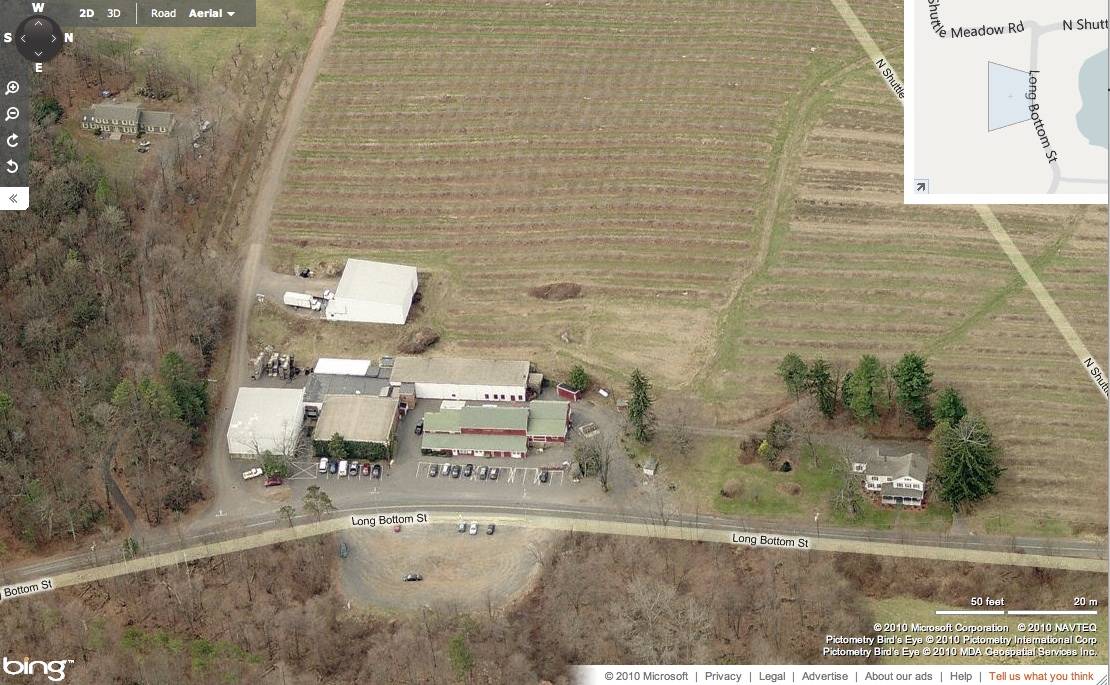
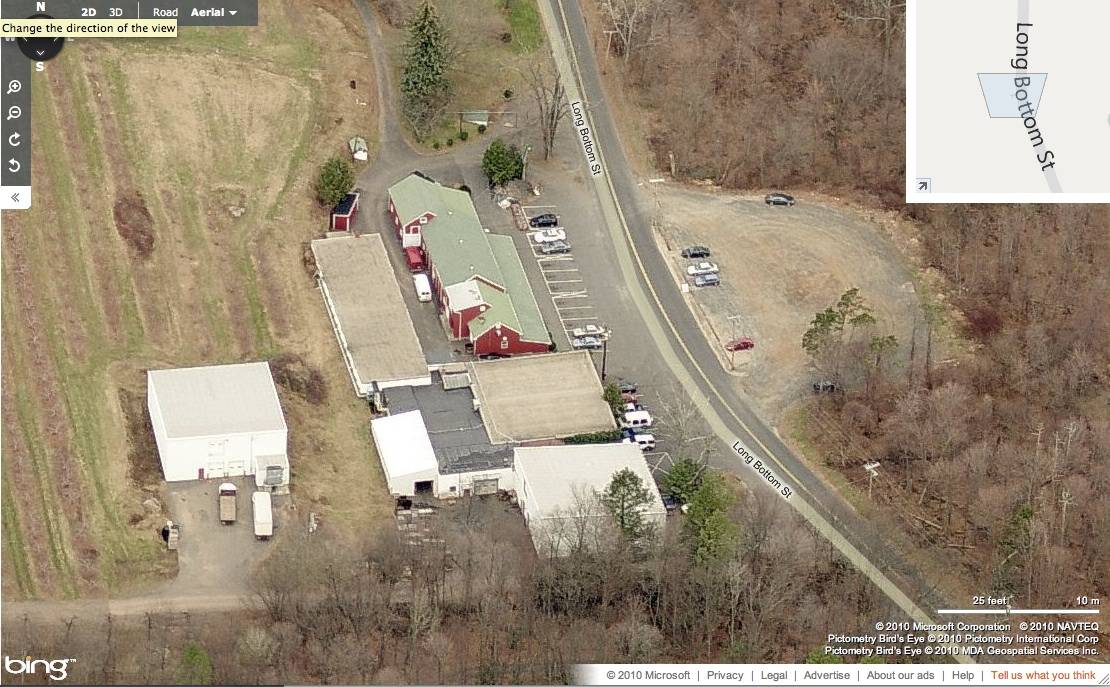
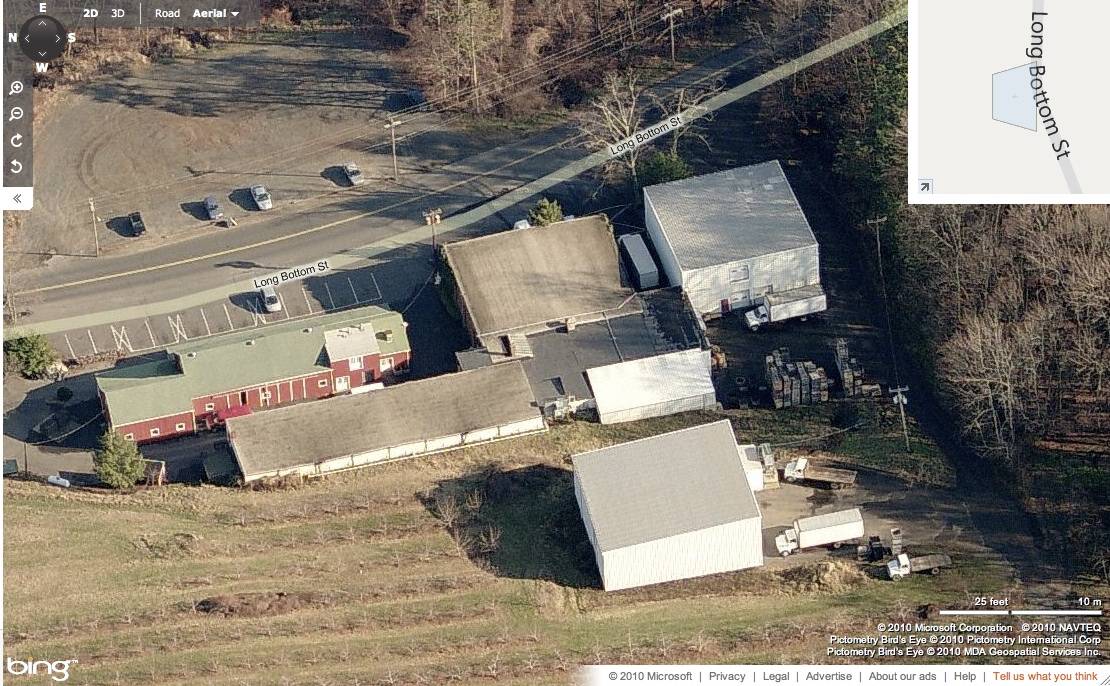
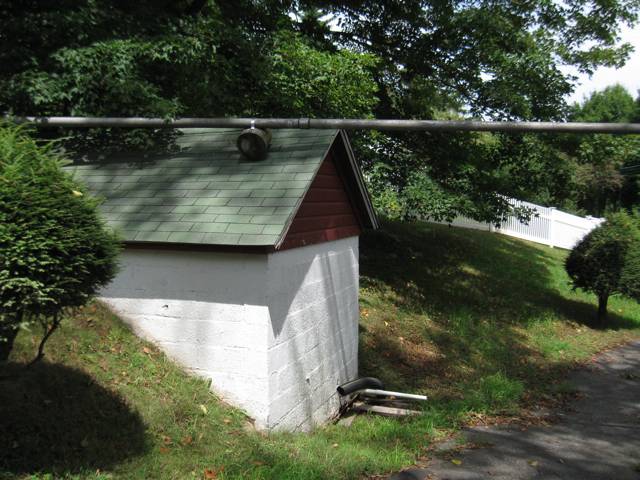
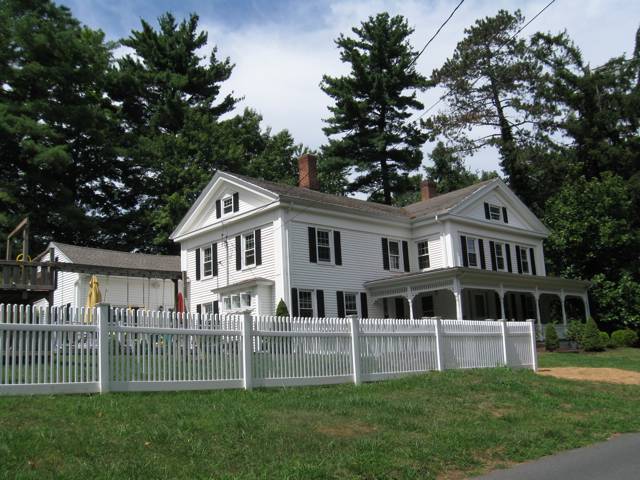
Complex includes the farm store, whose core is (Barn I) a double 19th c. English bank barn, (Barn II) a secondary barn, (Barn III) a brick apple warehouse (1926), a metal apple warehouse (1984), pump house and shed (early 20th c.), and to the north, the Elijah Rogers House (c. 1840). See 36 Long Bottom Road and 341 Mine Hollow Road for Parts 2 and 3.
- Use & Accessibility
- Environment
Related features
Environment features
Relationship to surroundings
Rogers [Orchards] is an extensive farm complex in the northeast corner of Southington, Connecticut. It encompasses approximately 160 acres of gently rolling farmland on a plateau overlooking the southern end of Shuttle Meadow Reservoir. The [complex] is bounded on the west by a steep slope which drops several hundred feet down to a broad open plain where the more urban areas of Southington are located. There are two major roads: Long Bottom Road, which runs between Shuttle Meadow Road on the north to Andrews Street on the east; and Mine Hollow Road, which runs from Long Bottom, at the center of the complex, to Flanders Road in a southwesterly direction.
The Rogers Farm complex is devoted exclusively to pomiculture (the growing of fruit trees), with more than 100 acres of land in cultivation in the [complex]. The orchards run gradually down-slope from the south and west to the bowl of the reservoir. In addition to three main orchards primarily used for growing apples, with some pear and peach trees, the [complex] contains six houses with their barns and other associated outbuildings, a retail store with an associated warehouse, and a modern cold storage and processing facility (Cunningham, Section 7).
- Typology & Materials
-
Building Typology
Materials
Structural System
Roof materials
Roof type
Approximate Dimensions
I: 50 x 96 feet. II: 34 x 42 feet. III: 65 x 70 feet.
- Source
-
Date Compiled
12/07/2010
Compiled By
Charlotte Hitchcock, reviewed by CT Trust
Sources
Field notes and photographs by Charlotte Hitchcock and Helen Higgins date 8/21/2010.
Barn I, English bank barn converted to store 19th c. 50 x 96 ft
Barn II, NE barn attached to Barn I north end. 34 x 42 ft
Barn III, Brick apple storage warehouse, 1926. 65 x 70 ft
Other structures mid- to late-20th century.Town of Southington Assessor’s Record & GIS Viewer http://www.southingtongis.com/ags_map
Parcel ID: 184011
Aerial Mapping:
http://maps.google.com
http://www.bing.com/maps accessed 8/25/2010.Andrews, Gregory, Sherrow, Doris, Colonial Houses of Southington Thematic Resource National Register Nomination, National Park Service, 1987.
Cunningham, Jan, Review Draft for Rogers Farm Historic District (not registered), 1988, Ct Trust for Historic Preservation files. National Register Nomination No. 88002688.
Ransom, David, Johnson, Lisa Fern, Southington Center National Register District Nomination No. 88002961, National Park Service, 1988.
Sexton, James, PhD, Survey Narrative of the Connecticut Barn, Connecticut Trust for Historic Preservation, Hamden, CT, 2005, http://www.connecticutbarns.org/history.
Visser, Thomas D., Field Guide to New England Barns and Farm Buildings, University Press of New England, 1997. - PhotosClick on image to view full file
-