Barn Record Griswold
RETURN TO ‘FIND BARNS’- Building Name (Common)
- Polinsky Farms - Part 1 of 2
- Building Name (Historic)
- Polinsky Farm
- Address
- 161 Bishop Crossing Road, Griswold
- Typology

- Overview
-
Designations
Historic Significance
Architectural description:
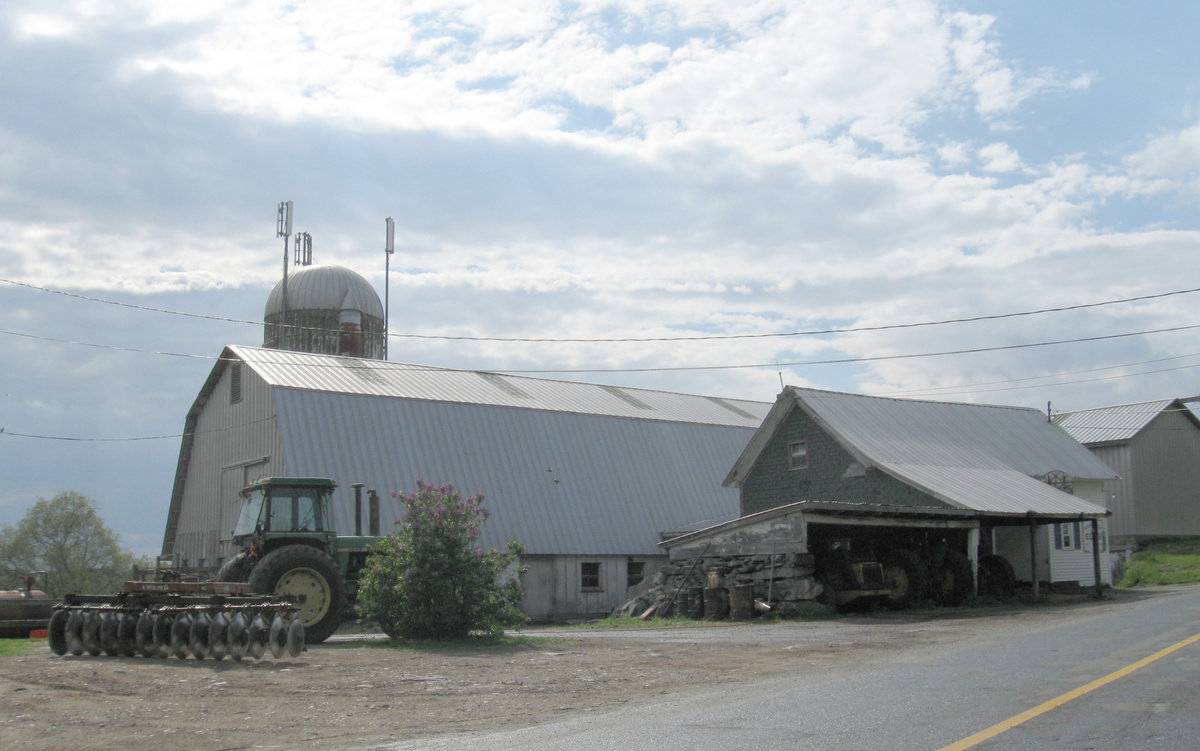
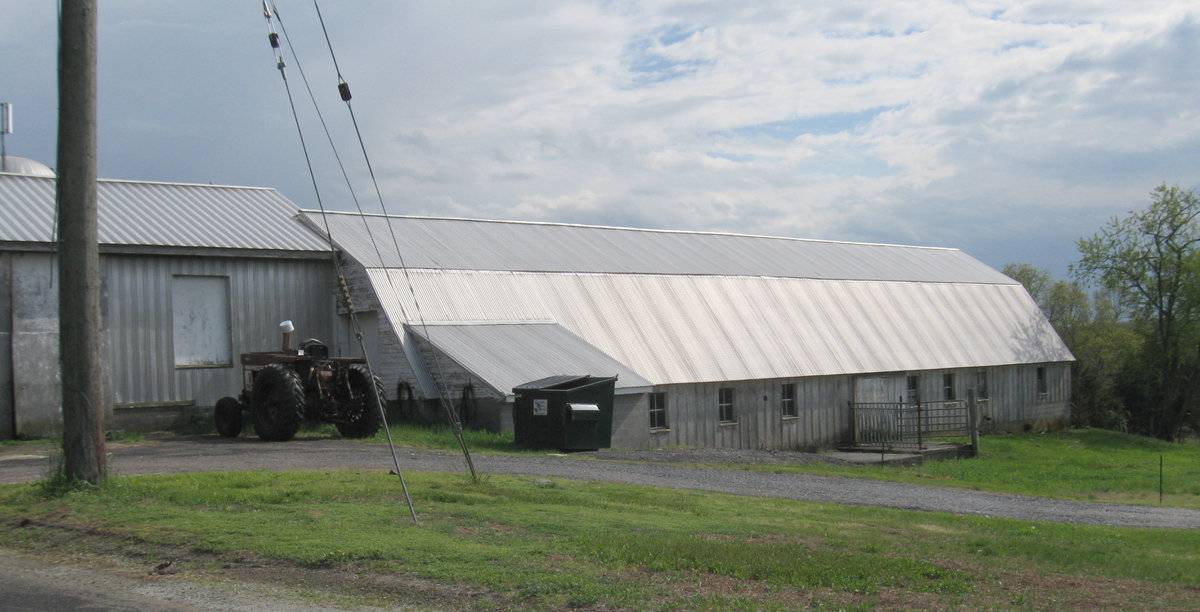
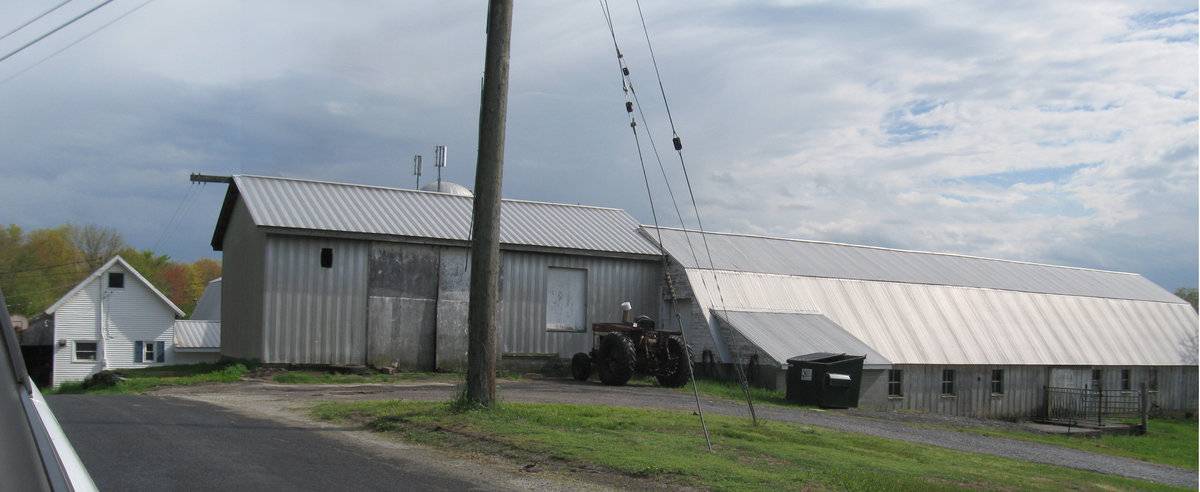
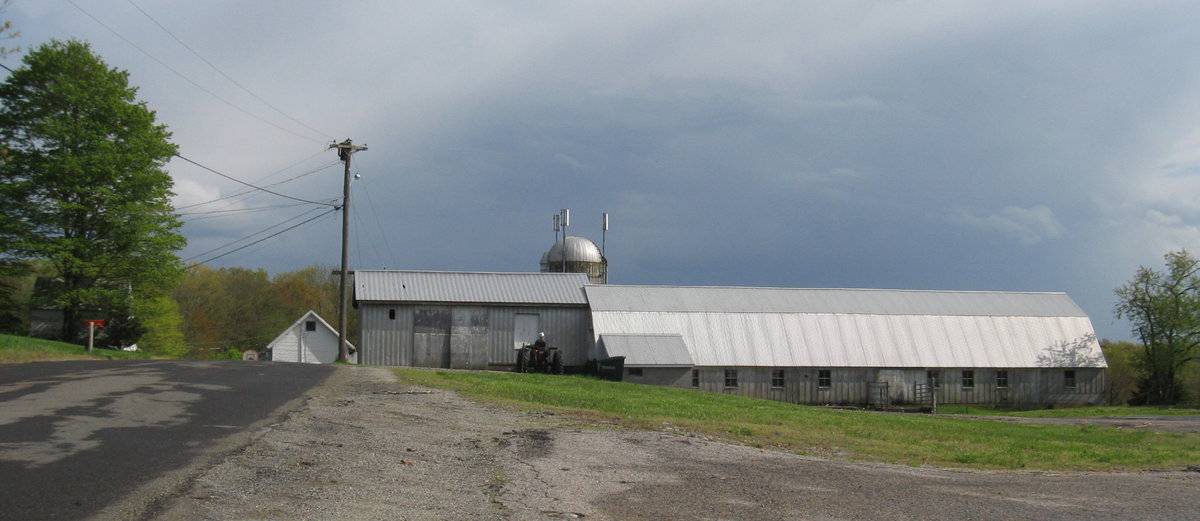
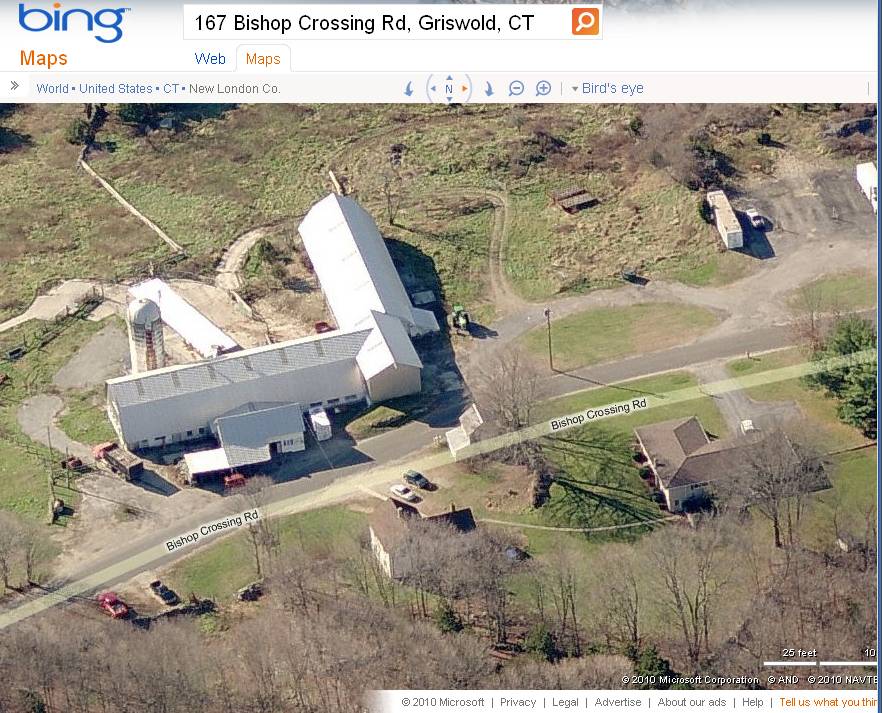
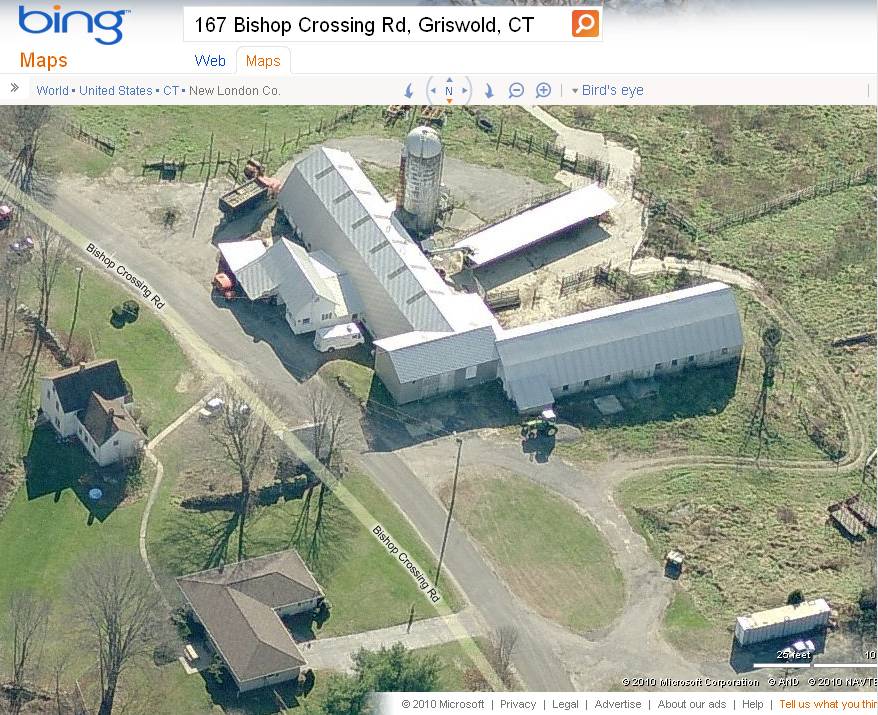
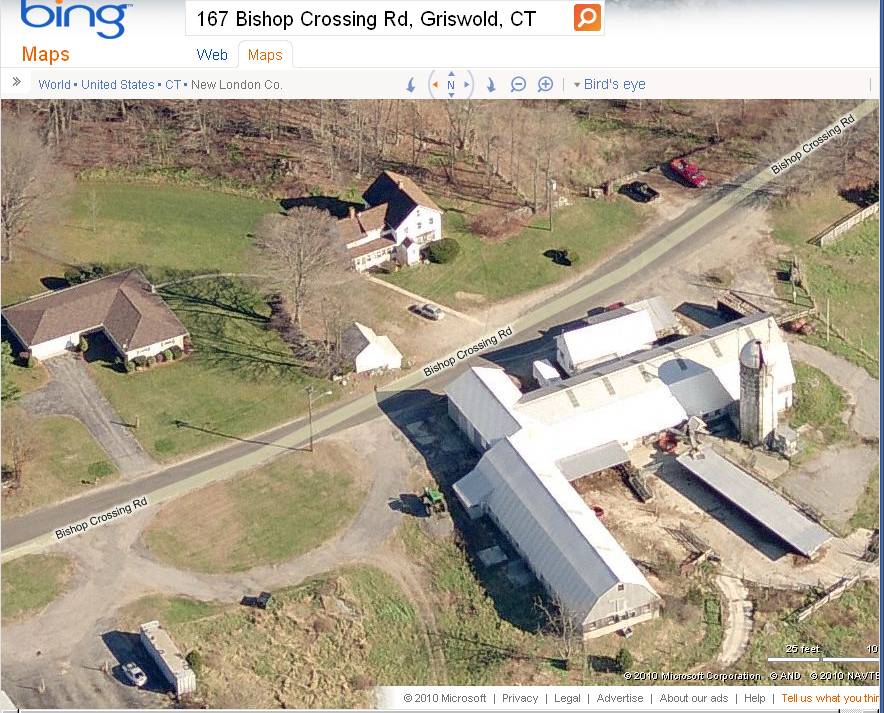
This is an L-shaped gambrel barn complex located at 170 Bishop Crossing Road. The main block is a 1 1/2-story gambrel-roofed metal-sided structure with its ridge-line oriented north-south. The base and foundation are concrete. The south gable-end has a row of six stable windows above the foundation and a metal-sided end wall with a sliding hay door above. The eave-sides have a row of stable windows and various door openings. A silo is located to the west near the south end. A 1-story milk-room is located to the east toward the north end. Its gable roof is oriented north-south, parallel to the main block, and connected to it by a low-pitched cricket connector. Several shed-roof canopies are attached on the east and south of the milk-room.
At the north end of the main block a two-story gable-roofed metal structure abuts perpendicular across the end and projects east of the main block. This has a pair of sliding doors in the north eave side and a blank east gable-end.
A second 1 1/2-story gambrel-roofed structure partially abuts the west gable-end of the two-story section, and has its ridge-line is oriented east-west. This has a row of eight stable windows along the north and south eave-side facades and a shed addition attached to the east end of the north side. The west gable-end of this block has a row of four stable windows above the concrete base and a hay door in the upper loft level.
At the southwest inside corner of the two gambrel-roofed blocks, a shed-roofed canopy is attached to the main block and enclosed by a fence creating a barn-yard. An open-sided shed stands to the west of the main block, with a fenced paddock surrounding it.
Siding is metal panels and roofing is metal with skylight panels at regular intervals.
Field Notes
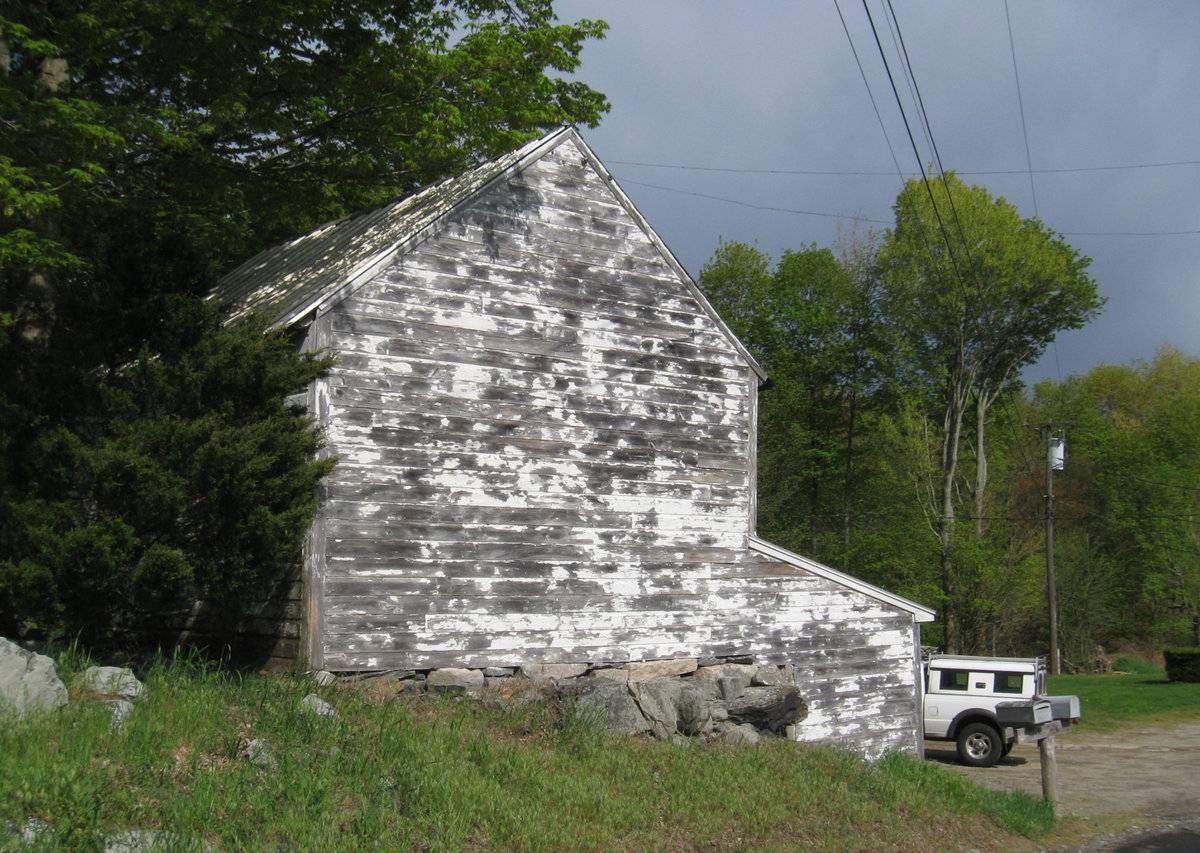
Jewish Farms and Resorts - documentation by Cunningham and Ransom. Barns built in 1980s on foundations of older barns after a fire. Polinsky Farm is significant historically because it is an example of a Jewish farm, established in rural Connecticut in the first quarter of the 20th century, which continues as a farm under the active ownership of the founding family. Samuel Polinsky acquired the farm in 1922; his son Harvey, the present owner, added to the acreage; and his son Scott is now resident in the historic house (Ransom, p. 138). Polinsky Farms includes poultry, Highland cattle, and a trucking business. See Part 2 for chicken coops at 205 Bishop Crossing Road. Outbuildings: BRN1 BARN - 1 STORY 1150 S.F. BRN1 BARN - 1 STORY 3960 S.F. BRN1 BARN - 1 STORY 1292 S.F. MLK MILK HOUSE 250 S.F. SILO-WD OR CNC 736 DIAxHT
- Use & Accessibility
Use (Historic)
Use (Present)
Exterior Visible from Public Road?
Yes
Demolished
n/a
Location Integrity
Unknown
- Environment
Related features
Environment features
Relationship to surroundings
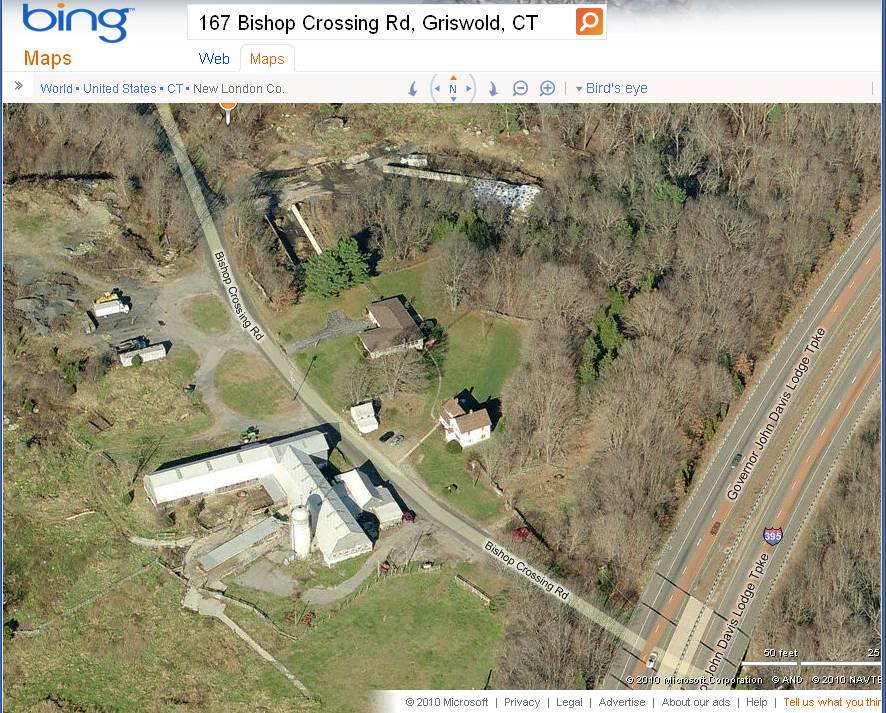
The houses are on the east side of the road. The historic house is directly across the street from the barns. A cattle barn complex is located on the west side of the road (Part 1), and a poultry complex is to the north on the east side (Part 2).
The barn complexes are made up mostly of gambrel-roofed aluminum buildings, erected in recent years after a fire. A silo appears somewhat older.
The site is located in the northern part of Griswold immediately to the west of I-395 and two miles east of the built-up area of Jewett City. Much of the area is woodland, with some open fields and residential subdivisions.
- Typology & Materials
-
Building Typology
Materials
Structural System
Roof materials
Roof type
Approximate Dimensions
n/a
- Source
-
Date Compiled
12/01/2010
Compiled By
Charlotte Hitchcock, reviewed by CT Trust
Sources
Town of Griswold Assessors Record
Parcel ID: 20/ 50/ 42; 117 acres.Aerial views from:
http://maps.google.com/
http://www.bing.com/maps/ accessed 11/30/2010.Cunningham, Janice, and Ransom, David; Back to the Land: Jewish Farms and Resorts in Connecticut 1890-1945, State of Connecticut Historical Commission and Jewish Historical Society of Greater Hartford, 1998, 186 pages, pp.137-140 .
Sexton, James, PhD; Survey Narrative of the Connecticut Barn, Connecticut Trust for Historic Preservation, Hamden, CT, 2005, http://www.connecticutbarns.org/history.
Visser, Thomas D.,Field Guide to New England Barns and Farm Buildings, University Press of New England, 1997, 213 pages.
- PhotosClick on image to view full file
-