Barn Record Sterling
RETURN TO ‘FIND BARNS’- Building Name (Common)
- n/a
- Building Name (Historic)
- n/a
- Address
- 41 Newport Road, Sterling
- Typology

- Overview
-
Designations
n/a
Historic Significance
Architectural description:
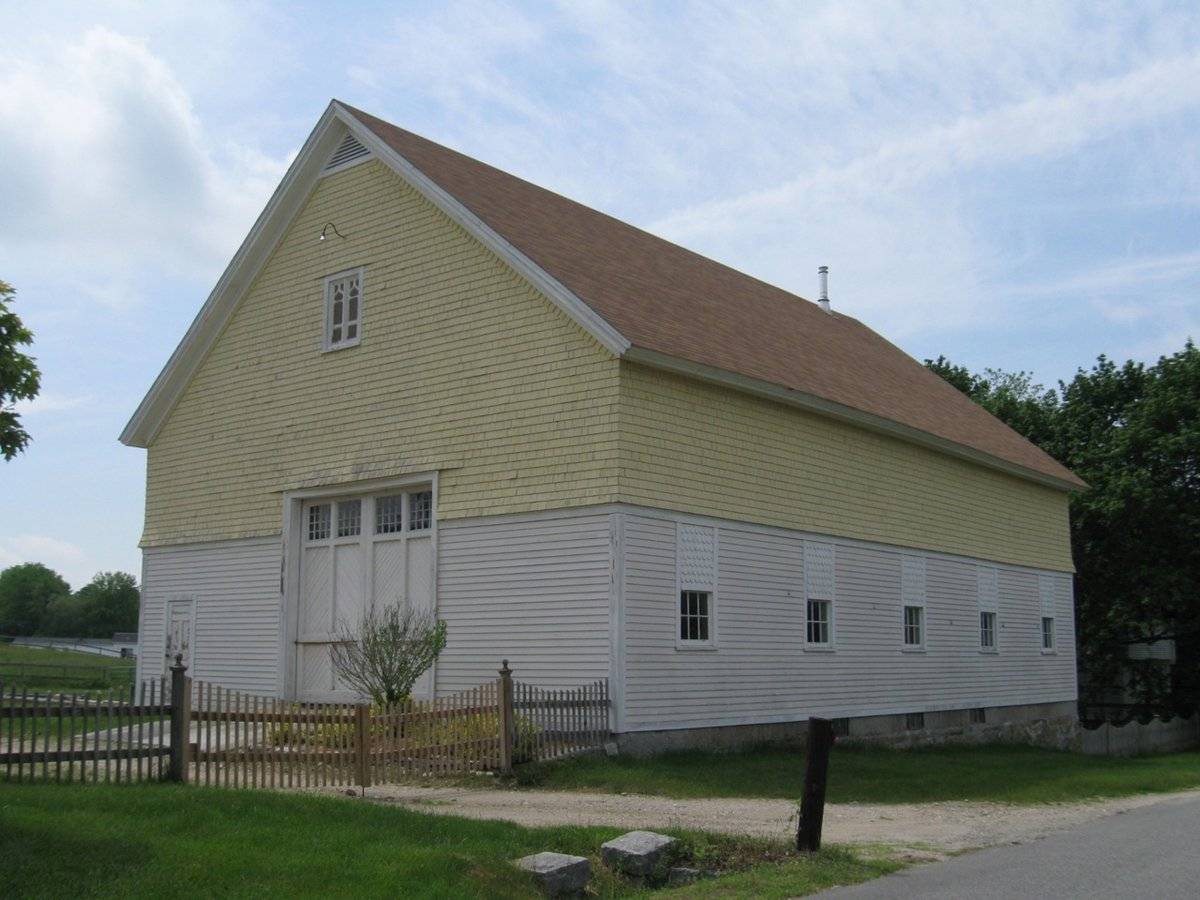
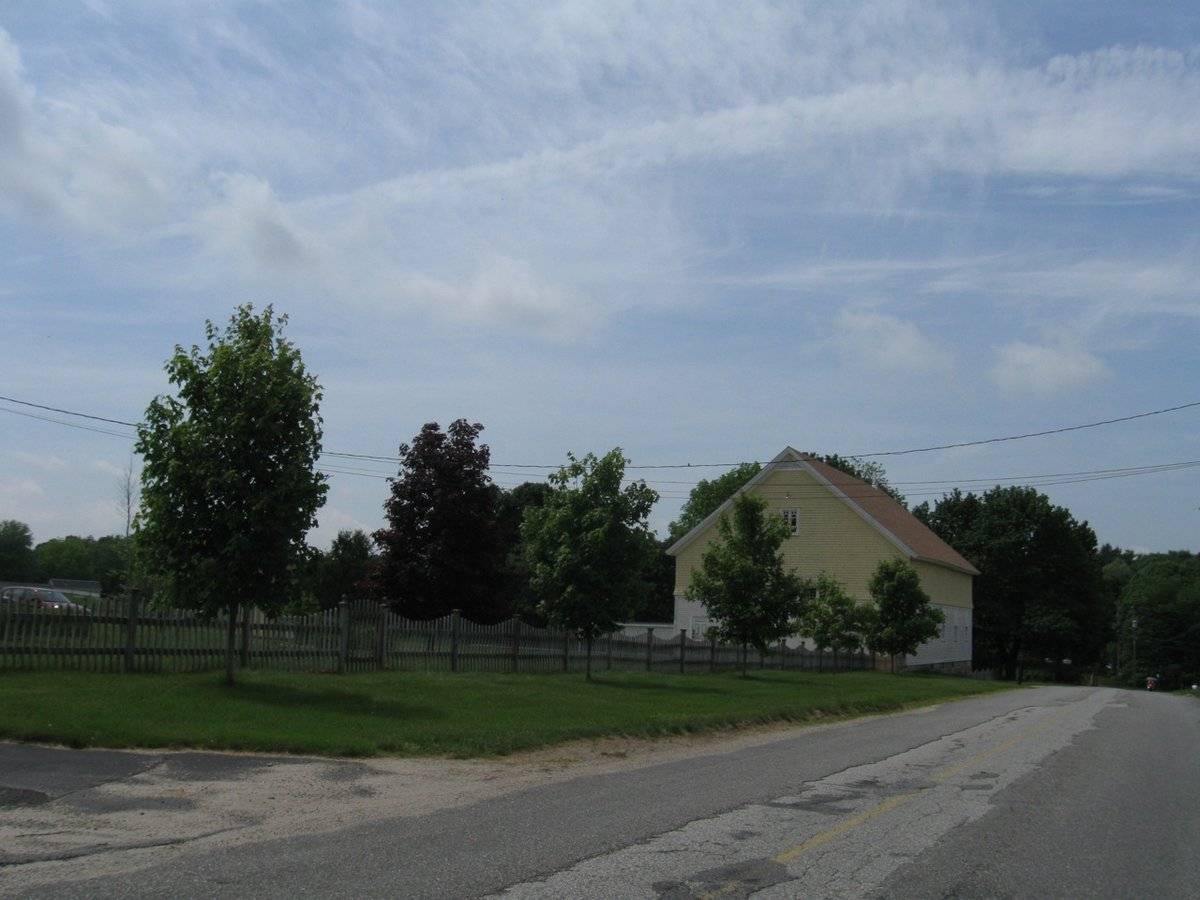
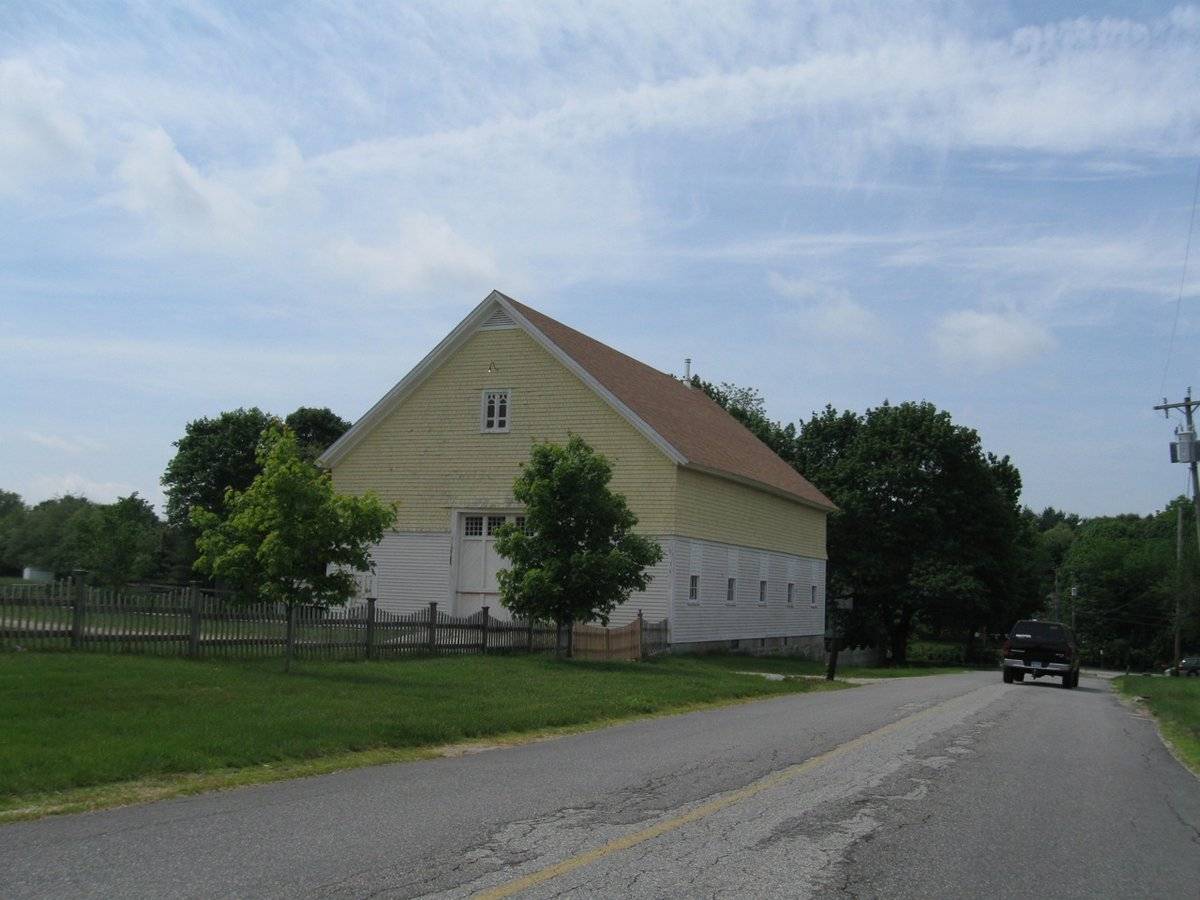
Barn I: This is a large 2 ½-story gable-roofed bank barn structure with its ridge-line oriented north-south parallel to the road. The entire barn has a random ashlar granite foundation which is visible at the north end where grade is lower and partially along the west and east sides. The lower part of the barn has narrow clapboard siding with corner board trim. Along the window heads is a horizontal trim fascia above which the walls are wood shingles with the lower courses flared. The entry is a pair of interior sliding doors in the south gable-end, with stiles and rails dividing each door into six parts. The upper two square panels contain 16-pane glazing. The tall center panels and shorter square lower panels are infilled with diagonal tongue and groove planking, forming a diamond effect. This entry is in the high side of the site, which slopes down gently toward the north. There is a slightly ramped grade to the entry. A pass-through door is located to the left (west), and is a decorative paneled door with a mix of horizontal and vertical raised panels. Above in the attic gable there is a pair of narrow thee-pane casement-style windows with decorative glazing patterns in the upper pane. The shingle siding forms a flared hood over both the main barn doors and the attic windows. The peak has a triangular louvered panel.
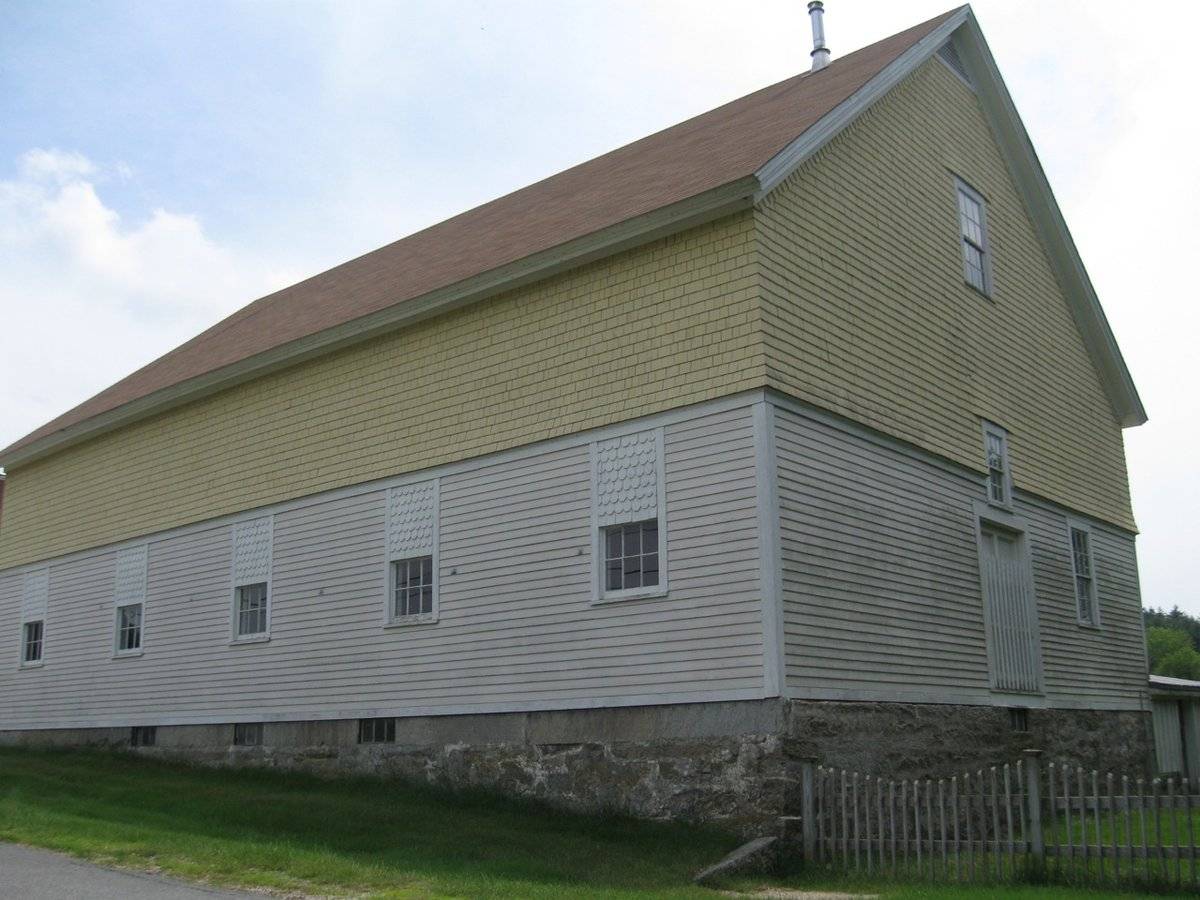
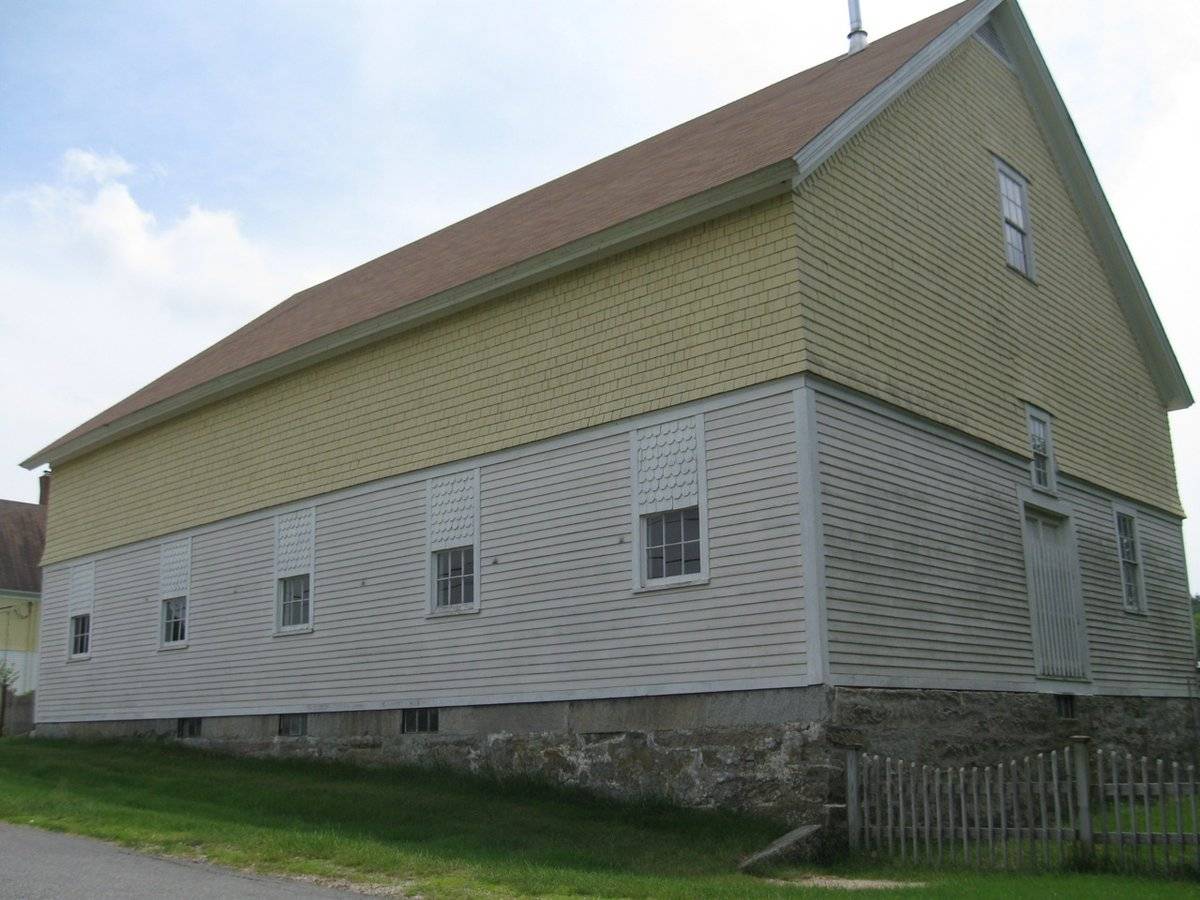
The east eave-side has five windows which appear to have been six-over-six double-hung with trim, but have been converted to six-pane stable windows in the lower area with solid panels of fish-scale shingles above. There are three basement windows set into the top course of granite block masonry.
The north gable-end has a pair of doors centered in the main level, which is approximately five feet above grade with no access, in the manner of a hay door. To the right (west) there is a tall six-over-six double-hung window with trim. Above the door is a smaller six-over-six double-hung window with a flared hood in the shingle siding above. In the attic there is a tall six-over-six double-hung window with a matching flared hood. The peak has a triangular louver.
The west eave-side has siding to match the other elevations, and has windows similar to the east side, but only one near the left (north) corner and three off-center toward the right (south). The stone foundation steps down at the center of the west side; it appears that there is access into the basement from an attached open shelter on this side.
Roofing is asphalt shingles; The eaves and rake have closed soffits and some molded trim on the fascias. The wood shingle siding is painted yellow while the lower level is a pale peachy pink with white trim.
Historical significance:
The New England barn or gable front barn was the successor to the English barn and relied on a gable entry rather than an entry under the eaves. The gable front offered many practical advantages. Roofs drained off the side, rather than flooding the dooryard. With the main drive floor running parallel to the ridge, the size of the barn could be increased to accommodate larger herds by adding additional bays to the rear gable end. Although it was seen by many as an improvement over the earlier side-entry English Barn, the New England barn did not replace its predecessor but rather coexisted with it; both types continued to be constructed.
The 19th century also saw the introduction of a basement under the barn to allow for the easy collection and storage of a winter’s worth of manure from the animals sheltered within the building. The bank barn is characterized by the location of its main floor above grade, either through building on a hillside or by raising the building on a foundation.
This innovation, aided by the introduction of windows for light and ventilation, would eventually be joined by the introduction of space to shelter more animals under the main floor of the barn.The 19th century saw the introduction of the Gentleman’s barn. While many farmers were striving for efficiency to compete with farms in the middle of the country, a new type of farmstead appeared in Connecticut: the gentleman’s farm. These barns were frequently designed by famous architects and were part of giant complexes that combined the luxury of a weekend retreat with the grit of a working farm.
Field Notes
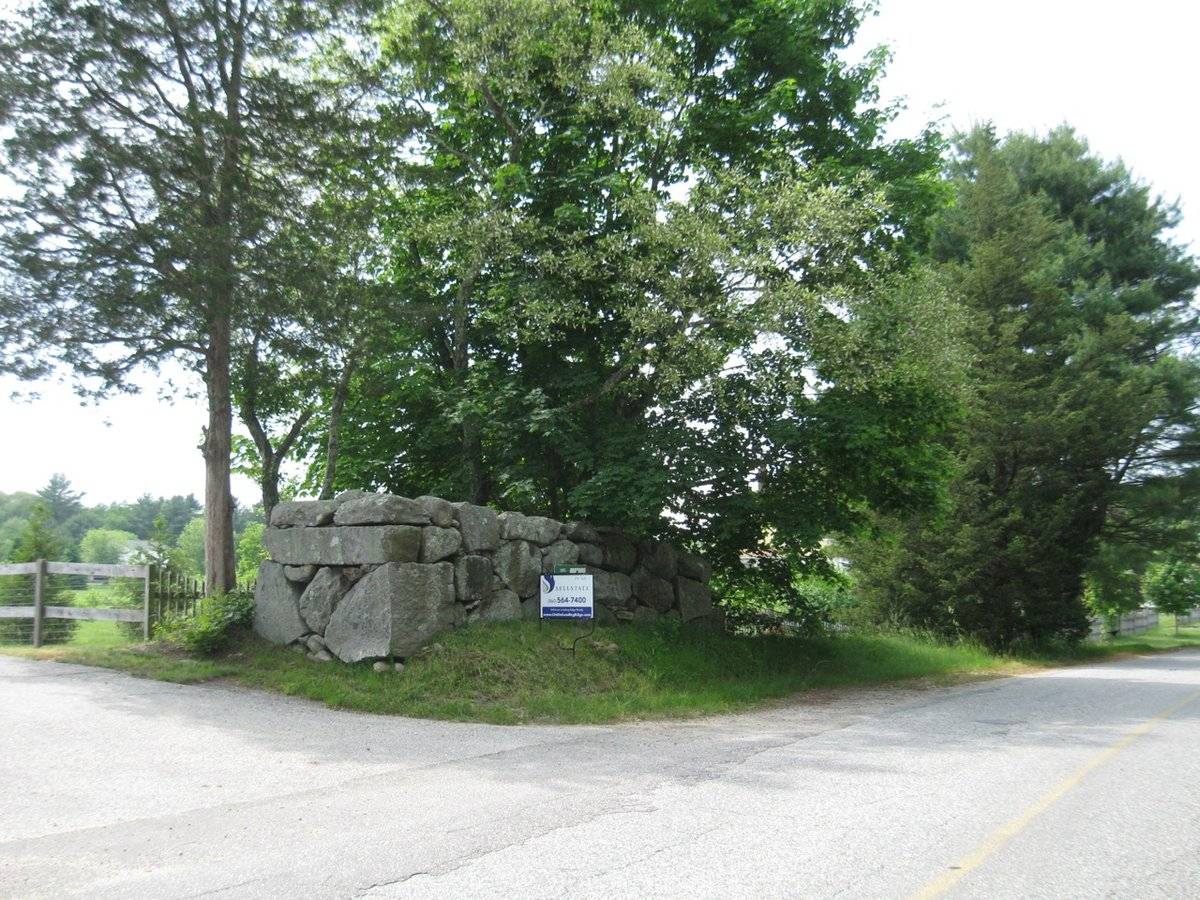
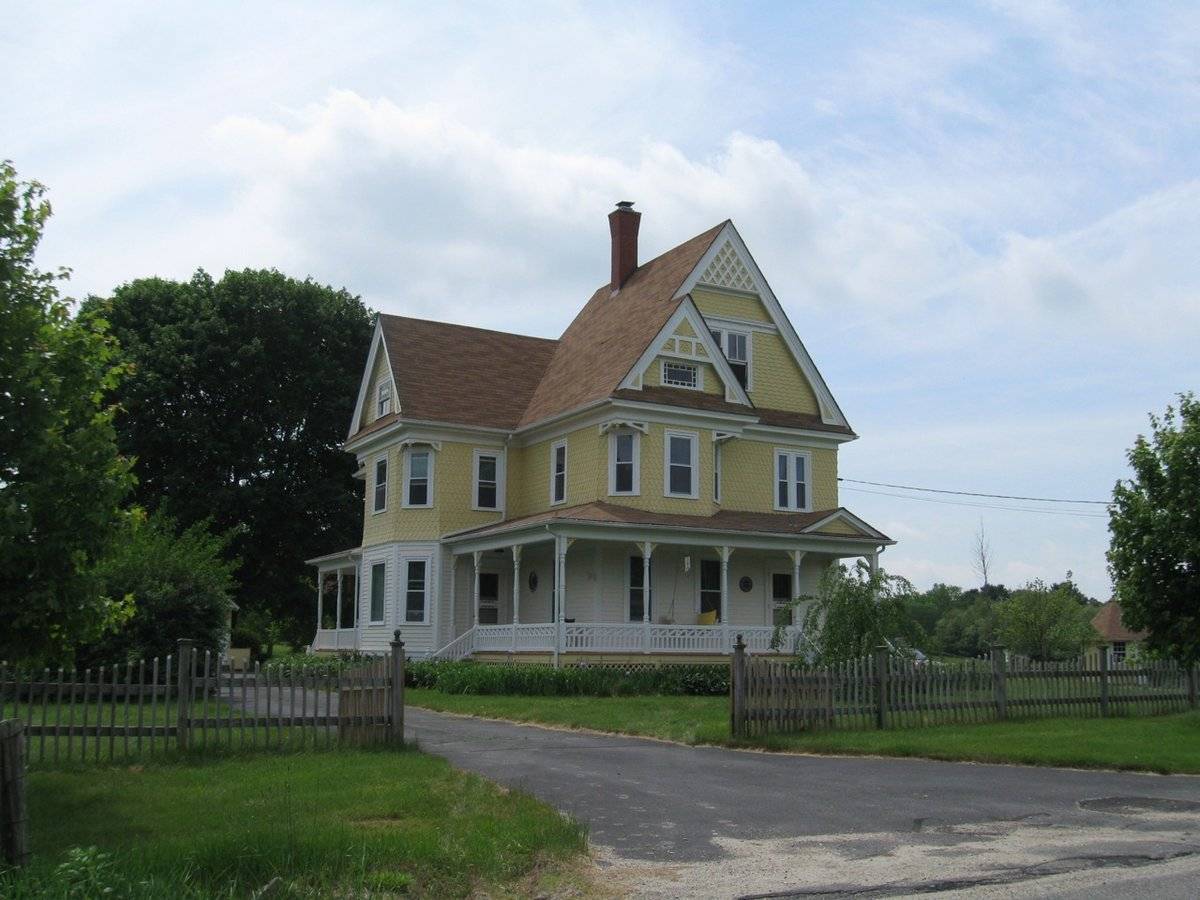
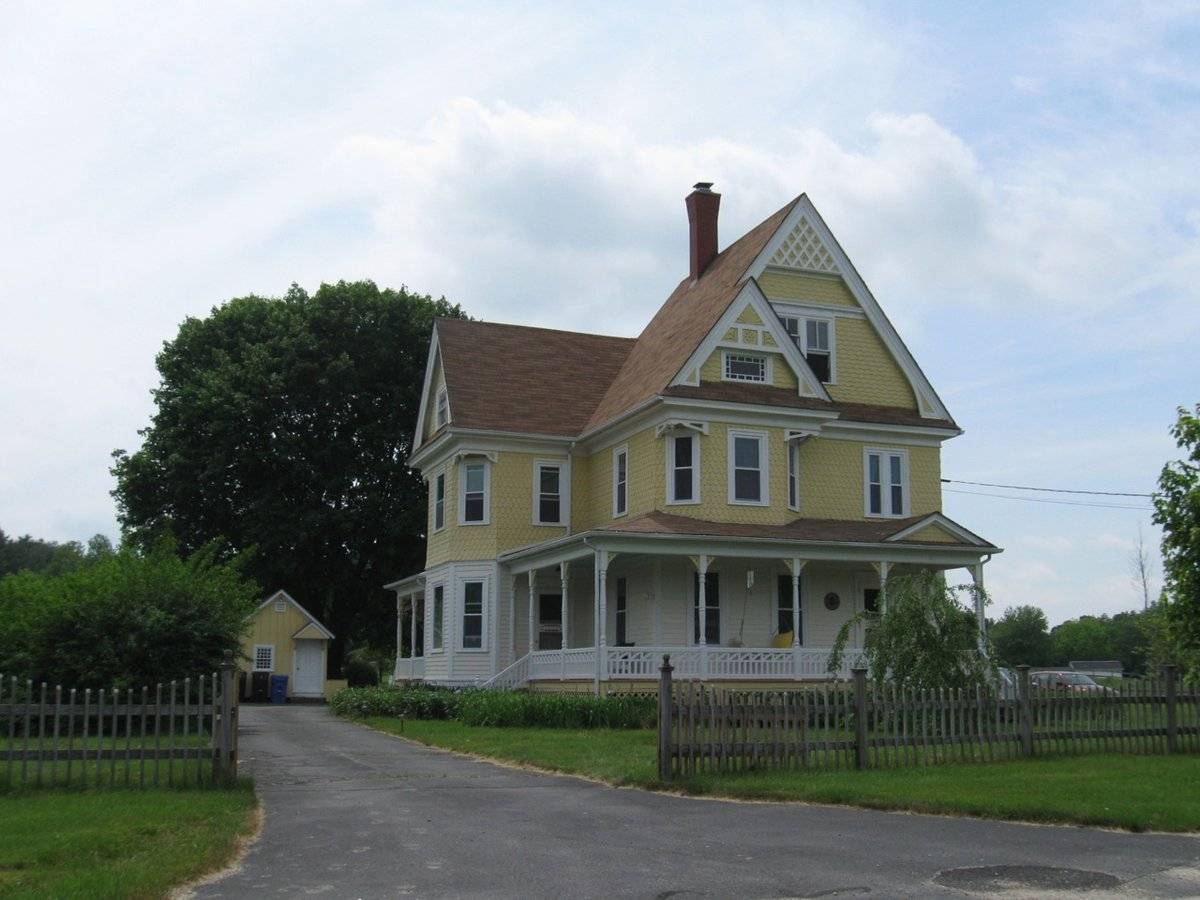
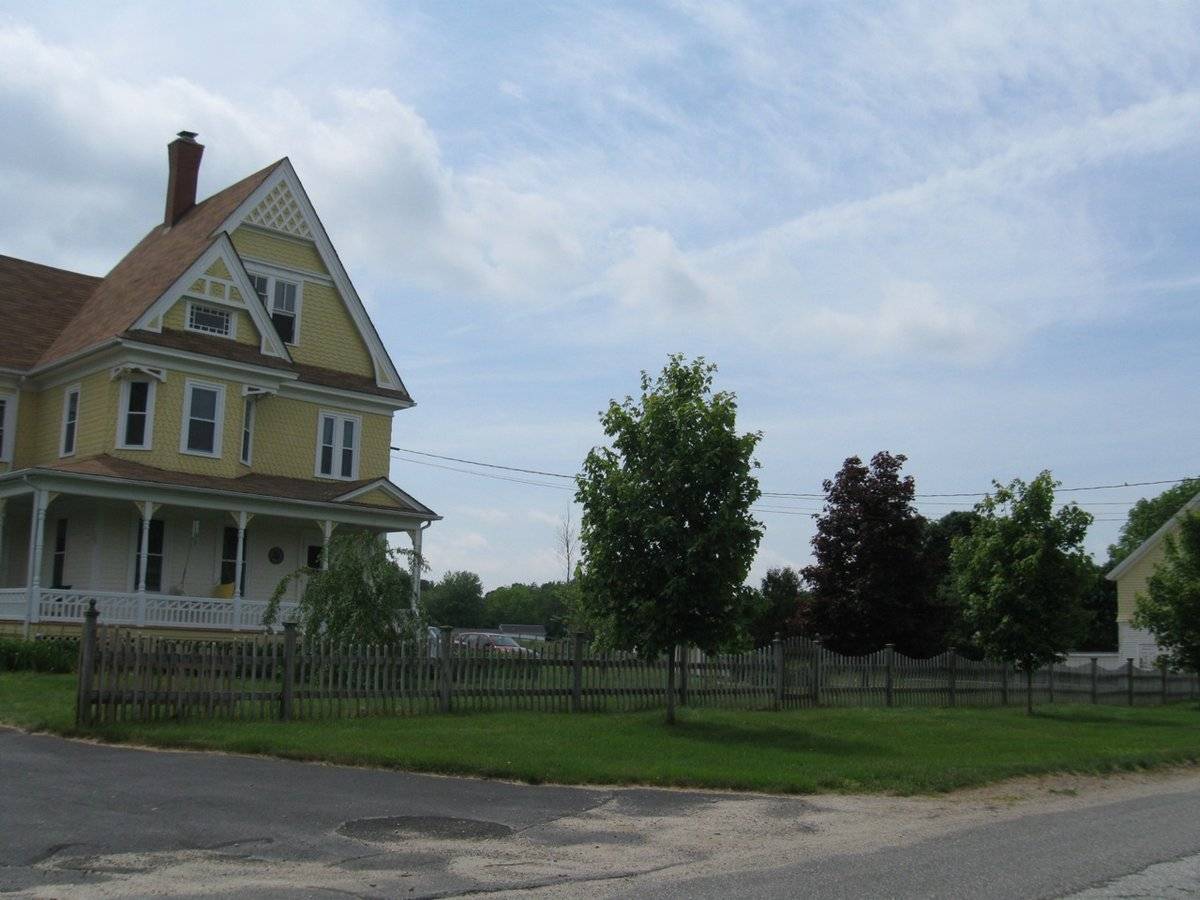
Victorian house, barn to the north, huge stone walls built from local granite quarry leftovers. This used to be a big farm, subdivided and several houses newly built to the south along Newport Rd. Info from owner of 102 Newport Rd. across the street.
- Use & Accessibility
Use (Historic)
Use (Present)
Exterior Visible from Public Road?
1
Demolished
n/a
Location Integrity
Unknown
- Environment
Related features
Environment features
Relationship to surroundings
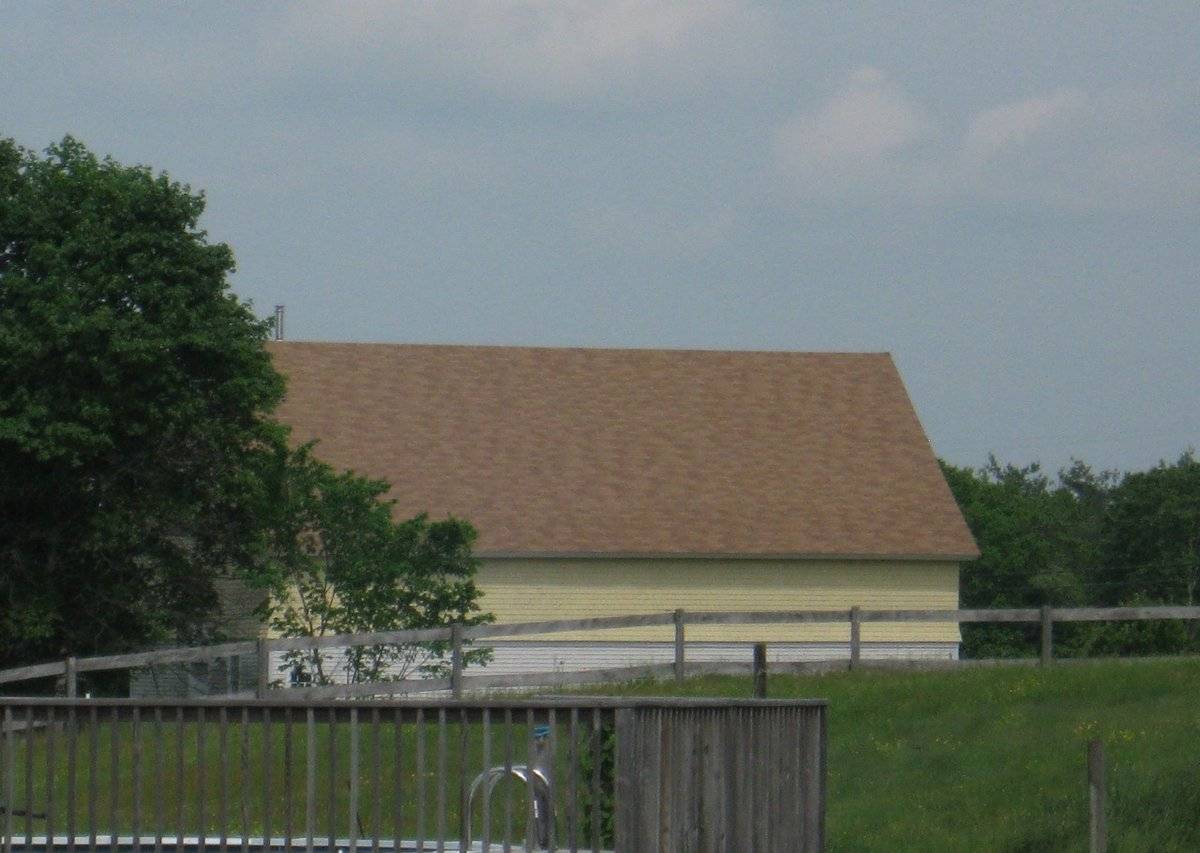
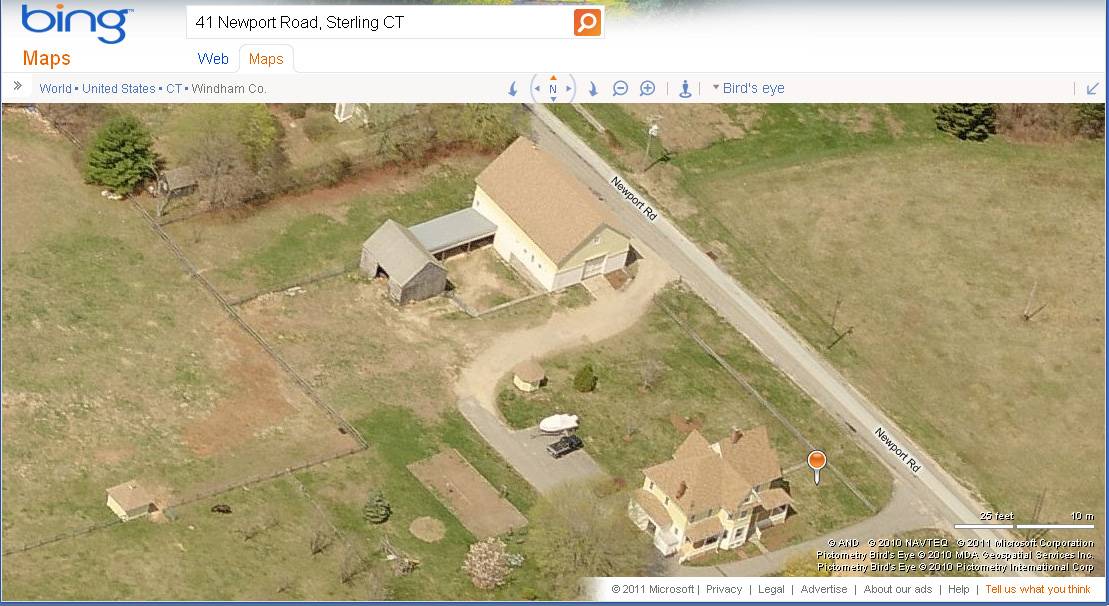
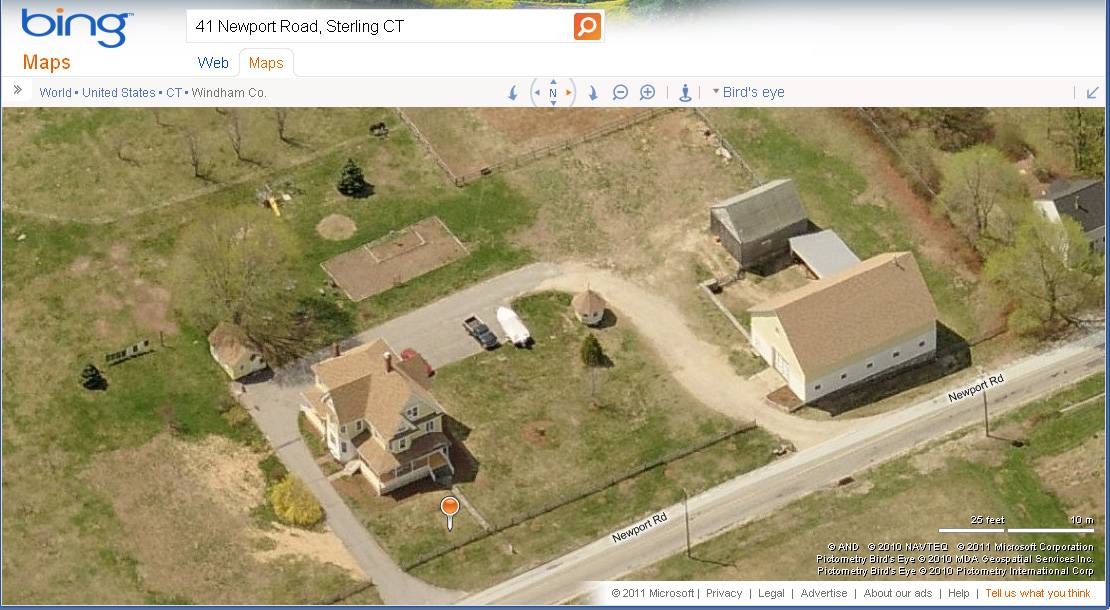
This barn is associated with an elegant 1 ½-story cross-gable-roofed Victorian/Queen Anne mansion which is located further south along the west side of Newport Road and faces east toward the road. The roadside is lined with a stone wall constructed of waste material from the local granite quarries. The house and barn formerly stood alone in open farmland where now the acreage has been subdivided and a number of late 20th-century homes have been built, leaving No. 41 on a 5-acre parcel. The Moosup River runs northward just to the east of the site. Plainfield Pike, the main east-west route, intersects Newport Road just north of this site in the Village of Oneco. Several granite quarries are in the vicinity, dating from the mid-19th century; some are still in use. The building is surrounded by open land which appear to be used as horse pasture. The main barn (Barn I) sits close to the road. To the west is a smaller 16 x 40 foot barn (Barn II) c. 1960; the two are connected by an open shelter and form the west, north, and east sides of a paddock which is completed by fencing along its south side.
- Typology & Materials
-
Building Typology
Materials
Structural System
Roof materials
Roof type
Approximate Dimensions
40 x 60 feet
- Source
-
Date Compiled
06/29/2011
Compiled By
Charlotte Hitchcock, reviewed by CT Trust
Sources
Field notes and photographs by Charlotte Hitchcock 6/03/2011.
Town of Sterling Assessor’s Record and GIS Viewer: http://sterling.ias-clt.com/parcel.list.php?parcel.search%5Bp_parid%5D=&parcel.search%5Bp_alt_id%5D=&parcel.search%5Bo_own1%5D=
Parcel ID: 00IOV-028-0026
Acres: 5.01 House 1879 (29’ x 48’) second barn 1960, is 16 x 40 ftAerial Mapping:
http://maps.google.com
http://www.bing.com/maps accessed 6/03/2011.Sexton, James, PhD, Survey Narrative of the Connecticut Barn, Connecticut Trust for Historic Preservation, Hamden, CT, 2005, http://www.connecticutbarns.org/history.
Visser, Thomas D., Field Guide to New England Barns and Farm Buildings, University Press of New England, 1997.
- PhotosClick on image to view full file
-