Barn Record Winchester
RETURN TO ‘FIND BARNS’- Building Name (Common)
- Solomon Rockwell House (Part 2 of 2)
- Building Name (Historic)
- Solomon Rockwell House horse barn
- Address
- 225 Prospect Street, Winchester
- Typology

- Overview
-
Designations
Historic Significance
Architectural description:
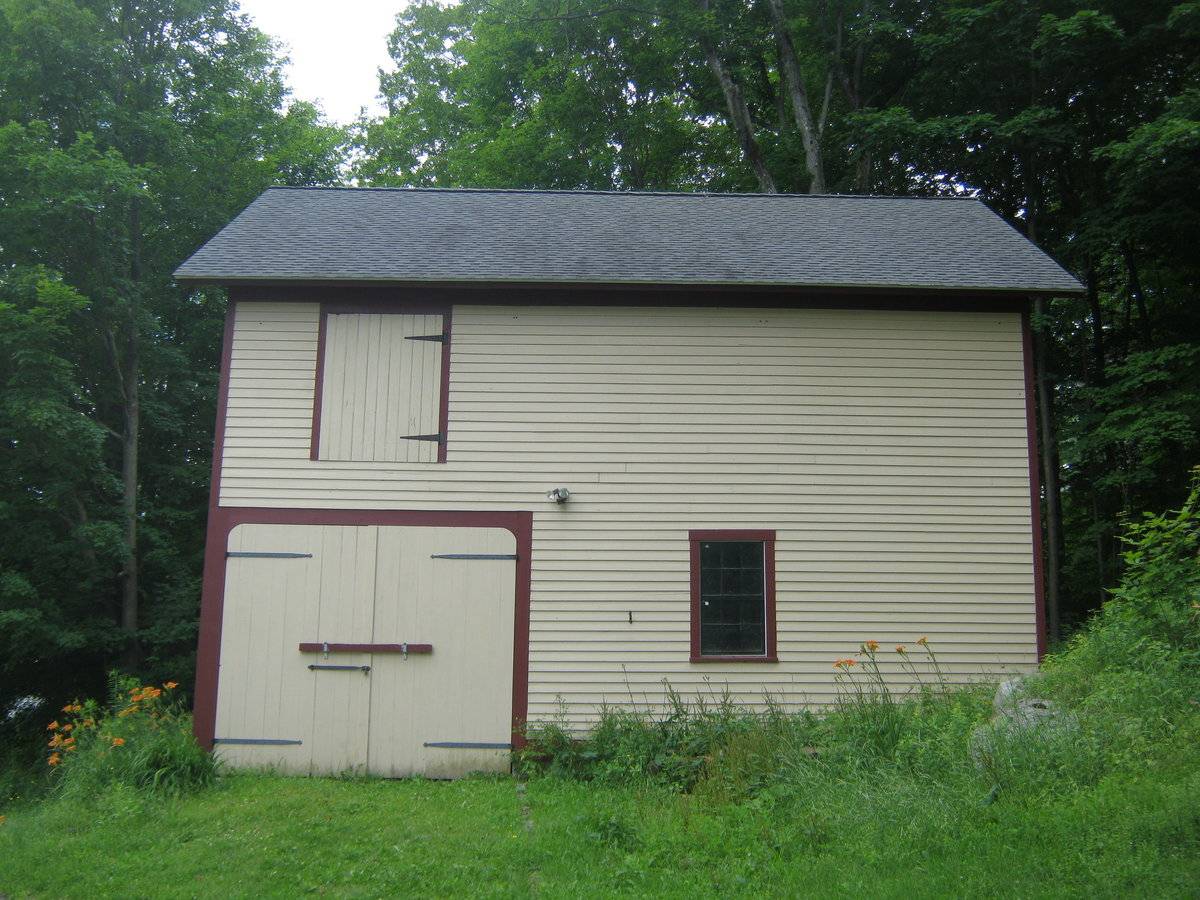
This is a 1 ½-story, eave-entry, gable-roof barn. The main façade faces north and the ridge-line is perpendicular to Prospect Street, which at this point runs approximately north to south.
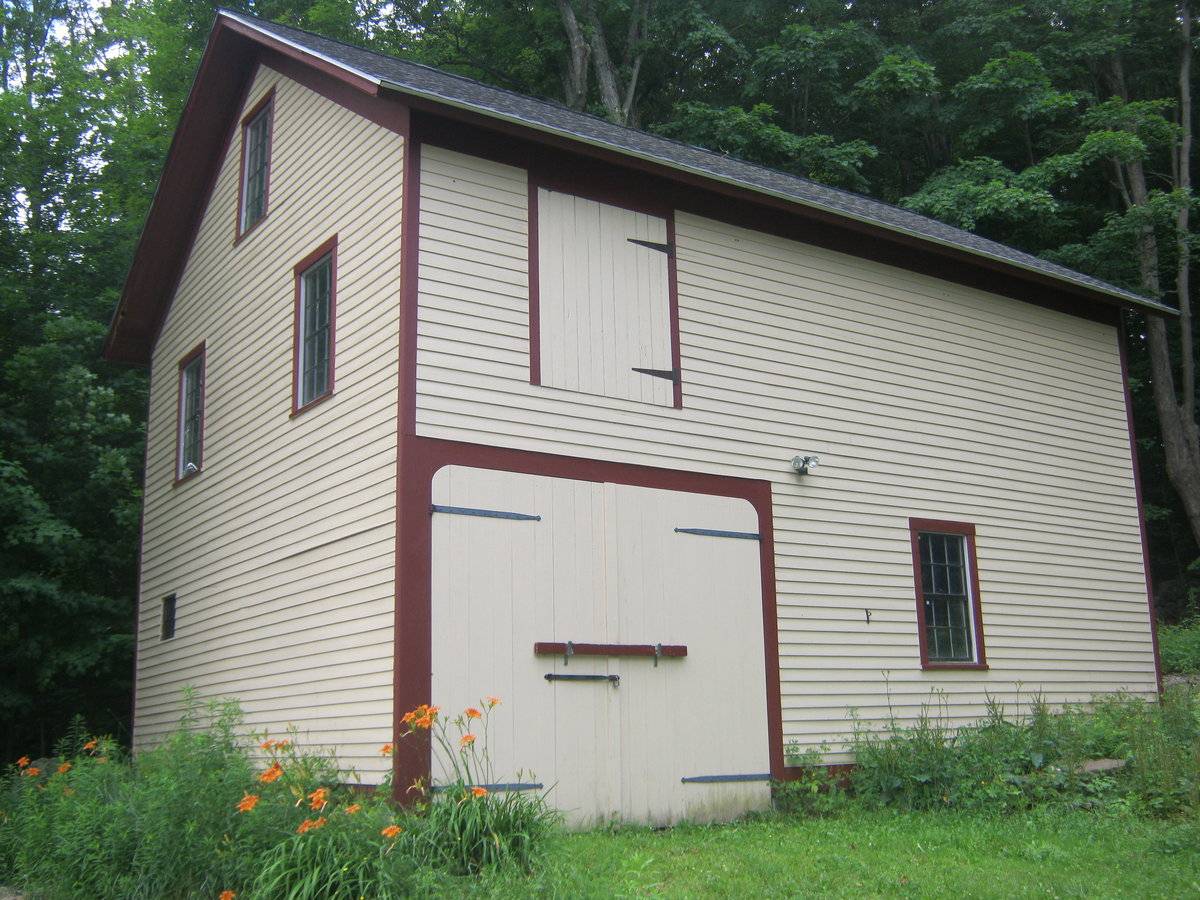
The main entry is located on the east corner of the north eave-façade of the barn and consists of a set of side-hinged doors with trim and original iron strap hinges. The door is made up of vertical boards, and a wooden board is centered, holding the doors closed, while an iron strap keeps the doors locked. To the west is a six-over-six double-hung window with trim. Above the entry, near the east corner, is a side-hinged hay-door with original iron strap hinges, trim, and consists of vertical boards.
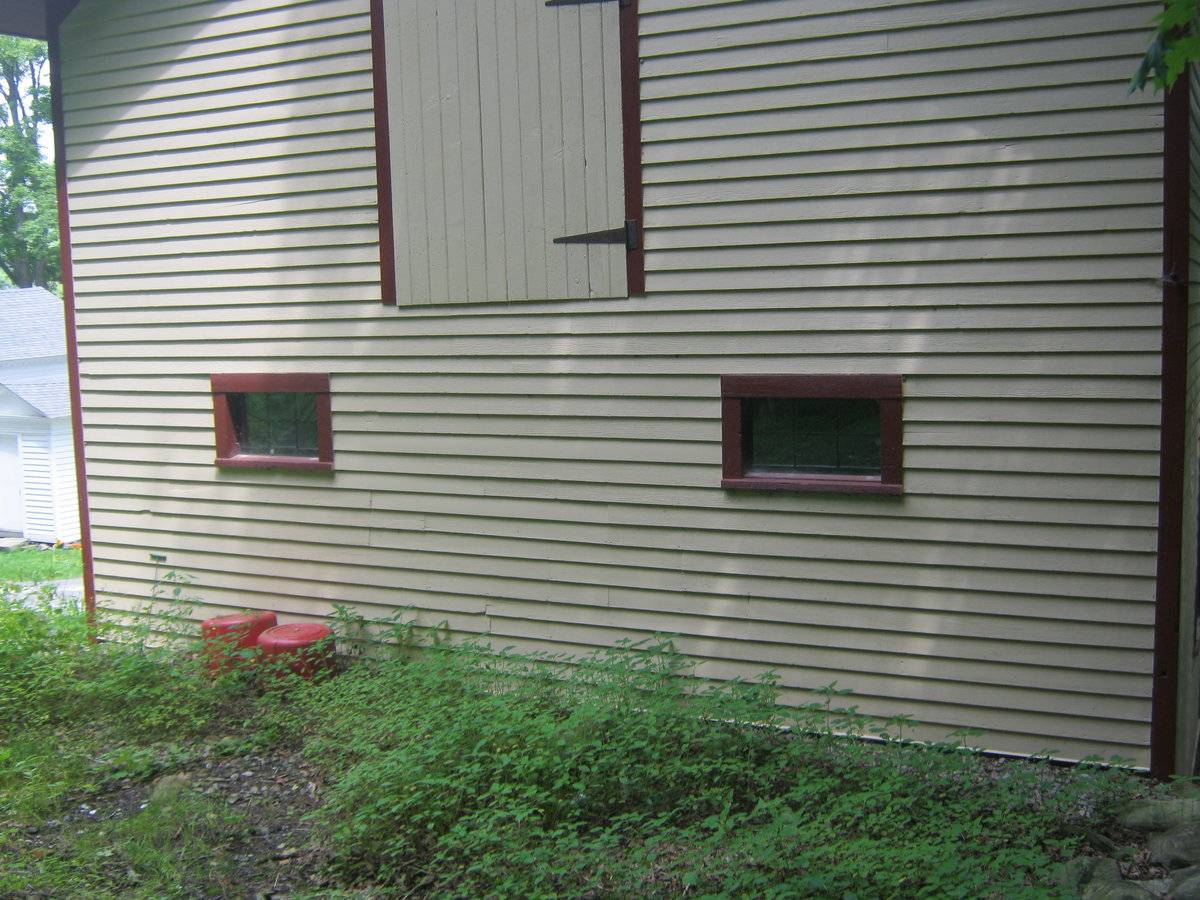
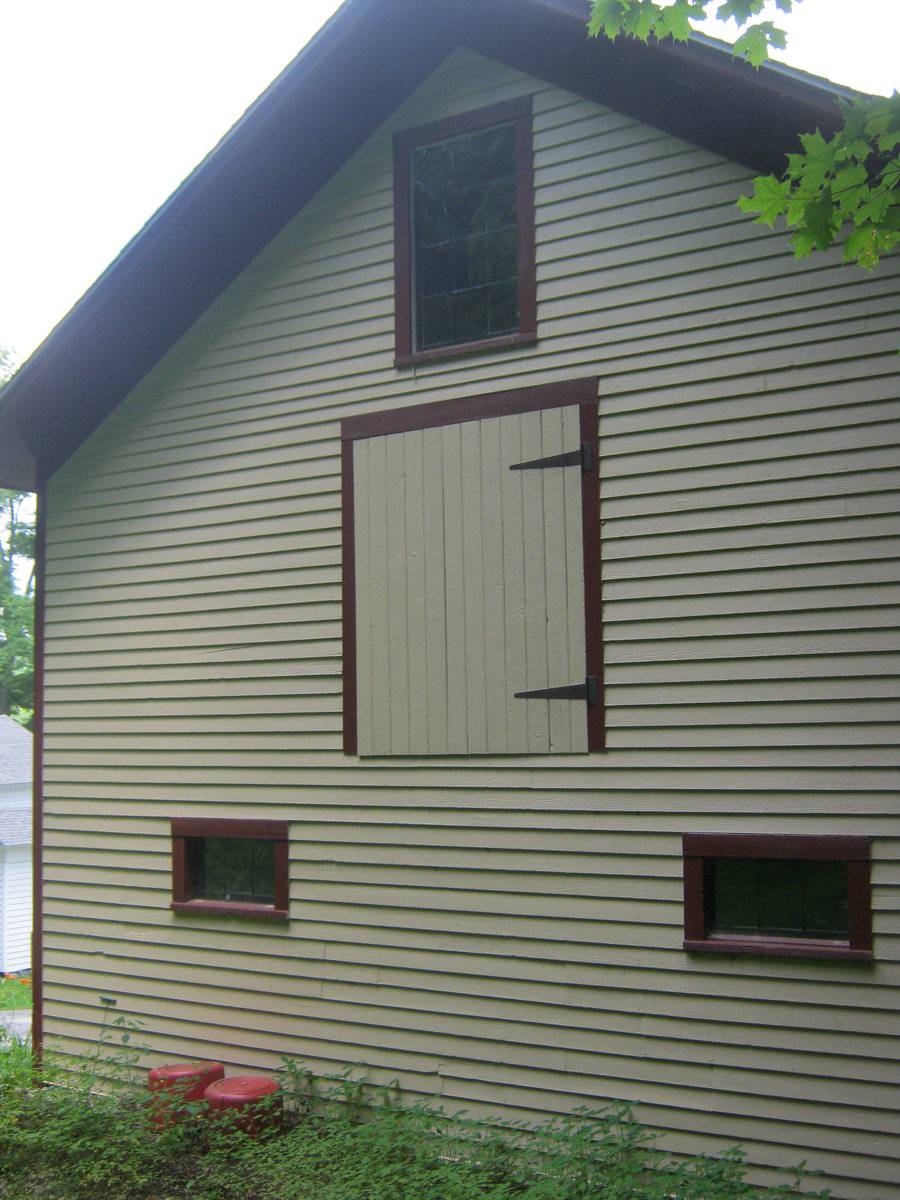
On the east gable-end of the barn is a small six-pane square window near the south corner. Above this are two, six-over-six double-hung windows with trim. Found in the gable-attic of the east gable-end of the barn is a six-over-six double-hung window with trim. There are no other features on this side.
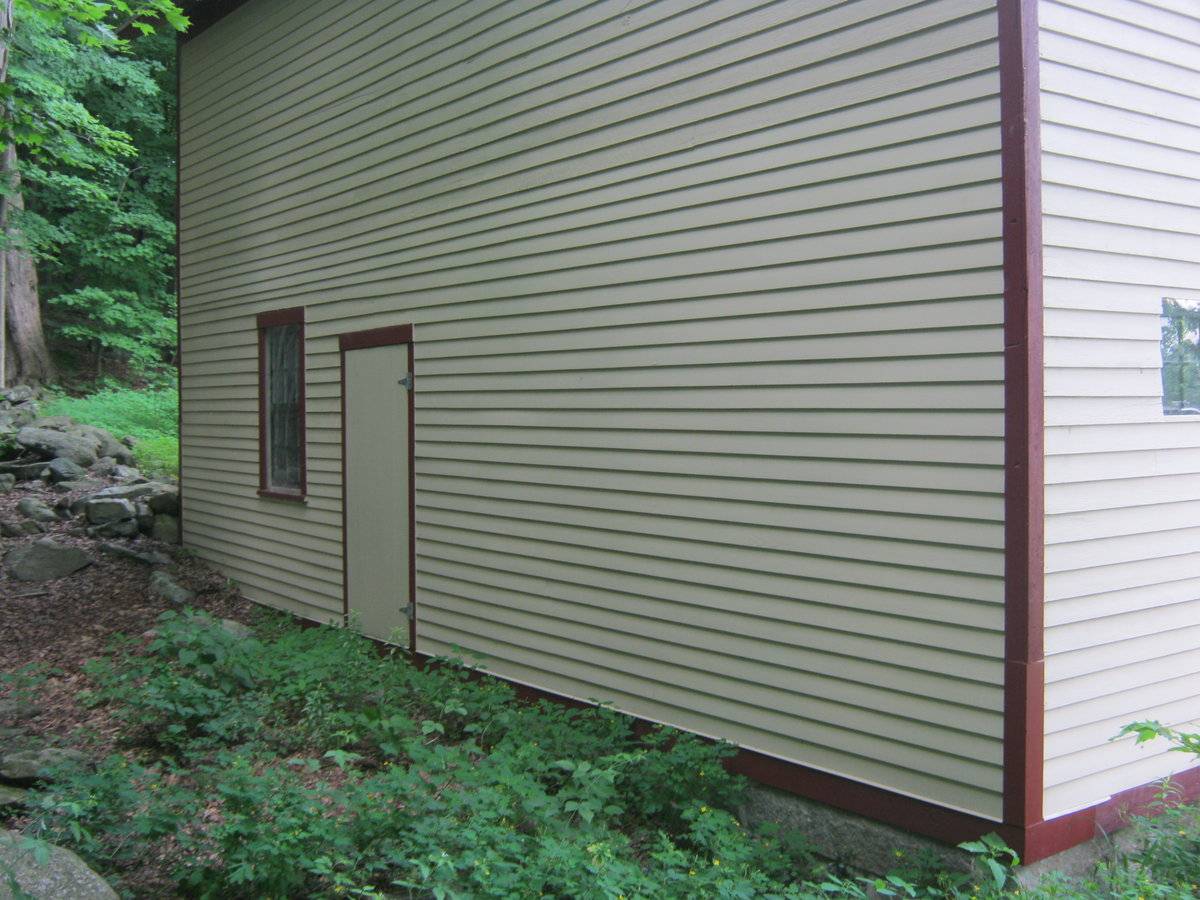
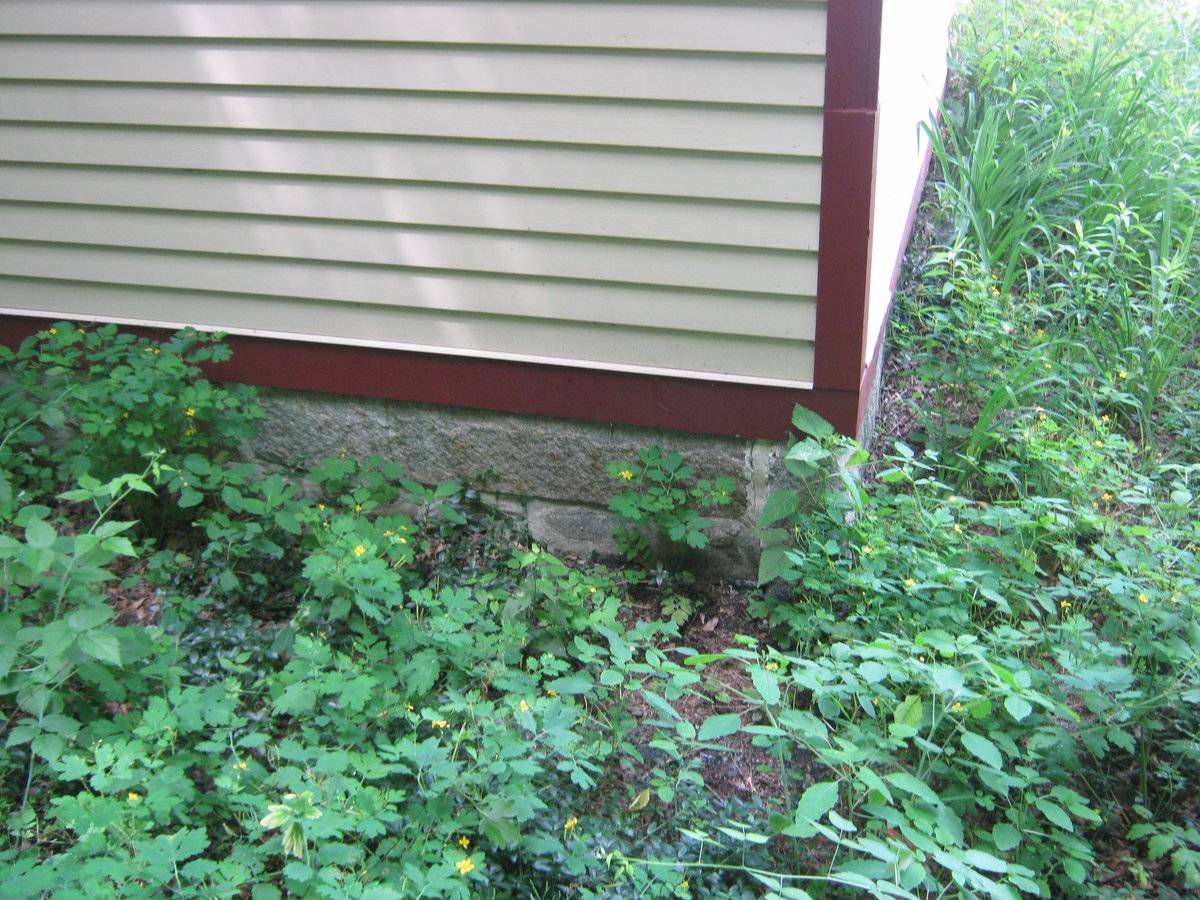
Along the east corner of the south eave-side of the barn, the cut stone foundation is visible. Centered in the south eave-side of the barn is a side-hinged pass-through door with metal hinges. Just to the west is a six-over-six double-hung window with trim.
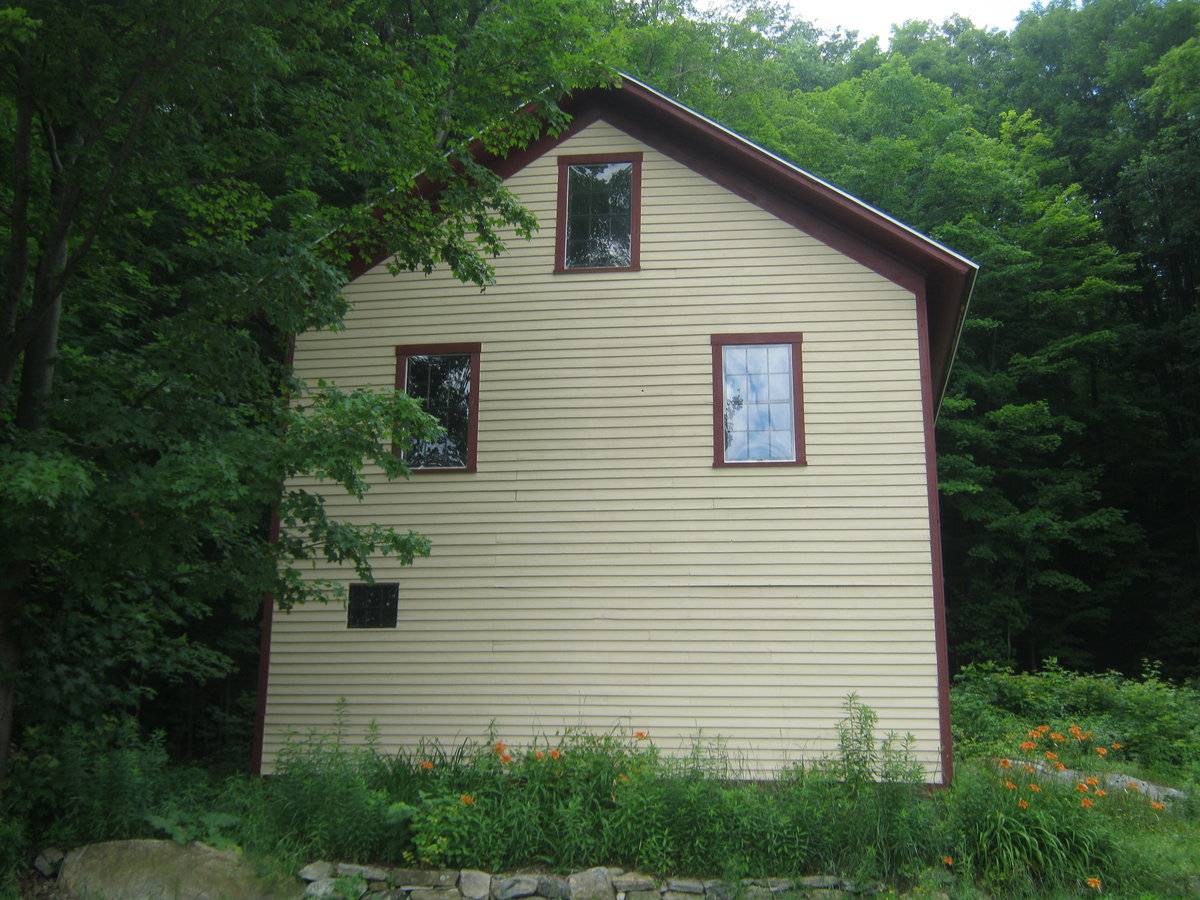
On the west gable-end of the barn are two, six-pane windows with trim, spaced evenly. Centered on this side, just above the windows is a side-hinged hay-door with original iron strap hinges, trim, and consists of vertical boards. Just above the hay-door, in the gable-attic of the west gable-end is a six-over-six double-hung window with trim.
The barn is clad in clapboard siding painted beige with red trim. The roof has
overhanging eaves and is clad in asphalt shingles. The foundation is cut stone.
Historical significance:The oldest barns still found in the state are called the “English Barn,” “side-entry barn,” “eave entry,” or a 30 x 40. They are simple buildings with rectangular plan, pitched gable roof, and a door or doors located on one or both of the eave sides of the building based on the grain warehouses of the English colonists’ homeland. The name “30 by 40” originates from its size (in feet), which was large enough for 1 family and could service about 100 acres. The multi-purpose use of the English barn is reflected by the building’s construction in three distinct bays - one for each use. The middle bay was used for threshing, which is separating the seed from the stalk in wheat and oat by beating the stalks with a flail. The flanking bays would be for animals and hay storage.
Field Notes
Solomon Rockwell House (c.1813), a classical Revival Colonial mansion, displays Victorian fashions, doll house, military collection, extensive collection of Civil War memorabilia, paintings by Erastus Salisbury Field. Fire department museum. 1813 2 1/2 center chimney cut stone foundation connected carriage house has pedimented peak with brackets and semi-elliptic-fanlight. Privy (3 hole) has cornice across gable, also reeded Ionic corner pilasters. House, Wood shed, carriage house. then privy (separate) and Horse Barn.
- Use & Accessibility
Use (Historic)
Use (Present)
Exterior Visible from Public Road?
Yes
Demolished
n/a
Location Integrity
Original Site
- Environment
Related features
Environment features
Relationship to surroundings
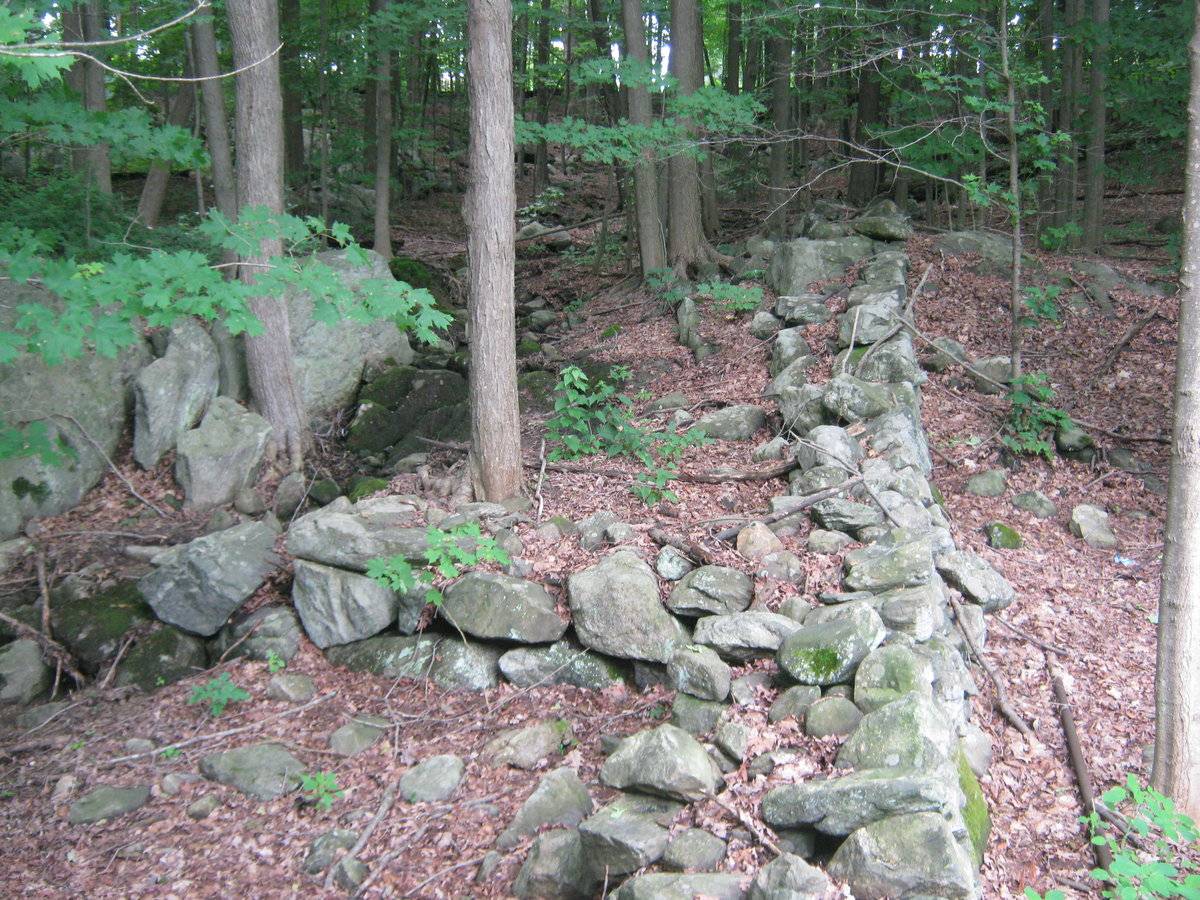
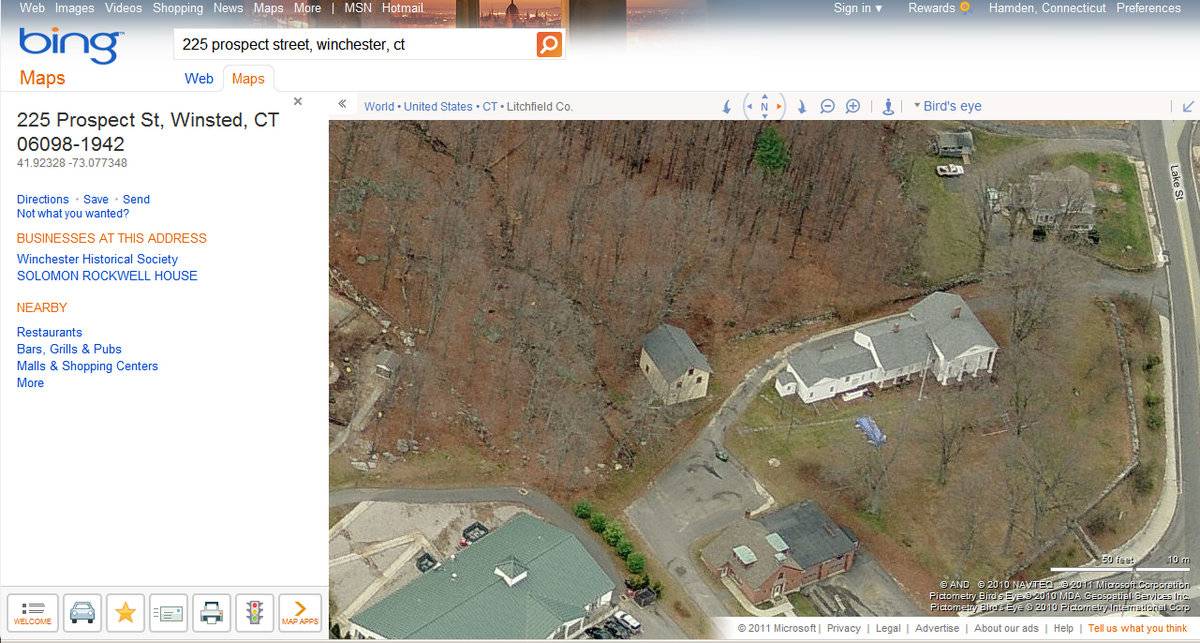
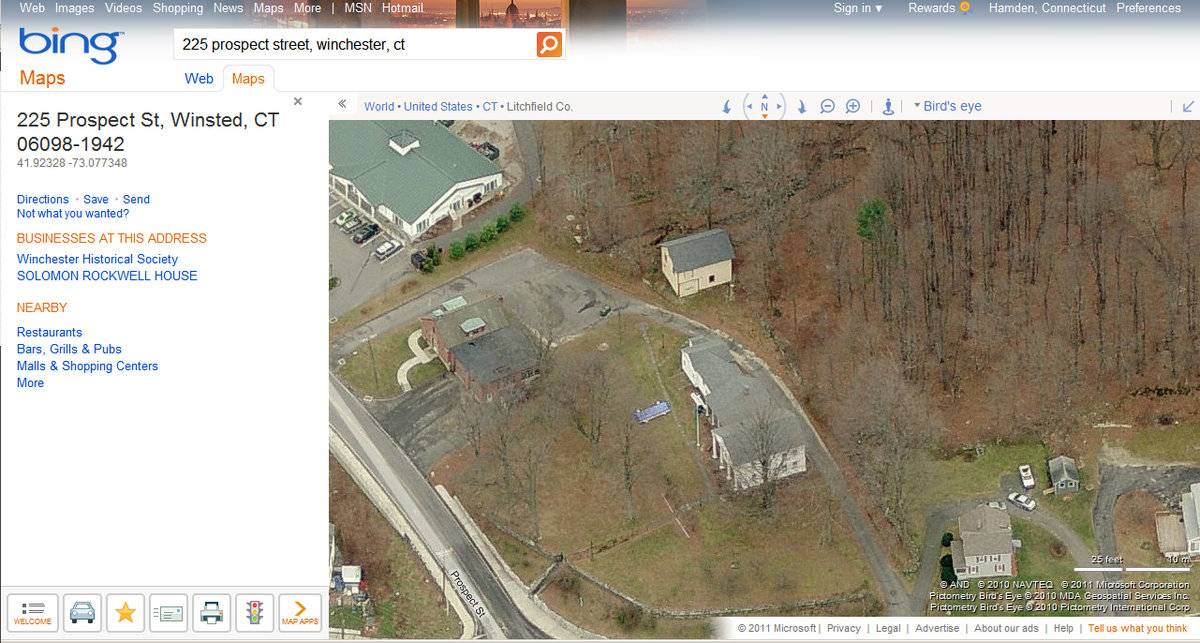
This barn sits on 2.68 acres of land. The main house and attached carriage house are just to the north of this barn. The carriage house and attached main house complex are located on the prominent corner of Prospect Street with Lake Street (CT Route 263). The primary façade of the house, like the carriage house, is the northeast gable-end, facing this corner. A wide front lawn with scattered trees inclines up from the road to the house. The present access to the site is a gravel driveway off nearby Lake Street, which passes along the southwest (rear) side of the house and connected structures, and leads to the barn. Beyond this driveway to the southwest is a small woodland. On all other sides, this site is surrounded by dense development, with industrial complexes across the street to the northwest and northeast, and commercial sites to the east and southeast. A small creek flows beyond some of these sites to the east. Immediately beyond the creek is Main Street, (US Route 44/CT Route 183). This site is on the west side of the center of Winsted.
Map/Block/Lot: 110/090/007
- Typology & Materials
-
Building Typology
Materials
Structural System
n/a
Roof materials
Roof type
Approximate Dimensions
768 square feet.
- Source
-
Date Compiled
06/30/2011
Compiled By
K. Young & T. Levine, reviewed by CT Trust
Sources
Rockwell, Solomon, House [Image]
URL: http://pdfhost.focus.nps.gov/docs/NRHP/Text/77001500.pdf
Link will open in a new browser window
URL: http://pdfhost.focus.nps.gov/docs/NRHP/Photos/77001500.pdf
Link will open in a new browser window
Publisher: National Park Service
Published: 07/15/1977
Access: Public access
Restrictions: All Rights Reserved
Format/Size: Physical document with text, photos and map
Language: eng: English
Note: 226 Prospect St.
Item No.: 77001500 NRIS (National Register Information System)
Subject: ARCHITECTURE/ENGINEERING
Subject: ARCHITECTURE
Subject: FEDERAL
Subject: BUILDING
Subject: 1800-1824
Keywords: Swift,William;1813
Place: CONNECTICUT—Litchfield County—WinstedRecord Number: 373640
Record Owner: National Register of Historic PlacesField notes and photographs by Todd Levine - 6/29/2011.
Aerial Mapping: Winchester Maps
http://www.bing.com/maps - accessed 6/30/2011.Town of Winchester Assessor’s Records:
http://www.visionappraisal.com/databases/ct/index.htm - accessed 6/30/2011.Sexton, James, PhD, Survey Narrative of the Connecticut Barn, Connecticut Trust for Historic Preservation, Hamden, CT, 2005, http://www.connecticutbarns.org/history.
Visser, Thomas D., Field Guide to New England Barns and Farm Buildings, University Press of New England, 1997.
- PhotosClick on image to view full file
-