Barn Record Waterbury
RETURN TO ‘FIND BARNS’- Building Name (Common)
- n/a
- Building Name (Historic)
- n/a
- Address
- 27 Holmes Avenue, Waterbury
- Typology

- Overview
-
Designations
Historic Significance
Architectural description:
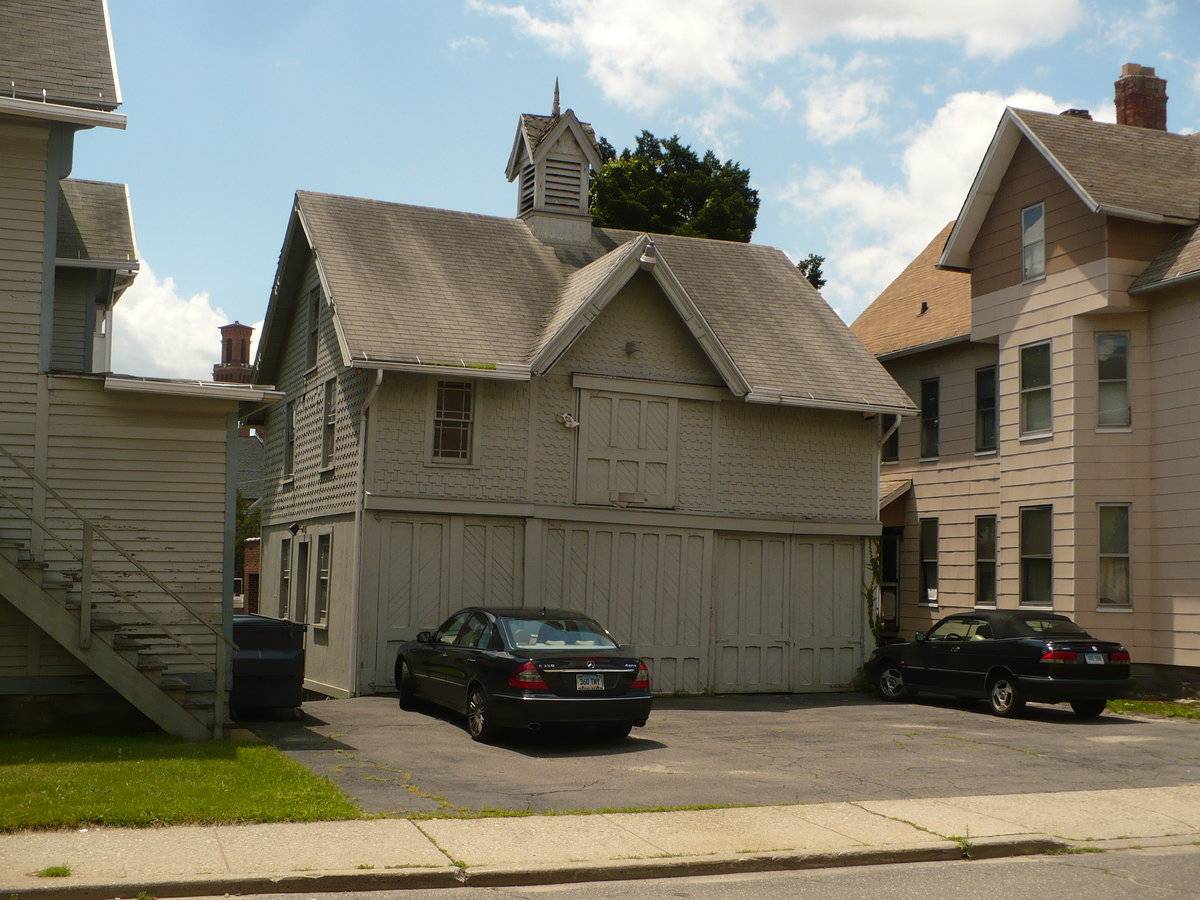
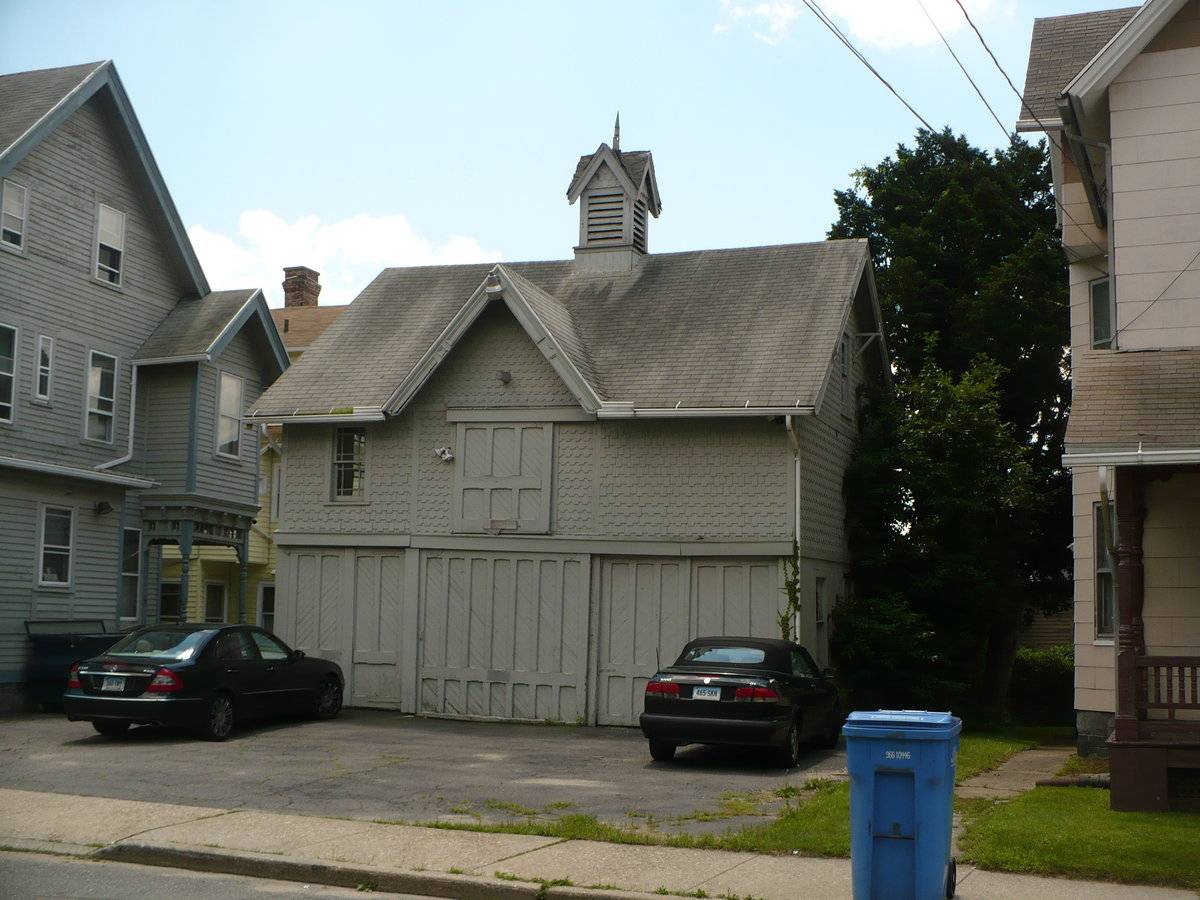
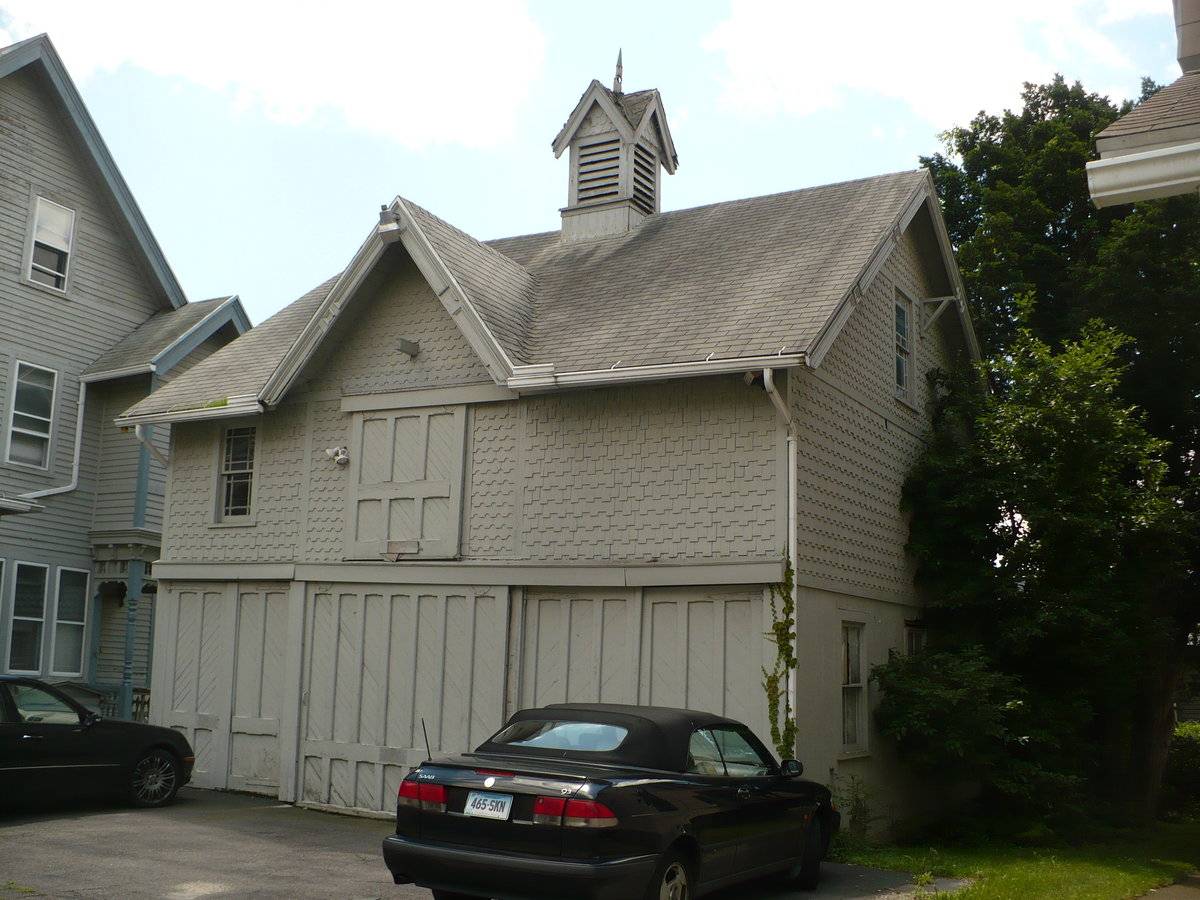
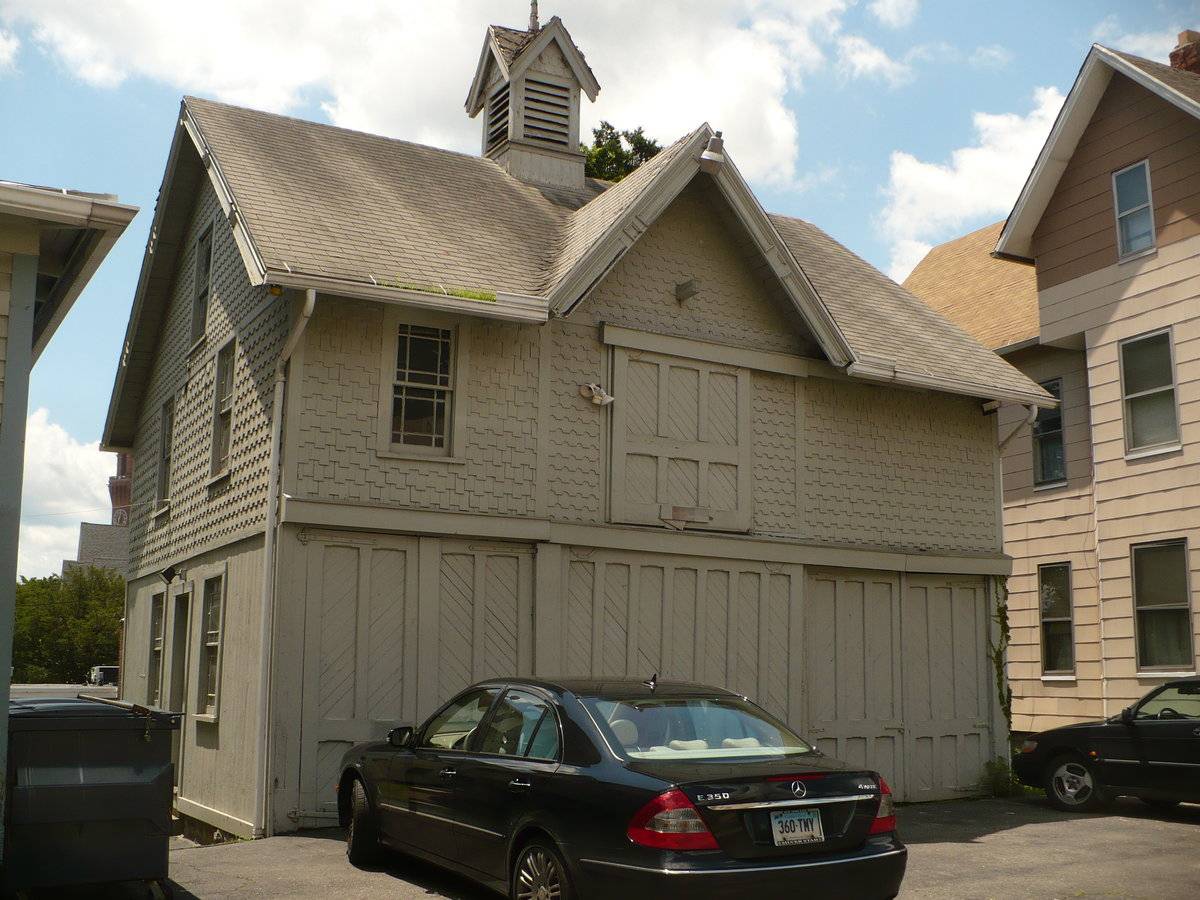
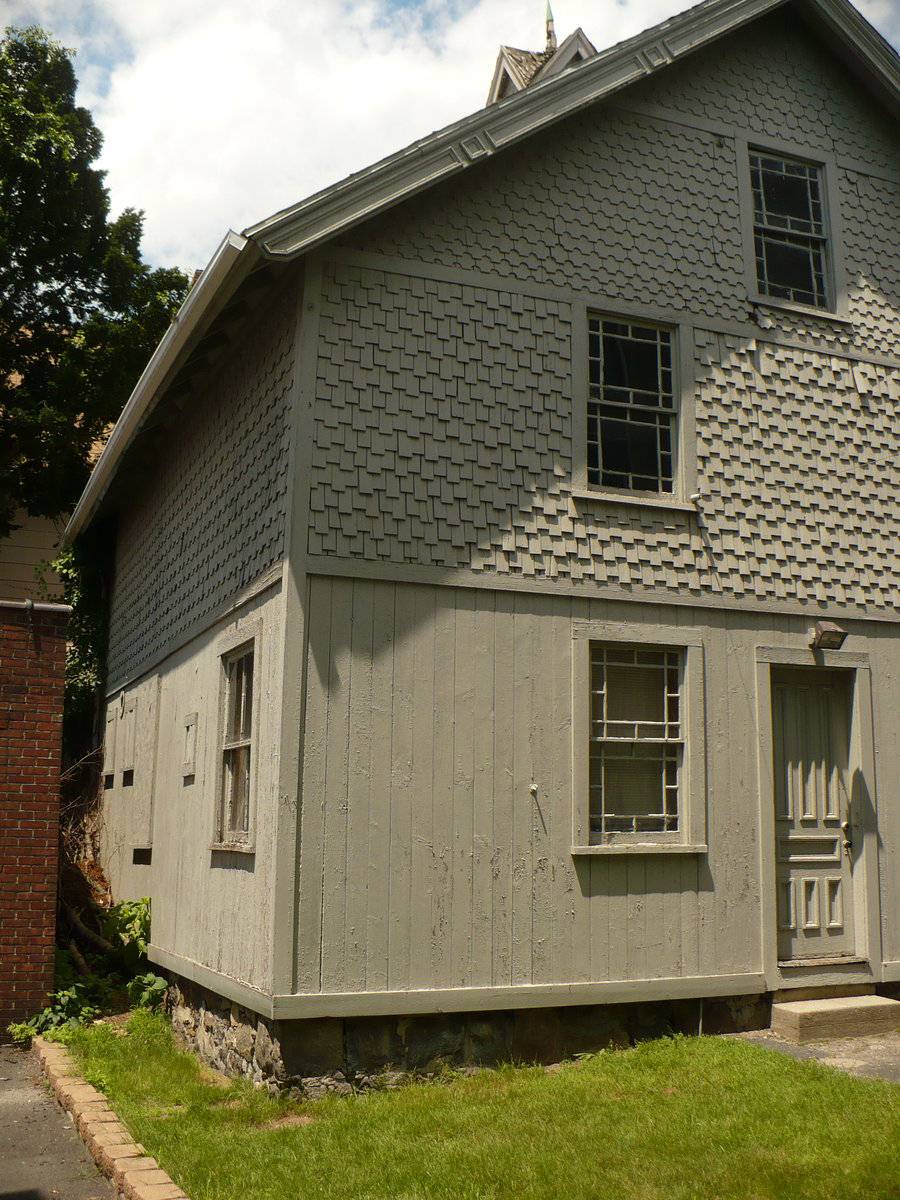
This is a 1 ½-story, eave-entry, gable-roof carriage barn with a gable wall-dormer. The main façade faces north and the ridge-line runs perpendicular to Holmes Avenue, which at this point runs approximately north to south.
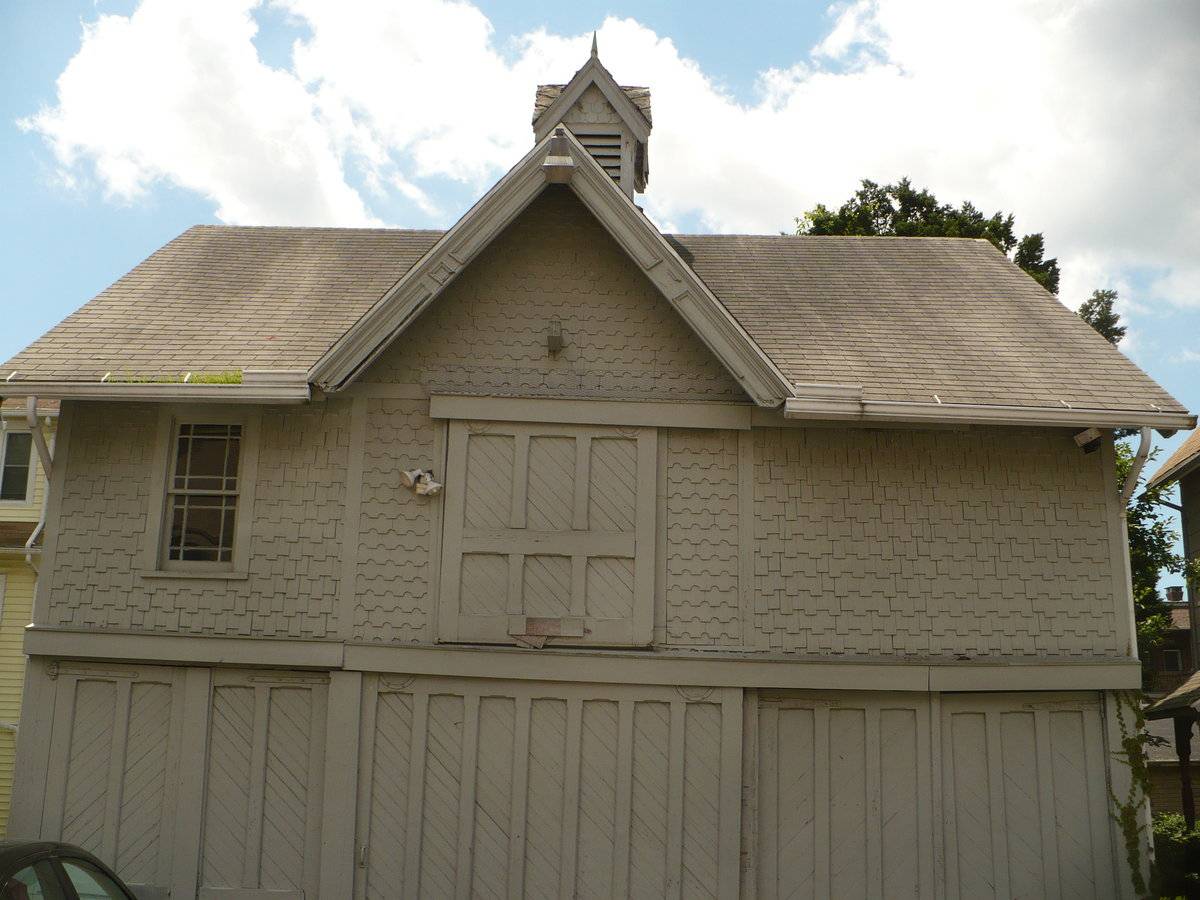
The main entries are on the north eave-façade of the barn and consist of a centered exterior-hung, paneled sliding door, flanked on either side by a pair of side-hinged paneled doors with original iron hinges. Centered above the sliding door on the north eave-façade of the barn, just below the gable wall-dormer is an exterior-hung, paneled sliding hay-door. Near the east corner is a six-over-six double-hung window with trim. In the gable-peak of the gable wall-dormer on the north eave-façade is a hay-rack.
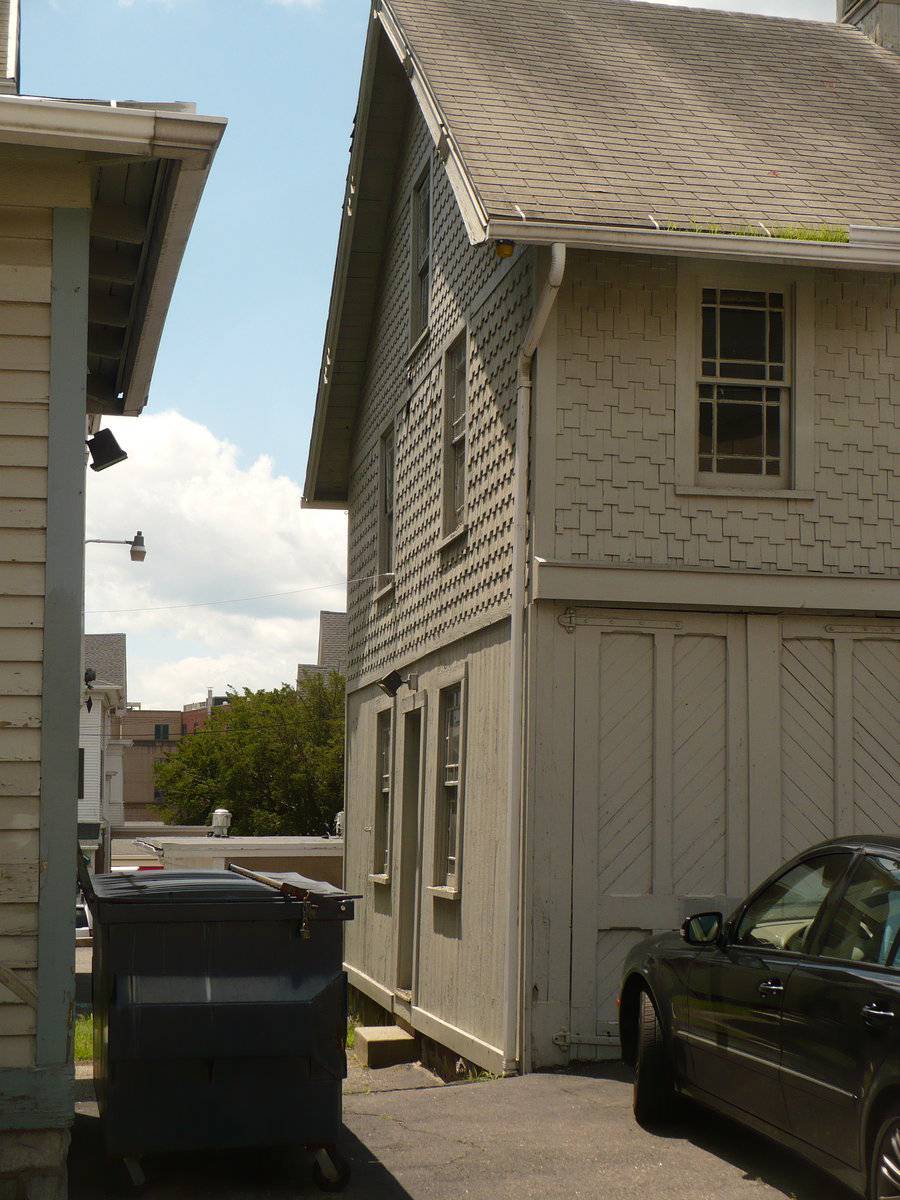
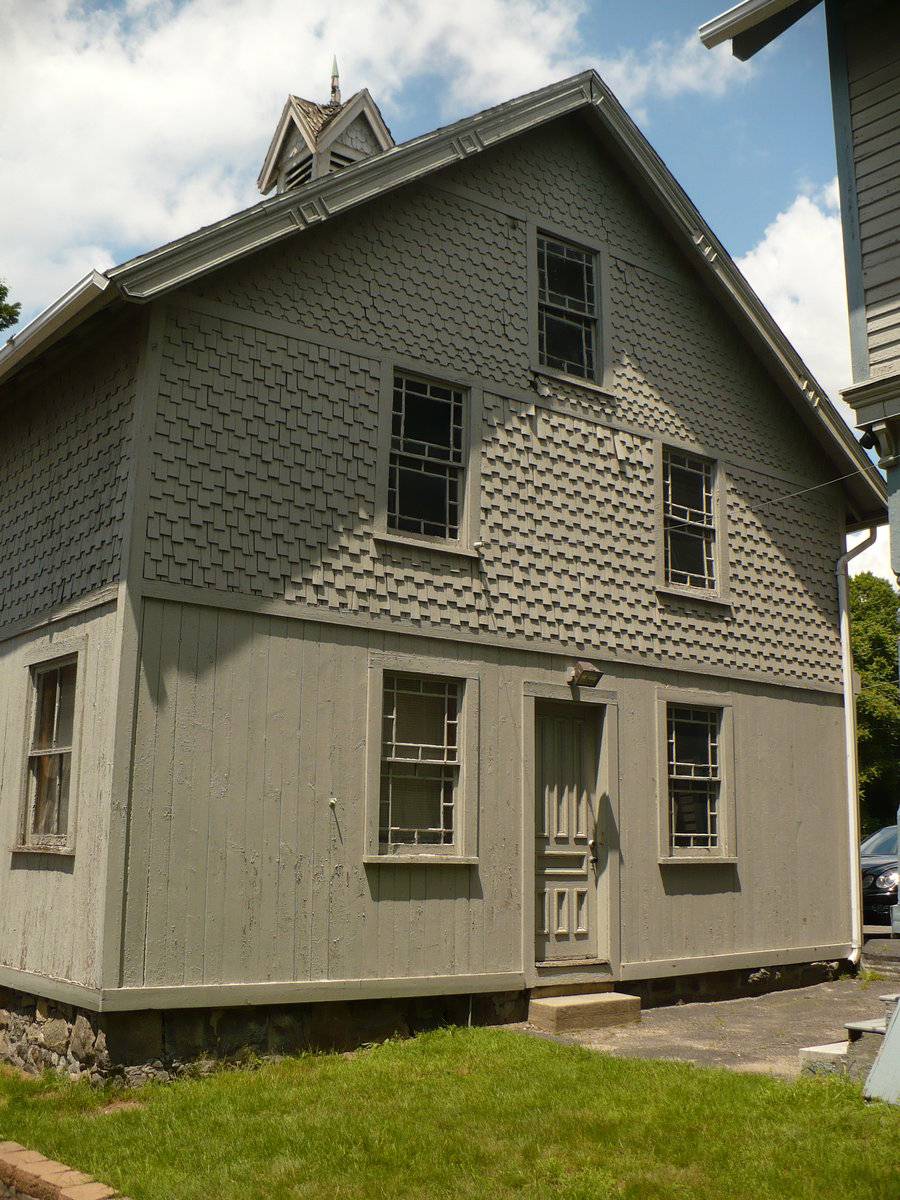
The grade drops slightly along the east gable-end of the barn, revealing a mortared cut stone foundation. Centered on this side is a paneled pass-through door, reached by a concrete step. Flanking either side of this is a Queen Anne sash with a large center pane surrounded by small panes, with trim. Just above each window is another Queen Anne sash with a large center pane surrounded by small panes, with trim. Found in the gable-attic of the east gable-end of the barn is a Queen Anne sash with a large center pane surrounded by small panes, with trim.
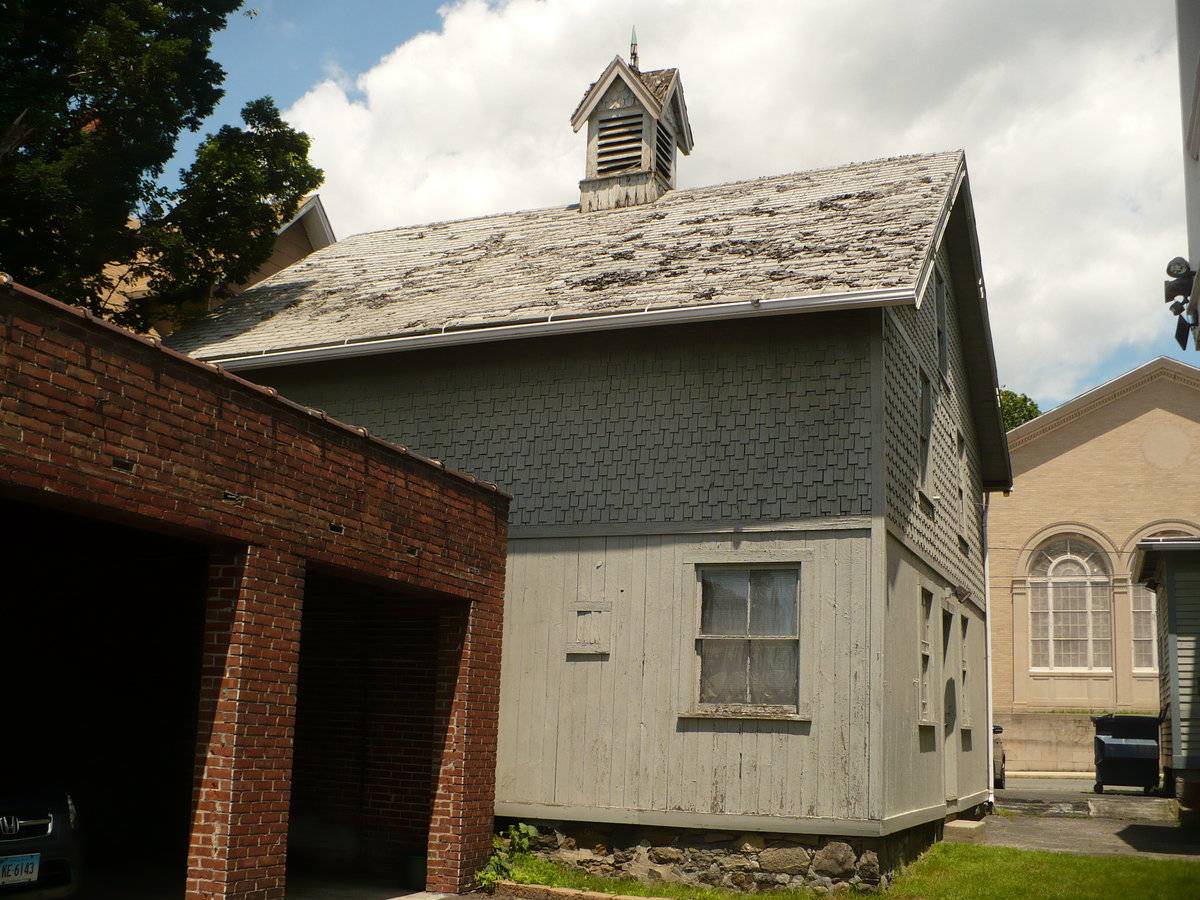
A mortared fieldstone foundation is visible along the south eave-side of the barn. A two-over-two double-hung window with trim is found near the east corner of the south eave-side of the barn. A small window opening, now boarded is found just to the west of this. A large window opening, now boarded, a medium sized window opening, now boarded, a round window opening, and another medium sized window opening, now boarded are all near the west corner of the south eave-side of the barn.
Two, two-over-two double-hung windows with trim appear to be spaced evenly on the west gable-end of the barn. In the gable-attic is a Queen Anne sash with a large center pane surrounded by small panes, with trim. A bracket is protruding from the wall, directly to the south of the window. There appear to be no other openings or features on this side.
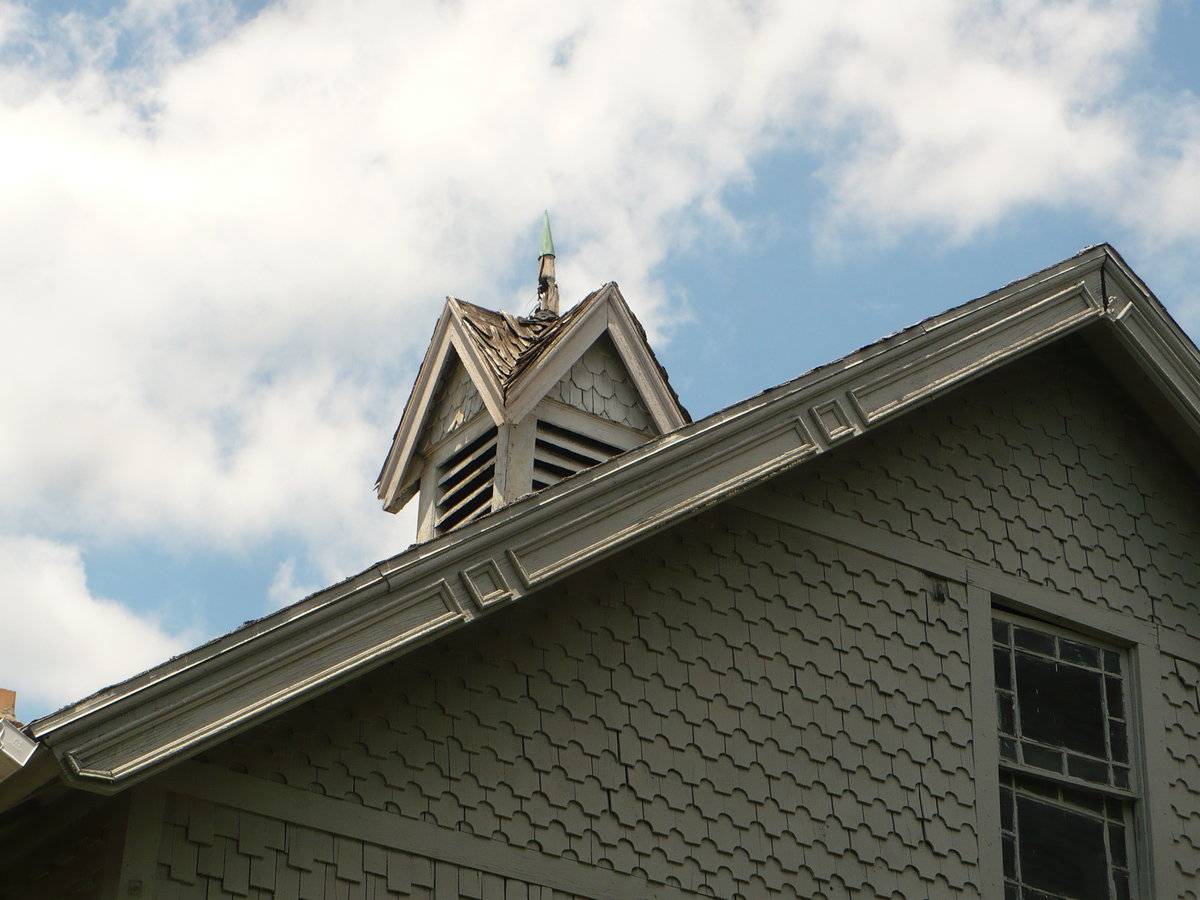
The eaves of the gable-peaks are designed with a decorative cornice panel motif. The north eave-façade, east gable-end and west gable-end have decorative wood shingles in the staggered pattern on the top half of the walls. The gable-peaks all have decorative wood shingles in the cove pattern. The bottom half of the east gable-end, west gable-end and the south eave-side of the barn have vertical flush-board siding. All the siding is painted grey. The roof has overhanging eaves and is clad in asphalt shingles. A cross-gable roofed cupola is centered atop the ridge-line. It has decorative wood-shingles in the fish scale pattern in the gable peaks and a louvered vent on all sides. The foundation is constructed of fieldstone and mortared cut stone.
Historical significance:Until the 1830s, the horses used for riding and driving carriages were often kept in the main barn along with the other farm animals. By the 1850s, some New England farmers built separate horse stables and carriage houses. Early carriage houses were built just to shelter a carriage and perhaps a sleigh, but no horses. The pre-cursor to the twentieth-century garage, these outbuildings are distinguished by their large hinged doors, few windows, and proximity to the dooryard.
The combined horse stable and carriage house continued to be a common farm building through the second half of the nineteenth century and the first decade of the twentieth century, until automobiles became common. Elaborate carriage houses were also associated with gentlemen farms and country estates of the late 19th and early 20th centuries. Another form of carriage barn, the urban livery stable, served the needs of tradespeople.
Historical background:“Although Waterbury was settled in 1667, the Hillside area remained relatively undeveloped land until the early 19th century, coming into its own as the city’s premier residential community c1860. The residential development of the Hillside area paralleled the commercial development of the city, and the neighborhood traditionally housed a wide range of Waterbury’s prosperous economic and social classes. The landscape of the upper regions of the Hillside district provided the area’s most prosperous residents with impressive parcels on which to build imposing homes, while the area’s proximity to the industrial area also made it convenient and desirable location for Waterbury’s growing working population to settle.”
“The migration of Waterbury’s wealthy above Rose Hill, an estate at the foot of the hill, was begun by D. F. Maltby, founder of Maltby and Morton Button Makers, who laid out tree-lined Hillside Avenue across the length of the hill in 1845 and built a house (demolished), located at the corner of Hillside Avenue and Prospect Street. With this construction, the uphill settlement of Hillside was established and the area’s demographics slowly changed to include a wider range of residents. Rose Hill (1852), on lower Prospect, was alternately the home of members of the three most prominent manufacturing families in Waterbury, the Scovills, the Weltons, and the Chases. Infill properties were first occupied by lesser executives of the brass industry. Subsequently, lower Hillside’s population included employees of the city’s many new businesses spawned by the brass industry; bankers and real estate developers were typical residents and included A.F. Abbot, Secretary of the City Savings Bank and Building Association, and real estate entrepreneur C.C. Horn. The upper section of the Hillside district, however, was still dominated by industrialist families, including the Haydens, the Maltbys, and the Weltons, who had located along Prospect and Grove Street. The (1879) Queen Anne-style mansion of brass industrialist Charles Benedict, president of Benedict and Burnham, situated on Hillside Avenue at the top of First Avenue, set the tone for many imposing residences built thereafter, and established Hillside Avenue’s role as a distinct boundary between the mansions and simpler houses of the neighborhood to the south.”
-Steven Bedford and Nora Lucas, National Register Hillside Historic District Nomination.
Field Notes
The house on the property is now a Law Office.
- Use & Accessibility
Use (Historic)
Use (Present)
Exterior Visible from Public Road?
Yes
Demolished
n/a
Location Integrity
Unknown
- Environment
Related features
n/a
Environment features
Relationship to surroundings
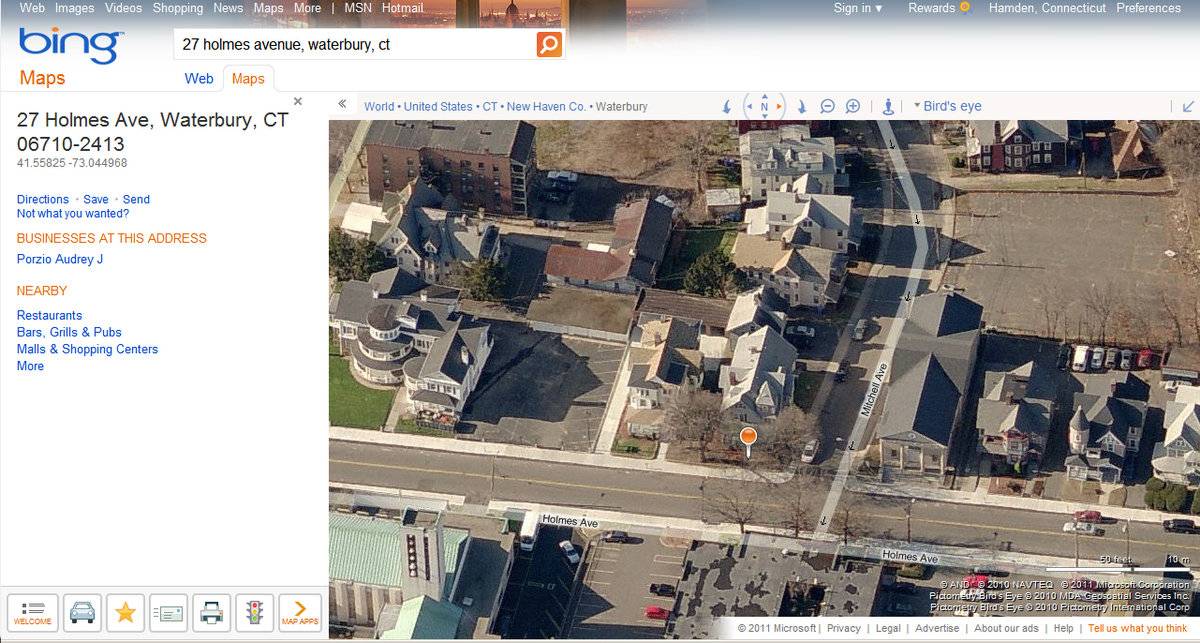
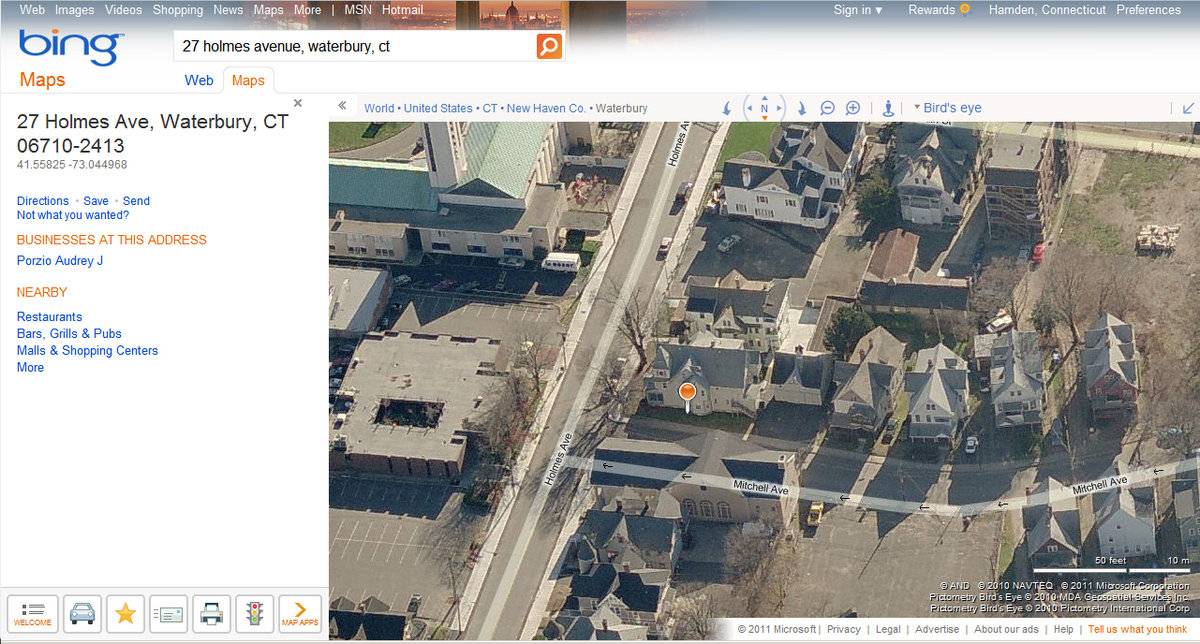
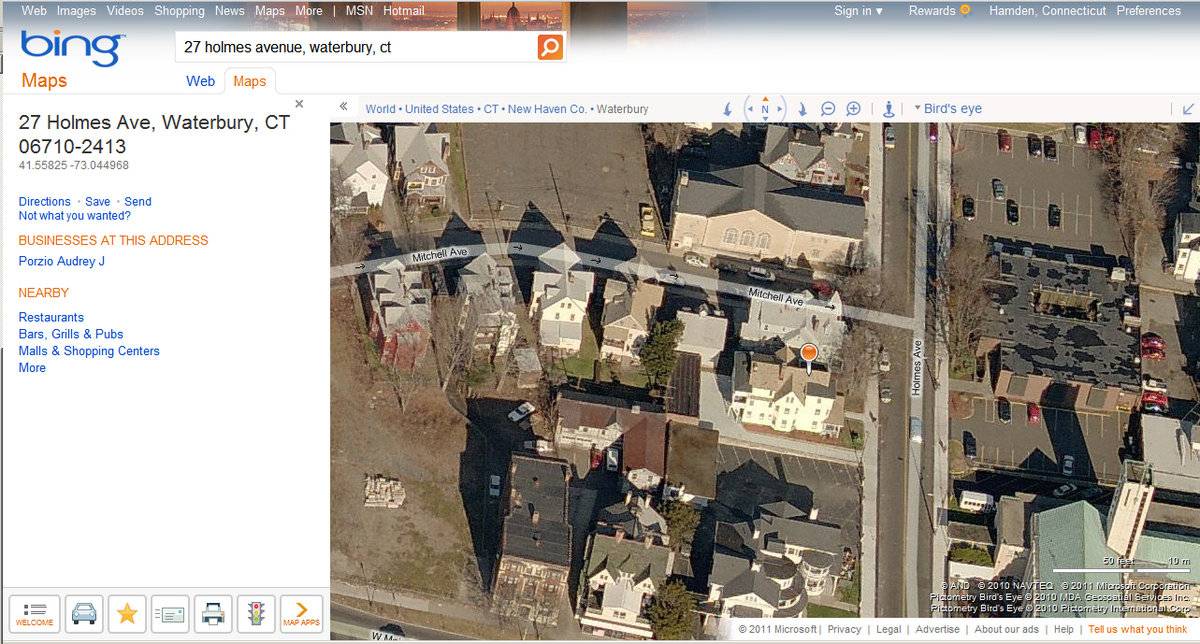
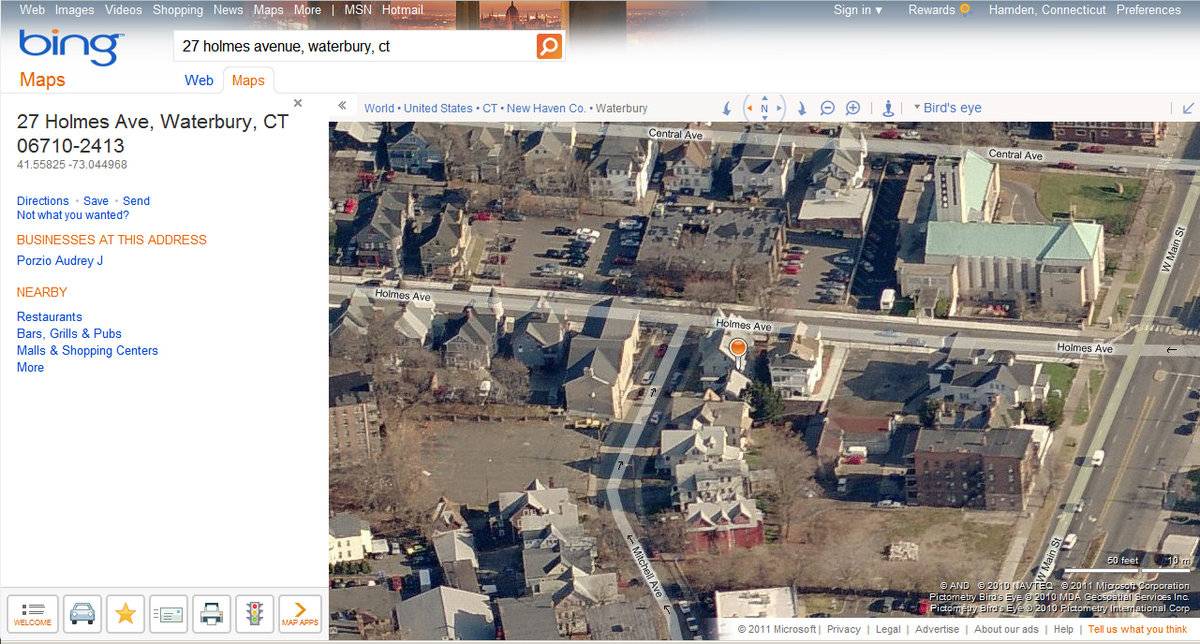
This barn sits on 0.16 acres of land and the property is at the intersection of Holmes Avenue and Mitchell Avenue. The driveway extends to the south off Mitchell Avenue and leads to the barn. The Queen Anne style house sits close to the street, directly to the east of the barn and the main façade faces east, with the ridge-line running perpendicular to Holmes Avenue. To the north of the property is Hayden Park, and to the northeast is Fulton Park. Center Square is to the east of the property, and Waterbury Green is to the southeast. Library Park is to the south and an industrial complex. Stepping Stones School, Immaculate Conception Church, Mattatuck Museum Arts and History Center and Council of Governments is slightly to the southeast of the property. To the west of the property, past James H Darcey Memorial Highway, is Waterbury Hospital and Naugatuck Valley Surgical Center. This property is surrounded by dense residential and commercial areas, which was once largely an industrial section of Connecticut.
Map/Block/Lot: 0253-0023-0115
- Typology & Materials
-
Building Typology
Materials
Structural System
n/a
Roof materials
Roof type
Approximate Dimensions
30 x 30
- Source
-
Date Compiled
06/30/2011
Compiled By
K. Young & T. Levine, reviewed by CT Trust
Sources
Field notes and photographs by Kristen Young - 6/29/2011.
Aerial Mapping: Waterbury Maps
http://www.bing.com/maps - accessed 6/29/2011.Town of Waterbury GIS Maps and Assessor’s Records: accessed 6/30/2011.
http://gis.waterburyct.org/waterbury-GIS-2010/Default.aspx
http://www.equalitycama.com/Towns/Towns.htmBedford, Steven & Lucas, Nora, National Register Hillside Historic District Nomination No. 87001384, National Park Services, 1987.
http://pdfhost.focus.nps.gov/docs/NRHP/Text/87001384.pdf
http://pdfhost.focus.nps.gov/docs/NRHP/Photos/87001384.pdfSexton, James, PhD, Survey Narrative of the Connecticut Barn, Connecticut Trust for Historic Preservation, Hamden, CT, 2005, http://www.connecticutbarns.org/history.
Visser, Thomas D., Field Guide to New England Barns and Farm Buildings, University Press of New England, 1997.
- PhotosClick on image to view full file
-