Barn Record Norfolk
RETURN TO ‘FIND BARNS’- Building Name (Common)
- Shepard-Cobb Barn
- Building Name (Historic)
- Shepard-Cobb Barn
- Address
- 51 Maple Avenue, Norfolk
- Typology
- Overview
-
Designations
n/a
Historic Significance
Architectural description:
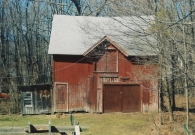
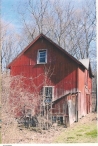
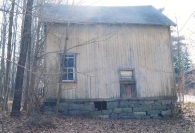
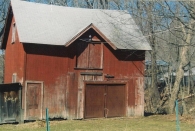
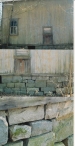
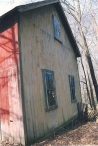
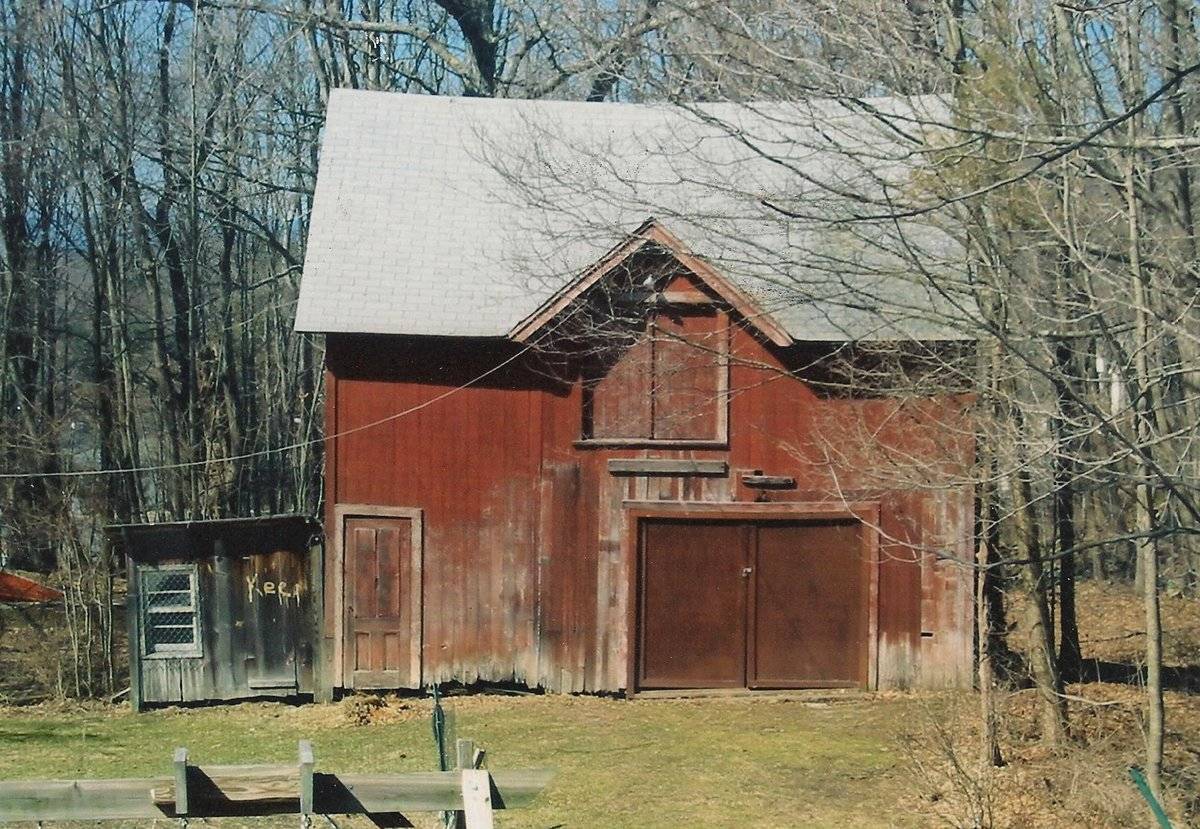
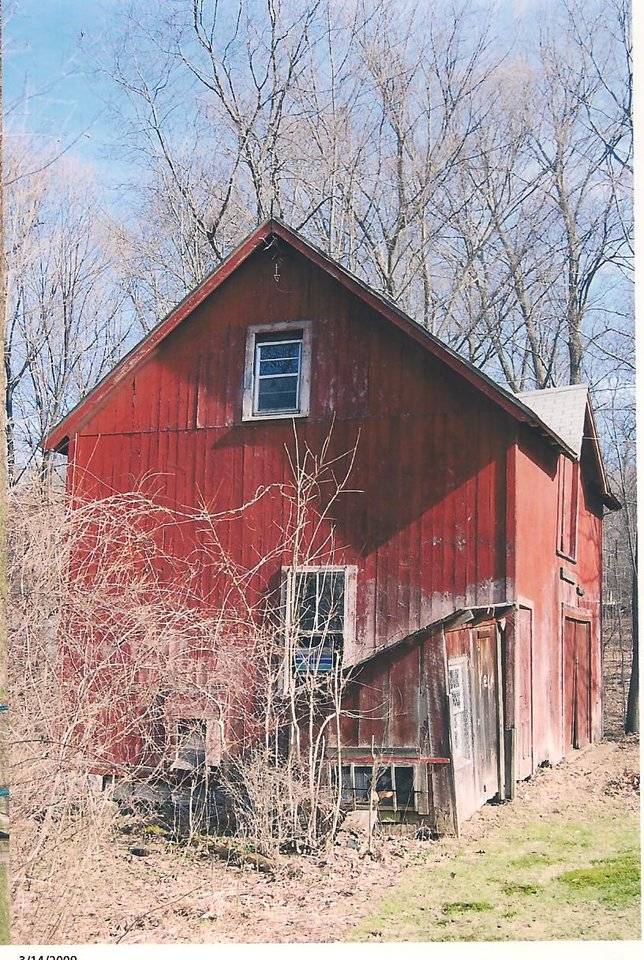
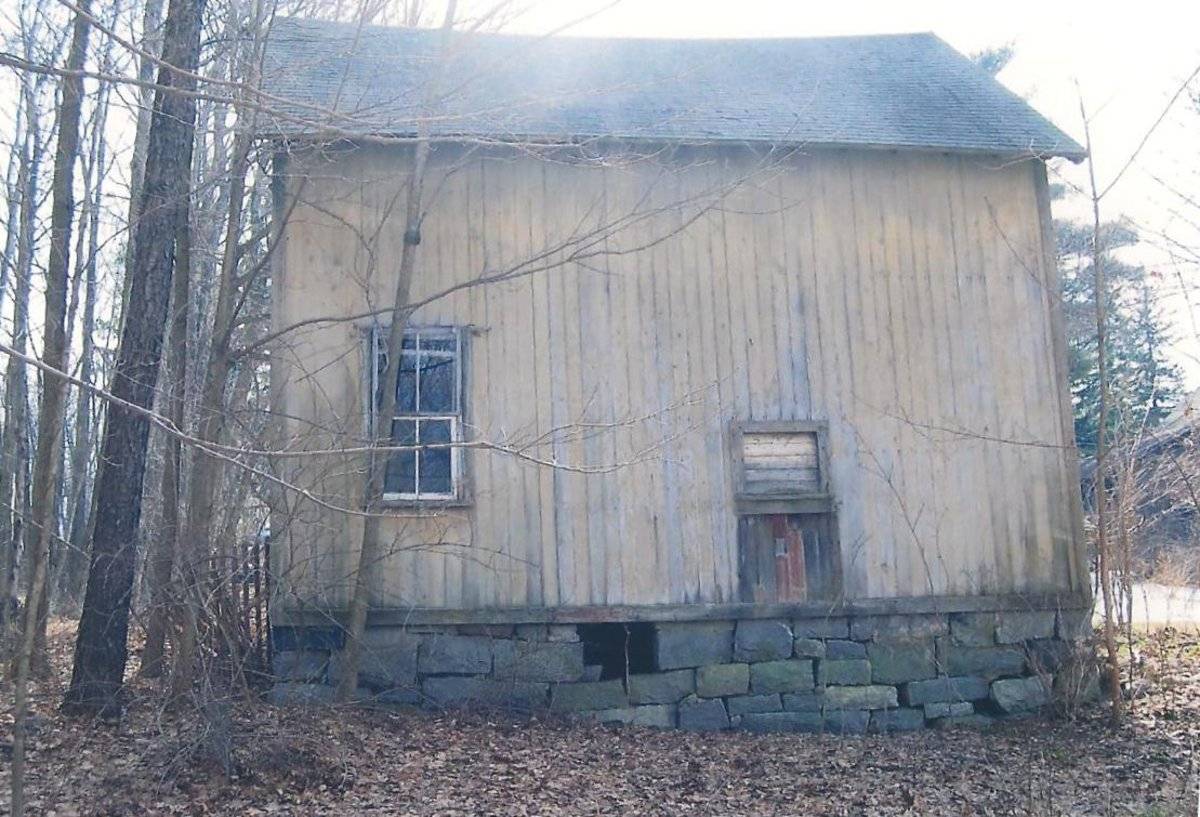
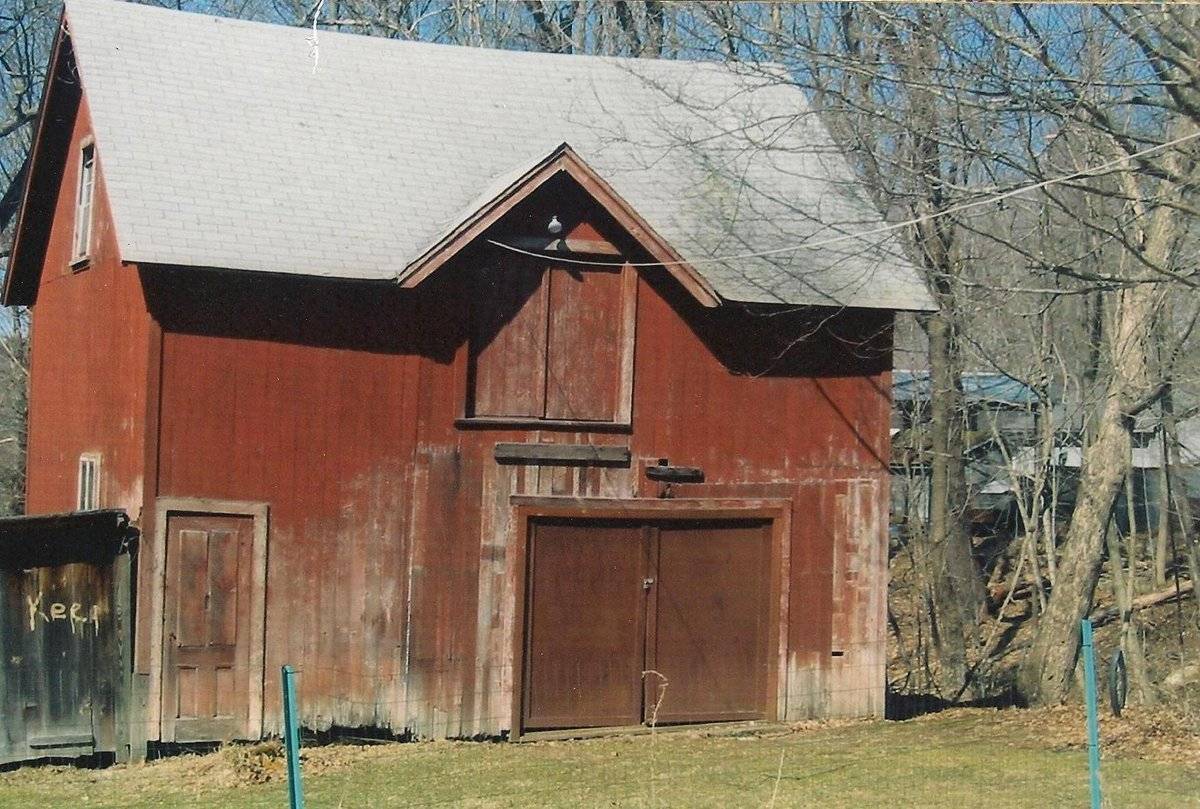
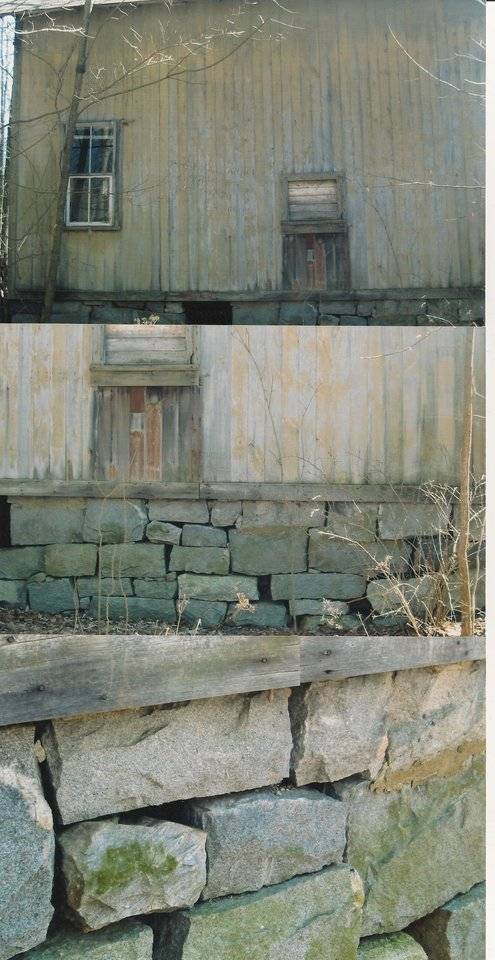
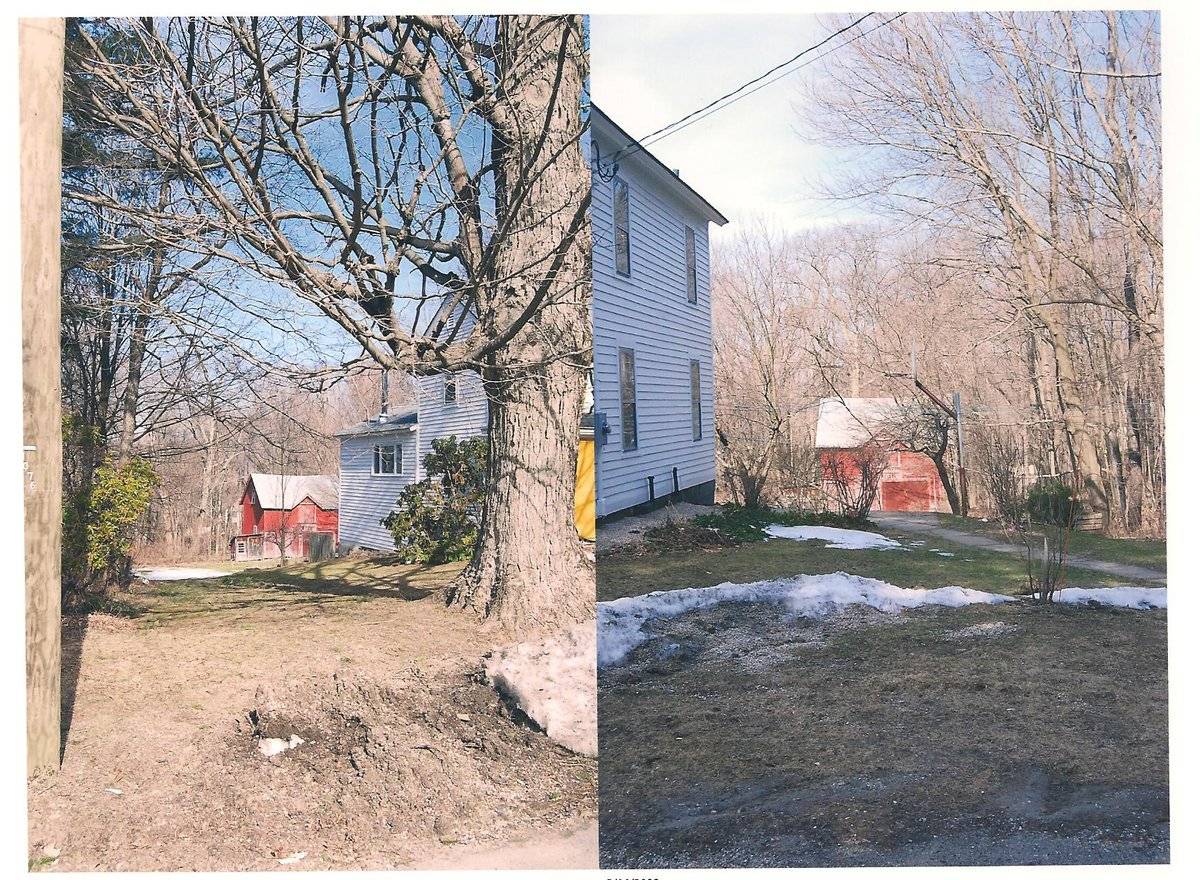
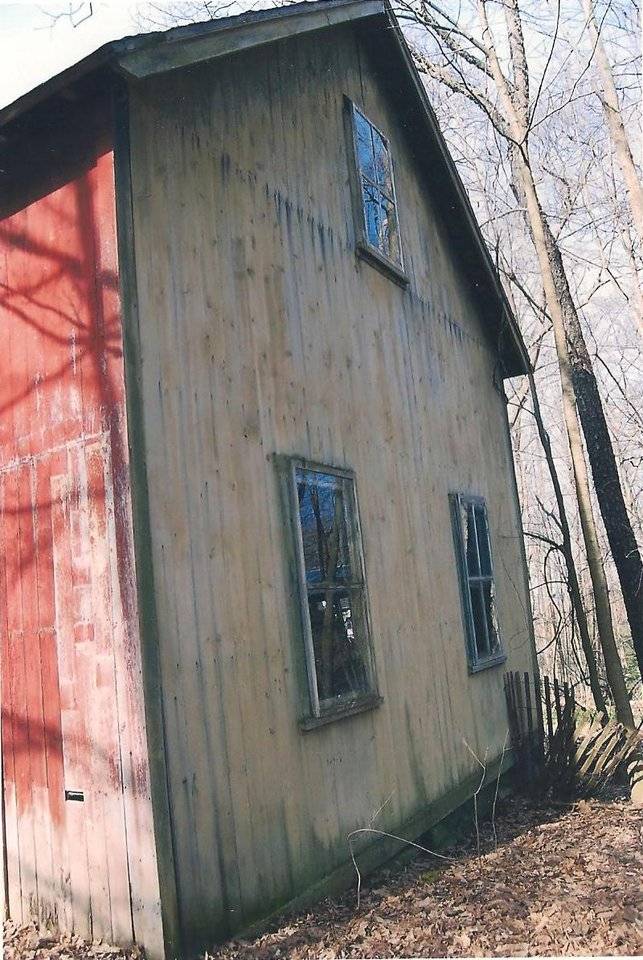
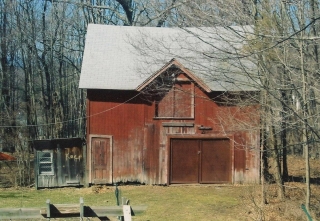
This is a 1 1/2-story carriage house. The main facade faces southeast and the ridge-line of the carriage house is parallel to this portion of Maple Avenue, which runs approximately northeast-southwest. The main entry is a pair of framed recessed doors, off-center to the east, in the southeast eave-facade of the carriage house. Towards the south corner of the southeast eave-facade of the carriage house is a pass-through door. Centered in the gabled wall dormer is a framed pair of hay doors. The southwest gable-end of the carriage house has a small detached shed-roofed structure at the south corner. Un-mortared cut stone foundation is evident behind the structure. There appears to be a feed chute off-center to the west, just above where the exterior sheathing starts and the foundation ends. Off-center to the south is a window with trim and storms. Centered in the gable attic is a window with trim and storms. The northwest eave-side of the barn has a window with storms towards the north corner. The rest of the side is blank except for a small boarded area off-center towards the west, as well as the exposed cut stone foundation. The northeast gable-end of the carriage house has three windows; two equally spaced on the main level and one centered in the gable attic. All three have storms. The grade inclines slightly at the northeast gable-end, resulting in the foundation being hidden. The carriage house has vertical flush-board siding with corner boards painted red in on the southeast and southwest sides and faded yellow paint on the northeast and northwest sides. The roof has a slight projecting overhang and exposed rafter tails. The roof is covered with asphalt shingles. The foundation is cut stone.
Historical significance:Until the 1830s, the horses used for riding and driving carriages were often kept in the main barn along with the other farm animals. By the 1850s, some New England farmers built separate horse stables and carriage houses. Early carriage houses were built just to shelter a carriage and perhaps a sleigh, but no horses. The pre-cursor to the twentieth-century garage, these outbuildings are distinguished by their large hinged doors, few windows, and proximity to the dooryard. The combined horse stable and carriage house continued to be a common farm building through the second half of the nineteenth century and the first decade of the twentieth century, until automobiles became common. Elaborate carriage houses were also associated with gentlemen farms and country estates of the late 19th and early 20th centuries. Another form of carriage barn, the urban livery stable, served the needs of tradespeople.
Field Notes
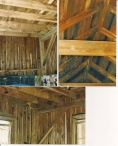
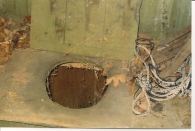
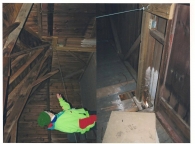
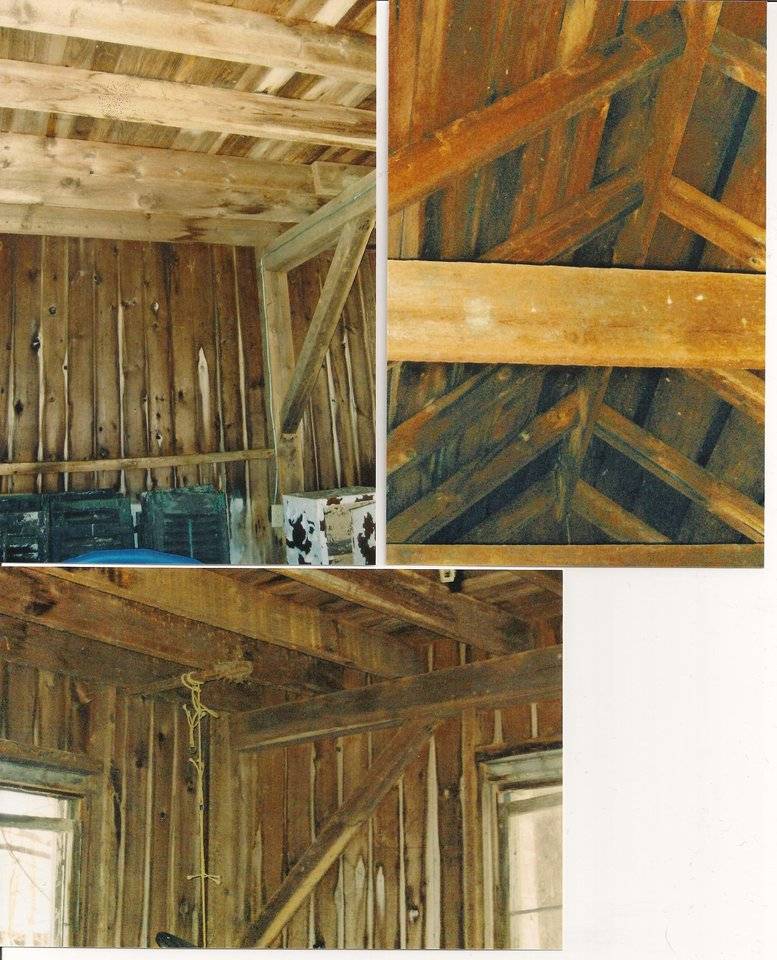
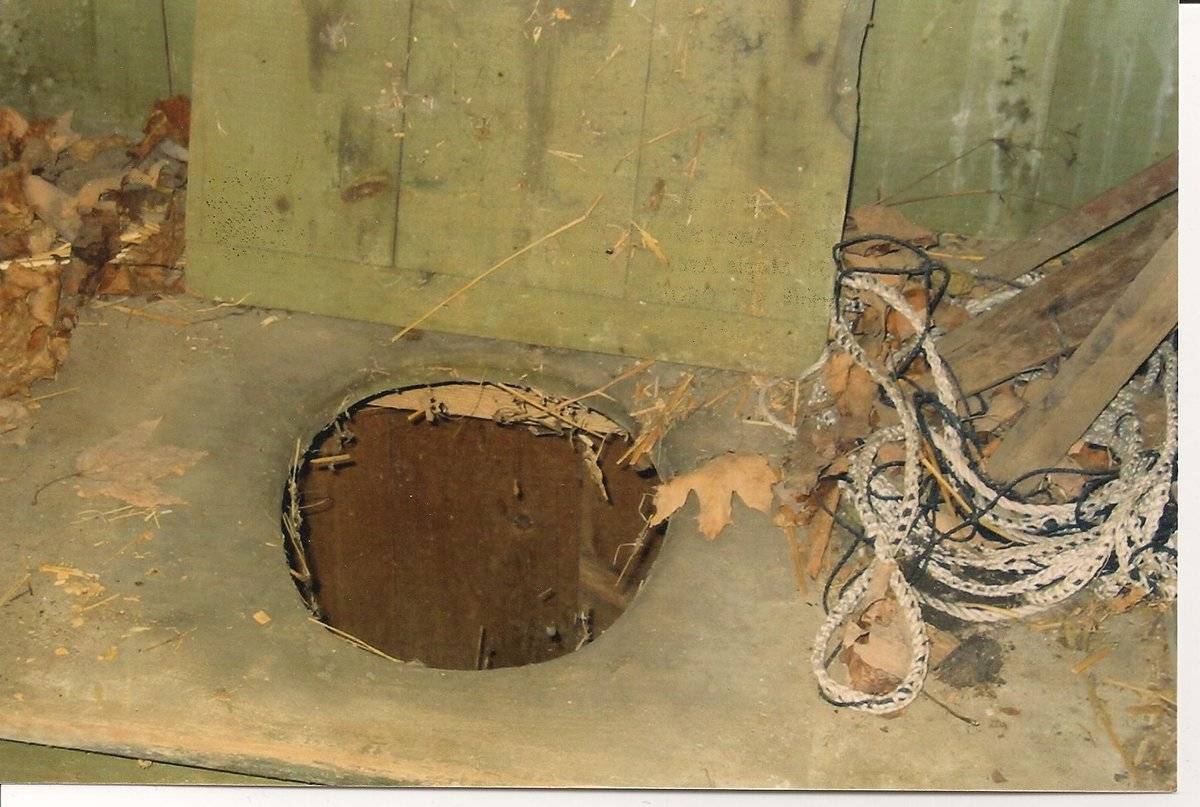
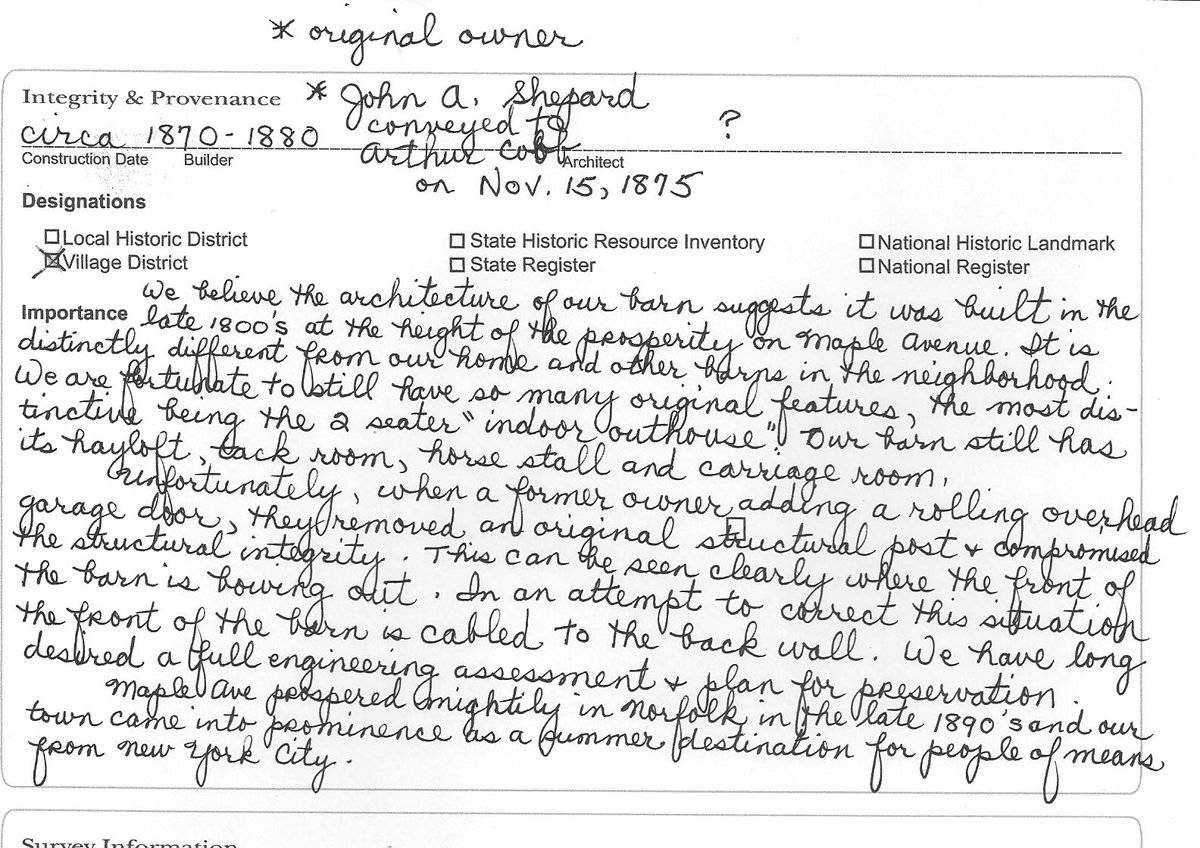
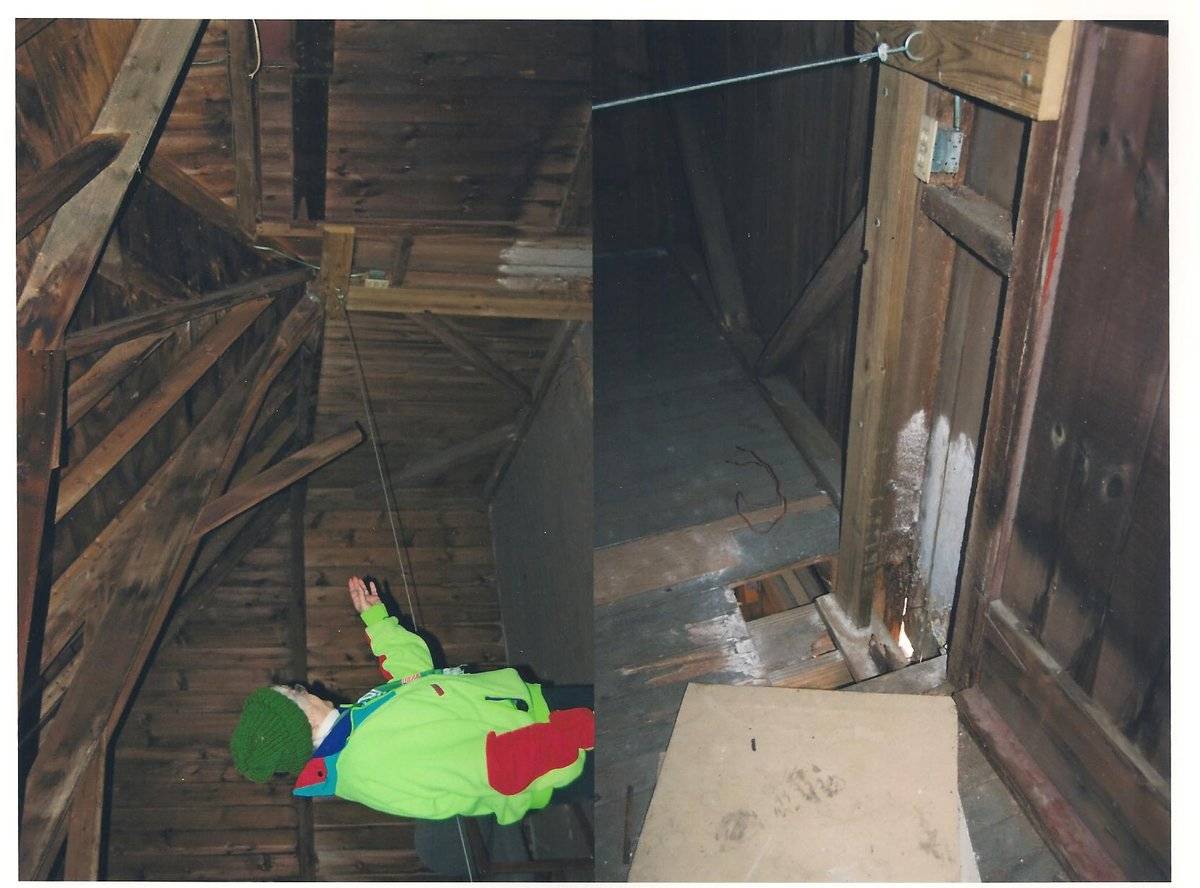
19th c. carriage barn with hayloft, tack room, horse stall, carriage room, and indoor "outhouse."
- Use & Accessibility
Use (Historic)
Use (Present)
Exterior Visible from Public Road?
Yes
Demolished
n/a
Location Integrity
Unknown
- Environment
Related features
n/a
Environment features
Relationship to surroundings
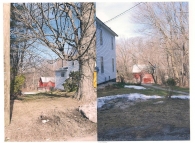
The barn is behind and to the northwest of the c1870 house with which it is associated. A yard separates the barn from the house. According to the assessors cards, the site is only. 23 acres. The Bing overhead map suggests otherwise, possible as large as 1 acre, and that is just counting the two structures and the yard in between; not any of the surrounding woodland. The area surrounding the site is residential and light woodland.
Map/Lot/Unit : 7-12/ 192/ / /
BRN4 BARN AVER 504 S.F.- Typology & Materials
-
Building Typology
Materials
Structural System
Roof materials
Roof type
Approximate Dimensions
504 S.F. 24.5' X 20.5'
- Source
-
Date Compiled
01/06/2011
Compiled By
Todd Levine, reviewed by the Connecticut Trust
Sources
Photographs and field notes by Geraldine Brodnitzki. 2009 barns grant pre-app.
Map of Norfolk, CT, retrieved on January 7, 2011 from website www.bing.com.
Visser, Thomas D.,Field Guide to New England Barns and Farm Buildings, University Press of New England, 1997.
Vision Appraisal Online Database. www.visionappraisal.com/norfolkct.
- PhotosClick on image to view full file
-