Barn Record New Britain
RETURN TO ‘FIND BARNS’- Building Name (Common)
- Art League of New Britain
- Building Name (Historic)
- George Post Stable/Carriage Barn
- Address
- 30 Cedar Street, New Britain
- Typology

- Overview
-
Designations
Historic Significance
Architectural description:
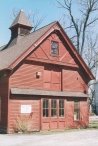
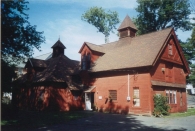
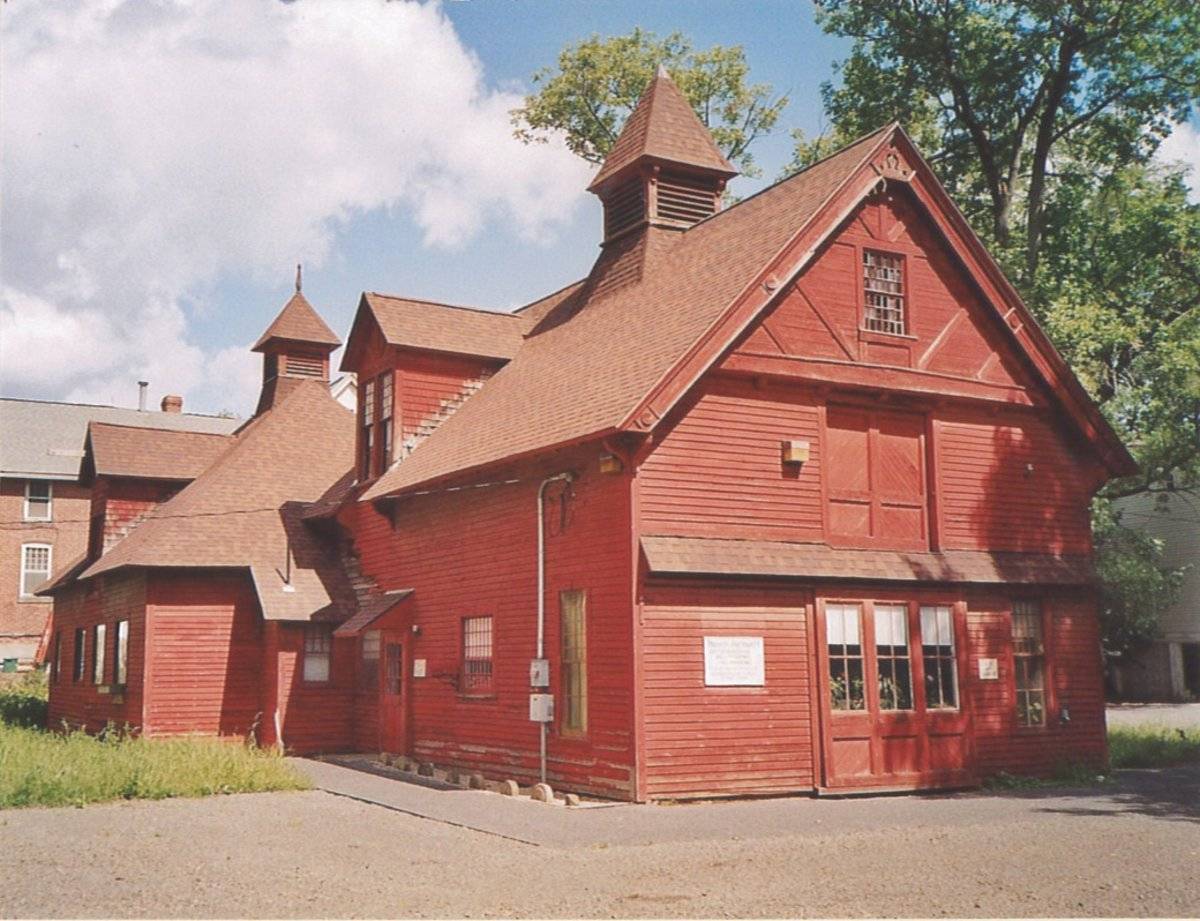
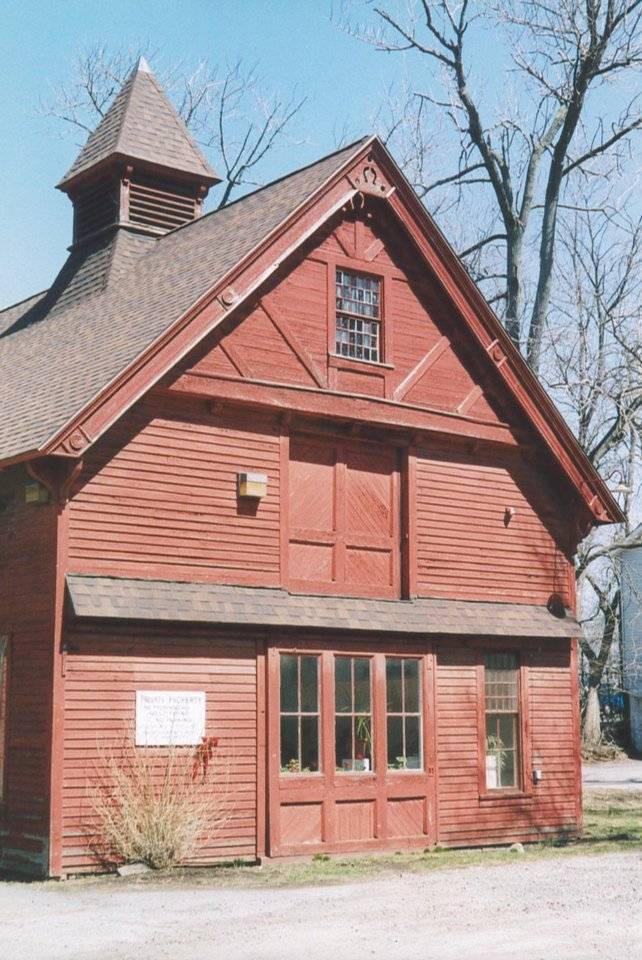
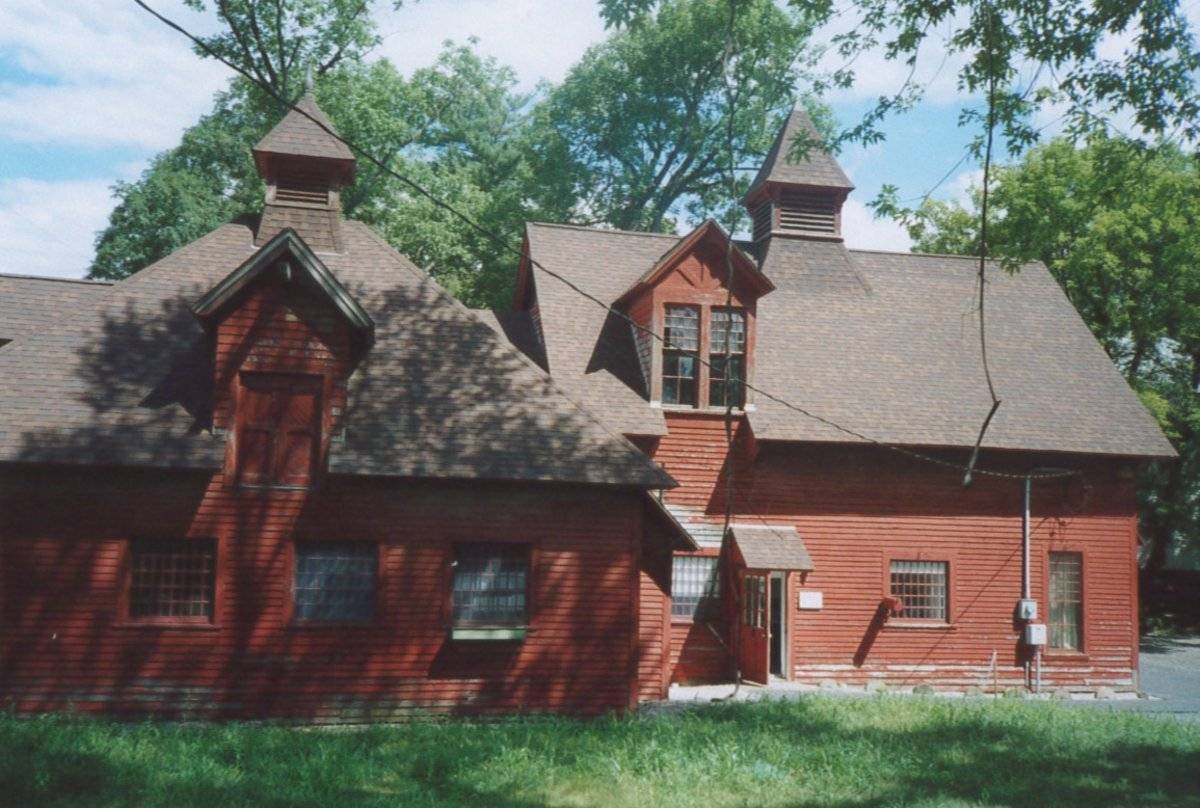
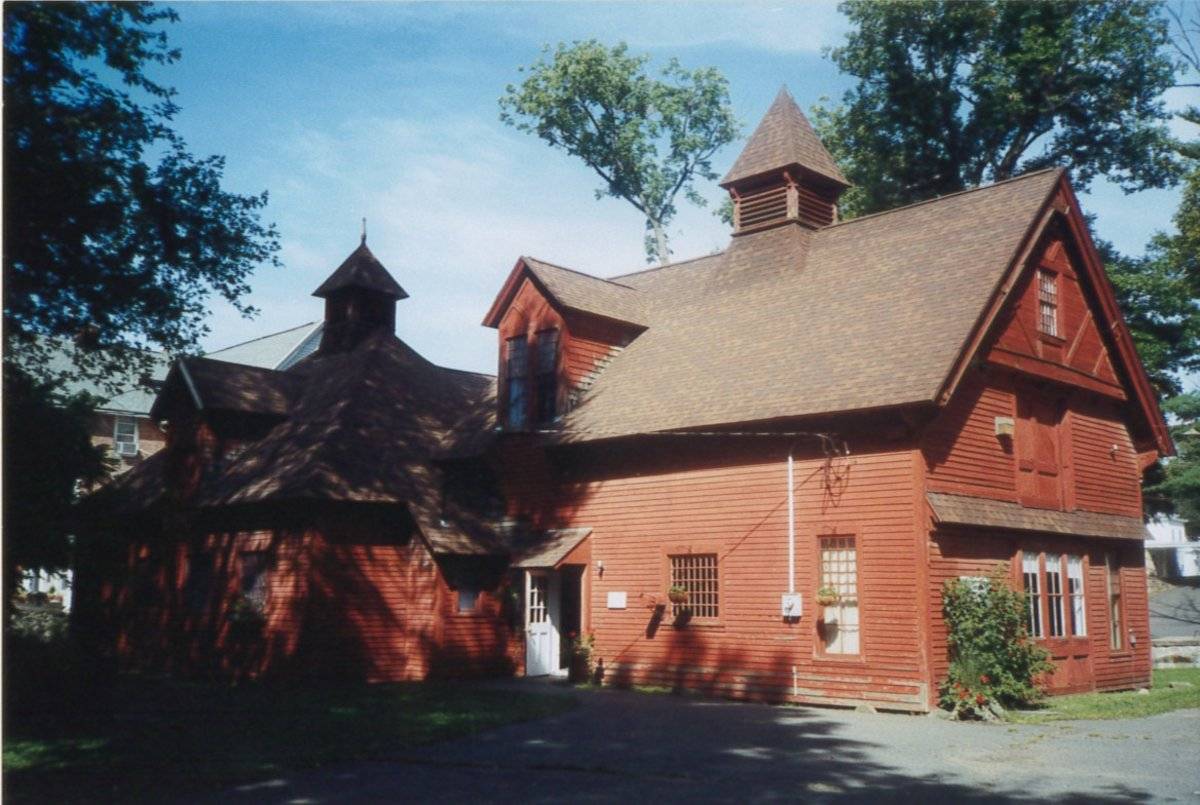
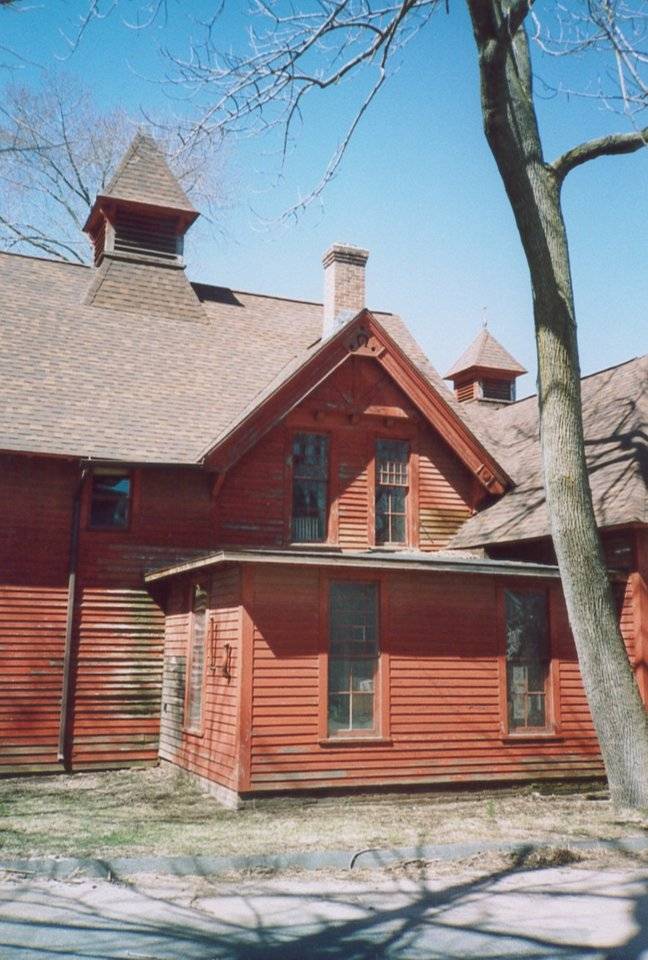
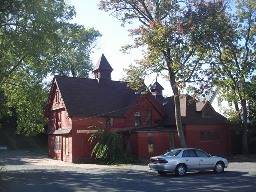
This is a 1 ½ - story three-bay gable-entry barn with its north gable-end connected to the main residence. East eave-side of the barn has a gable-wall dormer off-centered towards the north. The east eave-side of the barn faces Cedar Street with the ridge line running north-south parallel to the road. The south gable-end of the barn is the main façade with the main entrance at the center through an exterior-hung three-module paneled sliding wagon door with a continuous shed-roof hood at the lintel level. A twenty-over-four pane double-hung sash window can be seen towards the east of the main entrance while a display board is centered towards the west. The gable attic of the main south gable-façade has a pair of diagonal board hinged hay doors at the center with ornate brackets towards the eaves. The façade just below the apex of the roof projects out to form an over-hang above the hay door and has an eighteen-over-eighteen double-hung sash window centered in symmetrical stick style siding. The deep soffit of the gable attic is lined by ornate barge board. The west eave-side of the barn has a shed-roof dormer entrance towards the north through a nine-pane paneled hinged pass-through door. A forty-pane window can be seen centered on the west eave-side while a twenty-over-four pane double-hung sash window is positioned towards the south. The west eave-side of the barn has a gable-wall dormer above the pass-through door, off-centered towards the north. The gable-end of the gable wall-dormer has two paired sixteen-over-four double-hung sash windows with stick style open truss ornamentation in the gable attic. The north gable-end of the barn is connected to the hip-roof main wing of the complex. Both the gable-roof of the barn and the hip-roof of the main wing have a louvered cupola each at the center.
The wooden frame of the barn has asphalt shingles roofing and red painted horizontal clap board siding walls with red painted corner boards and ornate brackets.
Historical significance:Connected barns tied all of the functions of a farmstead - home, hearth, workplace and barn - into a series of linked buildings. This is the “big house, little house, back house, barn” of nursery rhymes.
Until the 1830s, the horses used for riding and driving carriages were often kept in the main barn along with the other farm animals. By the 1850s, some New England farmers built separate horse stables and carriage houses. Early carriage houses were built just to shelter a carriage and perhaps a sleigh, but no horses. The pre-cursor to the twentieth-century garage, these outbuildings are distinguished by their large hinged doors, few windows, and proximity to the dooryard.
The combined horse stable and carriage house continued to be a common farm building through the second half of the nineteenth century and the first decade of the twentieth century, until automobiles became common. Elaborate carriage houses were also associated with gentlemen farms and country estates of the late 19th and early 20th centuries. Another form of carriage barn, the urban livery stable, served the needs of tradespeople.
Field Notes
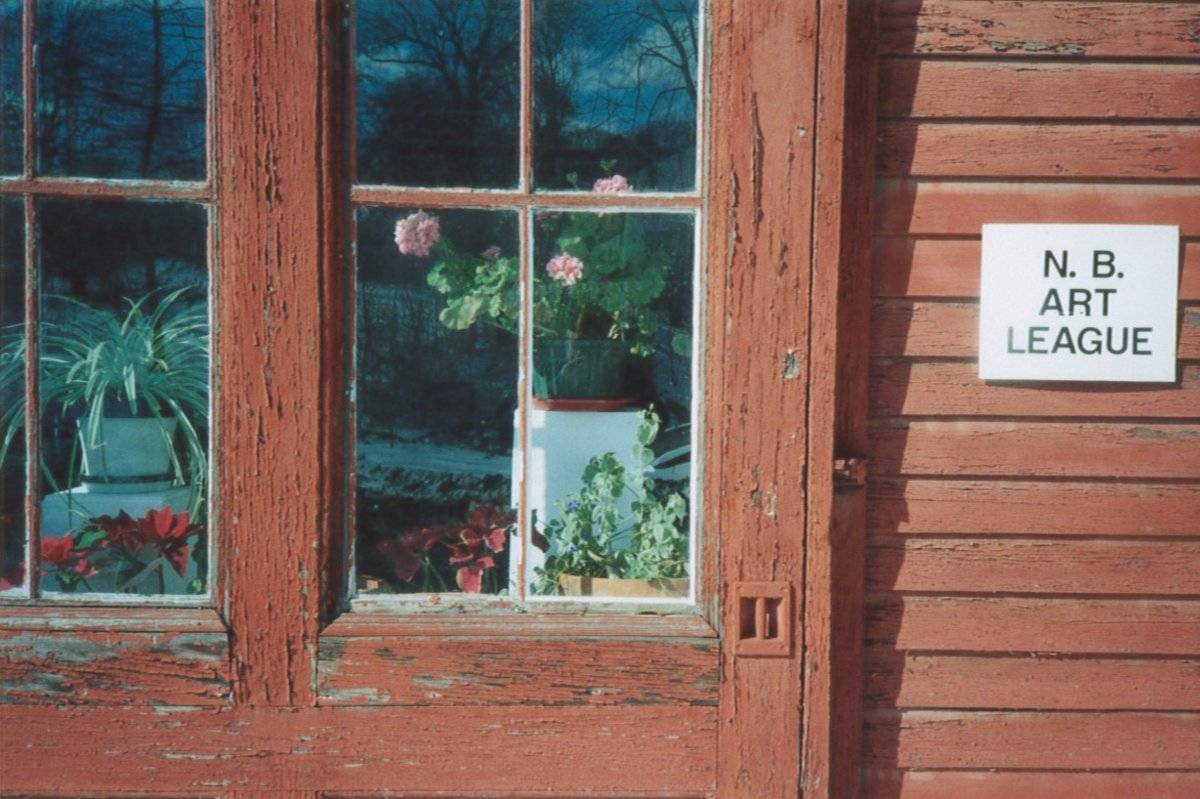
Contributing resource in the Walnut Hill Historic District No. 75001936. The barn has been the home of the Art League of New Britain since its inception in 1928. It was built by Mr. Post around 1870. Post called it a carriage house, constructed for his horses, wagons, buggies and feed. “A humble old red barn will soon become the home of New Britain 's first art school. Gone is the quiet that for years has haunted the old building as it stood, silent and ignored, at 30 Cedar Street . Today it echoes the sounds of busy workmen who are reconditioning it for the new and important role it is to play in the city's life. Within it's walls strange changes are taking place. Familiar stalls and stables are being torn away. Partitions are being removed. Rats and mice and cats, tenants of yesterday, have fled in terror before all this confusion. A big studio is being fashioned – a studio in which many future artists of New Britain will receive their first training.” This new institution was known as The Art League of New Britain or, more simply, The Studio. [Source: http://www.alnb.org/] HISTORY The Art League of New Britain, a non-profit organization, is the second oldest art league in the United States. Founded in 1928 and its original mission was as an art school holding both day and evening sessions. in 1934 it transitioned into an art club where artists could work together and gather for social affairs. The ALNB’s first president, Artist and former Director of the New Britain Museum of American Art; Sanford B.D. Low was the driving force behind the original success of the League. He gave considerable time, talent and enthusiasm to keep the arts alive during the depression. We honor him with our Sanford B. D. Low gallery. The Art League's home first served as local industrialist George Post stable and carriage house. In fact the names of the horses are still above each stall door and the horse shoe cut out is still remains at the peak of the main gable. Post's daughter sold the barn to A.J. Sloper who in turn sold it to William C. Hungerford. The late judge Hungerford had granted the use of his stable to the League for some time before passing, and after his widow deeded the property to the league along with the surrounding land. Along the way the Art League has the responsibility for caring and preserving our precious landmark and has been careful stewards. In the words of Meta Lacy "Let no man presume to modernize our old barn by stripping it of its architectural personality, which properly dates it as a fine example of its period." [Source: http://www.alnb.org/]
- Use & Accessibility
Use (Historic)
Use (Present)
Exterior Visible from Public Road?
Yes
Demolished
n/a
Location Integrity
Unknown
- Environment
Related features
Environment features
Relationship to surroundings
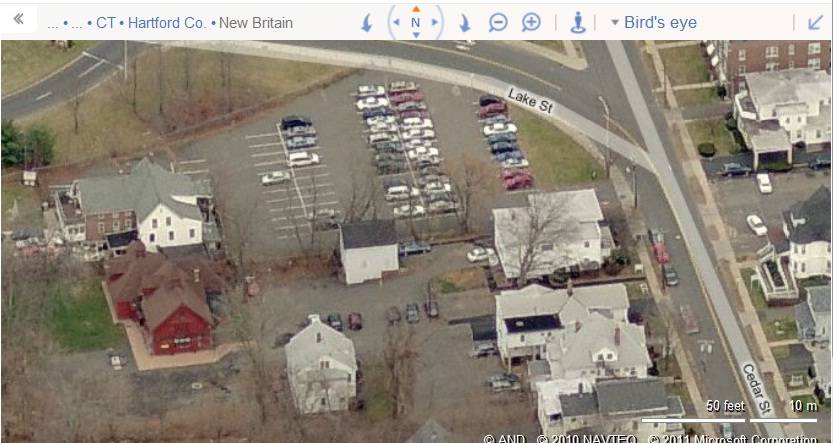
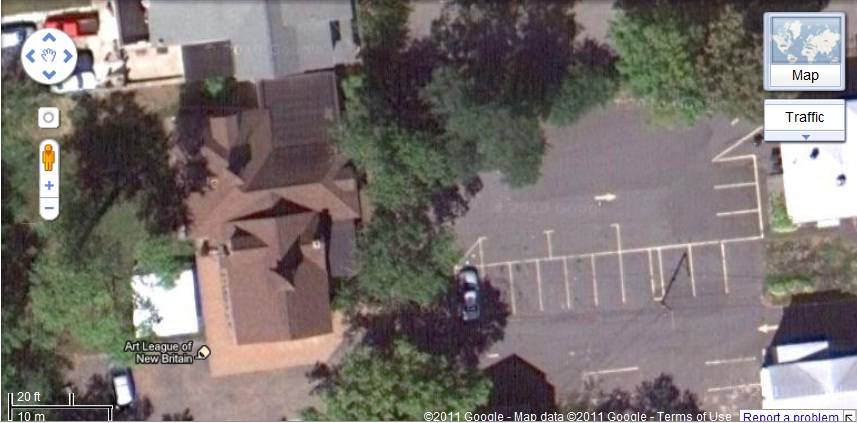
The 0.5 acres property, Account Number- 13900030 and Map number- D6D/ 15A/ / / /, is located towards the west of Cedar Street and the south of Lake Street. The property is located in a mixed land-use area surrounded by residential and institutional units. The property, now Art League of New Britain is flanked by parking space towards its east and the northeast while residential units can be seen towards is southeast. Medical institutions and clinics can be seen towards further west of the property along Lenox Place.
The barn is located in the northeast corner of the property, connected to the main house wing towards the north. The ridge line of the barn runs north-south parallel to Cedar Street. A patch of green area can be seen towards the west of the barn while parking area can be seen towards the south. The edges of the property are demarcated by trees and vegetation.
- Typology & Materials
-
Building Typology
Materials
Structural System
Roof materials
Roof type
Approximate Dimensions
Circa 1900.
- Source
-
Date Compiled
06/22/2011
Compiled By
T. Levine and M. Patnaik, reviewed by CT Trust
Sources
Field notes and photographs provided by: John Melecsinsky.
Additional information retrieved on June 22nd http://www.alnb.org/.
Assessors’ records retrieved on June 22nd, 2011 from website http://data.visionappraisal.com/NewbritainCT/DEFAULT.asp
Photograph/Information retrieved on June 22nd, 2011 from website http://www.google.com
Photograph/Information retrieved on June 22nd, 2011 from website http://www.bing.com.
Photograph/Information retrieved on June 22nd, 2011 from website http://www.zillow.com.
Raiche, Stephen J., Walnut Hill National Register Historic District No. 75001936, National Park Service, 1975.
Sexton, James, PhD; Survey Narrative of the Connecticut Barn, Connecticut Trust for Historic Preservation, Hamden, CT, 2005, http://www.connecticutbarns.org/history
Visser, Thomas D.,Field Guide to New England Barns and Farm Buildings, University Press of New England, 1997.
- PhotosClick on image to view full file
-