Barn Record Litchfield
RETURN TO ‘FIND BARNS’- Building Name (Common)
- William Plumb House/Falcon's Flight Farm (1 of 2)
- Building Name (Historic)
- William Plumb House/Falcon's Flight Farm- Cow barn
- Address
- 209 Beach Street, Litchfield
- Typology
- Overview
-
Designations
Historic Significance
Architectural description:
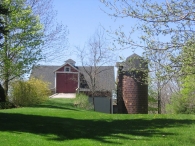
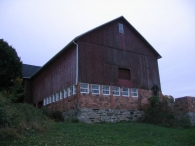
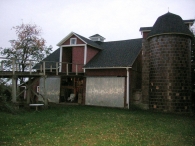
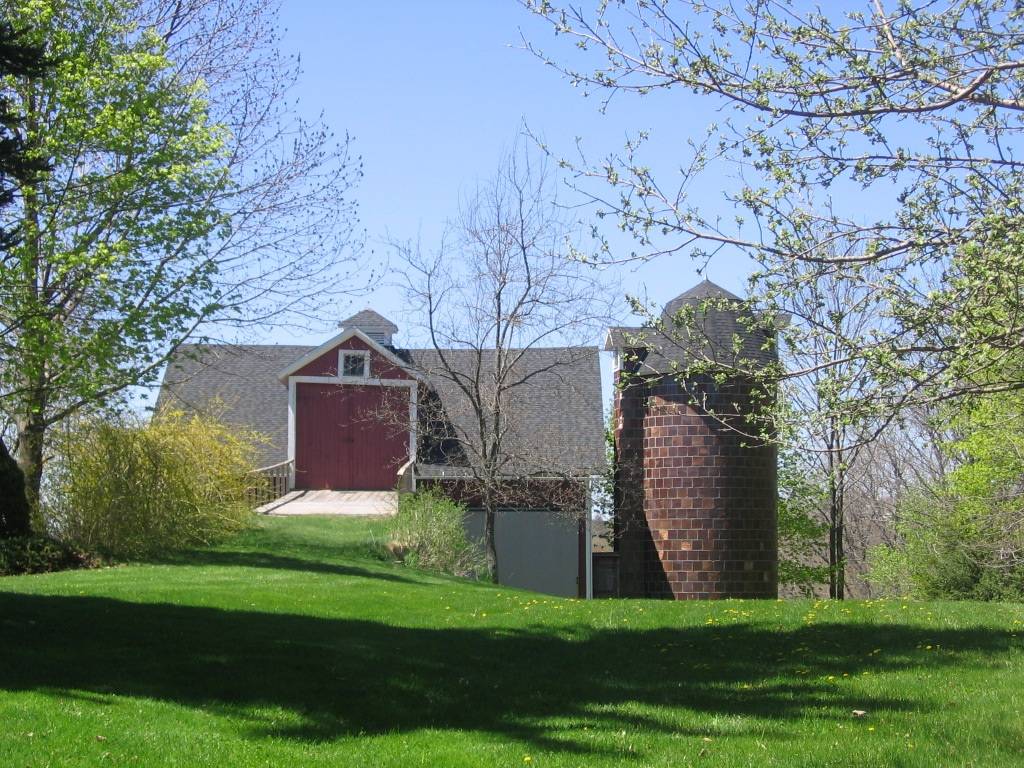
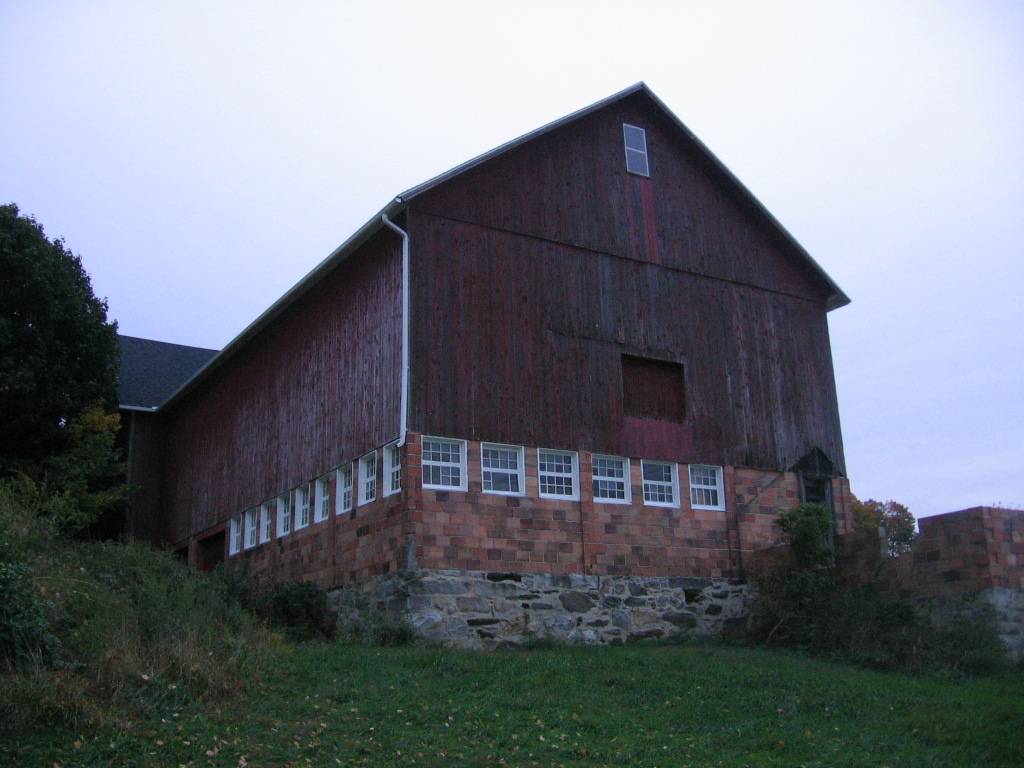
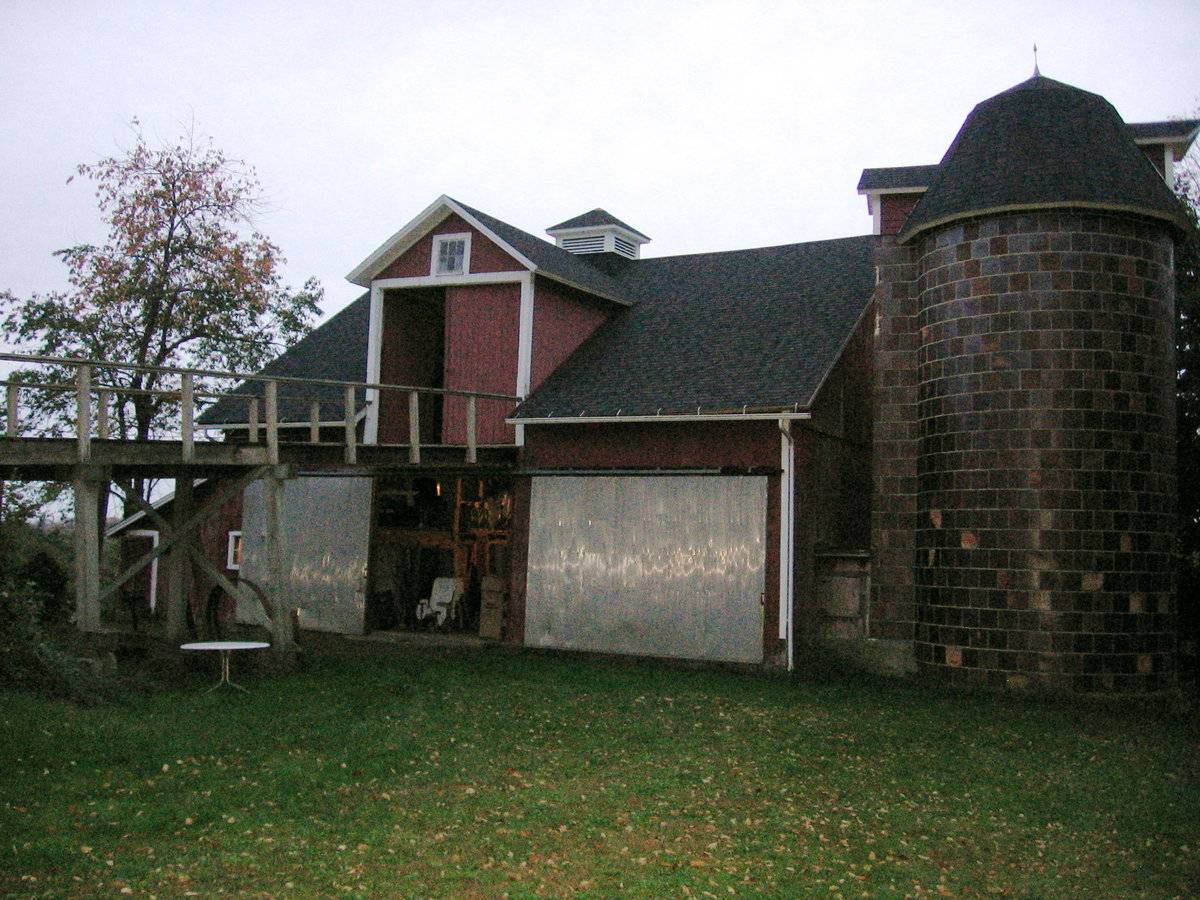
This barn is significant for many reasons, starting with its size. The western ell and hayloft gable may be additions to an existing English barn, although the framing members are similar. The barn was likely built or significantly enlarged c. 1906, when Joseph and Francis Blake began Falcon’s Flight Farm. The date 1929 marked into the concrete steps leading to the lower-level may indicate the year the milking parlor was installed or modernized. In addition to hay and cows, the barn held bulls and calves. The stone-enclosed bullpen to the south of the building is a notable feature. The silo is also significant as the only remaining hollow-tile silo in Litchfield. The hollow-clay tile silo type was developed in 1908 by the Iowa Experiment Station and is thus known as the “Iowa silo.” The design of this example appears nearly identical to a model pictured in the 1916 issue of the “Radford Building Guide,” published by the Radford Architectural Co. of Chicago; the firm sold architectural plans for farm buildings.
The barn is also notable for its beautiful pegged post-and-beam framing and the innovative design and insertion of the long central haymow. In the lower level under the front (east) section are massive beams made from full, untrimmed tree trunks. The fieldstone foundation adapting to the steep grade is also a significant architectural feature.
This immense barn consists of two intersecting parts to form a T-plan. The smaller of the two is a rectangular structure with a traditional English barn format (three interior bays), set gable ends to the north and south and with the façade facing east. A long intersecting ell runs west about 60 feet. This wing adjusts to the sloping site so that the barn gains a lower level about 11 feet in depth where the barn is banked below grade. A substantial fieldstone foundation is located at the west end. The lower level is clad in hollow clay tile and lit by a line of 8/8 double-hung windows on the three slides. The main, east façade has a central entrance opening and rolling corrugated doors; a shed-roofed milk house extends to the south. Centered above the façade, a narrow peak-roofed gable intersects with the peak roof of the barn front; this upper level entry provides access to a long central loft that runs the full length of the elongated western ell. The gable doors are accessed by a long ramped bridge that meets the upward grade to the east. The interior structure is built with a post-and-beam (square rule) frame of milled timbers. In the center aisle, a series of 12-foot bents carries the long central haymow the length of the western ell; immense purlins are spliced to span the 60-foot distance. The lower-level milking parlor of the barn is finished in concrete and fitted with pipe stanchions, laid out along to longitudinal feed alleys. Two low, hip-roofed cupola ventilators rest on the roof ridge. The silo is clad is hollow clay tile and covered with a polygonal roof.
Historical significance:The oldest barns still found in the state are called the “English Barn,” “side-entry barn,” “eave entry,” or a 30 x 40. They are simple buildings with rectangular plan, pitched gable roof, and a door or doors located on one or both of the eave sides of the building based on the grain warehouses of the English colonists’ homeland. The name “30 by 40” originates from its size (in feet), which was large enough for 1 family and could service about 100 acres. The multi-purpose use of the English barn is reflected by the building’s construction in three distinct bays - one for each use. The middle bay was used for threshing, which is separating the seed from the stalk in wheat and oat by beating the stalks with a flail. The flanking bays would be for animals and hay storage. The 19th century saw the introduction of a basement under the barn to allow for the easy collection and storage of a winter’s worth of manure from the animals sheltered within the building. The bank barn is characterized by the location of its main floor above grade, either through building into a hillside or by raising the building on a foundation. This innovation, aided by the introduction of windows for light and ventilation, would eventually be joined by the introduction of space to shelter more animals under the main floor of the barn.
Field Notes
Materials: Vertical board/hollow tile. Historic use: Hay/cow/bull barn.
- Use & Accessibility
Use (Historic)
Use (Present)
Exterior Visible from Public Road?
Yes
Demolished
n/a
Location Integrity
Original Site
- Environment
Related features
Environment features
Relationship to surroundings
Barn stands on the west side of Beach Street with its long side running parallel to Butternut Road. The site slopes steeply to the west; fields and long views to west. The smaller barn in this complex stands to the southeast. Bullpen adjacent to the south. Silo is adjacent to the northeast corner.
- Typology & Materials
-
Building Typology
Materials
Structural System
Roof materials
Roof type
Approximate Dimensions
40 x 100 1 story plus loft and lower level
- Source
-
Date Compiled
10/07/2008
Compiled By
Rachel Carley
Sources
Litchfield Tax Assessor Records
Interview with John Kleeman 10/07
Foster and Carter, Farm Buildings, John Wiley & Sons, 1922
Radford Farm and Building Guide, 1916Sexton, James, PhD, Survey Narrative of the Connecticut Barn, Connecticut Trust for Historic Preservation, Hamden, CT, 2005, http://www.connecticutbarns.org/history.
Visser, Thomas D., Field Guide to New England Barns and Farm Buildings, University Press of New England, 1997.
- PhotosClick on image to view full file
-