Barn Record Litchfield
RETURN TO ‘FIND BARNS’- Building Name (Common)
- n/a
- Building Name (Historic)
- n/a
- Address
- 264 East Litchfield Road, Litchfield
- Typology

- Overview
-
Designations
Historic Significance
Architectural description:
Barn:
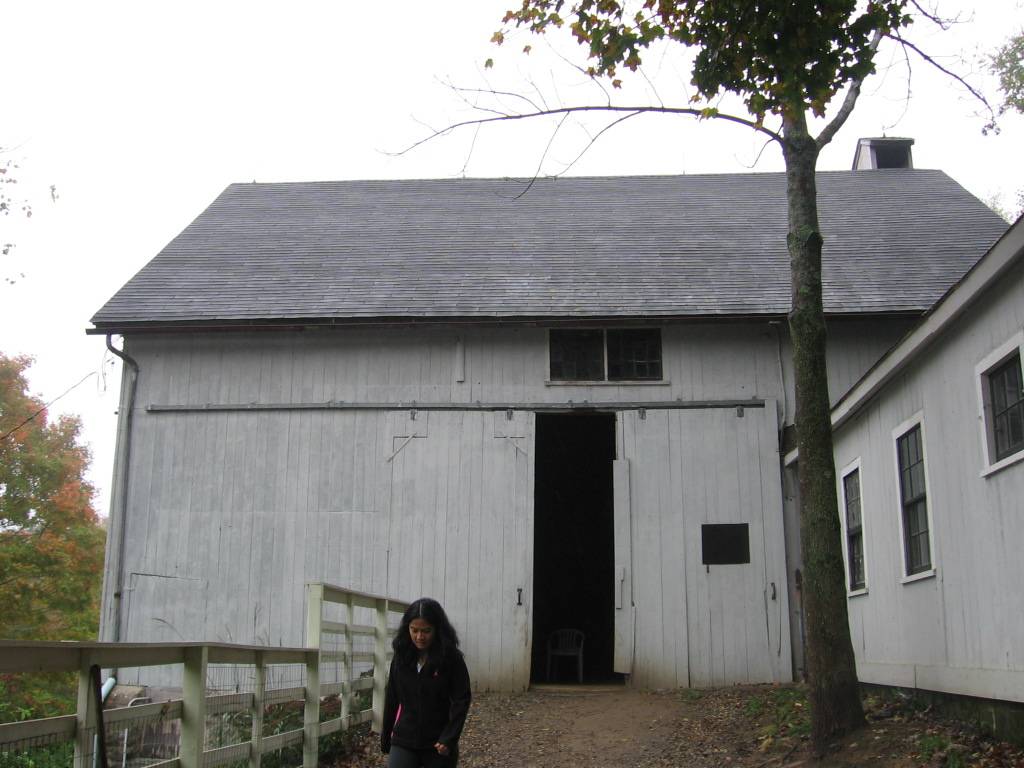
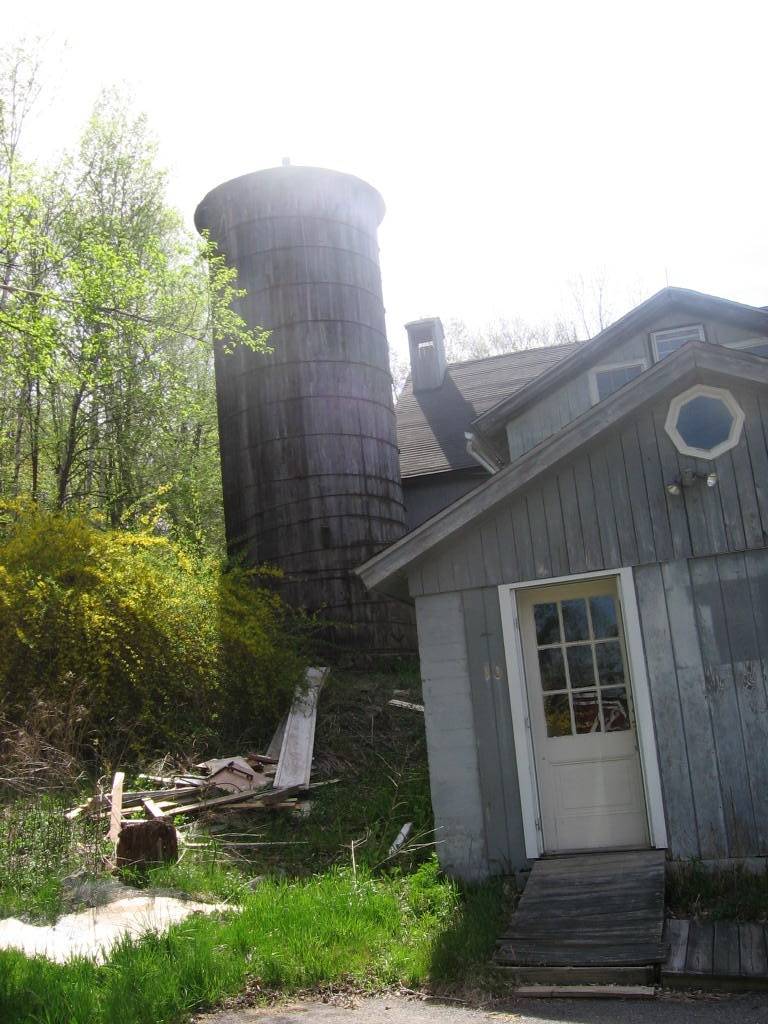
This barn is significant as a beautiful example of an English bank barn, built with a square-rule design and rafter-frame roof with intermediate purlins. This barn pre-dates the Howe ownership of the farm and may have been constructed by the Morse family, who owned this property in the 19C. The building served as the centerpiece of the Howe estate and the small dairy operation (eight cows) that provided butter, milk and cream to the Howes, their sizable household staff and to the Bissells. The upper level served as the hay barn and the lower, stone level on the north side held stalls for the work horses. In the 1990s the barn housed Meow Inc., an organization devoted to placing homeless cats.
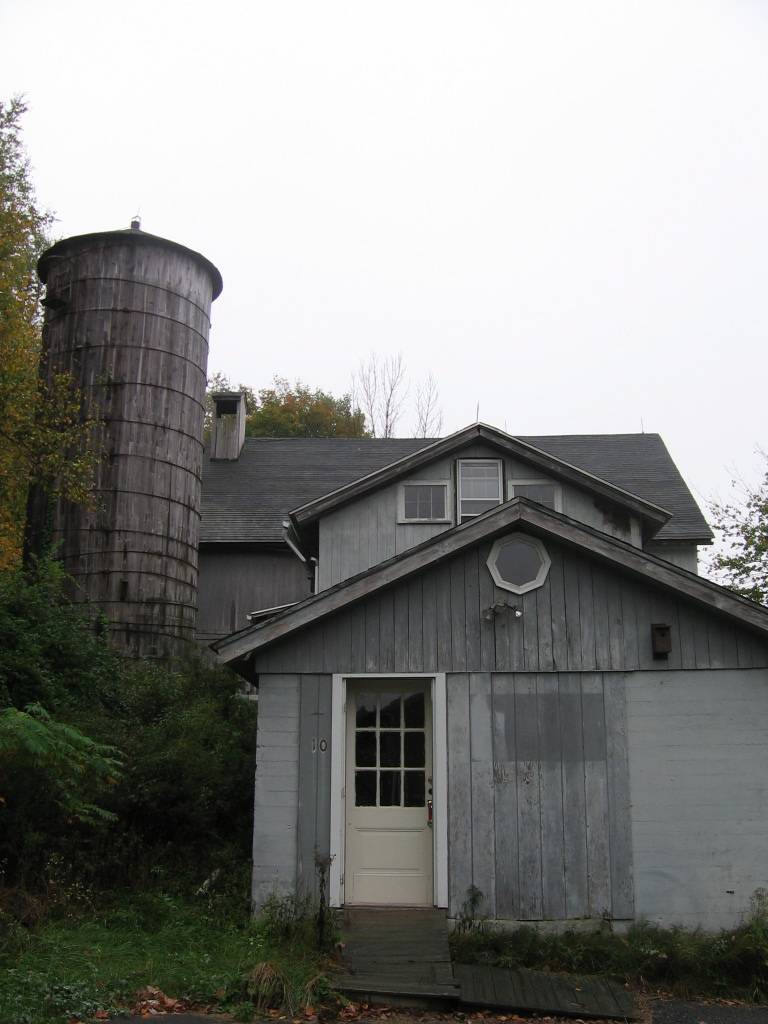
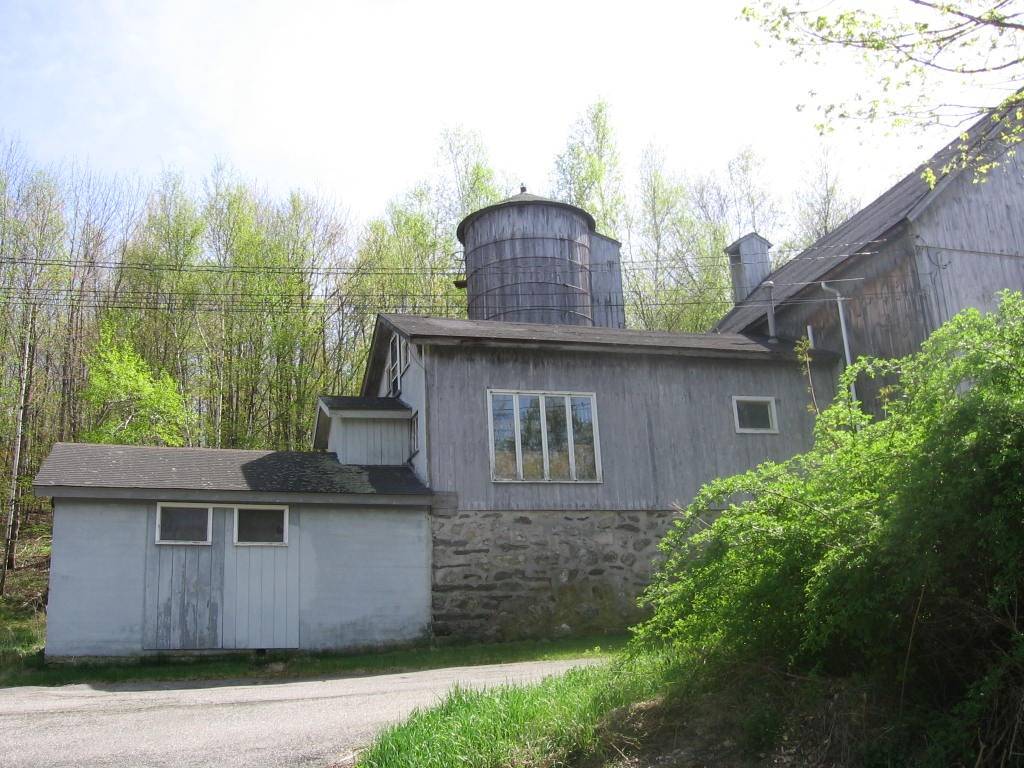
The attached silo is an extremely well-preserved example of a wood stave silo and one of a handful of wood silos surviving in Litchfield.
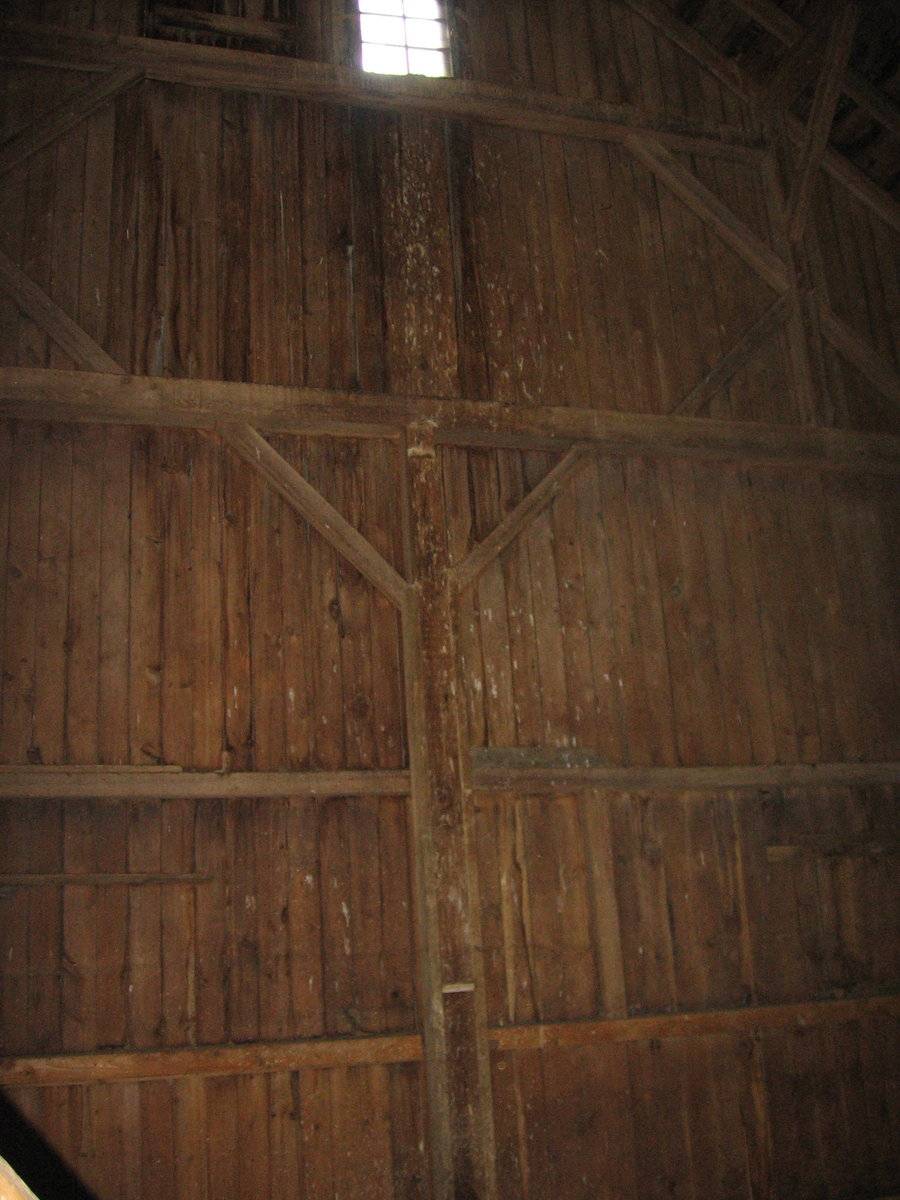
At the core of this handsome complex of gray barns is a peak-roofed English hay barn with its gable ends oriented ot the north and south and the façade main entrance (rolling doors) located on the long, west façade. The barn stands on a substantial fieldstone foundation that adjusts to the northward sloping site so that the structure gains a lower level (north side) of about 6’. A banked peak-roofed ell on a banked foundation also extends to the east, and from this telescopes a lower, smaller peak-roofed addition (cinder block), so that the building steps down to the east to meet the road. A massive stone retaining wall supports the wagon ram to the west doors; extending to the west above this ramp is a one-room peak-roofed wing (the milk house) and a contemporary addition to its west (now an artist’s studio). The interior of the hay barn is notable for the pegged, post-and-beam frame (two bays), a massive and well-preserved example of square rule construction (milled timbers), probably late 19C. A wooden silage shoot is located at the south gable end. A cabled, wood-stave silo with a conical roof (asphalt shingle) stands on a fieldstone foundation at the southeast corner.
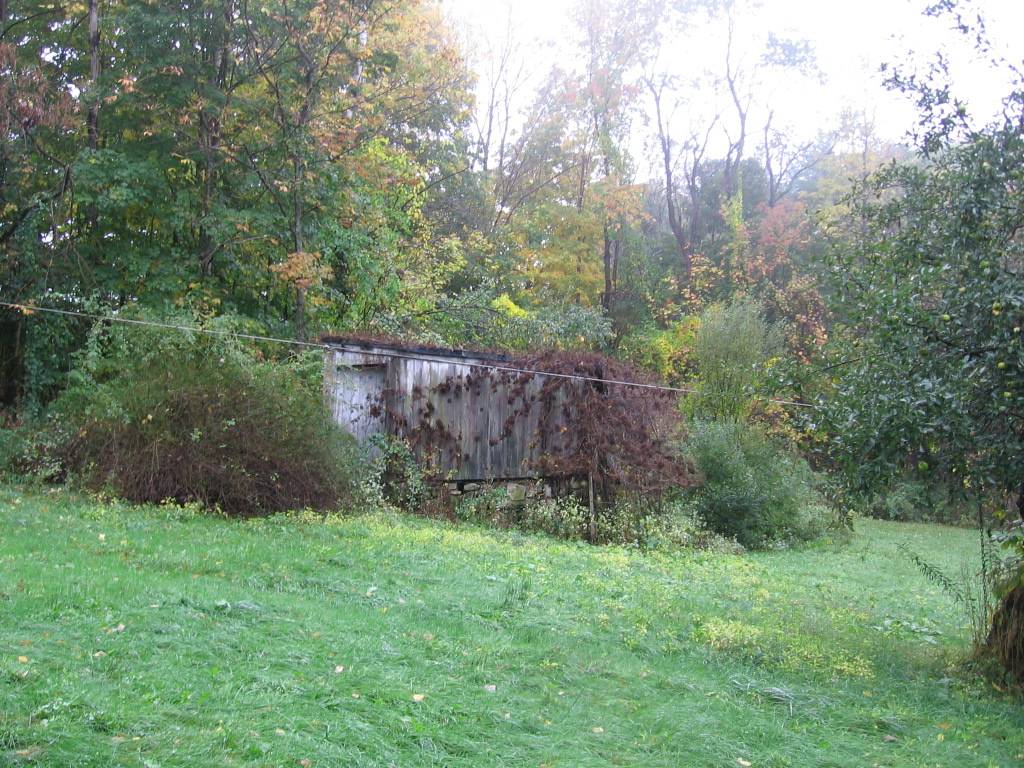
Chicken Coop:
Shed stands on a stone foundation that adjusts gradually to the northward slope of the grade. A door is located on the south side of the eats (main) façade.
This shed was part of Howe family estate; Chester Bissell, farm manager raised chickens here during the first half of the 20C.
Historical significance:The oldest barns still found in the state are called the “English Barn,” “side-entry barn,” “eave entry,” or a 30 x 40. They are simple buildings with rectangular plan, pitched gable roof, and a door or doors located on one or both of the eave sides of the building based on the grain warehouses of the English colonists’ homeland. The name “30 by 40” originates from its size (in feet), which was large enough for 1 family and could service about 100 acres. The multi-purpose use of the English barn is reflected by the building’s construction in three distinct bays - one for each use. The middle bay was used for threshing, which is separating the seed from the stalk in wheat and oat by beating the stalks with a flail. The flanking bays would be for animals and hay storage. The 19th century saw the introduction of a basement under the barn to allow for the easy collection and storage of a winter’s worth of manure from the animals sheltered within the building. The bank barn is characterized by the location of its main floor above grade, either through building into a hillside or by raising the building on a foundation. This innovation, aided by the introduction of windows for light and ventilation, would eventually be joined by the introduction of space to shelter more animals under the main floor of the barn.
When chopped cornstalks are compressed to prevent their exposure to the air, the silage ferments instead of spoiling, providing nutritious food for the dairy herd and allowing them to produce milk through the winter. Early silos were built inside the barns, but by the 1890s free-standing silos were being built outside dairy barns. Constructed much like a very large wooden barrel, with adjustable steel hoops holding the vertical grooved staves together, the round wooden stave silo was widely accepted by dairy farmers in New England from the 1890s through the 1930s. Conical roofs are most common on wooden stave silos, usually covered with composition sheet roofing and topped with a metal ventilator. Removable wooden access doors extend up one side. The hoops were loosened in fall to accommodate the swelling of the wood as it absorbed moisture from the silage, and tightened over the winter as the silage dried.
Poultry farming grew in popularity during the second half of the 19th century, and by the early 20th century most farms had small chicken coops. These lightly-built structures often feature a gabled or shed roof and large windows on the south side. Often chicken coops have a small stove and chimney for heat to protect young chicks during cold weather. Small openings near the ground provide the fowl with access to the yard. Inside are nesting boxes for the laying hens. During the 1930s and 1940s, poultry farming was adopted by many farmers in New England as a replacement for dairy farming.
Field Notes
Materials: Concrete block; Vertical board (tongue and groove). Historic use: Hay.
- Use & Accessibility
- Environment
Related features
Environment features
Relationship to surroundings
Barn stands to the south of the house, on the east side of Naser Road. Driveway enters west from Naser and passes on the north side of the building. Site rises to the south. Woodland track runs from west end of barn complex up hill toward the former Howe Estate (now Touchstone) on Country Place.
Chicken coop stands at the western edge of an open lawn to the west of the house. Wooded to the west. Site slopes to the north.
- Typology & Materials
-
Building Typology
Materials
Structural System
Roof materials
Roof type
Approximate Dimensions
Barn: 36 x 20; 20 x 16; 16 x 12 plus west ells 1 story plus loft and lower level Chicken Coop: 8 x 10
- Source
-
Date Compiled
10/07/2008
Compiled By
Rachel Carley
Sources
Litchfield Tax Assessor Records
Interview with Mrs. John Fuessenich 9/07Sexton, James, PhD, Survey Narrative of the Connecticut Barn, Connecticut Trust for Historic Preservation, Hamden, CT, 2005, http://www.connecticutbarns.org/history.
Visser, Thomas D., Field Guide to New England Barns and Farm Buildings, University Press of New England, 1997.
- PhotosClick on image to view full file
-