Barn Record Southington
RETURN TO ‘FIND BARNS’- Building Name (Common)
- Superior Products Distributors, Inc.
- Building Name (Historic)
- Dickerman Barn
- Address
- 212 Norton Street, Southington
- Typology
- Overview
-
Designations
n/a
Historic Significance
Architectural description:
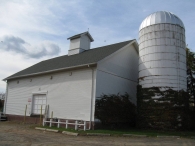
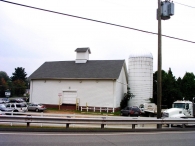
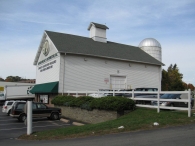
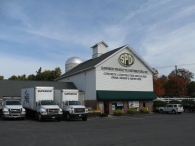
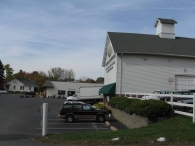
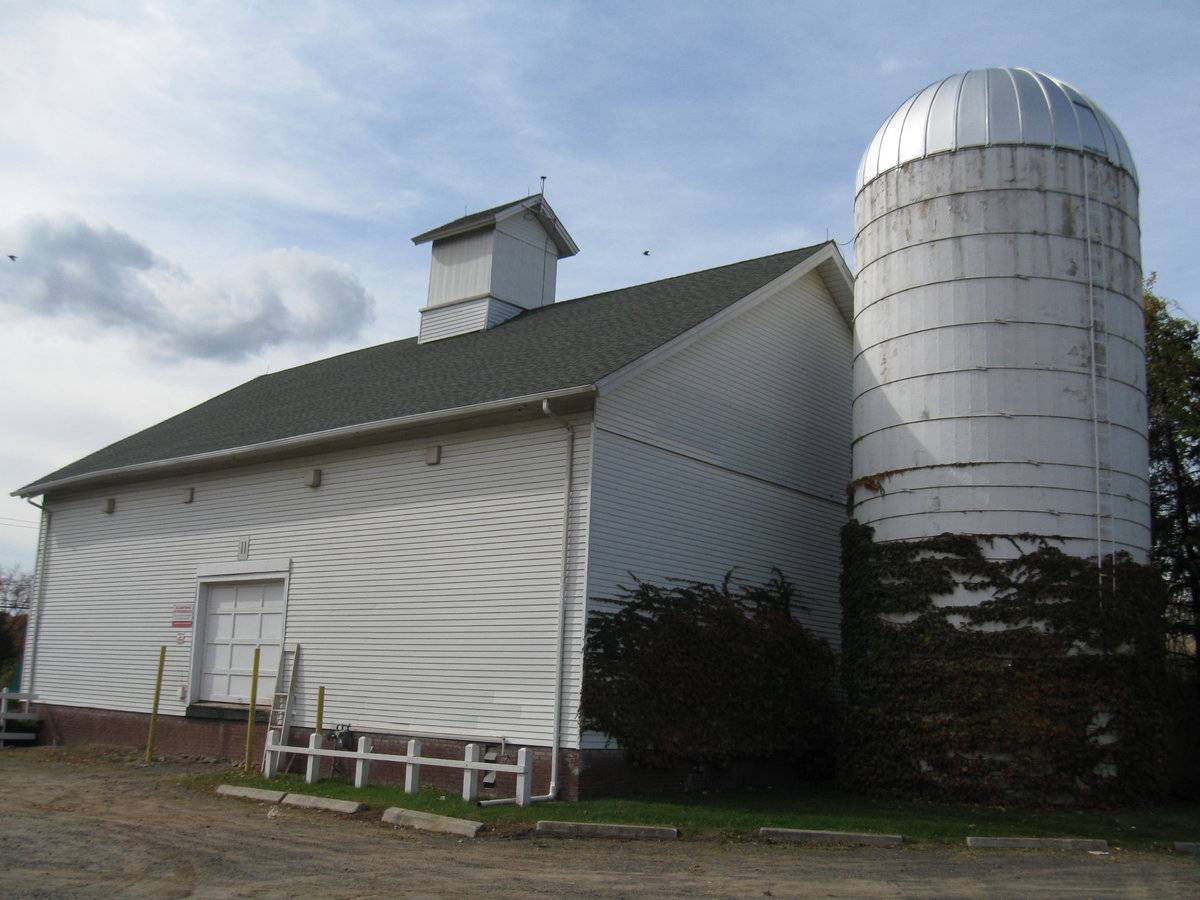
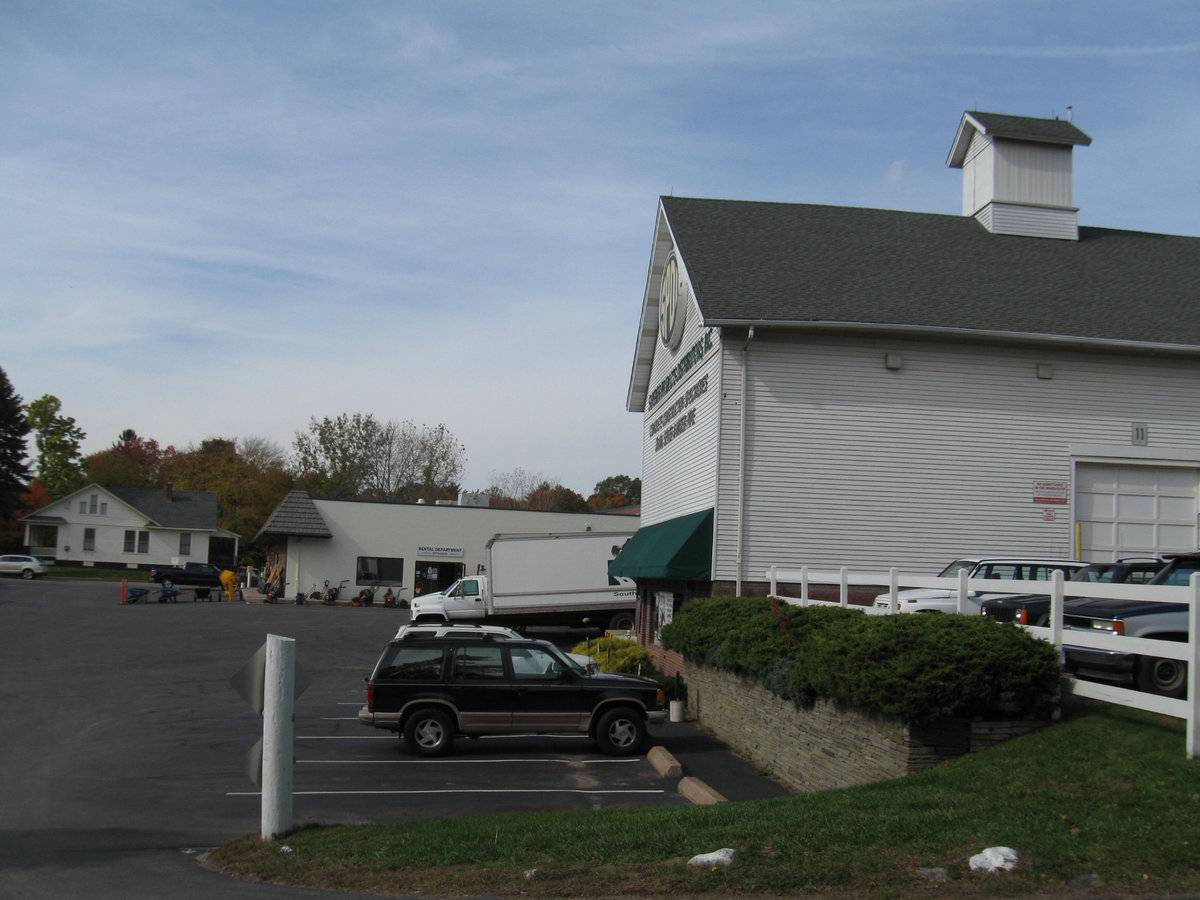
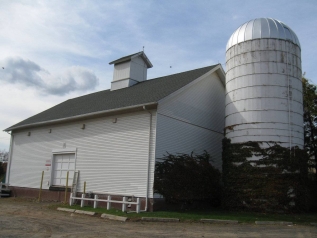
This is a 1 ½-story gable-roofed bank barn structure with its ridge-line oriented north-south. The exterior has been re-sided with aluminum siding at the main and attic levels, obscuring the original materials. The massing suggests the likelihood of a typical three-bay structure; there is an overhead garage door in the center of the east eave-side where a larger door opening would have existed, opening to the upper level grade at the east side. The south gable-end wall has a retail store entrance and windows in the brick-faced basement wall. Above, the windowless main level and attic are used for business signage. A gable-roofed one-story warehouse/retail wing projects from the west side, abutting the main barn at the lower level. The foundation is brick, visible on the south, east, and north sides.
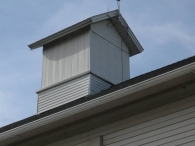
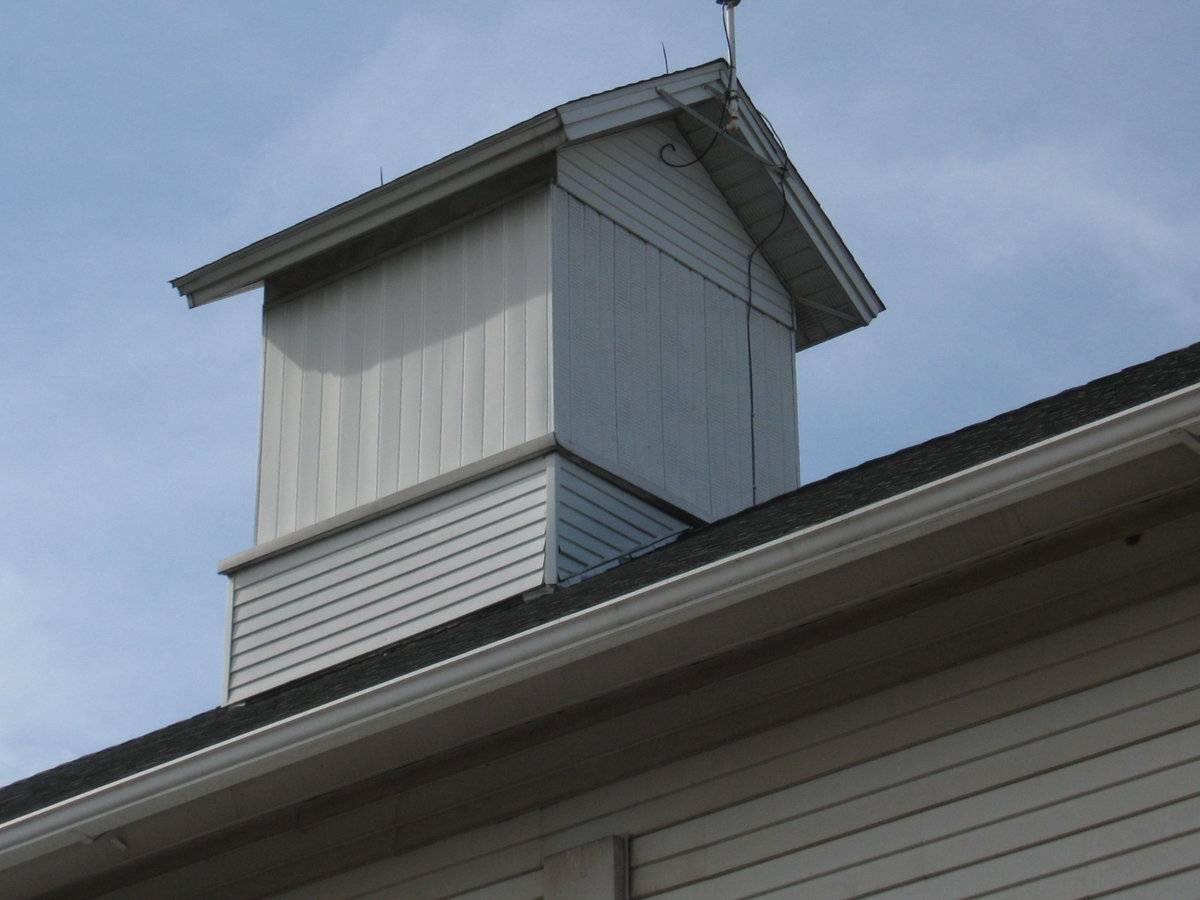
The roof is asphalt shingles, with a large gable-roofed cupola at the center of the ridge. The faces of the cupola have been sealed with aluminum siding, but a belt course or sill at the ridge elevation is typical of cupolas with louvers in the four sides.
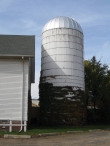
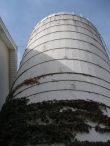
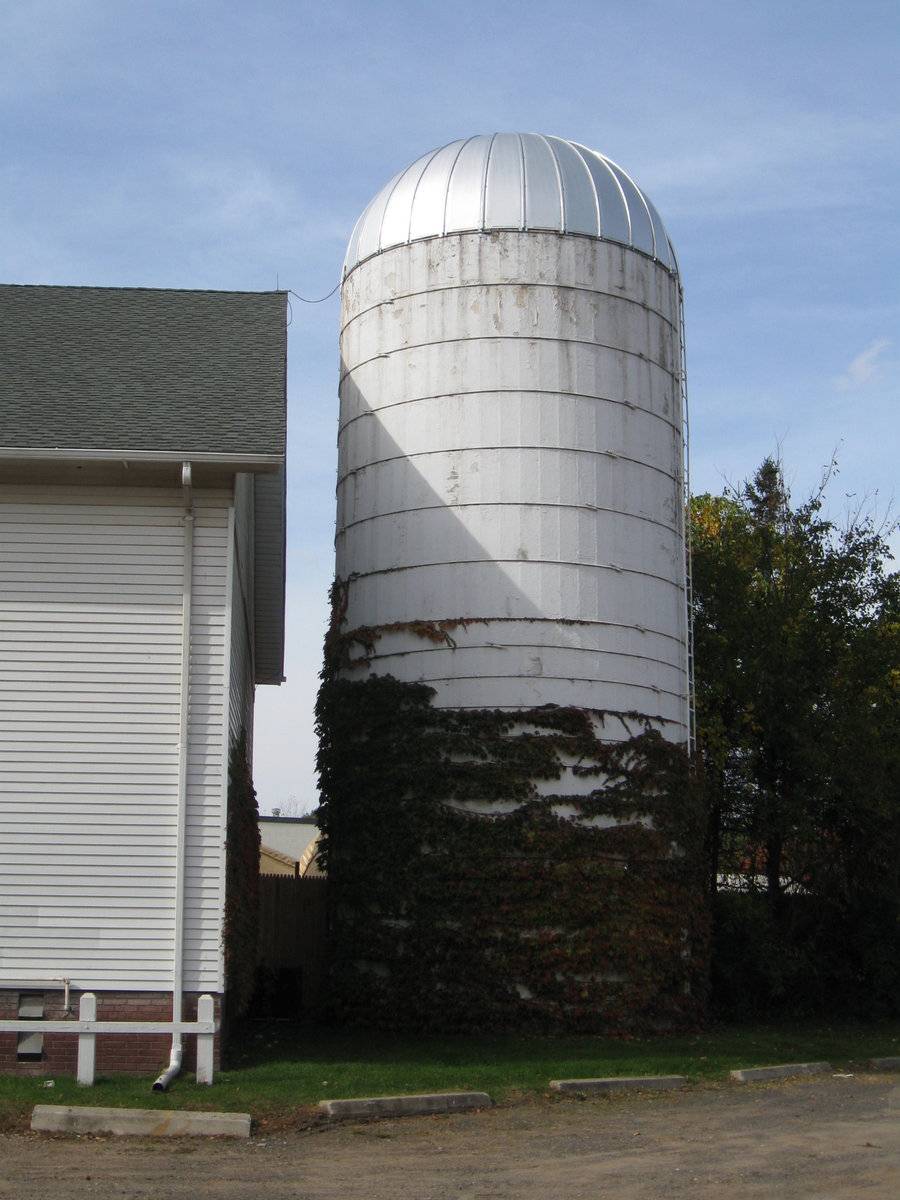
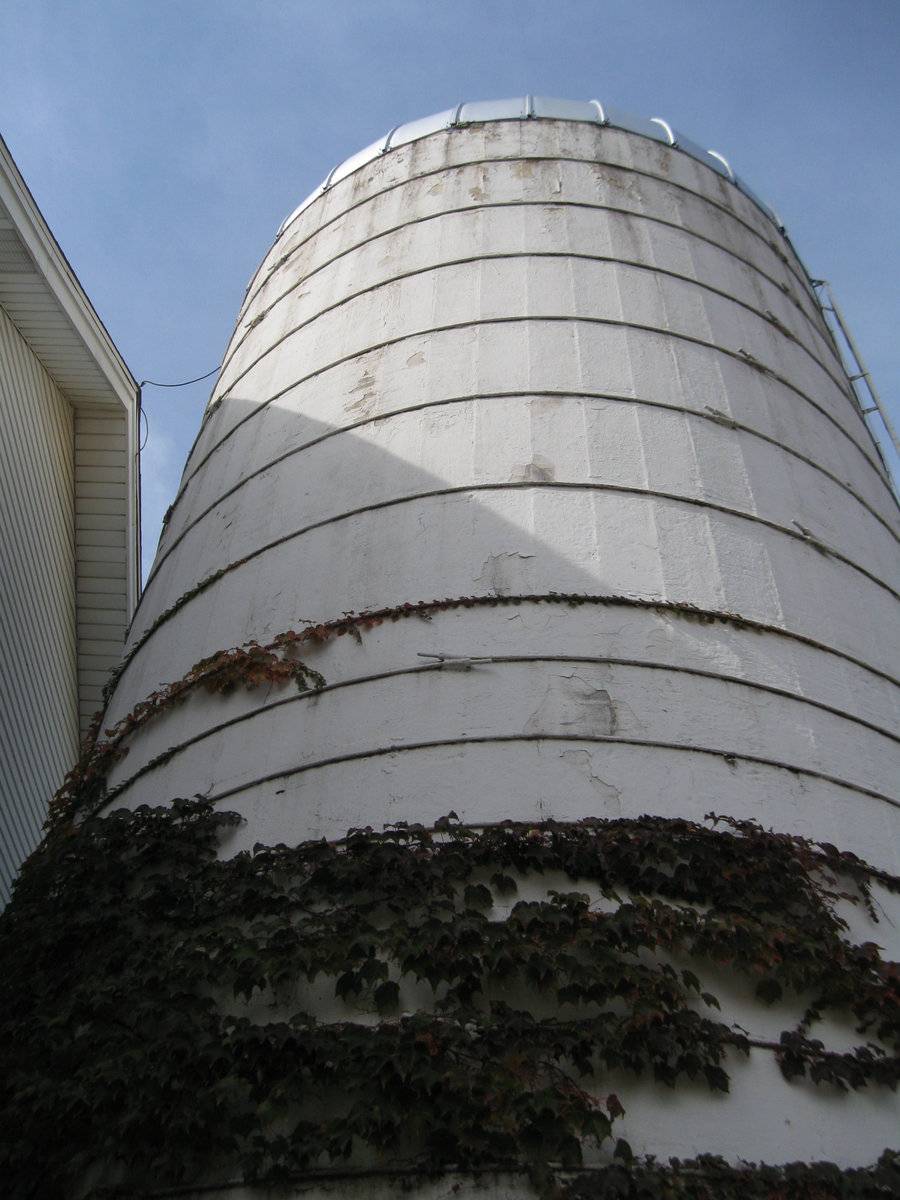
A concrete-walled silo with metal tension bands is located adjacent to the north gable-end. It is painted white, matching the barn siding, and has a silver metallic arched segmental roof.
Historical significance:The oldest barns still found in the state are called the “English Barn,” “side-entry barn,” “eave entry,” or a 30 x 40. They are simple buildings with rectangular plan, pitched gable roof, and a door or doors located on one or both of the eave sides of the building based on the grain warehouses of the English colonists’ homeland. The name “30 by 40” originates from its size (in feet), which was large enough for 1 family and could service about 100 acres. The multi-purpose use of the English barn is reflected by the building’s construction in three distinct bays - one for each use. The middle bay was used for threshing, which is separating the seed from the stalk in wheat and oat by beating the stalks with a flail. The flanking bays would be for animals and hay storage.
The 19th century saw the introduction of a basement under the barn to allow for the easy collection and storage of a winter’s worth of manure from the animals sheltered within the building. The bank barn is characterized by the location of its main floor above grade, either through building into a hillside or by raising the building on a foundation.
This innovation, aided by the introduction of windows for light and ventilation, would eventually be joined by the introduction of space to shelter more animals under the main floor of the barn.
Silo:
When chopped cornstalks are compressed to prevent their exposure to the air, the silage ferments instead of spoiling, providing nutritious food for the dairy herd and allowing them to produce milk through the winter. Early silos were built inside the barns, but by the 1890s free-standing silos were being built outside dairy barns. Constructed much like a very large wooden barrel, with adjustable steel hoops holding the vertical grooved staves together, the round wooden stave silo was widely accepted by dairy farmers in New England from the 1890s through the 1930s. Conical roofs are most common on wooden stave silos, usually covered with composition sheet roofing and topped with a metal ventilator. Removable wooden access doors extend up one side. The hoops were loosened in fall to accommodate the swelling of the wood as it absorbed moisture from the silage, and tightened over the winter as the silage dried.
Concrete silos were sometimes poured in place in one piece, but the more common practice was to pour large interlocking rings that were then stacked, or vertical concrete planks. As with wooden stave silos, the structures are held together with adjustable steel hoops, spaced about fifteen inches apart. Since concrete does not expand and contract with changes in moisture levels, the hoops on concrete stave silos were usually tightened only once after the structure was built. Inside, these silos are coated with a cement wash. In the mid-20th century, a system of metal panelized silos became the most advanced technology for silo construction, until silos were rendered obsolete by the current method of plastic shrink-wrapping.
Historical background:Originally part of the town of Farmington, Southington’s first settlement occurred in 1598, near the modern intersection of Pleasant and Woodruff Streets. Other settlers came north from New Haven and Wallingford. The earliest homes are documented in the “Colonial Houses of Southington Thematic Resource.”
In 1779 Southington incorporated. The town continued to grow, thanks to increased travel and prosperity along the New Haven Path, although population remained moderate. Farming was the basis of the Southington economy throughout the 19th century, leaving its mark in the remaining barns scattered throughout the town. As the soil became exhausted, farming diminished, with the exception of orchards in the hills in the east side of the town, and industry began to increase.
Waterpower provided by the Quinnipiac River, gave the town the means to process its agricultural goods. Gristmills and sawmills provided milling needs for the town. By the end of the 18th century, the mills were producing other products, such as buttons, combs, paper, and a variety of metal objects. The industrial transformation of Southington brought an increase in the population between 1850 and 1880. The prosperity brought on by new enterprises is reflected in Italianate and Queen Anne-style houses, many of which were built by the founders and officers of the manufacturing companies. Carriage barns associated with a number of these remain extant, often converted to use as garages.
The coming of the 20th century did not dampen Southington’s prosperity. The industrial demands of the two World Wars increased the population. Many of the old homes and barns are closely hemmed in by 20th-century development as the large acreages were sold off for residential building.
Field Notes
Concrete Silo with metal roof. Extensive connected buildings associated with large bank barn for retail sales of construction tools and truck rental. http://www.spdionline.com/index.html Superior Products Distributors, Inc. is located at 1403 Meriden Waterbury Rd (Rte 322, but the address for the barn is 212 Norton Street.
- Use & Accessibility
Use (Historic)
Use (Present)
Exterior Visible from Public Road?
Yes
Demolished
n/a
Location Integrity
Unknown
- Environment
Related features
Environment features
Relationship to surroundings
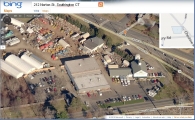
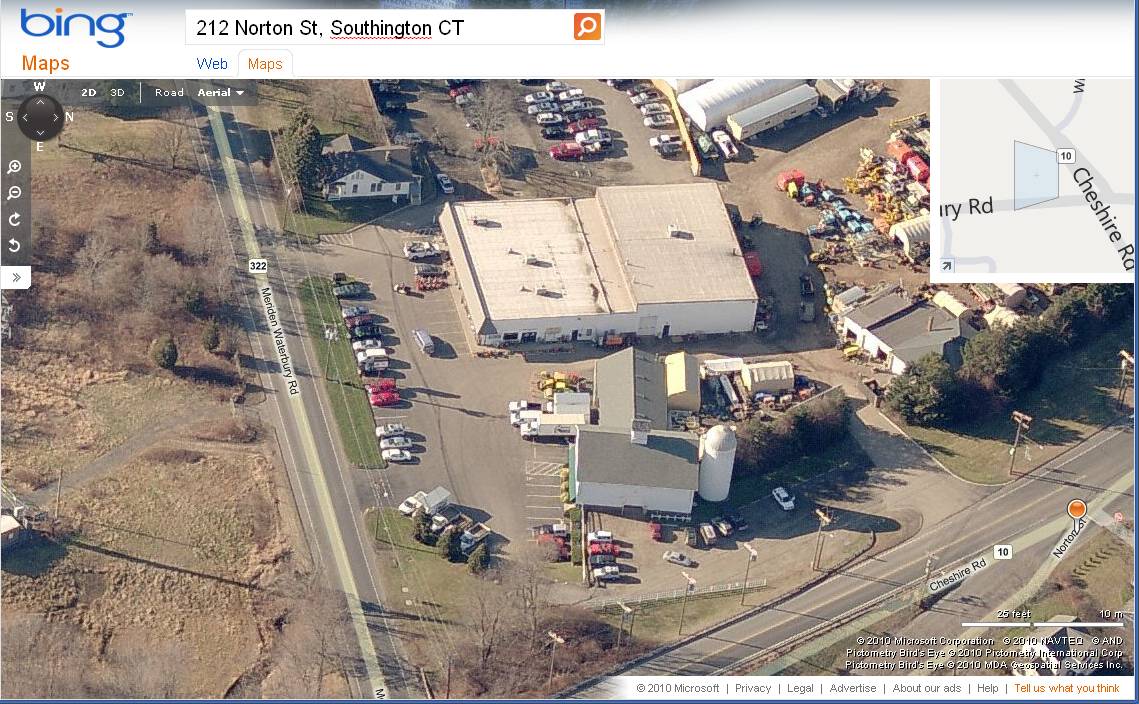
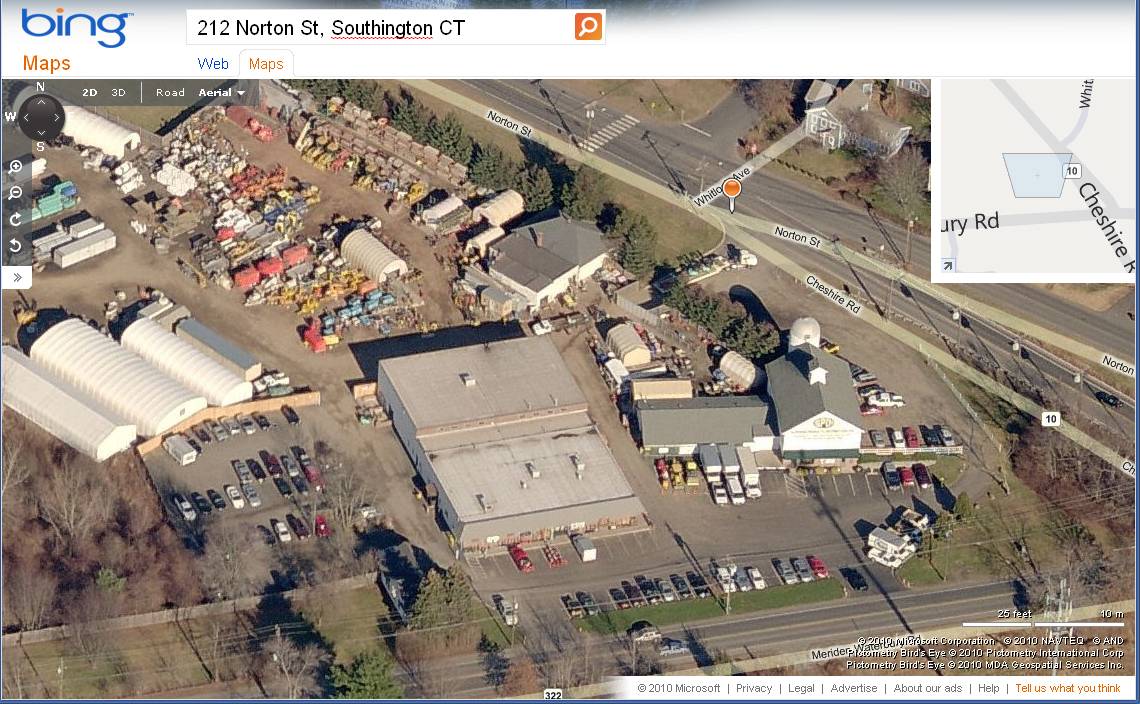
The site is located at the corner of Norton Street/Cheshire Road and Meriden Waterbury Road, close to the southern border of Southington, near the intersection of several major roads, including State Route 10, I-691, and I-84. The immediate vicinity is developed with a dense pattern of 20th-century residential subdivisions, but this 9-acre property remains in one ownership. At the southeast corner of the site, the old barn and silo are extant. Additional buildings for retail sales and warehousing of construction equipment and tools have been built to the west. An early 20th-century bungalow-style house is located approximately 200 feet west of the barn facing Meriden Waterbury Road. An open area remains west of the house, and the northern part of the site is occupied with storage yards for equipment. A second house is located north of the barn along Norton Street on a separate lot under the same ownership. To the south, between the road and highway, a wetland remains as open space.
- Typology & Materials
-
Building Typology
Materials
Structural System
n/a
Roof materials
Roof type
Approximate Dimensions
46 x 64 feet, west wing addition 36 x 74 feet, silo 15 feet diameter.
- Source
-
Date Compiled
11/15/2010
Compiled By
Charlotte Hitchcock, reviewed by CT Trust
Sources
Field notes and photographs by Charlotte Hitchcock date 10/20/2010.
Town of Southington Assessor’s Record & GIS Viewer http://www.southingtongis.com/ags_map/default.htm?MBL=031055
Parcel ID 031140 8.9 acres.Aerial Mapping:
http://maps.google.com
http://www.bing.com/maps accessed 11/11/2010.Andrews, Gregory, Sherrow, Doris, Colonial Houses of Southington Thematic Resource National Register Nomination, National Park Service, 1987.
Elliott, Janice L., Ransom, David F., Marion National Register District Nomination No. 88001423, National Park Service, 1988.
Lewis, Barbara, Andrews, Gregory, Plantsville National Register District Nomination No. 88002673, National Park Service, 1988.
Ransom, David, Johnson, Lisa Fern, Southington Center National Register District Nomination No. 88002961, National Park Service, 1988.
Sexton, James, PhD, Survey Narrative of the Connecticut Barn, Connecticut Trust for Historic Preservation, Hamden, CT, 2005, http://www.connecticutbarns.org/history.
Visser, Thomas D., Field Guide to New England Barns and Farm Buildings, University Press of New England, 1997.
- PhotosClick on image to view full file
-