Barn Record Coventry
RETURN TO ‘FIND BARNS’- Building Name (Common)
- Byron Hill Farm
- Building Name (Historic)
- Lester & Judith Hill Farm
- Address
- 77 Silver Street, Coventry
- Typology
- Overview
-
Designations
Historic Significance
Architectural description:
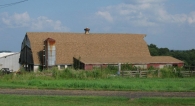
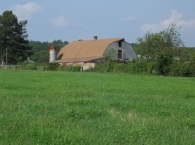
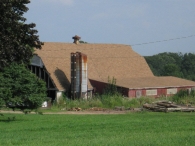
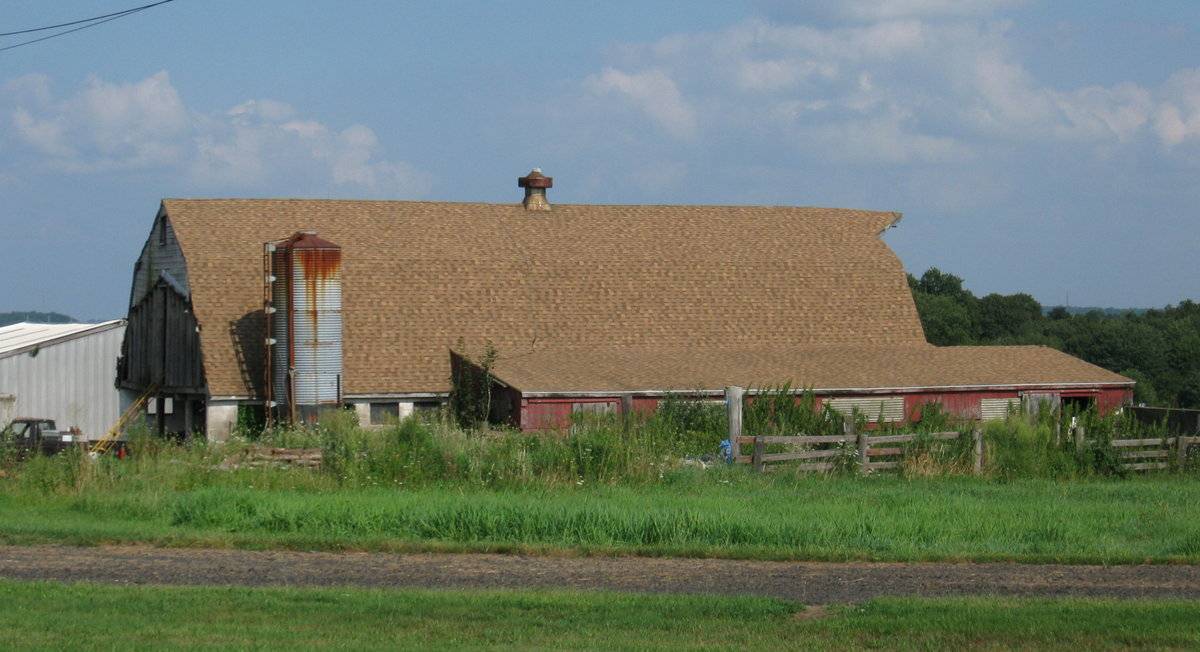
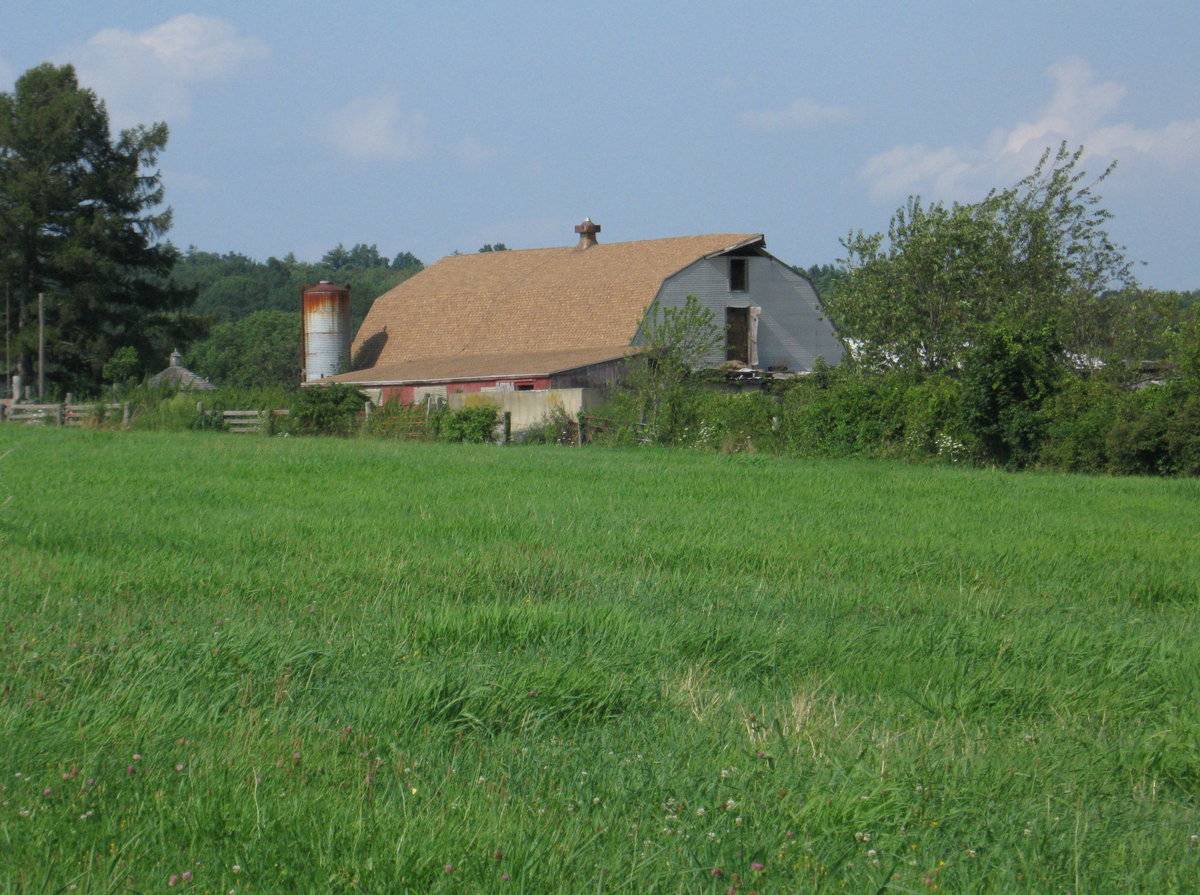
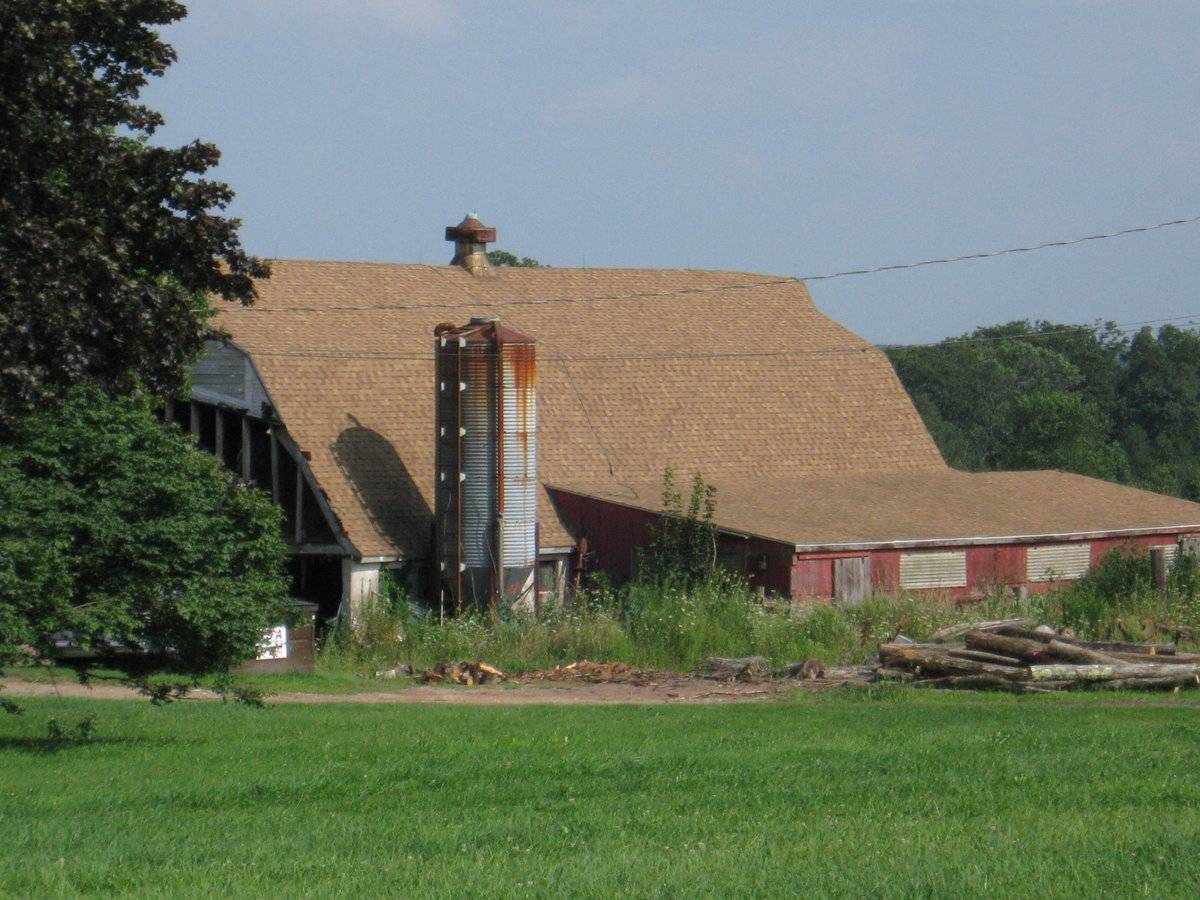
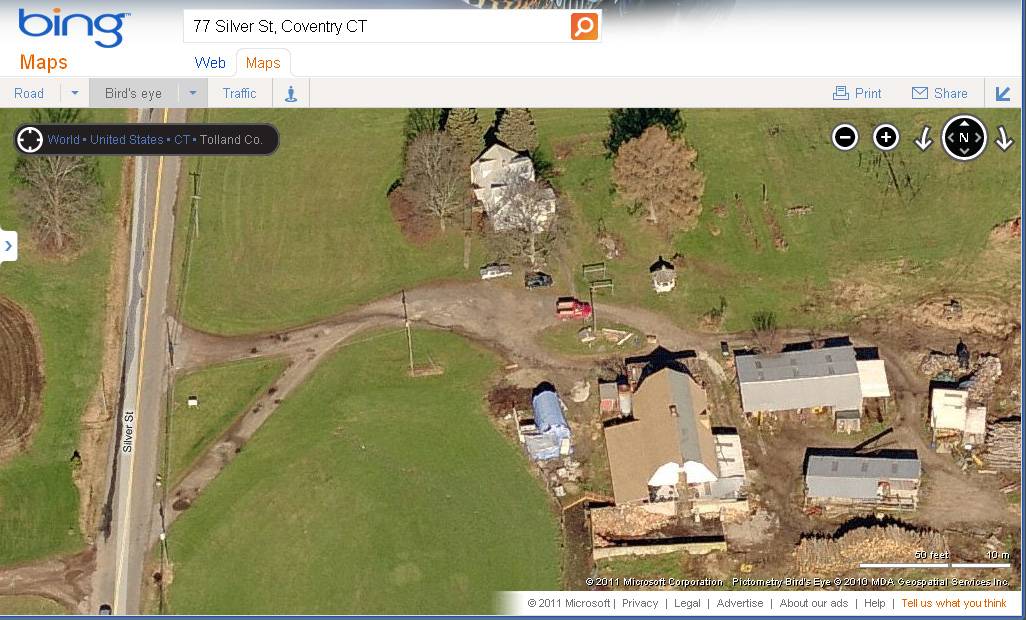
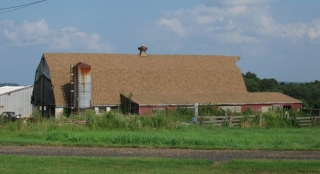
This is a 1 1/2-story gable-entry gambrel-roofed barn with its ridge-line oriented north-south. It has concrete block masonry foundations on the eave sides and wood framing at the gable ends. The north gable-end once had a connecting barn attached, now gone. Most of the sheathing that covered this facade is also gone. What remains is a small covered area of vertical siding under the apex. Just below the apex is a single window space. The west eave-side has a metal silo next to the barn and a shed-roofed addition along most of the side, extending past the south gable end. Atop the gambrel roof, in the center of the barn is a metal ventilator. Both the barn and the addition have asphalt shingle roofs. The south gable-end has a centered hay door, a single window above it, and a hay hood above both. This facade is covered in vinyl siding. A series of other small outbuildings complete the complex.
Historical significance:
The New England barn or gable-front barn was the successor to the English barn and relies on a gable entry rather than an entry under the eaves. The gable front offers many practical advantages. Roofs drain off the side, rather than flooding the dooryard. With the main drive floor running parallel to the ridge, the size of the barn could be increased to accommodate larger herds by adding additional bays to the rear gable end. Although it was seen by many as an improvement over the earlier side entry English Barn, the New England barn did not replace its predecessor but rather coexisted with it.
By the early 20th century agricultural engineers developed a new approach to dairy barn design: the ground-level stable barn, to reduce the spread of tuberculosis bacteria by improving ventilation, lighting, and reducing the airborne dust of manure. A concrete slab typically serves as the floor for the cow stables. Many farmers converted manure basements in older barns into ground-level stables with concrete floors. Some older barns were jacked up and set on new first stories to allow sufficient headroom. With the stables occupying the entire first story, the space above serves as a hayloft. By the 1920s most ground-level stable barns were being constructed with lightweight balloon frames using two-by-fours or two-by-sixes for most of the timbers. Novelty or tongue-and-groove beveled siding is common on the walls, although asbestos cement shingles also were a popular sheathing. Some barns have concrete for the first-story walls, either poured in place or built up out of blocks.
The gambrel roof design was universally accepted for ground-level stable barns as it enclosed a much greater volume than a gable roof did, and its shape could be formed with trusses that did not require cross beams, which would interfere with the movement and storage of hay. Also known as the curb roof, the double slopes of the gambrel offer more volume in the hayloft without increasing the height of the side walls.
In 1913, a Pennsylvania brick layer, Francis Straub, invented a system of making block out of waste cinders. The product, known as cinder block, was light weight and able to hold nails. Cinder blocks are a general term and includes concrete bock, cement block and foundation block. Cinder block foundations were an inexpensive and sanitary alternative to field-stone foundations.
The first ventilators were simple wooden louvered boxes with gable roofs, mounted near the ridge of the barn. The object of the cupola (or ventilator TL) is to protect the opening of the flue from the elements, keep out birds, prevent backdrafts as far as possible, and assist in drawing the foul air from the barn. Later, metal ventilators were introduced to offer more efficient ventilation with less maintenance. By the early twentieth century, prefabricated galvanized-steel ventilators were being marketed across the country. Despite sometimes being ornamented with finials or weathervanes, they lacked the romantic feel of the wooden cupola. The factory-produced steel ventilator symbolized another step in the movement towards an industrial approach to farming.
Field Notes
A substantial dairy farm with a gambrel barn, a shed along the southwest side, and indications of a former addition to the north, now demolished. Possibly not in active farming at present. 1954 house/ dairy barn 37x98 1875/ 16x70 addon 1970/ pole barn 28x60 1968/ 2c gar 22x 25 1942/ shed 4x7/ milkroom 14x14.5/ bank silo 32x80 barn& shed 14x35/ shed 14x14. coop 9x12/ hen house 14x18/ shed 12x16 Listed on the State Register in 1974 by inclusion in a Study Report for a local historic district, Coventry Historic District No.2, which was recommended by the Historic Preservation Council but was not enacted by the municipality.
- Use & Accessibility
Use (Historic)
Use (Present)
Exterior Visible from Public Road?
Yes
Demolished
No
Location Integrity
Unknown
- Environment
Related features
Environment features
Relationship to surroundings
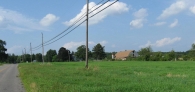
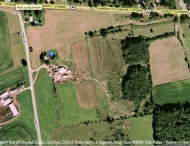
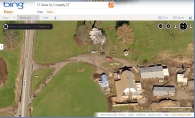
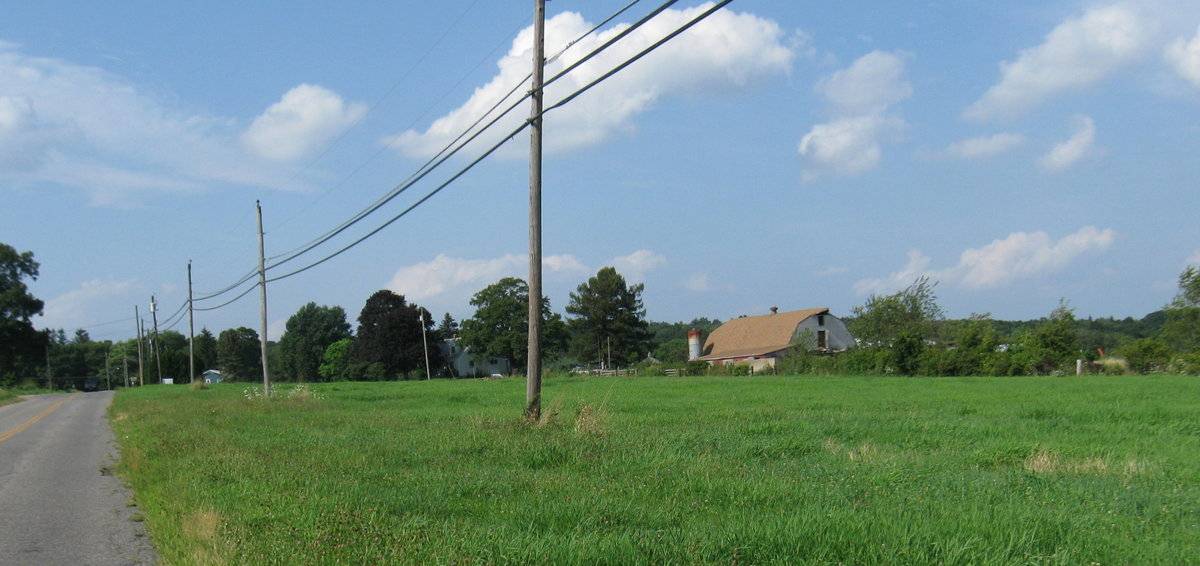
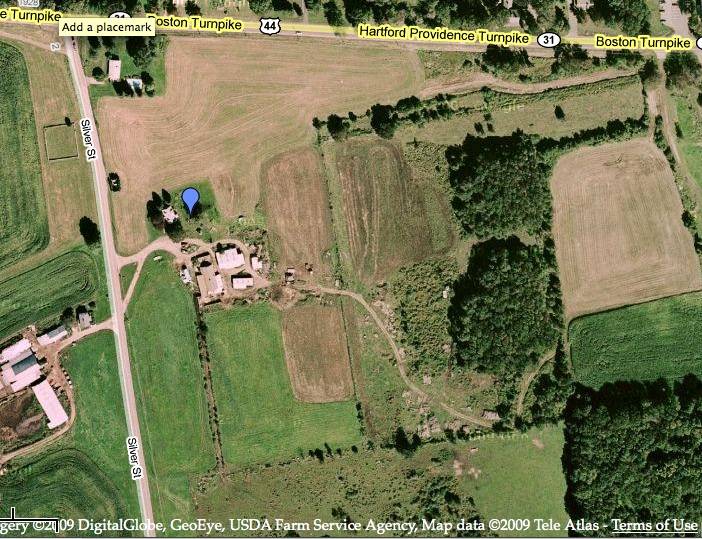
Silver Street extends south from the main road, Boston Turnpike (US Route 44) to South Street, and is the site of several significant historic farmsteads, now a mix of working dairy and gentleman/equstrian farms. Woodland acreage is interspersed with areas of open fields. To the west suburban subdivisions have sprung up during the late 20th century, but Silver Street remains as a series of large properties. Here at the southeast corner of Silver Street and Boston Turnpike, a former dairy farm includes 59 acres of open pasture and some woodlands, a farmhouse, a major gambrel dairy barn southeast of the house, and several pole barns or sheds to the east of the main barn. Two driveway entrances from Silver Street join together and extend eastward, along the south of the house and north of the main barn. Equipment and piles of logs indicate a current use other than dairy farming. The house is a c. 1954 cape style building, with its ridge-line oriented roughly north-south and its eave-side entry facing west toward Silver Street. It is set far back from the road and is surrounded on all sides by open fields. The barn complex is located to the southeast of the house.
- Typology & Materials
-
Building Typology
Materials
Structural System
Roof materials
Roof type
Approximate Dimensions
37 x 98 feet
- Source
-
Date Compiled
06/30/2011
Compiled By
T. Levine, C. Hitchcock, reviewed by CT Trust
Sources
Photographs by Charlotte R. Hitchcock 09/09/2009
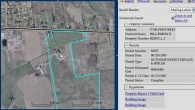
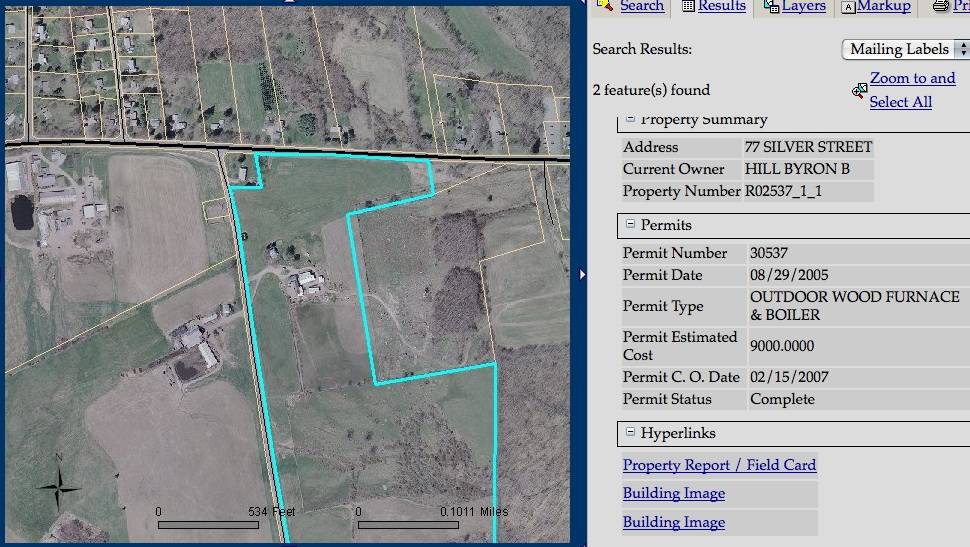
Assessor’s Record and GIS Viewer: http://ceo.fando.com/coventry/find.aspx?service=Coventry
Parcel ID: 0010 0017 0019 59 acres House date 1954
Barn 1story 1620.00 sf
Barn 1story 960.00 sf
Barn w/Loft 2520.00 sf
Gazebo 81.00 sf
Lean-to 952.00 sf
Shed-utility 1008.00 sf
Shed-utility 1080.00 sf
Shed-utility 224.00 sf
Shed-utility 465.00 sfAerial Mapping:
http://maps.google.com
http://www.bing.com/maps accessed 6/30/2011.Sexton, James, PhD, Survey Narrative of the Connecticut Barn, Connecticut Trust for Historic Preservation, Hamden, CT, 2005, http://www.connecticutbarns.org/history.
Visser, Thomas D., Field Guide to New England Barns and Farm Buildings, University Press of New England, 1997.
- PhotosClick on image to view full file
-