Barn Record Kent
RETURN TO ‘FIND BARNS’- Building Name (Common)
- n/a
- Building Name (Historic)
- n/a
- Address
- 5 Old Barn Road, Kent
- Typology
- Overview
-
Designations
n/a
Historic Significance
Architectural description:
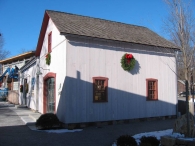
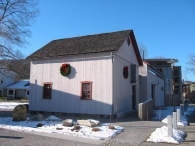
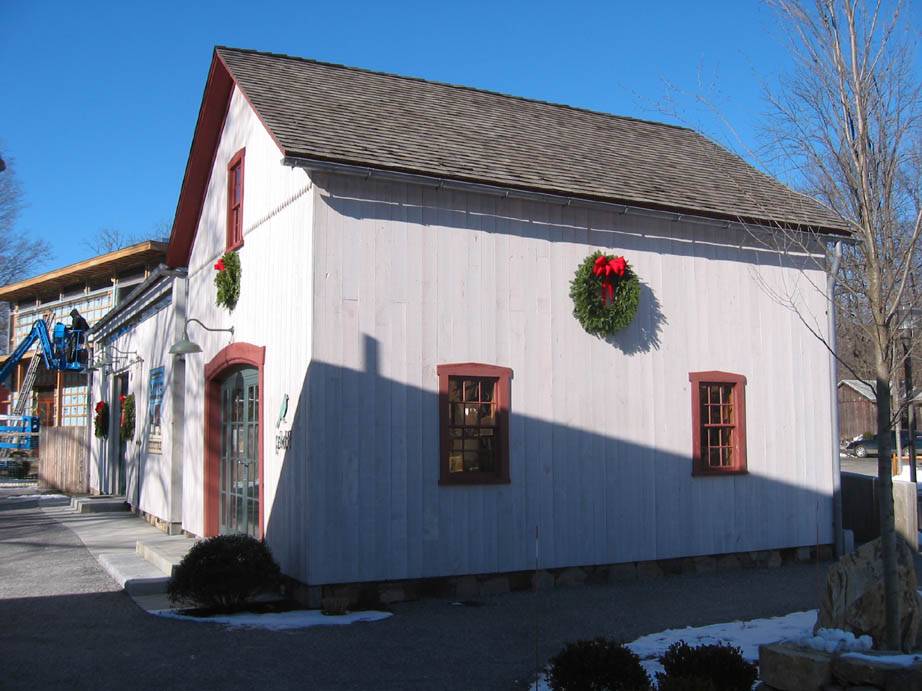
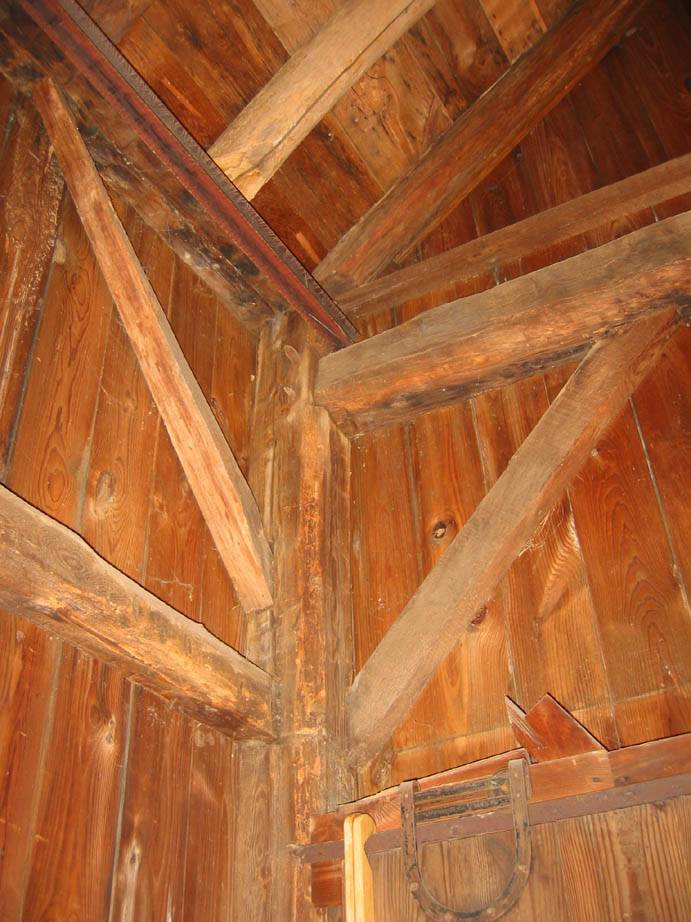
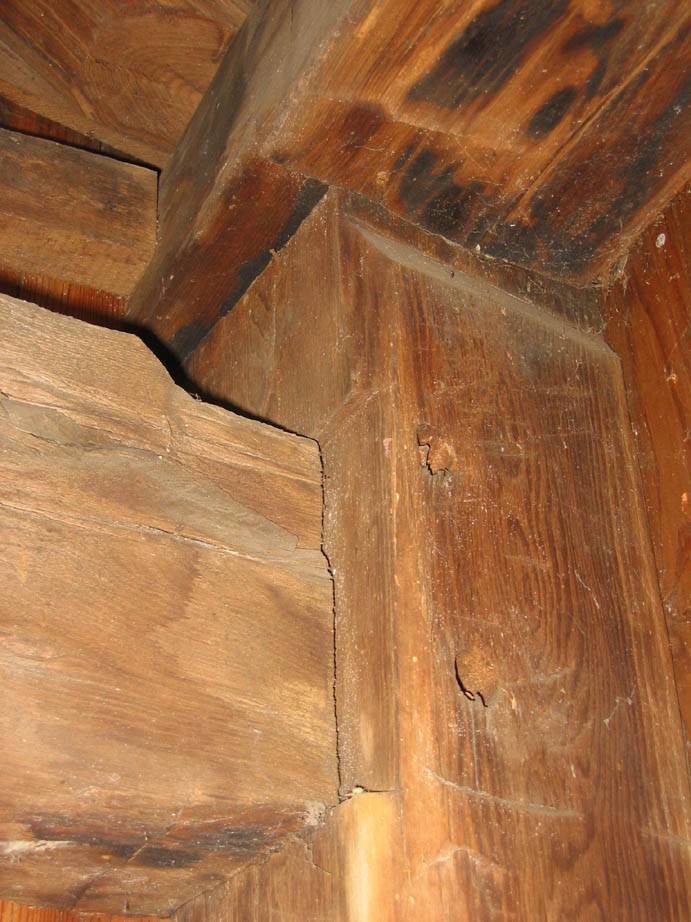
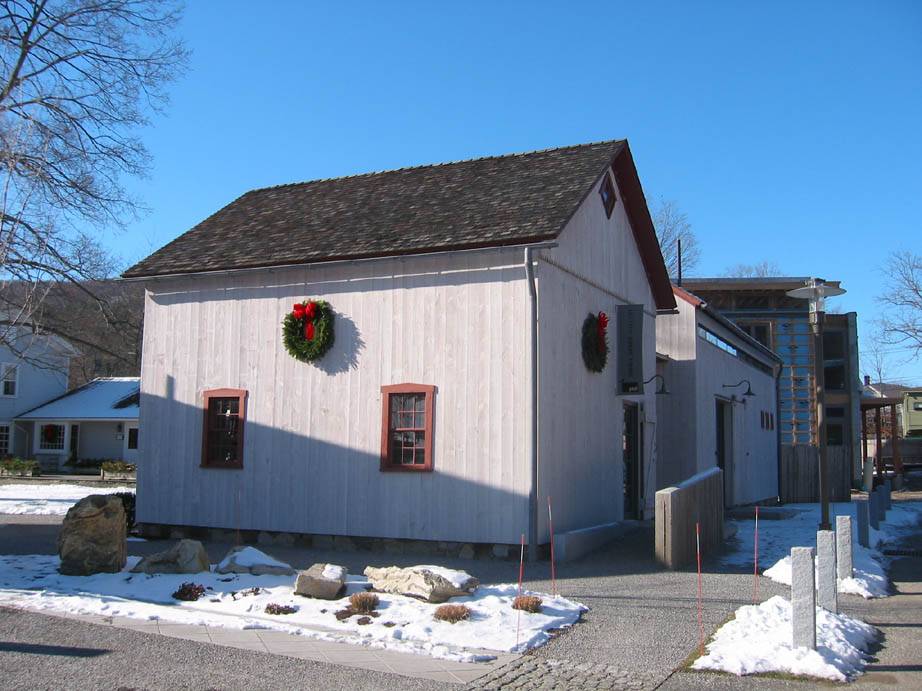
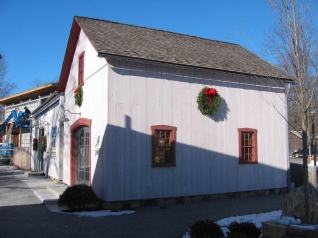
This is a pair of 1 1/2-story gable-roofed structures. An eave-entry barn structure to the west is attached by a connector to a gable-entry structure to the east. The main façade faces southwest and the ridge-line of the western block is perpendicular to Old Barn Road, which runs approximately southwest to northeast while the ridge-line of the eastern block is parallel to Old Barn Road. In the southwest facade are two entries, a pair of glazed French-doors with four-pane sidelights under a low-rising arch in the gable-end of the eastern block and a wide doorway in the eave-side of the western block. There is a six-over-six double-hung window centered in the gable of the southwest gable-façade of the eastern block. Recessed between the two blocks is a modern glazed hyphen connector. The northeast gable-end of the eastern barn has a single glazed French-door to the north and a single-pane diamond shaped window near the apex. The southeast eave-side of the barn has two evenly spaced six-over-six double-hung windows. The barn is covered in flush-board painted a pale ochre with a pink/terracotta color trim and cornice boards. The girt line siding divide is ornamented with serrated sawn ends of the attic siding board. The roof is covered in wood shingles. The foundation is fieldstone.
Historical significance:Until the 1830s, the horses used for riding and driving carriages were often kept in the main barn along with the other farm animals. By the 1850s, some New England farmers built separate horse stables and carriage houses. Early carriage houses were built just to shelter a carriage and perhaps a sleigh, but no horses. The pre-cursor to the twentieth-century garage, these outbuildings are distinguished by their large hinged doors, few windows, and proximity to the dooryard. The combined horse stable and carriage house continued to be a common farm building through the second half of the nineteenth century and the first decade of the twentieth century, until automobiles became common. Elaborate carriage houses were also associated with gentlemen farms and country estates of the late 19th and early 20th centuries. Another form of carriage barn, the urban livery stable, served the needs of tradespeople.
Field Notes
This barn is a good reminder that barns come in all sizes and were constructed to meet the needs of the farmer. The barn is now part of a shopping complex.
- Use & Accessibility
Use (Historic)
Use (Present)
Exterior Visible from Public Road?
Yes
Demolished
n/a
Location Integrity
Unknown
- Environment
Related features
Environment features
Relationship to surroundings
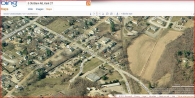
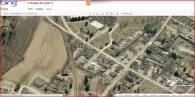
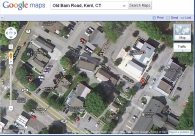
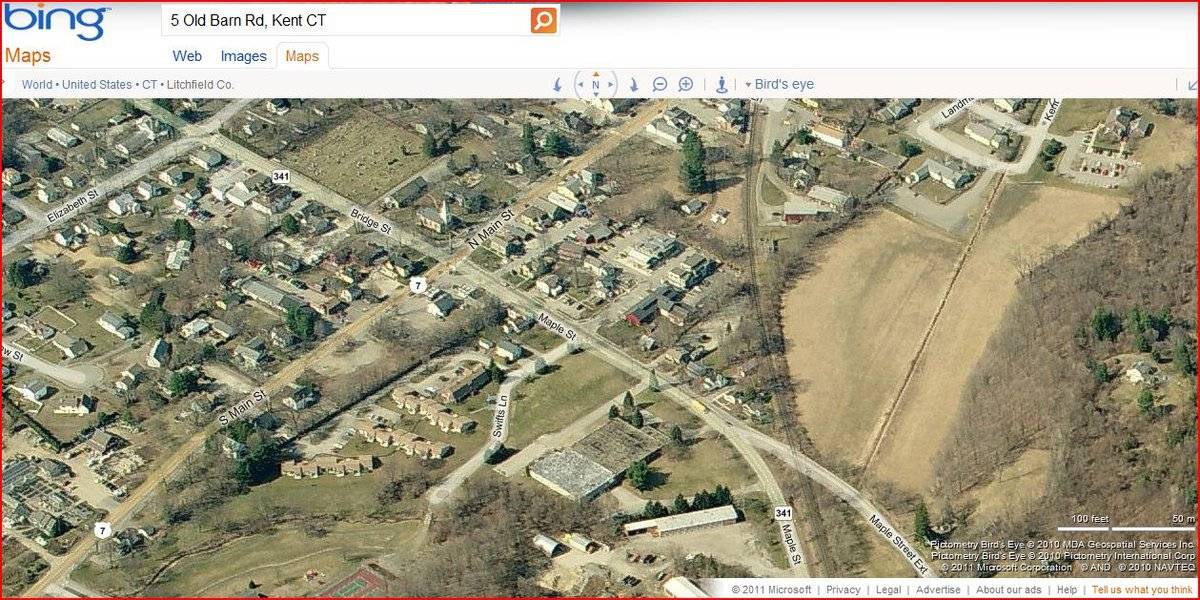
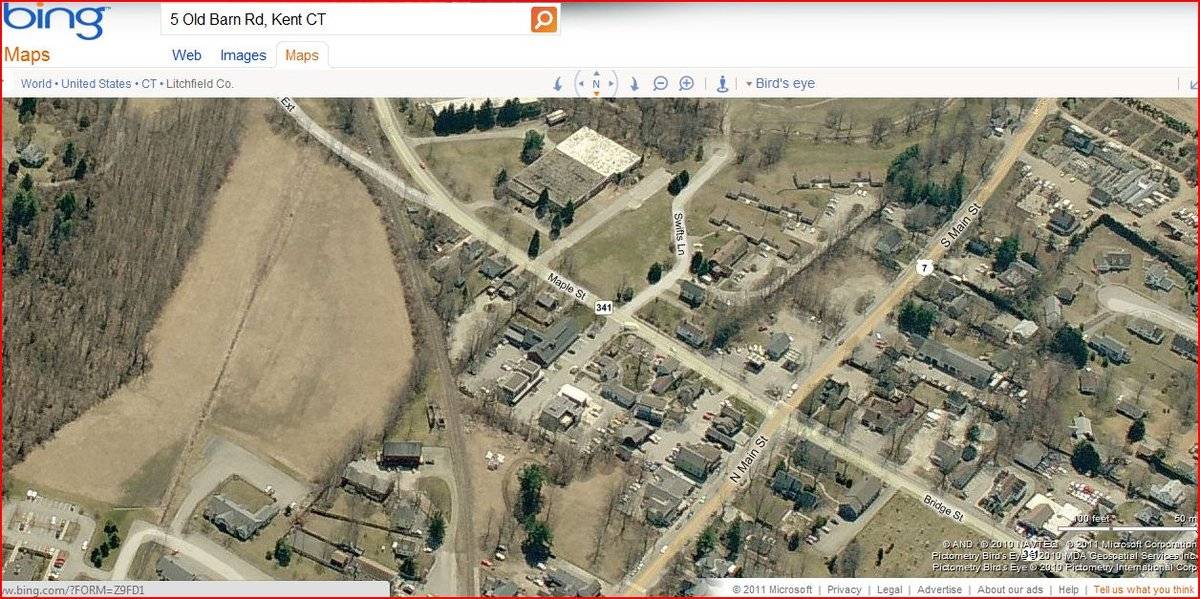
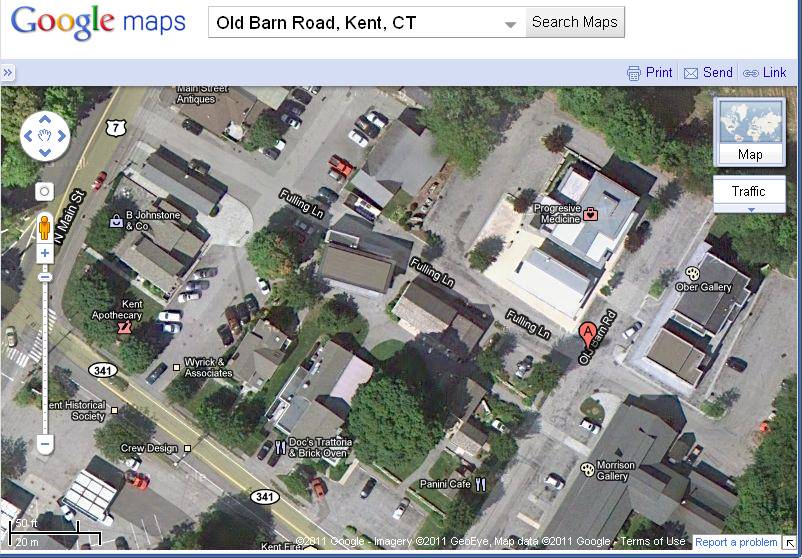
The barn sits to the center and north of the market complex with which it is associated, which is located northeast of the center of Kent, the intersection of US Route 7 (N/S Main Streets) and Maple Street (CT Route 341). Old Barn Road is the shopping center access road from the north side of Maple Street. Directly adjacent to the northeast gable-end of the barn is Fulling Lane, a shopping center access road from the east side of North Main Street. To the southeast is a parking lot and further beyond are two barns which have been converted to galleries. The barn sits within the main town-center of Kent and is part of a commercial district. The area surrounding the site is mixed-use commercial and dense residential.
- Typology & Materials
-
Building Typology
Materials
Structural System
Roof materials
Roof type
Approximate Dimensions
23x20, 460 sq. ft.
- Source
-
Date Compiled
02/20/2011
Compiled By
TR Revella & T. Levine, reviewed by CT Trust
Sources
Field notes and photographs by James Sexton Phd.
Aerial Mapping:
http://maps.google.com/maps accessed 3/15/2011.
http://www.bing.com/maps accessed 02/20/2010.Sexton, James, PhD, Survey Narrative of the Connecticut Barn, Connecticut Trust for Historic Preservation, Hamden, CT, 2005, http://www.connecticutbarns.org/history.
Visser, Thomas D., Field Guide to New England Barns and Farm Buildings, University Press of New England, 1997.
- PhotosClick on image to view full file
-