Barn Record Stafford
RETURN TO ‘FIND BARNS’- Building Name (Common)
- J. J. Ellis House and Carriage Barn
- Building Name (Historic)
- J. J. Ellis House and Carriage Barn
- Address
- 38 Highland Terrace, Stafford
- Typology

- Overview
-
Designations
n/a
Historic Significance
Architectural description:
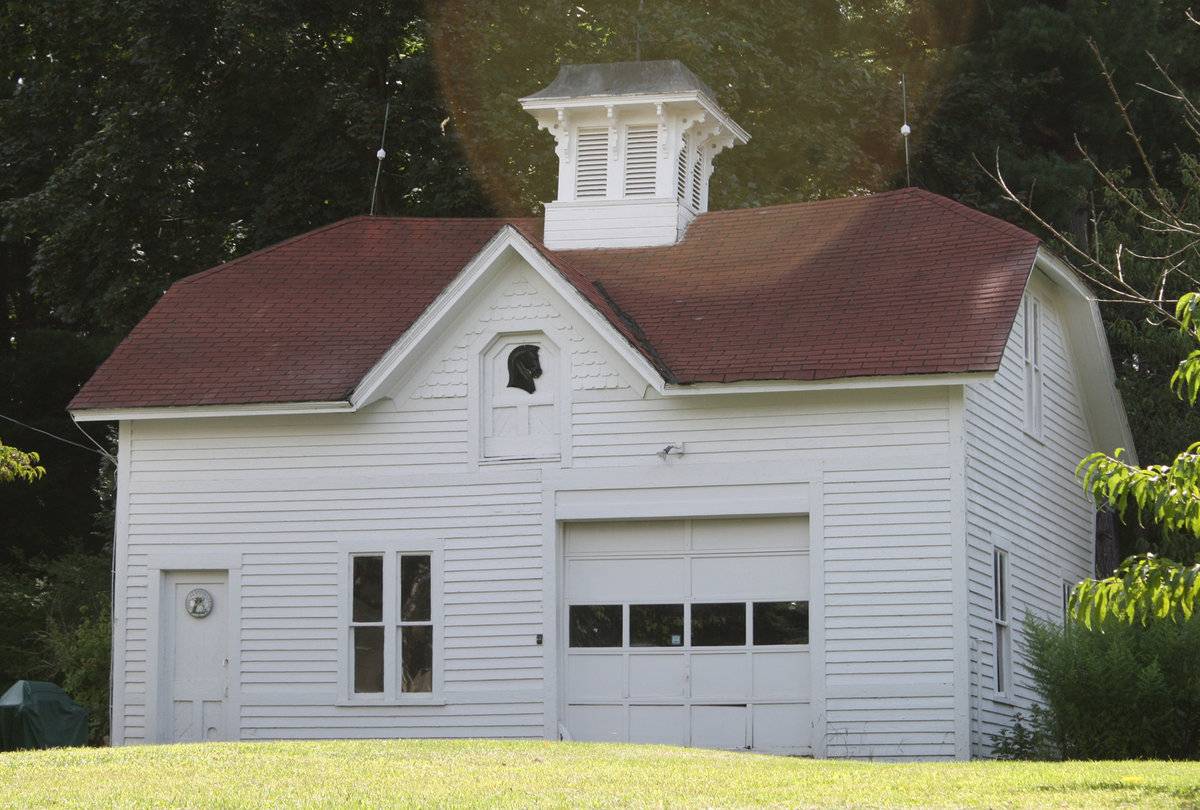
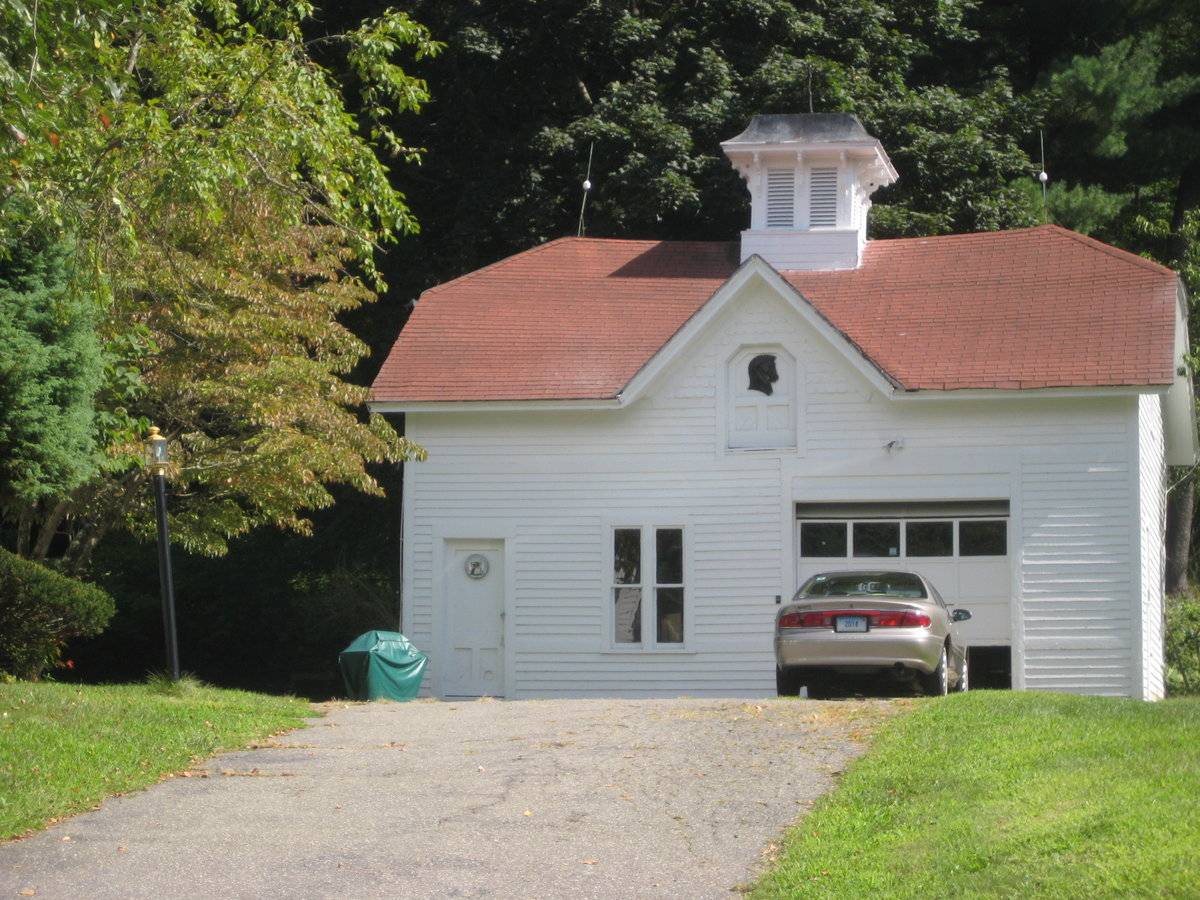
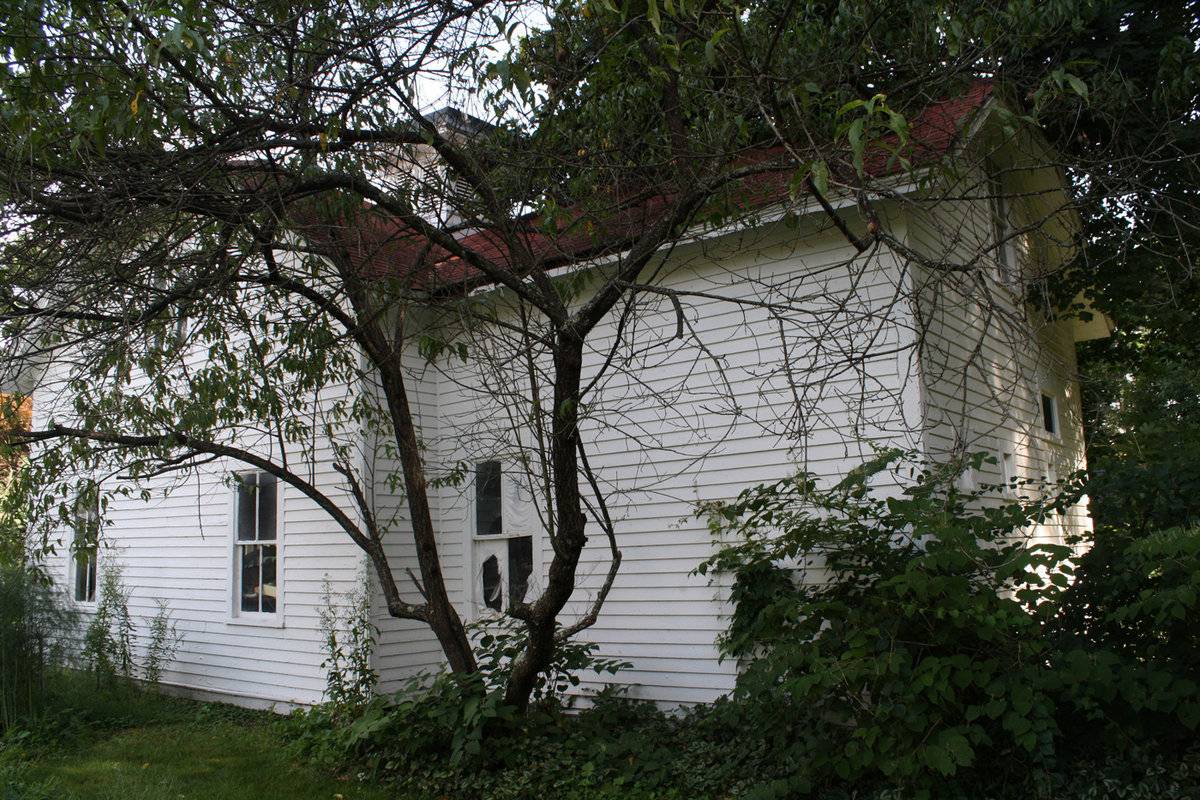
This is a Victorian carriage house with a clipped or jerkin-head gable roof and a wall dormer in the front (west) eave-side facade. The main eave-side faces Highland Terrance, which runs roughly north-south. The south half of the facade has an overhead garage door. The north half has a pass-through door and a pair of narrow one-over-one double hung windows. Beneath the apex of the cross gable is a recessed, hay door with chamfered upper corners and a horse head plaque in the center.
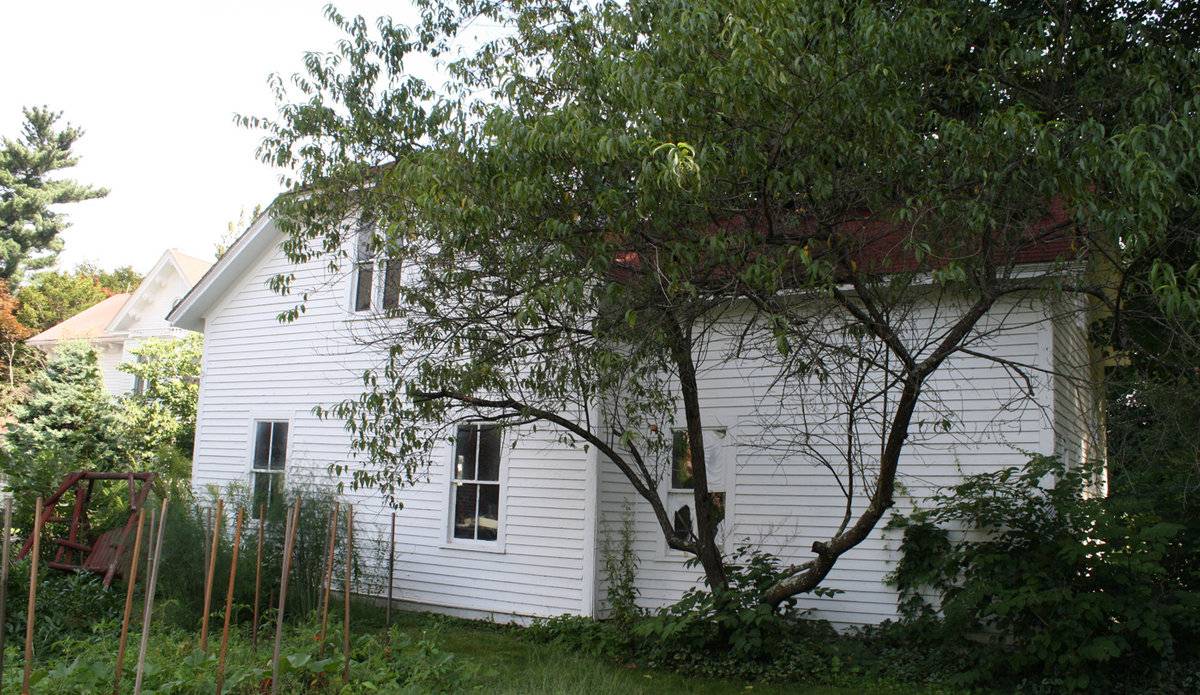
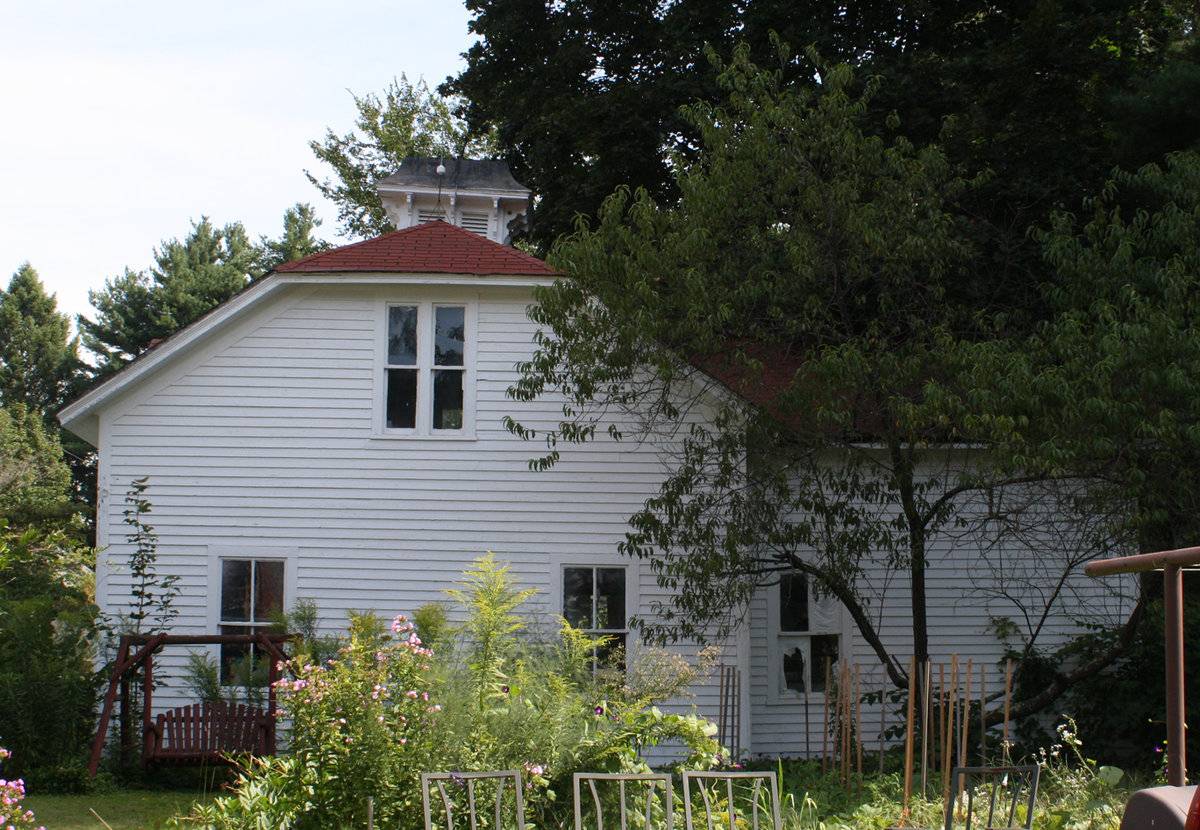
The south gable-end has two two-over-two double hung windows on the ground floor and a pair of narrow one-over-one double hung windows at the loft level. At the east side, a 1 1/2-story gable-roofed ell extends eastward. The ell has one two-over-two double hung window in its south eave-side and three square stable windows in the east gable-end. There is a small window opening above the rightmost (north) of the stable windows and a two-over-two double hung window in the attic under the peak. The north gable-end matches the south.
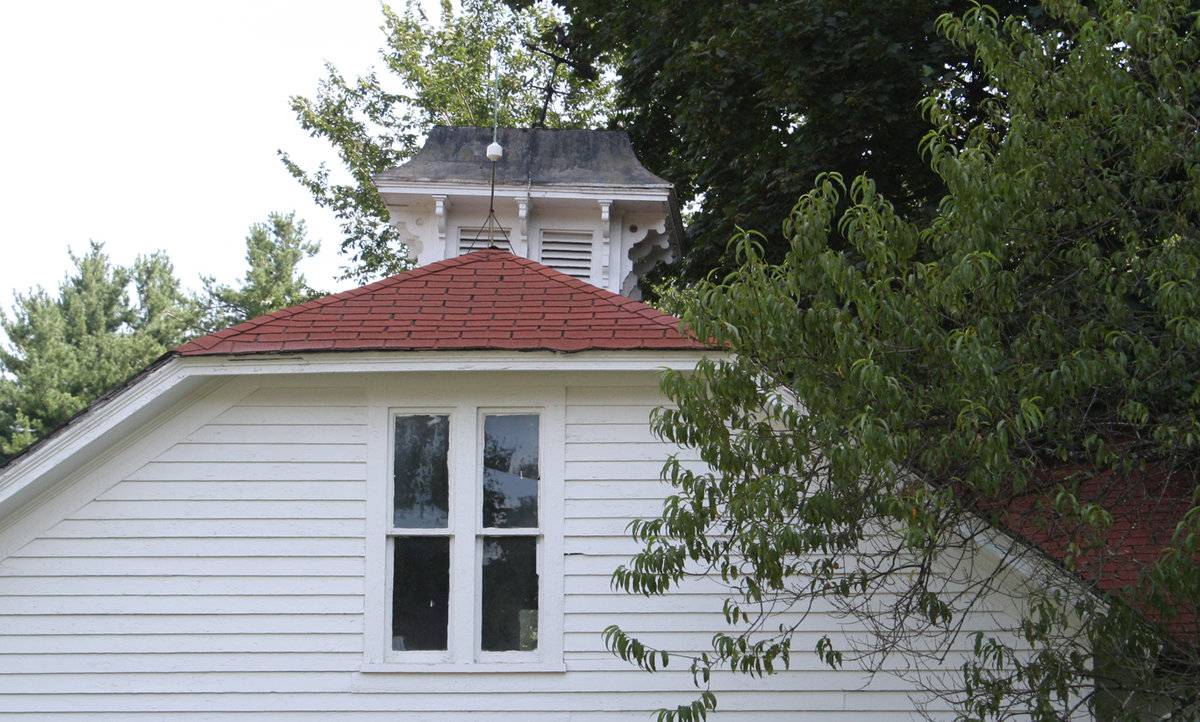
The structure has clapboard siding and corner board trim except in the dormer, where there are fish-scale shingles; siding is painted white. The roof has red asphalt shingles and a Mansard-roofed cupola a pair of louvered openings on each side and elaborate Italianate-style brackets under the soffits.
Historical significance:Until the 1830’s, the horses used for riding and driving carriages were often kept in the main barn along with the other farm animals. By the 1850’s, some New England farmers built separate horse stables and carriage houses. Early carriage houses were built just to shelter a carriage and perhaps a sleigh, but no horses. The pre-cursor to the twentieth-century garage, these outbuildings are distinguished by their large hinged doors, few windows, and proximity to the dooryard. The combined horse stable and carriage house continued to be a common farm building through the second half of the nineteenth century and the first decade of the twentieth century, until automobiles became common.
The long reign of Britain’s Queen Victoria lasted from 1837 to 1901 and, in the most precise sense, this span of years makes up the Victorian eta. In American architecture, it is those styles that were popular during the last decades of her reign-from about 1860-1900-that are generally refereed to as Victorian. During this period rapid industrialization and the growth of the railroads led to dramatic changes in American house design and construction. The balloon frame made up of light, two-inch boards held together by wire nails, was rapidly replacing heavy-timber framing as the standard building technique. This, in turn, freed houses from their traditional box-like shapes by greatly simplifying the construction of corners, wall extensions, overhangs, and irregular ground plans.
The first ventilators were simple wooden louvered boxes with gable roofs, mounted near the ridge of the barn. The successor to the ventilator was the more romantic cupola. Coinciding with the Italianate style of domestic architecture popular during the mid-nineteenth century, the room-sized cupola, embellished with decorative brackets and a copper weathervane, became a symbol of modern farming during the early Victorian era. The object of the cupola is to protect the opening of the flue from the elements, keep out birds, prevent back drafts as far as possible, and assist in drawing the foul air from the barn. The cupola was replaced in the early twentieth century by the factory-produced steel ventilator, symbolizing another step in the movement towards an industrial approach to farming.
Clipped gable roof is made when the end of a roof is formed into a shape intermediate between a gable and a hip; the gable rises about halfway to the ridge, resulting in a truncated shape, the roof being inclined backward from this level. Also called a jerkinhead or shreadhead.
Historical background:
J.J. Ellis was a partner with his brother A.D. Ellis in a mill at Orcuttville founded by their father D.W. Ellis and Parley Converse, father of Julius whose estate of Woodlawn occupied the valley to the north overlooked by the homes on Highland Terrace.
Field Notes
Fanciful Victorian carriage barn with clipped gable roof and ornate Mansard cupola.
- Use & Accessibility
Use (Historic)
Use (Present)
Exterior Visible from Public Road?
Yes
Demolished
n/a
Location Integrity
Original Site
- Environment
Related features
Environment features
Relationship to surroundings
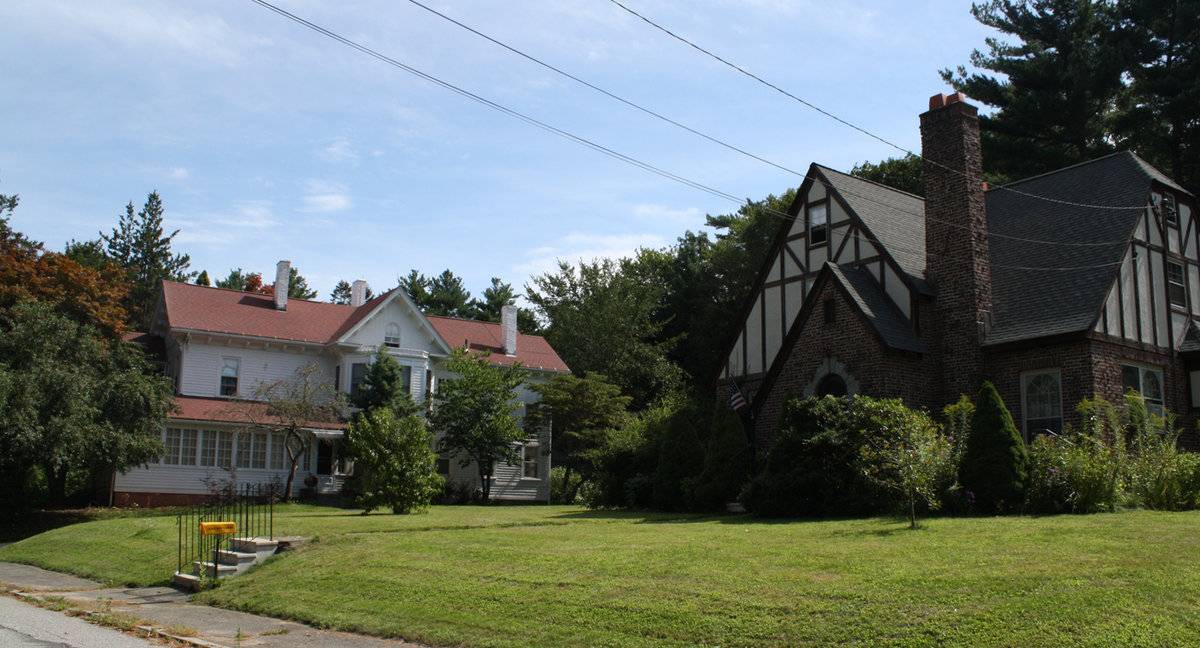
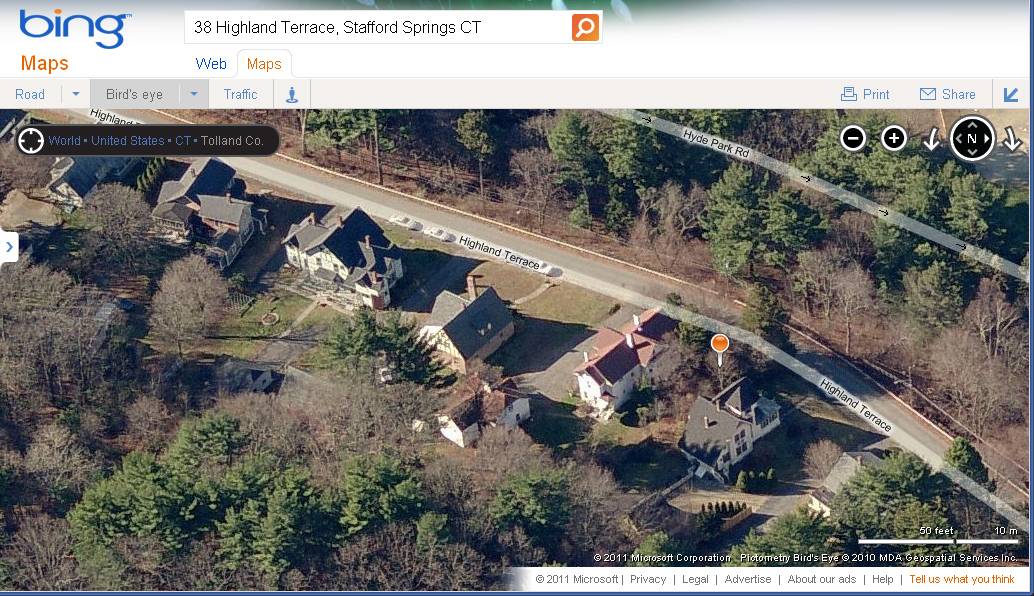
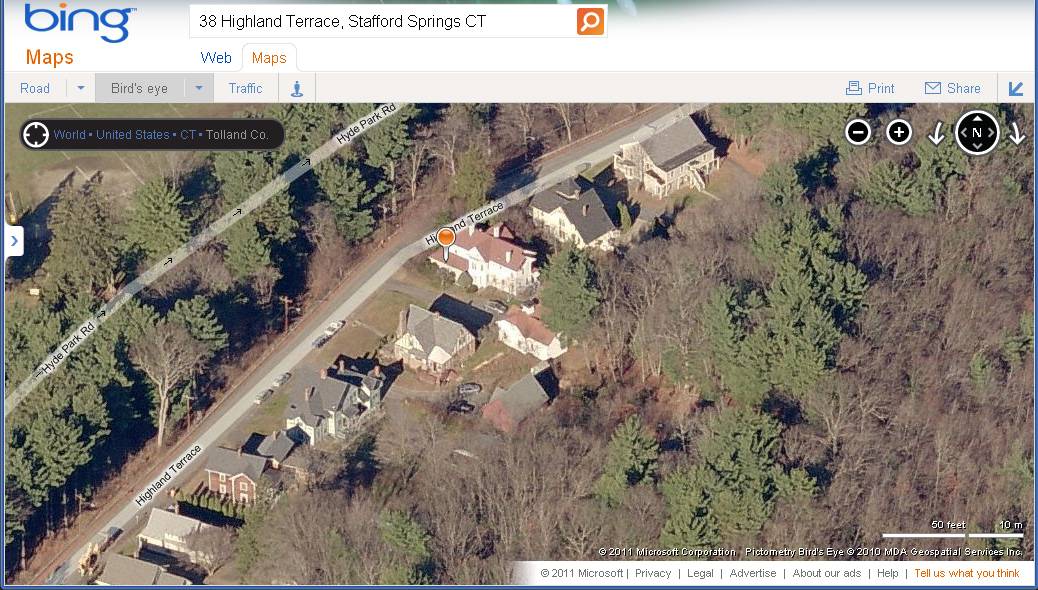
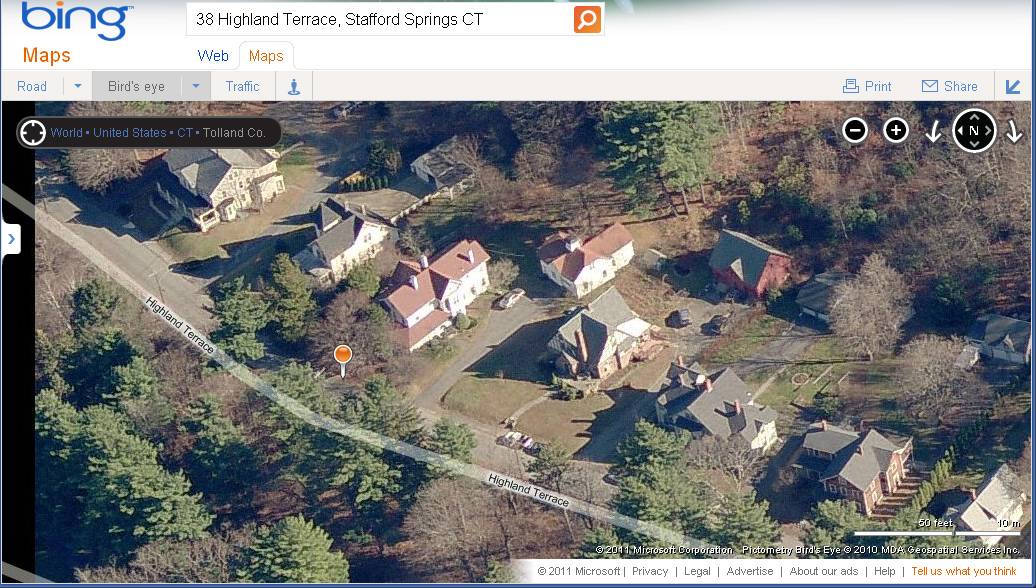
The carriage house is behind and to the southeast of the c. 1899 house with which it is associated. The ridgeline of the carriage house is oriented roughly north-south, parallel to Highland Terrace. The .87-acre site is on the east side of Highland Terrace, a residential street overlooking Stafford Springs, the mills along the Middle River, and Hyde Park, formerly the Julius Converse estate of Woodlawn but home to the town high school from the 1930s through the end of the 20th century. This house is flanked by a row of homes developed from the 1860s to 1900, with the street gradually filling in over time and the architectural styles reflecting the fashions of the late 19th century. This house is a 2 1/2-story gable-roofed structure with its ridge-line oriented east-west and its gable-end facing the street. A cross-gabled projection toward the south has a 2-story angled bay window and the attic level has an arch-topped double hung window. The deep overhangs of the roof eaves and rake are ornamented with carved brackets in an Italianate style, while over details appear to reflect late 19th-century Queen Anne style alterations. A wrap-around porch extends across the west front and partially around the south side. The house is painted white with a red asphalt shingle roof matching the carriage barn.
- Typology & Materials
-
Building Typology
Materials
Structural System
Roof materials
Roof type
Approximate Dimensions
992 square feet
- Source
-
Date Compiled
01/21/2010
Compiled By
Todd Levine, reviewed by the Connecticut Trust
Sources
Photographs and field notes by Esther DaRos/Mike Hayden - 09/17/2009. Additional photography by C. Hitchcock, 8/24/2011.
Town of Stafford Assessors office: Deed Book #0304, Deed Page #0153.
Harris, Cyril M., Illustrated Dictionary of Historic Architecture, Dover, 1977.
Town of Stafford assessors cards online: http://stafford.univers-clt.com/view_property_R.php?account_no=51%2F077&series_card=1
Map-Block-Lot: 51/077Map of Stafford, CT, retrieved on July 12, 2011 from website www.bing.com/maps.
Gibbs, James, Town of Stafford Historic and Architectural Resources Survey Report, 1993 (copy available at Stafford Public Library Local History Collection).
Sexton, James, PhD; Survey Narrative of the Connecticut Barn, Connecticut Trust for Historic Preservation, Hamden, CT, 2005, http://www.connecticutbarns.org/history.
Visser, Thomas D.,Field Guide to New England Barns and Farm Buildings, University Press of New England,1997.
- PhotosClick on image to view full file
-