Barn Record Stafford
RETURN TO ‘FIND BARNS’- Building Name (Common)
- n/a
- Building Name (Historic)
- n/a
- Address
- 42 Highland Terrace, Stafford
- Typology

- Overview
-
Designations
Historic Significance
Architectural description:
Inventory of structures (C – contributing, NC – non-contributing):
House c. 1925 C
Carriage Barn ca. 1890 C
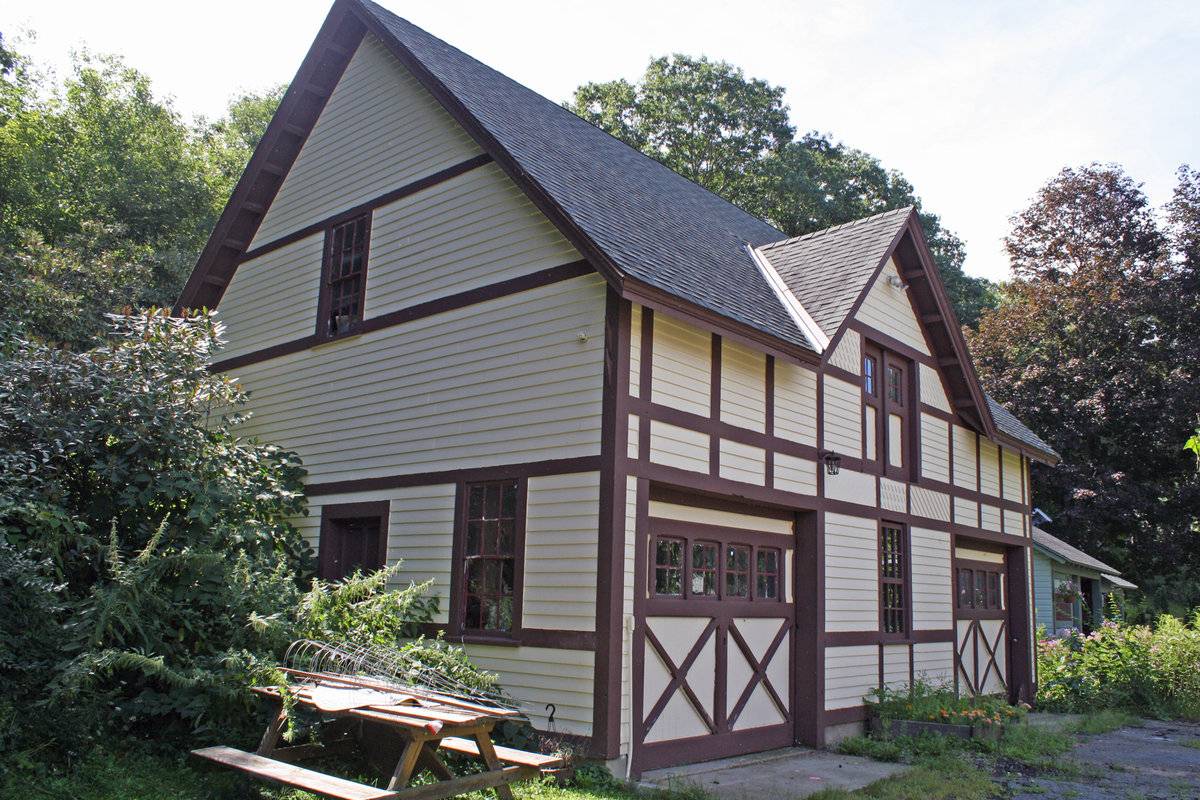
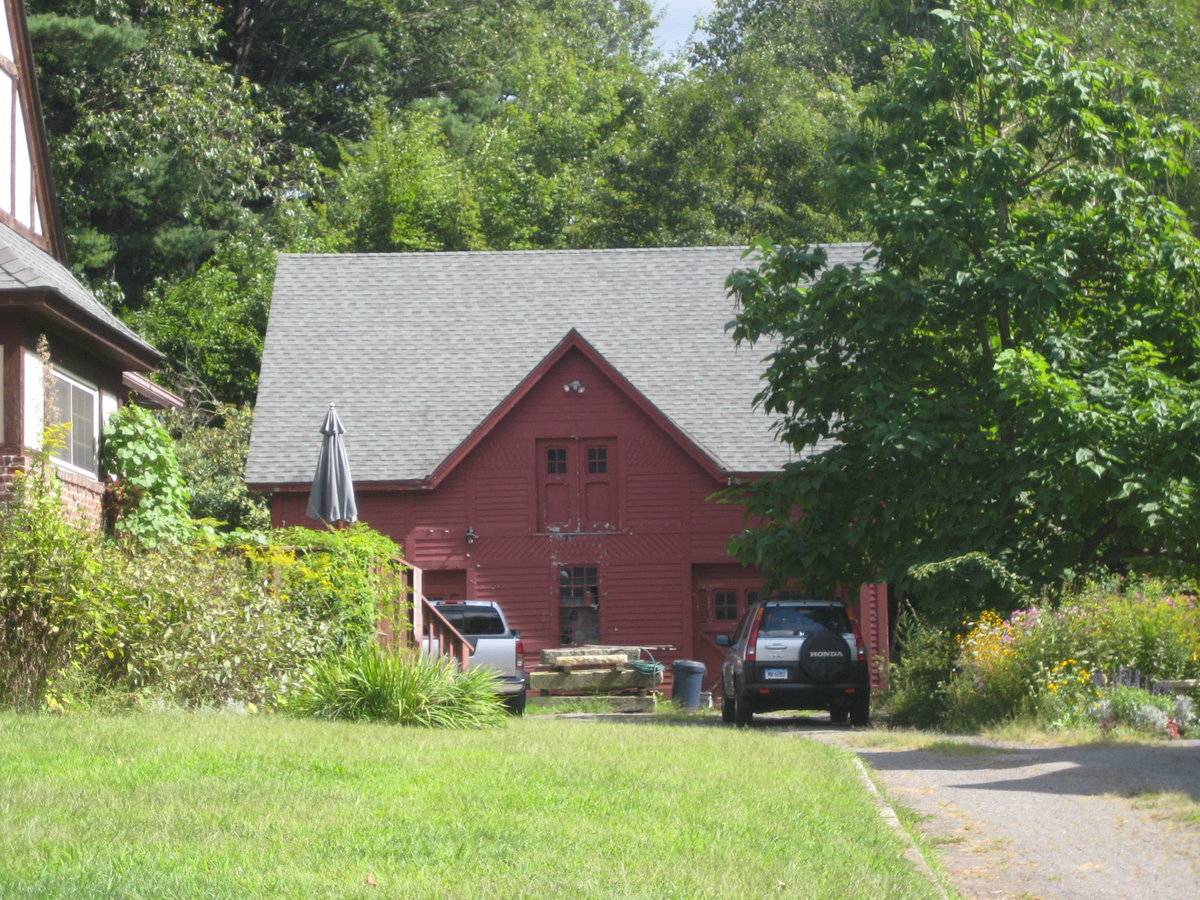
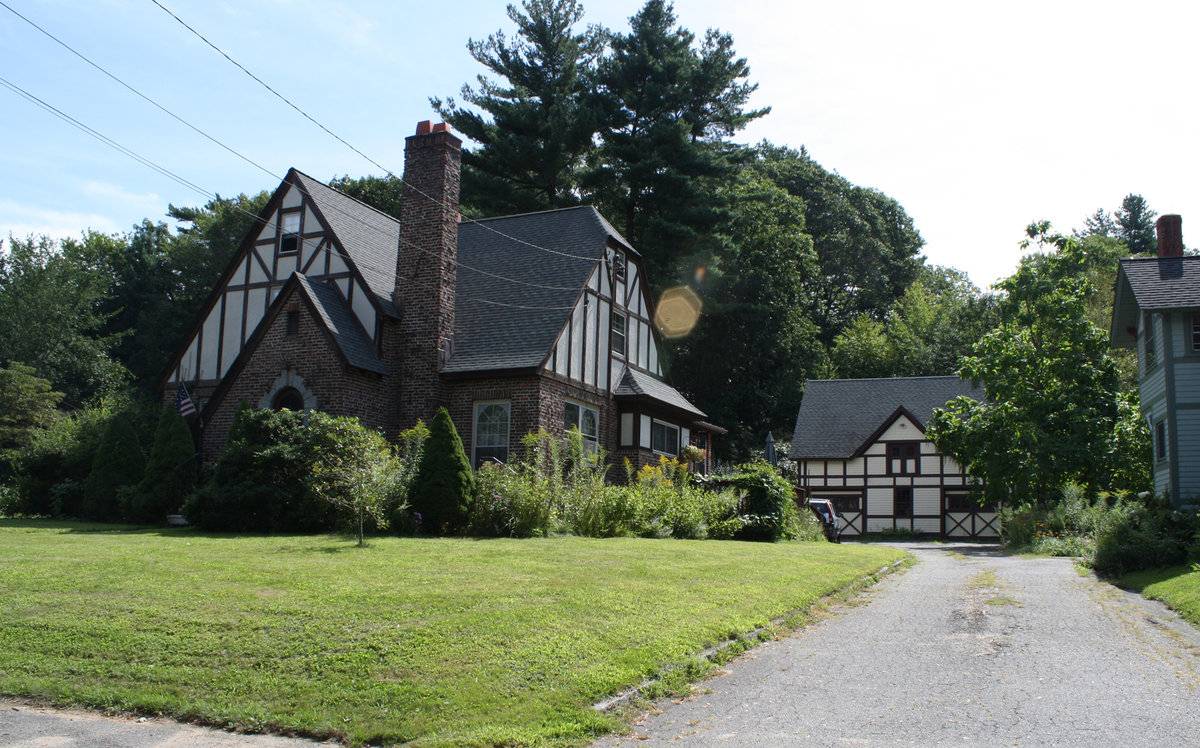
This is a 1 ½ -story three-bay gable-roofed carriage house in an Eastlake/Stick style with a wall dormer centered in
the front (west) eave-side facing Highland Terrace, which runs roughly north-south.
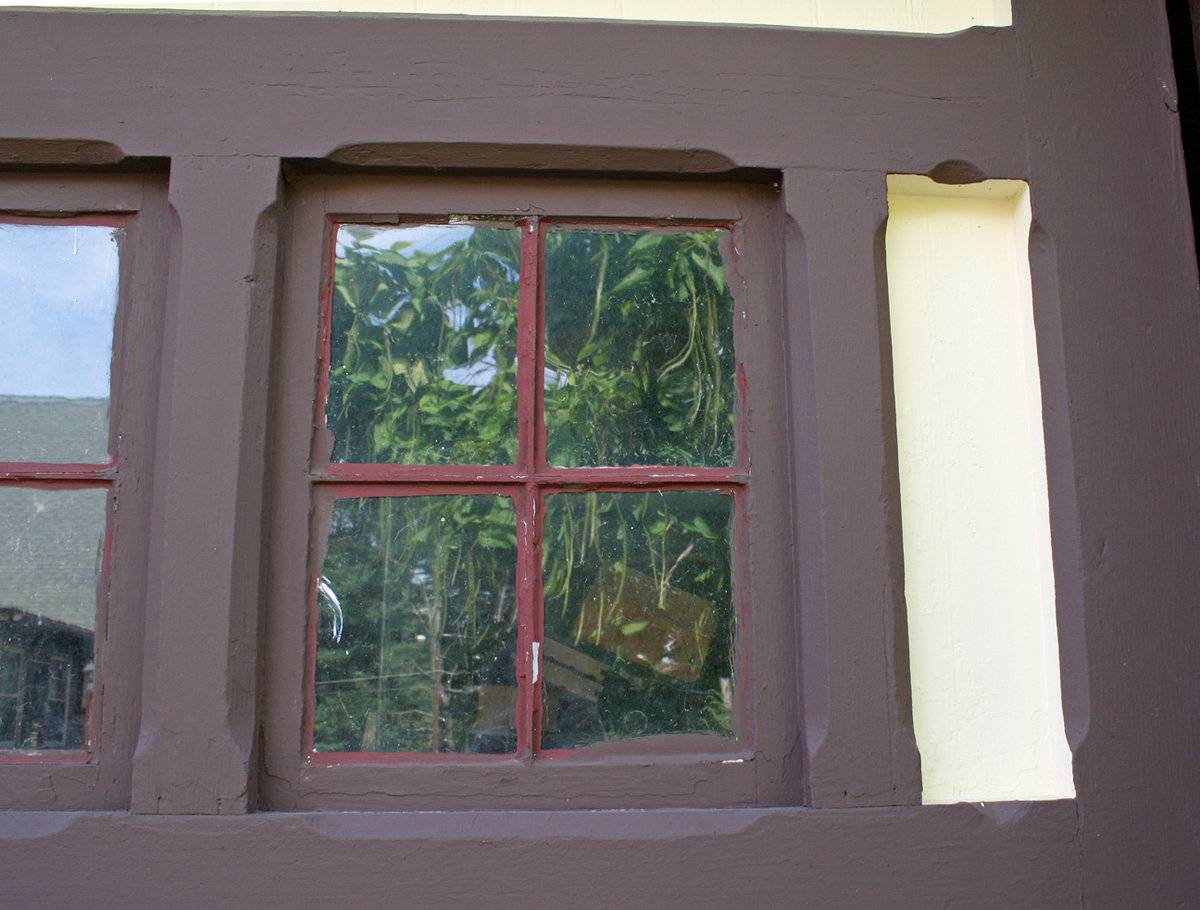
Exterior:The west eave-side has a six-over-six double hung window in the center of the three bays. Each of the flanking bays
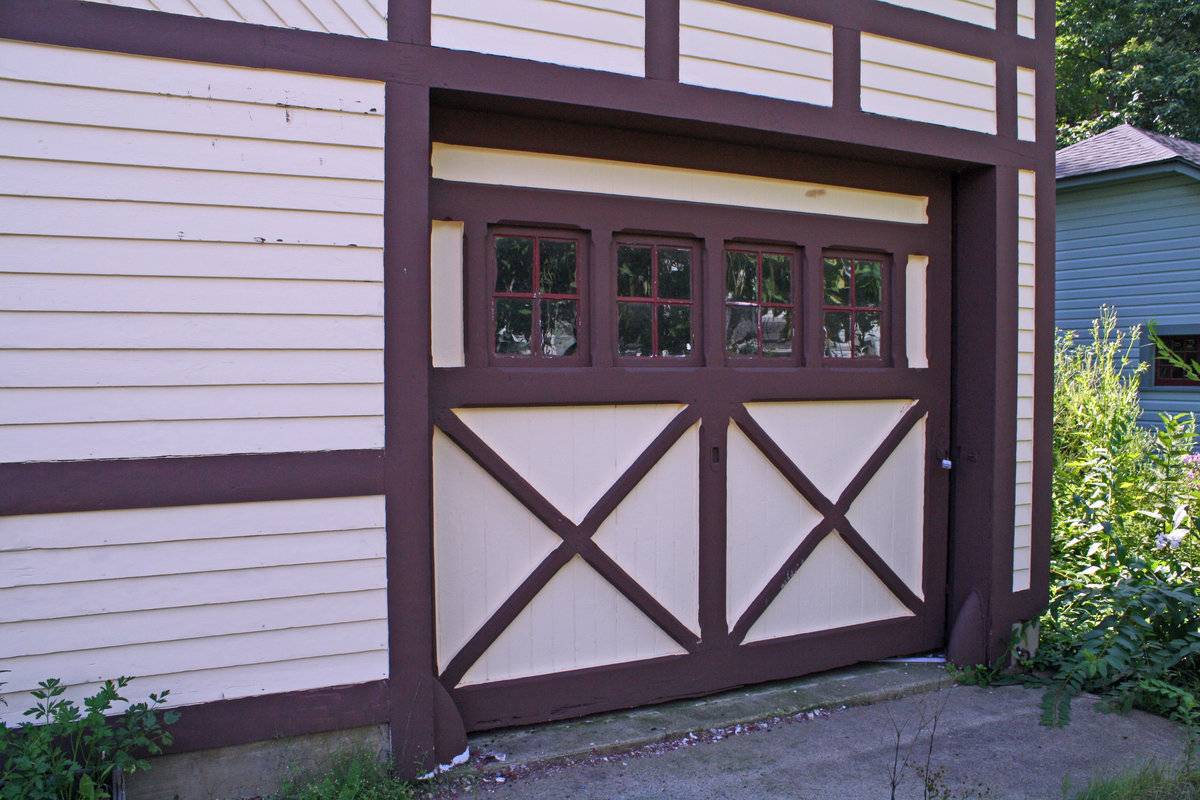
has an interior sliding barn door with four four-pane windows in the upper part above two large panels with xbraces.
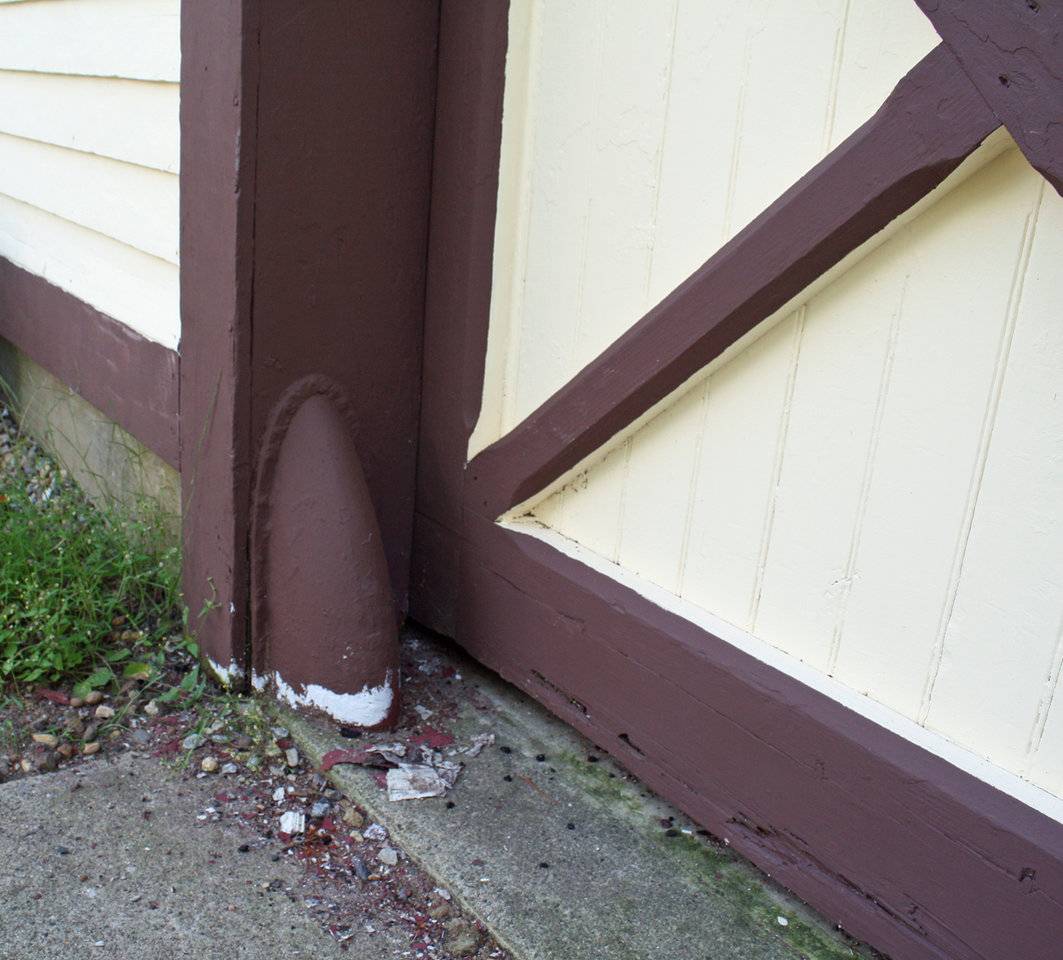
The stile and rail members are chamfered throughout both doors. The right (south) doorway has the original
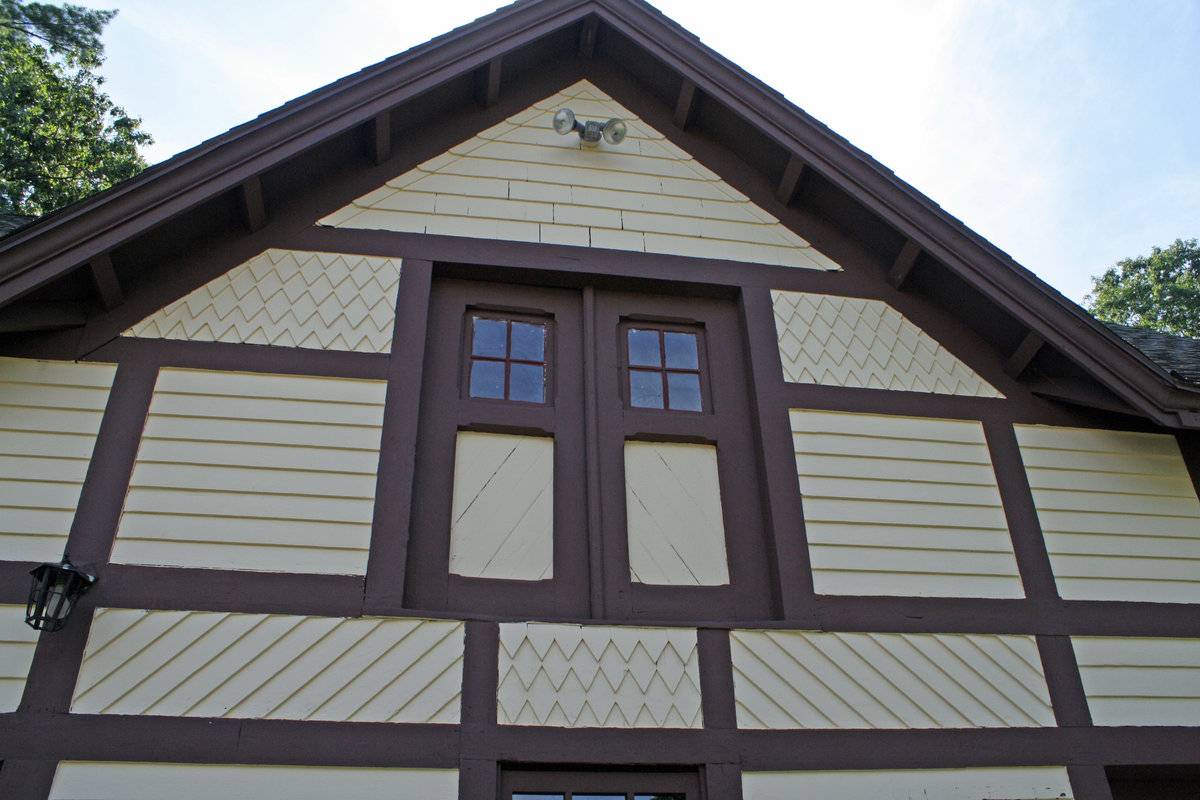
iron bumpers protecting the jambs from vehicle damage. Beneath the apex of the wall dormer is a pair of hay doors
each with a four-pane window above a panel with diagonal tongue-and-groove infill and chamfered frame members.
The west facade has wood siding in bands outlined by wider trim courses and vertical trim boards. The peak of the
dormer has shingle siding, and below are panels of diamond-pointed shingle siding and of diagonal clapboard
alternating with areas of horizontal clapboard. The structure is set into a rising slope, with the rear foundation wall
rising to approximately three feet above the floor elevation. The north gable-end has a six-over-six double hung
window near the right (west) corner and a pass-through door, with a six-over-six double hung window at the upper
loft level. The north pass-through door, with two small panels above a lower panel with x-braces, exhibits the same
type of chamfered stiles and rails as the doors on the front façade. The south gable-end has three six-over-six double
hung windows at grade and one above. The rear (east) wall has a six-over-six double hung window off-center toward
the left (south).
The roof has overhangs at the eaves and rake, with wood-trimmed soffits, and asphalt shingle roofing. The structure
is painted cream with brown trim, replicating a color scheme documented back to the 1950s. A concrete foundation
is 8 inches high at the front and approximately 36 inches high at the rear (east) wall and portions of the north and
south sides.
Interior:The interior is constructed of sawn dimension lumber, with full 3 x 4 inch studs and full 2 x 6 inch rafters. It is laid
out in three bays. The south bay is divided from the remainder by a bearing partition with horizontal wood
sheathing on one side, and forms the carriage barn, as evidenced by the iron bumpers on the door jambs. The center
and north bays have a timber girder running east-west between the bays, supported at mid-span by a wood post
which appears to be a replacement. This space would have been the horse barn. No stall partitions are extant;
however a water trough in the yard outside the pass-through door remains. Floors are concrete and the walls are predominantly unfinished, with exposed studs. The interior face of the sliding doors is the reverse face of the
vertical tongue-and-groove paneling. The doors slide open, stopping at the jambs of the center window; the south
door slides open through a narrow gap in the dividing partition.
A wood stair located along the south wall has a door at the bottom and leads in a straight run up to the attic loft
level. At the attic a 48-inch high knee wall supports the rafters. A set of collar ties is located approximately 9 feet
above the floor. Framing including the dormer framing and hay door opening is exposed. There are several small
trap doors in the floor above the north side of the ground level.
• Historical or Architectural importance:Applicable Connecticut Register Criterion:
2. Embodying the distinctive characteristics of a type, period or method of construction.
Historical background:Stafford Springs in the post-Civil War period was a thriving factory town, with water powering its mills and rail
transportation from Worcester, Massachusetts to Norwich, Connecticut connecting it with supplies and markets.
Highland Terrace was laid out on a narrow high ridge between the north-south course of the Willimantic River to
the east and a wide valley of the Middle River to the northwest. The building lots were on the east side of the road,
with the west side sloping down abruptly to the valley below and providing views of the estate grounds of Julius
Converse’s Woodlawn, which later became Hyde Park, a town open space. The earliest remaining homes were built
in the 1860s, including No. 28, the W.P. Bidwell House, No. 38, the J.J. Ellis House, and No. 52, all in Italianate
style. Development was slowed by the flood of 1877, caused by a catastrophic dam failure upstream, but in the
1890s additional homes were constructed filling in the street to the relatively dense streetscape that remains. 42
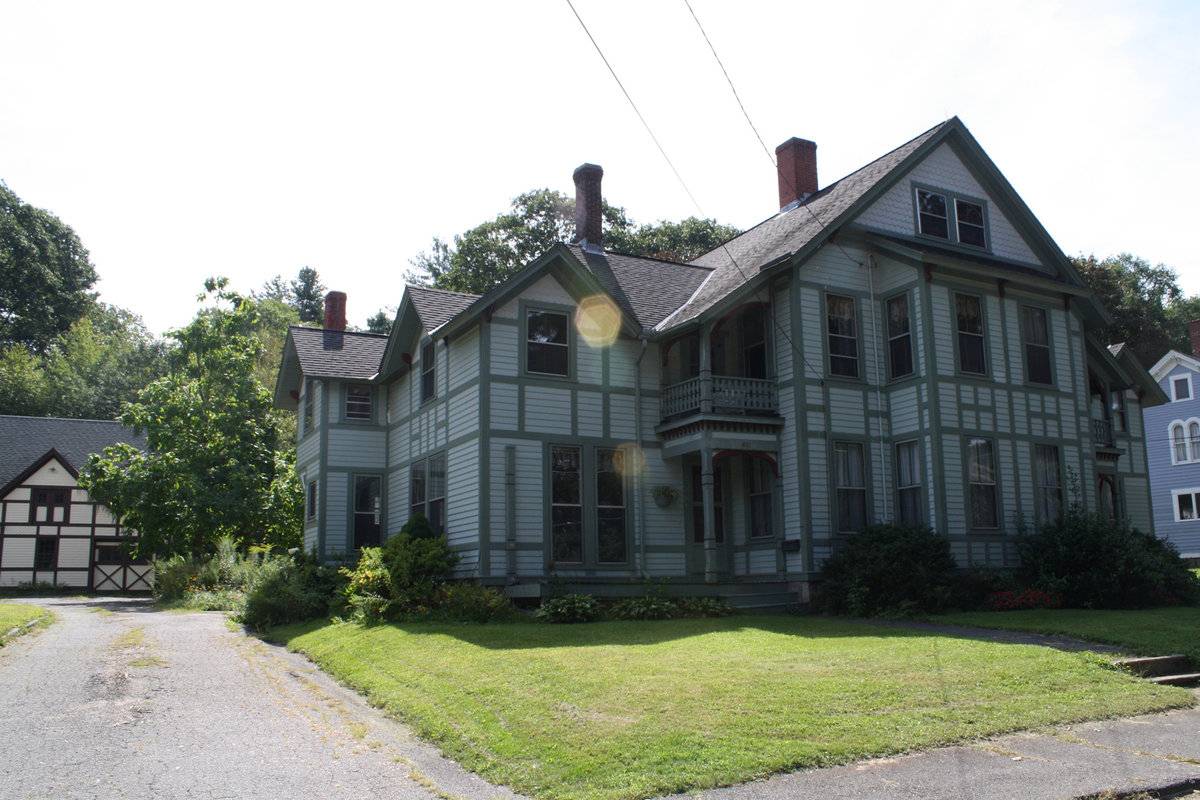
Highland Terrace and its barn were contemporary with the adjacent two-family house to the south, No. 46-48.
Subsequently the house at No. 42 burned and was replaced in the 1920s by the present Tudor revival style structure
while the original carriage barn remains.
Architectural significance:This carriage barn is significant because of the integrity of the exterior and interior including the original barn doors.
It is an excellent and well-preserved example of a typical residential carriage barn from the late 19th century period
just prior to the replacement of horses and barns by the automobile and garage. The setting of Highland Terrace is a
nearly-intact streetscape illustrating the development of the upper middle class homes of mill owners, managers, and
other professionals in a prosperous industrial town at the end of the 19th century. Although the associated house has
been replaced, the barn is in its original location and setting, and the replacement house adheres to consistent scale
and siting of the streetscape. Adjacent houses to the north and south are intact examples of the original
development in the late 19th century, reflecting a pattern of development of prosperous homes in the suburban
developments then gaining popularity on the outskirts of an industrial city.Field Notes
Listed on the State Register of Historic Places 2/06/2013 Historic Resource Inventory by T.Levine & C.Hitchcock 08/25/2011 Architectural description: This is a 1 1/2-story three-bay gable-roofed carriage house with a wall dormer centered in the front eave-side. The main eave-facade faces Highland Terrace, which runs roughly north-south. The west eave-side has a six-over-six double hung window in the center of three bays. Each of the flanking bays has an interior sliding barn door with four four-pane windows in the upper part above two large panels with x-braces. Beneath the apex of the wall dormer is a pair of hay doors each with a four-pane window above a panel with diagonal tongue-and-groove infill. The west facade has wood siding bands outlined by wider trim courses. The peak of the dormer has shingle siding, and there are panels of pointed shingle siding and of diagonal clapboard alternating with areas of horizontal clapboard. The structure is set into a rising slope, with the rear foundation wall rising to approximately three feet above the floor elevation. The north side has a six-over-six double hung window near the right (west) corner and a pass-through door, with a six-over-six double hung window at the upper loft level. The south side has three six-over-six double hung windows at grade and one above. The rear (east) wall has a six-over-six double hung window off-center toward the left (south). The roof has asphalt shingles and the structure is painted cream with brown trim. A concrete foundation is 8 inches high at the front and approximately 36 inches high at the rear (east) and portions of the north and south sides. Historical significance: Until the 1830’s, the horses used for riding and driving carriages were often kept in the main barn along with the other farm animals. By the 1850’s, some New England farmers built separate horse stables and carriage houses. Early carriage houses were built just to shelter a carriage and perhaps a sleigh, but no horses. The pre-cursor to the twentieth-century garage, these outbuildings are distinguished by their large hinged doors, few windows, and proximity to the dooryard. The combined horse stable and carriage house continued to be a common farm building through the second half of the nineteenth century and the first decade of the twentieth century, until automobiles became common.
- Use & Accessibility
Use (Historic)
Use (Present)
Exterior Visible from Public Road?
Yes
Demolished
n/a
Location Integrity
Unknown
- Environment
Related features
Environment features
Relationship to surroundings
State Register of Historic Places description:
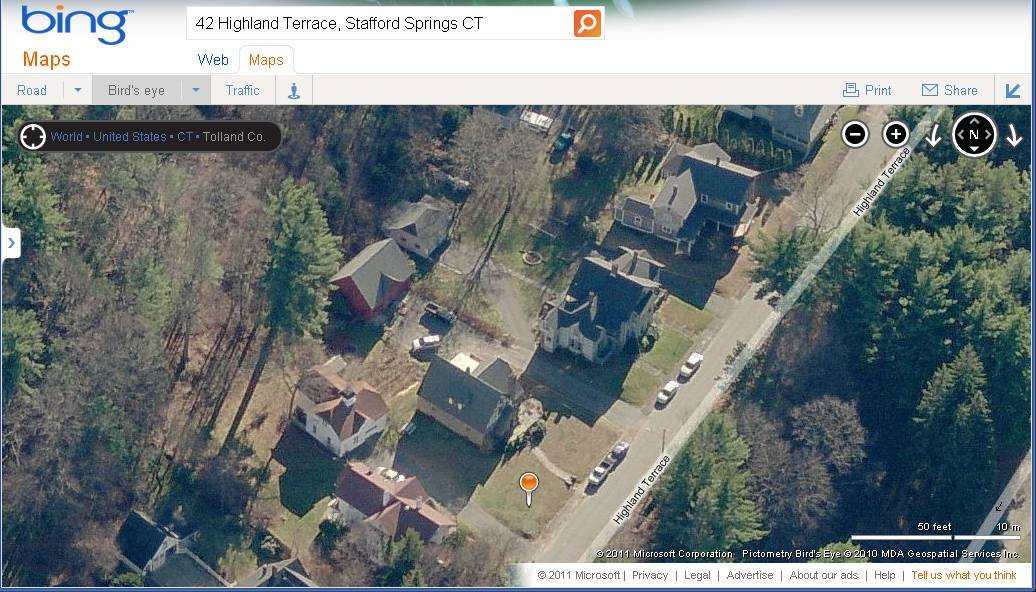
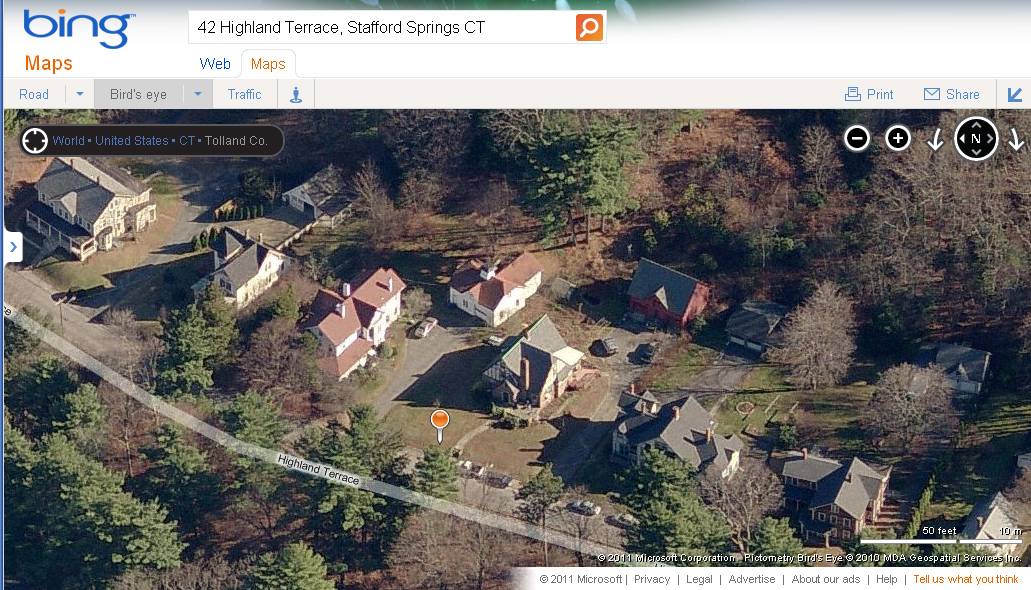
The carriage barn is to the southeast of the associated house, a late 1920s structure which replaced the original
following its destruction by fire. The ridgeline of the carriage house is oriented roughly north-south, parallel to
Highland Terrace. The .74-acre site is on the east side of Highland Terrace, a residential street on a high ridge with a
view toward the north and west overlooking Stafford Springs, the mills along the Middle River, and Hyde Park –
formerly the Julius Converse estate of Woodlawn and later site of the town high school. This property is flanked on
the north and south by a row of homes developed from the 1860s to 1900, with the street gradually filling in over
time and the architectural styles reflecting the fashions of the late 19th century. The house is a 2 ½ -story gableroofed
structure in an early 20th-century Tudor revival style. To the east over a small rise, the grade drops sharply to
the Willimantic River where a railroad line and Route 32 parallel the river. To the south is an expanse of woodland,
the Nye Holman State Forest.
HRI description:
The carriage house is behind and to the south of the c. 1930 house with which it is associated, a replacement structure following destruction of the original by fire. The ridgeline of the carriage house is perpendicular to the ridgeline of the house. The .74 acre site is on the east side of Highland Terrace, a residential street overlooking Stafford Springs, the mills along the Middle River, and Hyde Park, formerly the Julius Converse estate of Woodlawn but home to the town high school from the 1930s through the end of the 20th century. This house is flanked by a row of homes developed from the 1860s to 1900, with the street gradually filling in over time and the architectural styles reflecting the fashions of the late 19th century. This house is a 2 1/2-story gable-roofed structure in an early 20th-century Tudor revival style. The house is set back from the street further than the adjacent homes, all of which date from the mid- to late-20th century.- Typology & Materials
-
Building Typology
Materials
Structural System
Roof materials
Roof type
Approximate Dimensions
806 square feet
- Source
-
Date Compiled
08/25/2011
Compiled By
T.Levine & C.Hitchcock, reviewed by the CT Trust
Sources
Photographs by Esther DaRos/Mike Hayden - 11/20/09. Additional photography by C. Hitchcock, 8/24/2011.
Town of Stafford Assessors office: Deed Book #0208, Deed Page #0083.
Gibbs, James, Town of Stafford Historic and Architectural Resources Survey Report, 1993 (copy available at Stafford Public Library Local History Collection).
Sexton, James, PhD; Survey Narrative of the Connecticut Barn, Connecticut Trust for Historic Preservation, Hamden, CT, 2005, http://www.connecticutbarns.org/history.
Visser, Thomas D.,Field Guide to New England Barns and Farm Buildings, University Press of New England,1997.
Harris, Cyril M., Illustrated Dictionary of Historic Architecture, Dover, 1977.
Town of Stafford assessors cards online: http://stafford.univers-clt.com/view_property_R.php?account_no=51%2F077&series_card=1
Map of Stafford, CT, retrieved on July 12, 2011 from website www.bing.com/maps.
Map-Block-Lot: 51/076
Hitchcock, C. State Register of Historic Places nomination, 2011.
- PhotosClick on image to view full file
-