Barn Record Stafford
RETURN TO ‘FIND BARNS’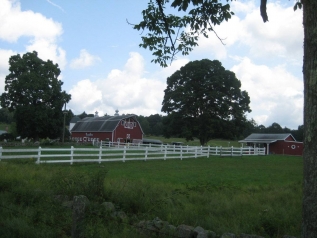
- Overview
-
Designations
n/a
Historic Significance
Architectural description:
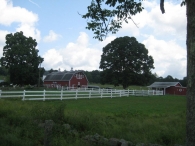
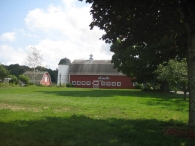
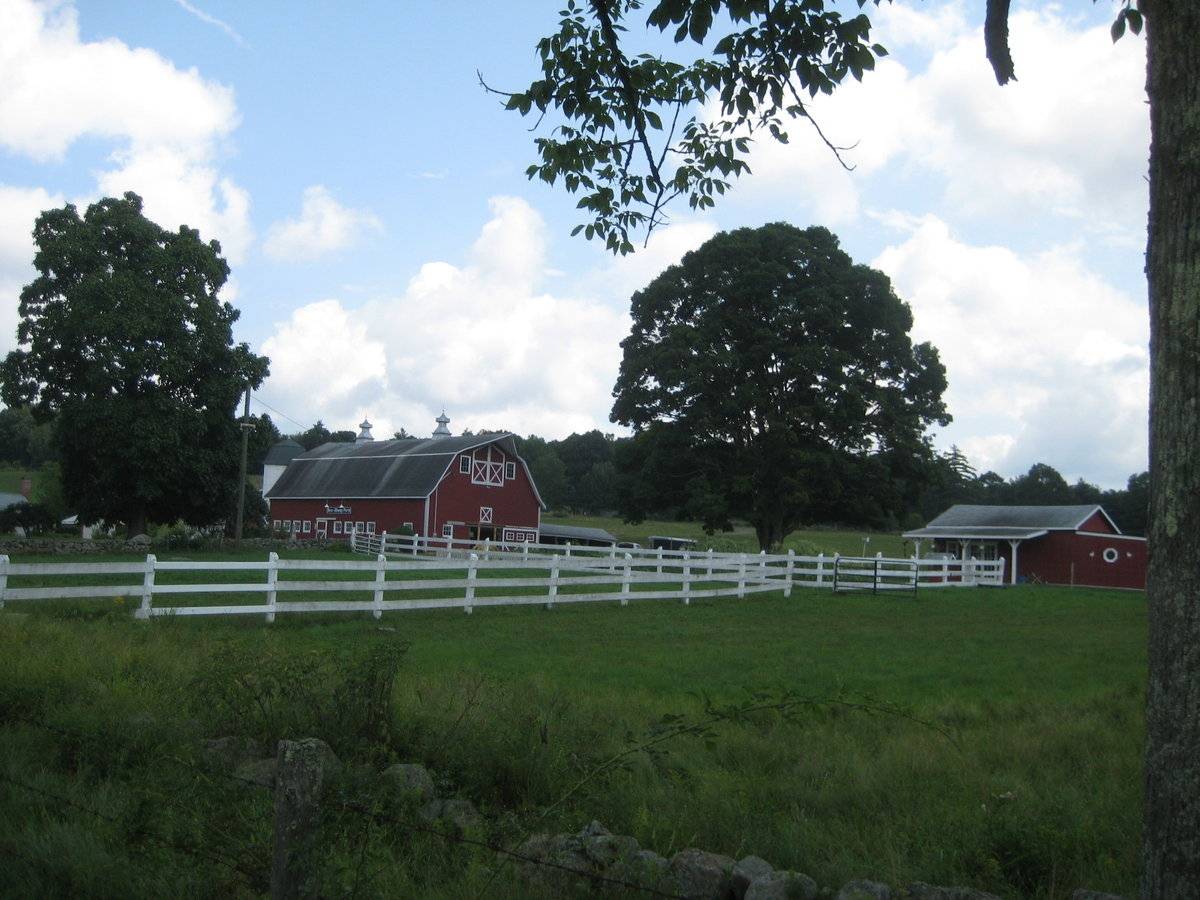
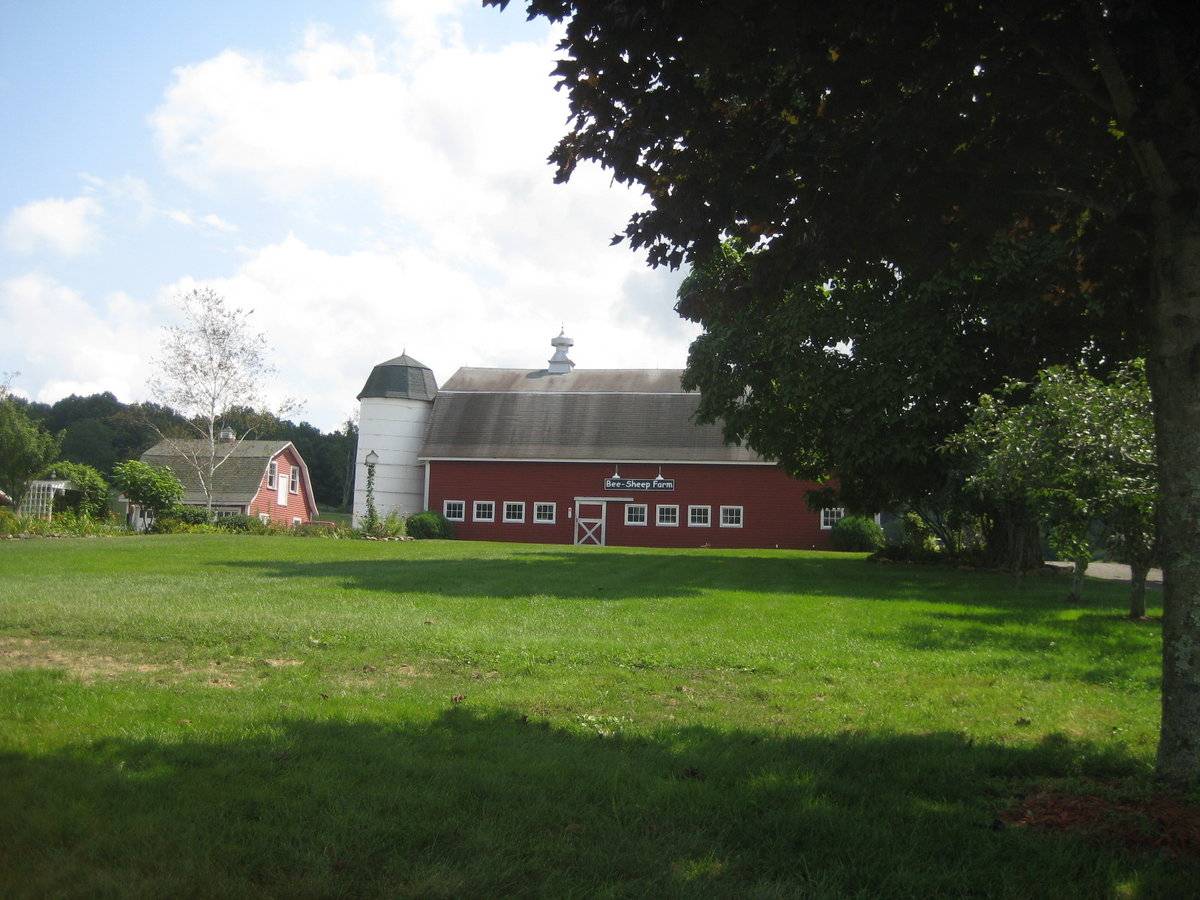
This is a 2-story gable-entry gambrel barn with a projecting hay hood. The main facade faces south and the ridge-line is parallel with Moulton Hill Road, which at this point runs approximately north to south. The main entry is found on the south gable-facade of the barn and consists of an exterior sliding door in the middle bay, which slides off to the east. Over the sliding door track is a small hood. There are three fixed four-pane windows with trim in the sliding door. To the west of the sliding door is a single fixed six-pane window with trim. Above the sliding door is a hay door with X bracing. Under the apex of the roof is a pair of irregular shaped hay doors with X bracing on the bottom halves, flanked by fixed nine-pane windows with trim. A fixed six-pane stable window with trim is located near the south corner of the west eave-side of the barn. Towards the north, along the west eave-side of the barn, is a series of eight fixed six-pane stable windows with trim divided by a pass-through sliding door with X bracing; four windows on each side of the door. Centered above this is a painted sign stating: “Bee-Sheep Farm.” Attached to the north gable-end of the barn appears to be a small gable-roof addition and a cypress wood silo. There appear to be no openings on the north gable-end of the barn. Two window openings appear to be on the north side of the gable-roof addition. A shed-roof addition is attached to the south corner of the east eave-side of the barn, extending to the east. The gambrel roof is covered with asphalt shingles and is topped with two metal ventilators. The barn has clapboard siding painted red with white trim.
Historical significance:The New England barn or gable front barn was the successor to the English barn and relies on a gable entry rather than an entry under the eaves. The gable front offers many practical advantages. Roofs drain off the side, rather than flooding the dooryard. With the main drive floor running parallel to the ridge, the size of the barn could be increased to accommodate larger herds by adding additional bays to the rear gable end. Although it was seen by many as an improvement over the earlier side-entry English Barn, the New England barn did not replace its predecessor but rather coexisted with it.
In a gambrel roofed barn of the mid-20th century, a hay fork typically ran along a track beneath the ridge. Large loads of loose hay could be lifted from hay wagons [through an upper level gable-end door]. On some barns this hay track continues outside the gable wall beneath a triangular extension of the roof. Powered conveyor lifts also could carry baled hay into the loft through the hay door.
Field Notes
Gambrel barn with silo
- Use & Accessibility
Use (Historic)
Use (Present)
Exterior Visible from Public Road?
Yes
Demolished
n/a
Location Integrity
Unknown
- Environment
Related features
Environment features
Relationship to surroundings
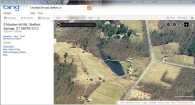
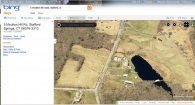
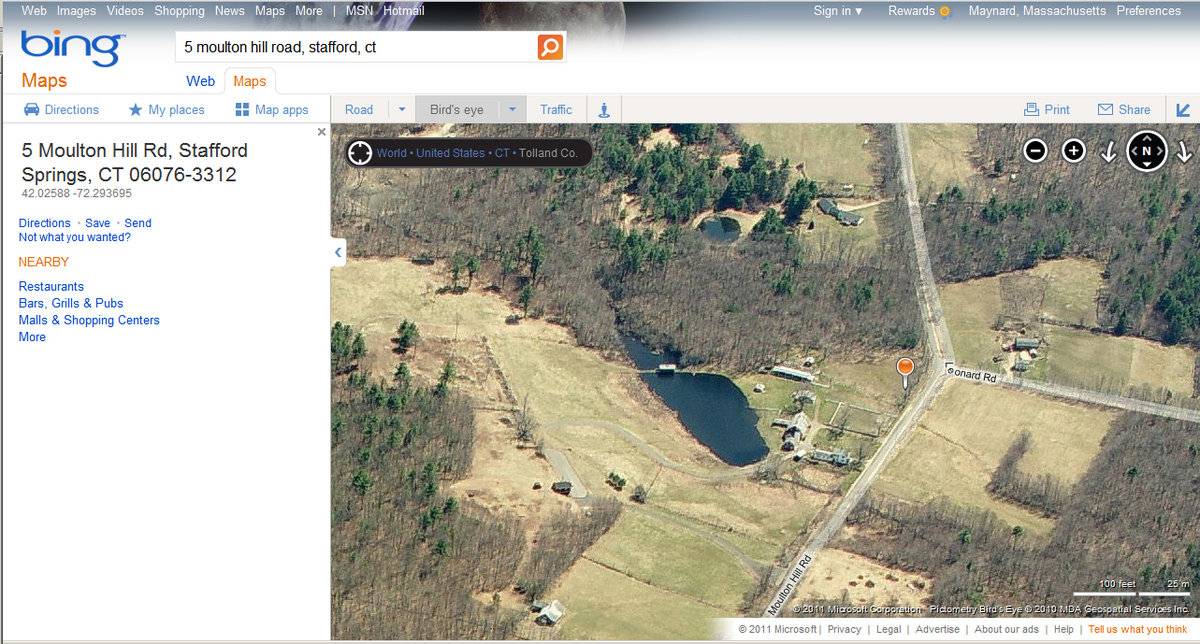
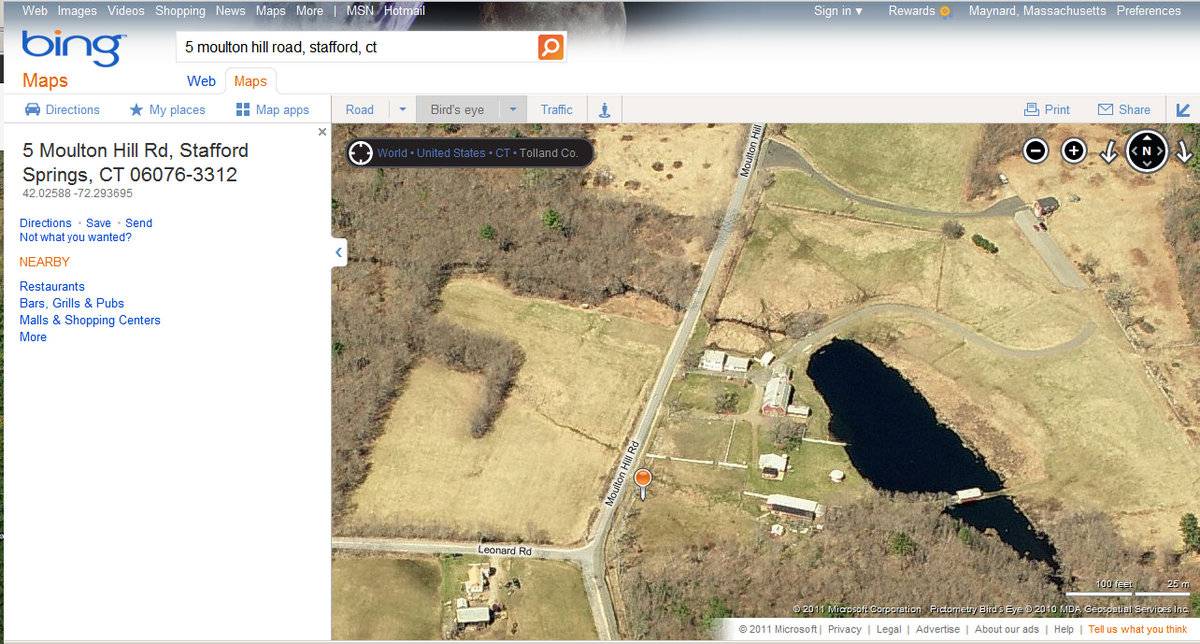
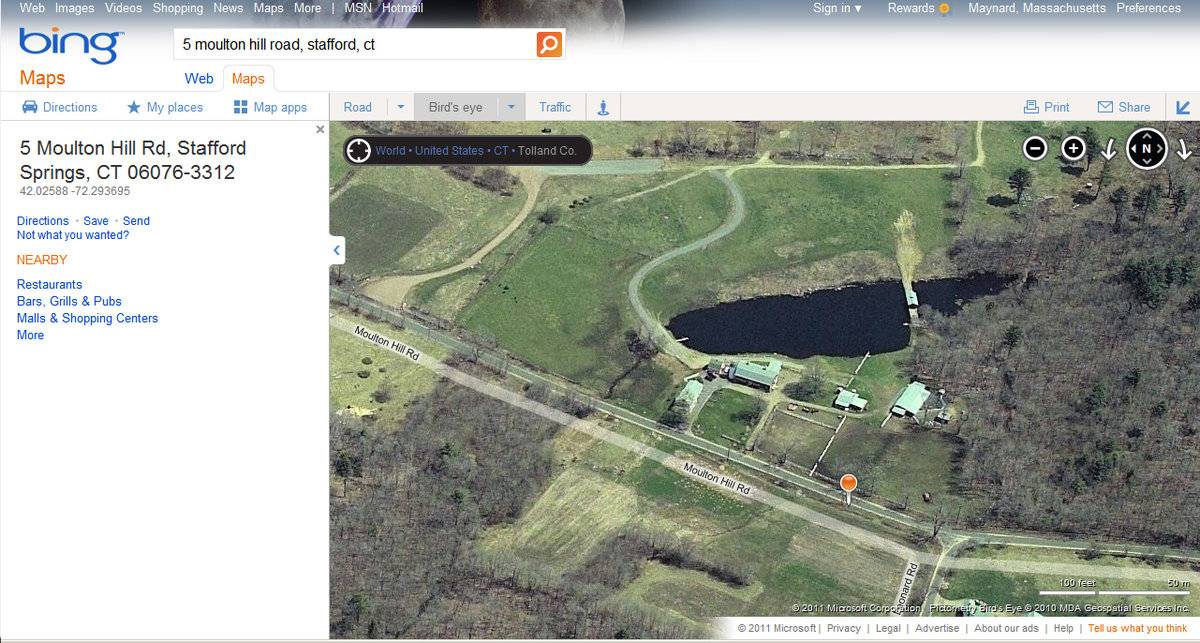
This barn sits on 31.1 acres of land and is to the southeast of the house with which it is associated. This complex also has two outbuildings to the south of the barn, and an outbuilding to the southeast of the barn. A pond is found on the property, just to the east of the barn, with open tracts of land just to the east of that. The driveway extends to the east off Moulton Hill Road and leads to the barn. The property is directly to the north of the intersection of Leonard Road and Moulton Hill Road. To the north of the property are a few open tracts of land, woodland and the boarder of Massachusetts. To the south are some open tracts of land, woodland, and Mineral Springs Family Campground. Directly to the east is a lake, and further to the east is woodland. To the west are State Line Pond, woodland, and some train tracks. Surrounding the property are a few open tracts of land, bodies of water, and woodland.
- Typology & Materials
-
Building Typology
Materials
Structural System
n/a
Roof materials
Roof type
Approximate Dimensions
barn: 2232 square feet, silo: 12 x 28 (diameter x height).
- Source
-
Date Compiled
01/21/2010
Compiled By
Todd Levine, reviewed by the Connecticut Trust
Sources
Photographs and field notes by Esther DaRos/Mike Hayden: 09/17/2009.
Aerial Mapping: Stafford Maps
http://www.bing.com/maps - accessed 6/30/2011.Sexton, James, PhD; Survey Narrative of the Connecticut Barn, Connecticut Trust for Historic Preservation, Hamden, CT, 2005, http://www.connecticutbarns.org/history.
Visser, Thomas D.,Field Guide to New England Barns and Farm Buildings, University Press of New England,1997.
Town of Stafford Assessors office: Deed Book #0519, Deed Page #0145.
- PhotosClick on image to view full file
-