Barn Record Willington
RETURN TO ‘FIND BARNS’- Building Name (Common)
- Building Name (Historic)
- n/a
- Address
- 13 Bidwell Road, Willington
- Typology

- Overview
-
Designations
n/a
Historic Significance
Architectural description:
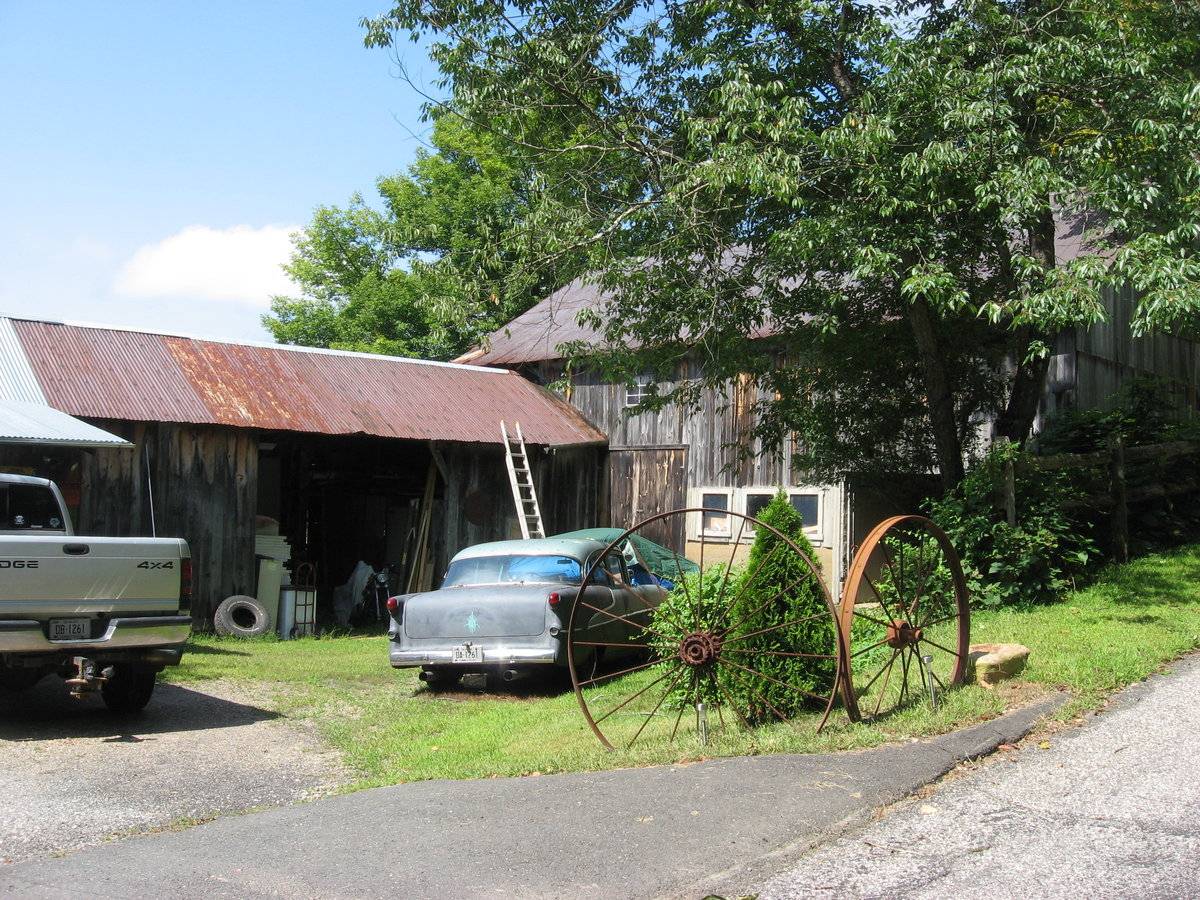
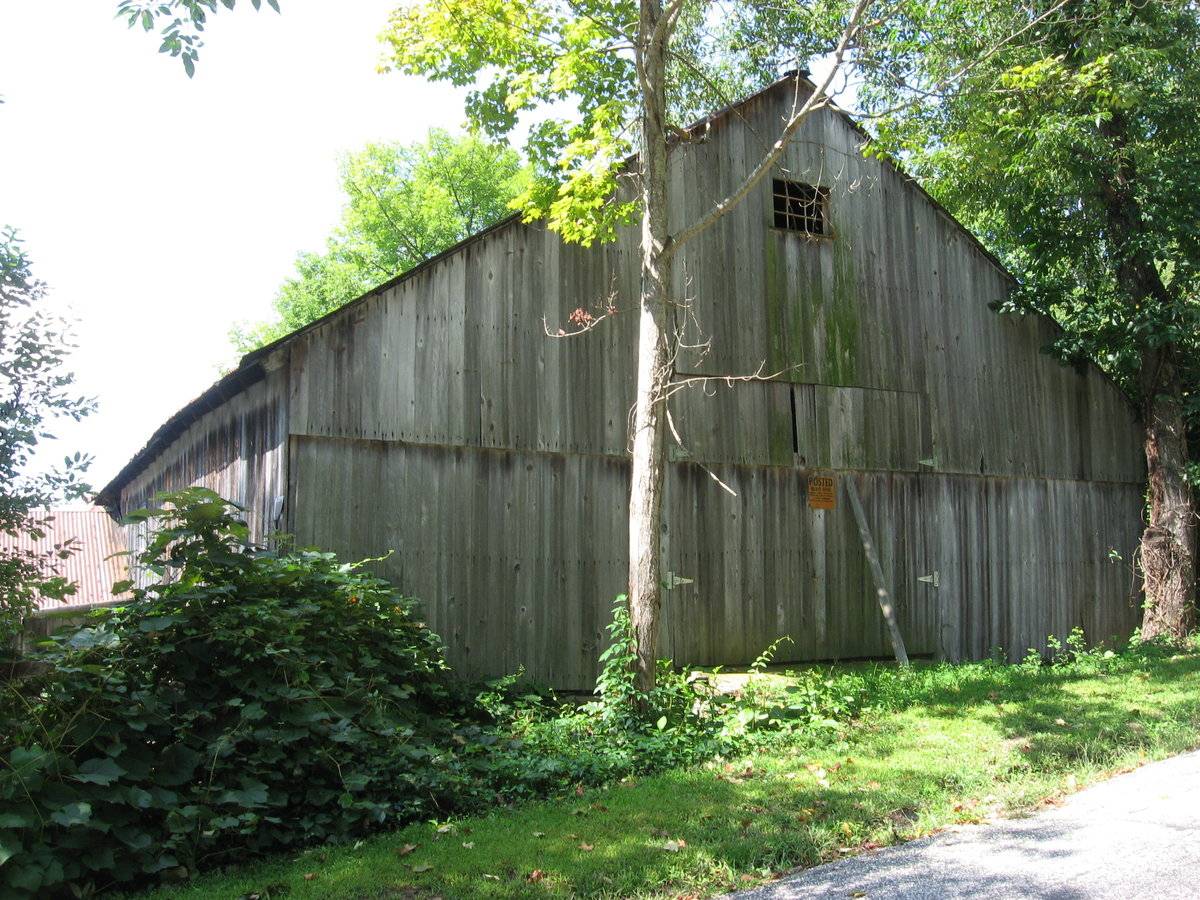
This is a bank barn with a side entry at the lower level, a gable-end entry at the main level, and a wagon shed attached perpendicular, also at the lower level. Street façade (east):. a pair of hinged gable-end doors oddly extend up across the siding division line in the vertical flush-board siding; possibly some framing modifications were made to insert doors on this end, which faces the road. Eave façade (north): the uphill eave side has unmatched tongue and groove siding, possibly reflecting a change in door location over time. A missing portion of siding allows a view into the interior. Eave façade (south): the lower level entry doors extend up higher than the main floor at the street façade, again indicating some modifications over time. A single four-light sash is located in the wall above, lighting the main level. A row of three stable windows can be seen at the lower level next to the doors. The roofing is painted corrugated metal.
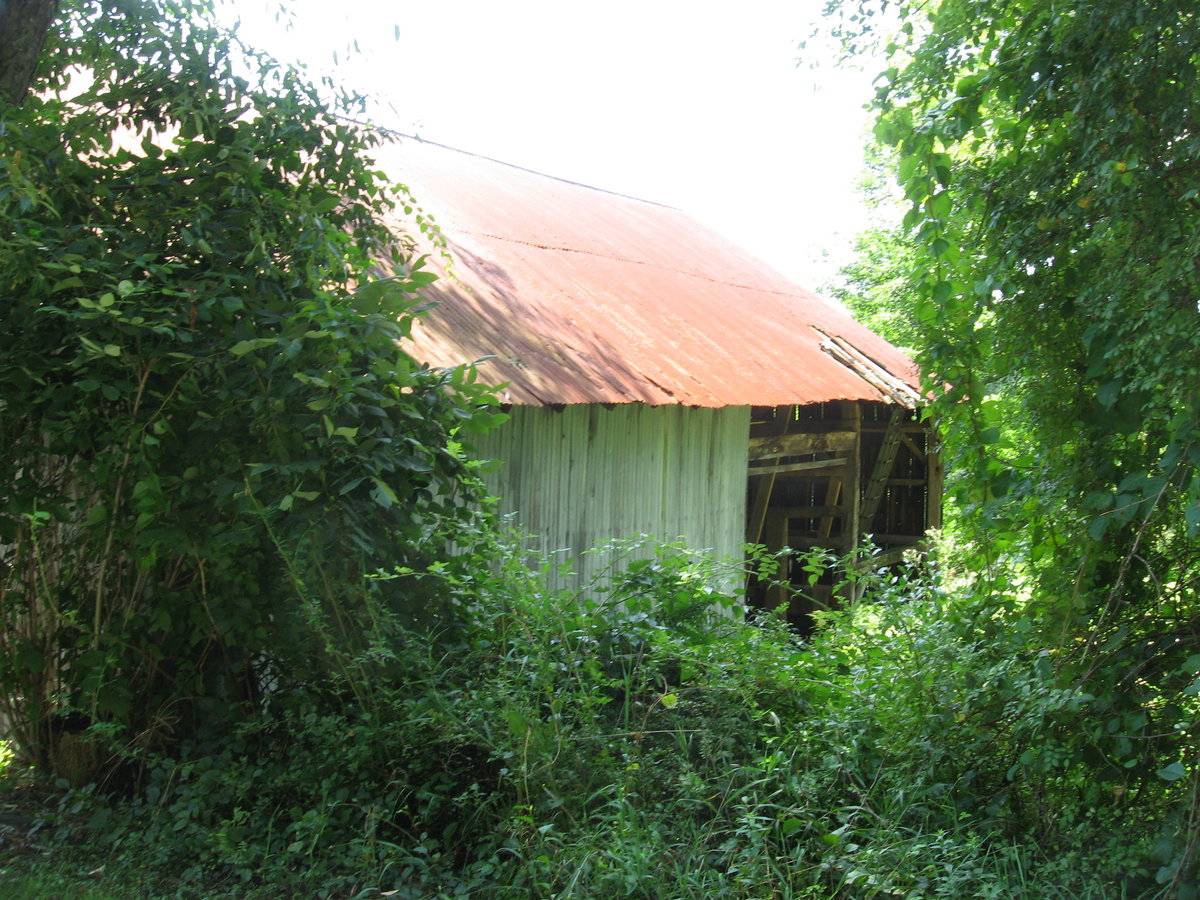
The wagon shed projects perpendicular (south) from the lower level side wall. It is three bays wide, with the center bay being open and the side bays sided with vertical flush boards. Its roof is a gable, with corrugated metal roofing.
Historical significance:The New England barn or gable front barn was the successor to the English barn and relies on a gable entry rather than an entry under the eaves. The gable front offers many practical advantages. Roofs drain off the side, rather than flooding the dooryard. With the main drive floor running parallel to the ridge, the size of the barn could be increased to accommodate larger herds by adding additional bays to the rear gable end. Although it was seen by many as an improvement over the earlier side-entry English Barn, the New England barn did not replace its predecessor but rather coexisted with it.
The 19th century also saw the introduction of a basement under the barn to allow for the easy collection and storage of a winter’s worth of manure from the animals sheltered within the building. The bank barn is characterized by the location of its main floor above grade, either through building on a hillside or by raising the building on a foundation. This innovation, aided by the introduction of windows for light and ventilation, would eventually be joined by the introduction of space to shelter more animals under the main floor of the barn.
Wagon shed: distinguished by the long shed or gable roof and the row of large openings along the eave side, the typical wagon shed was often built as a separate structure or as a wing connected to the farmhouse or the barn. These open-bay structures protect farm vehicles and equipment from the weather and provide shelter for doing small repairs and maintenance.
Field Notes
No information available. Photos taken from road. New England barn with wagon shed wing attached perpendicular to the side.
- Use & Accessibility
Use (Historic)
Use (Present)
Exterior Visible from Public Road?
Yes
Demolished
n/a
Location Integrity
Unknown
- Environment
Related features
Environment features
Relationship to surroundings
Located in the northeast corner of Willington where large farms limited development until the mid- to late-20th century. Now it is close to Interstate-84 and is an area of scattered houses and forest land.
- Typology & Materials
-
Building Typology
Materials
Structural System
Roof materials
Roof type
Approximate Dimensions
n/a
- Source
-
Date Compiled
12/23/2009
Compiled By
Charlotte Hitchcock, reviewed by CT Trust
Sources
Photographs by Melodi Lacy, 9/18/2009.
Town of Willington Assessor’s Record .Demers, Ronald F., Modernization in a New England Town: A History of Willington, Connecticut, Willington Historical Society, 1983, W. Willington CT, 431 pp.
Sexton, James, PhD, Survey Narrative of the Connecticut Barn, Connecticut Trust for Historic Preservation, Hamden, CT, 2005, http://www.connecticutbarns.org/history.
Visser, Thomas D., Field Guide to New England Barns and Farm Buildings, University Press of New England, 1997.
Willington Historical Society website - South Willington district: http://www.geocities.com/willingtoncthistory/mapnarrative.htm
- PhotosClick on image to view full file
-