Barn Record Willington
RETURN TO ‘FIND BARNS’- Building Name (Common)
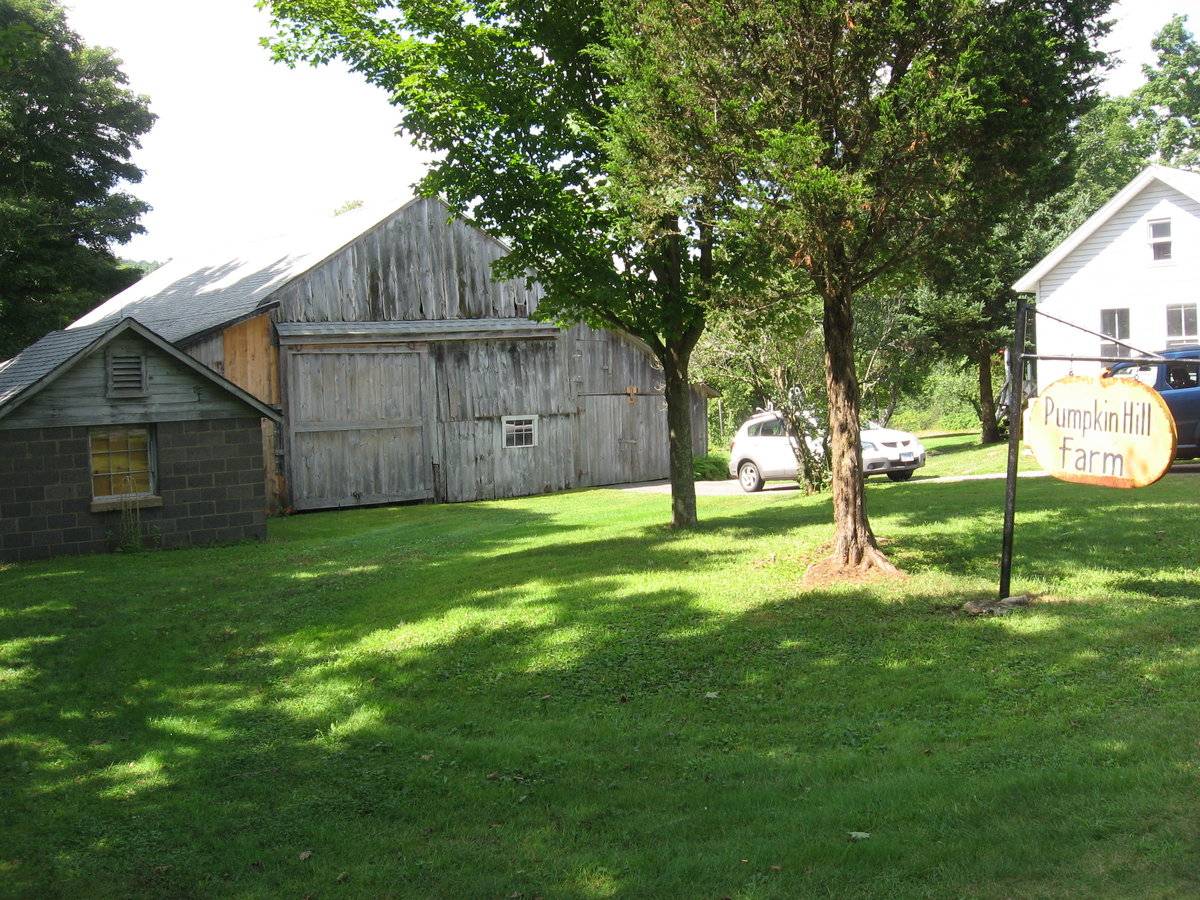
- Pumpkin Hill Farm
- Building Name (Historic)
- Thomas Rider Farm
- Address
- 259 Moose Meadow Road, Willington
- Typology
- Overview
-
Designations
n/a
Historic Significance
Architectural description:
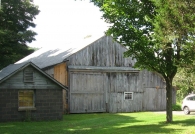
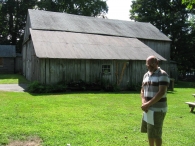
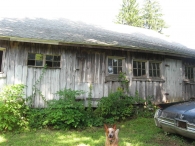
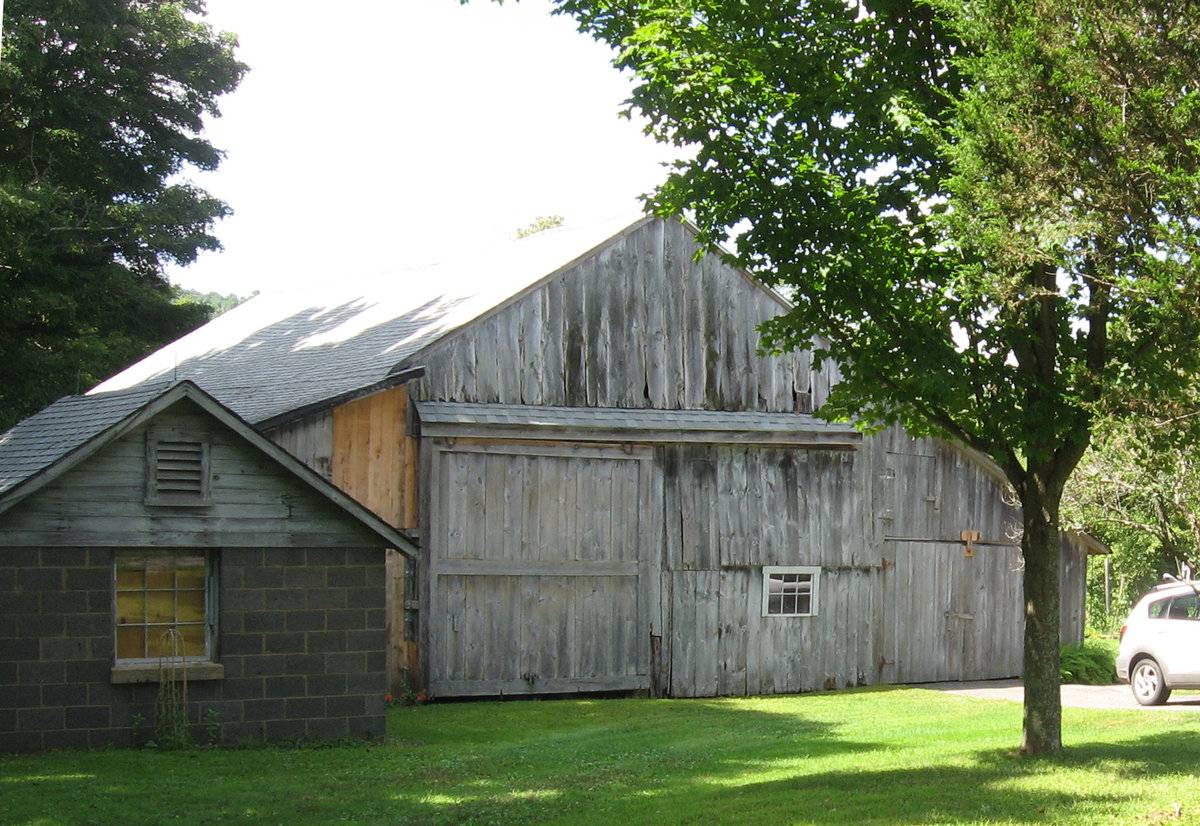
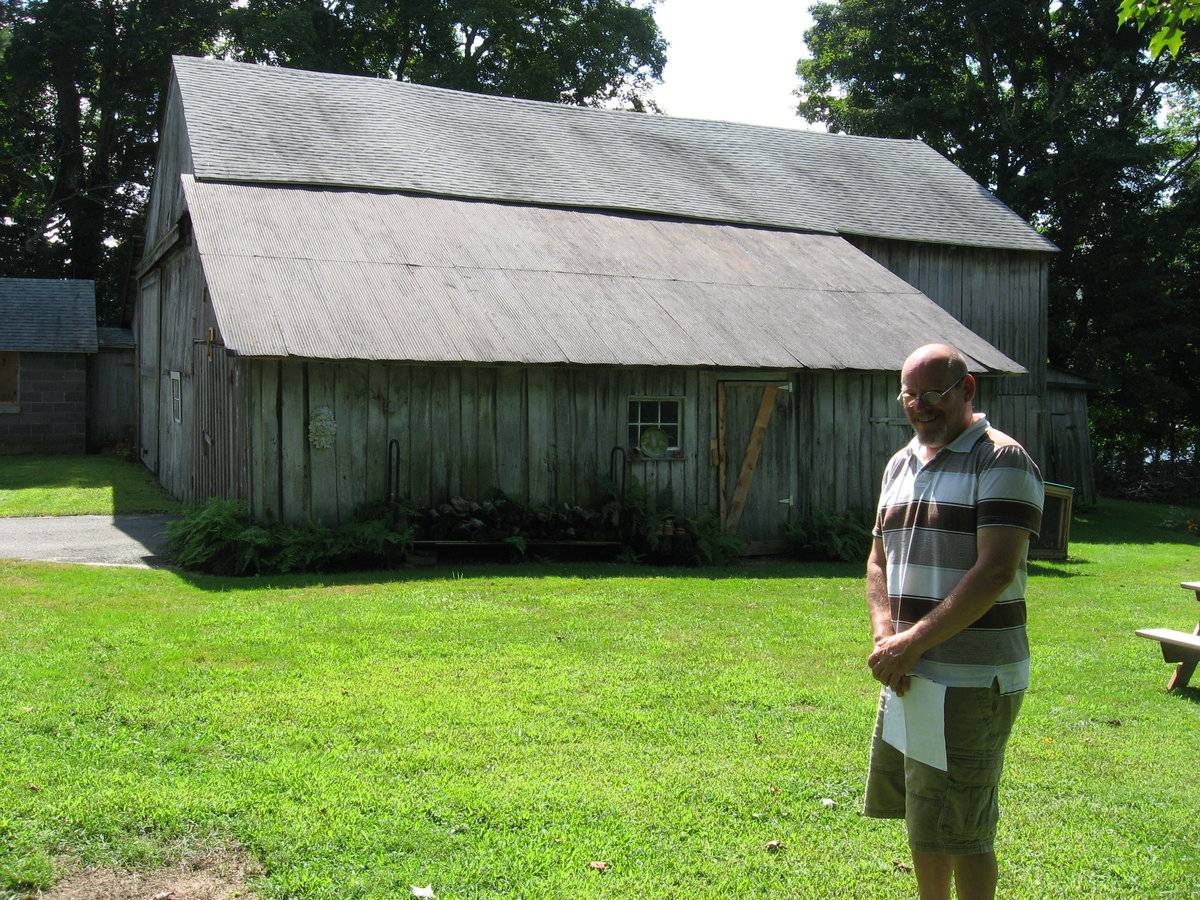
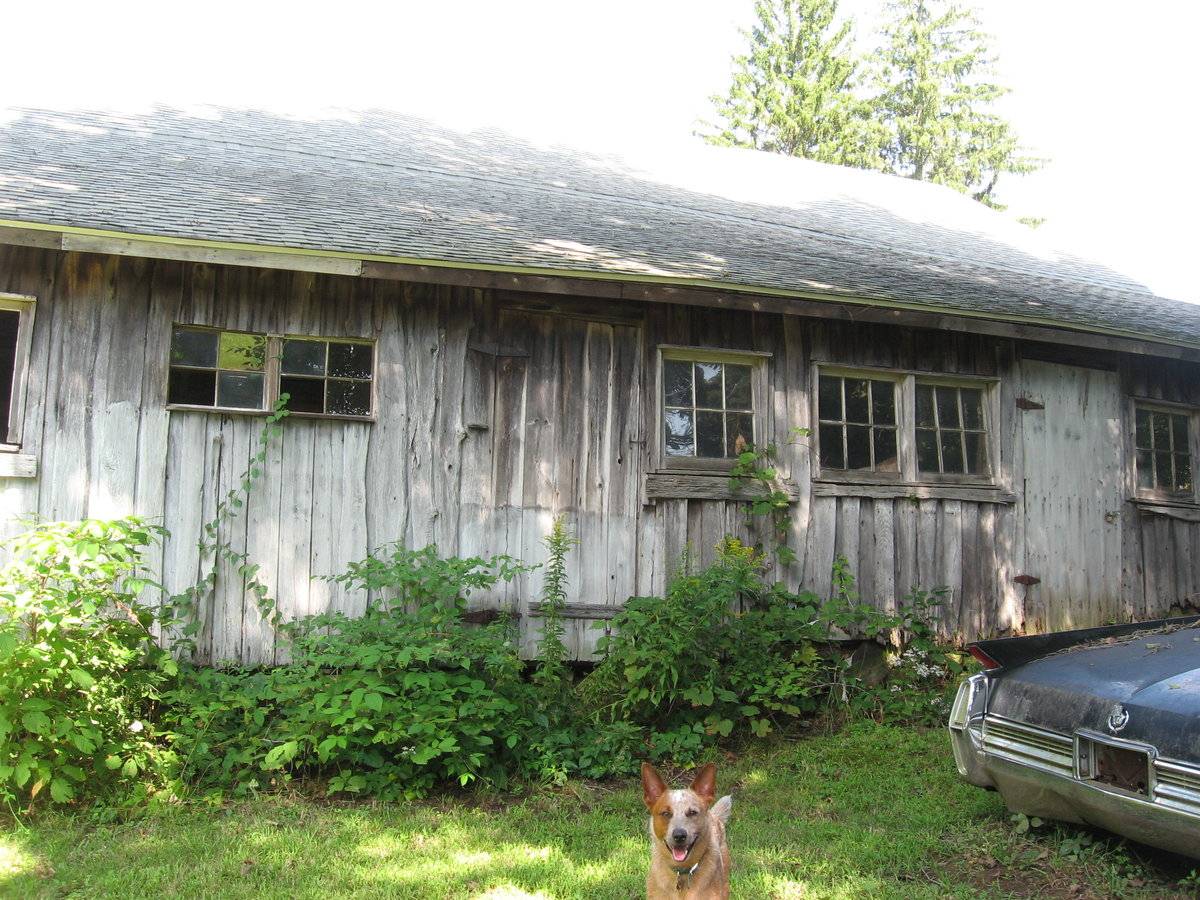
This is a gable-entry barn with shed additions along both eave sides. The ridge orientation is roughly east-west, with the east façade facing the road. Roofing is asphalt shingles on the main barn and south shed, and corrugated metal on the north shed. There is a small shed addition at the rear, possibly an outhouse.
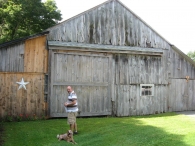
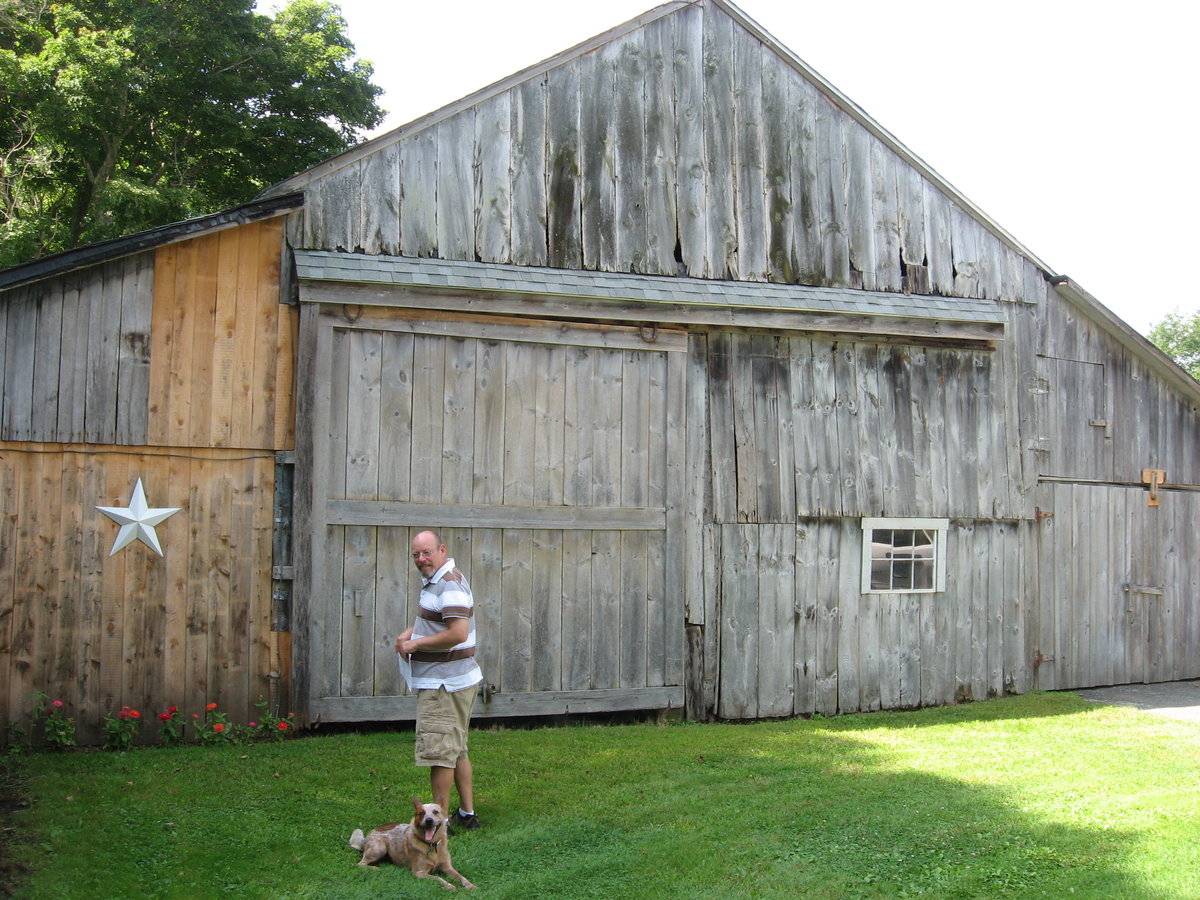
The east gable-end appears to have a center post below the peak, as it has a sliding door in the left bay which slides to the right (northward) and has a hood covering the door track. A six-light barn sash is mounted in the right bay. Vertical siding in this area is cut at the level of the window head, suggesting some change in configuration over time. The north shed addition has a pair of hinged doors in the east façade and a haymow door above.
The north façade of the north shed addition has one single pass-through door and one six-light sash near the center of the wall.
The south shed addition has on its south façade a series of stable windows (four-light and six-light), and two pass-through doors at approximately one-third points.
Historical significance:The New England barn or gable front barn was the successor to the English barn and relies on a gable entry rather than an entry under the eaves. The gable front offers many practical advantages. Roofs drain off the side, rather than flooding the dooryard. With the main drive floor running parallel to the ridge, the size of the barn could be increased to accommodate larger herds by adding additional bays to the rear gable end. Although it was seen by many as an improvement over the earlier side-entry English Barn, the New England barn did not replace its predecessor but rather coexisted with it. The 19th century also saw the introduction of a basement under the barn to allow for the easy collection and storage of a winter’s worth of manure from the animals sheltered within the building. The bank barn is characterized by the location of its main floor above grade, either through building on a hillside or by raising the building on a foundation. This innovation, aided by the introduction of windows for light and ventilation, would eventually be joined by the introduction of space to shelter more animals under the main floor of the barn.
Sliding doors came into wide use in the mid 19th century, either as original equipment or as replacements for hinged doors. Often the hardware and doors are mounted on the exterior with a shallow hood for protection. In some barns the doors and hardware are mounted at the interior.
Thomas Rider’s farmstead is shown on the Map of Willington 1869 from the Baker & Tilden Hartford & Tolland County Atlas. As early settlers, the Rider name came to represent this district in the early years of Willington.
Field Notes
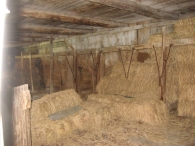
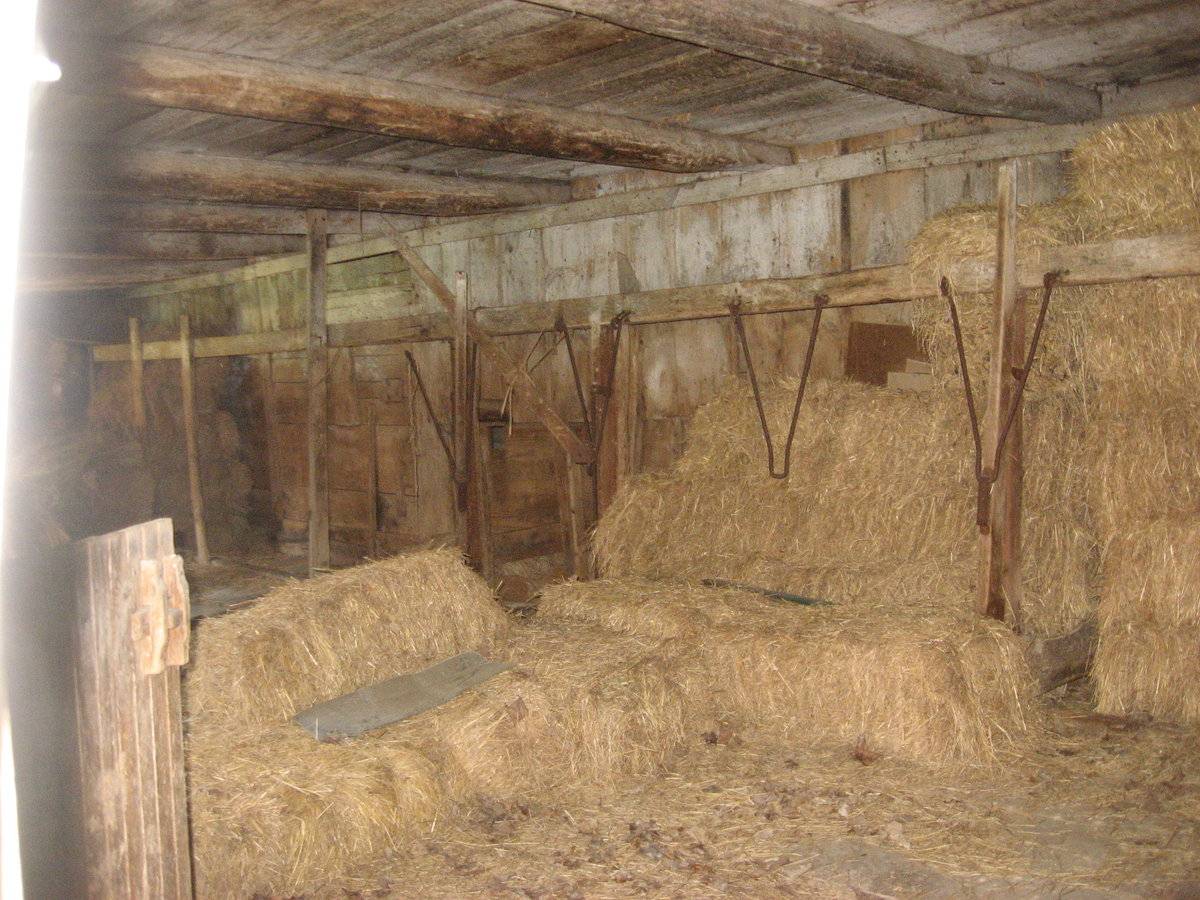
This barn appears to have been most recently part of a dairy farm. The home nearby was built in the 1750s but the barn seems to have been built post-1850 as evidenced by its sliding doors. It is possible that this multipurpose barn was used for housing cattle and sheep. It is not currently in agricultural use. Listed in Town of Willington Plan of Conservation & Development Appendix 6 - Listing of Historic Structures or Sites - date given as 1850. Historical School District IV - Moose Meadow or Rider District One of the largest centers of commercial activity in northeastern Connecticut during the middle of the 19th century was a placed owned by Origin Dimock in the Rider district. There was a large building where palm leaf hats were braided by hand and pressed by machine. A team from the store traversed the country and the peddler with “Yankee Notions” was a familiar sight. Furniture and matches were made here and a wood yard employing water power supplied stove wood to families living in the Glass Factory and East Willington areas. The intense industrialization of one section of this district led to its designation as Tinkerville (or Forestville). One of the state’s first woolen mills was established in this section in the early part of the century. The mill was destroyed by fire in 1847 and a silk business was established on the old mill site. The numerous streams in the district were also used to power a saw mill that produced plow beams and a spool thread factory that employed twenty men and women. In addition, there was a small mine where iron ore was obtained and made into pig iron and finally, a general store, which in addition to the goods produced by the local industries, purchased supplies for resale from Hartford and Norwich. These supplies were brought in by ox teams which performed a freight service both ways, similar to that carried on by our contemporary trucking lines. Liquor was one of the most profitable items handled by the store. The demise of the Forest Mill in Tinkerville in 1887 marked the end of industrial activity in the Rider district.
- Use & Accessibility
- Environment
Related features
Environment features
Relationship to surroundings
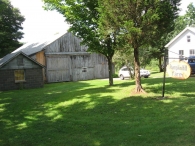
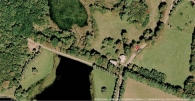
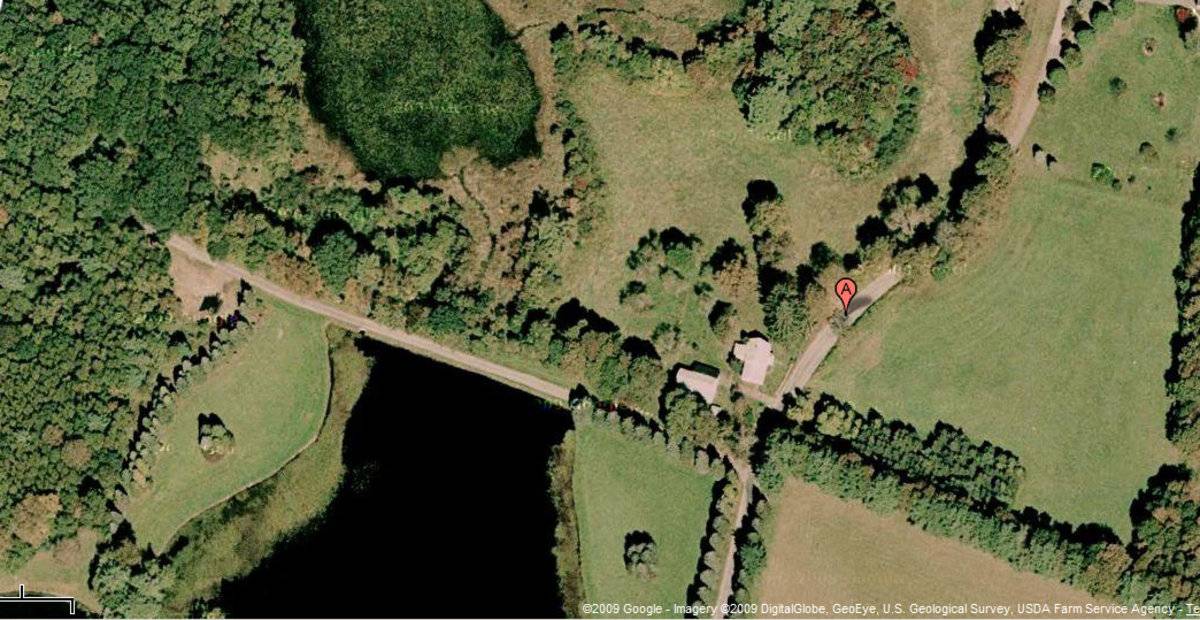
This area along the Fenton River is a mix of woodlands and open fields, with scattered 19th- and 20th-century houses and farmsteads. The barn is set back from the street behind the house, and has an open field to the north and the Fenton River to the west.
- Typology & Materials
-
Building Typology
Materials
Structural System
Roof materials
Roof type
Approximate Dimensions
1960 square feet
- Source
-
Date Compiled
12/30/2009
Compiled By
Charlotte Hitchcock, reviewed by CT Trust
Sources
Photographs by Melodi Lacy 9/18/2009
Town of Willington Assessor’s Record 36/001-00.
Demers, Ronald F., Modernization in a New England Town: A History of Willington, Connecticut, Willington Historical Society, 1983, W. Willington CT, 431 pp.
Sexton, James, PhD, Survey Narrative of the Connecticut Barn, Connecticut Trust for Historic Preservation, Hamden, CT, 2005, http://www.connecticutbarns.org/history.
Visser, Thomas D., Field Guide to New England Barns and Farm Buildings, University Press of New England, 1997.
Willington Common National Register Historic District Nomination, #90001911, 12/18/1990, Cunningham Associates, Ltd., Middletown CT.
Willington Historical Society website - South Willington district: http://www.geocities.com/willingtoncthistory/mapnarrative.htm
Willington Historical Society, Chronology of Willington CT – 1727-1927, 1977.
Willington Historical Society website - South Willington district: http://www.geocities.com/willingtoncthistory/mapnarrative.htmWillington Plan of Conservation and Development, Appendix 6, Listing of Historic Structures or Sites, 2006.
- PhotosClick on image to view full file
-