Barn Record Willington
RETURN TO ‘FIND BARNS’- Building Name (Common)
- James Peck Farm
- Building Name (Historic)
- James Peck Farm
- Address
- 128 Pinney Hill Road, Willington
- Typology

- Overview
-
Designations
n/a
Historic Significance
Architectural description:
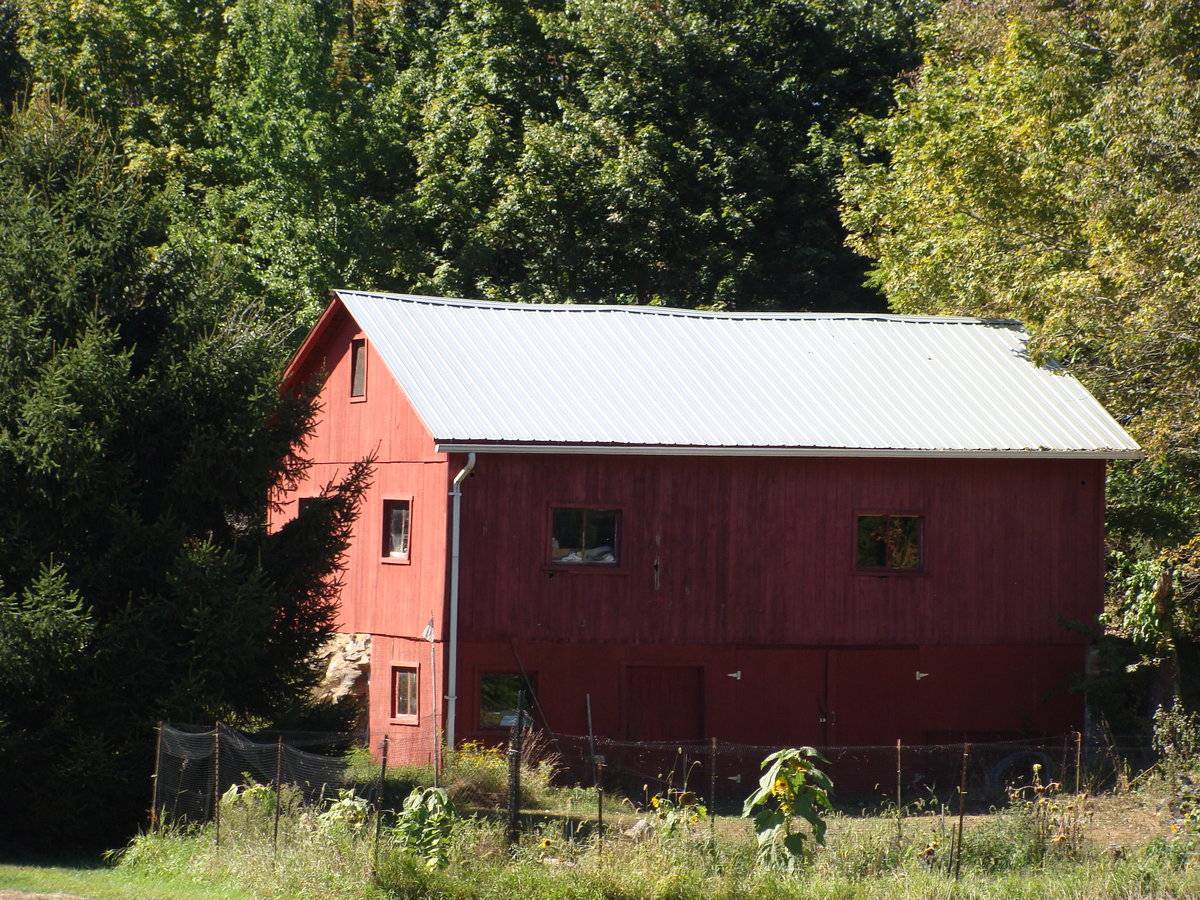
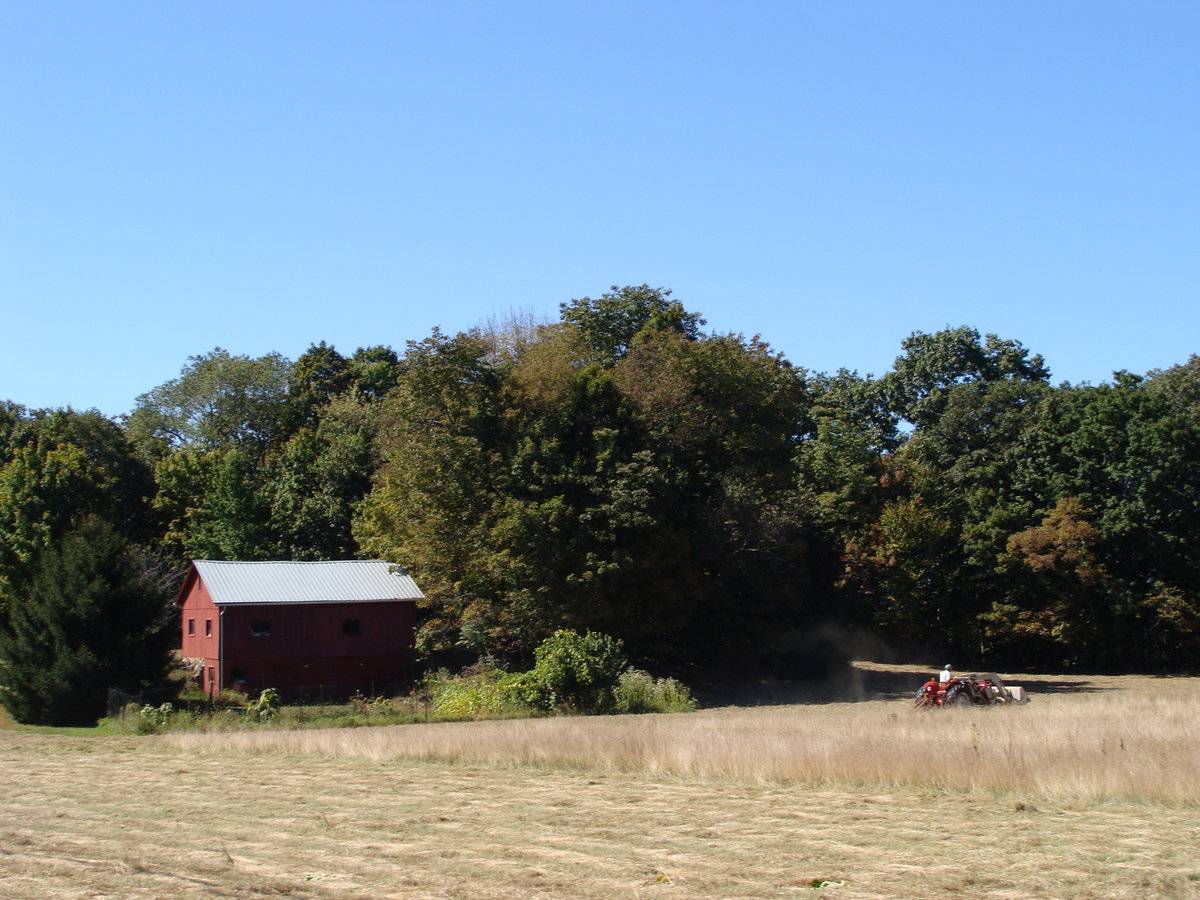
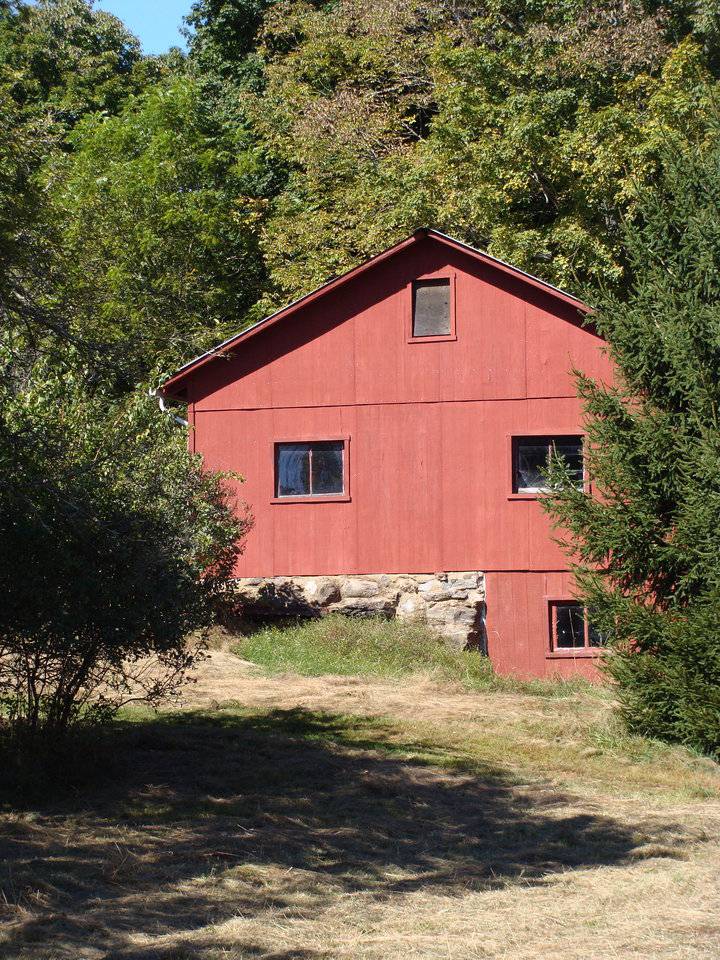
This barn is a 1 and ½-story bank barn with a gable roof. The ridge runs north-south, with the up-hill side facing west. Mortared field stone foundations are visible supporting the west half of the structure; the east half appears to be wood framing down to the lower level grade.
The extant siding is plywood on the south and lower level, vertical flush-board siding on the east main level. Two windows on each façade are two-light fixed sash, larger than the typical stable window. At the lower level there is a single pass-through door on the east façade, and a pair of hinged doors.
Roofing is metal interlocking panels. Some deformation of the ridge line indicates the presence of a three-bay post and beam frame.
Historical significance:
The oldest barns still found in the state are called the “English Barn,” “side-entry barn,” “eave entry,” or a “30 x 40”. They are simple buildings with rectangular plan, pitched gable roof, and a door or doors located on one or both of the eave sides of the building based on the grain warehouses of the English colonists’ homeland. The name 30 by 40 originates from its size (in feet), which was large enough for 1 family and could service about 100 acres. The multi-purpose use of the English barn is reflected by the building’s construction in three distinct bays - one for each use. The middle bay was used for threshing, which is separating the seed from the stalk in wheat and oat by beating the stalks with a flail. The flanking bays would be for animals and hay storage.
The 19th century saw the introduction of a basement under the barn to allow for the easy collection and storage of a winter’s worth of manure from the animals sheltered within the building.
The bank barn is characterized by the location of its main floor above grade, either through building into a hillside or by raising the building on a foundation. This innovation, aided by the introduction of windows for light and ventilation, would eventually be joined by the introduction of space to shelter more animals under the main floor of the barn.Field Notes
Listed in Town of Willington Plan of Conservation & Development Appendix 6 - Listing of Historic Structures or Sites. Historical School District IX - Thread Factory or South Willington District South Willington was, without dispute, the major industrial sector of Willington for over one hundred years because of the Gardiner Hall Jr. Co. which manufactured thread here. When Gardiner Hall Jr. founded the company in 1860, he employed six workers and did his own bleaching. Before his death in 1915, the company employed more than 150 workers and produced 26 million spools of thread annually. To accommodate the increasing number of employees who came from neighboring towns, a boarding house was constructed so that workers could stay overnight and get their meals there as well. About four years later, in 1876, tenement houses were constructed and rented to employees and their families. As the company grew and expanded the Hall’s recognized the needs of the growing community and built a general store which also housed a post office. A few years later the Clara Hall Elliott Baptist Church was erected and in 1924 a new, modern school was constructed in memory of Holman Hall, with a gymnasium and auditorium Even after the district schools were consolidated – many of the villages still retained their identity such as: Center, Daleville, East Willington, Moose Meadow, Glass Factory and South Willington.
- Use & Accessibility
Use (Historic)
Use (Present)
Exterior Visible from Public Road?
Yes
Demolished
n/a
Location Integrity
Unknown
- Environment
Related features
Environment features
Relationship to surroundings
Pinney Hill Road is located on the outskirts of the village of South Willington where closely-spaced buildings transition to farmland, forest, and scattered 19th- and 20th-century houses.
- Typology & Materials
-
Building Typology
Materials
Structural System
Roof materials
Roof type
Approximate Dimensions
768 square feet
- Source
-
Date Compiled
01/11/2010
Compiled By
Charlotte Hitchcock, reviewed by CT Trust
Sources
Photographs by Kim Szkudlarek 9/28/2009.
Town of Willington Assessor’s Record Map/Lot 014/008-00 (house built 1845, 2.93 acres, barn 768 sf).
Demers, Ronald F., Modernization in a New England Town: A History of Willington, Connecticut, Willington Historical Society, 1983, W. Willington CT, 431 pp.
Sexton, James, PhD, Survey Narrative of the Connecticut Barn, Connecticut Trust for Historic Preservation, Hamden, CT, 2005, http://www.connecticutbarns.org/history.
Visser, Thomas D., Field Guide to New England Barns and Farm Buildings, University Press of New England, 1997.
Willington Common National Register Historic District Nomination, #90001911, 12/18/1990, Cunningham Associates, Ltd., Middletown CT.
Willington Historical Society, Chronology of Willington CT – 1727-1927, 1977.
Willington Historical Society website - South Willington district: http://www.geocities.com/willingtoncthistory/mapnarrative.htm
Willington Plan of Conservation and Development, Appendix 6, Listing of Historic Structures or Sites, 2006.
- PhotosClick on image to view full file
-