Barn Record Preston
RETURN TO ‘FIND BARNS’
- Overview
-
Designations
n/a
Historic Significance
Architectural description:
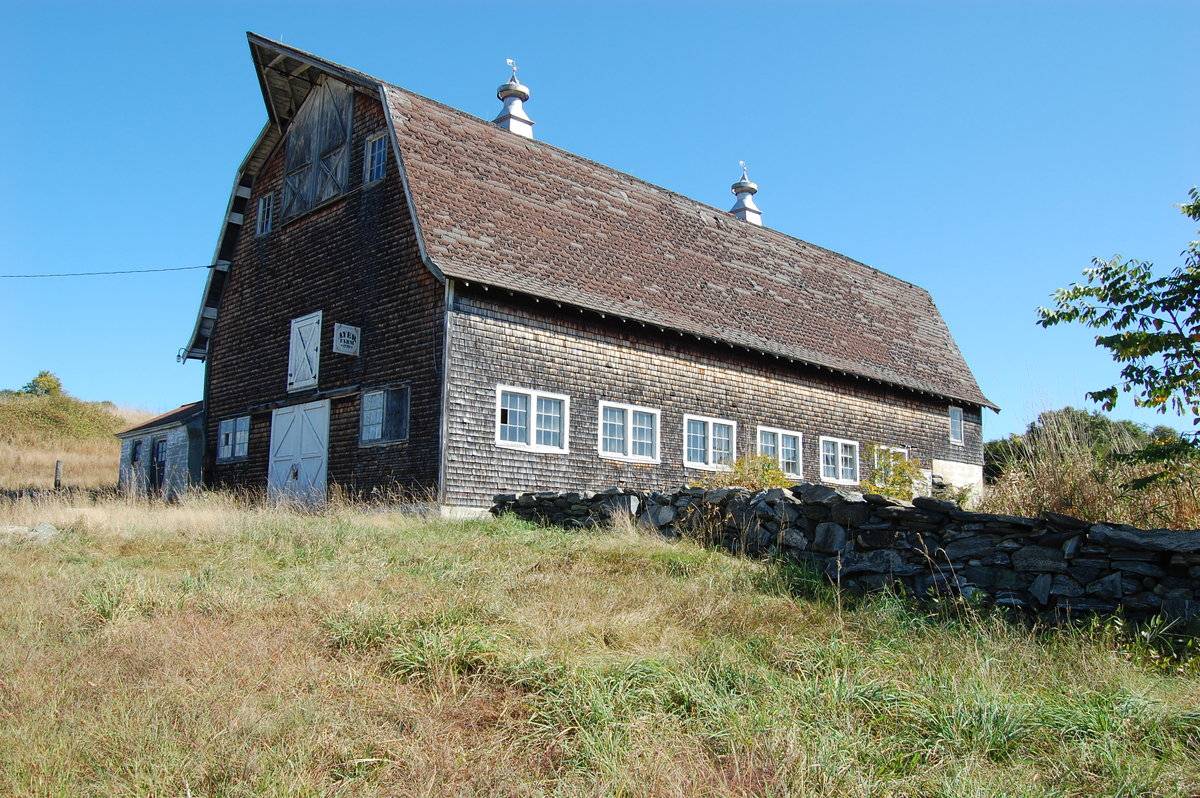
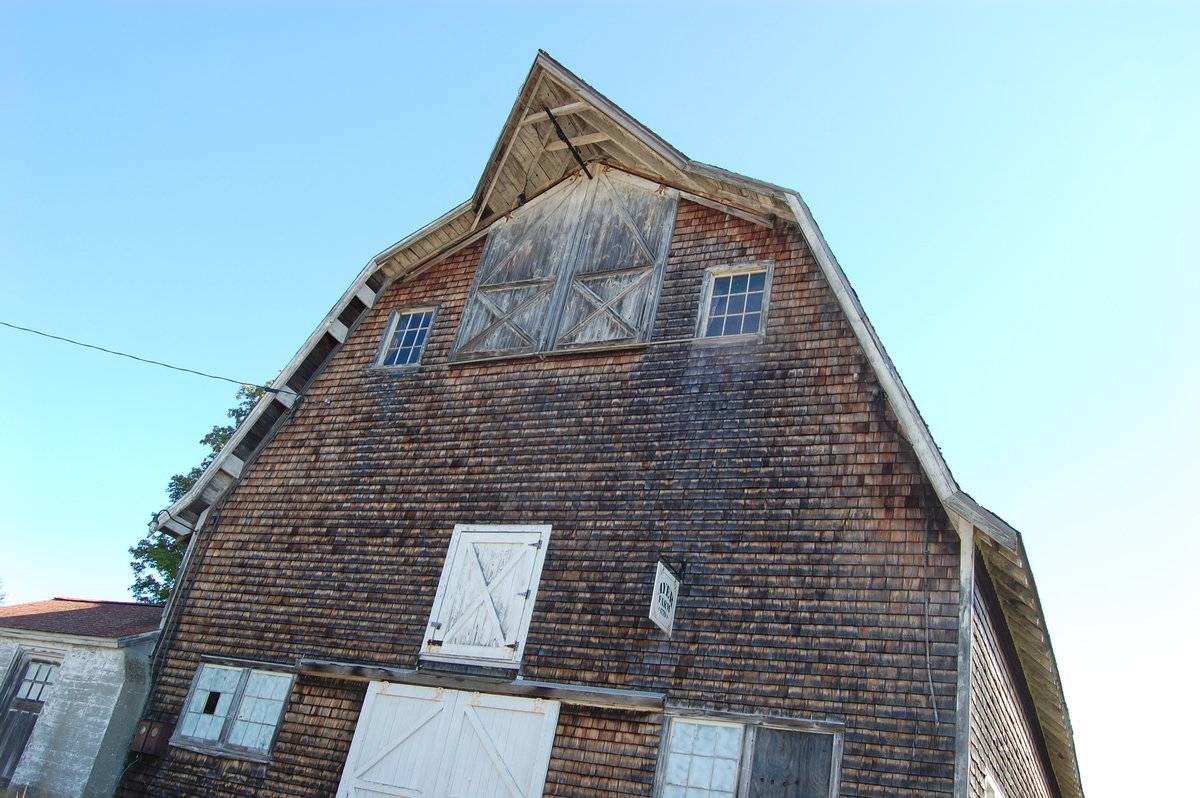
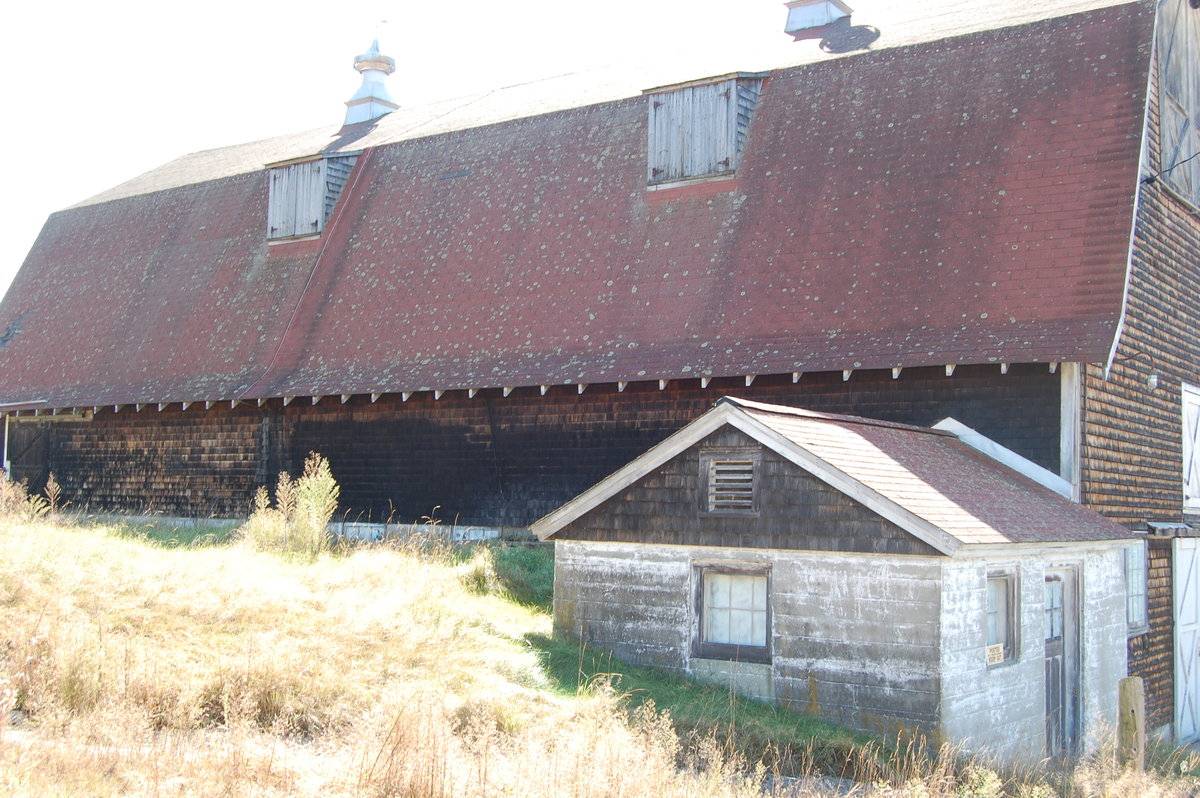
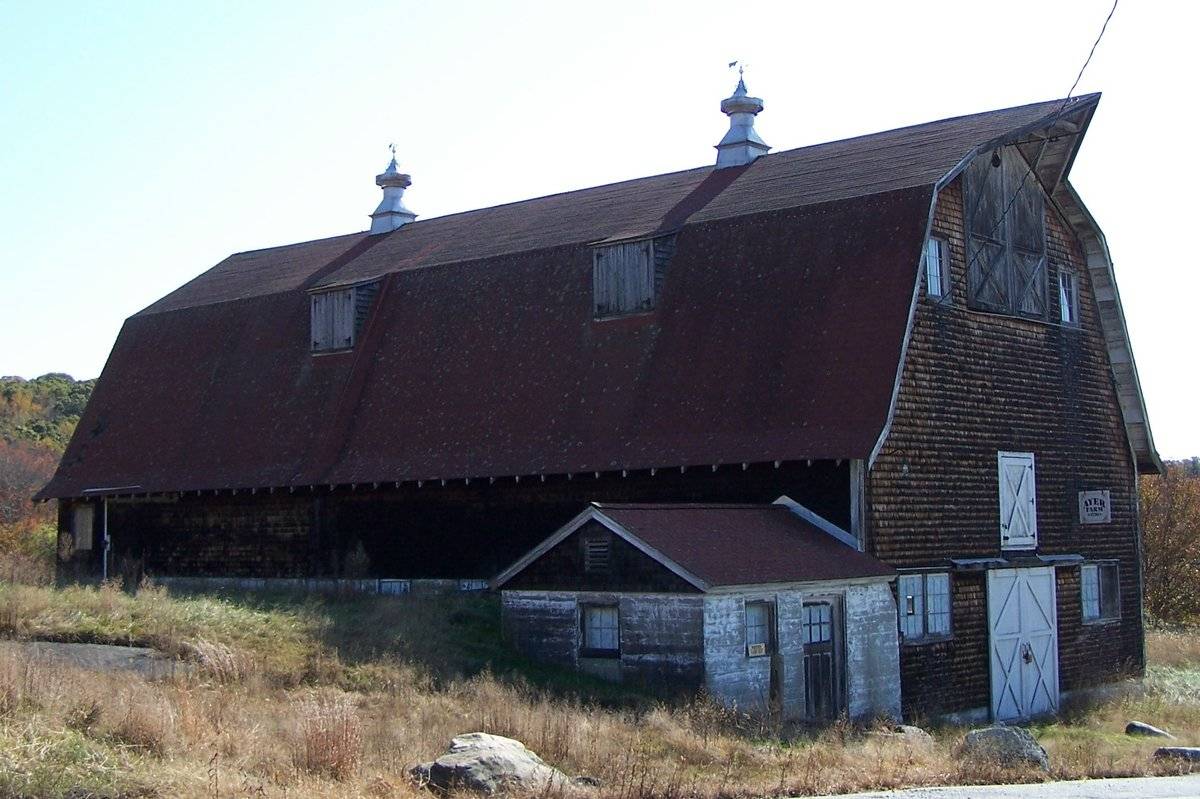
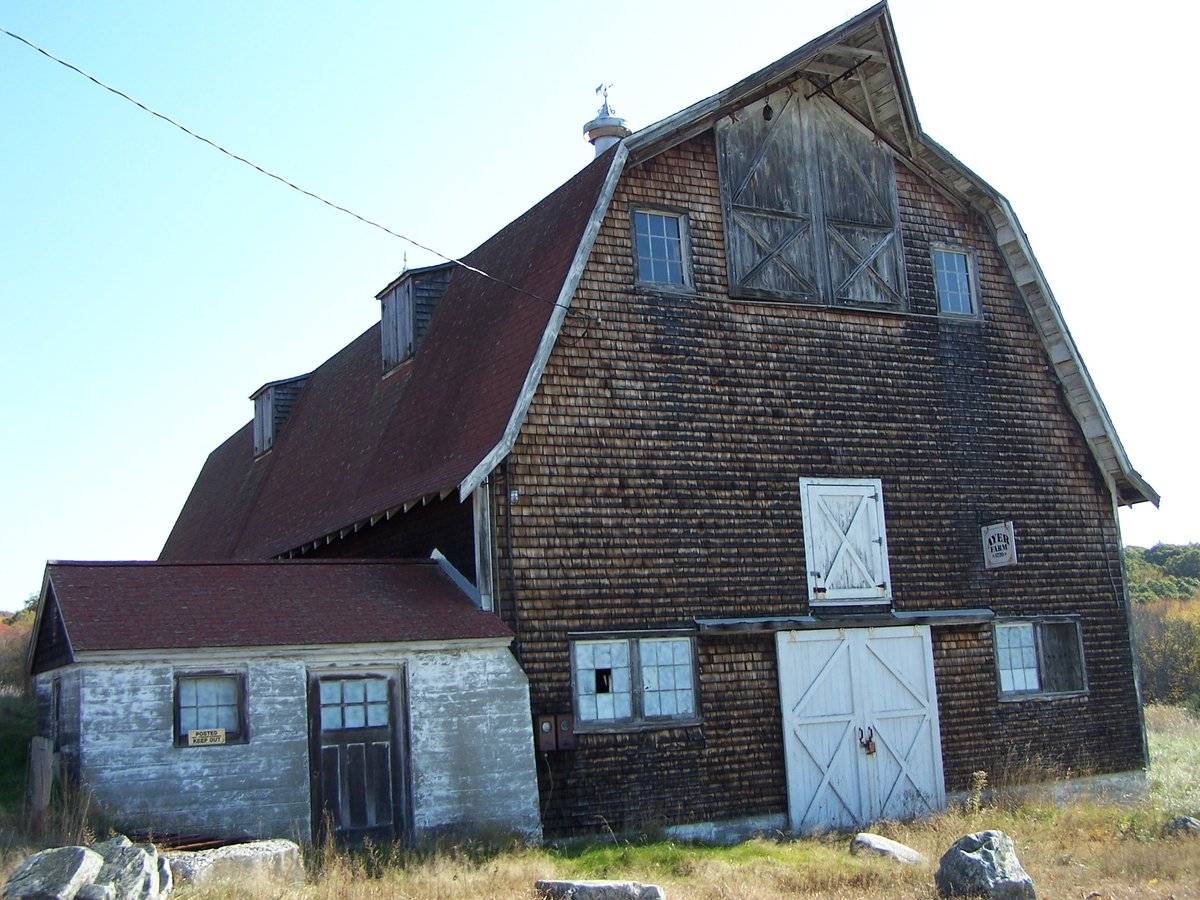
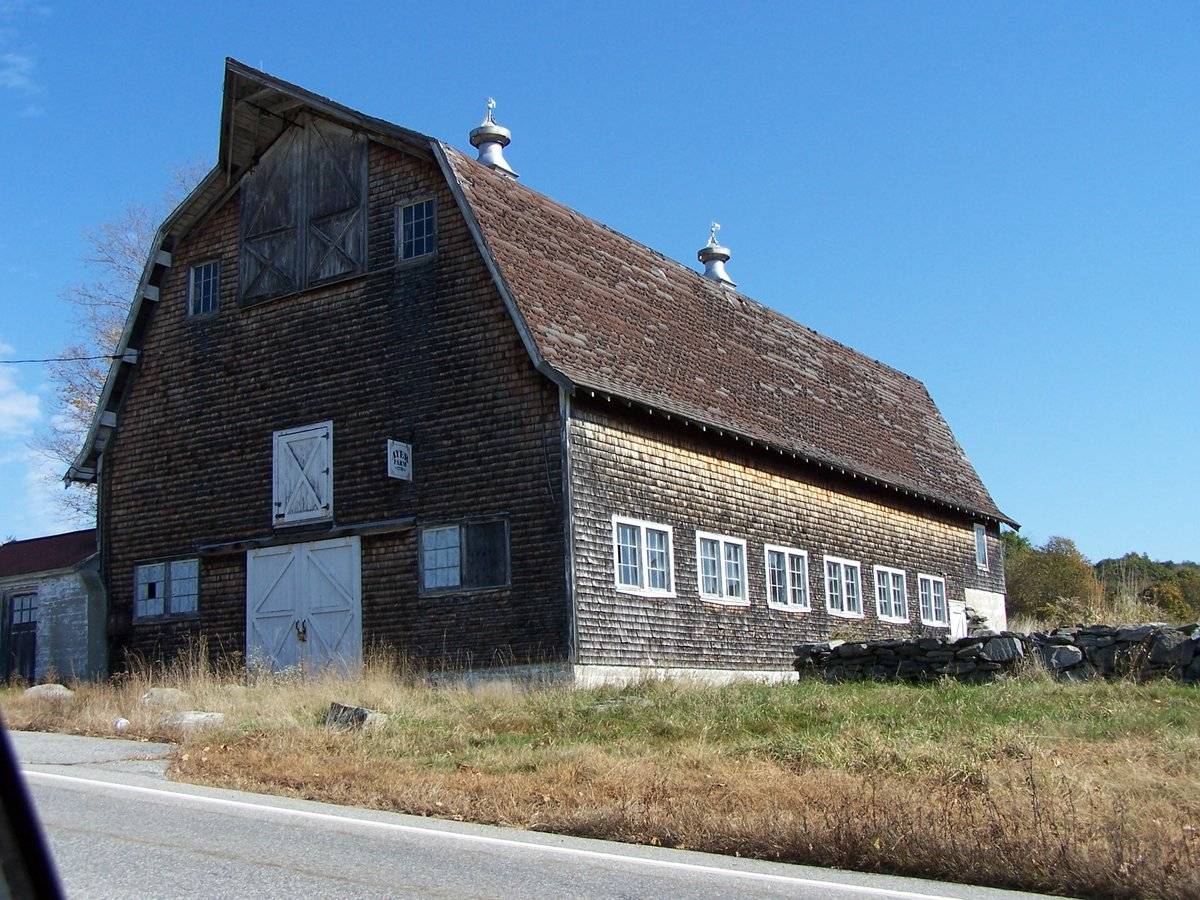
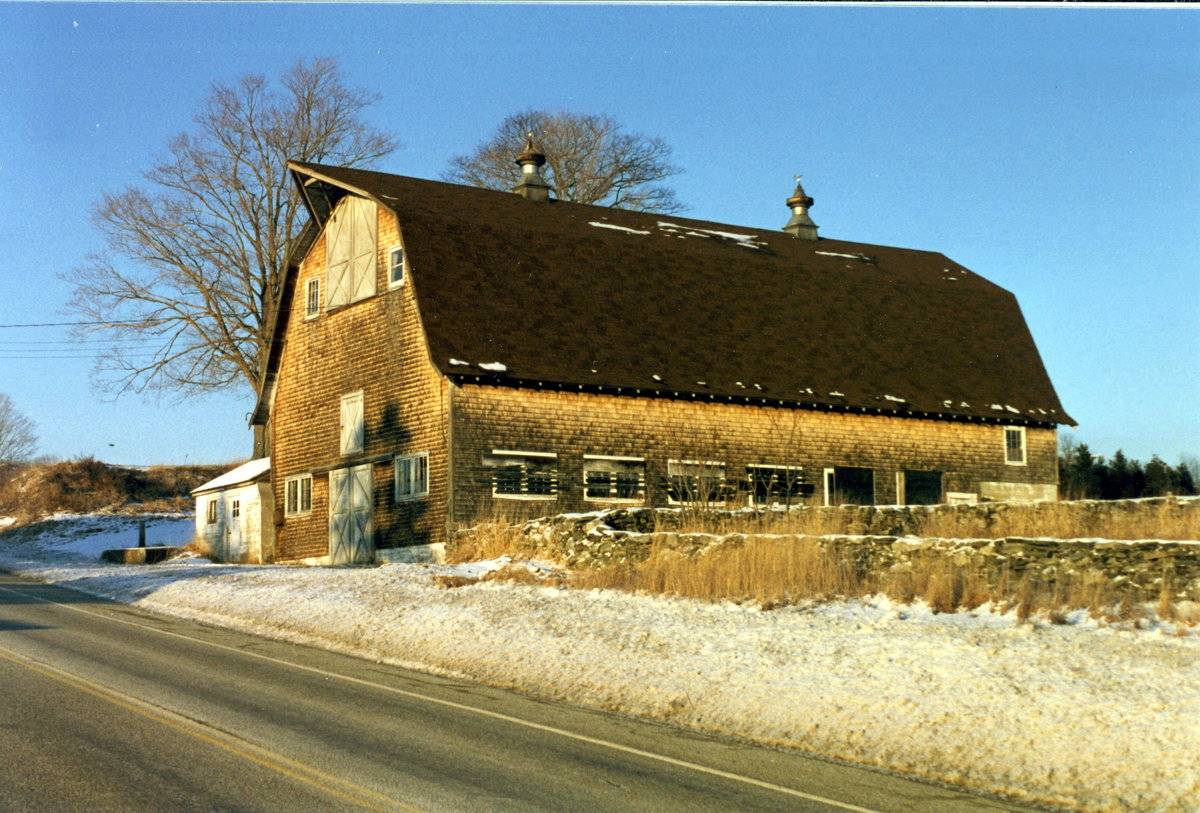
This is a 2 1/2 story gambrel bank barn with a gable-roofed addition, most likely a milk room. The main facade faces west towards Jewett City Road (Route 164), which runs approximately north-south. The main entry is a pair of exterior sliding doors in the center of the facade. Flanking the double doors are two pairs of two adjacent, fixed nine-pane windows. Above the double doors is a side hinged haydoor. Just to the north of the haydoor is a swinging sign that states: AYER FARM 1770. Just beneath the apex of the roof is a hay track and a pair of sliding haydoors. Flanking the haydoors are fixed six-pane windows. The south eave-facade has a series of six pairs of fixed nine-pane stable windows. there is a pass-through door towards the eastern end of the facade, as is a single fixed nine-pane window, just beneath the eave, at the east corner. The north eave-facade has a gable-roofed addition, with the gable facing north, made of concrete block. The rest of the gable is built into the earth. The gambrel roof has a dutch flair and an interesting set of two haydoor dormers with hinged doors. Along the ridge of the roof are two metal ventilators. The barn is clad in wood shingles and has a cement foundation. The roof has asphalt shingles.
Historical significance:
By the early 20th century agricultural engineers developed a new approach to dairy barn design: the ground-level stable barn, to reduce the spread of tuberculosis bacteria by improving ventilation, lighting, and reducing the airborne dust of manure. A concrete slab typically serves as the floor for the cow stables. Many farmers converted manure basements in older barns into ground-level stables with concrete floors. Some older barns were jacked up and set on new first stories to allow sufficient headroom. With the stables occupying the entire first story, the space above serves a a hayloft. By the 1920s most ground-level stable barns were being constructed with lightweight balloon frames using two-by-fours or two-by-sixes for most of the timbers. Tongue-and-groove beveled siding is common on the walls, although asbestos cement shingles also were a popular sheathing. Some barns have concrete for the first-story walls, either poured in place or built up out of blocks. The gambrel roof design was universally accepted as it enclosed a much greater volume than a gable roof did, and its shape could be formed with trusses.
The first ventilators were simple wooden louvered boxes with gable roofs, mounted near the ridge of the barn. The object of the cupola [or ventilators] is to protect the opening of the flue from the elements, keep out birds, prevent backdrafts as far as possible, and assist in drawing the foul air from the barn. Later, metal ventilators were introduced to offer more efficient ventilation with less maintenance. By the early twentieth century, prefabricated galvanized-steel ventilators were being marketed across the country. Despite sometimes being ornamented with finials or weathervanes, they lacked the romantic feel of the wooden cupola. The factory-produced steel ventilator symbolized a step in the movement towards an industrial approach to farming.
Field Notes
Old beautiful Gambrel barn. Colonial farmhouse and surrounding 200 acres are for sale, but state of CT owns development rights.
- Use & Accessibility
- Environment
Related features
Environment features
Relationship to surroundings
The barn faces the house across the street. Open land is behind the barn.
- Typology & Materials
-
Building Typology
Materials
Structural System
Roof materials
Roof type
Approximate Dimensions
n/a
- Source
-
Date Compiled
03/18/2010
Compiled By
Todd Levine, reviewed by the Connecticut Trust
Sources
Photographs by Linda Christensen.
Additional photographs by Sue Theve.
Sexton, James, PhD; Survey Narrative of the Connecticut Barn, Connecticut Trust for Historic Preservation, Hamden, CT, 2005, http://www.connecticutbarns.org/history.
Visser, Thomas D.,Field Guide to New England Barns and Farm Buildings, University Press of New England,1997.
- PhotosClick on image to view full file
-