Barn Record Willington
RETURN TO ‘FIND BARNS’- Building Name (Common)
- Ephraim Chamberlain Farm
- Building Name (Historic)
- Ephraim Chamberlain Farm
- Address
- 61 River Road (Rte 32), Willington
- Typology

- Overview
-
Designations
n/a
Historic Significance
Architectural description:
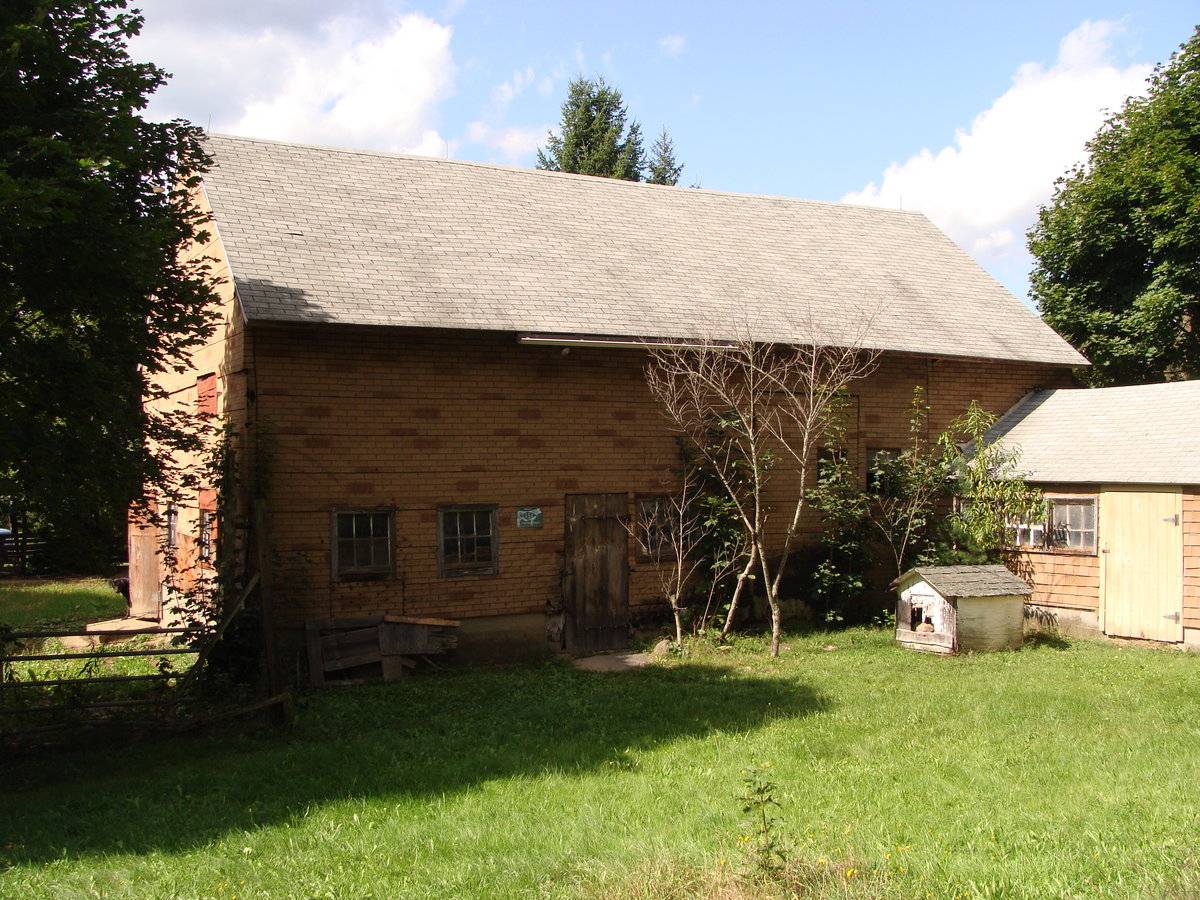
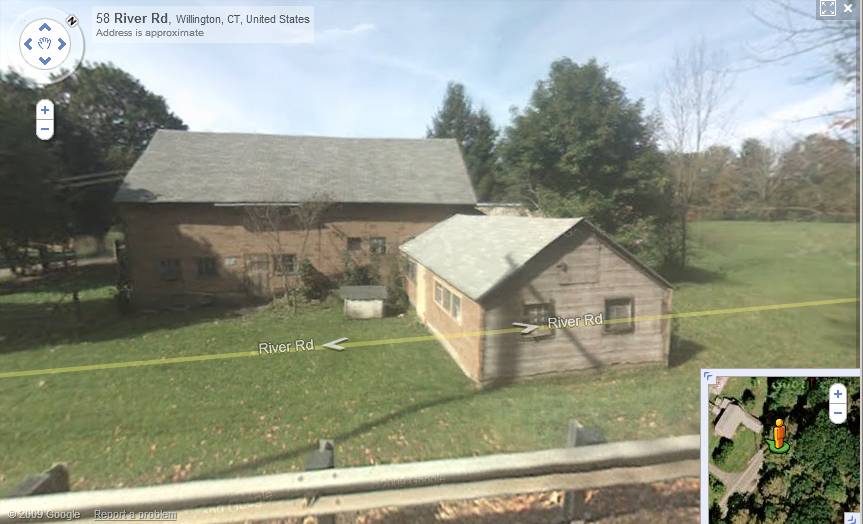
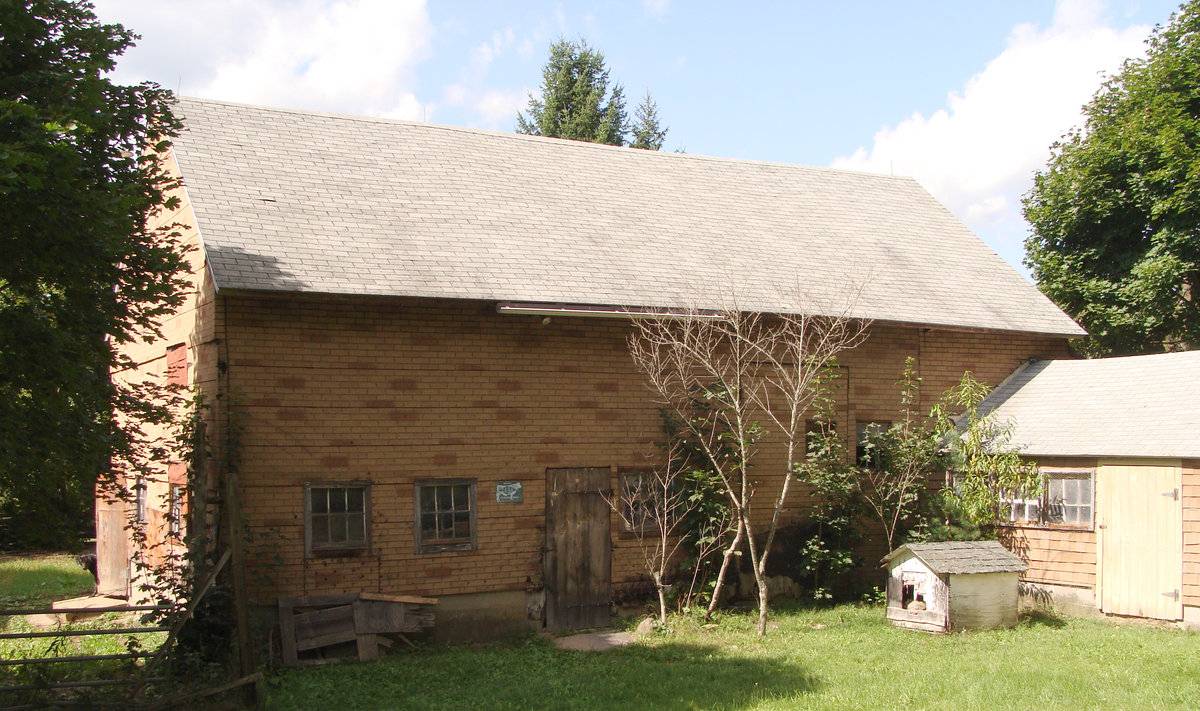
This is a 2 and ½-story gable-roofed barn with its ridge oriented roughly north-south parallel to the road.The south gable-end, facing the side of the farmhouse, appears as the primary facade, and has a single hinged door off-center toward the west corner, and two six-light stable windows. There appears to be a hay door in the second floor. The east eave-side façade has four six-light stable windows and a pass-through door at the center of the row of windows.
Siding is asphalt panels with a faux-brick texture. A one-story gable-roofed ell projects eastward from the eave-side near the north-east corner. It has a pass-through door in its south façade, flanked by two groupings of three six-light windows suggesting use as a chicken coop. The east gable-end façade also has two six-light stable-type windows. Roofing is asphalt shingles; the roof of the main barn has an overhang at eaves and rake.
Historical significance:
This barn has hybrid characteristics of the New England barn and the carriage barn, livery stable, or poultry house.
During the 1930s and 1940s, poultry farming was adopted by many farmers in New England as a replacement for dairy farming. Many large cow barns were converted into chicken barns with the addition of more floors and numerous windows and dormers.
Poultry farming grew in popularity during the second half of the 19th century, and by the early 20th century most farms had small chicken coops. These lightly-built structures often feature a gabled or shed roof and large windows on the south side. Often chicken coops have a small stove and chimney for heat to protect young chicks during cold weather. Small openings near the ground provide the fowl with access to the yard. Inside are nesting boxes for the laying hens. During the 1930s and 1940s, poultry farming was adopted by many farmers in New England as a replacement for dairy farming.
In Willington of the early 1900s, the settlers of the previous centuries had for the most part given up farming in favor of small-scale industries, or moved west to more fertile lands. A new influx of immigrants from Eastern Europe arrived in the 20th century and resumed farming, operating dairy or chicken farms and building or converting barns and coops using the technologies that were conventional and most economical at the time.
Field Notes
Listed in the Willington Plan of Conservation and Development, Appendix 6, Listing of Historic Structures or Sites, 2006.
- Use & Accessibility
- Environment
Related features
Environment features
Relationship to surroundings
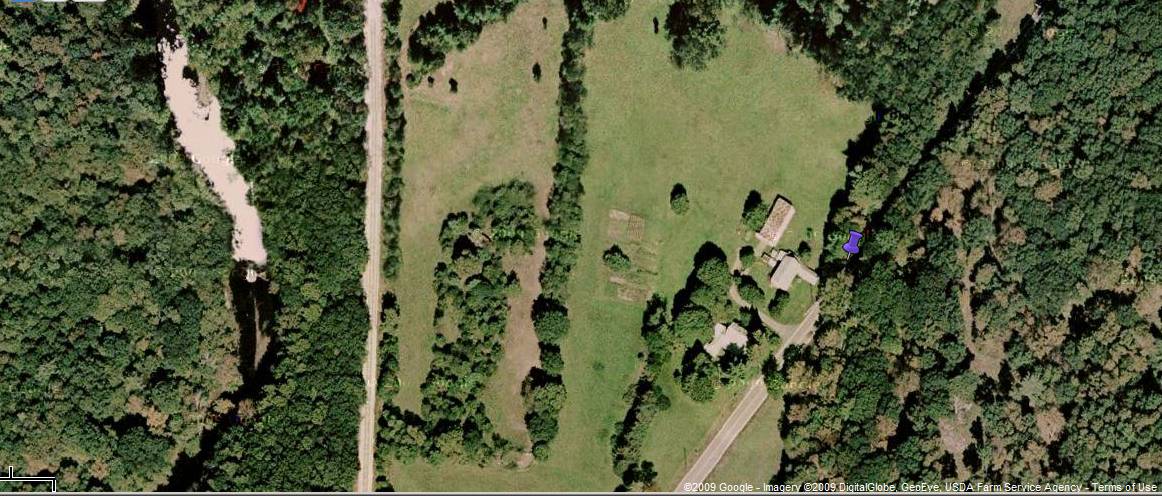
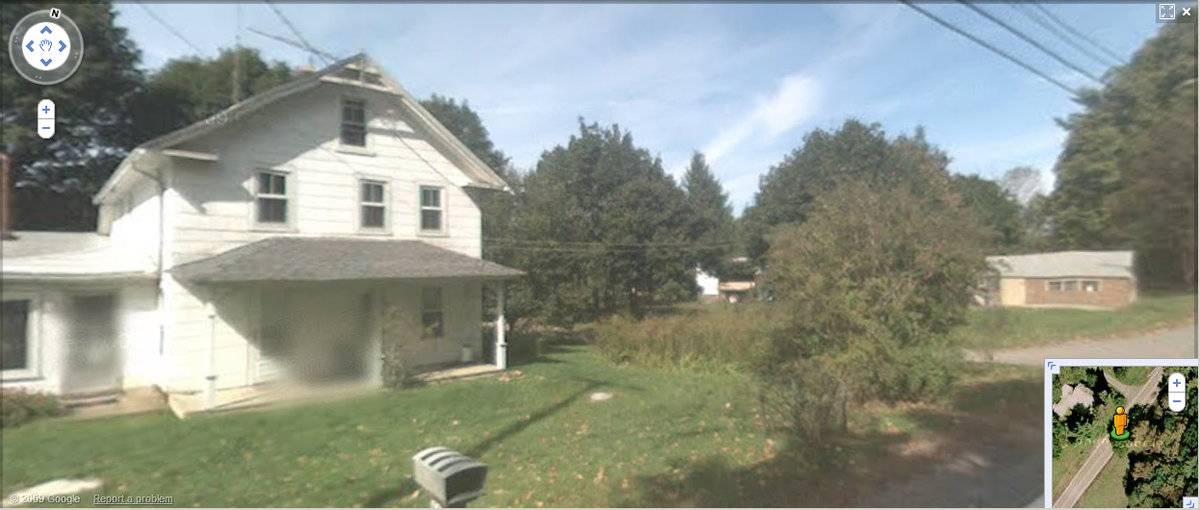
This historic farm site is on the west side of River Road, the main road through South Willington paralleling the Willimantic River and railroad line, on the outskirts of the village of South Willington.
- Typology & Materials
-
Building Typology
Materials
Structural System
Roof materials
Roof type
Approximate Dimensions
1008 square feet
- Source
-
Date Compiled
01/12/2010
Compiled By
Charlotte Hitchcock, reviewed by CT Trust
Sources
Photographs and field note by Kim Szkudlarek 9/30/2009
Town of Willington Assessor’s Record Map/Lot 10/005-00 (house built 1840, 18 acres, barn 1008 sf).
Demers, Ronald F., Modernization in a New England Town: A History of Willington, Connecticut, Willington Historical Society, 1983, W. Willington CT, 431 pp.
Sexton, James, PhD, Survey Narrative of the Connecticut Barn, Connecticut Trust for Historic Preservation, Hamden, CT, 2005, http://www.connecticutbarns.org/history.
Visser, Thomas D., Field Guide to New England Barns and Farm Buildings, University Press of New England, 1997.
Willington Common National Register Historic District Nomination, #90001911, 12/18/1990, Cunningham Associates, Ltd., Middletown CT.
Willington Historical Society website - South Willington district: http://www.geocities.com/willingtoncthistory/mapnarrative.htm
Willington Historical Society, Chronology of Willington CT – 1727-1927, 1977.
Willington Plan of Conservation and Development, Appendix 6, Listing of Historic Structures or Sites, 2006.
- PhotosClick on image to view full file
-