Barn Record Chaplin
RETURN TO ‘FIND BARNS’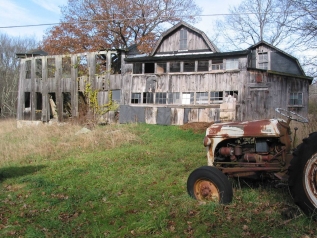
- Overview
-
Designations
n/a
Historic Significance
Architectural description:
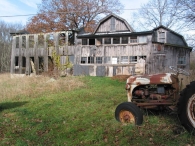
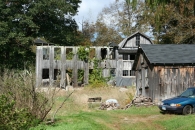
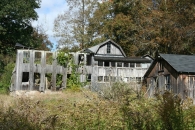
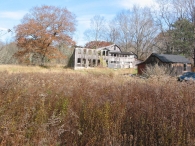
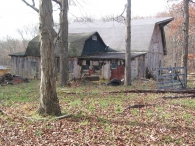
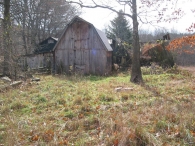
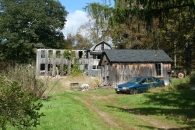
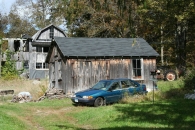
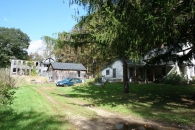
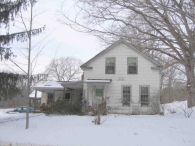
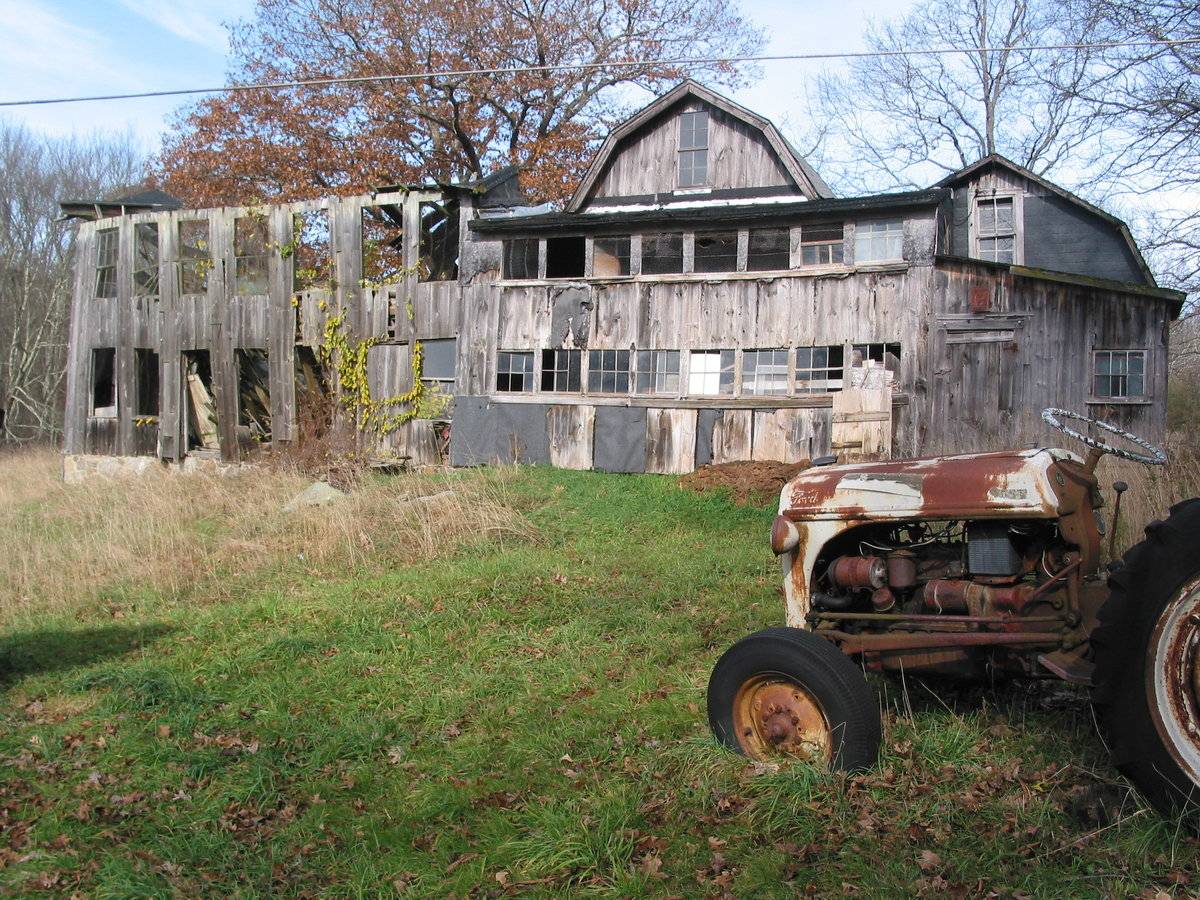
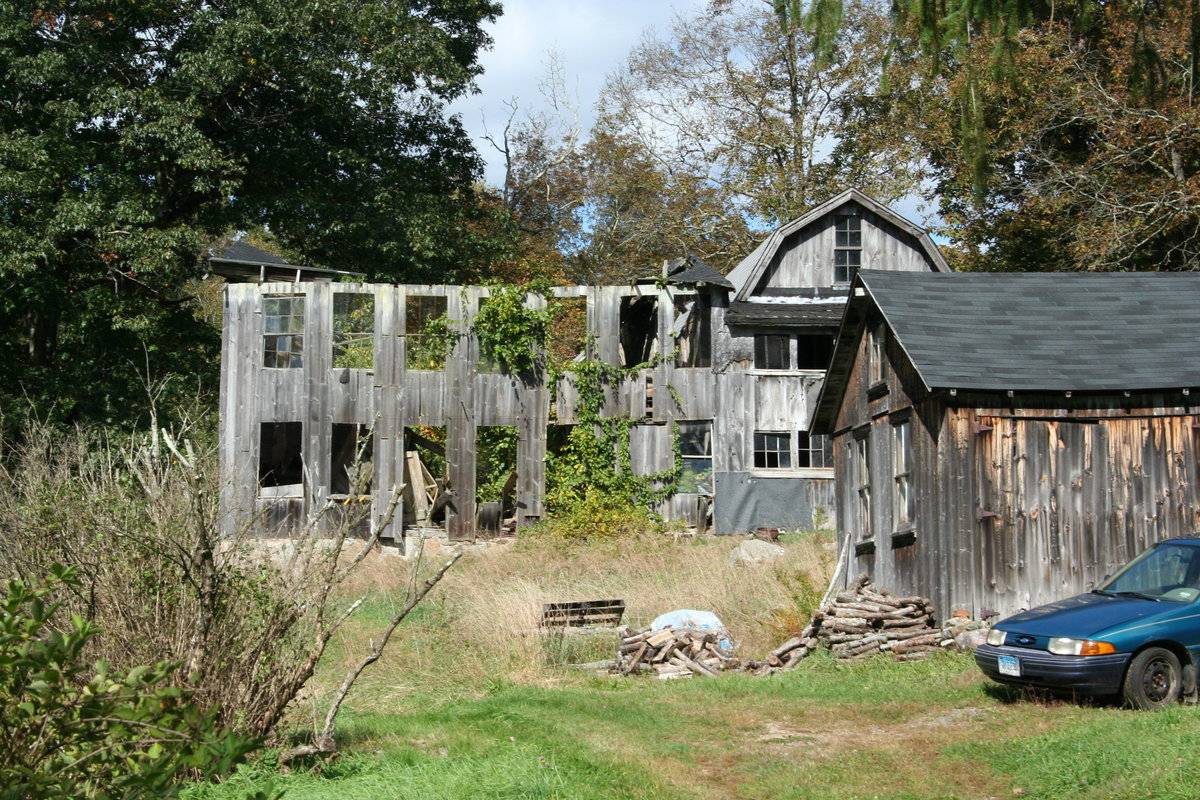
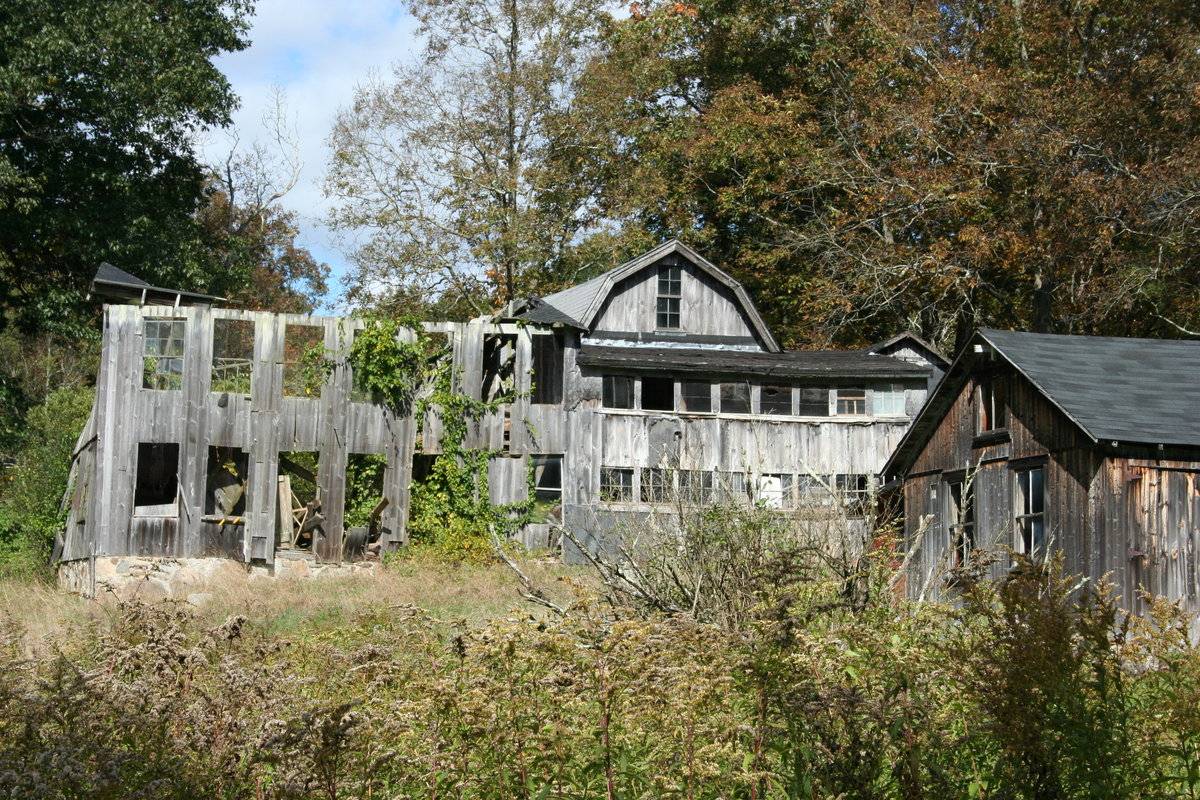
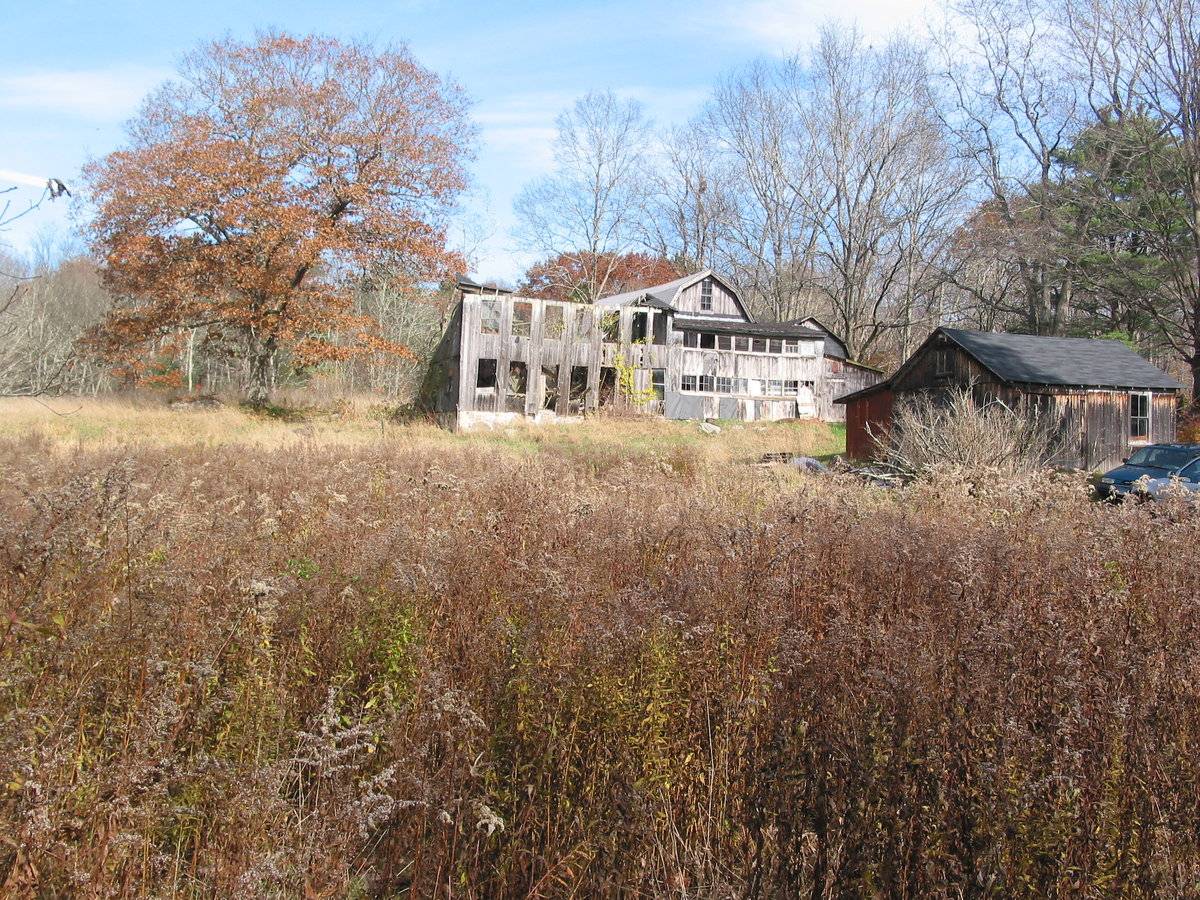
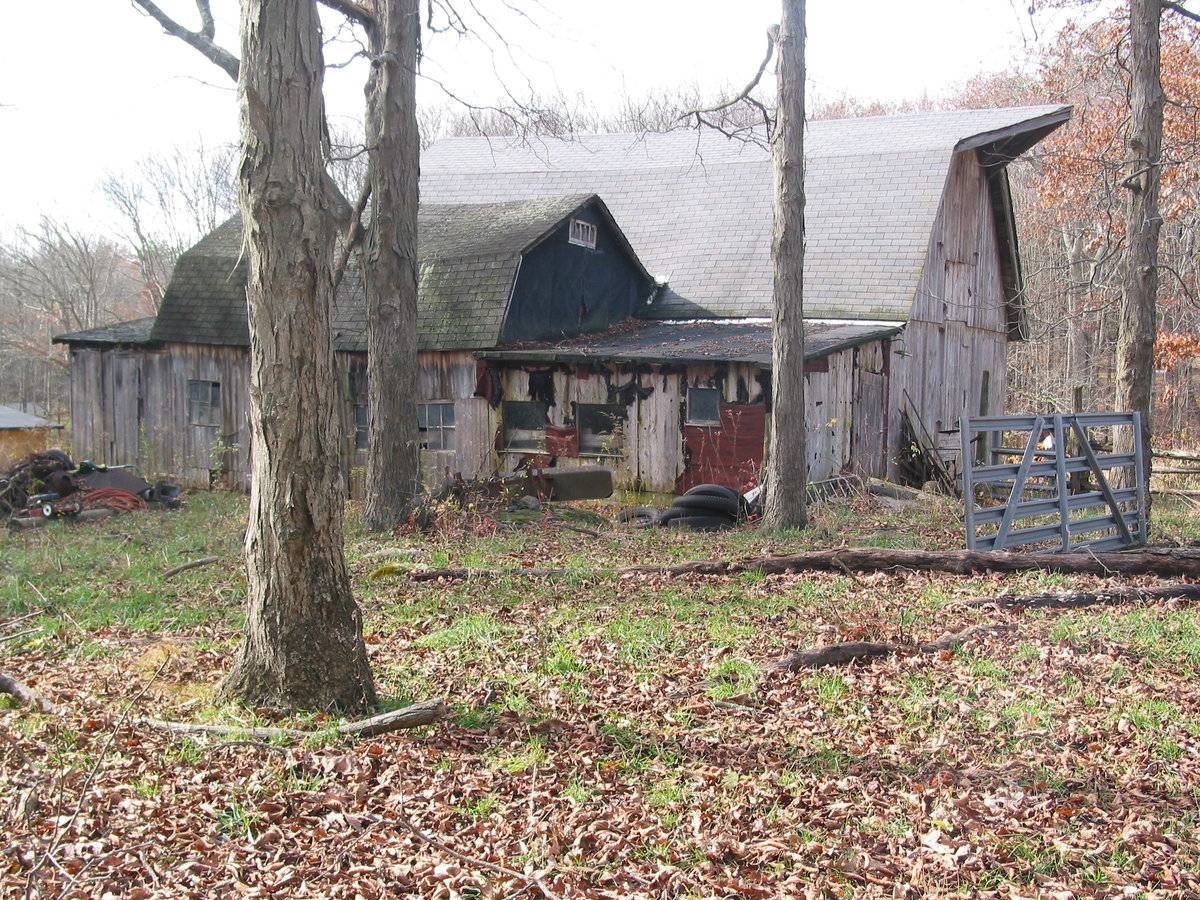
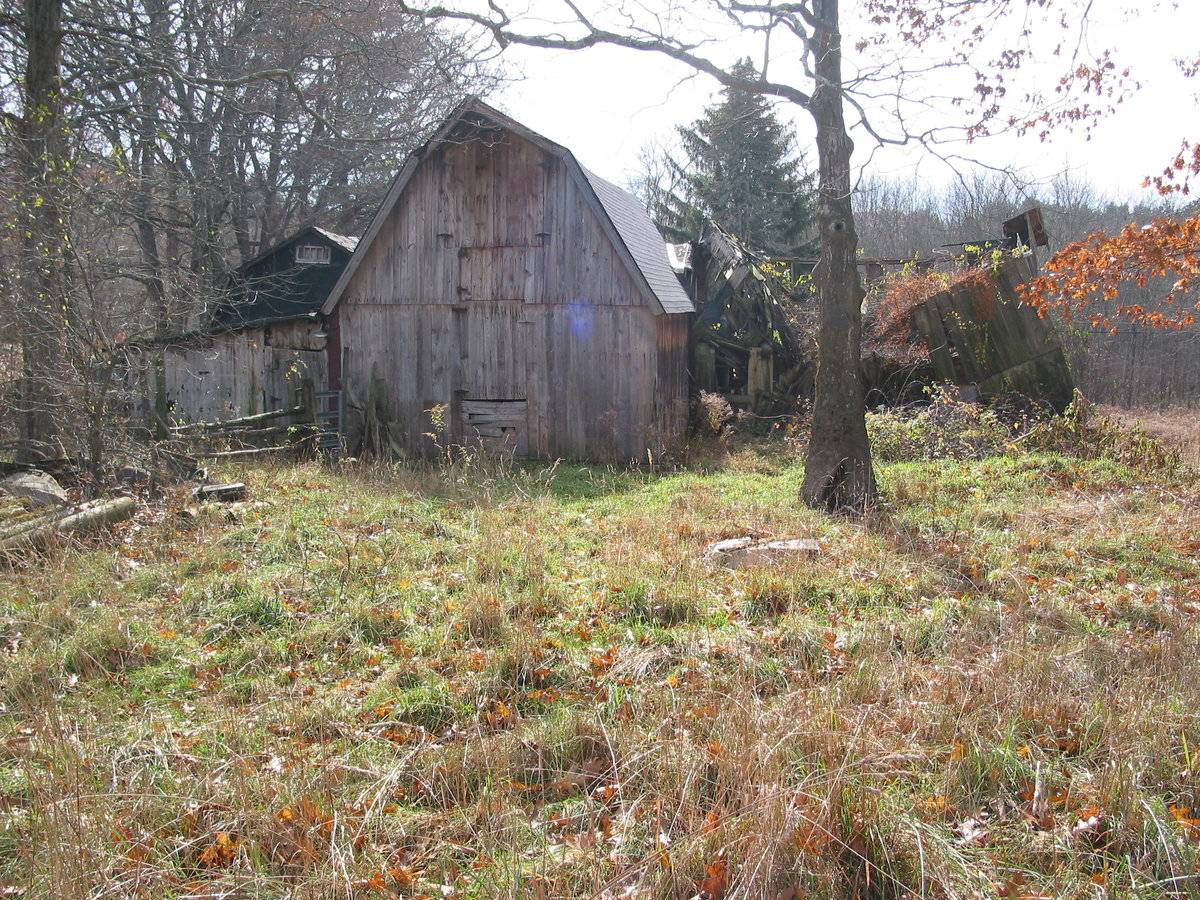
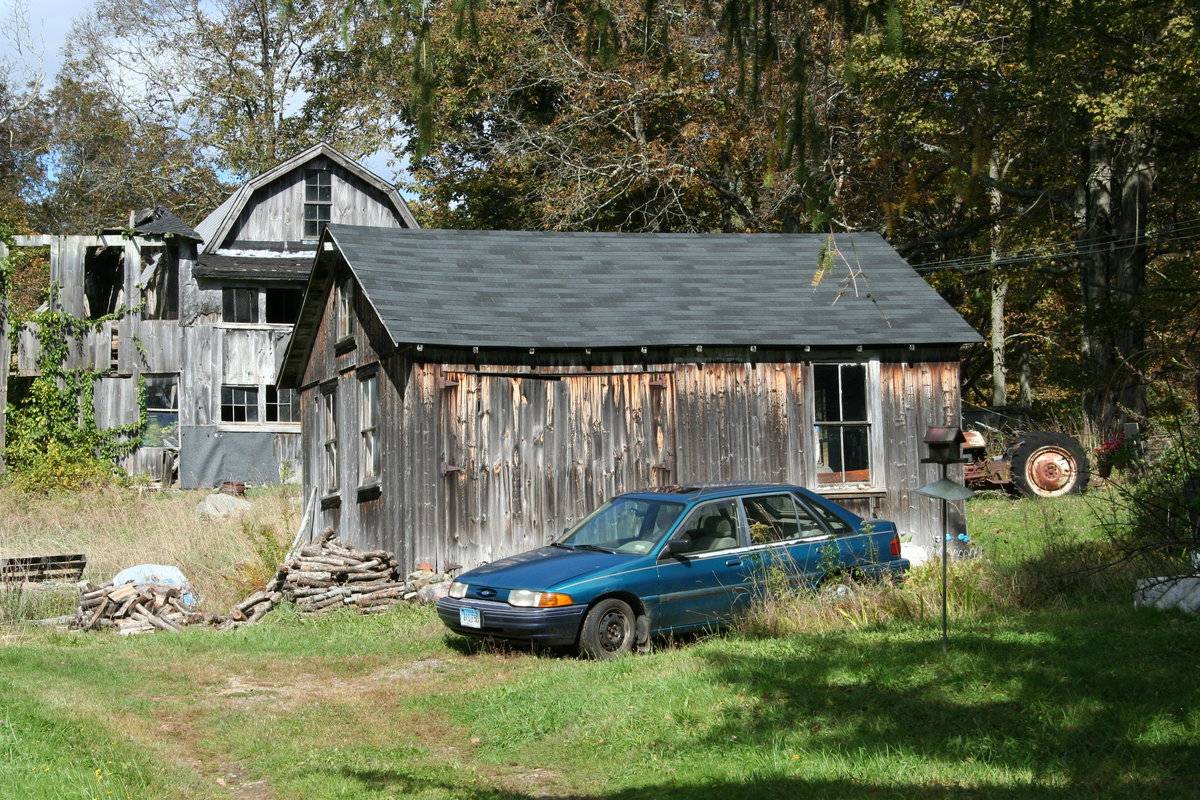
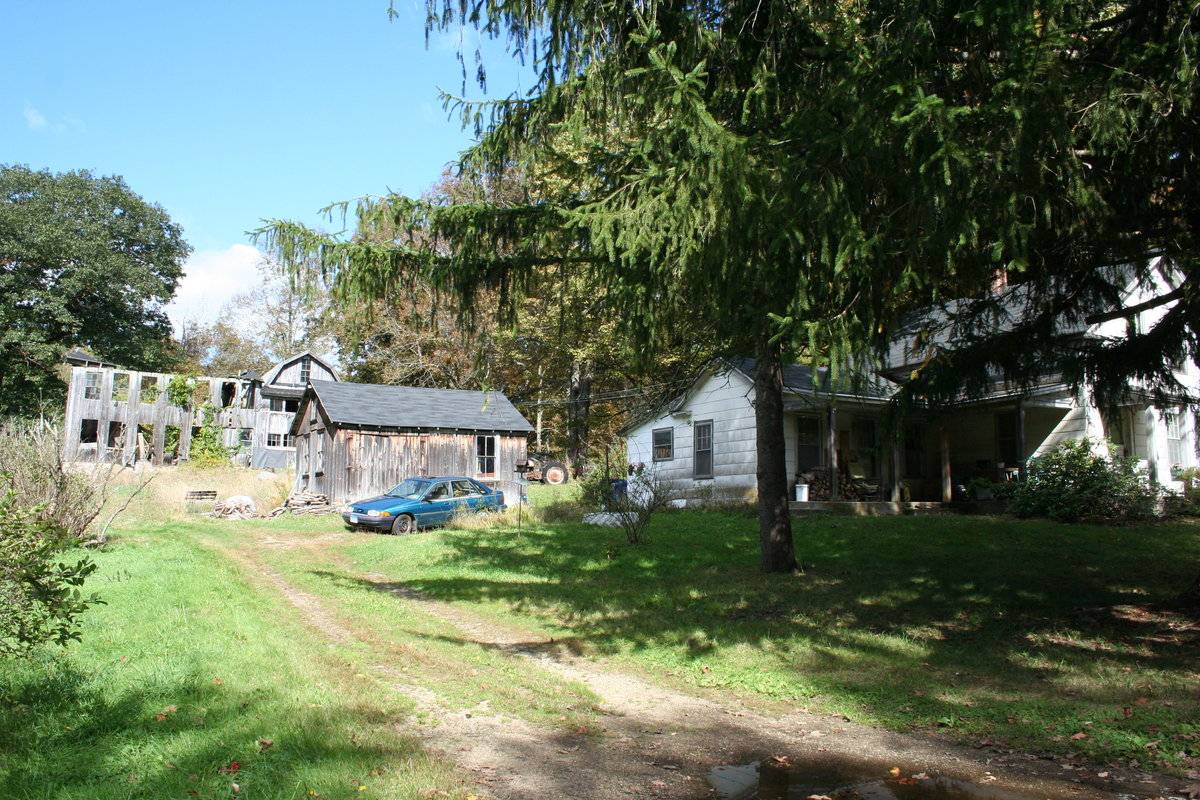
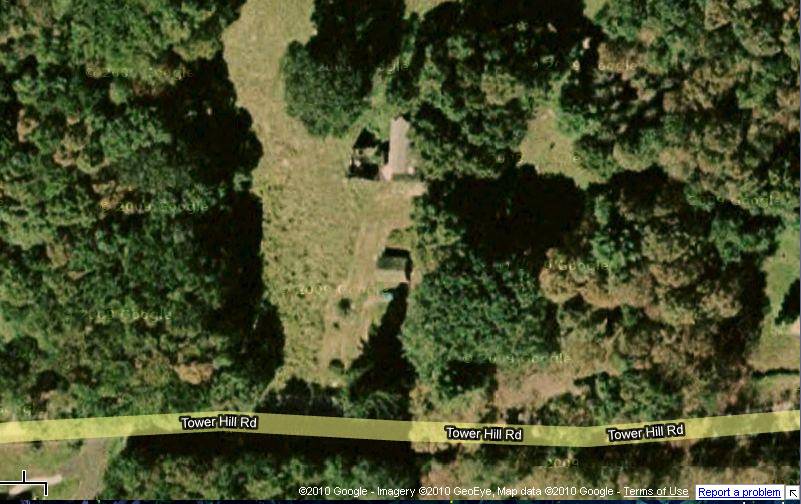
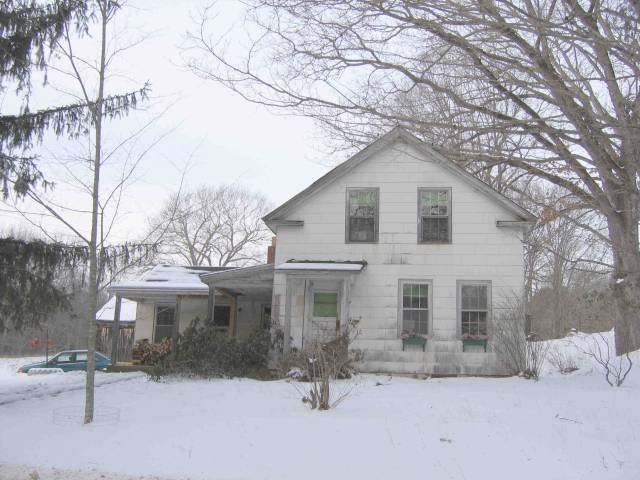
This is a complex of inter-connected structures in a state of partial collapse. The barns are located on the north side of the road behind the farm house.
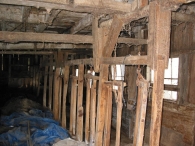
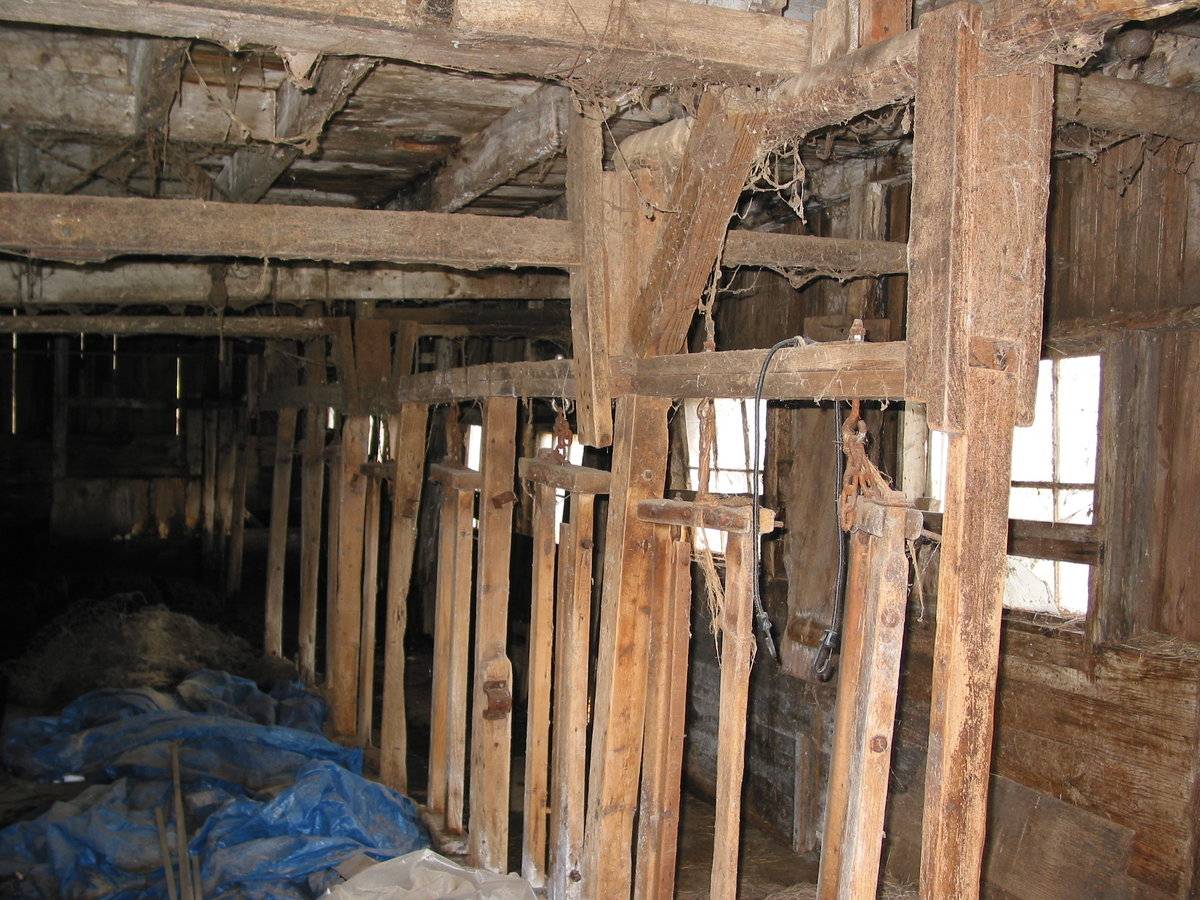
Two parallel connected gambrel-roofed barns are oriented with their ridge lines north-south – a larger barn and a smaller barn attached to its east side, with a shed addition at the northeast corner. The north gable-end of the larger barn has a Dutch door in the ground level and a hay door above. The remnants of wooden stanchions indicate use for dairy. The smaller attached gambrel barn has a row of six-pane stable windows in the east eave-facade, continuing across the side of a shed-roofed addition.
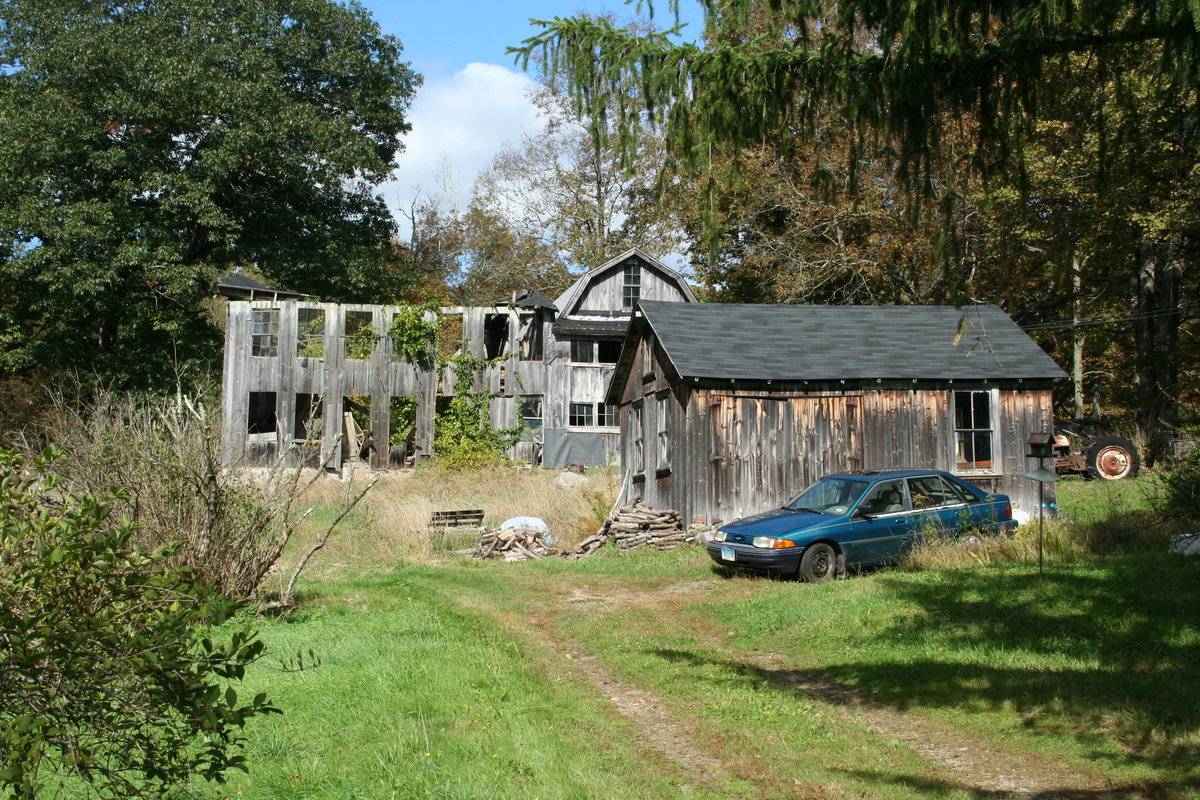
Attached at the southwest corner of the complex is the ruin of a poultry house. The roof and north wall have collapsed. The remaining south wall consists of a two-story height with a row of seven tall window openings on each level. Fragments of double-hung windows remain in some openings. Continuous with this structure is a shed-roofed addition on the south side of the gambrel barns, also with two floors of poultry space. Here there is a row of seven six-pane poultry windows on each of two levels. In the south attic gable of each of the two gambrel barns, there is a two-over-two double hung window visible above the shed roof of the addition.
Siding is un-painted vertical boards and some asphalt shingle siding. Roofing is a mixture of asphalt shingles and roll roofing.
A free-standing gable-roofed shed stands to the south of the barn complex.
Historical significance:
The New England barn or gable front barn was the successor to the English barn and relied on a gable entry rather than an entry under the eaves. The gable front offers many practical advantages. Roofs drain off the side, rather than flooding the dooryard. With the main drive floor running parallel to the ridge, the size of the barn could be increased to accommodate larger herds by adding additional bays to the rear gable end. Although it was seen by many as an improvement over the earlier side entry English Barn, the New England barn did not replace its predecessor but rather coexisted with it. The gambrel roof enclosed a much greater volume than a gable roof did, and its shape could be formed with trusses that did not require cross beams, which would interfere with the movement and storage of hay. Also known as the curb roof, the double slopes of the gambrel offer more volume in the hayloft without increasing the height of the side walls.
The term dairy barn is used as early as the 18th century (along with “cow house”). Modern dairy barns are characterized by their interior arrangements of stanchions and gutters to facilitate milking and the removal of manure. In some cases this is just a few stalls in the corner of a barn, in others it can be a large barn dedicated to that single purpose.
During the 1930s and 1940s, poultry farming was adopted by many farmers in New England as a replacement for dairy farming. Many cow barns were converted into chicken barns with the addition of more floors and numerous windows and dormers, or in separate purpose-built coops. These lightly-built structures often featured a gabled or shed roof and large windows on the south side. Often chicken coops had a small stove and chimney for heat to protect young chicks during cold weather. Small openings near the ground provided the fowl with access to the yard. Inside were nesting boxes for the laying hens. During the 1930s and 1940s, poultry farming was adopted by many farmers in New England as a replacement for dairy farming.
Field Notes
Barn One: 1940's enlarging additions, joining original farm and coop (in the 50's?) 6 additions to main barn- sheds and chicken coop. Barn Two: Shed Threats: deterioration. 1/2 collapsed, the other half is collapsing. Owner is elderly and most likely will not take action to save the barns. Historic use: agriculture, dairy, goats, chickens and turkey's.
- Use & Accessibility
- Environment
Related features
Environment features
Relationship to surroundings
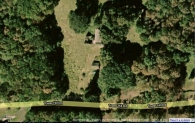
The house and barn are located west of Chaplin Village, where the closely built-up village housing changes to a more scattered pattern of old farms mixed with newer homes.
- Typology & Materials
-
Building Typology
Materials
Structural System
Roof materials
Roof type
Approximate Dimensions
20'8" w x 35' L (dimensions = original structure. later structure much larger - 3,000 square feet)
- Source
-
Date Compiled
02/16/2010
Compiled By
Charlotte Hitchcock, reviewed by CT Trust
Sources
Field Notes by Catherine Lynch and Hill Bullard 10/22/2009. Photographs by Catherine Lynch, Hill Bullard, and Stephanie Lessard.
Town of Chaplin Assessor’s Record Map/Lot 73/ 8.Ransom, David, Chaplin National Register Historic District Nomination, #78002856, National Park Service, 10/11/1978.
Sexton, James, PhD, Survey Narrative of the Connecticut Barn, Connecticut Trust for Historic Preservation, Hamden, CT, 2005, http://www.connecticutbarns.org/history.Visser, Thomas D., Field Guide to New England Barns and Farm Buildings, University Press of New England, 1997.
- PhotosClick on image to view full file
-