Barn Record Chaplin
RETURN TO ‘FIND BARNS’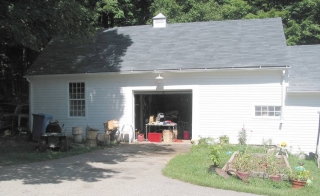
- Overview
-
Designations
Historic Significance
Architectural description:
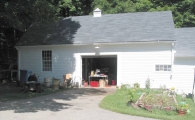
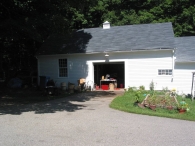
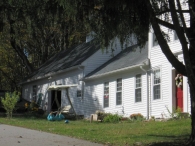
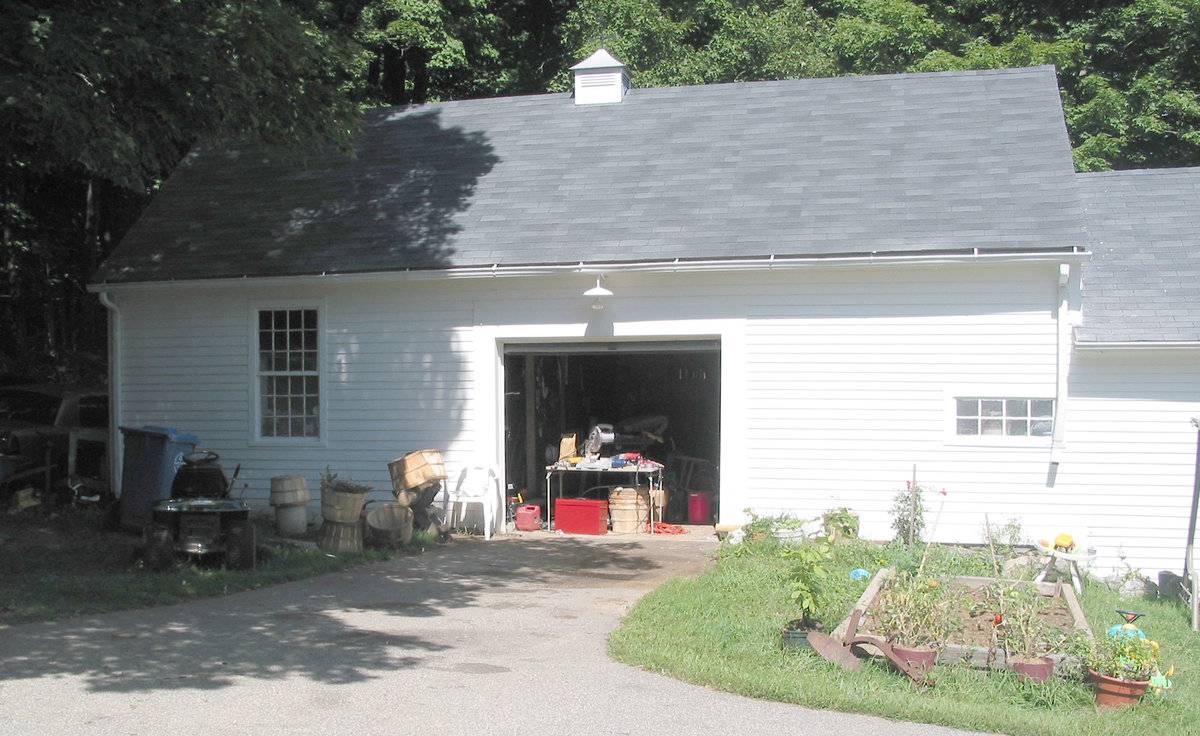
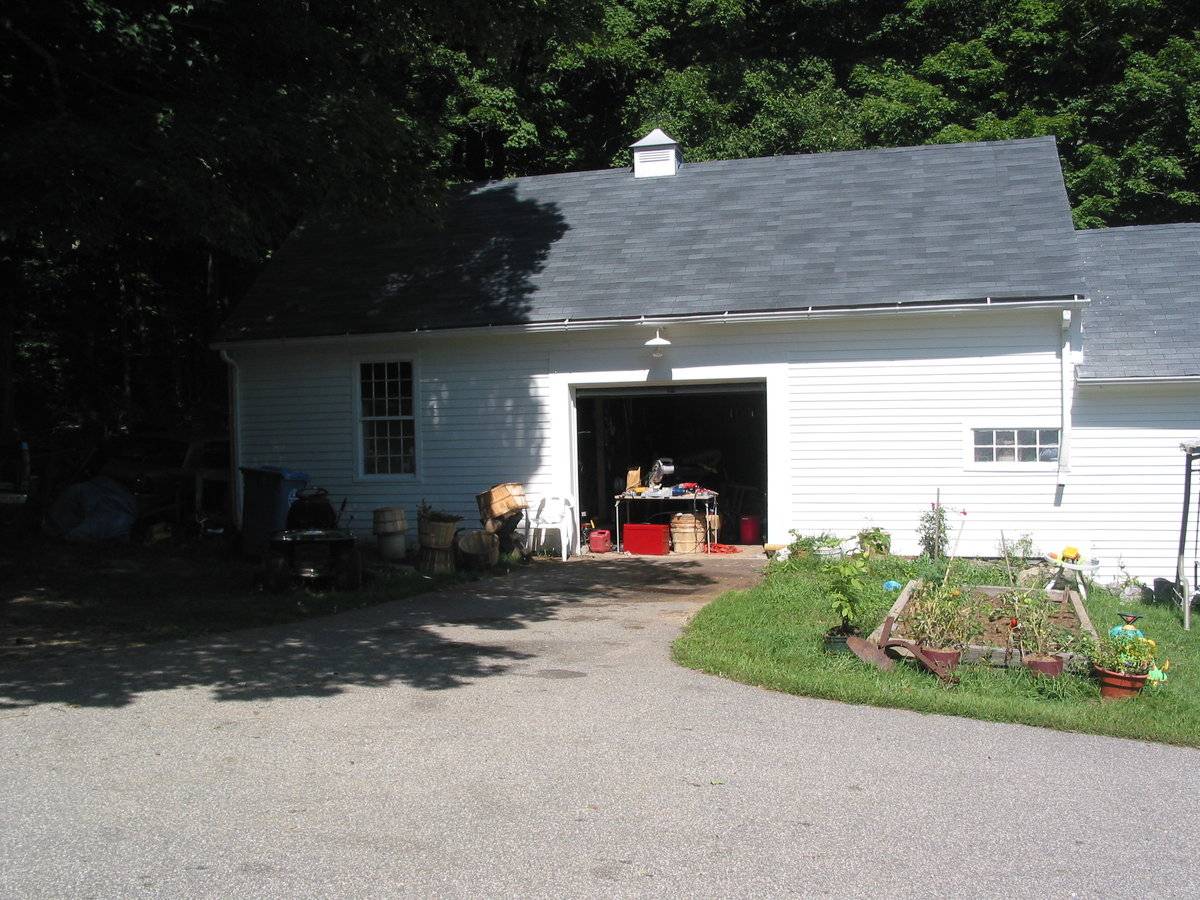
This is a gable-roofed barn with its ridge oriented east-west, attached at the rear (west) side of the rear ell of the associated house. The roof is a salt-box form, lower at the rear (north) side. The south eave-side façade facing the modern drive way, has an overhead door in the center of three bays. A twelve-over-twelve double hung window is in the left (west) bay, and a horizontal eight-light barn sash is in the right (east) bay near the building corner.
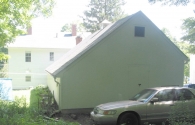
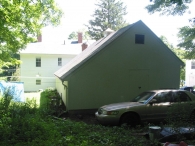
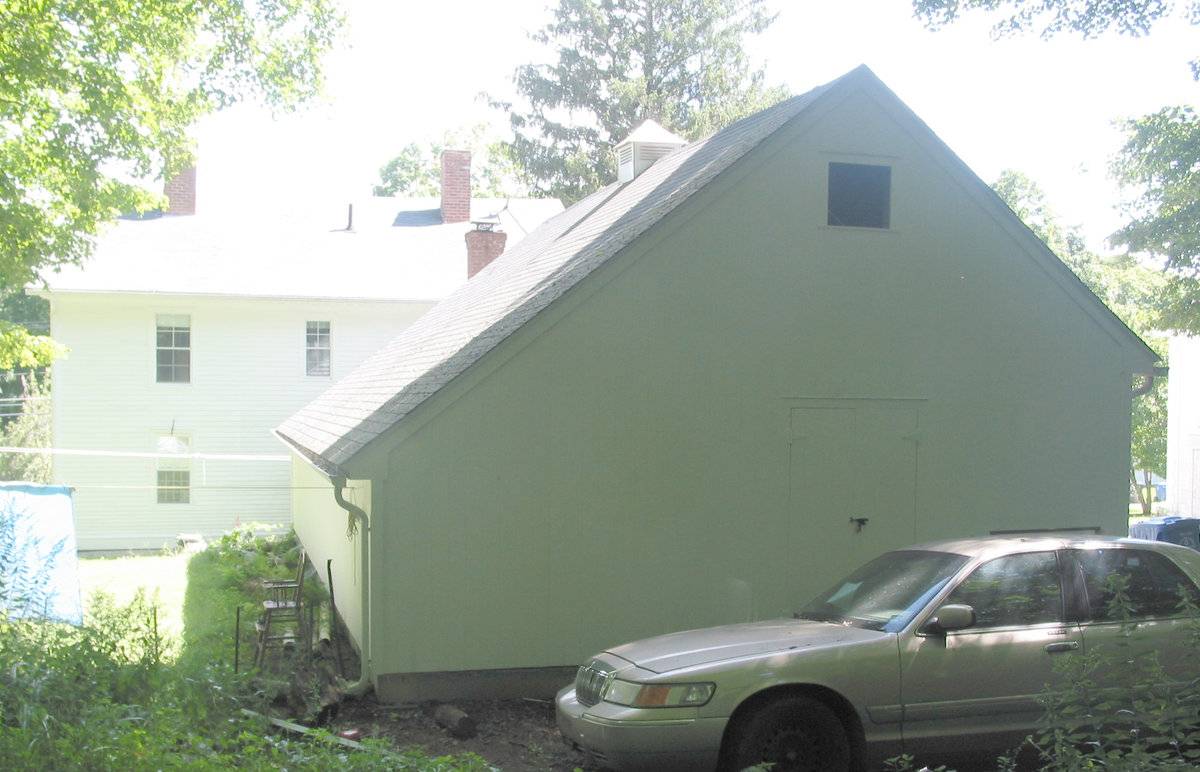
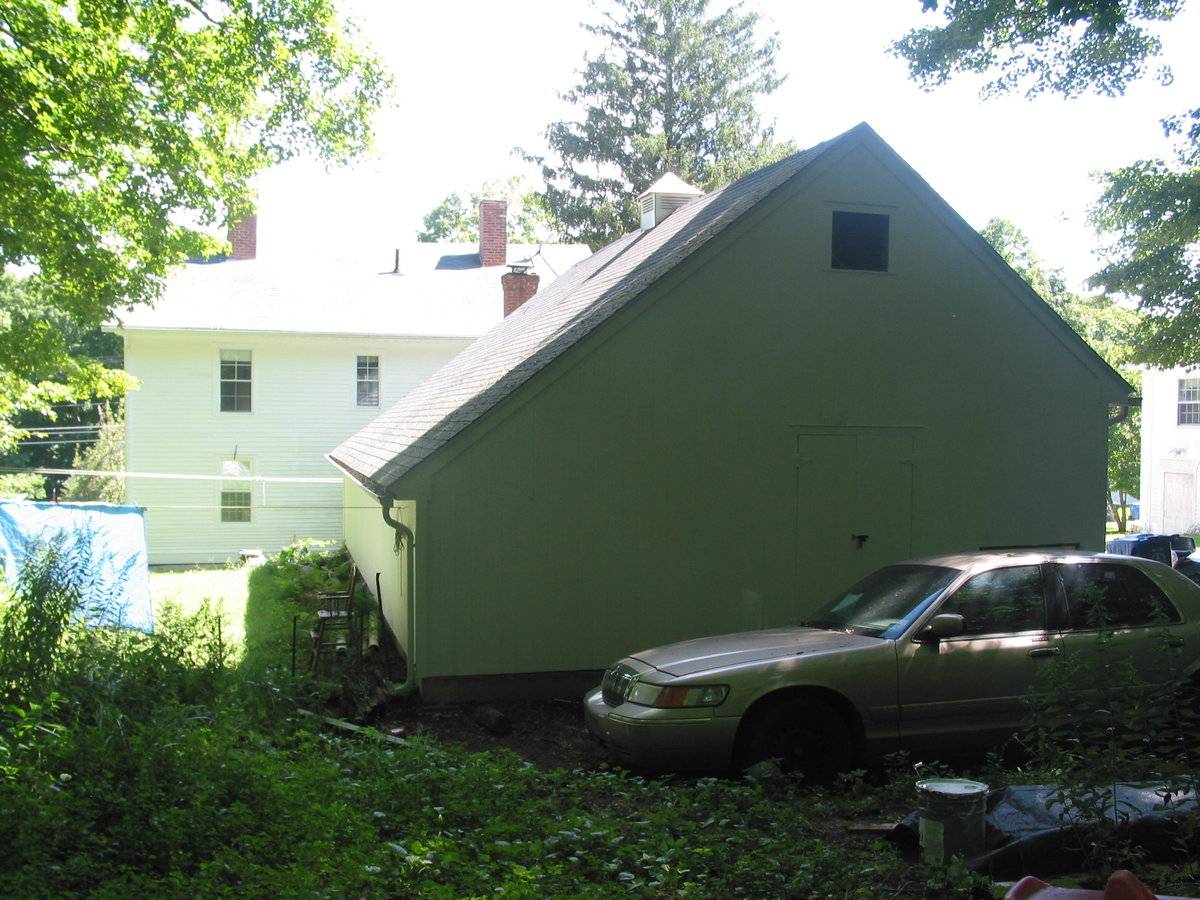
The west gable-end shows the saltbox profile, and has a pass-through door at grade and a square window high under the peak. The north eave-side façade is one story high below the saltbox roof line, and has no openings.
Siding is vertical flush board siding on the north and west walls, and horizontal clapboards with corner board trim at the south and the east gable-end above the roof of the one-story ell to which the barn is attached.
Roofing is asphalt shingles. There is a small cupola at the center of the ridge, which appears to be 20th-century.
Historical significance:
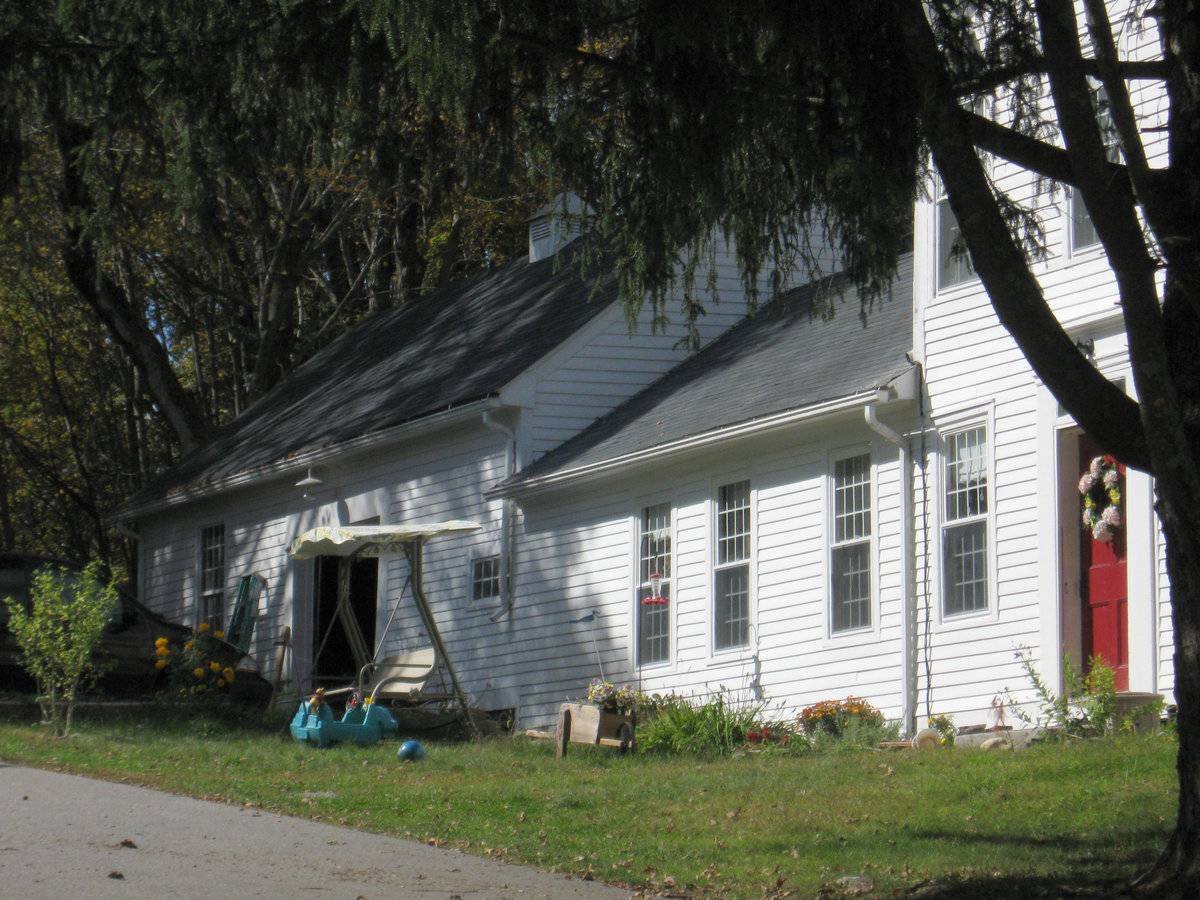
The oldest barns still found in the state are called the “English Barn,” “side-entry barn,” “eave entry,” or a 30 x 40. They are simple buildings with rectangular plan, pitched gable roof, and a door or doors located on one or both of the eave sides of the building based on the grain warehouses of the English colonists’ homeland. The name “30 by 40” originates from its size (in feet), which was large enough for 1 family and could service about 100 acres. The multi-purpose use of the English barn is reflected by the building’s construction in three distinct bays - one for each use. The middle bay was used for threshing, which is separating the seed from the stalk in wheat and oat by beating the stalks with a flail. The flanking bays would be for animals and hay storage. In this example, the English barn is connected to the house.
Connected barns tied all of the functions of a farmstead - home, hearth, workplace and barn - into a series of linked buildings. This is the “big house, little house, back house, barn” of nursery rhymes.
Historical background:
The Chaplin Historic District is an entire village built between 1815 and 1840, standing today in complete integrity, free of intrusions. The church, tavern, Town Hall, store and nineteen houses in late Federal and early Greek Revival styles provide a unique example of the architecture and ambience of a New England village - entirely constructed in a compressed period of time a century and a half ago, and unaltered since that time.
Connecticut has many villages which are older than Chaplin and many towns founded earlier than Chaplin in which can be traced continuing architectural and community developments from a century or more before through a century or more after the fabric demonstrated by Chaplin. Chaplin is unique because it was created on site where before there had been no settlement, was created complete in a brief span of time, and subsequently has experienced no development or changes. Chaplin provides a unique record of the architecture and community planning of the 1820’s and 1830’s (Ransom, p. 7).Field Notes
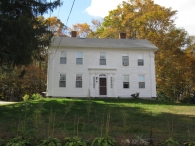
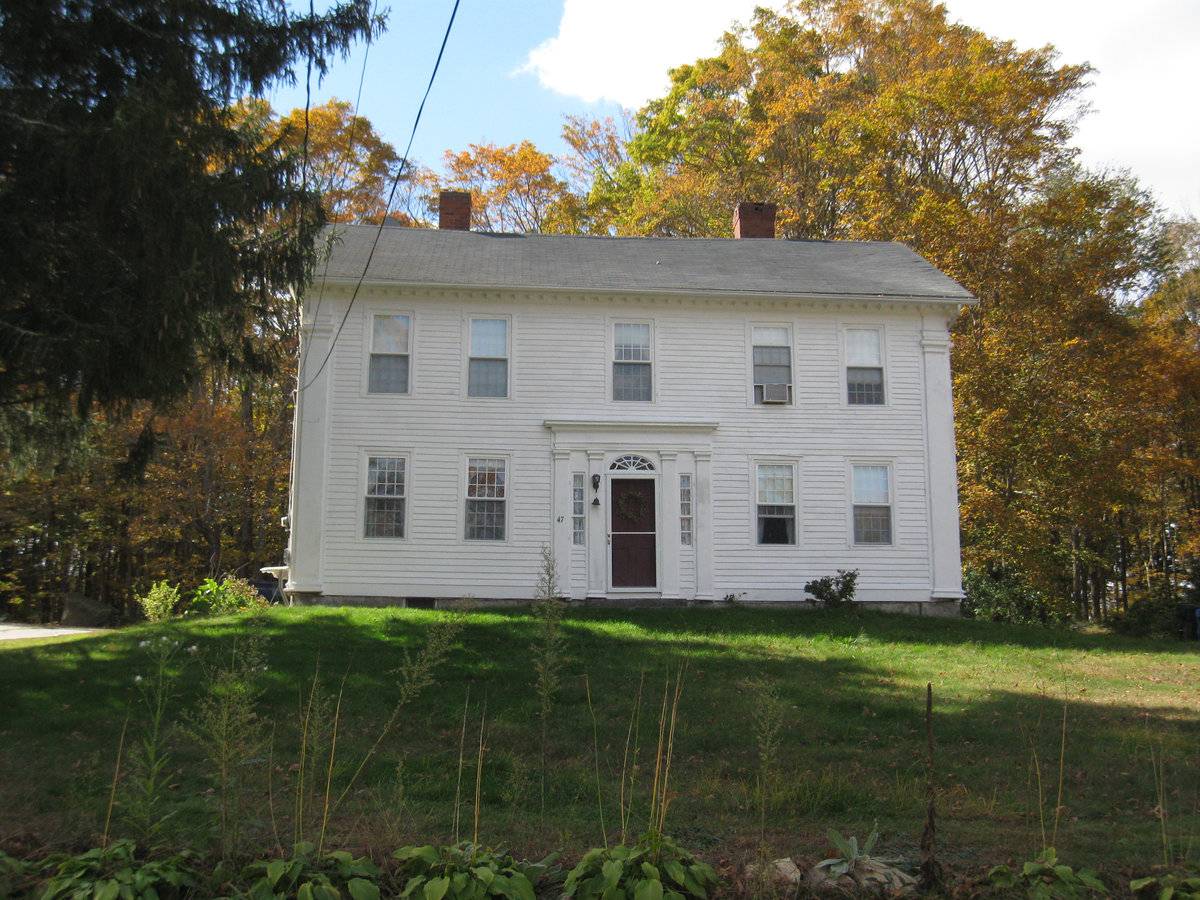
Associated house-Date (given sources WPA census): c.1830 Attached. Barn measurements include lean-to. Surrounding area: residential, no threats. National Register and Local Historic District.
- Use & Accessibility
Use (Historic)
Use (Present)
Exterior Visible from Public Road?
Yes
Demolished
n/a
Location Integrity
Original Site
- Environment
Related features
Environment features
Relationship to surroundings
The house and attached barn are in a village of closely-spaced 19th-century homes, many with barns. Chaplin Street, formerly the main highway, is now a secondary road since Route 198 has been straightened to bypass the village center.
- Typology & Materials
-
Building Typology
Materials
Structural System
Roof materials
Roof type
Approximate Dimensions
35'4" L x 22'4" W
- Source
-
Date Compiled
02/02/2010
Compiled By
Charlotte Hitchcock, reviewed by CT Trust
Sources
Field Notes by Catherine Lynch and Hill Bullard. Photographs by Catherine Lynch, Hill Bullard, Charlotte Hitchcock, and Stephanie Lessard.
Town of Chaplin Assessor’s Record Map/Lot 75/33.
Ransom, David, Chaplin National Register Historic District Nomination, #78002856, National Park Service, 10/11/1978.
Sexton, James, PhD, Survey Narrative of the Connecticut Barn, Connecticut Trust for Historic Preservation, Hamden, CT, 2005, http://www.connecticutbarns.org/history.
Visser, Thomas D., Field Guide to New England Barns and Farm Buildings, University Press of New England, 1997.
Works Progress Administration Writers’ Project: Architectural Survey, Census of Old Buildings, Reference Group 33, Box 226 “Bolton-Chaplin,” Hartford: Connecticut State Library Archives, Chaplin No. 5.
- PhotosClick on image to view full file
-