Barn Record Franklin
RETURN TO ‘FIND BARNS’
- Overview
-
Designations
n/a
Historic Significance
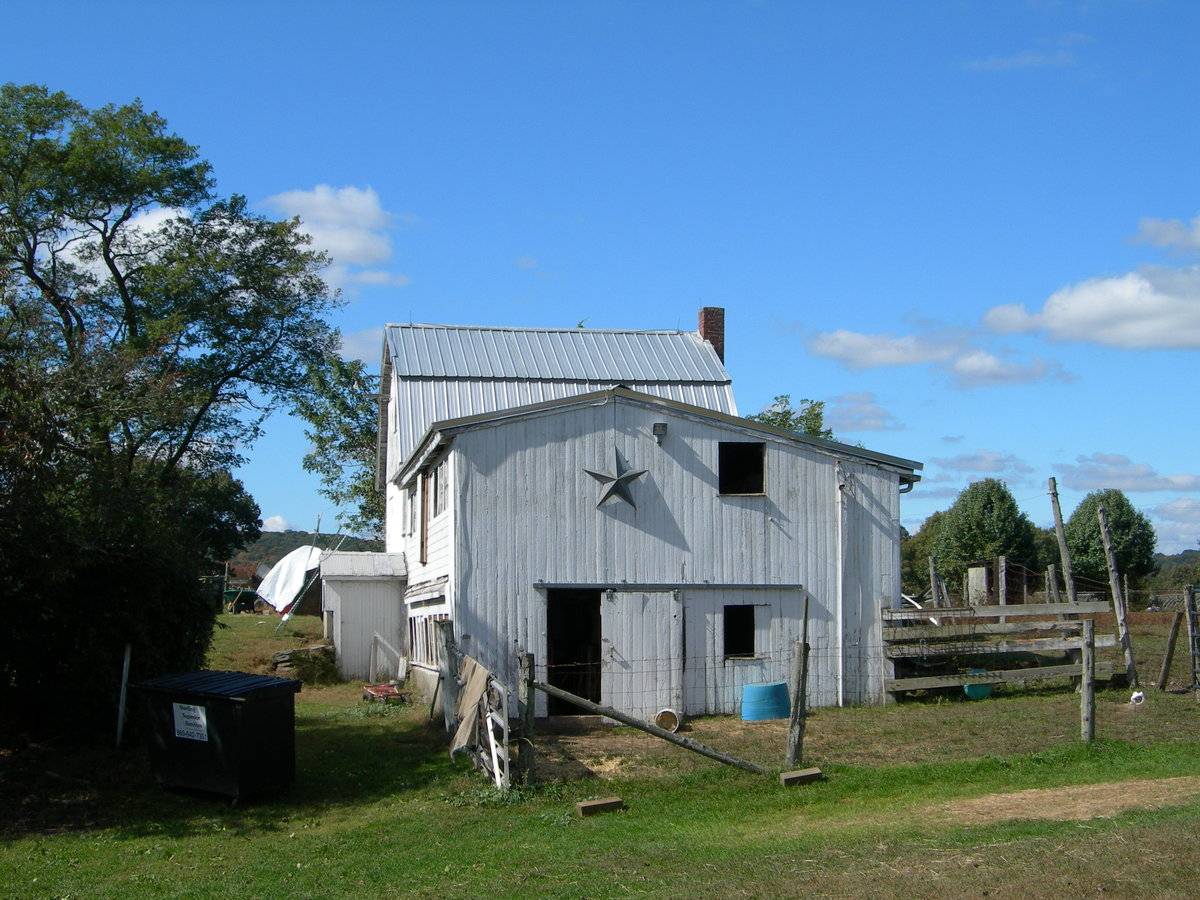
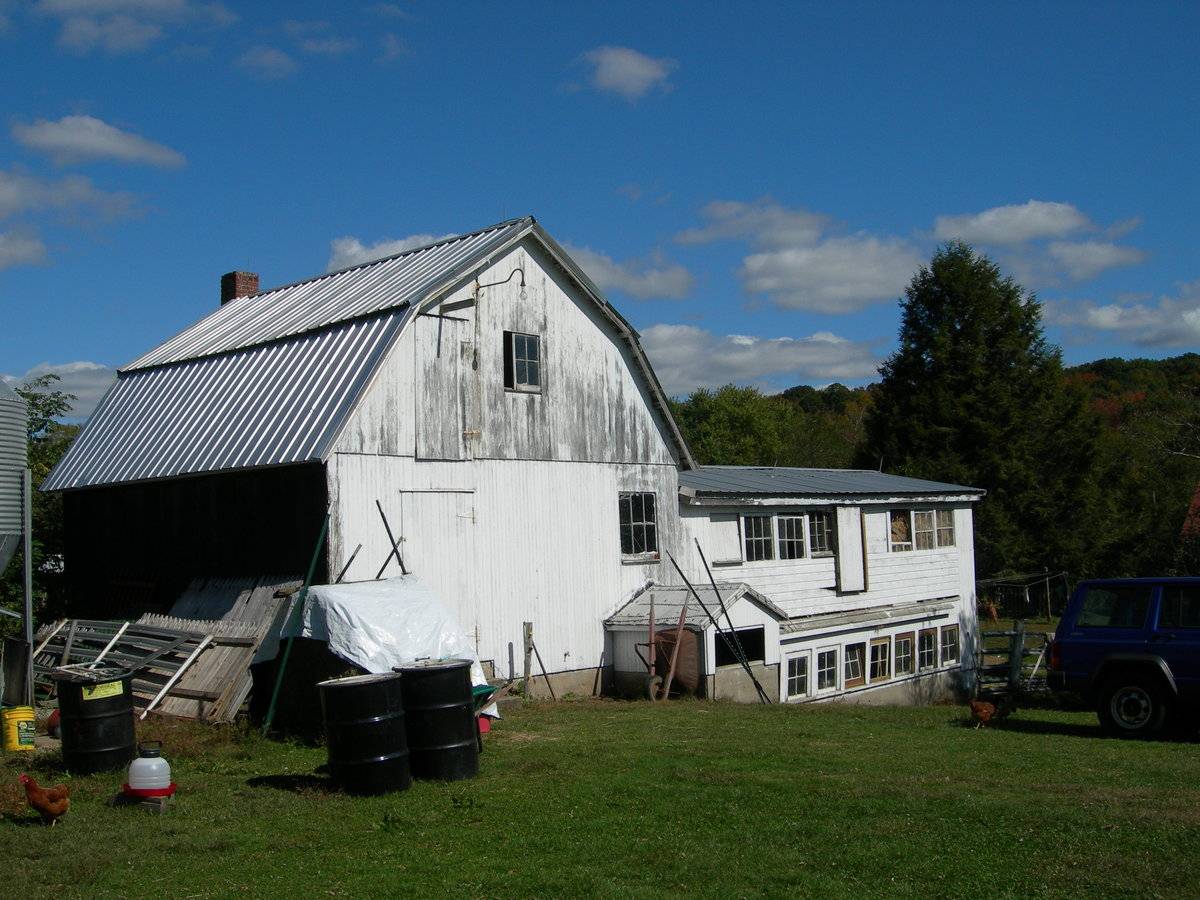
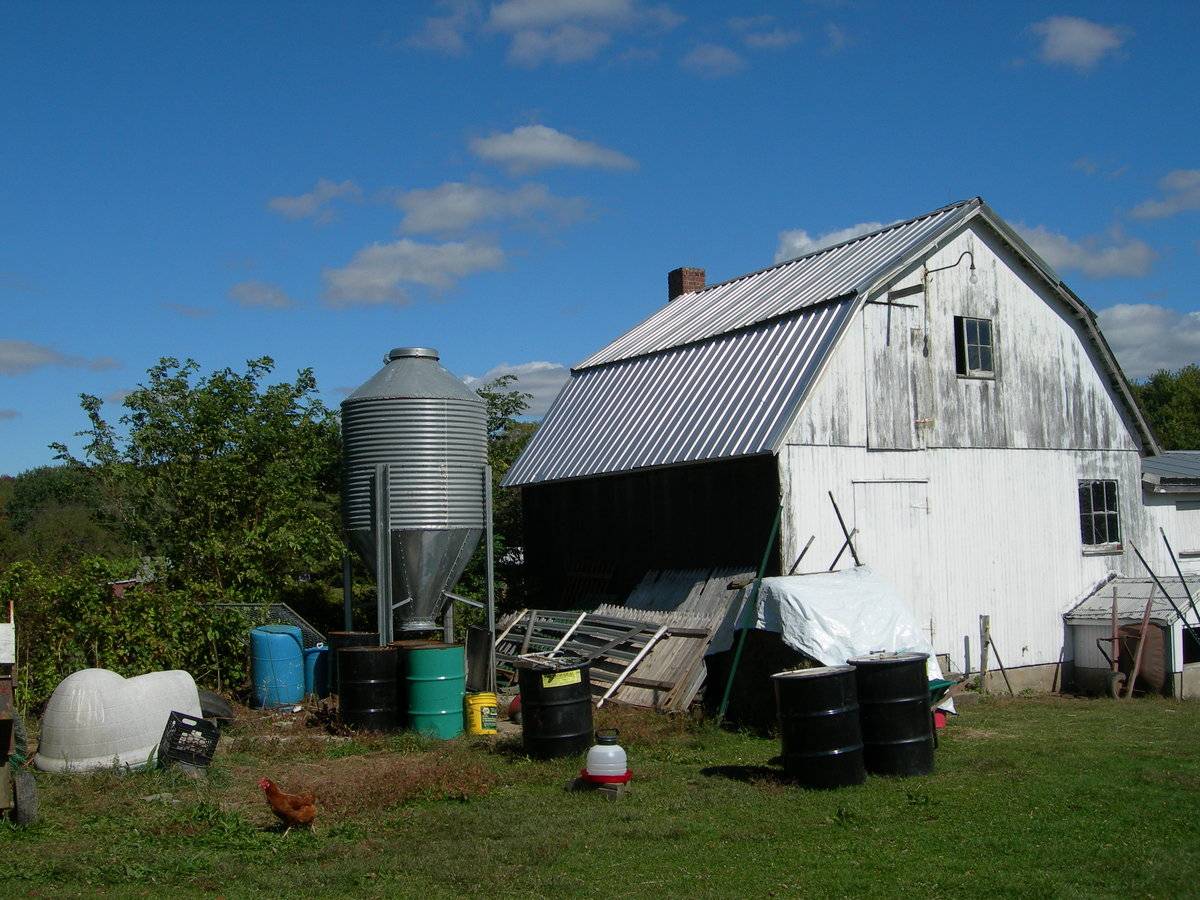
Architectural Description: This is a 1 ½ story gambrel-roofed bank barn with a gable-roofed addition. The front gable-facade has a pass-through door. In the left corner, above the pass-through door is a a haymow door. There is a fixed six-paned window in the right corner below the siding divide. Just below the window is a small gable-roofed addition which appears to have been used for animal access or feed. Centered in the attic gable is a six-paned sliding window. The gable-roofed addition is off the right eave-facade of the gambrel-roofed barn. On either side of the haymow door on the second floor is a row of four six-paned windows. Below the projecting hood on the first floor is a row of eight four-paned hopper windows. The first floor of the addition’s right gable-end has a sliding door mounted on an exterior track. To the right of the door is a window opening with a second window opening above. The barn has vertical and plywood siding that is painted white with a tin roof.
Historical Significance: The New England barn or gable front barn was the successor to the English barn and relies on a gable entry rather than an entry under the eaves. The gable front offers many practical advantages. Roofs drain off the side, rather than flooding the dooryard. With the main drive floor running parallel to the ridge, the size of the barn could be increased to accommodate larger herds by adding additional bays to the rear gable end. Although it was seen by many as an improvement over the earlier side entry English Barn, the New England barn did not replace its predecessor but rather coexisted with it. The gambrel roof enclosed a much greater volume than a gable roof did, and its shape could be formed with trusses that did not require cross beams, which would interfere with the movement and storage of hay. Also known as the curb roof, the double slopes of the gambrel offer more volume in the hayloft without increasing the height of the side walls. The 19th century would see the introduction of a basement under the barn to allow for the easy collection and storage of a winter’s worth of manure from the animals sheltered within the building. The bank barn is characterized by the location of its main floor above grade, either through building on a hillside or by raising the building on a foundation. This innovation, aided by the introduction of windows for light and ventilation, would eventually be joined by the introduction of space to shelter more animals under the main floor of the barn.
Field Notes
n/a
- Use & Accessibility
Use (Historic)
Use (Present)
Exterior Visible from Public Road?
Yes
Demolished
n/a
Location Integrity
Unknown
- Environment
Related features
Environment features
Relationship to surroundings
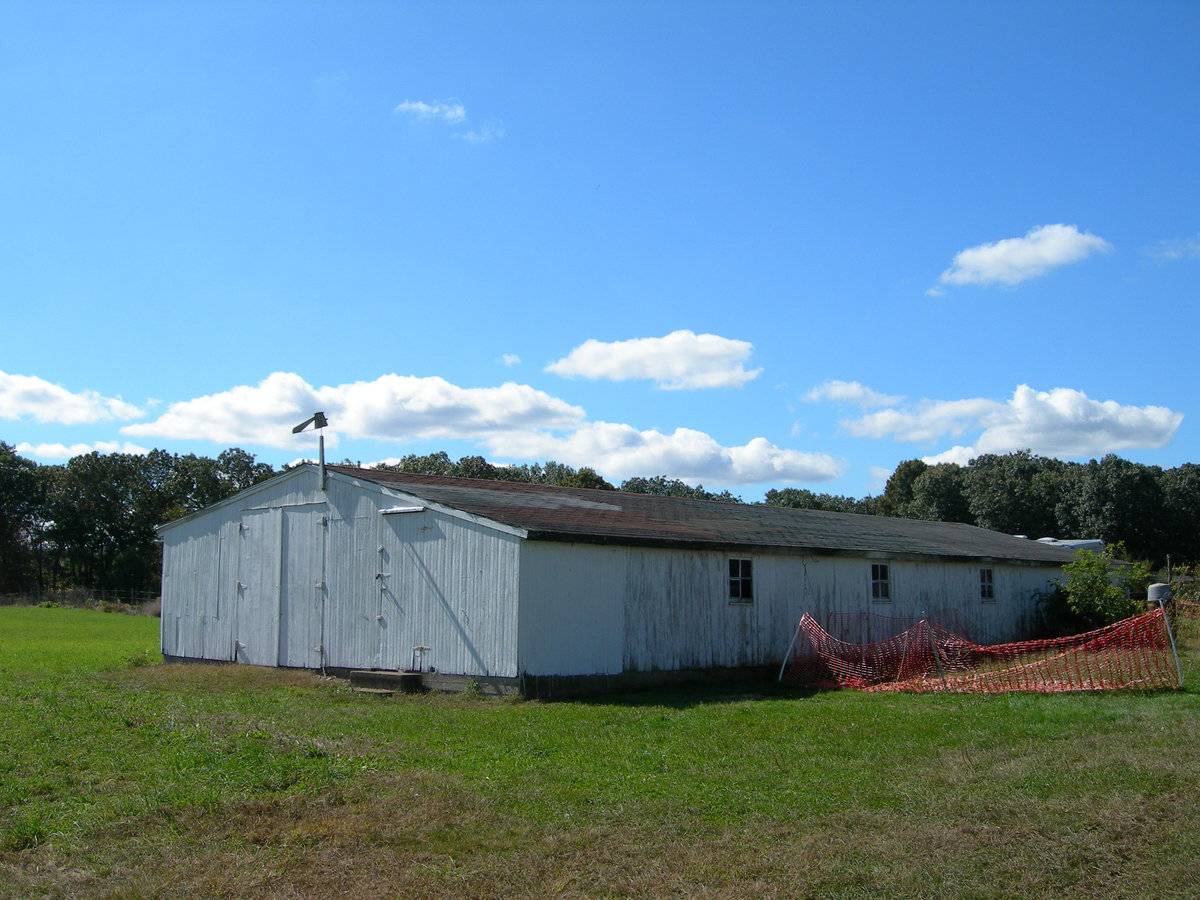
This is one of two barns associated with 105 Pond Road.
- Typology & Materials
- Source
-
Date Compiled
04/29/2010
Compiled By
T. Levine and S. Lessard, reviewed by CT Trust
Sources
Photographs by Rick Spencer (rspencer02@snet.net).-12/09/2009
Sexton, James, PhD, Survey Narrative of the Connecticut Barn, Connecticut Trust for Historic Preservation, Hamden, CT, 2005, http://www.connecticutbarns.org/history.
Visser, Thomas D.,Field Guide to New England Barns and Farm Buildings, University Press of New England,1997.
- PhotosClick on image to view full file
-