Barn Record Bozrah
RETURN TO ‘FIND BARNS’
- Overview
-
Designations
n/a
Historic Significance
Architectural Description:
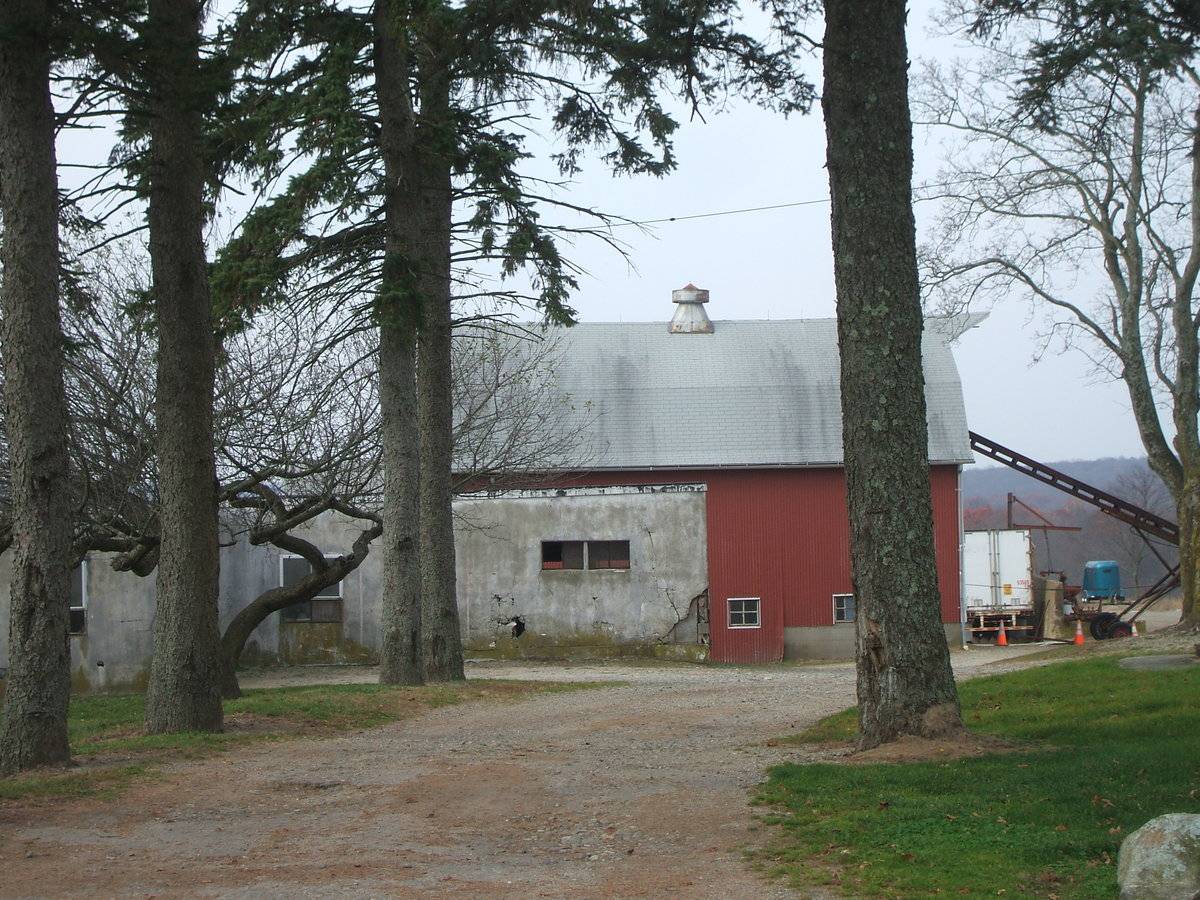
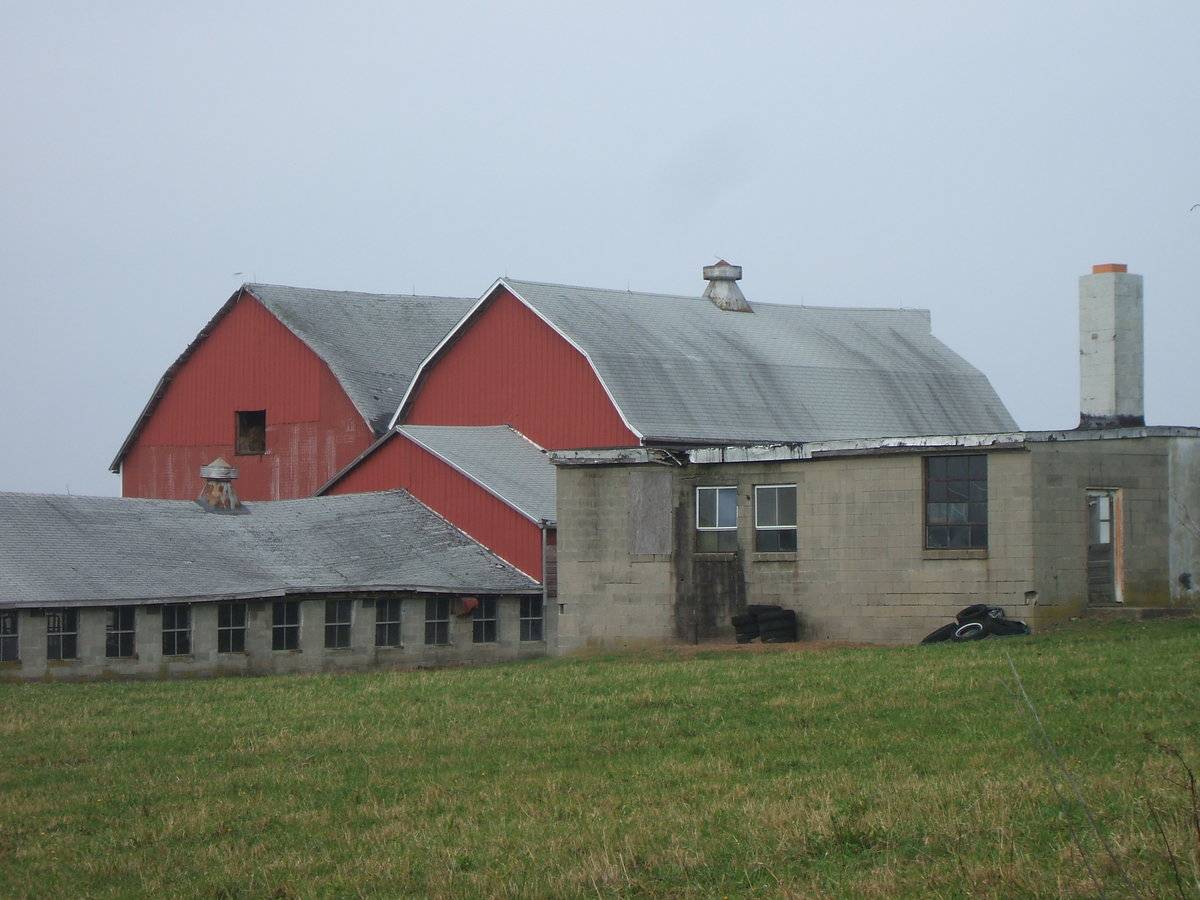
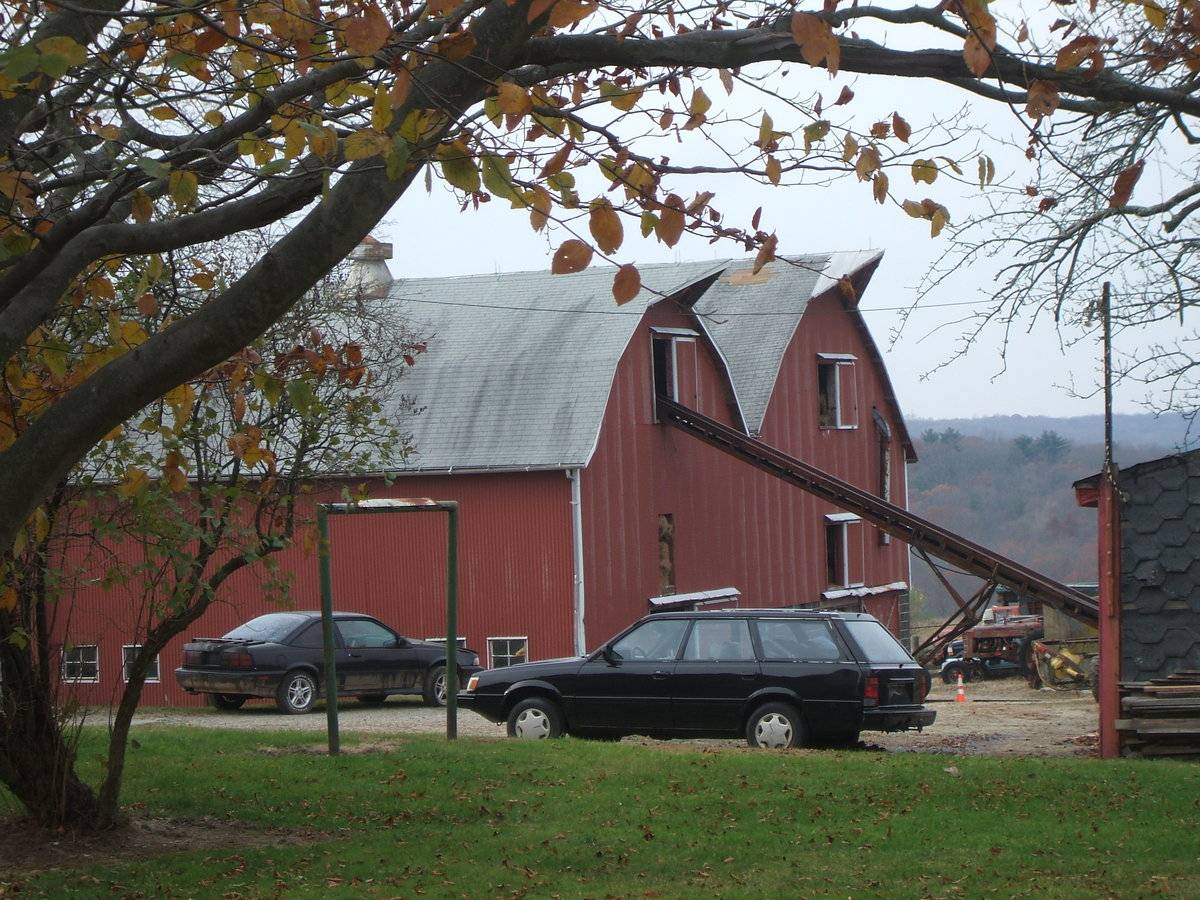
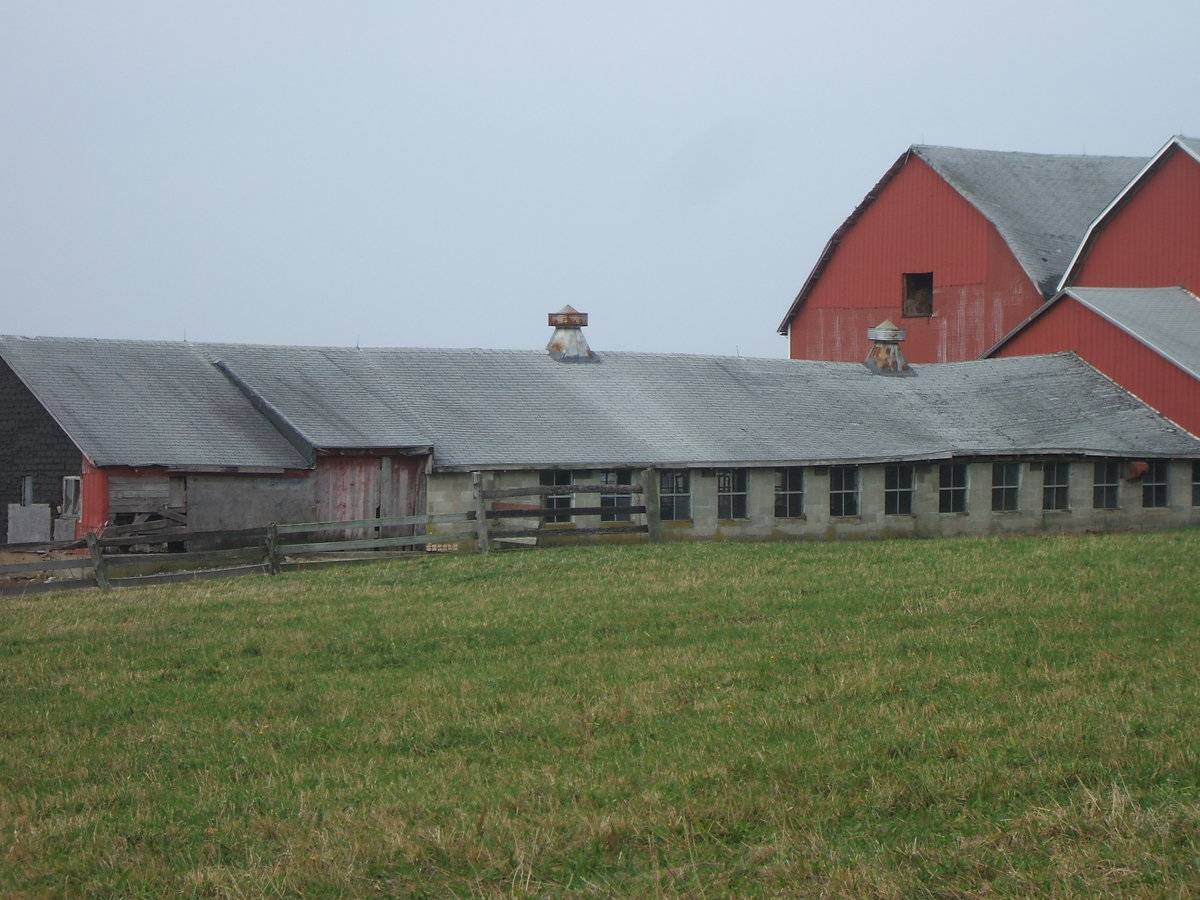
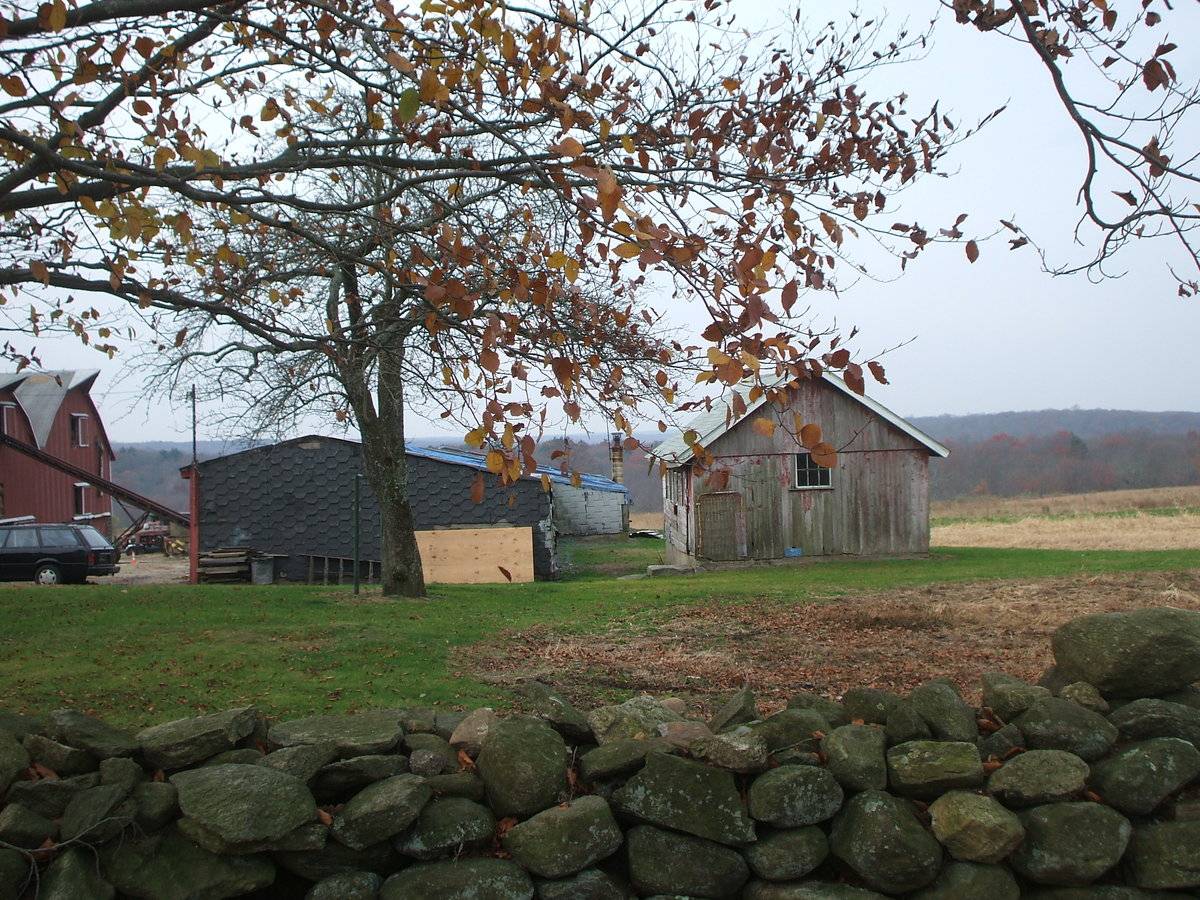
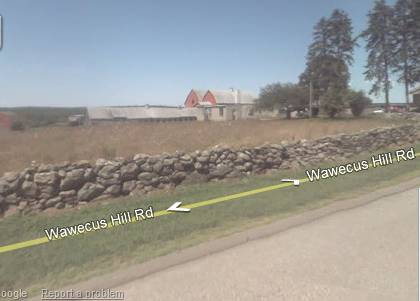
This is 2 ½ story twin barn with parallel gambrel roofs sharing the inside eave wall. The gable end walls are aligned in the same plane. The main facade faces north with its ridge line running north-south. the north gable-end has two sliding doors mounted on an exterior track on the first floor centered below the apex. Above the hood of each doors ia haymow door. In te hayloft level, below each of the triangular projecting hoods is a haymow door. The east-eave facade has evenly spaced groupings of fixed four-paned stable windows. The only visible opening on the south facade is a haymow door off-center in the hay loft level of the eastern-most gambrel. Off the eastern-most corner of the south gable-facade are two gable-roofed additions. The second appears to be used for dairy purposes and has thirteen evenly spaced fixed four-paned stable windows. The barn has vertical siding that is painted red with trim that is painted white and asphalt shingles.
Historical Significance:
The New England barn or gable front barn was the successor to the English barn and relies on a gable entry rather than an entry under the eaves. The gable front offers many practical advantages. Roofs drain off the side, rather than flooding the dooryard. With the main drive floor running parallel to the ridge, the size of the barn could be increased to accommodate larger herds by adding additional bays to the rear gable end. Although it was seen by many as an improvement over the earlier side-entry English Barn, the New England barn did not replace its predecessor but rather coexisted with it.
The term dairy barn is used as early as the 18th century (along with “cow house”). Modern dairy barns are characterized by their interior arrangements of stanchions and gutters to facilitate milking and the removal of manure. In some cases this is just a few stalls in the corner of a barn, in others it can be a large barn dedicated to that single purpose.
Field Notes
Property has two barns that are connected on the side approximately 6oft X 100ft each. Historic and current use: dairy Envir: rural, open fields, pastures, pond Related features: sheds, stone walls Mater: concrete, cinder block, vertical siding Roof: asphalt shingle Roof type: Gambrel Form: New England
- Use & Accessibility
- Environment
Related features
Environment features
Relationship to surroundings
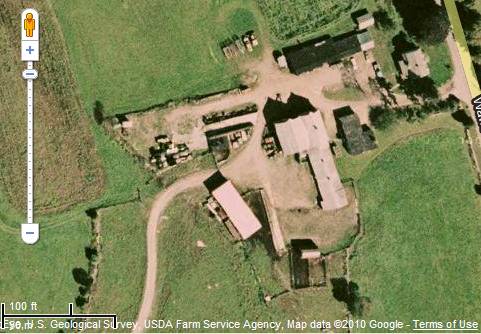
The twin barns are at the heart of a farming complex. The barn is behind and to the west of the house with which it is associated. The ridgeline of the house is parallel to the ridgeline of the barn. just south of the house is an access driveway that runs to the west, just north of the barn and continues west through open space and woodland, accessing a large tract of open space demarcated by woodland. To the north, west and south of the barn are tracts of open space used for active agriculture. To the south of the barn is a shed with fenced in paddocks. Further south is a stone wall running north-south. A body of water is west of the wall. To the west of the barn are a number of old vehicles and a pole barn. North of the barn is a large garage. The area surrounding this site is open space, active agriculture, woodland and residential.
- Typology & Materials
-
Building Typology
Materials
Structural System
Roof materials
Roof type
Approximate Dimensions
Two 60 x 100
- Source
-
Date Compiled
03/16/2010
Compiled By
T. Levine and S. Lessard, reviewed by CT Trust
Sources
Photographs by Susan Ververis - 12/7/2009
Sexton, James, PhD, Survey Narrative of the Connecticut Barn, Connecticut Trust for Historic Preservation, Hamden, CT, 2005, http://www.connecticutbarns.org/history.
Visser, Thomas D., Field Guide to New England Barns and Farm Buildings, University Press of New England, 1997.
- PhotosClick on image to view full file
-