Barn Record Woodstock
RETURN TO ‘FIND BARNS’- Building Name (Common)
- Westview Farm
- Building Name (Historic)
- Westview Farm
- Address
- 209 Prospect Street, Woodstock
- Typology
- Overview
-
Designations
Historic Significance
Architectural description:
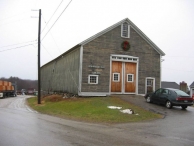
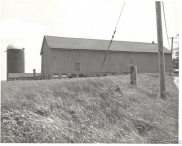
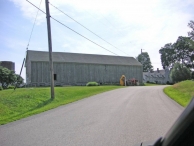
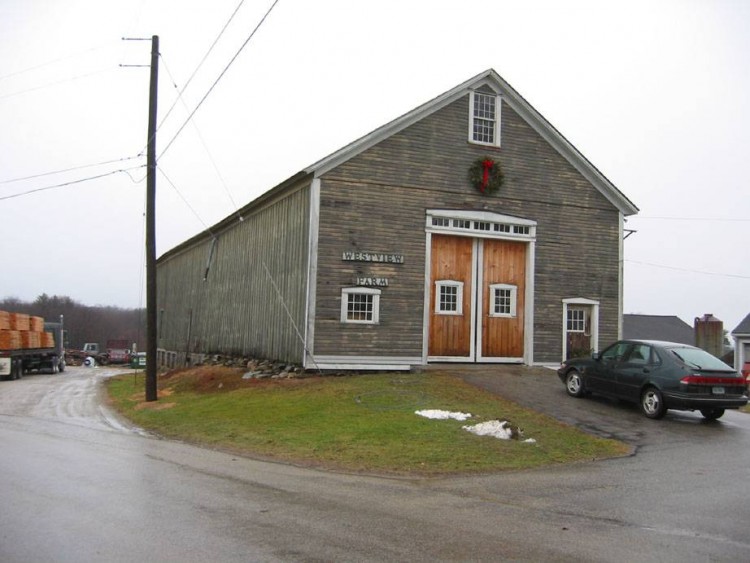
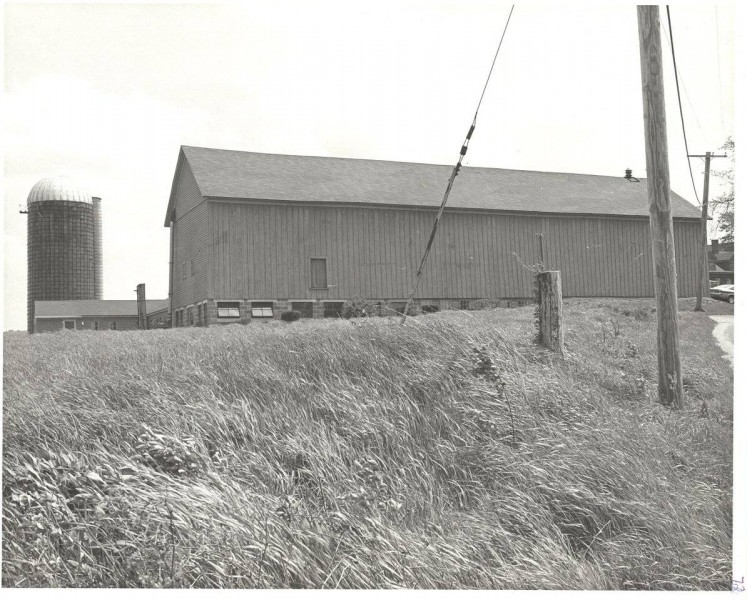
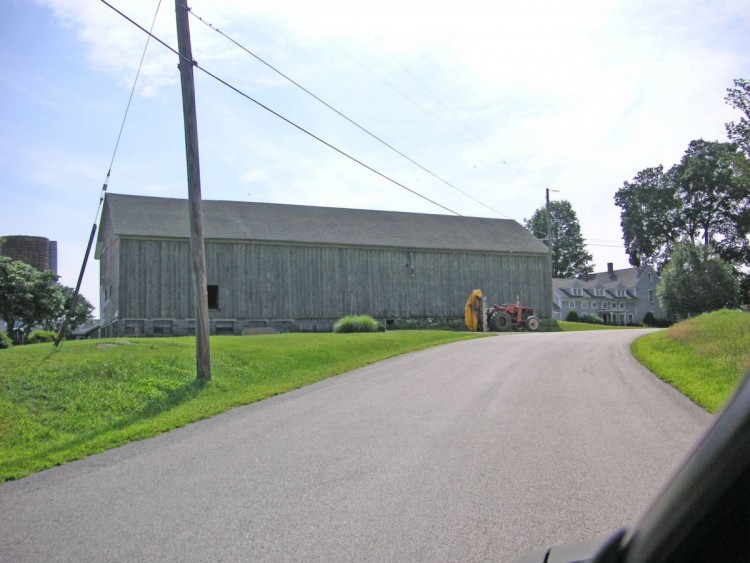
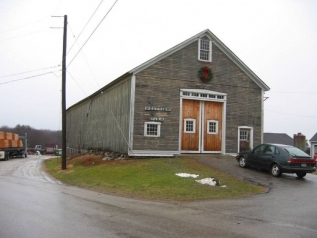
This is a 2 ½ story gable-roofed barn structure oriented with it ridge-line parallel to Prospect Street, which runs approximately north-south. A 1 ½ story gable-roofed addition extends off of the north half of the east eave-side of the main barn. A second gable-roofed addition extends north off the center of the north eave-side of the gable-roofed addition. A silo, attached by a small gable-roofed structure extending north, is located on the east half of the north eave-side of the first gable-roofed addition. The south gable-façade of the main barn has a pair of interior hung sliding barn doors that open at grade on the main level. Each leaf of the sliding barn doors has a nine-pane barn sash window on center. A fifteen light transom window is located above the sliding barn doors. On the east half of the south gable-façade on the main level of the main barn is a pass-through door with a six pane window in the center. On the east half of the south gable-façade on the main level of the main barn is a twelve-pane window. A twelve-over-twelve double hung sash window is located in the gable attic on the south gable-façade. All openings on the south gable-façade of the main barn have trim surrounds painted white. The openings on the main level of the south gable-facade of the main barn have peaked pediments. A few courses of fieldstone can be seen at the south half of the west eave-side of the main barn, where the grade slops to the north. The west eave-side has a bank of windows on the north half on the basement level of the main barn. The north gable-side has a bank of three windows on the basement level of the main barn. The east gable-end of the first gable-roofed addition has a pair of sliding barn doors that open at grade on the main level. The east eave-side of the main barn has four open bays on the south half on the basement level. The barn has unpainted horizontal clapboard siding on the south gable-façade of the main barn and unpainted vertical board and batten on the west eave-side of the main barn. The south gable-façade of the main barn has opening trim surrounds, corner boards and frieze painted white. The roofs have projecting overhangs and asphalt shingles. The east slope of the main barns gable roof has four skylights. Two cupolas are placed equidistant on the ridge line of the first gable-roofed addition roof.
Historical significance:The New England barn or gable front barn was the successor to the English barn and relies on a gable entry rather than an entry under the eaves. The gable front offers many practical advantages. Roofs drain off the side, rather than flooding the dooryard. With the main drive floor running parallel to the ridge, the size of the barn could be increased to accommodate larger herds by adding additional bays to the rear gable end. Although it was seen by many as an improvement over the earlier side-entry English Barn, the New England barn did not replace its predecessor but rather coexisted with it. The 19th century also saw the introduction of a basement under the barn to allow for the easy collection and storage of a winter’s worth of manure from the animals sheltered within the building. The bank barn is characterized by the location of its main floor above grade, either through building on a hillside or by raising the building on a foundation. This innovation, aided by the introduction of windows for light and ventilation, would eventually be joined by the introduction of space to shelter more animals under the main floor of the barn.
Field Notes
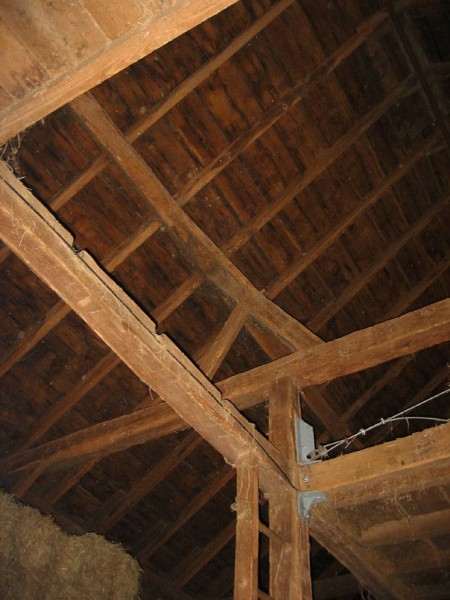
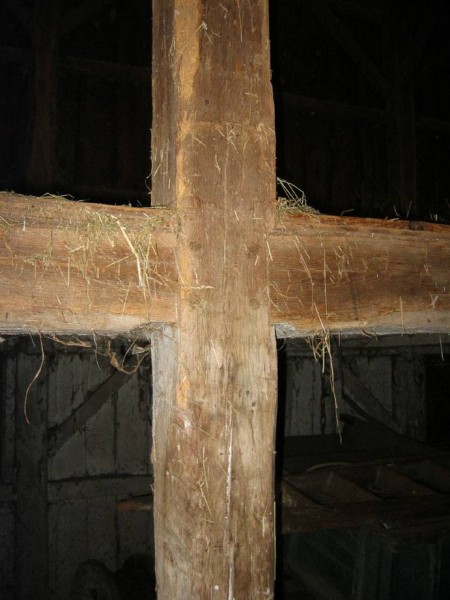
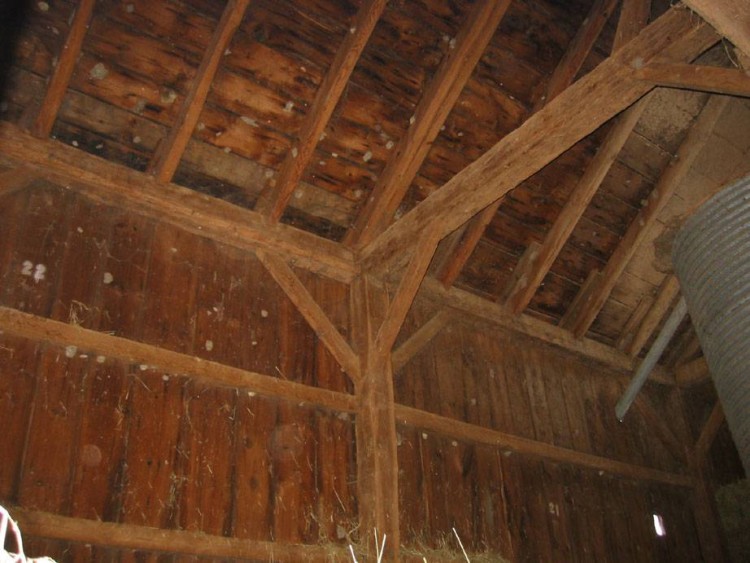
This building demonstrates how a 19th century barn can be modified over time to meet some modern farming needs. This barn is part of an active cattle farm. It sits close to the road and provides the western edge of a protected work yard. Negative Source #: 32-72 Barn Form: gable entrance, basement barn Addition(s): Roof Form: gable, rafter overhand Roof Pitch (Gable): Sheathing: vertical, batted Siding: Doors: recessed roll Windows: Foundation: Bent Type (ala Glassie): Roof Frame: Framed Elements:
- Use & Accessibility
- Environment
Related features
Environment features
Relationship to surroundings
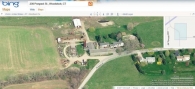
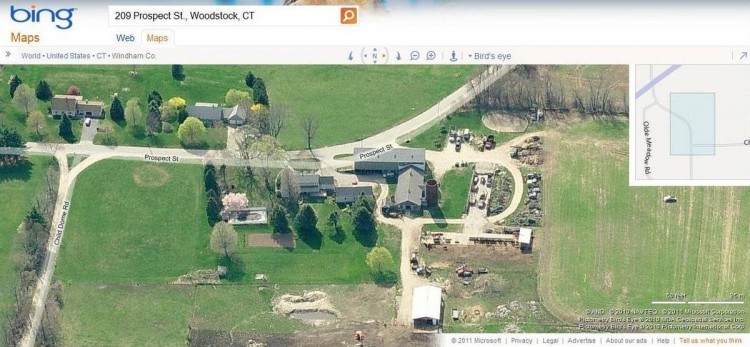
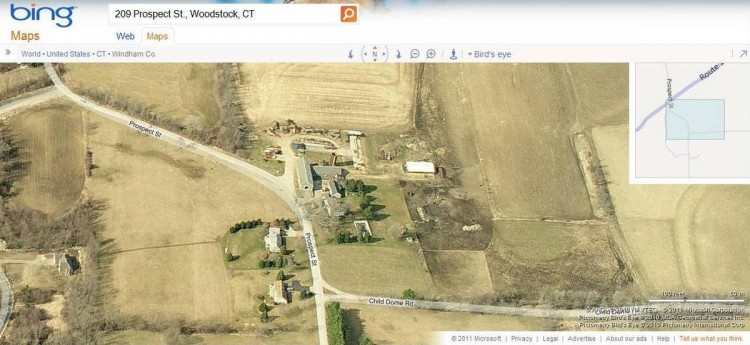
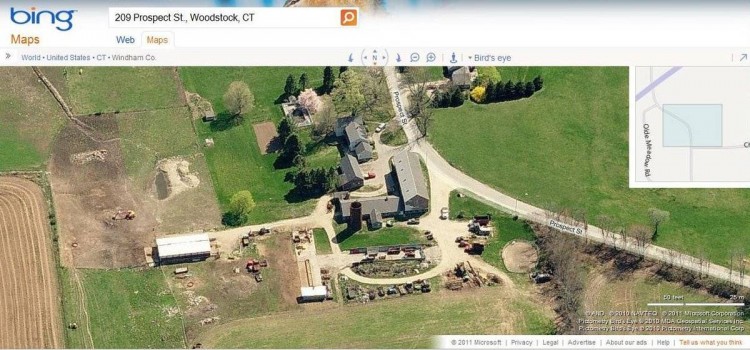
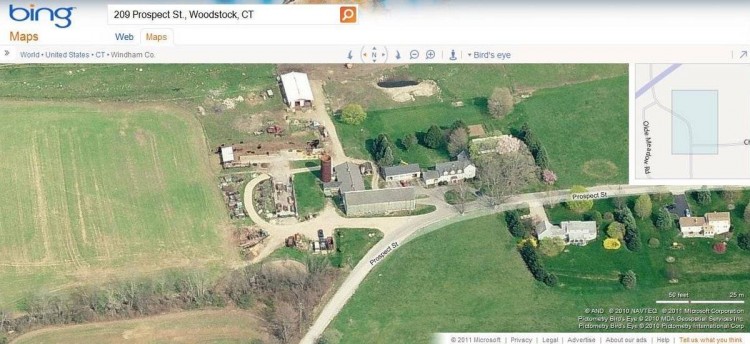
The barn is to the north of the c. 1700 Colonial-style house it is associated with. Immediately to the west of the barn Prospect Street. Further to the west and to the north of the barn are open fields. A small shed and large gable-roofed structure are located to the east of the barn. Further east of the barn are open fields. To the south and west of the barn and to the north of the house is a garage. The total size of the site is 78.90 acres. The area surrounding the site is active agricultural and rural.
- Typology & Materials
-
Building Typology
Materials
Structural System
Roof materials
Roof type
Approximate Dimensions
33.5 x 105 ft., 3604 sq. ft.
- Source
-
Date Compiled
02/25/2011
Compiled By
A. Ehrgott & T. Levine; reviewed by CT Trust
Sources
Field notes and photographs by James Sexton, PhD date - 8/24/2006.
Additional photograph by R. Hallock Svensk - 11/16/2009.
Town of Woodstock Assessor’s Record: http://data.visionappraisal.com/WoodstockCT/findpid.asp?iTable=pid&pid=1770
Parcel ID: H0169200Aerial Mapping:
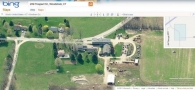
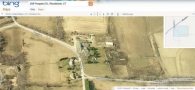
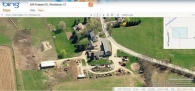
http://www.bing.com/maps accessed 02/25/2011.Mott, John A., White, Frank G.; Barns of New England, Old Sturbridge Village Research Paper, Negative 32-72, 1978.
Sexton, James, PhD, Survey Narrative of the Connecticut Barn, Connecticut Trust for Historic Preservation, Hamden, CT, 2005, http://www.connecticutbarns.org/history.
Visser, Thomas D., Field Guide to New England Barns and Farm Buildings, University Press of New England, 1997. - PhotosClick on image to view full file
-