Barn Record Woodstock
RETURN TO ‘FIND BARNS’- Building Name (Common)
- Hibbard - Part 1 of 2
- Building Name (Historic)
- Hibbard
- Address
- 270 Lyon Hill Road, Woodstock
- Typology
- Overview
-
Designations
Historic Significance
Architectural description:
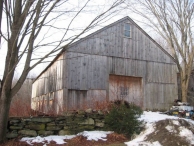
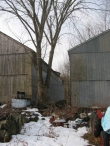
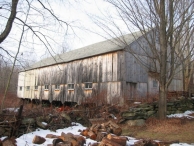
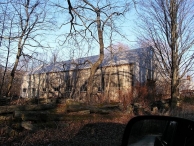
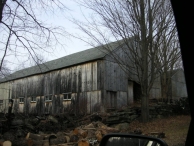
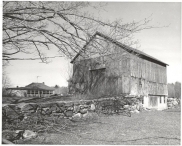
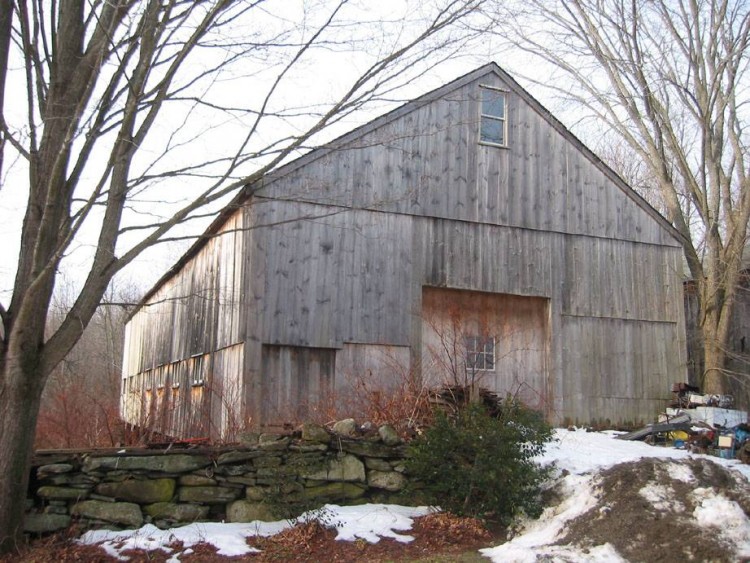
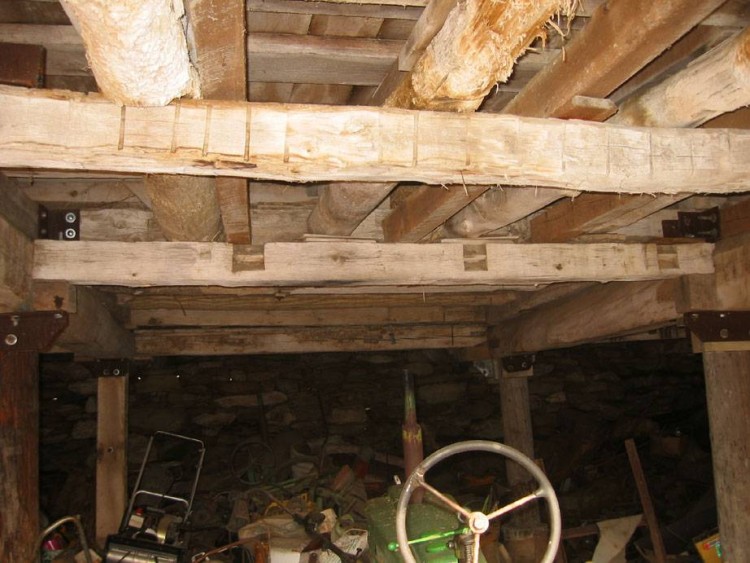
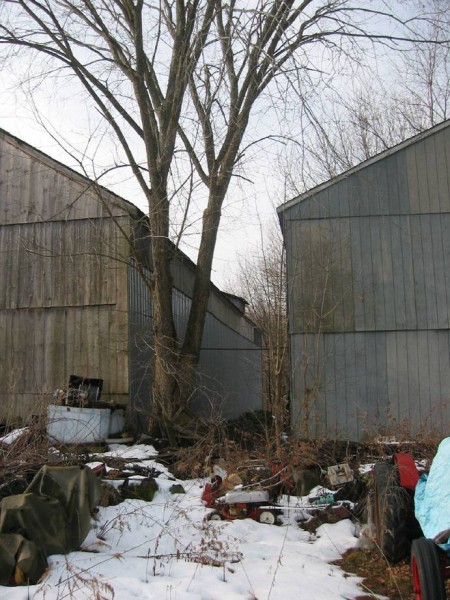
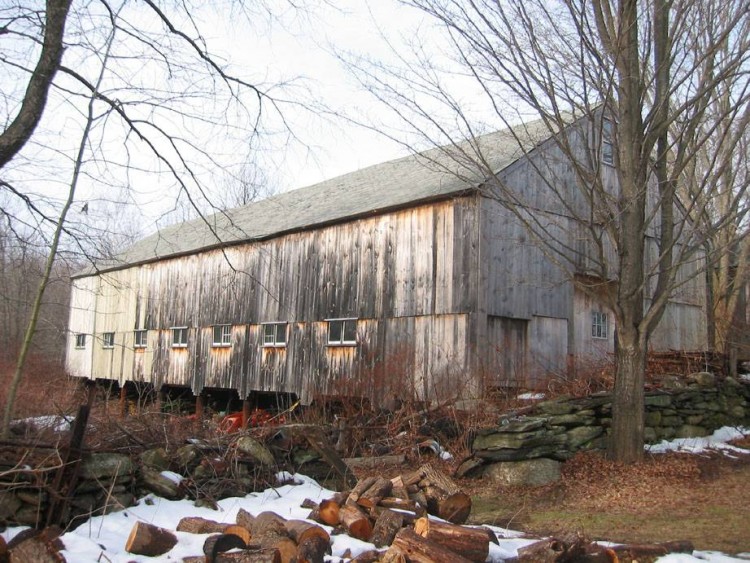
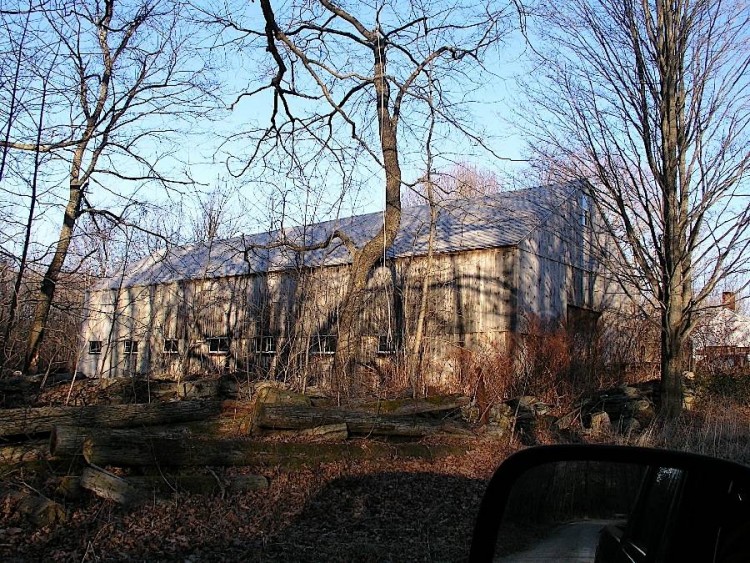
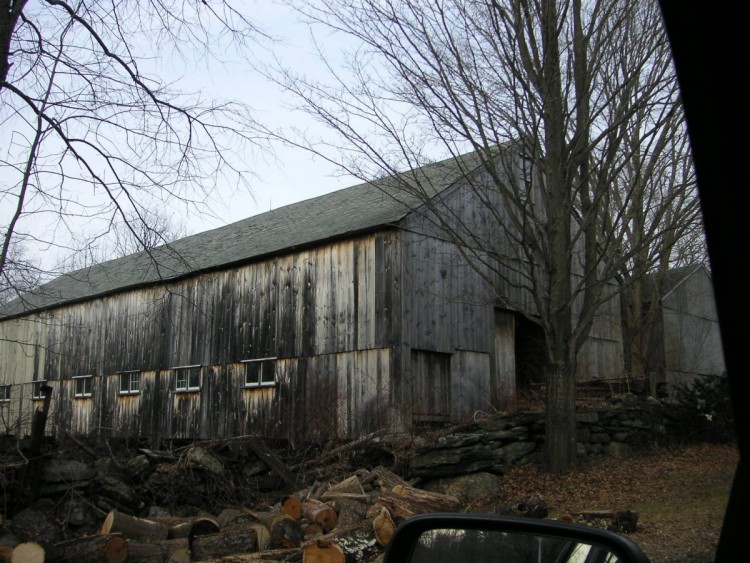
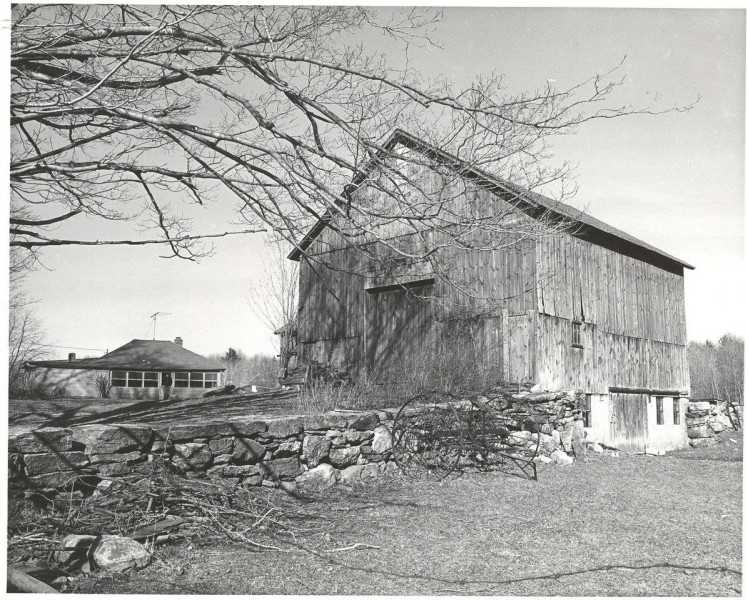
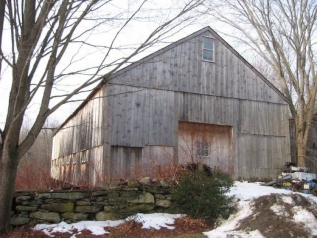
This is a 1 ½-story gable-roofed barn structure oriented with its ridge-line perpendicular to Lyon Hill Road, which run approximately north-south. The east gable-façade of the barn, facing the road it is associated with, has an interior hung sliding barn door opening at grade on the main level. Located in the center of the sliding barn door is a six-pane window. Midway down on the north half of the east gable-façade on the main level is a dropped siding divide. On the south half of the east gable-façade on the main level appears to have had two connected openings of varying heights that have been patched from the interior of the barn. A one-over-one double hung sash window is located in the gable attic of the east gable-façade. The grade slopes to the south, exposing a foundation of piers on the basement level of the south eave-side of the barn. The siding from the main level extends over the top of the piers in a stepped or zigzag pattern. A bank of seven horizontal sliding windows extends along the main level of the south eave-side on the main level, immediately below the siding divide line. The west gable-end of the barn has an interior hung sliding barn door opening at grade on the main level. Located in the center of the sliding barn door is a six-pane window. Above the sliding barn door on the west gable-end on the main level is a ten-light transom. A one-over-one double hung sash window is located in the gable attic of the west gable-end. The north eave-side of the barn is blank. The barn has unpainted vertical flush-board siding. The roof appears to be asphalt shingle.
Historical significance:The New England barn or gable front barn was the successor to the English barn and relies on a gable entry rather than an entry under the eaves. The gable front offers many practical advantages. Roofs drain off the side, rather than flooding the dooryard. With the main drive floor running parallel to the ridge, the size of the barn could be increased to accommodate larger herds by adding additional bays to the rear gable end. Although it was seen by many as an improvement over the earlier side-entry English Barn, the New England barn did not replace its predecessor but rather coexisted with it. The 19th century also saw the introduction of a basement under the barn to allow for the easy collection and storage of a winter’s worth of manure from the animals sheltered within the building. The bank barn is characterized by the location of its main floor above grade, either through building on a hillside or by raising the building on a foundation. This innovation, aided by the introduction of windows for light and ventilation, would eventually be joined by the introduction of space to shelter more animals under the main floor of the barn.
Field Notes
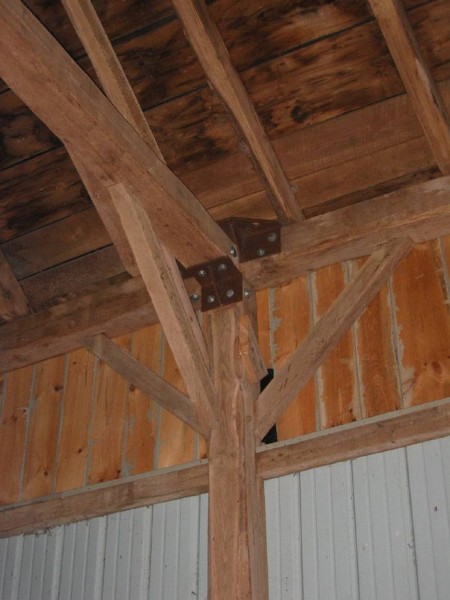
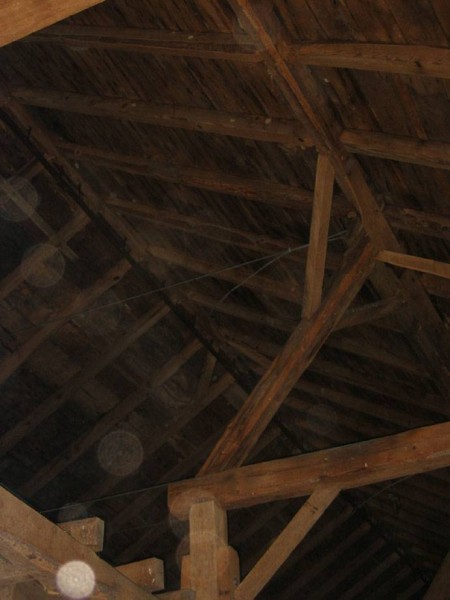
This is a good example of an intact mid-19th century farmstead. The barns and the associated house sit close to the road, with the subject barn running back perpendicular to it. The land falls away from the road, providing access to the lowest story of the barn. See Record 5916 for Old Sturbridge Village survey data.
- Use & Accessibility
- Environment
Related features
Environment features
Relationship to surroundings
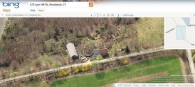
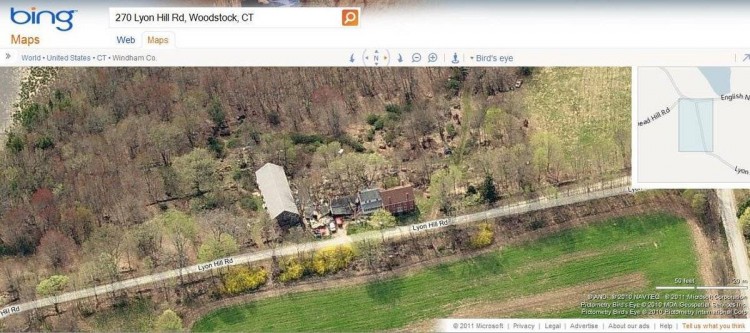
The barn sits to the south of the c. 1700 Colonial-style house it is associated with. The ridge-line of the house is perpendicular to the ridge-line of the barn. Fieldstone retaining walls extend from the southeast and southwest corners of the barn. Immediately to the east of the barn is Lyon Hill Road, which runs approximately north-south. Further east, across the road is an open field. To the south of the barn is woodland and pond. To the west of the barn are woodlands and open fields. The total size of the site is 64.00 acres.
- Typology & Materials
-
Building Typology
Materials
Structural System
Roof materials
Roof type
Approximate Dimensions
38x100
- Source
-
Date Compiled
02/26/2011
Compiled By
A. Ehrgott & T. Levine; reviewed by CT Trust
Sources
Field notes and photographs by James Sexton, PhD date - 8/24/2006.
Town of Woodstock Assessor’s Record:
http://data.visionappraisal.com/WoodstockCT/findpid.asp?iTable=pid&pid=1898
Parcel ID: H0182700 accessed 02/26/2011.Aerial Mapping:
http://www.bing.com/maps accessed 02/26/2011.Mott, John A.; White, Frank G. ; Barns of New England, Old Sturbridge Village Research Paper, 1978.
Sexton, James, PhD, Survey Narrative of the Connecticut Barn, Connecticut Trust for Historic Preservation, Hamden, CT, 2005, http://www.connecticutbarns.org/history.
Visser, Thomas D., Field Guide to New England Barns and Farm Buildings, University Press of New England, 1997. - PhotosClick on image to view full file
-