Barn Record Guilford
RETURN TO ‘FIND BARNS’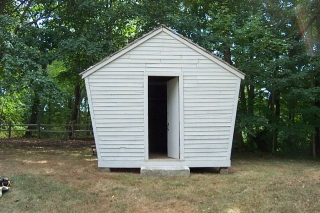
- Overview
-
Designations
Historic Significance
Architectural description:
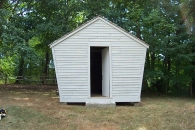
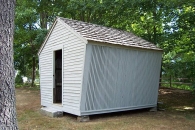
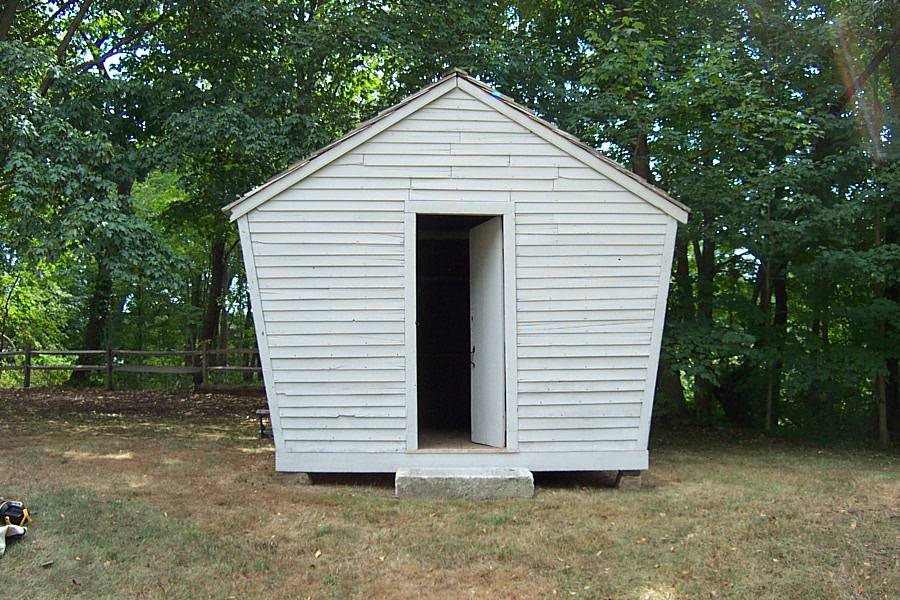
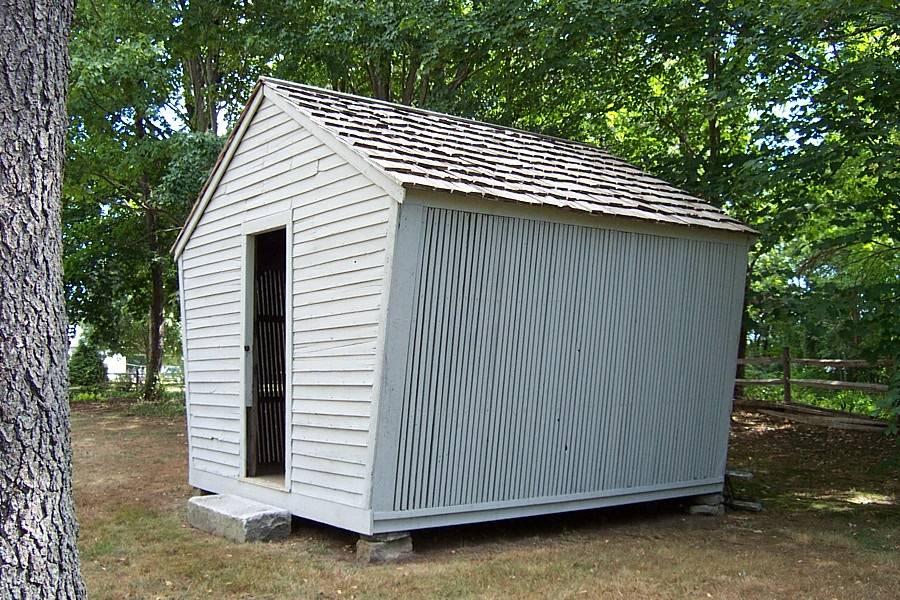
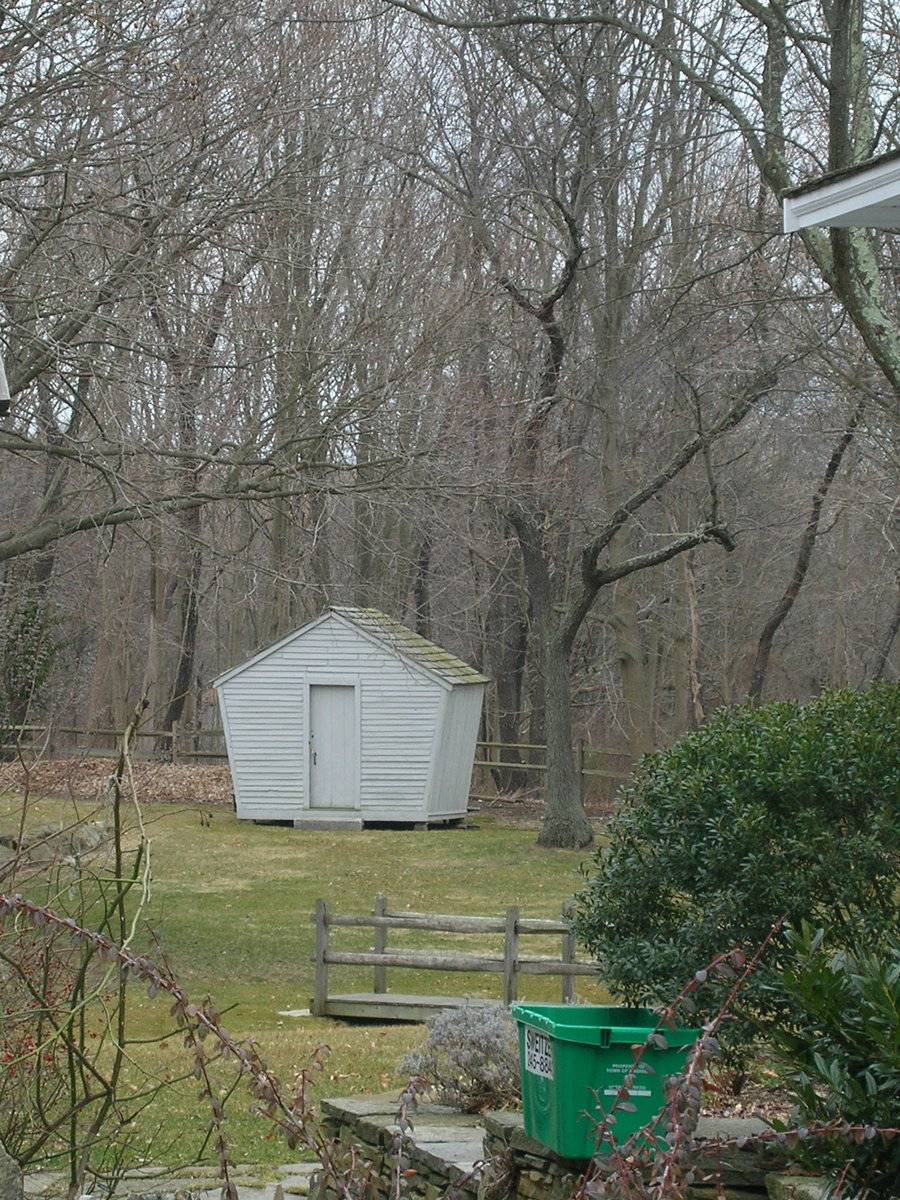
This is a gable-entry corn crib with its ridge-line oriented north-south. The gable-ends are vertical, the eave-sides slant outward from bottom to top. There is a pass-through door in the center of the north gable-end. The east eave-side, south gable-end, and west eave-side have no openings. The siding is clapboard. The roof is covered with wood shingles. The foundation consists of pieces of cut stone placed under each corner to raise the building slightly above grade to permit the flow of air.
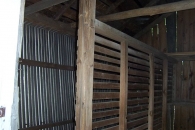
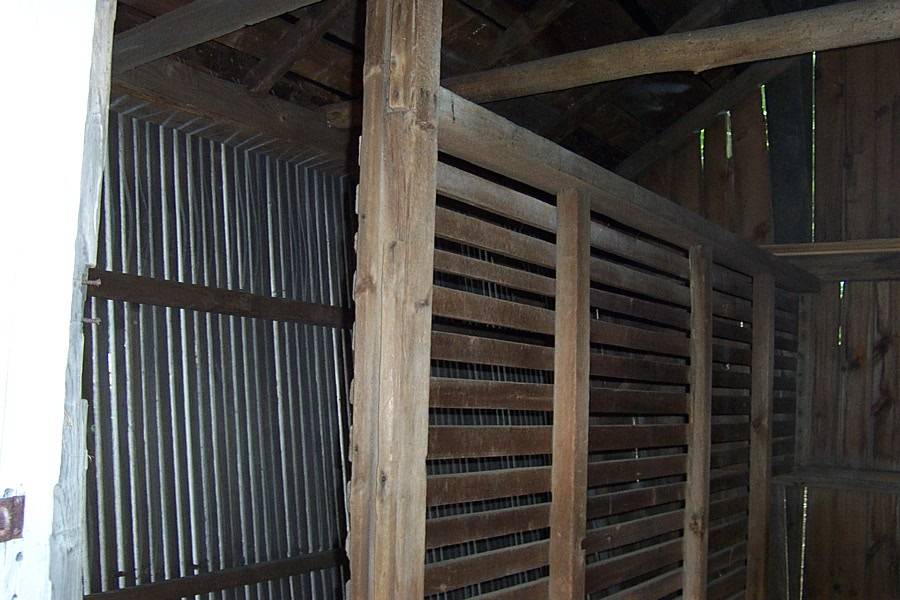
Historical significance:In the middle of the 19th century, growing “Indian” corn became popular. Storing the corn on the cob in well-ventilated corn cribs allowed the kernels to dry without spoiling. The distinctively shaped corn crib, with slanted side walls built of spaced wooden slats, became common by the 1860s. The overhanging eaves and slanted walls helped prevent rain from splashing inside. Vertical side walls are also common. Corn cribs are typically set high above the ground on wooden or stone posts.
Historical background:The corn crib is located on a .60-acre property that also contains an English barn. This parcel of land is to the rear of a .33-acre parcel that fronts on Boston Street. The house on that property, listed on the National Register as the Thomas Burgis II House, was built in 1735 for Burgis by his father. Both properties were part of an original 4-acre parcel. The property was reduced to 3 acres in 1873, and subdivided again in 1908. In 1989, the present owners purchased the .33-acre parcel containing the house and carriage house. In 2002, they purchased the rear .60-acre parcel.
This property is located within the boundaries of the Guilford Historic Town Center, a National Register District of approximately four square miles that contains over 700 structures. Nearby is Guilford Green, a large open green space surrounded by 18th and 19th century architecture. The house on this property is the second oldest in the neighborhood, with a chain of title that goes back to land divisions set to original proprietors in 1640. It was built in 1735 for Thomas Burgis II by his father. Originally on 4 acres, the property was reduced to 3 acres in 1873, and subdivided again in 1908. In 1989, present owners purchased the .33-acre parcel fronting on Boston Street and containing the house and shed. In 2002, they purchased the rear .60-acre parcel, with the English barn and a corn crib.
Field Notes
Example of corn crib At rear of residential lot. Located in Guilford Town Center Historic District (1976), and is assumed to be a contributing resource within the district although an inventory of structures is not included in the nomination (the site is outside the Local Historic District boundary). House is individually listed on the National Register (2000); barn is considered non-contributing due to date outside the period of significance.
- Use & Accessibility
- Environment
Related features
Environment features
Relationship to surroundings
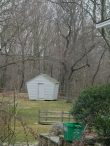
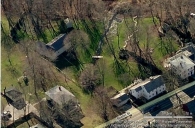
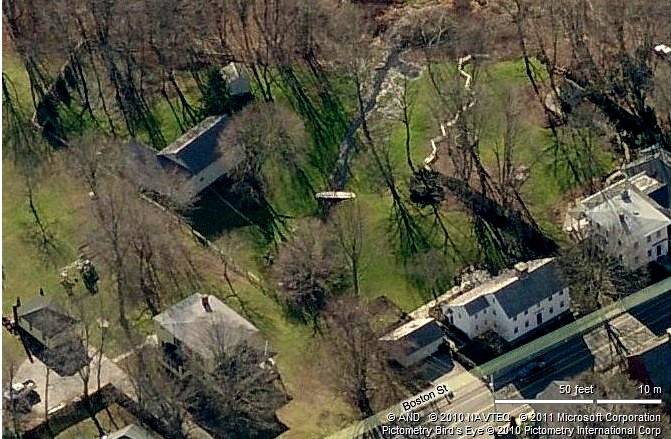
The corn crib is located at 85 Boston Street, which runs northeast-southwest at this point. The .60 acre property also contains an English barn. The property is located to the rear of another parcel of land containing a salt-box house, built in 1736, a carriage house, garden, and privy. A small creek runs diagonally northeast-southwest between the two parcels. This section of Boston Street is largely residential, but has retained a rural feel with green space, trees, barns, and outbuildings. To the southwest is the Guilford Fair Grounds, and to the northeast stands historic Guilford Green.
M/P 040144C
- Typology & Materials
-
Building Typology
Materials
Structural System
Roof materials
Roof type
Approximate Dimensions
12.5 ft by 11 ft
- Source
-
Date Compiled
02/19/2011
Compiled By
C. Wilkinson & T. Levine, reviewed by CT Trust
Sources
Field notes and photographs by Nina E. Harkrader 11/02/2006.
GIS Viewer: http:www.guilfordgis.com
Town of Guilford Assessor’s Record: http://www.prophecyone.us/index_prophecy.php?town=Guilford
Parcel ID: 040144C
Aerial Mapping:
http://www.bing.com/maps accessed 02/19/2011.Cunningham, Jan, Thomas Burgis II House National Register Nomination No. 00001562, National Park Service, 12/28/2000.
Raiche, Stephen J., Guilford Historic Town Center National Register Historic District Nomination No. 76001988, National Park Service, 1976.
Sexton, James, PhD, Survey Narrative of the Connecticut Barn, Connecticut Trust for Historic Preservation, Hamden, CT, 2005, http://www.connecticutbarns.org/history.
Visser, Thomas D., Field Guide to New England Barns and Farm Buildings, University Press of New England, 1997. - PhotosClick on image to view full file
-