Barn Record Clinton
RETURN TO ‘FIND BARNS’- Building Name (Common)
- n/a
- Building Name (Historic)
- n/a
- Address
- 15 Pearl Street, Clinton
- Typology
- Overview
-
Designations
n/a
Historic Significance
Architectural Description:
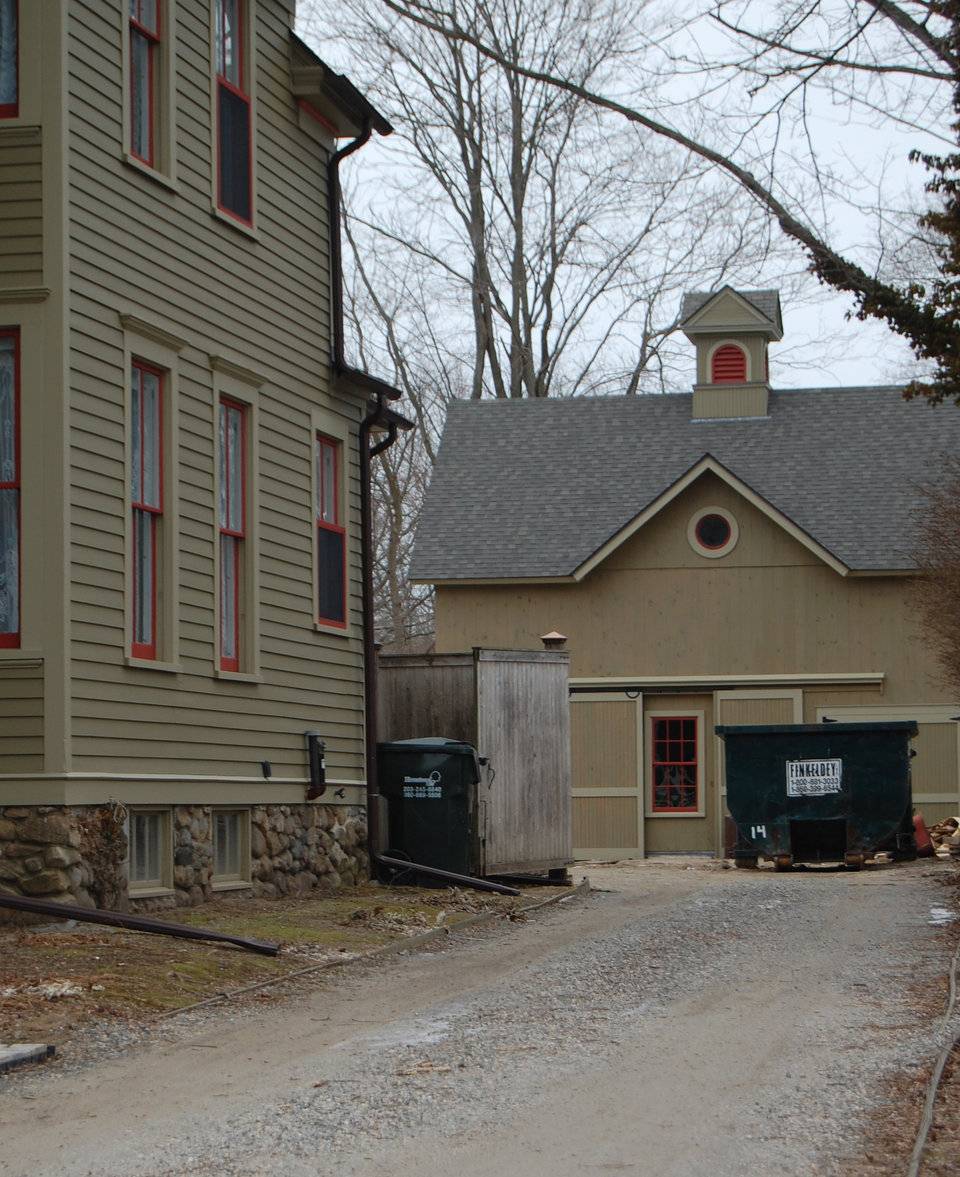
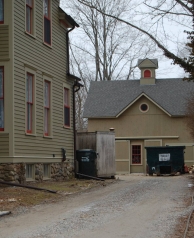
This is a 1 ½-story, three-bay side- or eave-entry barn with its main facade facing east and its ridgeline running north-south. The east eave-facade has a pair of single-height exterior sliding doors in the center bay. Opening in opposite directions, the southern-most (left) door slides to the south on the exterior track. When opened it reveals a wall with a six-over-six double-hung window. The northern-most (right) door slides to the north. The exterior track projects into the north and south bays on the east eave-facade. This provides the doors with room to open entirely by sliding far enough north and south.
Centered above the pair of exterior sliding doors is a cross-gabled wall dormer with an ocular window. The plan of the cross-gable is the same as the front (east) wall. The window is centered below the apex of the wall dormer.The north bay on the east eave-facade has a pair of single-height hinged doors. Above the south hinged door is the sliding door’s exterior track. The south hinged door in the north bay would be partially covered by the north sliding door when fully opened.
The south gable-facade has a window in the attic gable below the apex. There appears to be a gable-roofed addition off the west side of the south gable-facade.
A cross-gable-roofed cupola with ornamental pediments is centered on the ridge. The cupola has vertical and horizontal siding that appears to be painted tan and the roof has asphalt shingles. There are arched wooden louvered ventilators that are painted red with white trim below each of the enclosed pediments.
The barn has vertical siding which appears to be painted tan. The trim is painted a yellow-tan color. The head rail, sill, and stiles of the double-hung window is painted red, including the ocular window that is painted red and yellow. The roof has asphalt shingles.
Historical Significance:Until the 1830s, the horses used for riding and driving carriages were often kept in the main barn along with the other farm animals. By the 1850s, some New England farmers built separate horse stables and carriage houses. Early carriage houses were built just to shelter a carriage and perhaps a sleigh, but no horses. The pre-cursor to the twentieth-century garage, these outbuildings are distinguished by their large hinged doors, few windows, and proximity to the dooryard. The combined horse stable and carriage house continued to be a common farm building through the second half of the nineteenth century and the first decade of the twentieth century, until automobiles became common. Elaborate carriage houses were also associated with gentlemen farms and country estates of the late 19th and early 20th centuries. Another form of carriage barn, the urban livery stable, served the needs of tradespeople.
Field Notes
This is a beautifully restored Victorian barn. The house in front of it (on the same property) has also been restored.
- Use & Accessibility
Use (Historic)
Use (Present)
Exterior Visible from Public Road?
Yes
Demolished
n/a
Location Integrity
Unknown
- Environment
Related features
Environment features
Relationship to surroundings
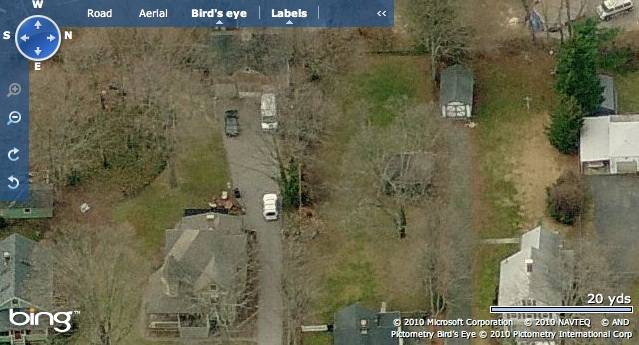
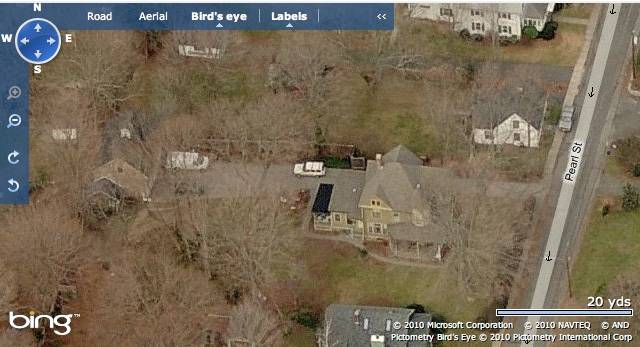
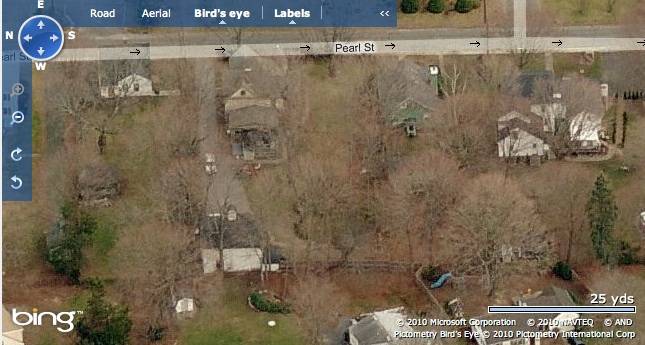
The barn is west of Pearl Street and northwest of the associated house. It faces east with its ridgeline running north-south, parallel to Pearl Street in a residential area.
- Typology & Materials
-
Building Typology
Materials
Structural System
Roof materials
Roof type
Approximate Dimensions
n/a
- Source
-
Date Compiled
07/13/2010
Compiled By
S. Lessard and T. Levine, reviewed by CT Trust
Sources
Photographs and field notes by Marye Wagner (jwagner04@snet.net)- 4/10/2010
Historic Preservation, Hamden, CT, 2005, http://www.connecticutbarns.org/history.
Visser, Thomas D.,Field Guide to New England Barns and Farm Buildings, University Press of New England,1997. - PhotosClick on image to view full file
-