Barn Record Deep River
RETURN TO ‘FIND BARNS’- Building Name (Common)
- n/a
- Building Name (Historic)
- n/a
- Address
- 4 Bahr Road, Deep River
- Typology
- Overview
-
Designations
n/a
Historic Significance
Architectural Description:
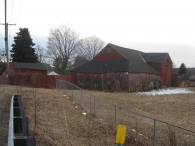
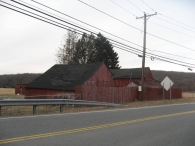
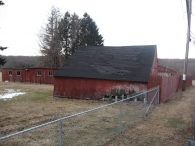
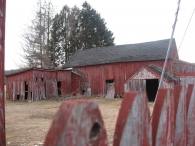
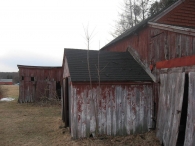
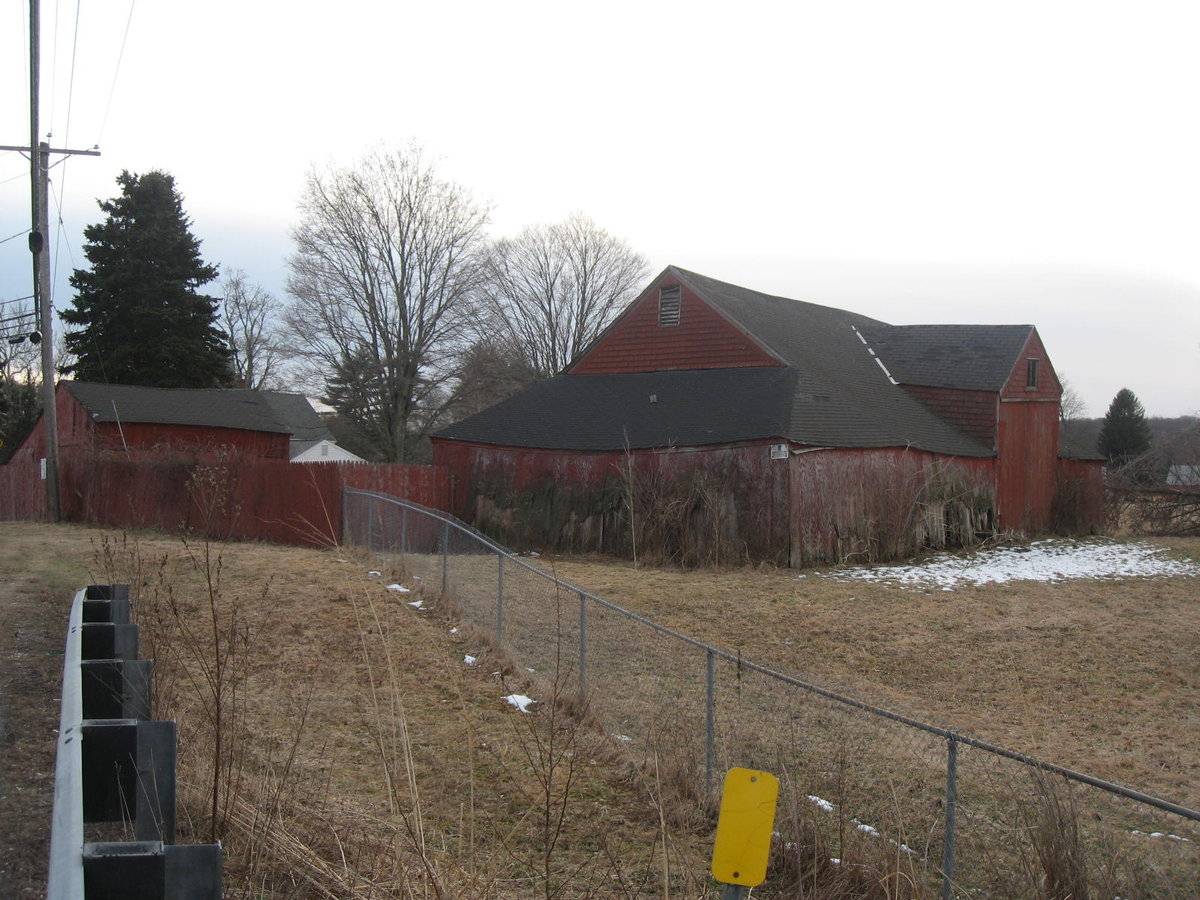
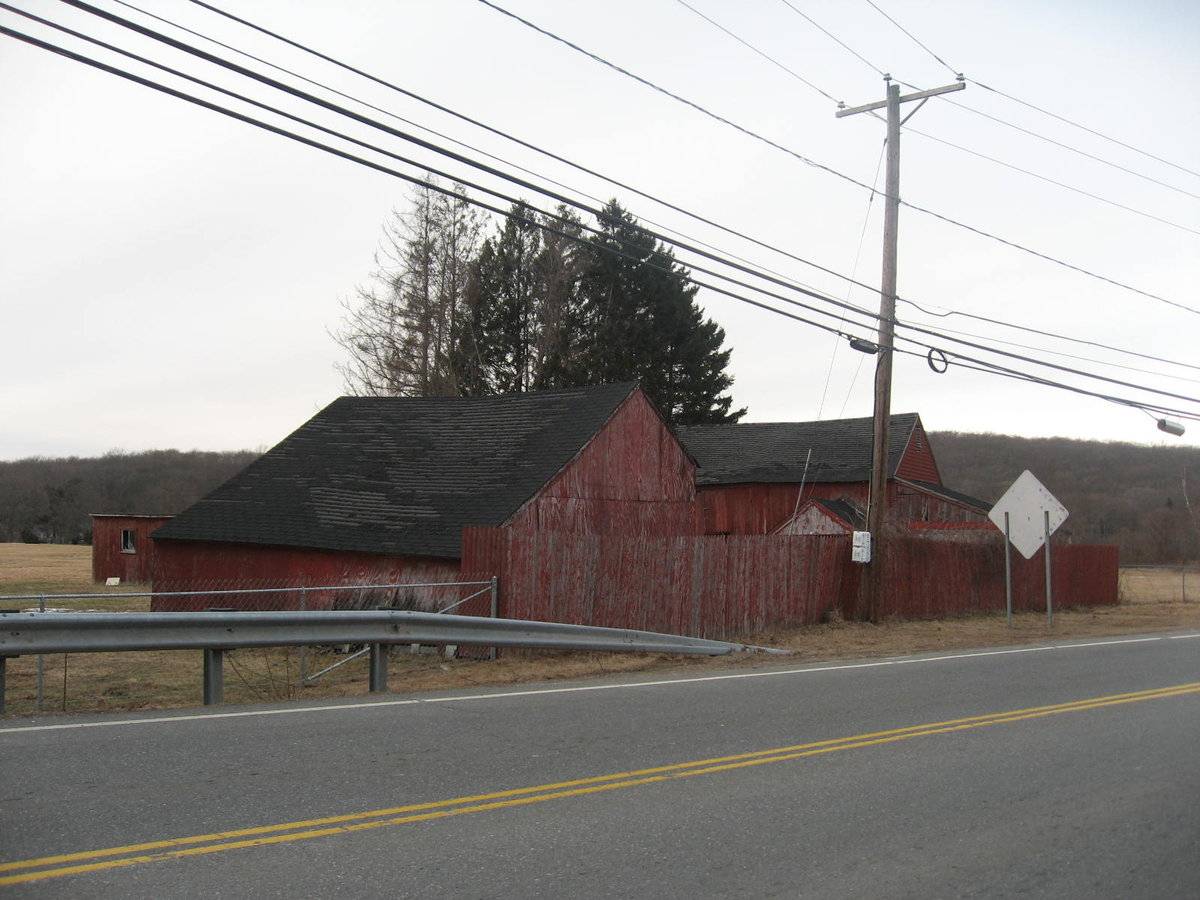
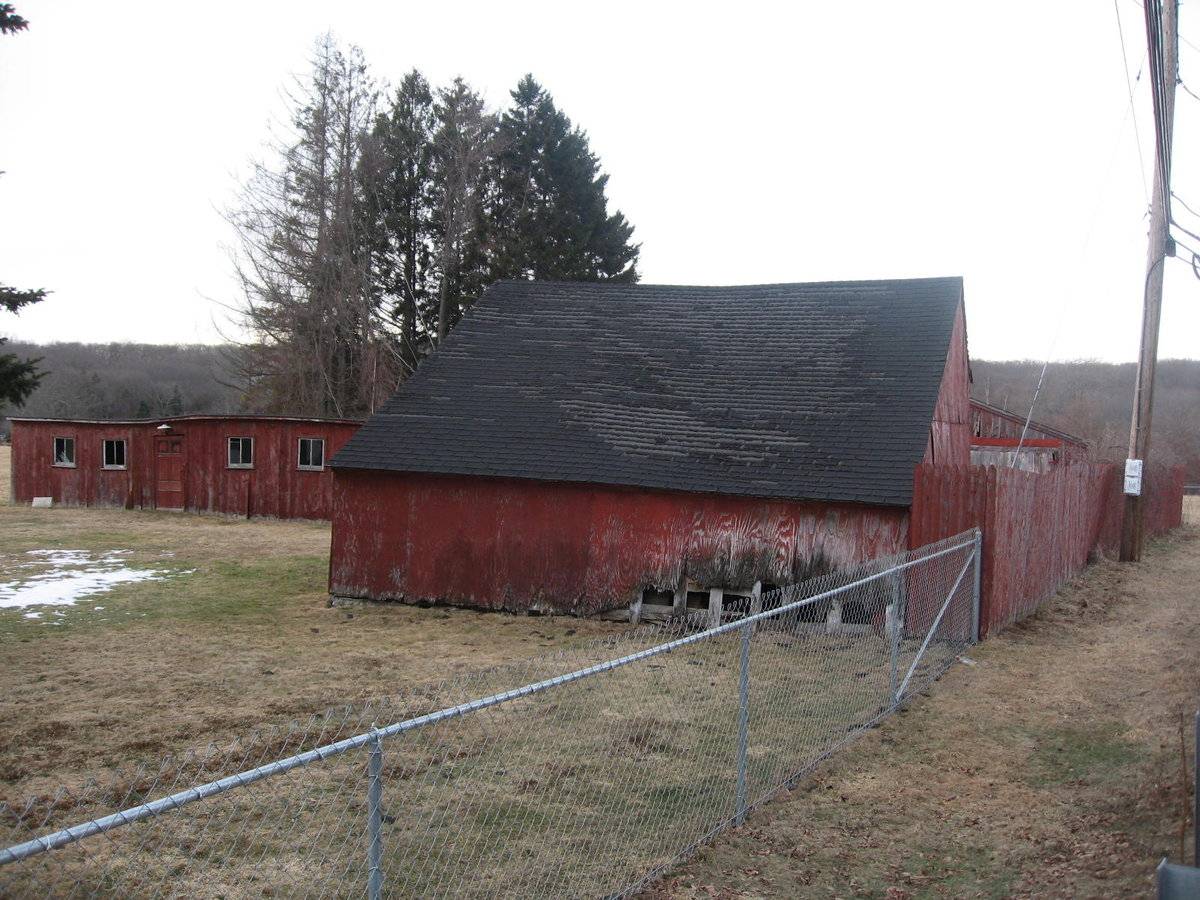
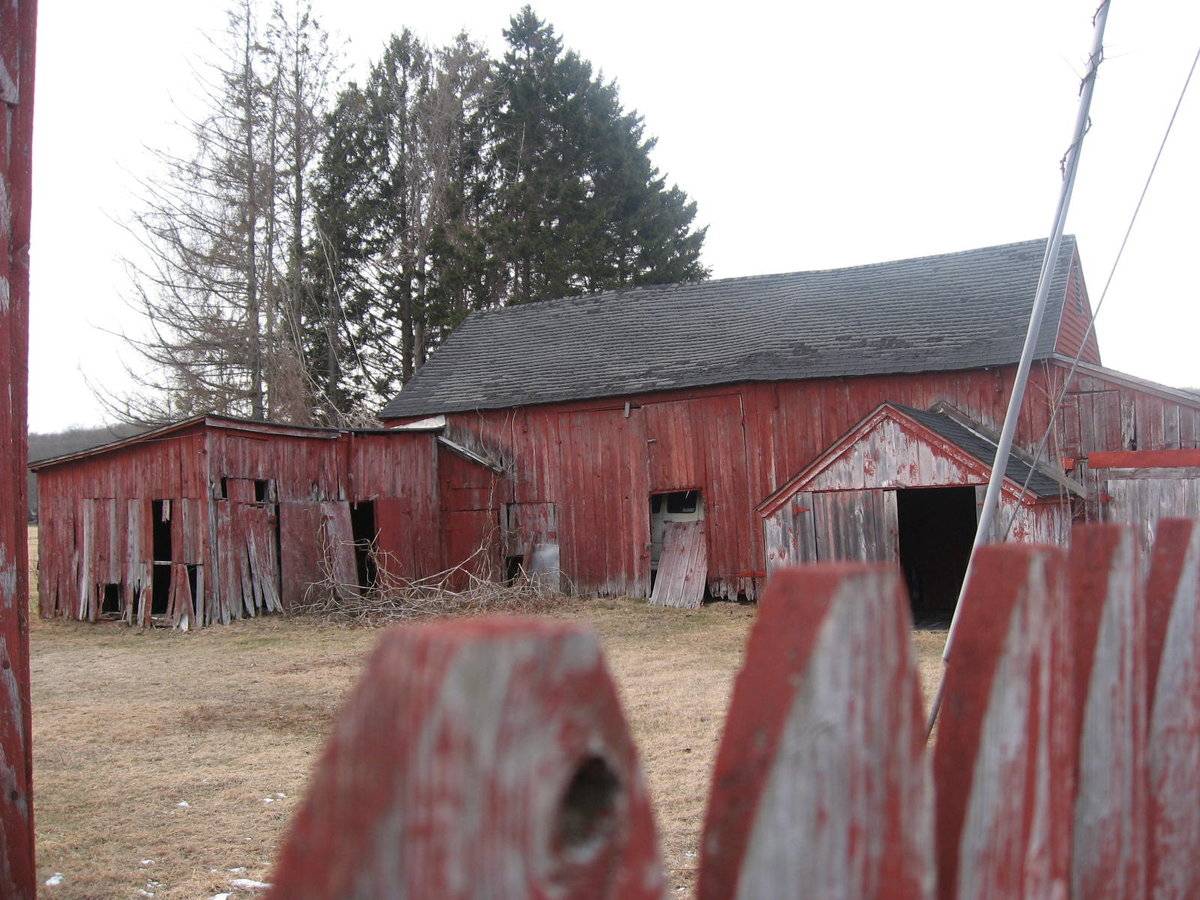
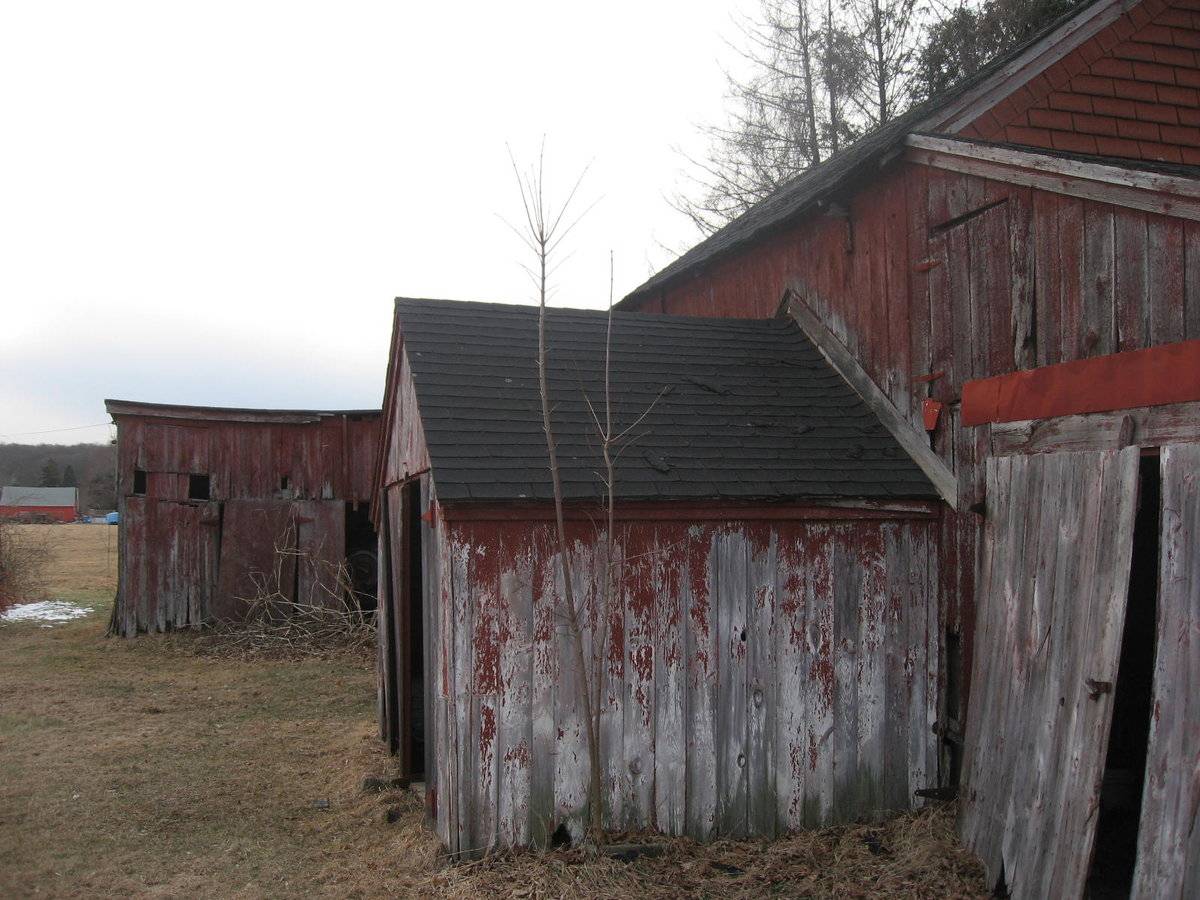
This is a 1 ½ story eave-entry saltbox-roof barn with a shed-roof addition on its eastern gable-façade and a wall-dormer on its northern eave-façade. The barn also has a gable-roof addition on its southern eave-façade and a saltbox-roof addition on its south-west corner. The southern eave-façade of the barn faces Bahr Road while the eastern gable-façade faces West Elm Street. The southern eave-façade of the barn is the main façade with the main entrance off-centered towards the west through a pair of hinged wagon doors which has a weather-door insert on its eastern door leaf. The façade also has a pass-through door towards the west and a dilapidated saltbox-roof addition on the south-west corner. The southern eave-façade of the main barn has a gable-roof addition towards the east which has a double-leaf hinged door entrance centered on its southern gable-side. The southern side-wall of the shed-roof addition on the eastern gable-façade of the main barn can be seen flush with the southern eave-façade towards the east. The southern side-wall of the shed-roof addition has a pair of hinged doors at the center with a hinged hay door above. The eastern gable-façade of the barn has wood shingles in the gable attic with a louvered window just below the apex of the roof while the shed-roof addition below has vertical siding. The northern eave-façade of the barn has a wall-dormer at the center with the gable attic separated by a distinct girt siding divide line. The gable attic of the wall dormer has wood shingle cladding with a louvered window just below the apex of the roof while the rest of the façade has vertical siding.
The wooden frame of the barn complex has red-painted vertical siding walls and red-painted wood shingles on the gable attics. The main barn and its additions have asphalt shingle roofing.
Historical Significance:The oldest barns still found in the state are called the “English Barn,” “side-entry barn,” “eave entry,” or a 30 x 40. They are simple buildings with rectangular plan, pitched gable roof, and a door or doors located on one or both of the eave sides of the building based on the grain warehouses of the English colonists’ homeland. The name “30 by 40” originates from its size (in feet), which was large enough for 1 family and could service about 100 acres. The multi-purpose use of the English barn is reflected by the building’s construction in three distinct bays - one for each use. The middle bay was used for threshing, which is separating the seed from the stalk in wheat and oat by beating the stalks with a flail. The flanking bays would be for animals and hay storage.
Field Notes
- @ corner of Bahr Road and Rte 80 - jumble of barns, some connected (not connected to house) - one could be English type (pic 03) - might be too damaged - rotted siding, failing roof lines - some sides are plywood, not board sheathing
- Use & Accessibility
Use (Historic)
Use (Present)
Exterior Visible from Public Road?
Yes
Demolished
n/a
Location Integrity
Unknown
- Environment
Related features
Environment features
Relationship to surroundings
The property is a corner plot towards the north of Bahr Road and the west of West Elm Street. The property is separated from the surrounding residential plots by parcels of open farm land. A few small water bodies can be seen towards the north of the property and a relatively larger water body towards the west, across Plains Road.
The barn complex is towards the north-east of the property, abutting to West Elm Street. The barn complex is surrounded by open land and the main residence is towards its south-west.
The main barn and the out buildings form a semi-enclosed C-shaped barn complex facing West Elm Street. A red-painted fence along the road defines the eastern edge of the barn complex. The main barn and its additions form the northern edge of the C-shaped complex. The western edge of the complex is formed by the saltbox-roof addition to the main barn on its south-west corner and a free-standing elongated shed-roof with its shorter gable-side facing West Elm Street. A 1 ½ story saltbox-roof barn can be seen towards the south of the barn forming the southern edge of the complex.
- Typology & Materials
-
Building Typology
Materials
Structural System
Roof materials
Roof type
Approximate Dimensions
n/a
- Source
-
Date Compiled
07/18/2010
Compiled By
T. Levine and M. Patnaik, reviewed by CT Trust
Sources
Photographs and information provided by –
Sara and Bruce Dodson
sgdodson@hotmail.comSexton, James, PhD; Survey Narrative of the Connecticut Barn, Connecticut Trust for Historic Preservation, Hamden, CT, 2005, http://www.connecticutbarns.org/history.
Visser, Thomas D.,Field Guide to New England Barns and Farm Buildings, University Press of New England, 1997.
- PhotosClick on image to view full file
-