Barn Record Chester
RETURN TO ‘FIND BARNS’
- Overview
-
Designations
n/a
Historic Significance
Architectural Description:
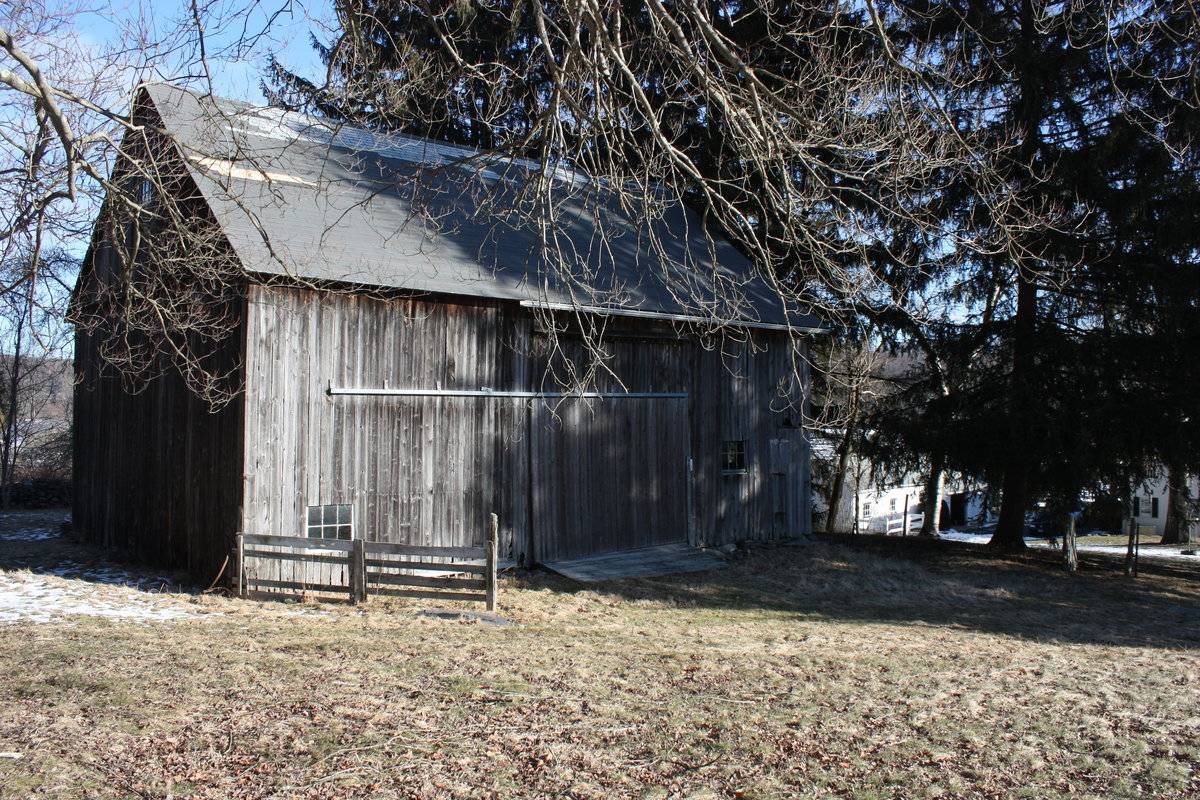
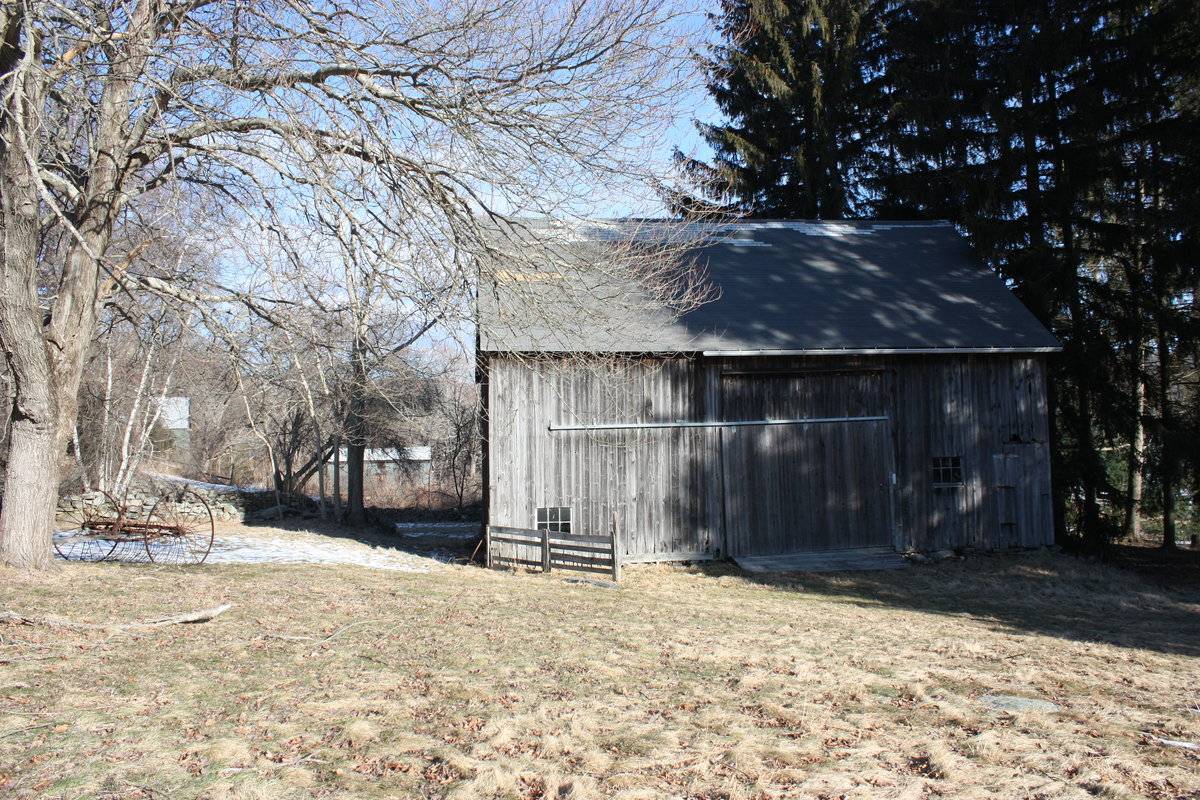
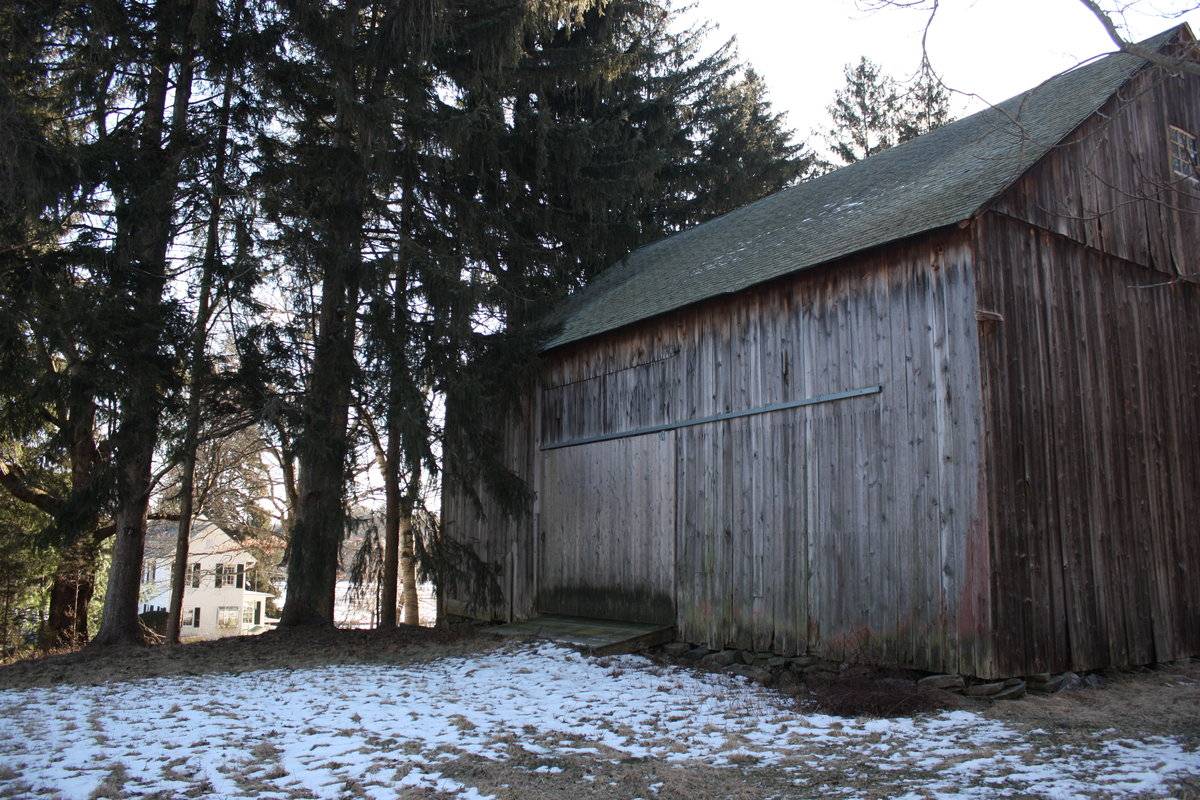
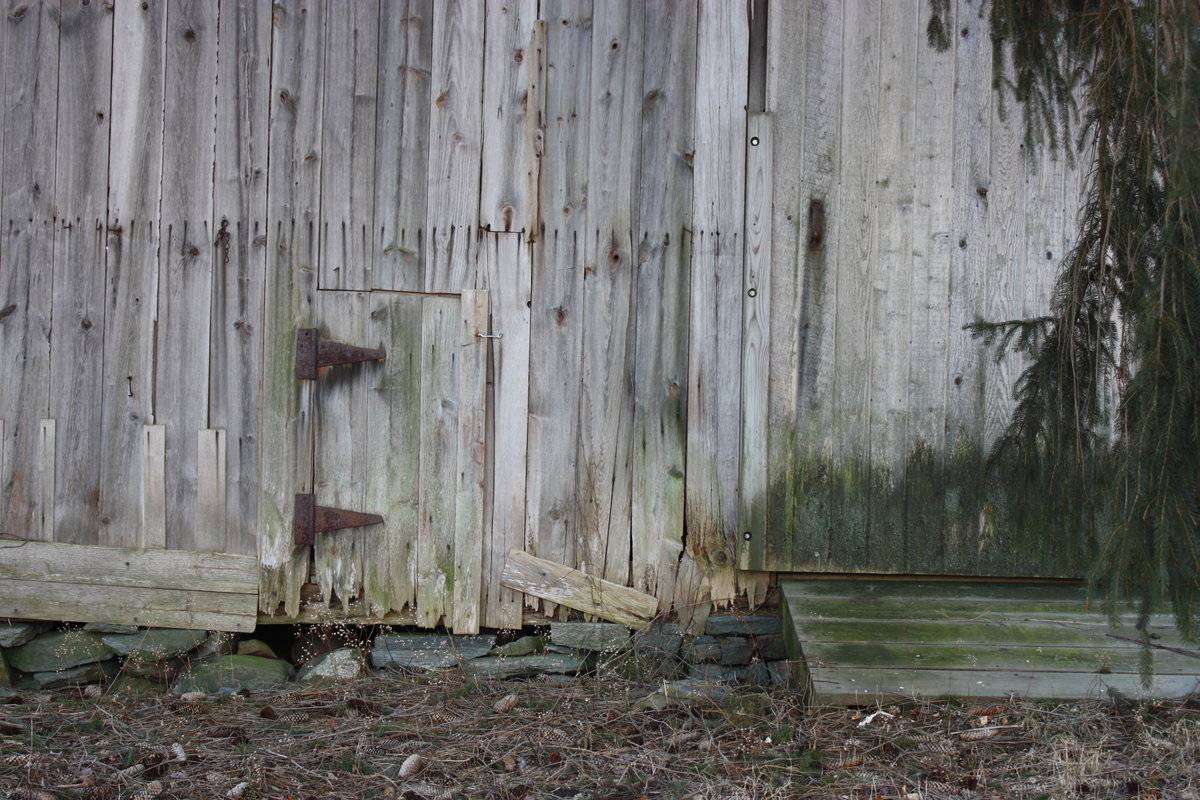
This is a 1 ½ story eave-entry three-bay barn with its eastern eave-façade facing Cedar Lake Road. The ridge-line of the barn runs along east-west, perpendicular to the road. The southern three-bay eave-façade facing the property is the main façade of the barn with the main entrance on the middle-bay through an exterior-hung sliding wagon door. The main entrance on the façade was through a higher sliding wagon door entry than the present one, as evident from the door tracks still in place just below the eave-level above. The main entrance is accessed by a wooden ramp. The first bay on the façade from the east has a second entrance through a hinged pass-through door followed by a six-pane stable window. A similar six-pane window can be seen on the third bay from the east with a much lower sill-level. The undulating grade level along the façade reveals the field-stone masonry foundation below. The western gable-façade of the barn appears to be blank apart from a distinct girt siding divide line separating the gable attic. A nine-pane window can be seen punctuating the façade just below the apex of the roof. The three-bay northern eave-façade of the barn has an entrance on the middle bay through an exterior-hung sliding wagon door, similar to the main entrance on the southern eave-façade. The lintel height of the sliding door on the northern eave-face has also been reduced to the present level as evident from the markings of the original tracks and the siding divide line. The entrance on the façade is also accessed by a wooden ramp.
The wooden frame of the barn is supported on field-stone masonry foundation. The barn has asphalt roofing and vertical siding walls.
Historical Significance:The oldest barns still found in the state are called the “English Barn,” “side-entry barn,” “eave entry,” or a 30 x 40. They are simple buildings with rectangular plan, pitched gable roof, and a door or doors located on one or both of the eave sides of the building based on the grain warehouses of the English colonists’ homeland. The name “30 by 40” originates from its size (in feet), which was large enough for 1 family and could service about 100 acres. The multi-purpose use of the English barn is reflected by the building’s construction in three distinct bays - one for each use. The middle bay was used for threshing, which is separating the seed from the stalk in wheat and oat by beating the stalks with a flail. The flanking bays would be for animals and hay storage.
Field Notes
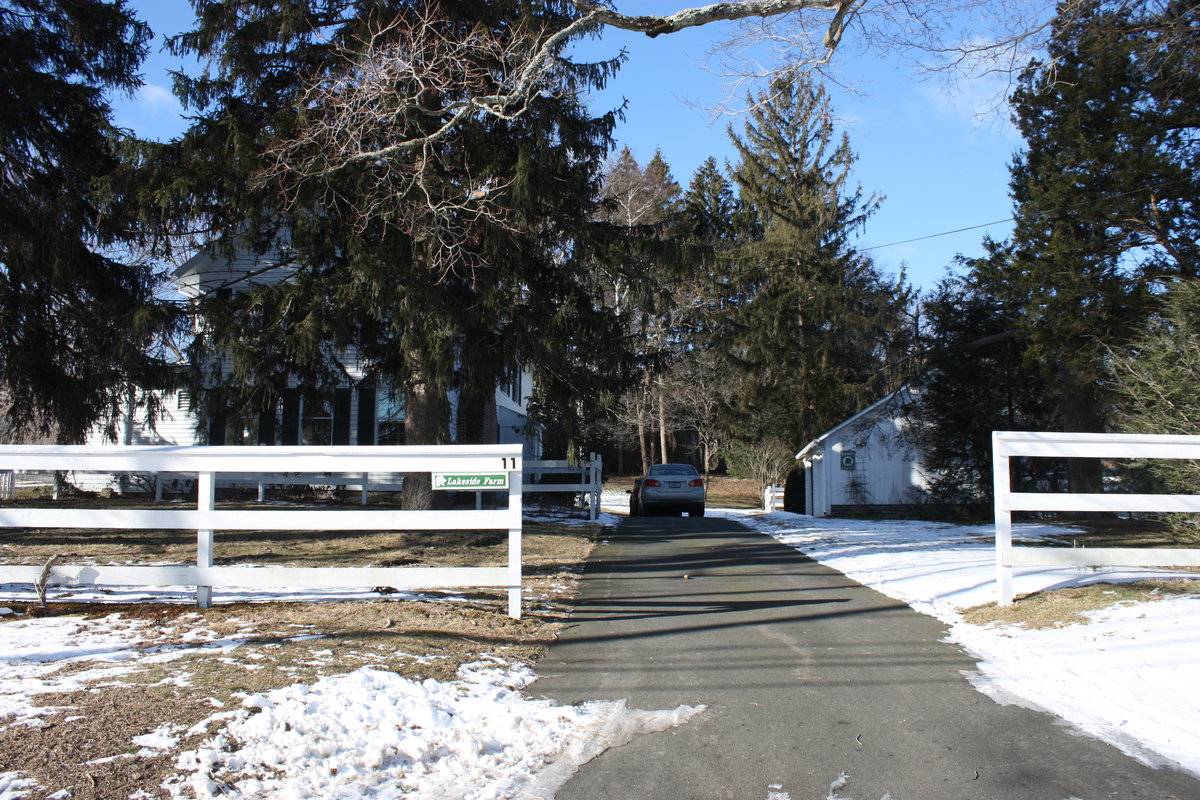
Large English style barn, not quite visible from the road. The barn probably predates the house, which was built in 1880. Barn was originally part of the farm next door, but when this parcel was subdivided to a son, the barn was included. There is a deep foundation near the barn of what probably was an ice house. Currently barn is used to store old farm equipment [Source:Diane Lindsay]
- Use & Accessibility
Use (Historic)
Use (Present)
Exterior Visible from Public Road?
Yes
Demolished
n/a
Location Integrity
Unknown
- Environment
Related features
Environment features
Relationship to surroundings
The property is towards the north of West Main Street and West of Cedar Lake Road. The Cedar Lake Cemetery can be seen across Cedar Lake Road which forms the western edge of Cedar lake. Dense woodland can be seen towards the west of the property with a patch of open farm land towards the north.
The barn is located at the northern edge of the property and is barely visible from the road. The eastern gable-façade of the barn is lined with ever-green trees and two residences can be seen towards further east.
- Typology & Materials
-
Building Typology
Materials
Structural System
Roof materials
Roof type
Approximate Dimensions
n/a
- Source
-
Date Compiled
07/03/2010
Compiled By
T. Levine and M. Patnaik, reviewed by CT Trust
Sources
Photographs and information provided by –
Diane Lindsay, DianeDaveLindsay@att.netSexton, James, PhD; Survey Narrative of the Connecticut Barn, Connecticut Trust for Historic Preservation, Hamden, CT, 2005, http://www.connecticutbarns.org/history.
Visser, Thomas D.,Field Guide to New England Barns and Farm Buildings, University Press of New England, 1997.
- PhotosClick on image to view full file
-