Barn Record Killingworth
RETURN TO ‘FIND BARNS’- Building Name (Common)
- Chauncy and Jerusha Parmelee Farm
- Building Name (Historic)
- Chauncy and Jerusha Parmelee Farm
- Address
- 476 Route 81 (Higganum Road), Killingworth
- Typology
- Overview
-
Designations
Historic Significance
Architectural description:
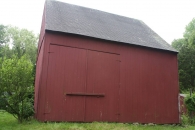
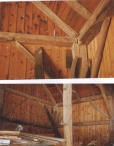
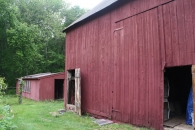
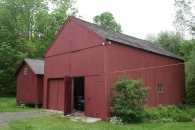
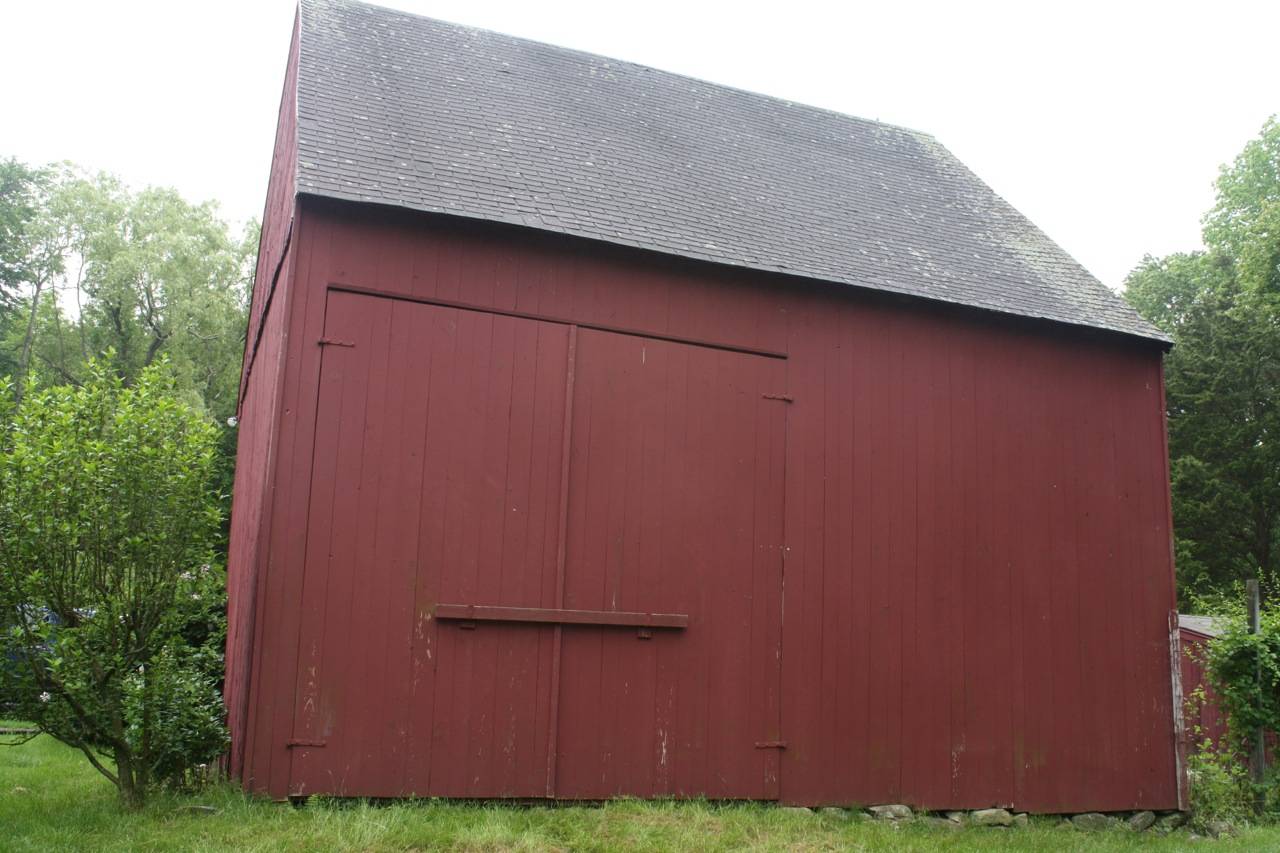
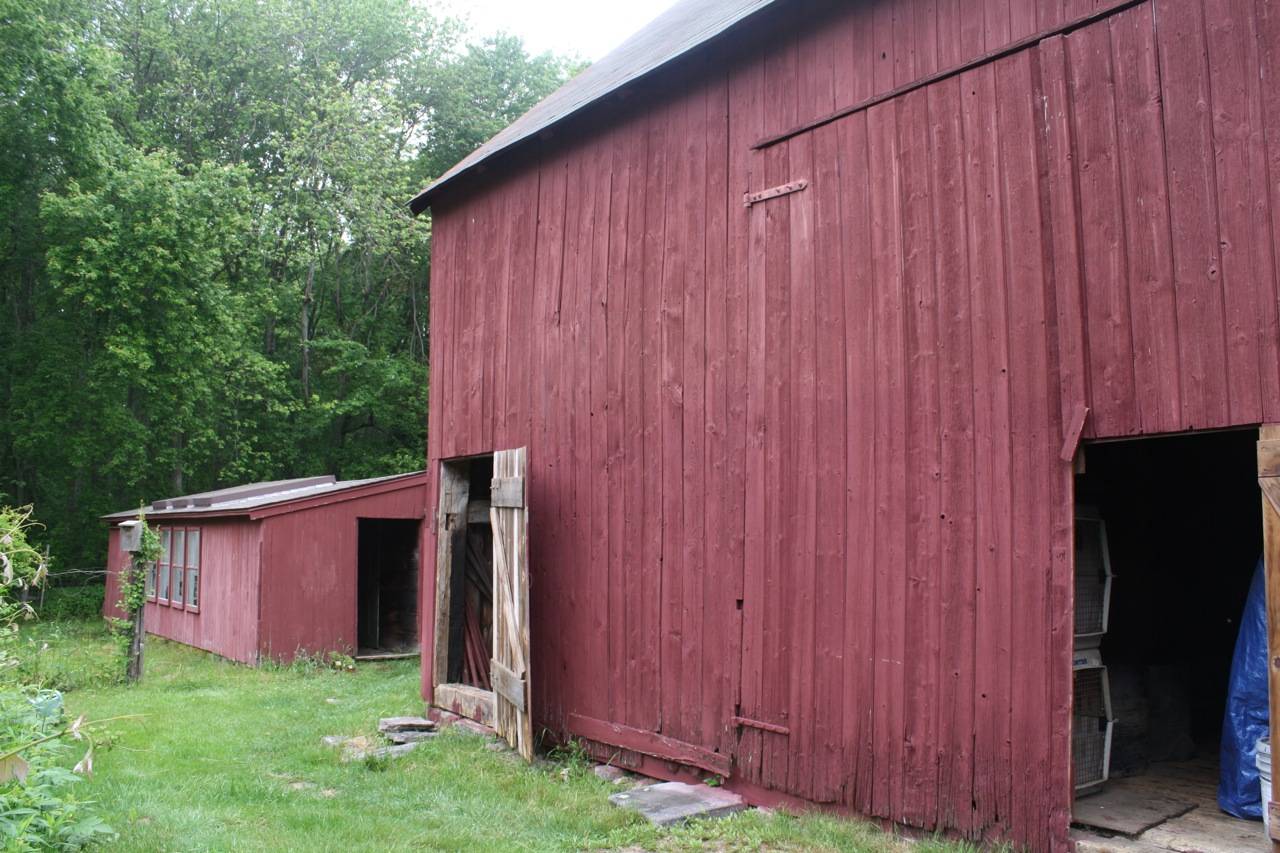
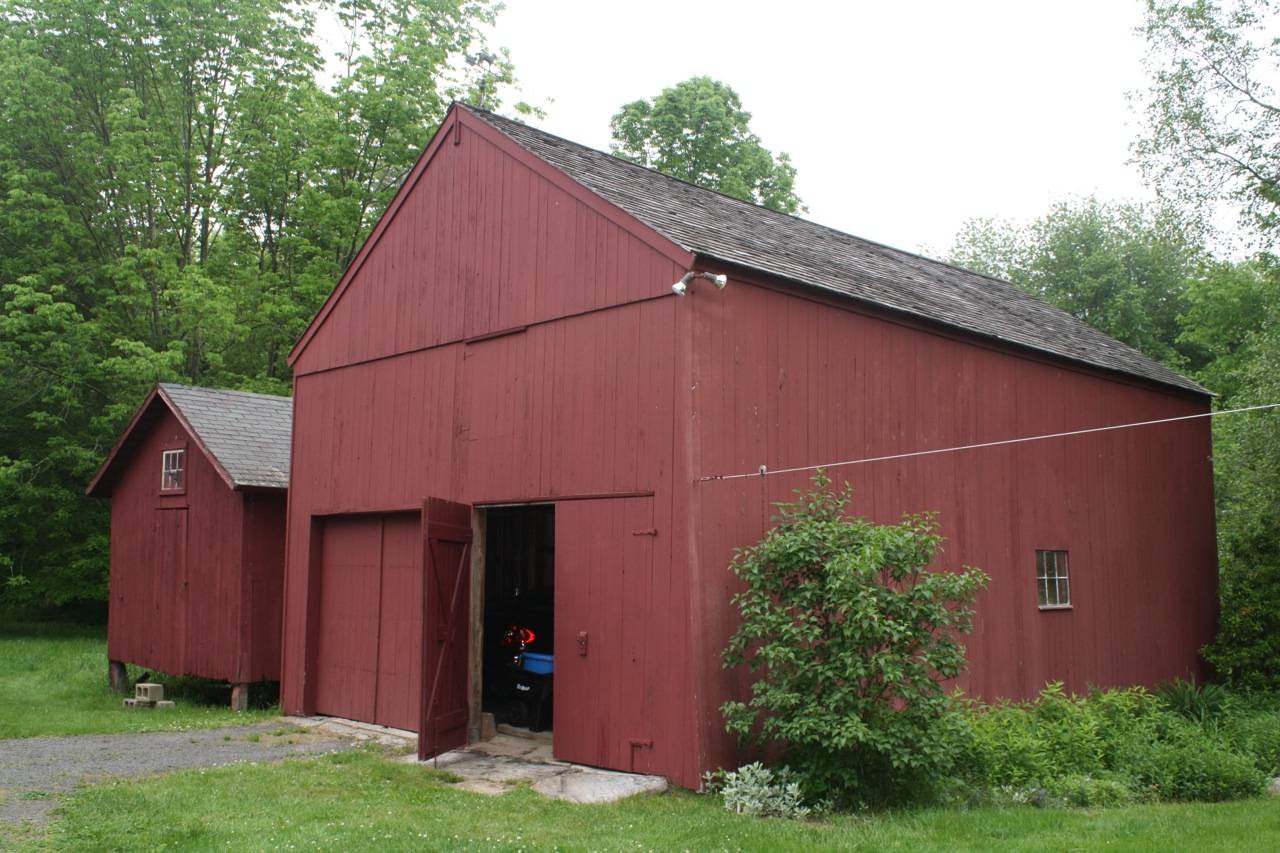
This is a 1 ½-story gable-roofed two-bay eave-entry or English barn, 26’ x 26’. Its ridge-line is oriented east-west, and the entry doors are pairs of tall hinged barn doors in the north and south eave-sides. Based on some charring of timbers, it is conjectured that an original third bay at the east end, which would have been typical, may have been damaged by fire and removed. The roof is steeply pitched.The north eave-side has a pair of full-height hinged out-swinging doors in the left (east) bay, no openings in the right bay, and a small exposure of fieldstone foundation wall toward the right (west) corner; grade is sloped up to the door sill at the left bay. The east gable-end has no openings. The siding divide is at the eave line, signaling the tie girt in the plane of the plate in the framing. The roof has no overhang at the rake.
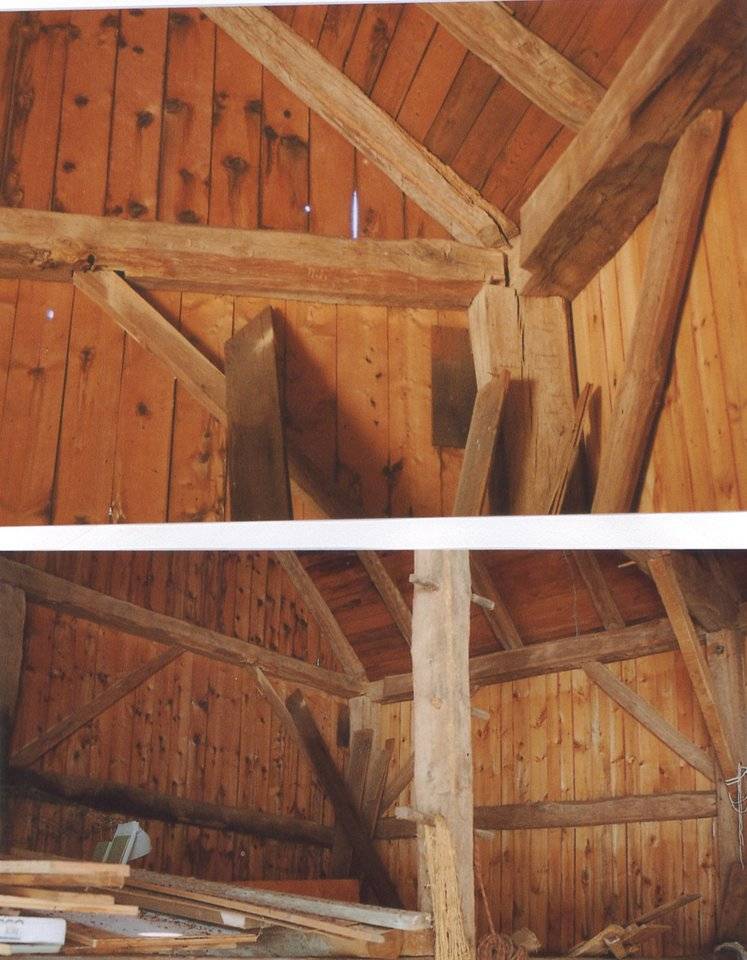
The south eave-side has a pair of hinged doors corresponding to the north, in the right (east) bay. These are similarly framed with z-bracing on the interior and vertical flush boards on the exterior and have iron strap hinges. A weather door is in the right leaf. At the left (west) corner there is a pass-through door that gave access to the cow stable area in the west bay of the barn. The west gable-end has a single six-pane stable window in the right (south) half at grade level and a small six-pane attic window near the peak. Approximately a foot of foundation wall is exposed below the siding on this side. The eaves have a very slight overhang, while the rakes are flush, with a narrow rake board over the siding. Siding is vertical boards painted red. The steeply-pitched roof has asphalt shingles.Historical significance:
The oldest barns still found in the state are called the “English Barn,” “side-entry barn,” “eave entry,” or a 30 x 40. They are simple buildings with rectangular plan, pitched gable roof, and a door or doors located on one or both of the eave sides of the building based on the grain warehouses of the English colonists’ homeland. The name “30 by 40” originates from its size (in feet), which was large enough for 1 family and could service about 100 acres. The multi-purpose use of the English barn is reflected by the building’s construction in three distinct bays - one for each use. The middle bay was used for threshing, which is separating the seed from the stalk in wheat and oat by beating the stalks with a flail. The flanking bays would be for animals and hay storage.
Field Notes
Listed on the State Register of Historic Places 9/04/2013. House: Chauncy Parmelee Barn: same age or older circa 1790. Large doors on either eaves sides allowing acess to large hay wagons. Hay mow above cow stable below. Other out buildings of a later period. House was residence of Chauncey & Jerusha Parmelee. Positive date of 1821 but probably earlier.
- Use & Accessibility
Use (Historic)
Use (Present)
Exterior Visible from Public Road?
Yes
Demolished
n/a
Location Integrity
Unknown
- Environment
Related features
Environment features
Relationship to surroundings
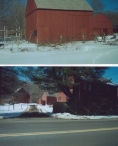
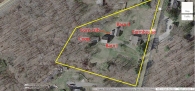
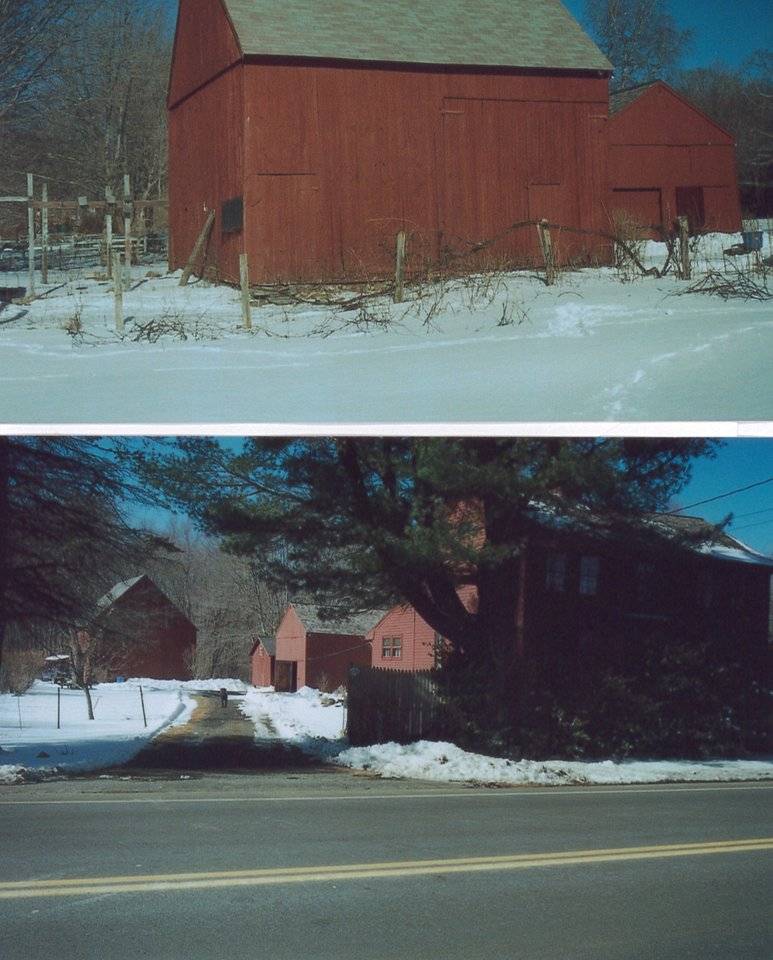
This farmstead site is located on the west side of Route 81, Higganum Road, which is the main north-south road through Killingworth and connects with Clinton to the south and Haddam to the north. The site is just to the south of the intersection with Route 148, an east-west route connecting with Durham to the northwest and Chester to the east. The town middle school, offices, and library are to the south along Route 81. In the vicinity are some areas of open farmland to the north, but largely second-growth woodlands, rolling hills and wetlands. Residential development is scattered on relatively large lots. This farmstead on a two-acre parcel is the historic core of a larger farm that was subdivided in the early 1970s. To the east across the road is the historic Parmelee Farm property now owned by the Town of Killingworth.
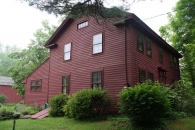
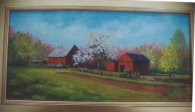
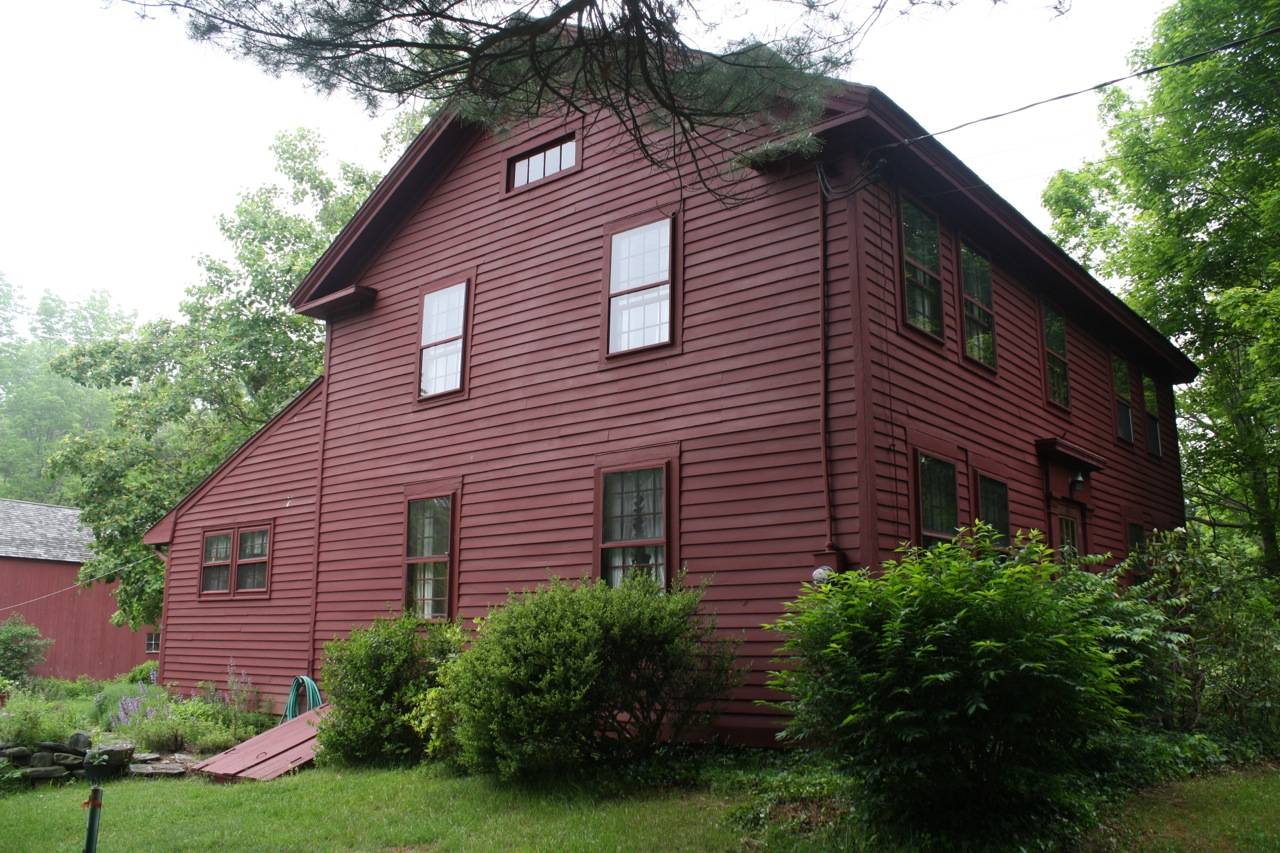
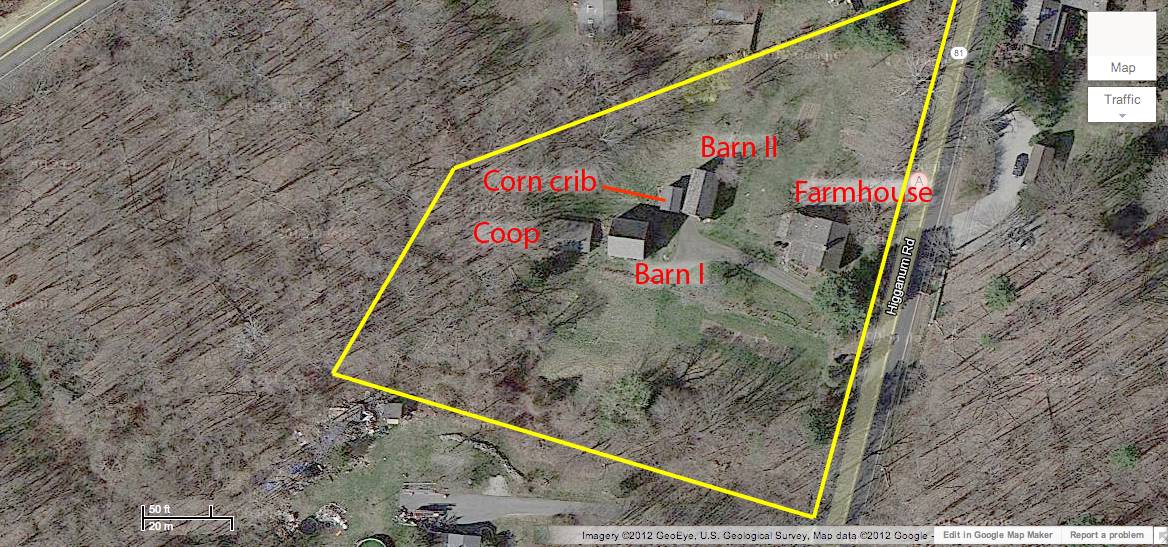
The farmstead includes a 2 ½-story colonial center-chimney Farmhouse with a gable roof whose ridge-line is oriented north-south. The east eave-side faces the road and has a five-bay façade with the original formal entryway at the center. The entry surround has engaged pilasters, a deep lintel, and projecting cornice. A 1-story shed-roofed addition encompasses the west side of the structure. The main block is 25’ x 32’ and the addition extends approximately 14’. Windows are twelve-over-twelve double-hung sash. The eaves have boxed soffits and cornice returns on the gable-ends. There are horizontal four-pane attic windows in the north and south gable-ends. Siding is wood clapboard, and roofing is wood shingles. The house is documented from 1821 but is thought to date from the late 18th century.To the west of the Farmhouse is a group of outbuildings. Barn I is to the south, with its ridge-line east-west and main doors opening to the north to a barnyard framed on the north side by Barn II and the Corn crib. Barn II is a 1 ½-story post-and-beam framed structure with its ridge-line oriented north-south, now used as a garage and workshop.
The Corn crib is a 1-story gable-roofed structure with its ridge-line oriented north-south, elevated off the ground on granite posts. The walls are vertical, unlike the typical canted crib walls. The interior is a two-bay square rule post and beam frame with sash-saw kerf marks and pegged joints, indications of a 19th-century date. Siding is vertical boards and roofing is asphalt shingles.
West of Barn I is a 1-story Chicken coop, now used as a greenhouse and potting shed. This has a low-slope gable roof with unequal pitches and the ridge-line oriented east-west. The south side, with the higher eave line, has a panel of four two-light windows and the roof has three skylights. South of the barn group is a small open field.
- Typology & Materials
-
Building Typology
Materials
Structural System
Roof materials
Roof type
Approximate Dimensions
26' x 26'
- Source
-
Date Compiled
04/13/2010
Compiled By
Charlotte Hitchcock, reviewed by CT Trust
Sources
Photographs and field notes by Florence and Robert Broach, 04/13/2010; Charlotte Hitchcock 5/24/2012.
Interview with Florence and Robert Broach 5/25/2012, at the site.
Town of Killingworth Assessor’s Records http://www.equalitycama.com
Parcel ID: 20-09KAerial views from:
http://maps.google.com/ and http://www.bing.com/maps/ accessed 6/18/2012.UTM coordinates: http://itouchmap.com/latlong.html
Connecticut River Estuary Regional Planning Agency, Historical and Architectural Survey of the Town of Killingworth, 1980.
Sexton, James, PhD; Survey Narrative of the Connecticut Barn, Connecticut Trust for Historic Preservation, Hamden, CT, 2005, http://www.connecticutbarns.org/history.
Visser, Thomas D., Field Guide to New England Barns and Farm Buildings, University Press of New England, 1997, 213 pages.
- PhotosClick on image to view full file
-