Barn Record Bolton
RETURN TO ‘FIND BARNS’- Building Name (Common)
- Fish Family Farm and Dairy Store
- Building Name (Historic)
- White, Jabez Loomis, Farmstead
- Address
- 20 Dimock Lane, Bolton
- Typology

- Overview
-
Designations
Historic Significance
Architectural description:
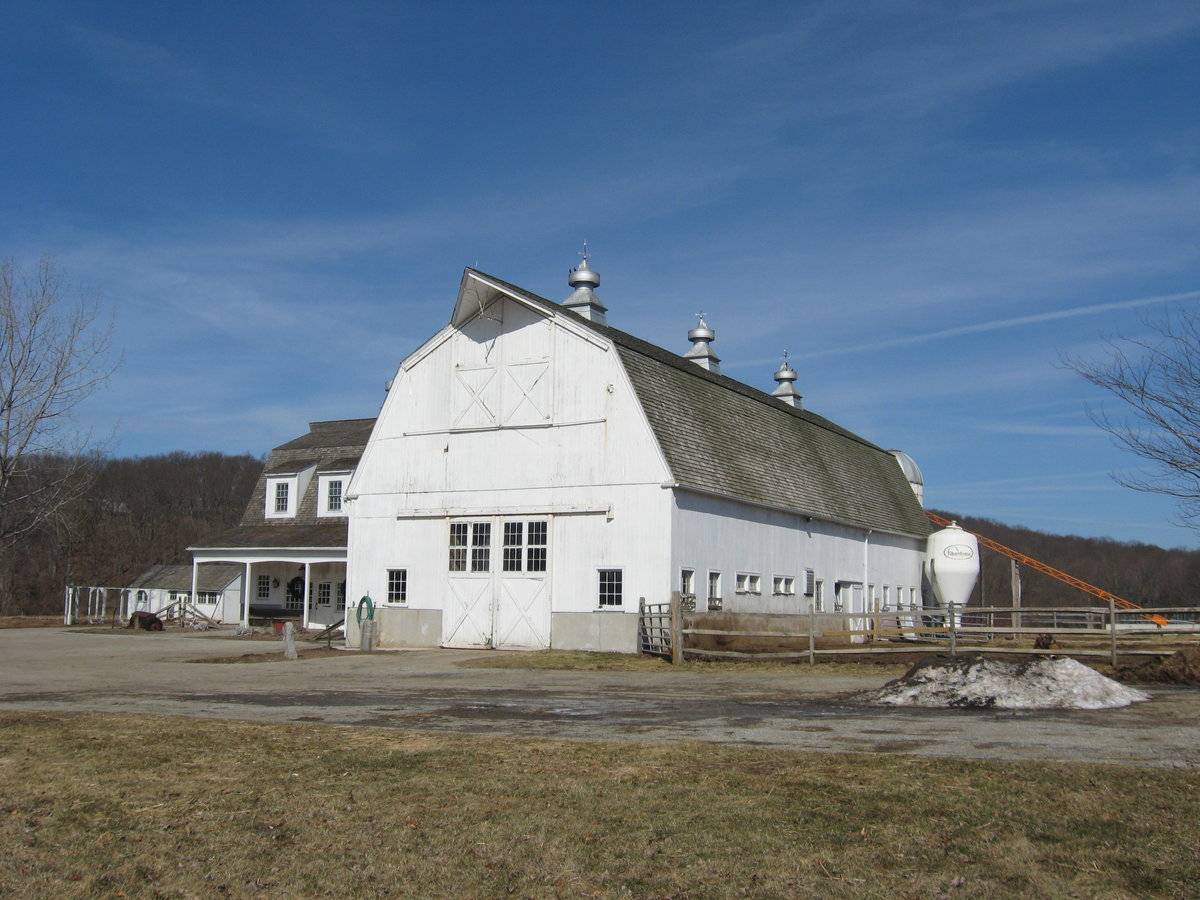
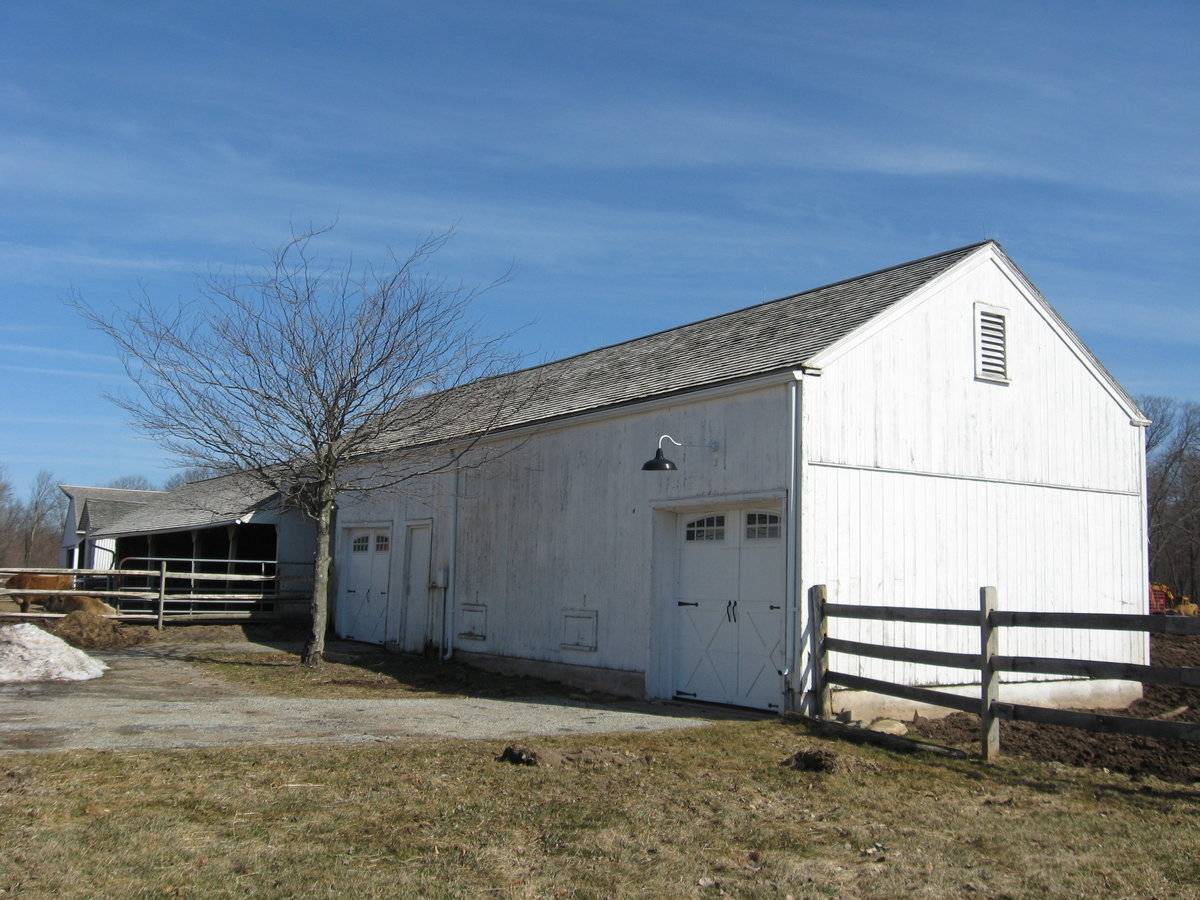
This is a 2 1/2-story ell-shaped, ground-level, stable barn. The main façade faces south with its ridge-line running north-south, perpendicular to the last portion of Dimock Lane. The main entry of the barn is centered on the south gable-façade and consists of a pair of double-height, exterior sliding doors. There are fixed nine-pane windows on either side of the entry above what appears to be a concrete socle. A hood projects over a pair of hinged doors of the hay loft at the gable peak.
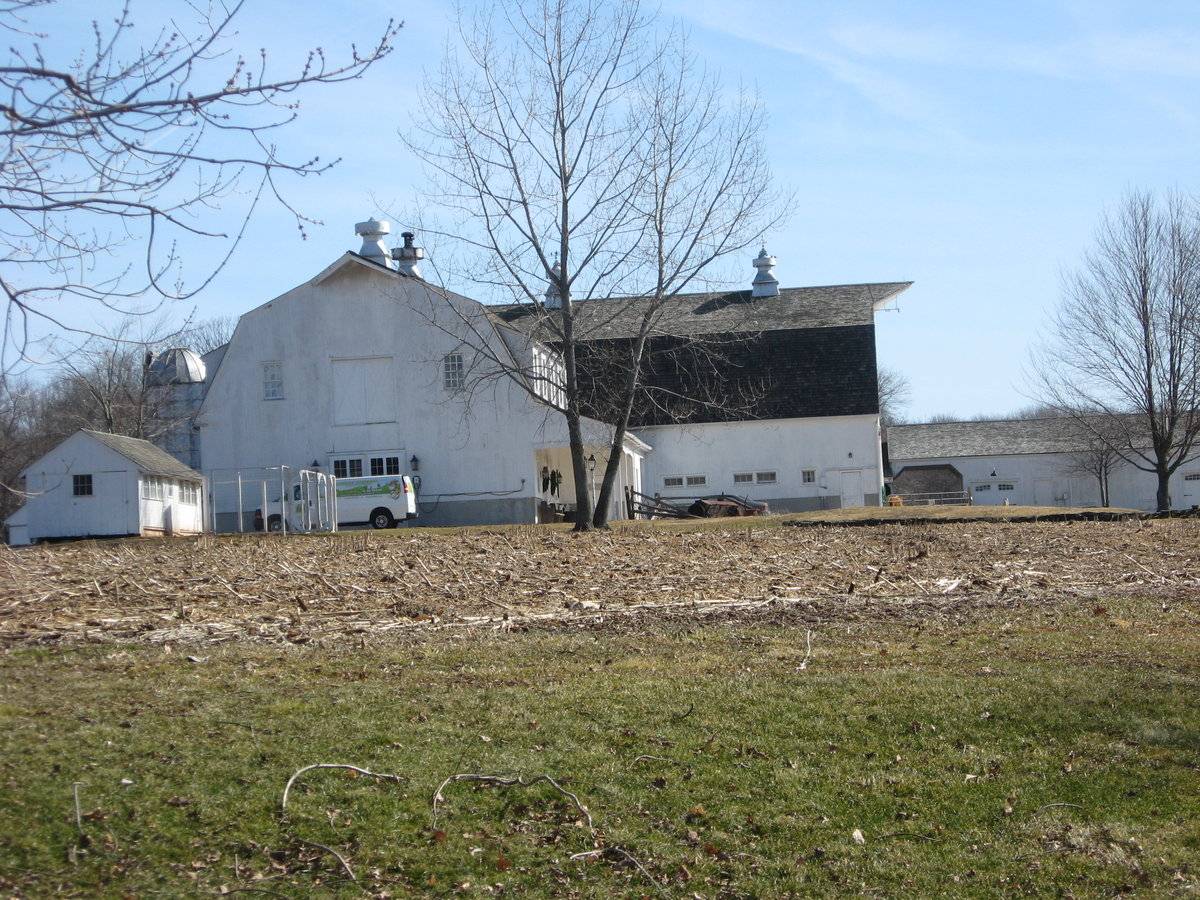
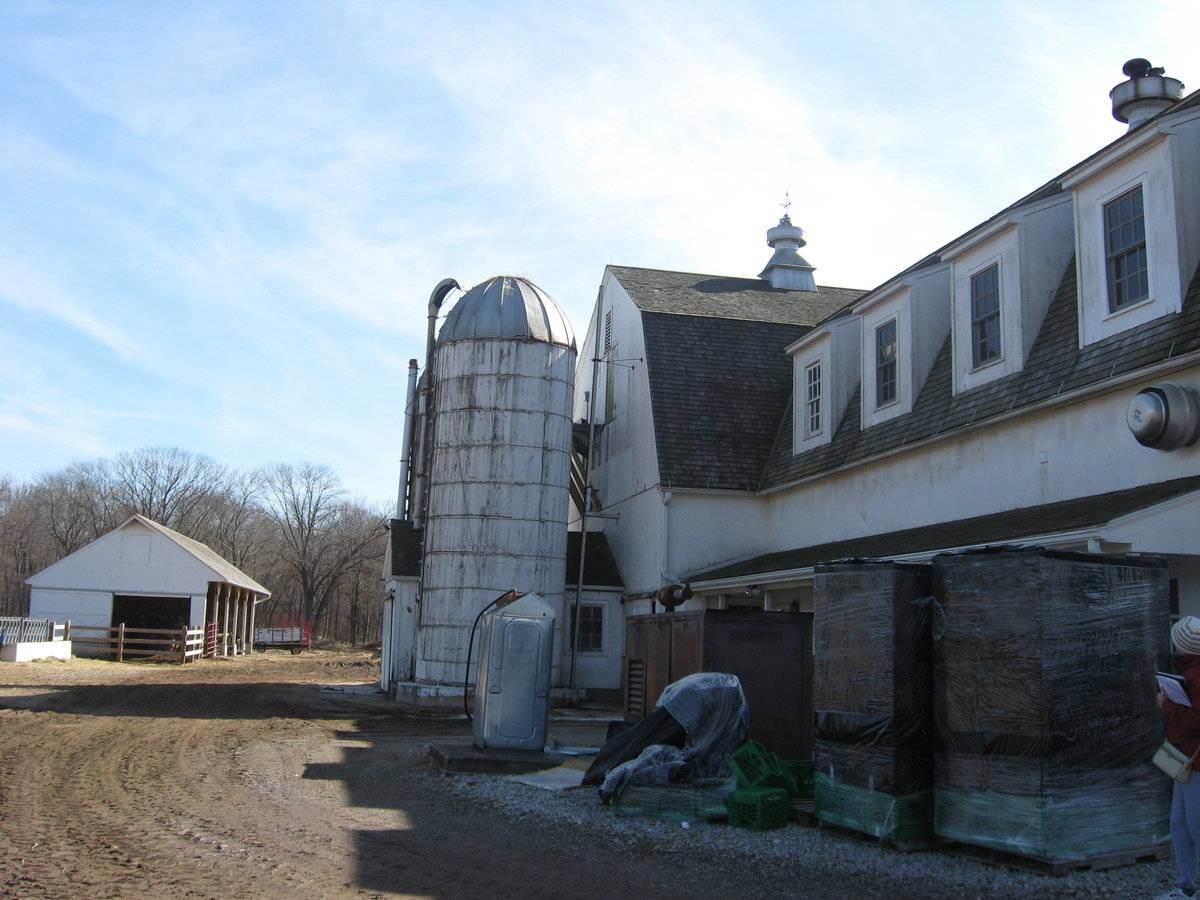
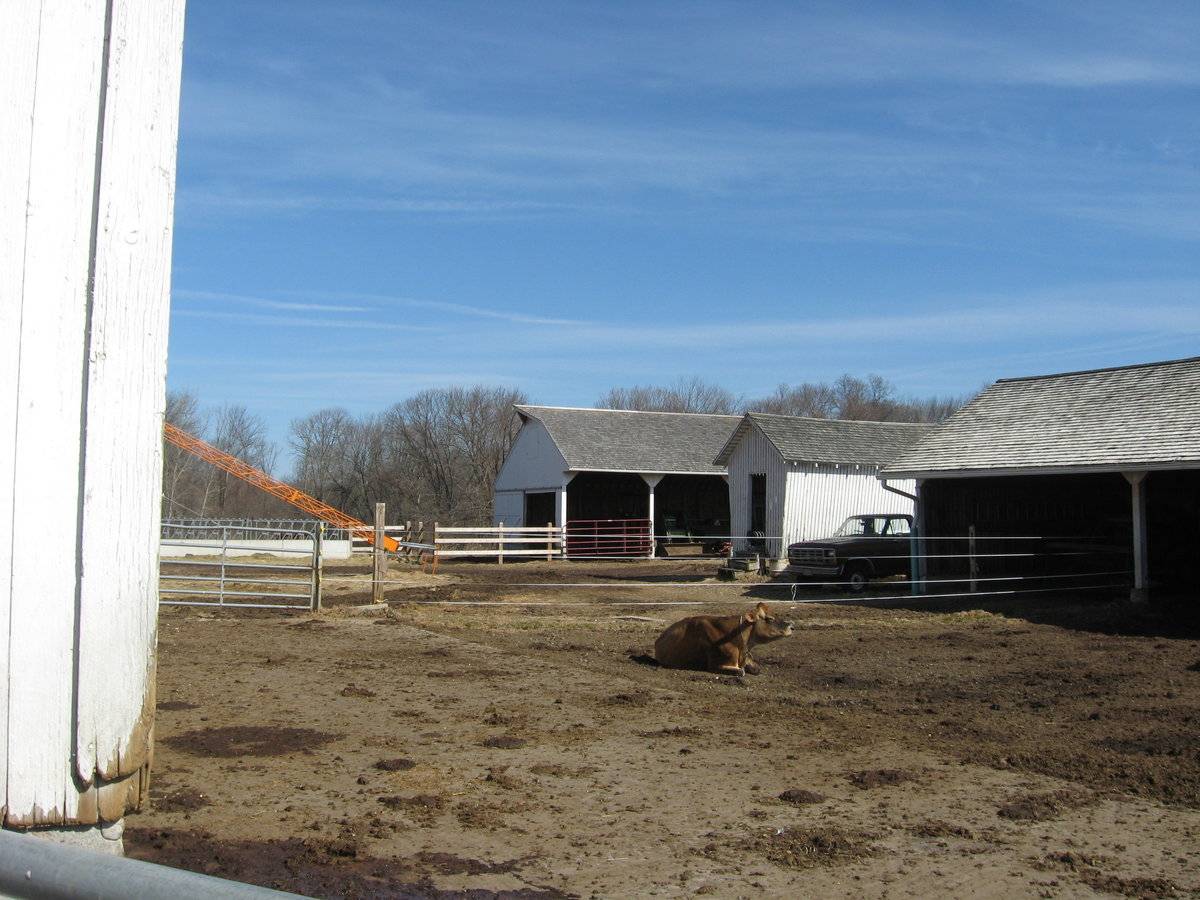
The long, east eave-side of the barn faces a corral enclosed to the east by a series of buildings. It has a row of windows with a uniform lintel height in the lower story. These are rectangular in shape and extend to the level of the socle with the exception of two pairs of small square windows in what is roughly the second bay from the south. The entry for livestock is located just north of the center of the east eave-side. There is a silo on either side of a single-story gable-roof addition on the north gable-side of the barn. There appear to be pass-through doors on the far ends of the lower story and a large square window in the gable attic of the north gable-side of the barn.
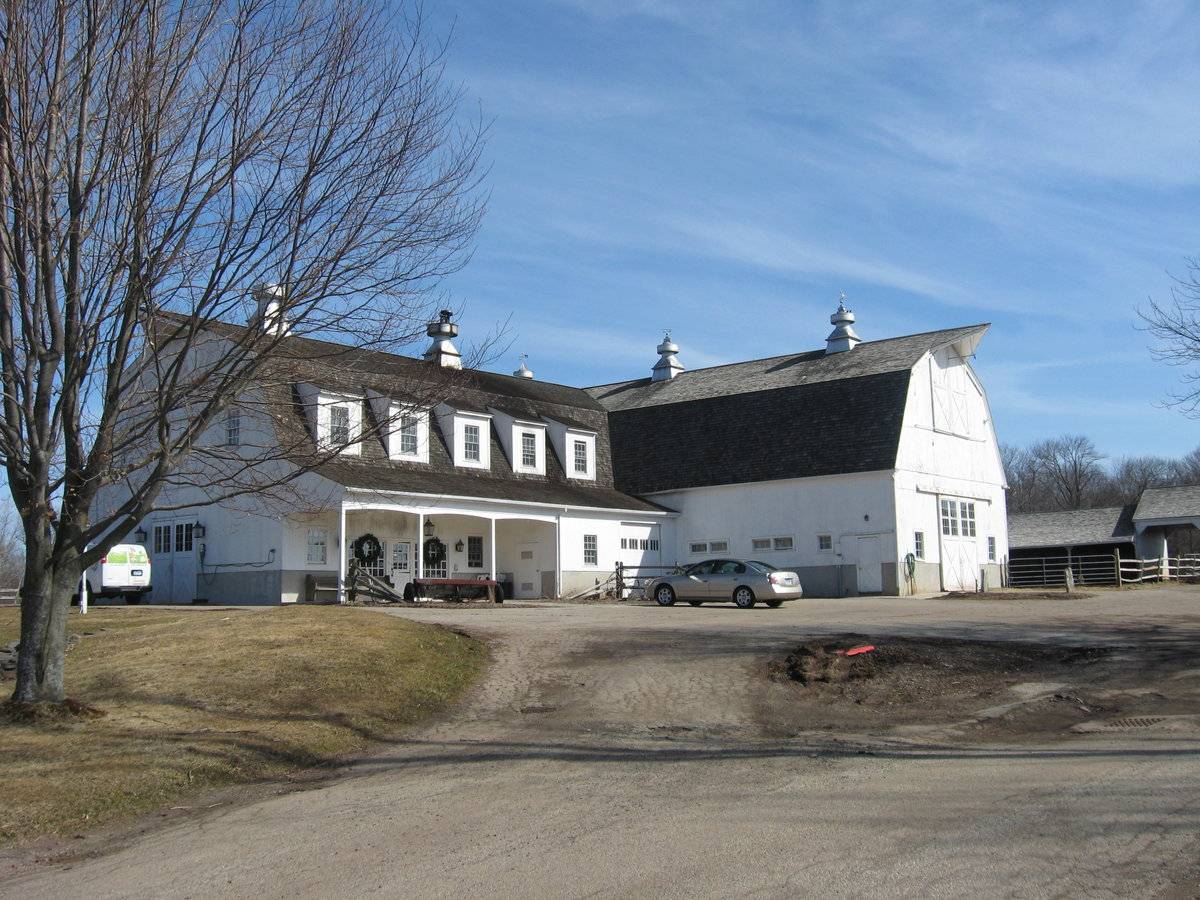
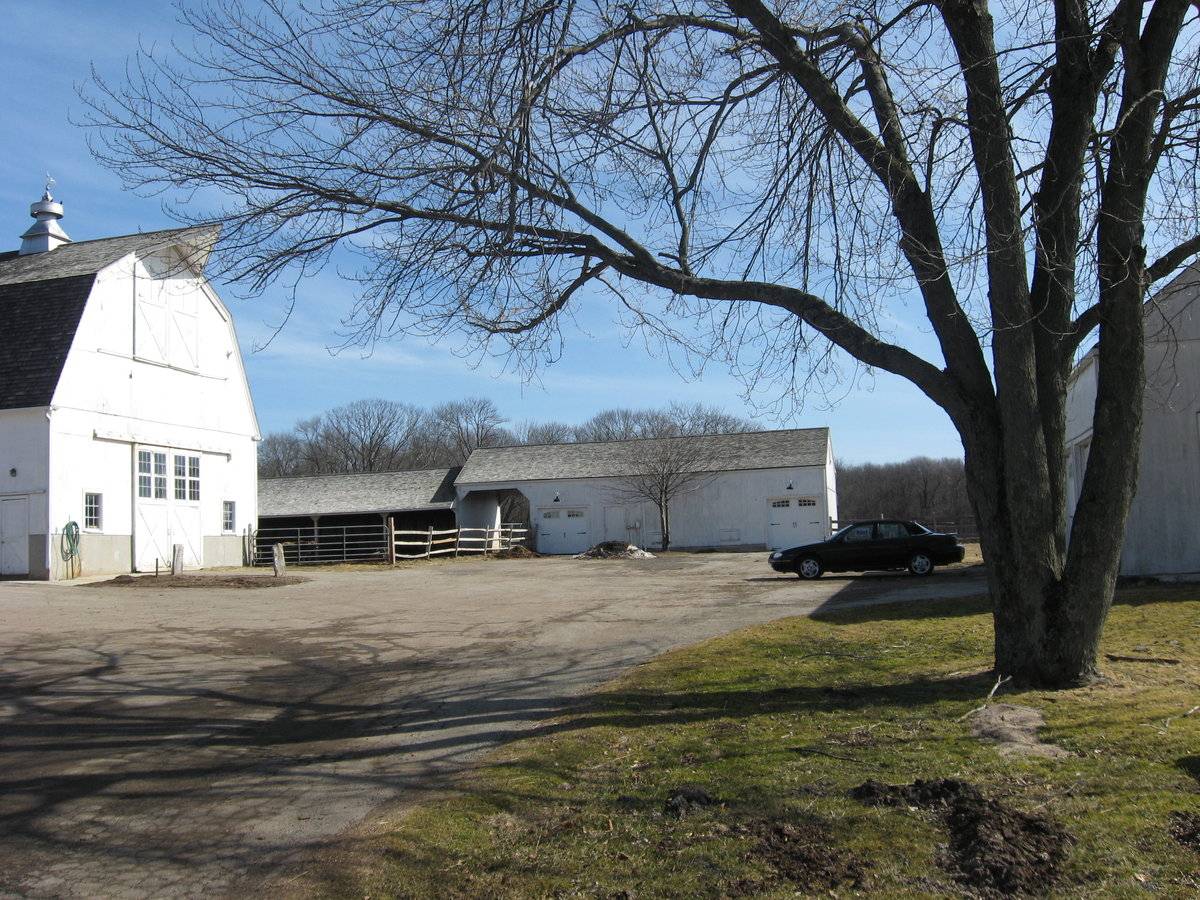
The gambrel-roof ell intersects with the north half of the west eave-side of the barn and has been converted into a creamery and dairy store. It has a row of five dormer windows and a porch on both the north and south eave-sides. The west gable-façade of the ell has a pair of hinged doors in the center of the lower story and another pair of doors directly above them in the upper story. Six-over-six double-hung windows are found on either side of the upper-story door. The upper gable attic is blank, but a projecting hood extends over the façade of the west gable-side of the ell. The entrance to the store is found in the middle bay of the three-bay porch on the south eave-side. It is flanked by large multi-pane windows immediately next to the door and six-over-six double hung sash windows in the adjacent bays. The two east bays of the porch are enclosed; one is used as a garage and the other has a six-over-six double-hung sash in its south wall and a door in its west wall. The remaining portion of the west eave-side of the barn has two pairs of fixed, horizontally-oriented, oblong windows to the north and a pass-through door and a small, square fixed window to the south.
The barn has three and the ell has two steel ventilators rising through the asphalt shingle roof. The vertical flush-board siding is painted white.
Historical significance:By the early 20th century agricultural engineers developed a new approach to dairy barn design: the ground-level stable barn, to reduce the spread of tuberculosis bacteria by improving ventilation, lighting, and reducing the airborne dust of manure. A concrete slab typically serves as the floor for the cow stables. Many farmers converted manure basements in older barns into ground-level stables with concrete floors. Some older barns were jacked up and set on new first stories to allow sufficient headroom. With the stables occupying the entire first story, the space above serves a a hayloft. By the 1920s most ground-level stable barns were being constructed with lightweight balloon frames using two-by-fours or two-by-sixes for most of the timbers. Novelty or tongue-and-groove beveled siding is common on the walls, although asbestos cement shingles also were a popular sheathing. Some barns have concrete for the first-story walls, either poured in place or built up out of blocks.
The gambrel roof design was universally accepted as it enclosed a much greater volume than a gable roof did, and its shape could be formed with trusses.
Field Notes
Listed on the State Register of Historic Places 10/02/2013. This is a dairy farm with a store attached to the barn. They sell dairy products produced on the farm. There are several barn-like structures near the main building.
- Use & Accessibility
Use (Historic)
Use (Present)
Exterior Visible from Public Road?
Yes
Demolished
n/a
Location Integrity
Unknown
- Environment
Related features
Environment features
Relationship to surroundings
The barn is behind and to the northeast of the house with which it is associated. Dimock Lane is a dead-end street off Bolton Center Road which meanders up a hill and ends in front of the south gable-side of the barn. The ridge-line of the house is roughly perpendicular to the ridge-line of the barn. The house has a 2-story, gable-roof addition to the south to which a single-story addition is attached to the east. The house and yard, including a large L-shaped in-ground pool, a gazebo and a small outbuilding, are enclosed by a fence on the south and east sides and a row of trees on the west side. A shed used as a five-car garage faces the south gable-side of the barn across Dimock Lane. Two sheds are arranged in a line gable-to-gable opposite the east eave-side of the barn. The south shed has two sets of hinged doors and a covered passageway in the northernmost bay. The north shed has open bays on the west eave-side and is used as a shelter for cattle. Two small gable-roof sheds oriented with their ridge-lines perpendicular to the former sheds are found at the north gable-side of the north shed with a farm road running between them. The smaller of the two appears to be a corn crib and the larger one appears to be an equipment shed with open bays on the south eave-side. There is a henhouse to the east of the sheds across a pasture. The site of the barn and house is roughly in the middle of the 98.97-acre property so that pastures surround them on all sides. There are woodlands around the eastern perimeter of the property. A new house is under construction on the northwest side of the barn. A gambrel-roof building with a single-story gable-roof addition in front of its south gable façade faces Dimock Lane at the entrance to the property. The area surrounding the site is residential, light agriculture, light open space and woodland.
- Typology & Materials
-
Building Typology
Materials
Structural System
Roof materials
Roof type
Approximate Dimensions
n/a
- Source
-
Date Compiled
11/12/2010
Compiled By
Amy Prescher & Todd Levine, reviewed by CT Trust
Sources
Photographs and field notes by Carol and Alan Lyons.
The Capitol Region Council of Governments website. http://www.crcog.org/gissearch/
Map of Bolton, CT, retrieved on November 11, 2010 from website www.bing.com.
eQuality Valuation Services, LLC Database. http://www.equalitycama.com/tvweb/MainSearch.aspx?city=Bolton
Sexton, James, PhD; Survey Narrative of the Connecticut Barn, Connecticut Trust for Historic Preservation, Hamden, CT, 2005, http://www.connecticutbarns.org/history.
Visser, Thomas D.,Field Guide to New England Barns and Farm Buildings, University Press of New England, 1997.
- PhotosClick on image to view full file
-