Barn Record Hebron
RETURN TO ‘FIND BARNS’- Building Name (Common)
- Foote Hills Farm, Inc.
- Building Name (Historic)
- Foote Hills Farm
- Address
- 1126 Gilead Street (Rte 94), Hebron
- Typology
- Overview
-
Designations
n/a
Historic Significance
Architectural description:
Barn I:
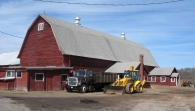
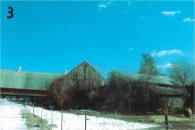
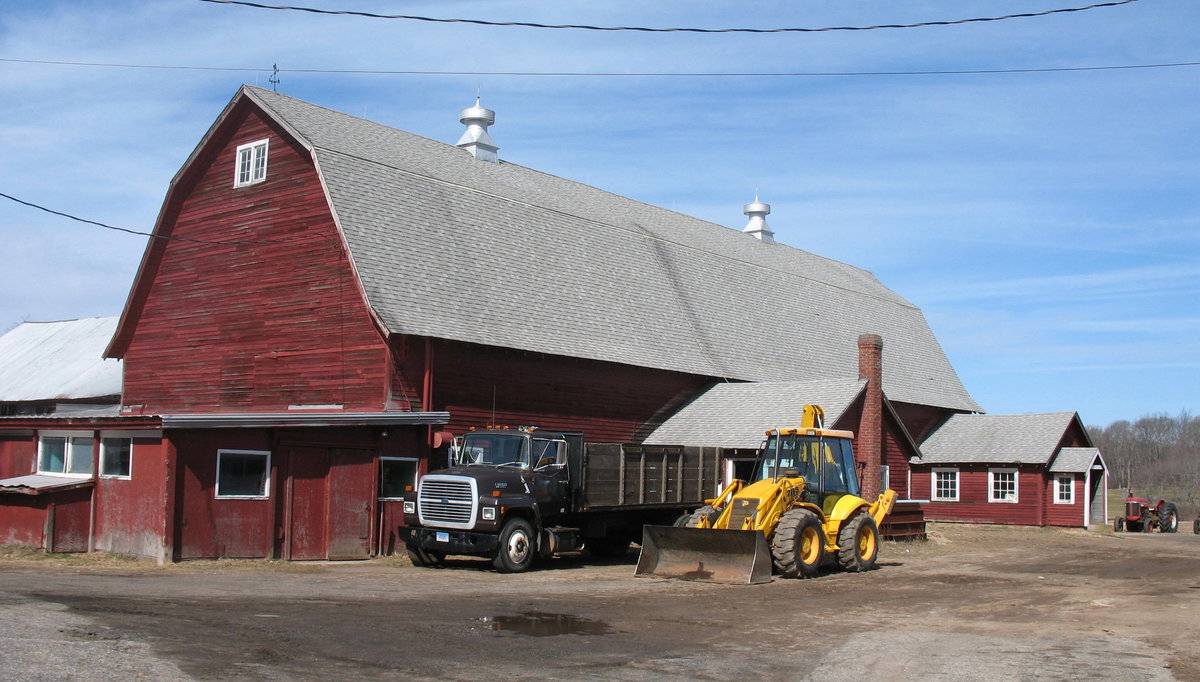
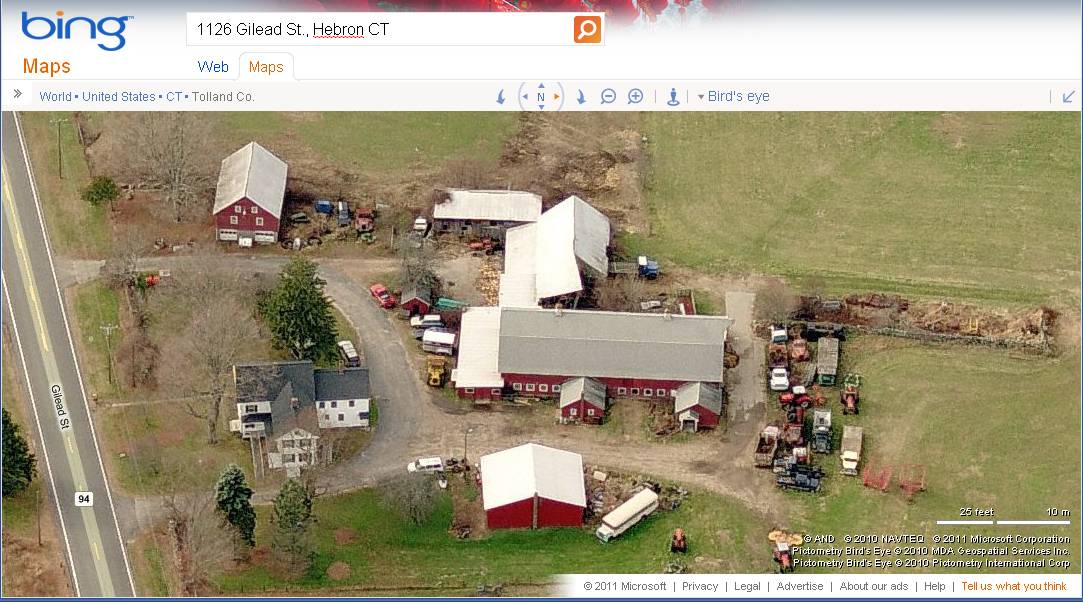
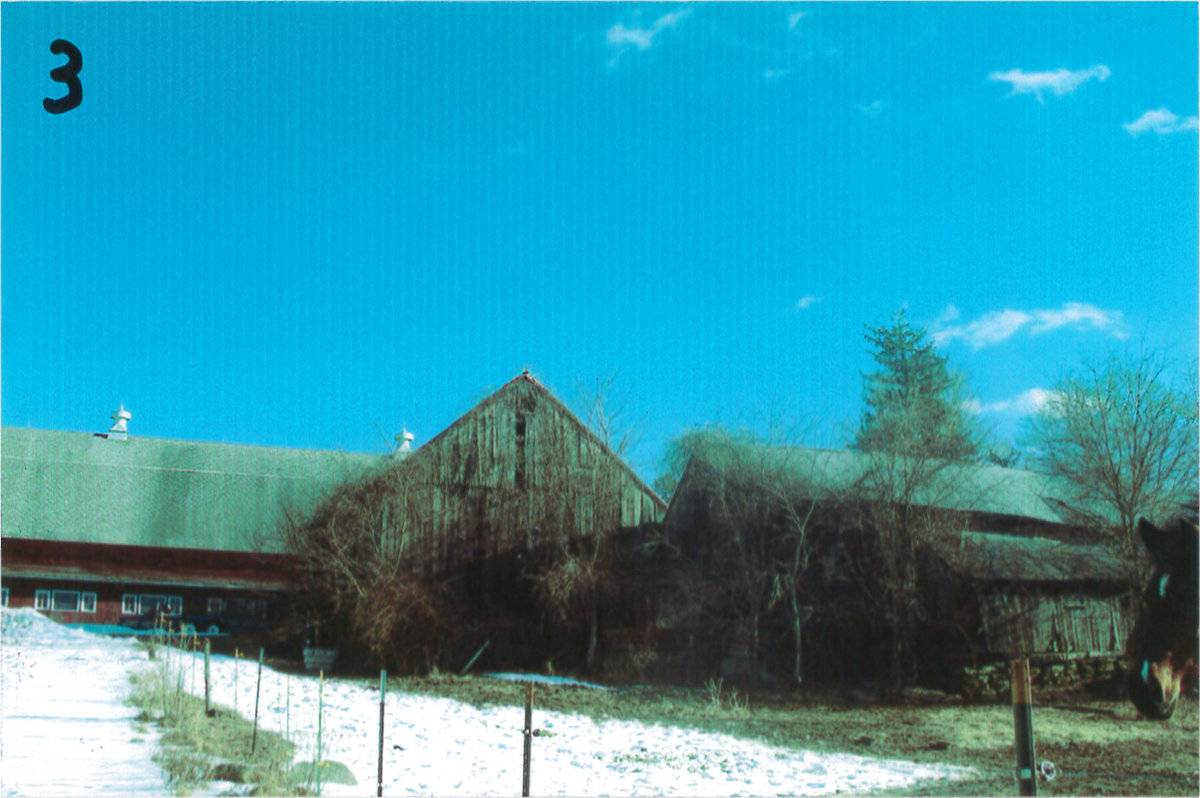
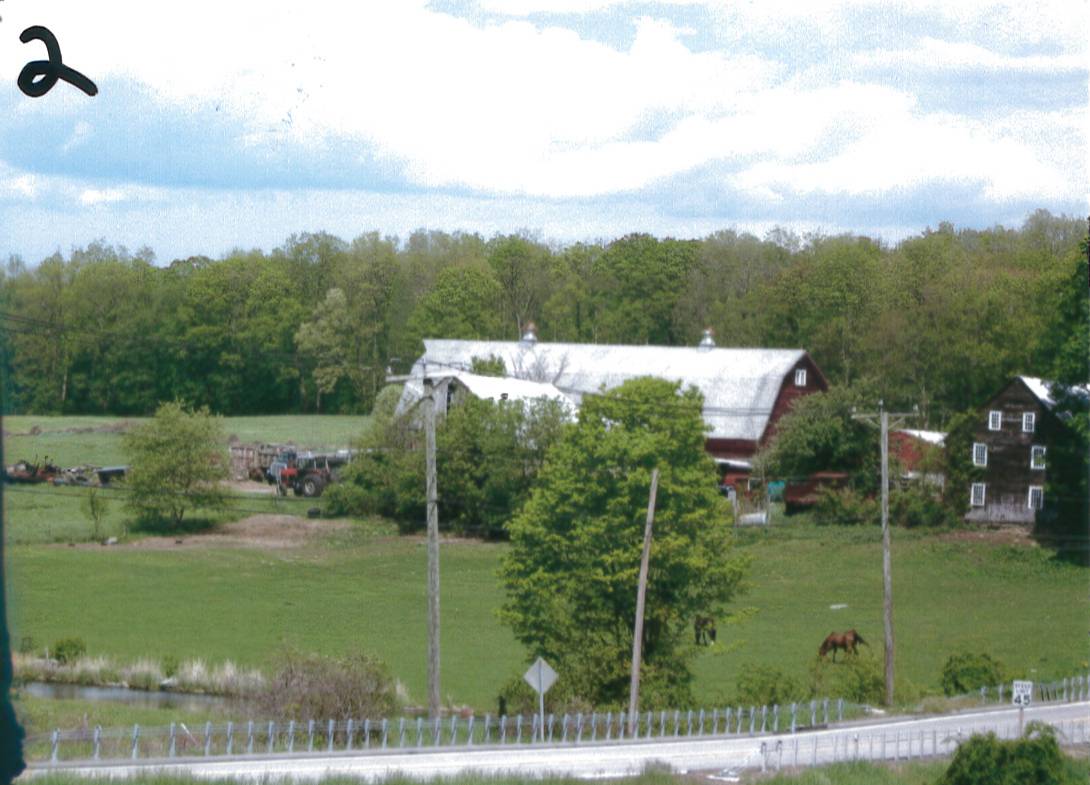
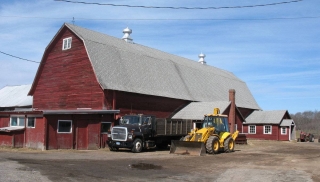
This is a large 2 ½-story Dutch gambrel-roofed structure with its ridge-line oriented north-south perpendicular to the road. The main block has a high one-story wall exposed on the east side. Two one-story gable-roofed additions, in the typical form of milk rooms, project perpendicular to the main east side wall, each with the roof ridge meeting the main block just below the spring-line of the gambrel roof. The more southerly addition is located at the middle of the main block and has a chimney in its east gable-end wall and a pass-through door in its south eave-side. The more northerly addition is located at the right (north ) corner and has an entry door with a roofed porch in its east gable-end , two nine-pane windows in the south eave-side, and a sliding door in the north eave-side adjacent to the main block. The north eave side of the addition is flush with the north wall of the main block. The east wall of the main barn has a group of four stable windows at the left (south) end and another group of four between the additions.
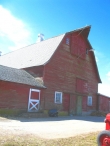
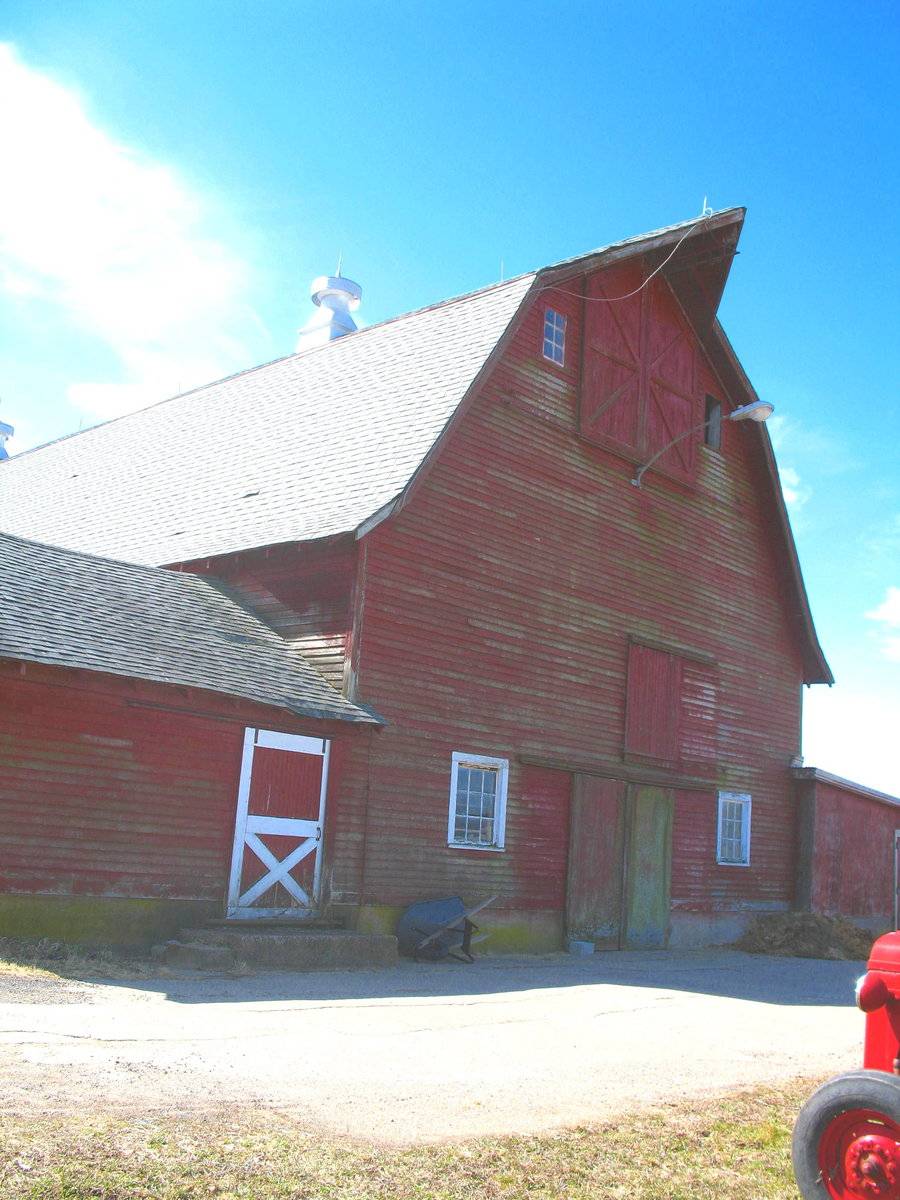
The north gable-end has a pair of exterior sliding doors at grade, flanked by a nine-pane window on each side. Above there is a small sliding hay door at a loft level below the spring-line of the roof. High in the attic loft there is a pair of trapezoidal hay doors extending up to the underside of the roof rake overhang. These appear to open by sliding down- and out-ward. A small six-pane window is located on each side flanking the doors. There is a projecting hay hood above the hay doors.
The west eave-side has a low-pitched shed-roofed addition the length of the main block, with a row of five stable windows. Near the southwest corner of the main block, a perpendicular shed-roofed addition connects to the apparently older Barn II.
The south gable-end of Barn I has a pair of six-pane windows in the upper loft attic just below the peak. At grade a low-pitched shed-roofed addition is attached across the south side. This has three groups of three one-pane stable windows in the south eave-side and a sliding door flanked by stable windows in the east end.
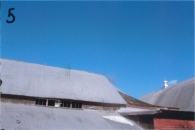
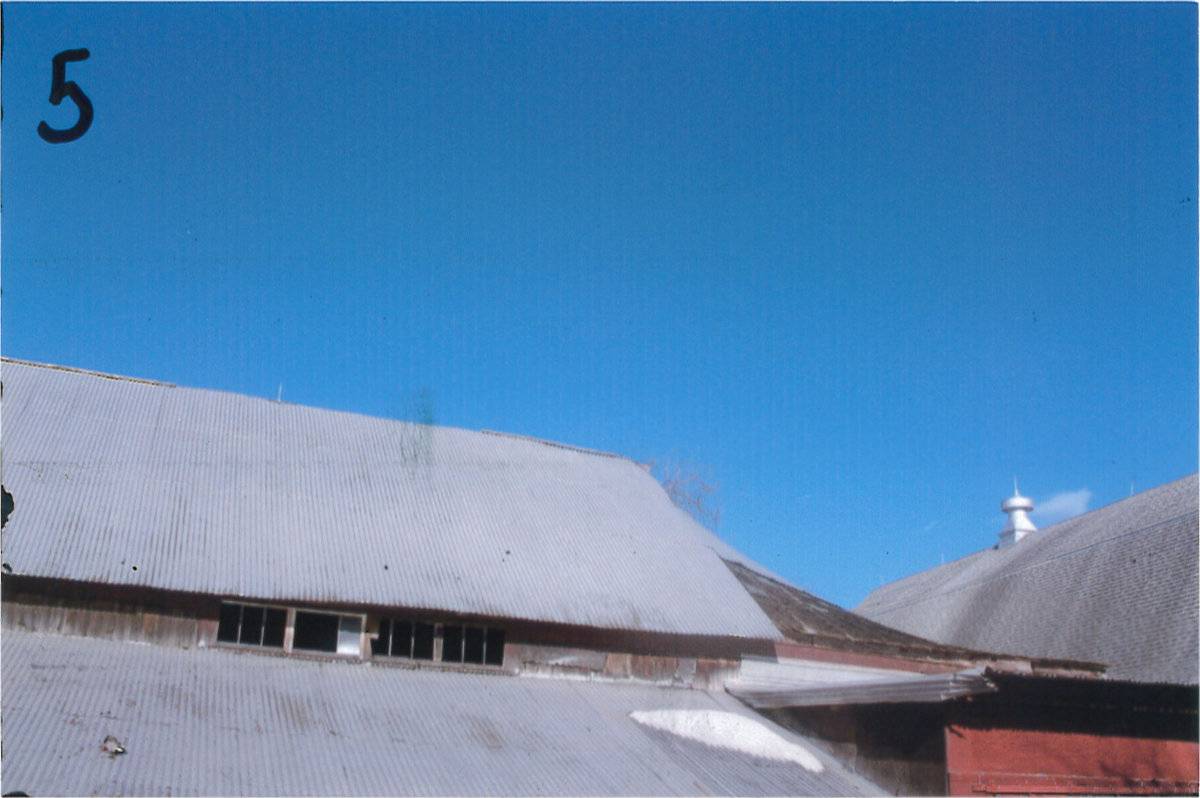
Siding on the main block and east side additions is horizontal clapboards stained or painted red with white trim. The remaining additions appear to have plywood siding. The roof of the main gambrel block and the east side additions is asphalt shingles. The main roof has two metal ventilators located approximately one-fourth of the distance in from the gable-ends. The remaining additions have metal roofing. Some concrete foundations are visible in the gable-roofed additions.
Barn II-III:
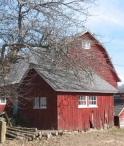
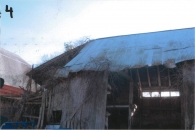
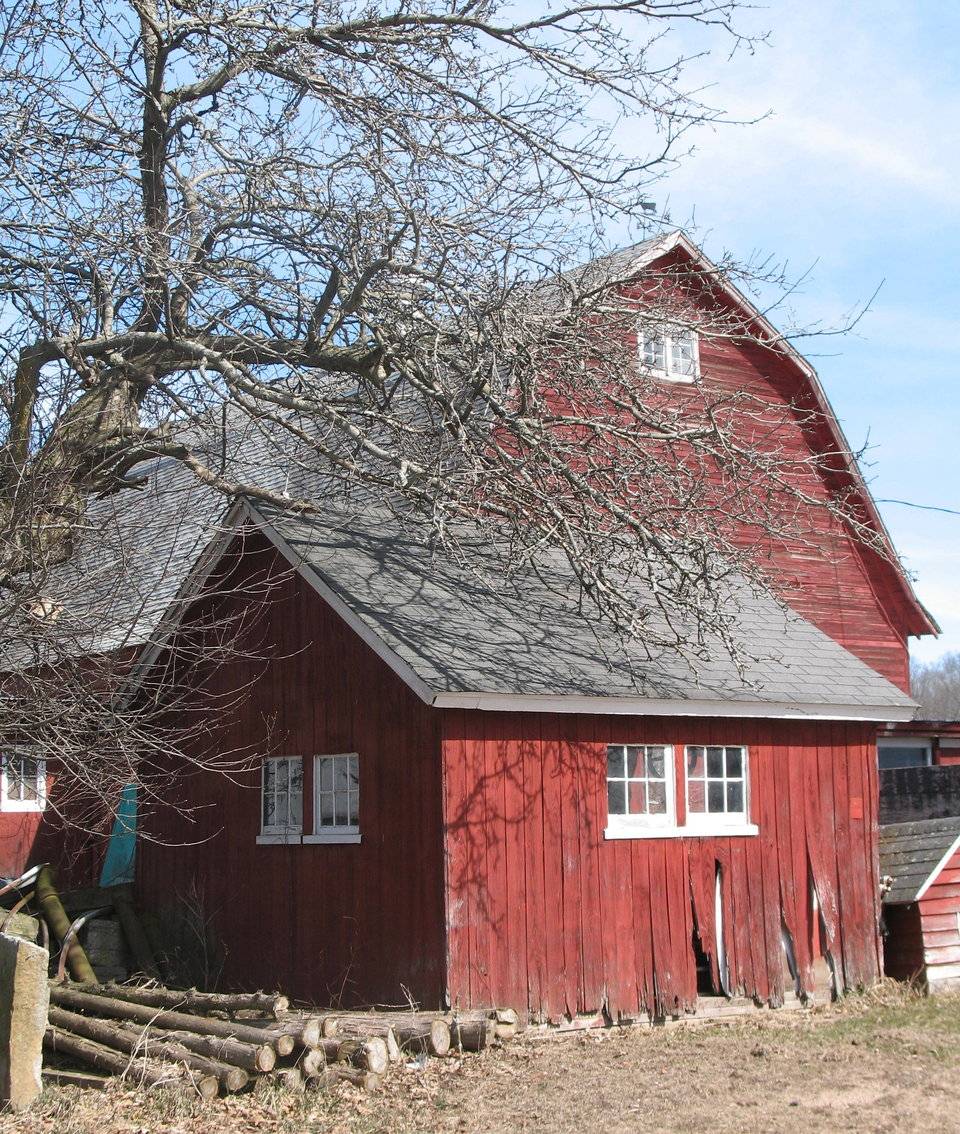
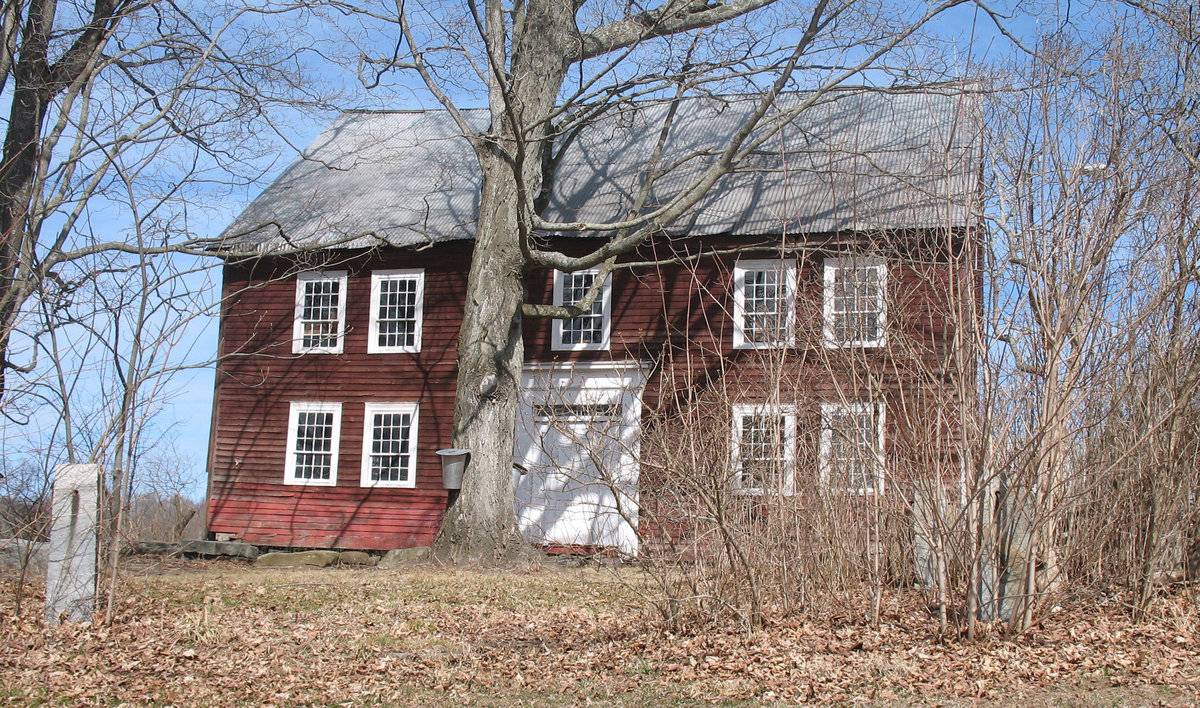
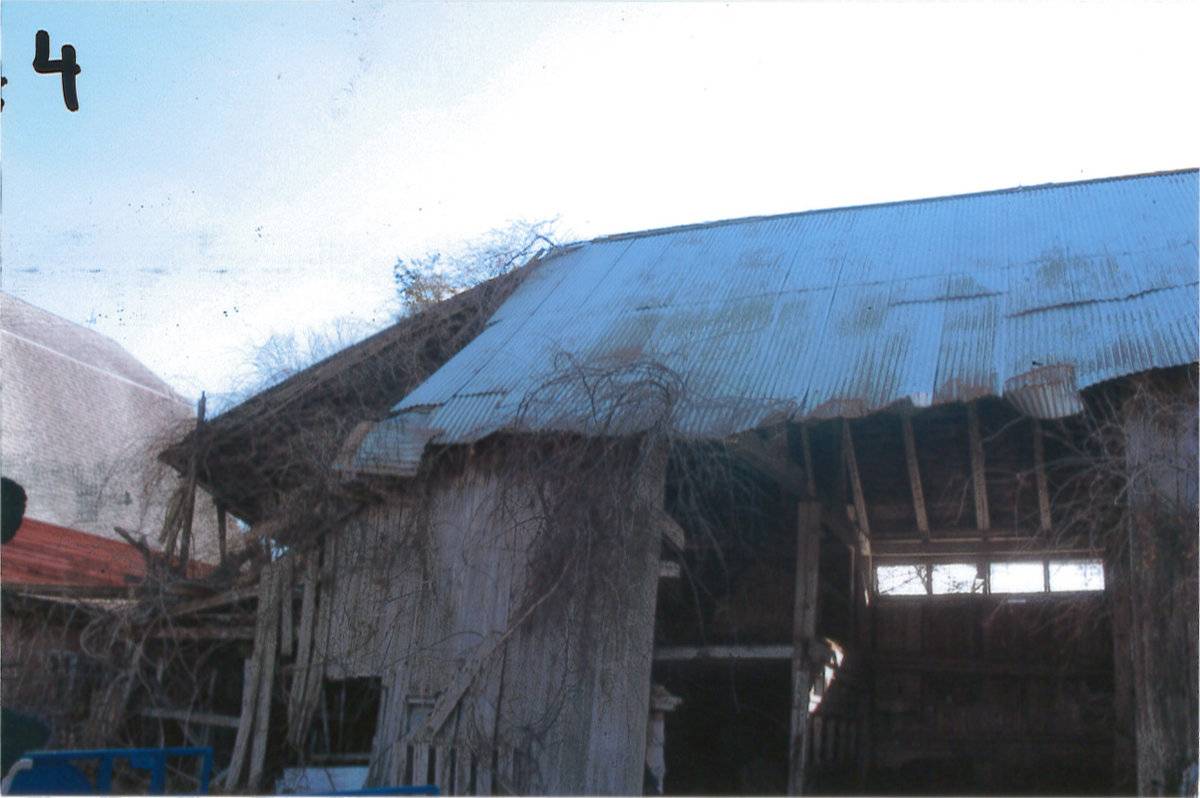
Connected at its west side to Barn I by an irregular shed-roofed link is a pair of gable-roofed structures. Barn II is oriented with its ridgeline east-west, perpendicular to Barn I; Barn III is oriented with its ridgeline north-south and its northeast eave-side corner abuts the west gable end of Barn II. Both appear to be 1 ½-story gable-roofed post-and-beam structures. Barn II has a one-story shed addition along its south eave-side, with a row of eight four-pane stable windows in the south wall. The north eave-side appears to have a barn door opening in the center of three bays. Barn III has a shed addition along the right (south) half of the west eave-side. The south gable-end appears to have a barn door opening. The east eave-side appears to have several door and window openings. Siding is unpainted vertical boards and roofing is corrugated metal panels.
Barn IV:
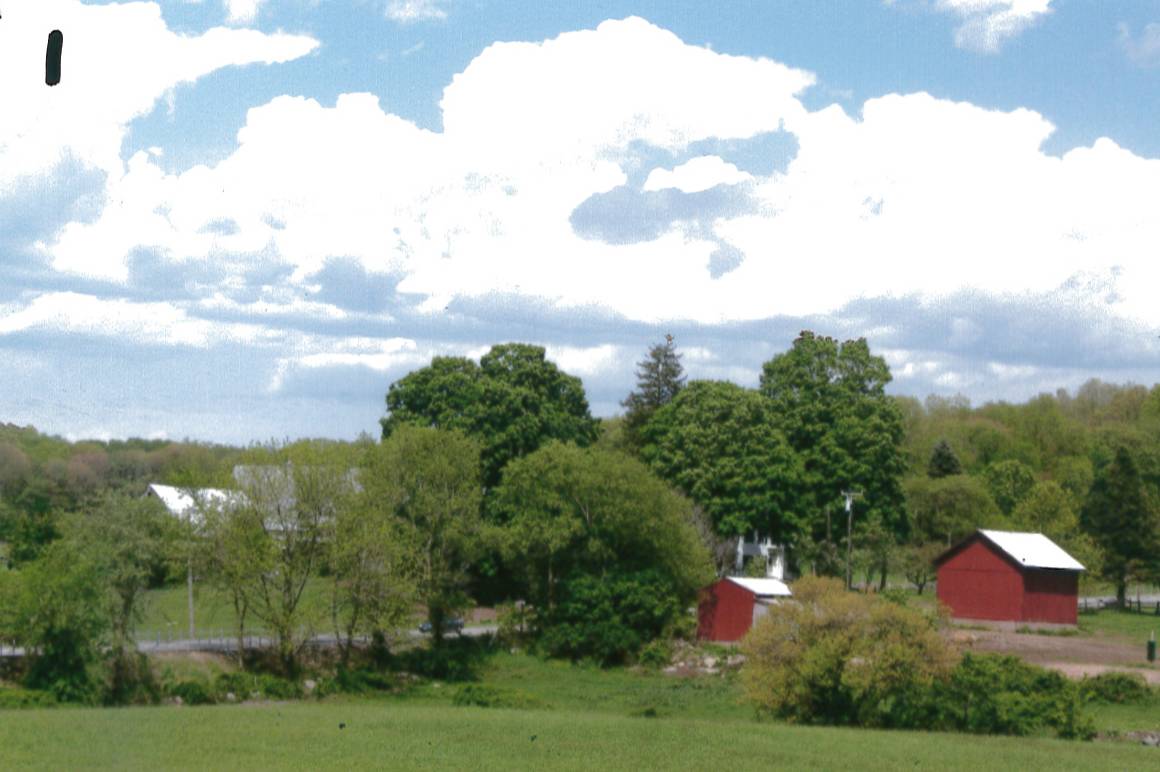
Located southwest of Barn I, this is a small one-story gable-roofed shed with a pair of six-pane stable-type windows on the west gable-end and south eave-side. The siding is vertical boards painted red with white window trim and the roofing is asphalt shingles.
Barn V:
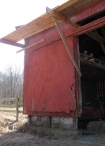
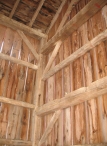
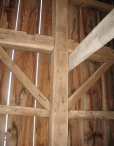
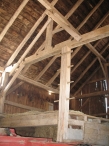
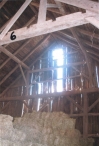
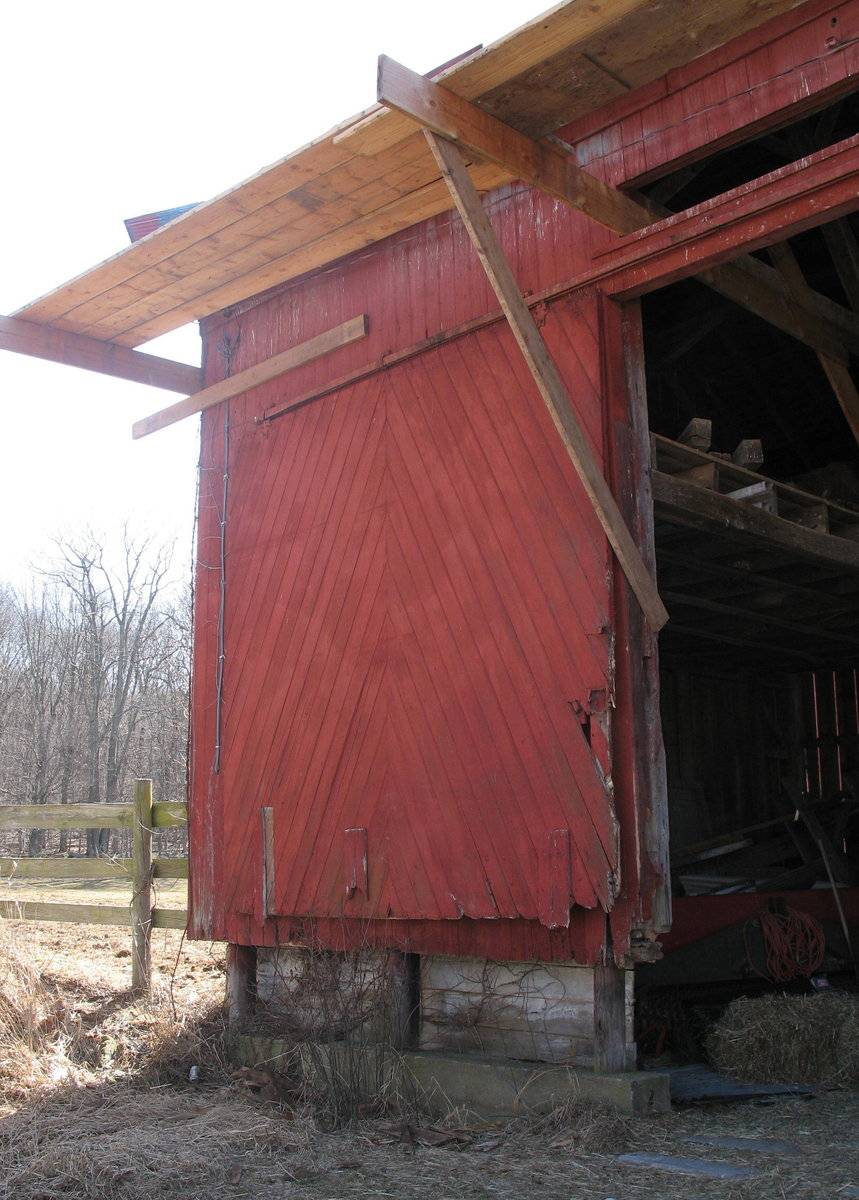
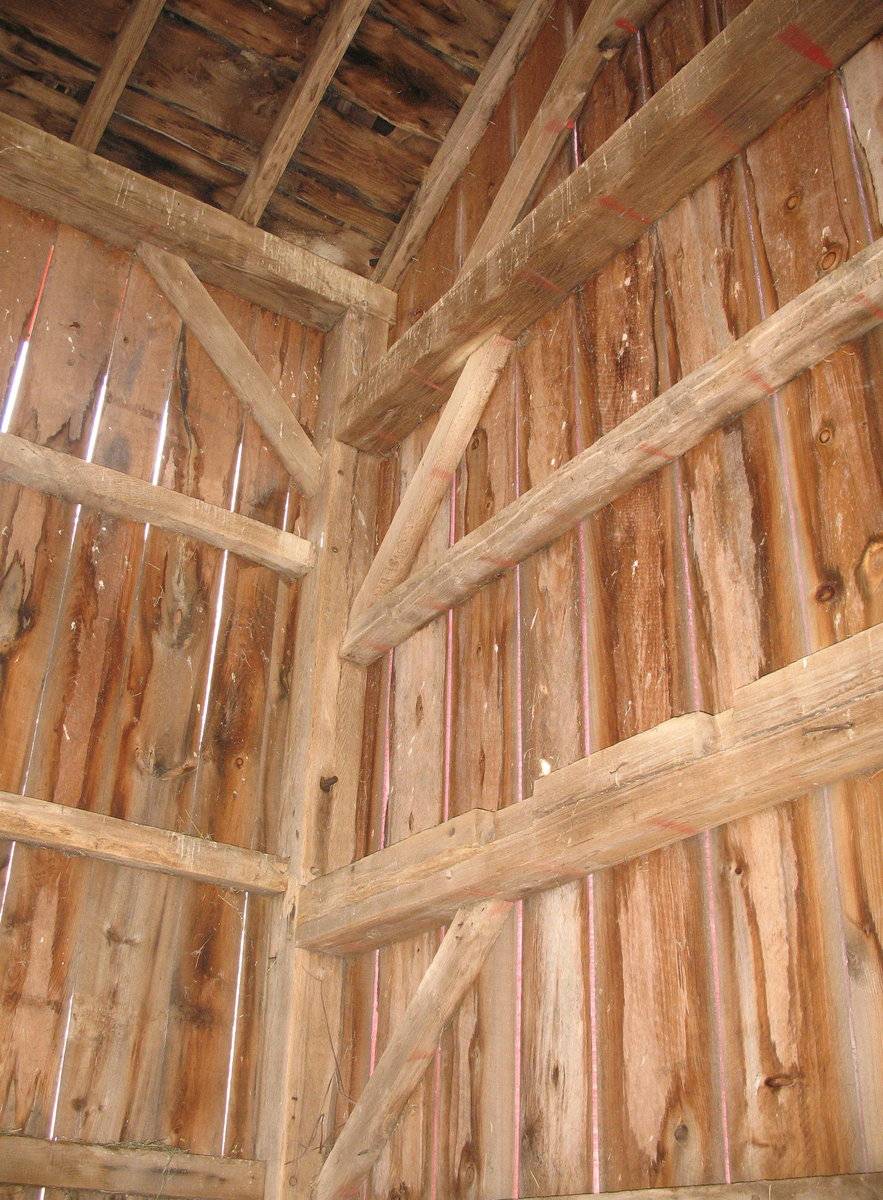
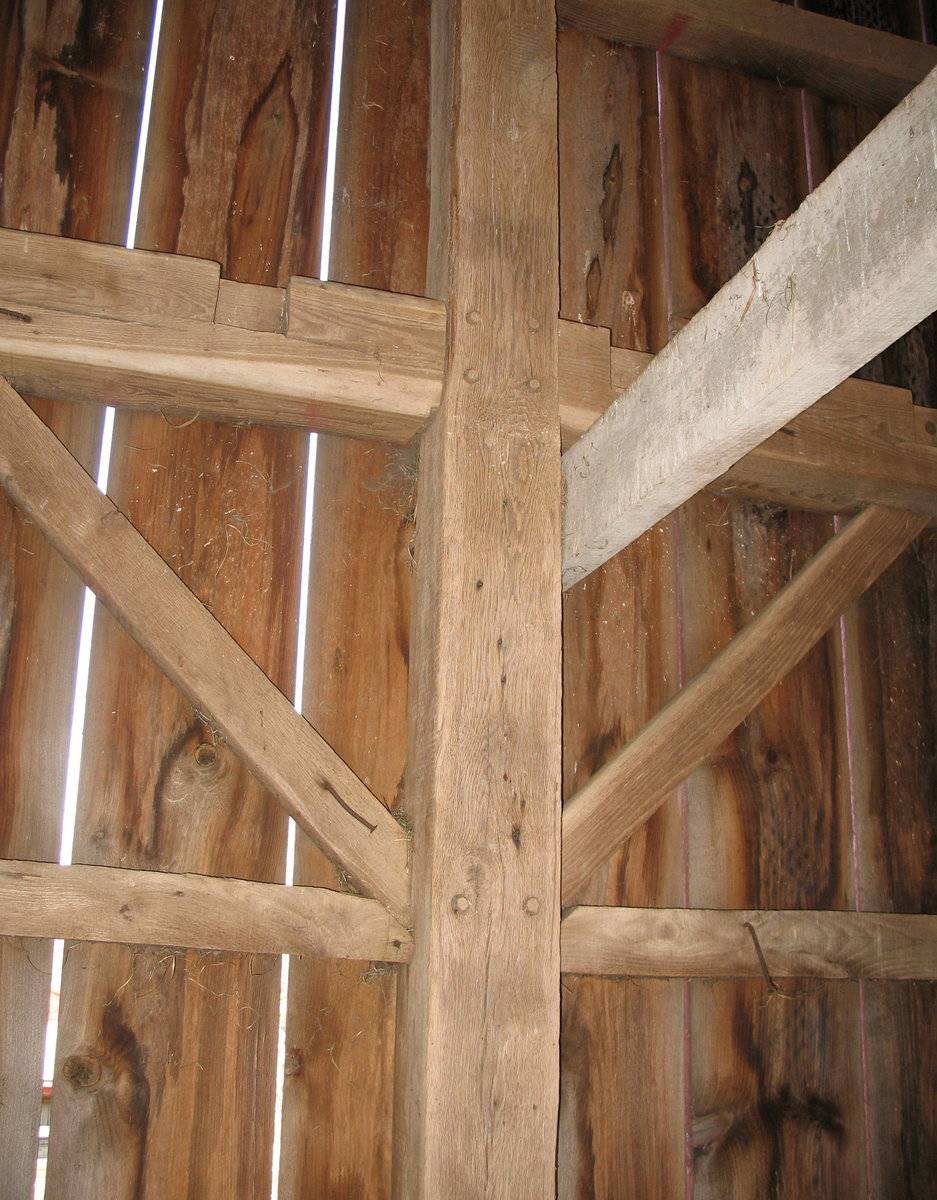
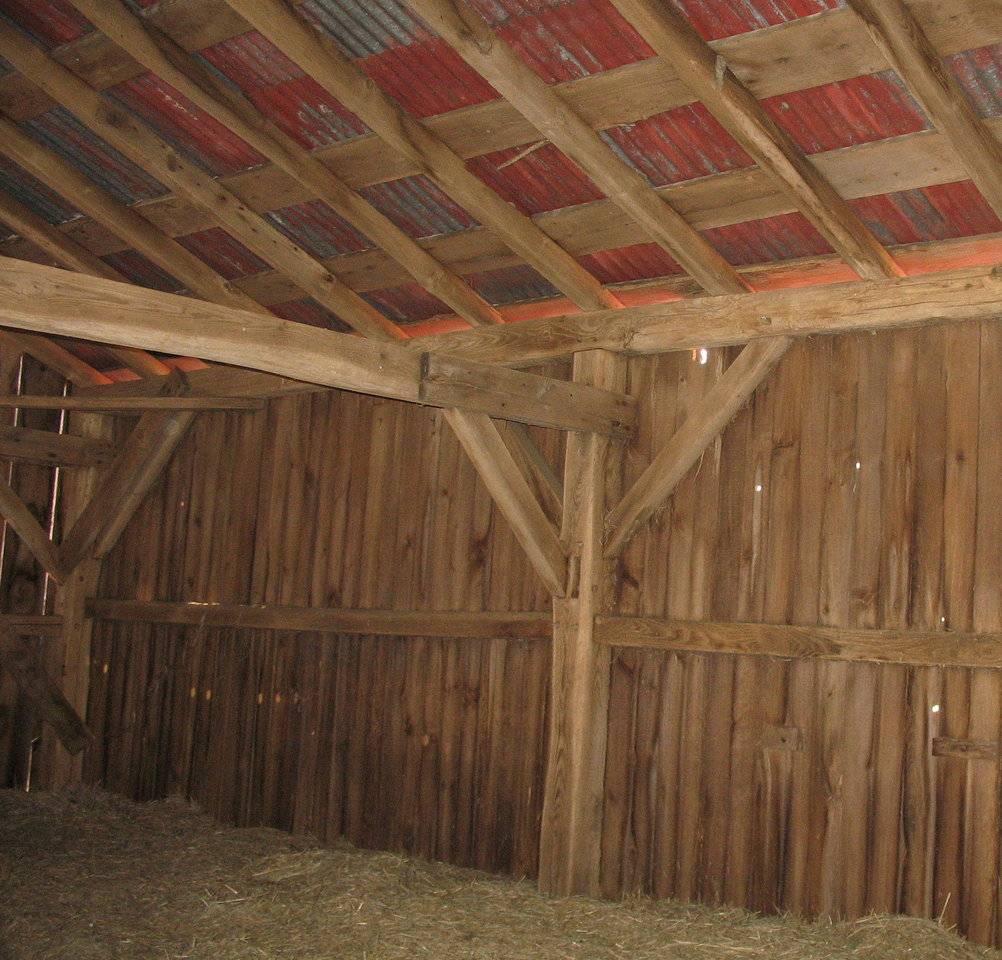
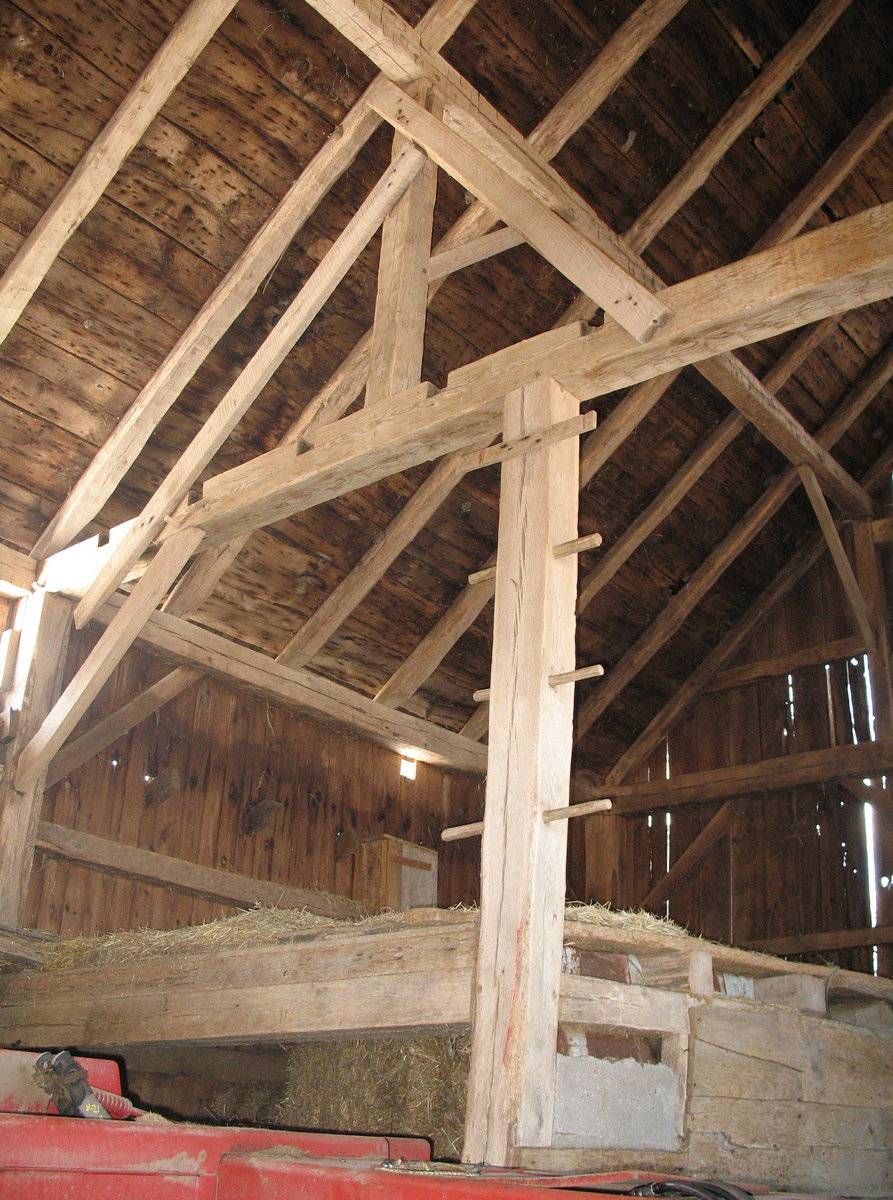
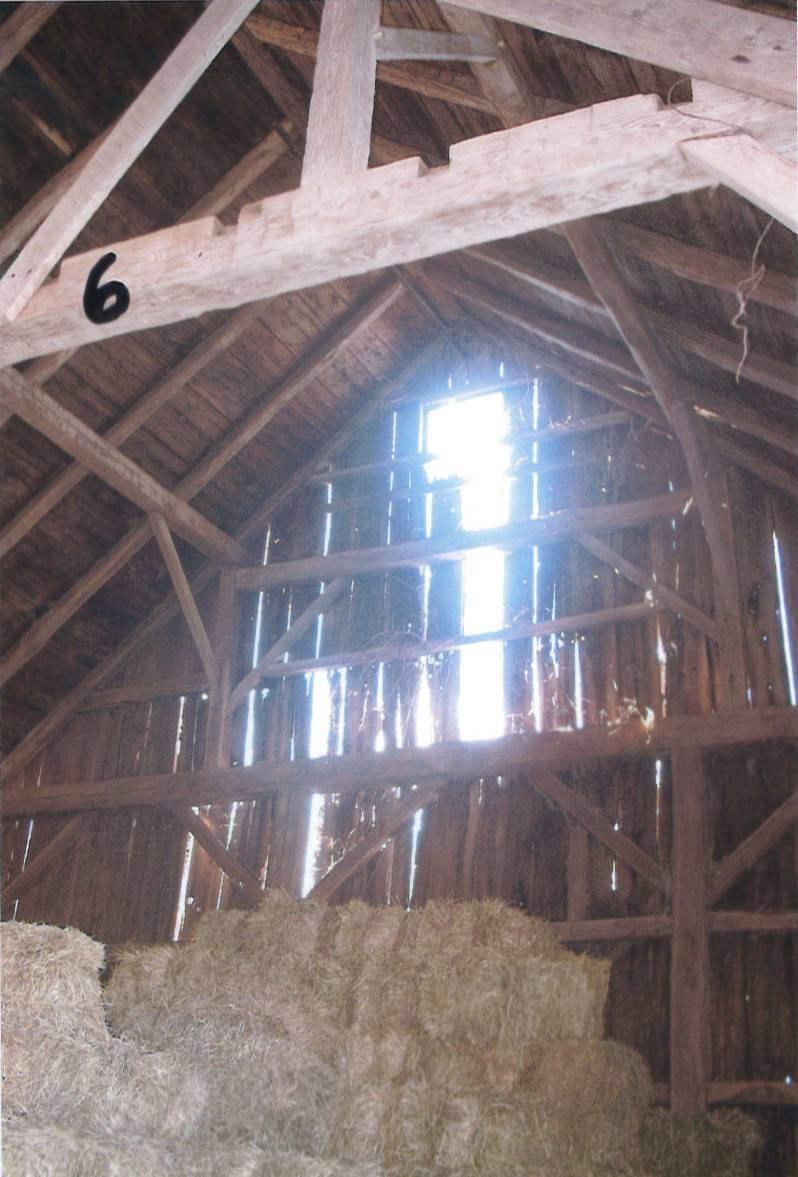
Located south of the road, this is a 1 ½-story three-bay gable-roofed structure. The main entry façade is the north eave-side, which has an exterior sliding barn door on the center bay, with an opening for a transom above the doorway. Interior photographs indicate square rule framing and one of the barns exhibits a dropped girt layout at the gable-end. Siding is vertical boards painted red. The foundation is concrete, and the roofing is corrugated metal panels.
Historical significance:
Barn I:
The New England barn or gable front barn is the successor to the English barn and relies on a gable entry rather than an entry under the eaves. The gable front offers many practical advantages. Roofs drain off the side, rather than flooding the dooryard. With the main drive floor running parallel to the ridge, the size of the barn could be increased to accommodate larger herds by adding additional bays to the rear gable end. Although it was seen by many as an improvement over the earlier side entry English Barn, the New England barn did not replace its predecessor but rather coexisted with it as both types continued to be constructed.
The gambrel roof enclosed a much greater volume than a gable roof did, and its shape could be formed with trusses that did not require cross beams, which would interfere with the movement and storage of hay. Also known as the curb roof, the double slopes of the gambrel offer more volume in the hayloft without increasing the height of the side walls.By the early 20th century agricultural engineers developed a new approach to dairy barn design: the ground-level stable barn, to reduce the spread of tuberculosis bacteria by improving ventilation, lighting, and reducing the airborne dust of manure. A concrete slab typically serves as the floor for the cow stables. Many farmers converted manure basements in older barns into ground-level stables with concrete floors. Some older barns were jacked up and set on new first stories to allow sufficient headroom. With the stables occupying the entire first story, the space above serves a a hayloft. By the 1920s most ground-level stable barns were being constructed with lightweight balloon frames using two-by-fours or two-by-sixes for most of the timbers. Novelty or tongue-and-groove beveled siding is common on the walls, although asbestos cement shingles also were a popular sheathing. Some barns have concrete for the first-story walls, either poured in place or built up out of blocks.
The gambrel roof design was universally accepted as it enclosed a much greater volume than a gable roof did, and its shape could be formed with trusses. Also see entry for Pole Barn.Before the 1880s, cheese and butter making were usually done on the farm. The milk room or dairy room was often located in an ell between the kitchen and the woodshed. Some farms had separate milk rooms and dairy rooms. In the milk room, the fresh milk was poured into shallow pans placed on shelves or racks. After the cream rose to the surface, it was skimmed off the milk and then churned to make butter. Cooperative creameries were being established throughout New England in the 1880s. Usually located next to the railroad line in villages, these creameries processed the milk of dozens of farmers, who shipped the liquid from the farm to the creamery by wagon in metal cans.
Single-story milk houses are typically attached to [20th-century] ground-level stable barns for preparation of the milk to be sent to the creamery. Designed to comply with state and local ordinances intended to minimize the potential for milk contamination, many are now fitted with large, electrically cooled stainless steel bulk storage tanks.Barn II-V:
The New England barn or gable front barn was the successor to the English barn and relies on a gable entry rather than an entry under the eaves. The gable front offers many practical advantages. Roofs drain off the side, rather than flooding the dooryard. With the main drive floor running parallel to the ridge, the size of the barn could be increased to accommodate larger herds by adding additional bays to the rear gable end. Although it was seen by many as an improvement over the earlier side-entry English Barn, the New England barn did not replace its predecessor but rather coexisted with it, as both types continued to be built.
The New England barn or gable front barn was the successor to the English barn and relies on a gable entry rather than an entry under the eaves. The gable front offers many practical advantages. Roofs drain off the side, rather than flooding the dooryard. Although it was seen by many as an improvement over the earlier side entry English Barn, the New England barn did not replace its predecessor but rather coexisted with it. It this case, both an eave entry and a gable entry are used.
Historical background:
Hebron, incorporated as a town in 1708, grew slowly as families from other areas bought tracts of land and settled. Farms were spread out throughout the town, with only the area around the town common and meetinghouse as a focal
point. There were few houses there in the 18th century, but the crossroads at the center also provided the core for a small commercial nucleus in the form of a tavern and store.After the Revolutionary War Hebron began to grow and many more buildings were constructed, forming a small village at the town center. The main road through the village, present-day Route 66, was improved as the Hebron and Middle Haddam Turnpike, further contributing to the village’s prosperity. Church Street also began to expand and develop. The 19th century saw an increase in religious diversity, and as other denominations formed, they built their meeting places at the town center. In the 20th century, the process was repeated: United Brethren synagogue reflects the settlement of East European Jews in Hebron in the early 20th century. Taking up egg and dairy farming, they gave new life to the town’s farmlands.
Hebron’s growth tapered off in the middle of the 19th century. Several buildings were destroyed by the great fires of 1882 and 1888, but it is a testimony to the continuing importance of the center that most were rebuilt. As part of the reconstruction, the Victorian Gothic Congregational Church at 1 Main Street was dedicated in 1883, and a new parsonage was built nearby a few years later. The district school, 18 Main Street, was also replaced in a more Victorian style. New public buildings continued to be built at the center as need arose: a small Queen Anne-style building was erected for a public library at 22 Main Street, on the south side of the green, in 1898, and in 1909, the town built a small brick structure to house town records and to commemorate Hebron’s 200th anniversary (Clouette, Section 8).
Field Notes
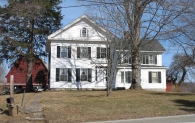
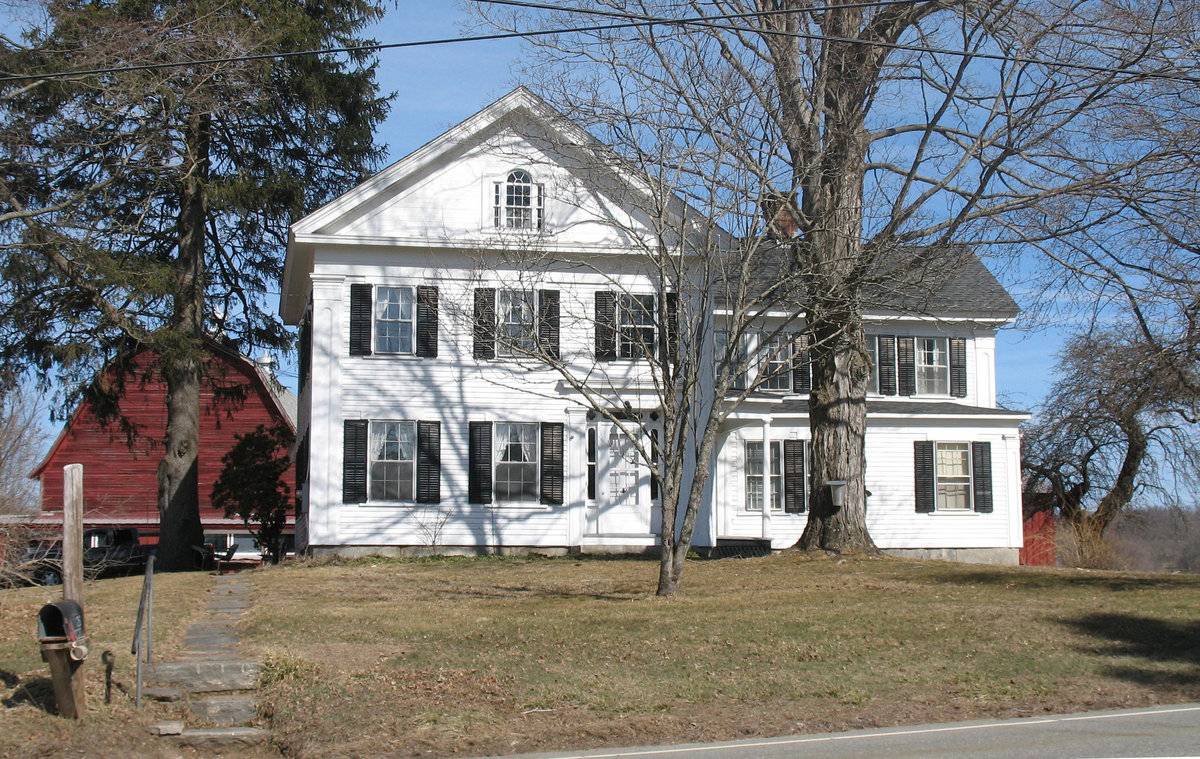
Red house is ca. 1749 White house is 1863 Barns & sheds match both ages; oldest barns, mostly unviewed, are in major need of help The large barn was built in 1941, with timber used from the 1938 hurricane devastation
- Use & Accessibility
Use (Historic)
Use (Present)
Exterior Visible from Public Road?
Yes
Demolished
n/a
Location Integrity
Unknown
- Environment
Related features
Environment features
Relationship to surroundings
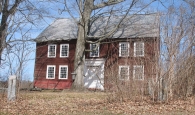
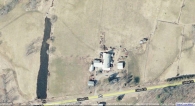
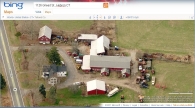
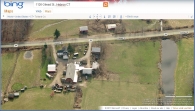
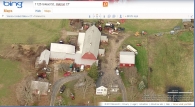
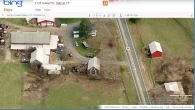
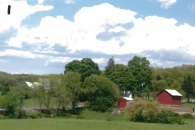
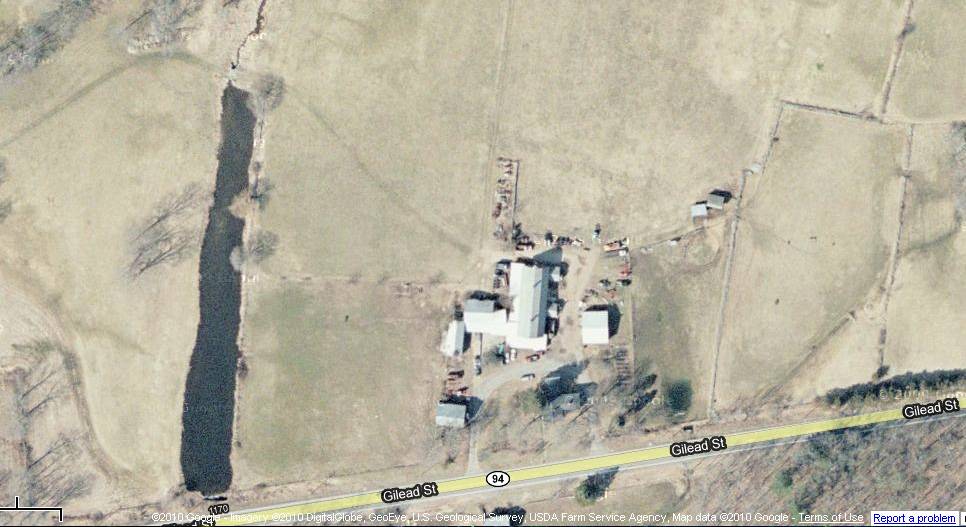
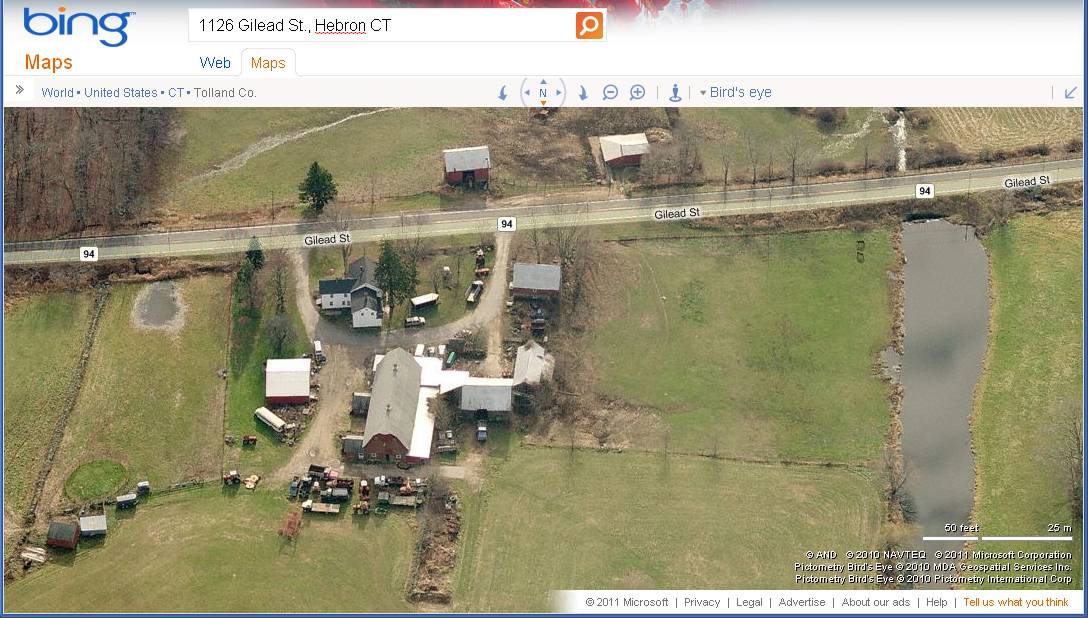
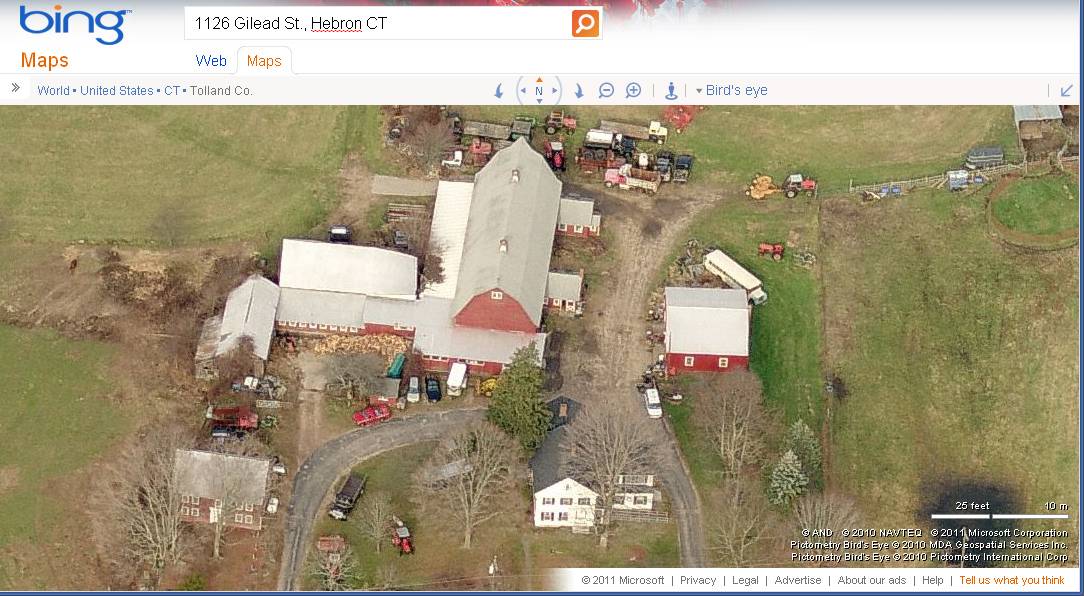
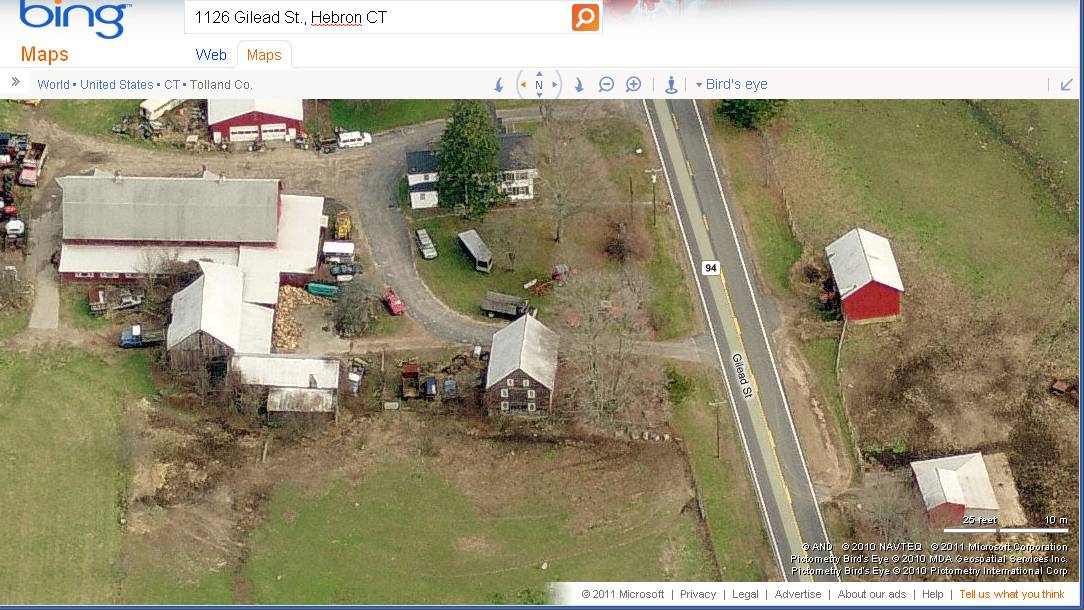
The farmstead buildings are located mostly on the north side of Gilead Street, with additional property and outbuildings on the south side of the road. The extensive property of nearly 170 acres includes pastures and hayfields, woodland, and a stream with a dammed pond. Two houses, a red 18th-century 2 ½-story colonial to the west and a white 19th-century 2 ½-story Greek Revival style house to the east, face south toward the road. A loop driveway enters east of the white house, curves around behind the houses and meets the road again between the houses. The drive widens into a farmyard and to the north is a large complex of barns including Barns I, II, and III, which are all connected. In addition, to the east of Barn I there is a shed/garage structure with a metal gable roof oriented east-west. Several small sheds which appear to be animal shelters are located north-east of the main complex, connected with paddock fencing. A small shed (Barn IV) is located southeast of the main barn complex, north of the red house. On the south side of the road directly across from the houses there is a 1 ½-story gable-roofed English barn (Barn V) and a 1-story animal shelter with a gable roof and shed-hip addition around its east and south sides. The site is in active farming; there are cattle visible in the fields and many farm vehicles parked around the buildings. An area northwest of the main barn complex appears to be a disused manure collection area, which suggests that dairy farming is no longer an active business. The property is located at the western edge of Hebron, abutting the town line with Marlborough. Surroundings include woodlands, some open fields, residential subdivisions, and a golf country club.
- Typology & Materials
-
Building Typology
Materials
Structural System
Roof materials
Roof type
Approximate Dimensions
Barn (1941) 3600 square feet; Barn (1750) 1560 square feet; Barn (1745) 1120 square feet; Shed (1830) 156 square feet.
- Source
-
Date Compiled
02/03/2011
Compiled By
Charlotte Hitchcock, reviewed by CT Trust
Sources
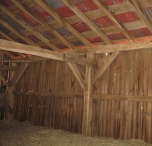
Field notes and photographs by Mary Ann Foote 4/20/2010. Interior photos appear to be of barn located south of Gilead St. (Barn V).
Town of Hebron Assessor’s Record http://www.prophecyone.us/index_prophecy.php?town=Hebron
Parcel ID: 62/7PT, 169 acres,
10 outbldgs:
Barn 1941 3600 sf
Barn 1750 1560 sf
Barn 1745 1120 sf
Sheds 1920s small
Shed 1830 156 sfAerial Mapping:
http://maps.google.com
http://www.bing.com/maps accessed 2/01/2011.Clouette, Bruce, Cronin, Maura, Hebron Center National Register Historic District Nomination 93000649, National Park Service, 1993.
Sexton, James, PhD, Survey Narrative of the Connecticut Barn, Connecticut Trust for Historic Preservation, Hamden, CT, 2005, http://www.connecticutbarns.org/history.
Visser, Thomas D., Field Guide to New England Barns and Farm Buildings, University Press of New England, 1997.
- PhotosClick on image to view full file
-