Barn Record East Windsor
RETURN TO ‘FIND BARNS’- Building Name (Common)
- n/a
- Building Name (Historic)
- n/a
- Address
- 88 Phelps Road, East Windsor
- Typology

- Overview
-
Designations
n/a
Historic Significance
Architectural Description:
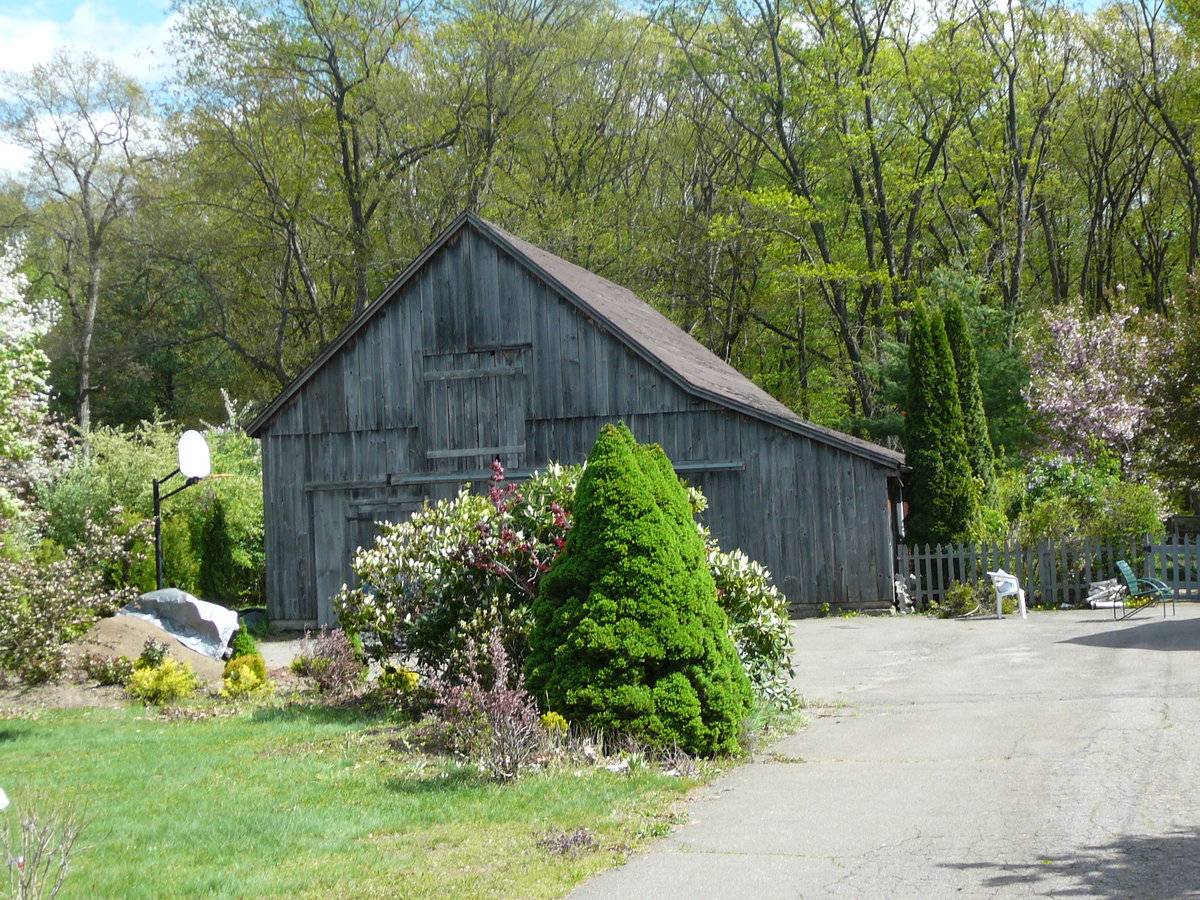
This is a 1 1/2 - story gable-entry barn with a shed-roof addition encompassing the entire length of the west eave-side. The north gable-side of the barn faces Phelps Road while the ridge line runs north-south perpendicular to the road. The main façade of the barn is the north gable-façade with the main entrance off-centered towards the east through an exterior-hung hooded sliding wagon door. The sliding door leaf has a hinged weather-door insert with blacksmith hardware. The gable attic above is separated by a distinct dropped siding divide line which is intersected by a hay door centered above the main entrance. The façade appears to have a second entrance towards the west through a pass-through door. The north side-wall of the shed-roof addition can be seen flush with the main north gable-façade towards the west.
The wooden frame of the barn is supported on cement plastered masonry work. The barn has vertical siding walls and asphalt shingle roofing.
Historical Significance:The New England barn or gable front barn was the successor to the English barn and relies on a gable entry rather than an entry under the eaves. The gable front offers many practical advantages. Roofs drain off the side, rather than flooding the dooryard. With the main drive floor running parallel to the ridge, the size of the barn could be increased to accommodate larger herds by adding additional bays to the rear gable end. Although it was seen by many as an improvement over the earlier side-entry English Barn, the New England barn did not replace its predecessor but rather coexisted with it, as both types continued to be built.
The wagon door entrance and the proximity of the barn to the main residence suggest the probable usage of the barn as a carriage house.
Until the 1830s, the horses used for riding and driving carriages were often kept in the main barn along with the other farm animals. By the 1850s, some New England farmers built separate horse stables and carriage houses. Early carriage houses were built just to shelter a carriage and perhaps a sleigh, but no horses. The pre-cursor to the twentieth-century garage, these outbuildings are distinguished by their large hinged doors, few windows, and proximity to the dooryard.
The combined horse stable and carriage house continued to be a common farm building through the second half of the nineteenth century and the first decade of the twentieth century, until automobiles became common. Elaborate carriage houses were also associated with gentlemen farms and country estates of the late 19th and early 20th centuries. Another form of carriage barn, the urban livery stable, served the needs of tradespeople.Field Notes
Small barn with sloping shed roof to the west.
- Use & Accessibility
Use (Historic)
Use (Present)
Exterior Visible from Public Road?
Yes
Demolished
n/a
Location Integrity
Unknown
- Environment
Related features
n/a
Environment features
Relationship to surroundings
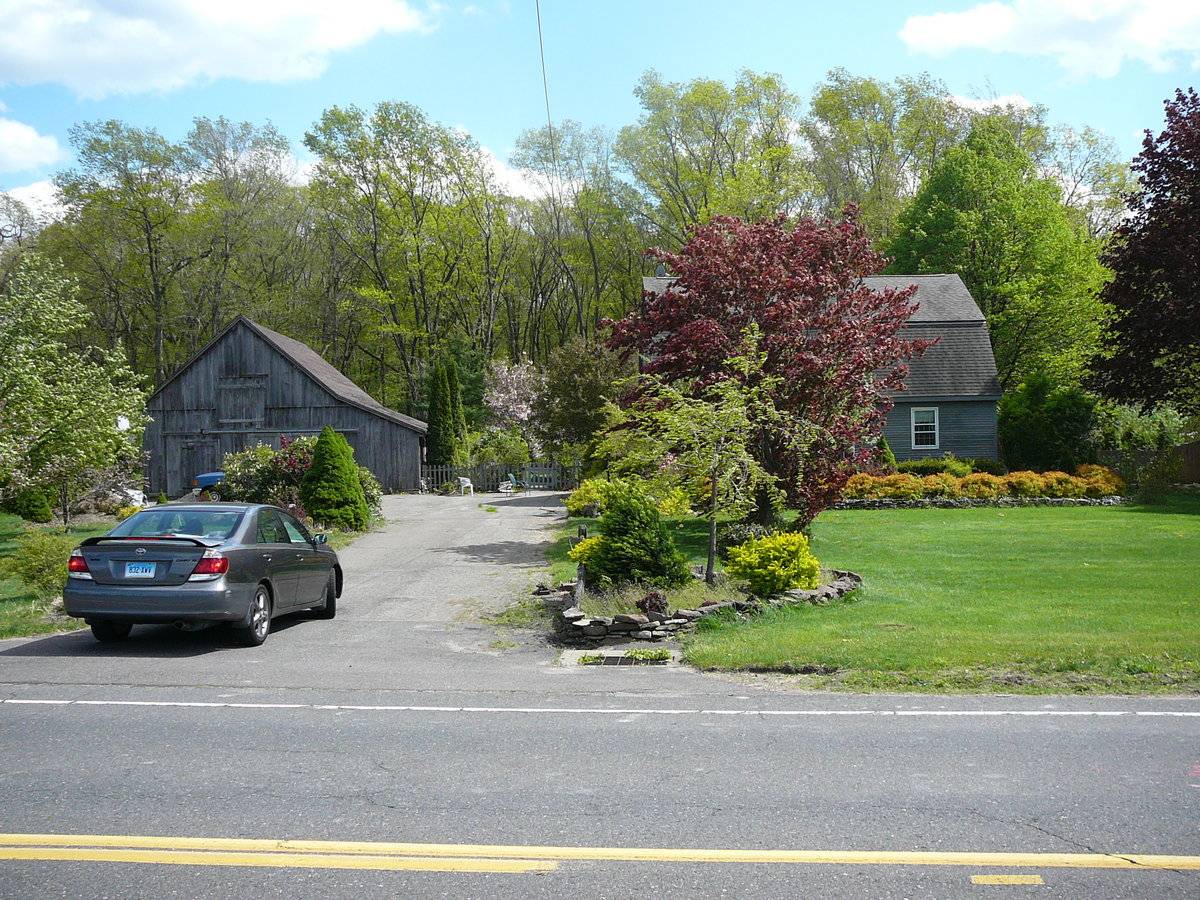
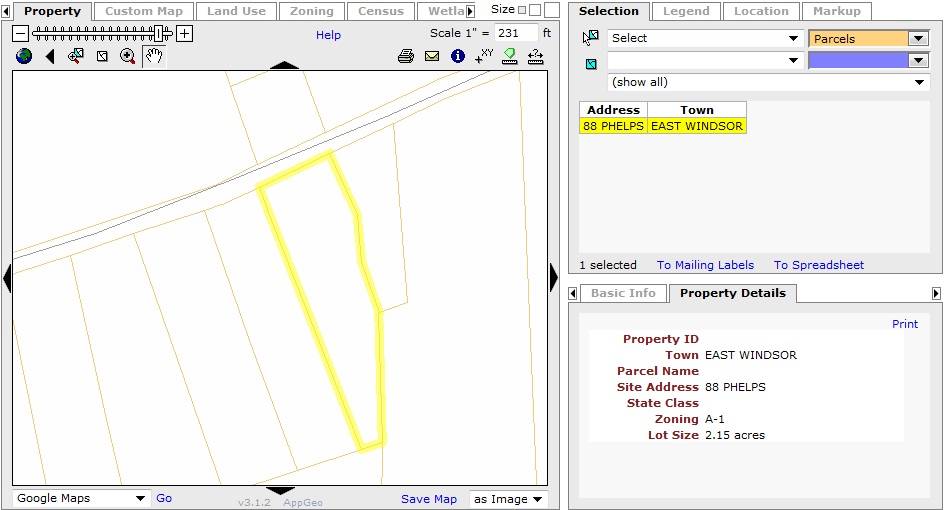
The 2.15 acres property is towards the south of Phelps Road in a predominantly residential area of rural character. Residential plots flank the property toward the east and west while dense woodland surrounds it towards the south. Parcels of farm land can be seen towards the north of the property across Phelps Road.
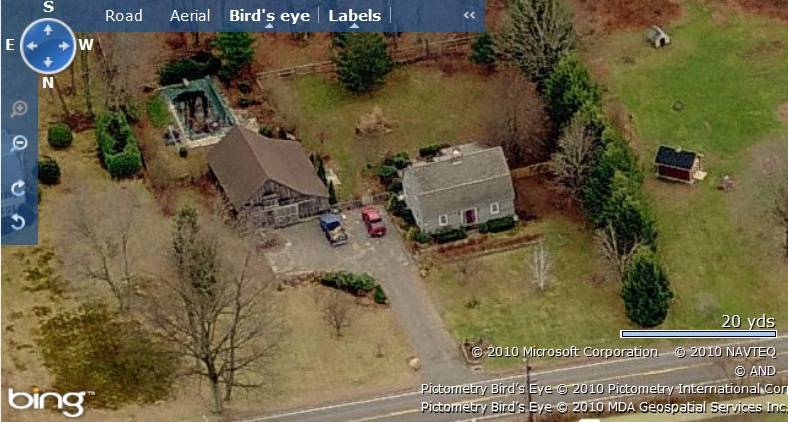
The barn is towards the eastern edge of the property with the circa 1900 main residence towards its north-west. The property is accessed by a drive way from the north-east leading to the main residence and the barn. Timber fence can be seen towards the west of the barn while a swimming pool is situated towards its south.
- Typology & Materials
-
Building Typology
Materials
Structural System
Roof materials
Roof type
Approximate Dimensions
n/a
- Source
-
Date Compiled
09/27/2010
Compiled By
T. Levine and M. Patnaik, reviewed by CT Trust
Sources
Photographs and field-notes provided by –
John Harmon, harmonjiii@gmail.comAssessors’ records and GIS information retrieved on September 27th , 2010 from website http://www.crcog.org/gissearch/
Information retrieved on September 27th, 2010 from website http://www.google.com
Photograph/ Information retrieved on September 27th, 2010 from website http://www.zillow.com
O’Gorman, James F., Connecticut Valley Vernacular: the Vanishing Landscape and Architecture of the New England Tobacco Fields, University of Pennsylvania Press, 2002, 144 pages.
Sexton, James, PhD; Survey Narrative of the Connecticut Barn, Connecticut Trust for Historic Preservation, Hamden, CT, 2005, http://www.connecticutbarns.org/history
Visser, Thomas D.,Field Guide to New England Barns and Farm Buildings, University Press of New England, 1997.
- PhotosClick on image to view full file
-