Barn Record Branford
RETURN TO ‘FIND BARNS’- Building Name (Common)
- Benjamin Hosley House
- Building Name (Historic)
- Benjamin Hosley House
- Address
- 93 Montowese Street (Rte 146), Branford
- Typology

- Overview
-
Designations
Historic Significance
Architectural description:
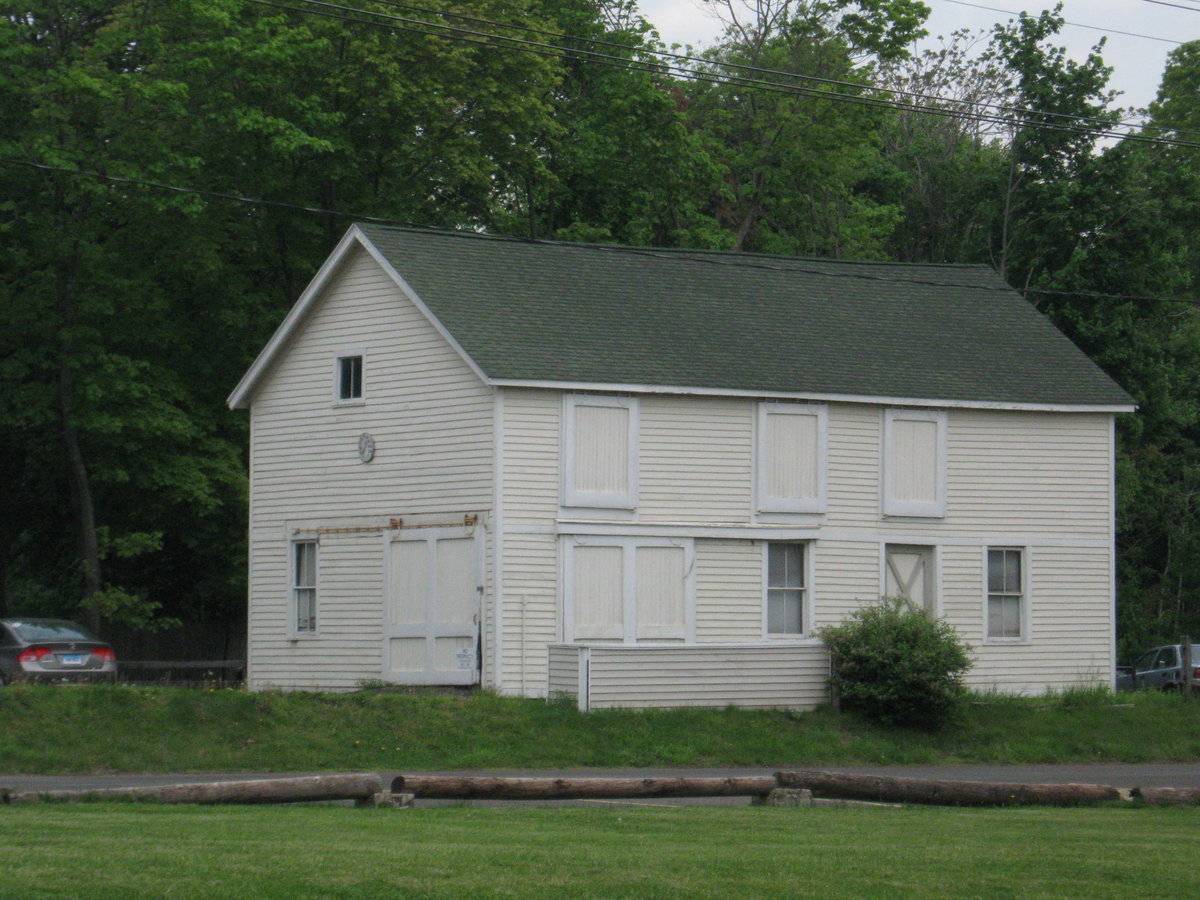
The barn is an example of the carriage barn type associated with a relatively large house dating to the period about 1880-1910 (based on its Queen Anne vernacular form and stylistic aspect). It is a 1 1/2-story, gable-roof, rectangular structure. The ridge-line is aligned east-west, with the axis of the ridge arranged roughly perpendicular to the course of the public street.
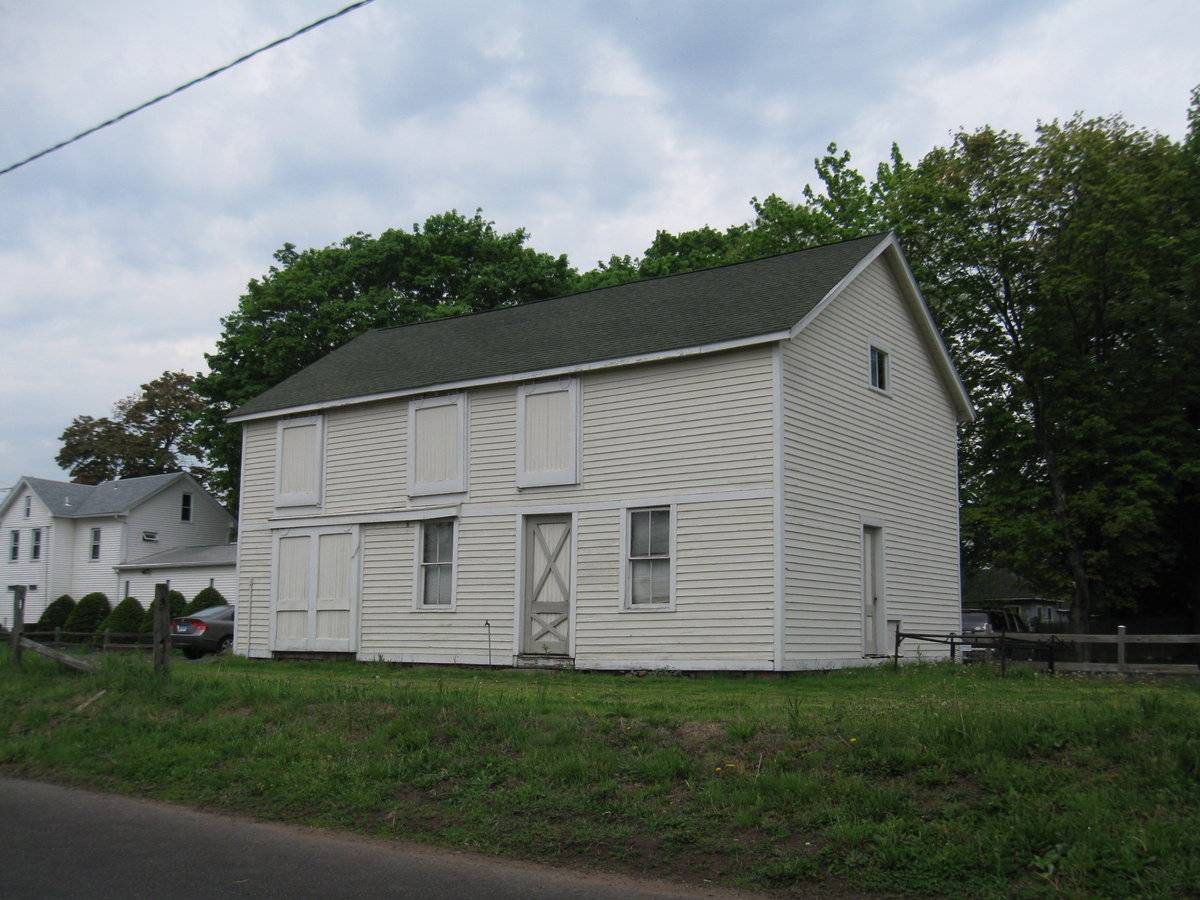
The principal façade is the south eave wall. The openings on the façade are arranged in four bays. There are two entries on this wall, both on the ground story, a wagon entry and pass-through doorway. The wagon entry is in the first bay from the west and is fitted with a single exterior sliding door mounted on a hooded track, the wooden door has two long vertical panels over two short panels. The pass-through entry, located in the third bay, is a door with a long vertical panel over a short panel, each panel with an “X” brace design. The second and fourth bays on the first story each hold a two-over-two double-hung window. The three second-story openings, located in the first, second, and third bays, are fitted with single-leaf, exterior sliding loft doors mounted on open tracks sheltered under the overhang of the roof.
The west gable-end wall has two first-story openings, a wagon entry and a window. The wagon entry, located at the south corner, is fitted with a single exterior sliding door mounted on an open track, the wooden door has two long vertical panels over two short panels. The wooden two-over-two double-hung window is of the same form as those on the south wall. The gable attic holds a two-pane fixed-sash window.
The north eave-side of the barn appears to have three window openings in the east half of the wall. The rest of this side appears blank.
The east gable-end wall has a single first-story opening, a pass-through doorway with a paneled wooden door. In the gable attic there is a two-pane fixed-sash window.
The carriage house is clad in clapboard siding and sits on a fieldstone foundation. The roof is covered with asphalt shingle, and has overhanging eaves.
Historical significance:Until the 1830s, the horses used for riding and driving carriages were often kept in the main barn along with the other farm animals. By the 1850s, some New England farmers built separate horse stables and carriage houses. Early carriage houses were built just to shelter a carriage and perhaps a sleigh, but no horses. The precursor to the twentieth-century garage, these outbuildings are distinguished by their large hinged doors, few windows, and proximity to the dooryard. The combined horse stable and carriage house continued to be a common farm building through the second half of the nineteenth century and the first decade of the twentieth century, until automobiles became common. Elaborate carriage houses were also associated with gentleman farms and country estates of the late 19th and early 20th centuries. Another form of carriage barn, the urban livery stable, served the needs of tradespeople.
Historical background:“Originally part of the New Haven Colony (1639-1666), the Town of Branford was laid out on land purchased from Montowese, son of Sowheog, a sachem of the Mattabeseck Indians. At that time, the area was known by its Indian name, Totoket (“the Land of the Tidal River”). The first English settlers recruited by the New Haven Colony to move to Totoket were a group of 40 families from Wethersfield led by William Swaine and the Reverend John Sherman. They are believed to have arrived in the spring of 1644, some travelling by water down the Connecticut River and others coming overland, driving their domestic animals before them. They were joined the following year by settlers from New Haven under the leadership of the Reverend Abraham Pierson, who replaced John Sherman as the new community’s pastor.
The choice of Totoket for settlement proved fruitful. The land was productive and the Branford River estuary proved to be the best harbor between New Haven and New London. Shortly after it’s initial settlement, the town’s name was changed to Branford, presumably derived from Brentford, a town on the Thames River near London in which some of the initial settlers had been born.”
(Loether, J. Paul)Field Notes
The barn has three main doors from three sides with a pass-through entrance from the rear gable end. It has a thermometer on the gable side facing the main house. This carriage house is a contributing resource in the Branford Center National Register Historic District.
- Use & Accessibility
Use (Historic)
Use (Present)
Exterior Visible from Public Road?
Yes
Demolished
n/a
Location Integrity
Unknown
- Environment
Related features
Environment features
Relationship to surroundings
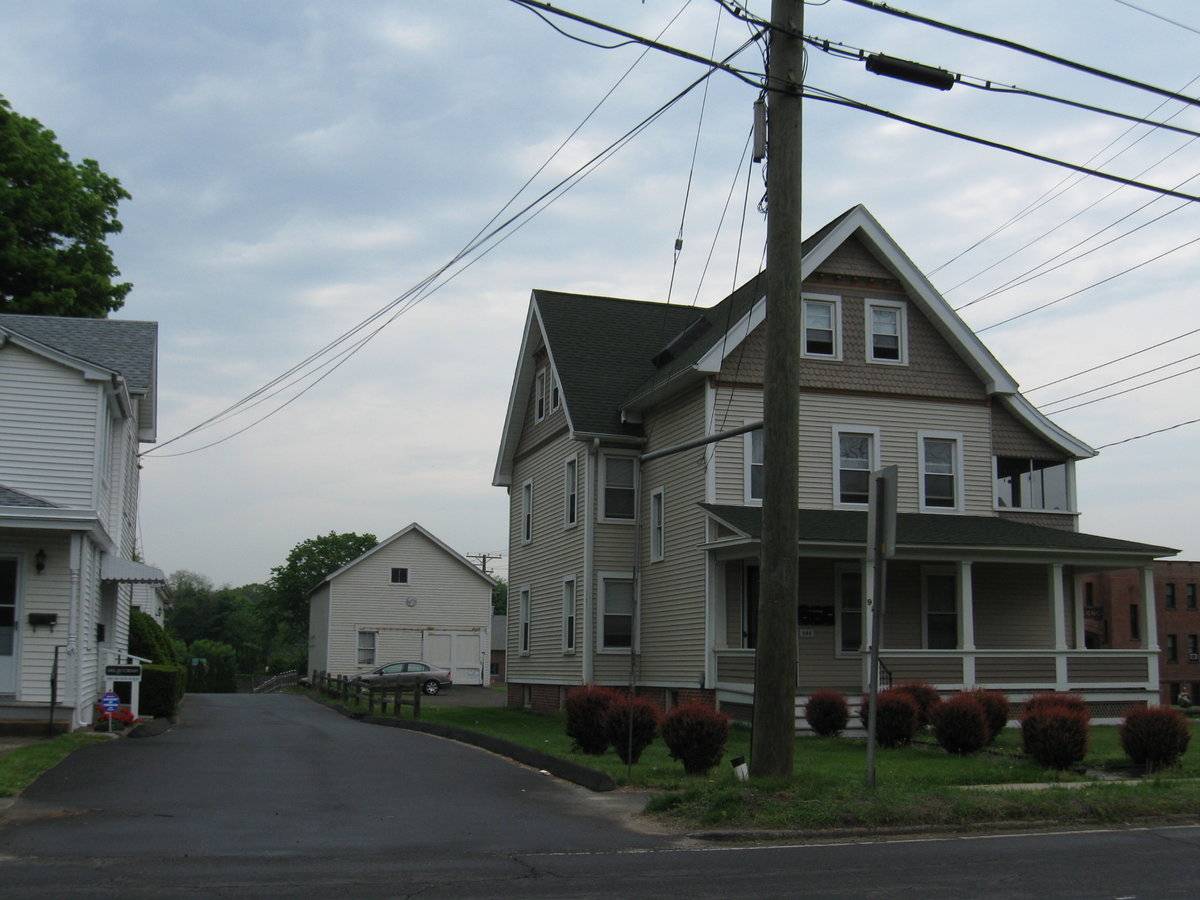
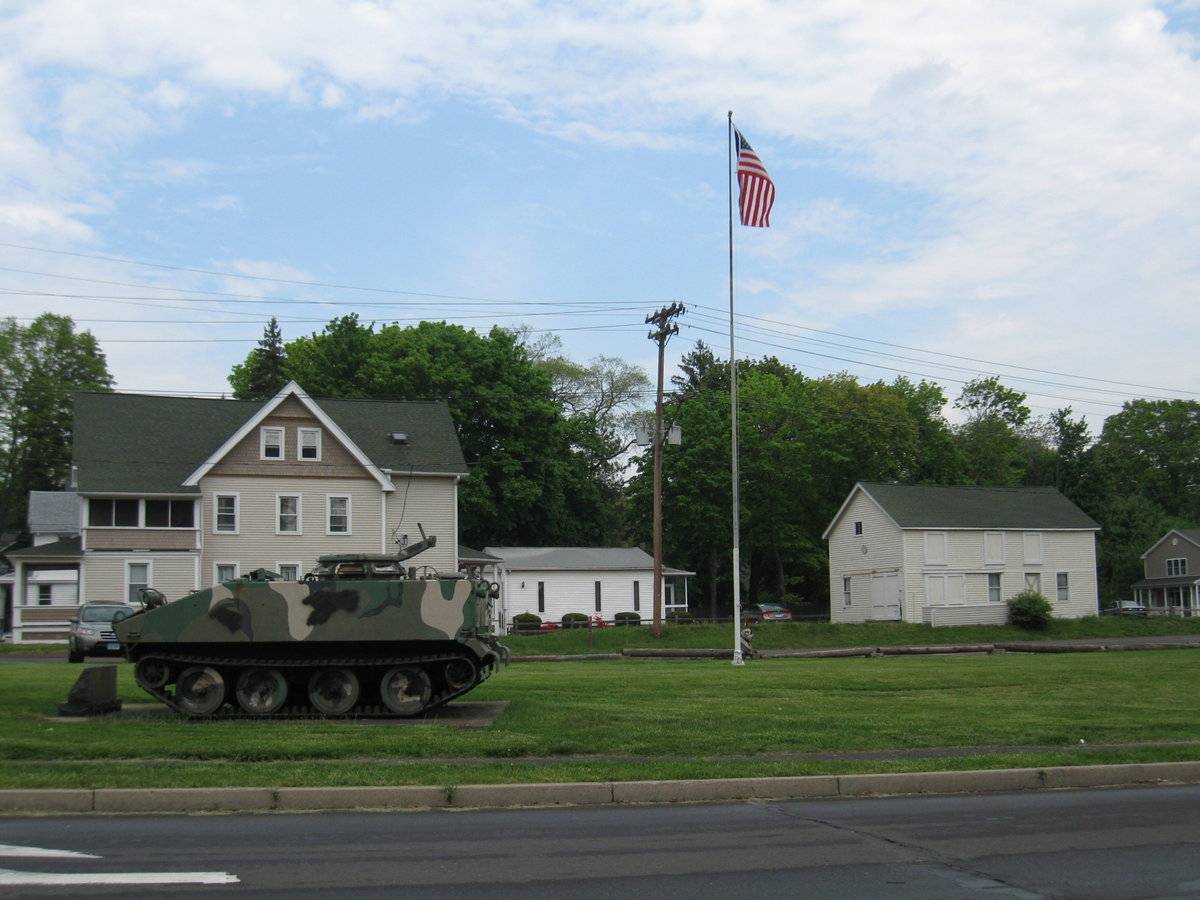
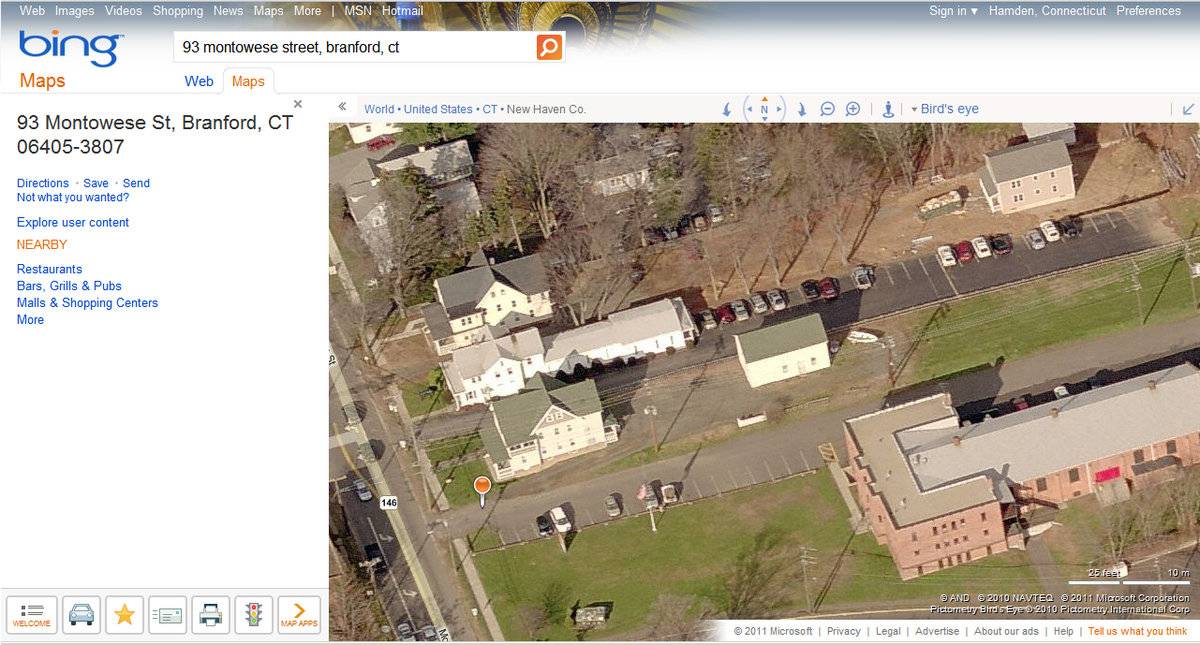
The property is located on the east side of Montowese Street (Route 146), situated on the south fringe of the Branford Center about 200 feet north of the junction with Pine Orchard Road and about a quarter-mile north of Montowese Street’s bridge over the Branford River. The general character of the near vicinity is that of a low-density, mixed residential and commercial urban neighborhood in the town center of a suburban town near New Haven.
The property, one-half (0.5) acre in extent, consists of a attenuated rectangular lot fronting on Montowese Street. It is sandwiched between lots of similar configuration, that on the north an office property and that on the south a National Guard armory, that both have long asphalt parking areas directly adjoining the edge of the subject lot. The parking area on this property, however, which occupies almost the entire lot apart from the building footprints, has a gravel surface, with no trees or other plantings present. There are two buildings on the property, the dwelling and the carriage house. The large house is set back from streetside by about 50 feet with a sidewalk and lawn in front. The carriage house is situated about 90 feet behind the house.
- Typology & Materials
-
Building Typology
Materials
Structural System
Roof materials
Roof type
Approximate Dimensions
960 square feet.
- Source
-
Date Compiled
04/10/2011
Compiled By
P. Pendleton & T. Levine, reviewed by CT Trust
Sources
Field notes and photographs by Charlotte Hitchcock date 5/11/2010.
Town of Branford Assessor’s Record:
http://data.visionappraisal.com/BranfordCT/DEFAULT.asp
Parcel ID: E08-E07007-00020Aerial Mapping:
http://www.bing.com/maps accessed 4/10/2010.Loether, J. Paul, Branford Center Historic District National Register Nomination No. 406204 Item No. 87000636 NRIS (National Register Information System), National Park Service, 1987.
http://pdfhost.focus.nps.gov/docs/NRHP/Text/87000636.pdfSexton, James, PhD, Survey Narrative of the Connecticut Barn, Connecticut Trust for Historic Preservation, Hamden, CT, 2005, http://www.connecticutbarns.org/history.
Visser, Thomas D., Field Guide to New England Barns and Farm Buildings, University Press of New England, 1997.
- PhotosClick on image to view full file
-