Barn Record Enfield
RETURN TO ‘FIND BARNS’- Building Name (Common)
- JARMOC FARMS
- Building Name (Historic)
- n/a
- Address
- 0 Still Lane, Enfield
- Typology
- Overview
-
Designations
n/a
Historic Significance
Architectural Description:
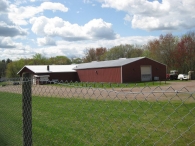
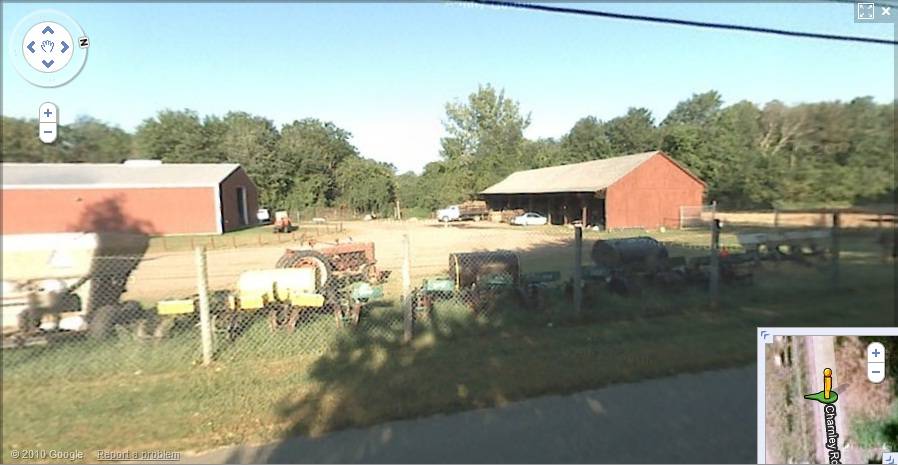
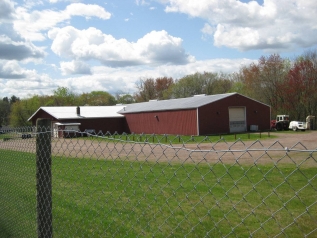
This is a two barn complex consisting of a T-shaped barn with intersecting gable-roofs towards the south, Barn-I, and another 1 1/2 -story eave-entry barn towards the north, Barn-II.
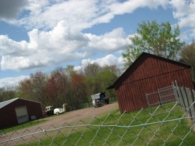
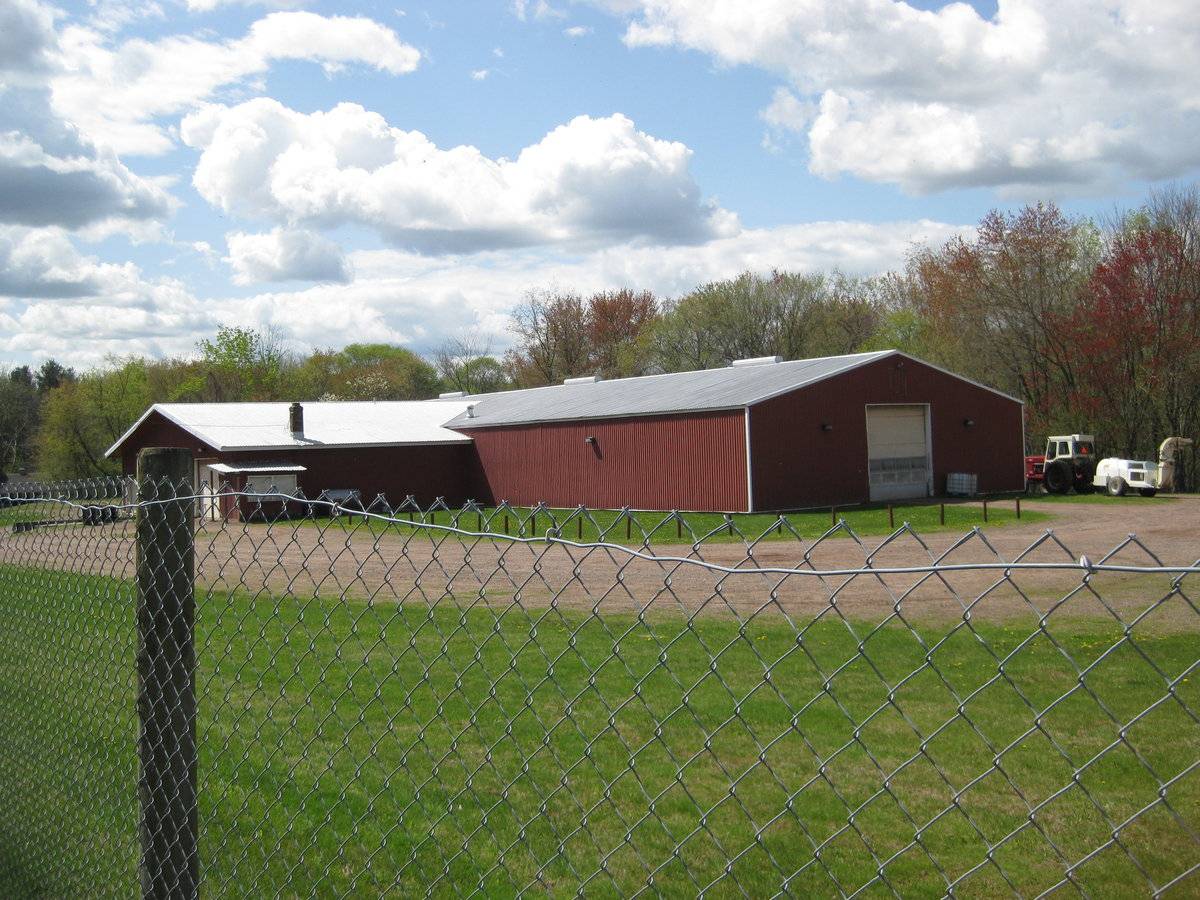
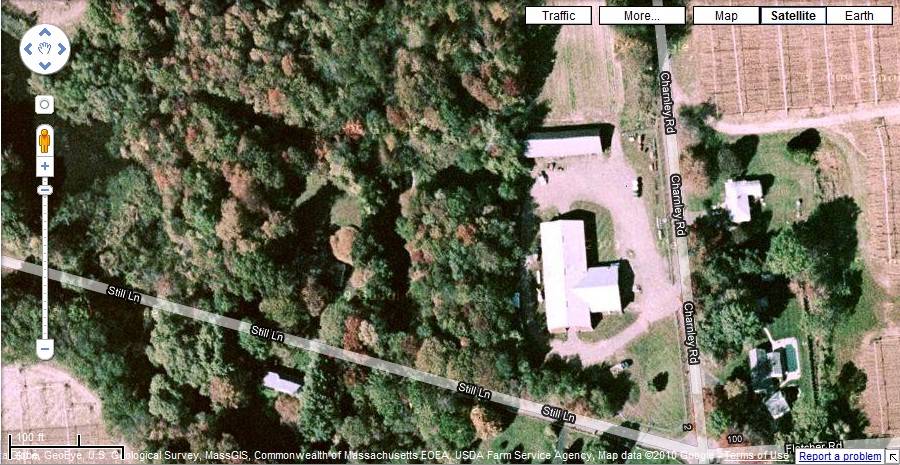
Barn-I: This is a T-shaped barn with the east eave-side of a 1 1/2 - story gable-entry main barn intersected by another 1 1/2 - story gable-entry barn towards the south. The east eave-side of the main barn and the east gable-side of the intersecting barn face Charnley Road. The ridge line of the main barn runs north-south parallel to Charnley Road while that of the intersecting barn runs east-west. The main façade of the barn is the north gable-façade facing Barn-II with the main entrance at the center through an overhead garage door. The west eave-side of the main barn is blank while the south gable-side also has an entrance at the center through an overhead garage door. The east gable-side of the intersecting barn has an entrance towards the north through a double-height overhead garage door and two entrances towards the south through a pair of overhead garage doors. The north eave-side of the intersecting barn is blank apart from a small shed-roof addition towards the western edge. Three roof metal vents can be seen equally spaced along the ridge line of the main barn.
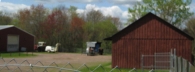
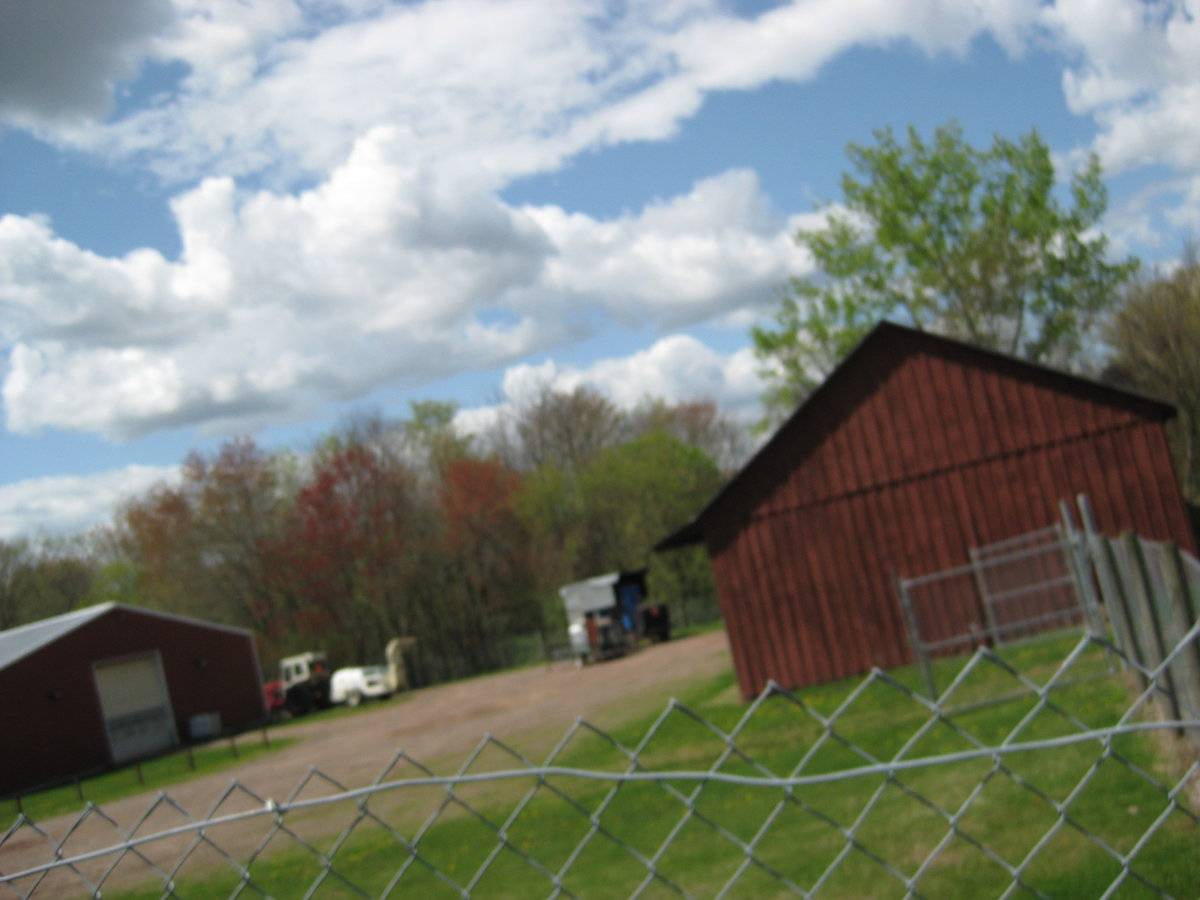
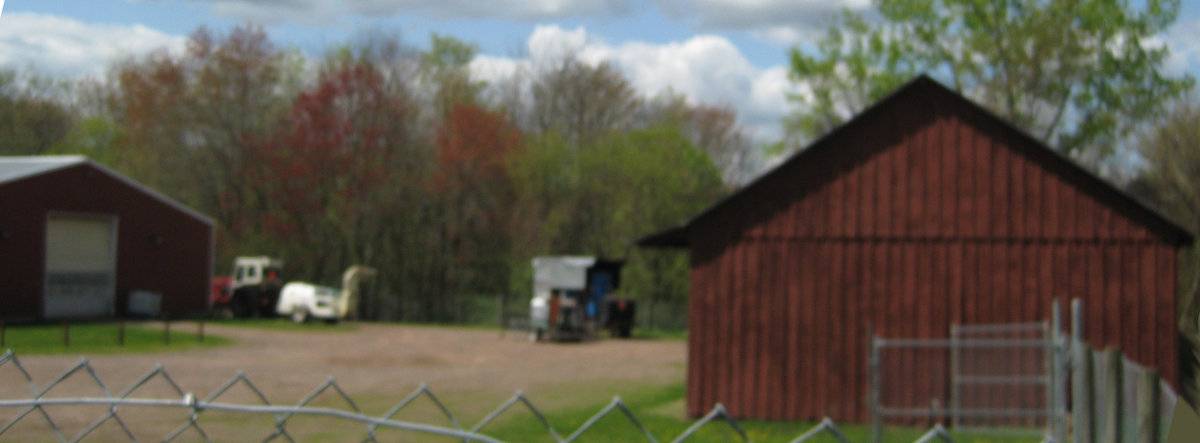
The wooden frame of the T-shaped barn is supported on cement plastered masonry foundation. The barn has metal sheathing on the walls and on the intersecting gable roofs.Barn-II: This is a 1 1/2 - story nine-bay eave-entry barn with its east gable-side facing Charnley Road. The ridge line of the barn runs east-west perpendicular the road. The main façade of the barn is the nine-bay south eave-façade facing barn-I which has a series of open bays. The east gable-side of the barn is blank with a distinct girt siding divide line separating the gable attic above.
The wooden frame of the barn has board-and-batten siding on walls and metal sheet roofing.Historical Significance:
The New England barn or gable front barn was the successor to the English barn and relies on a gable entry rather than an entry under the eaves. The gable front offers many practical advantages. Roofs drain off the side, rather than flooding the dooryard. With the main drive floor running parallel to the ridge, the size of the barn could be increased to accommodate larger herds by adding additional bays to the rear gable end. Although it was seen by many as an improvement over the earlier side-entry English Barn, the New England barn did not replace its predecessor but rather coexisted with it, as both types continued to be built.
Most ground-level stable barns and free-stall dairy barns built since the 1970s have no hayloft. Instead, the roofs are supported by prefabricated wooden trusses covered with metal roofing. While most single-story truss-roofed barns in New England are constructed with concrete foundations and stud-framed walls, pole barns with open sides are becoming popular, especially for sheltering large herds of dairy cows, heifers, and beef cattle. Many of these large truss-roofed structures are free-stall barns, introduced in the late 1940s.
Field Notes
n/a
- Use & Accessibility
Use (Historic)
Use (Present)
Exterior Visible from Public Road?
Yes
Demolished
n/a
Location Integrity
Unknown
- Environment
Related features
Environment features
Relationship to surroundings
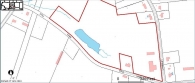
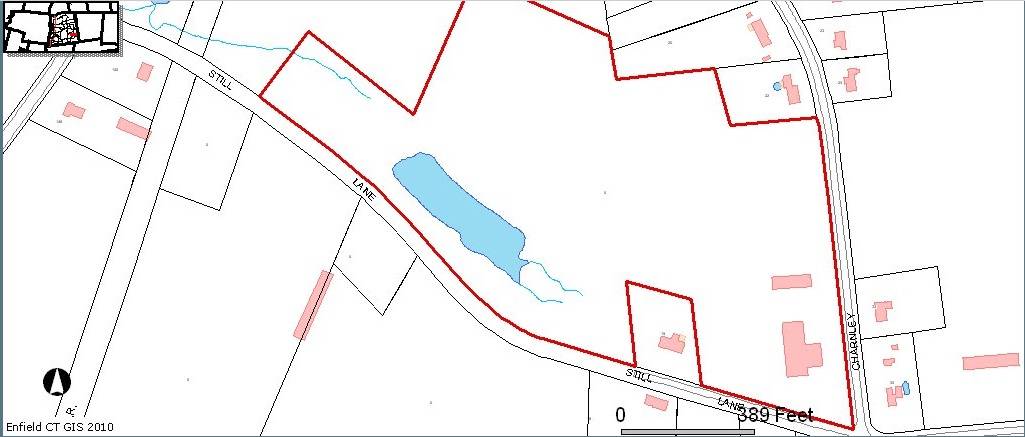
The 20.76 acres property, Map 108-0004, is a corner plot towards the north of Still Lane and the west of Charnley Road in Hazardville Fire District. It is situated in a pre-dominantly residential area with other residential plots towards the north and the east across Charnley Road. Parcels of farm land and tobacco sheds can be seen towards the west, south and east of the property.
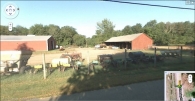
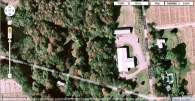
The barn complex is situated towards the south-eastern corner of the property abutting to Charnley Road, with Barn-I towards the south and Barn-II towards the north. A patch of open land can be seen towards the north of Barn-II while dense woodland covers the property towards the west of the barn complex. The property also includes a water body situated towards the south-western corner of the plot, nearer to Still Lane.- Typology & Materials
-
Building Typology
Materials
Structural System
Roof materials
Roof type
Approximate Dimensions
n/a
- Source
-
Date Compiled
09/05/2010
Compiled By
T. Levine and M. Patnaik, reviewed by CT Trust
Sources
Photographs and field-notes provided by –
Walt Wojciehowski and Len WarburtonAssessors’ records information retrieved on September 5th , 2010 from website http://www.enfield-ct.gov/
Aerial photograph/Information retrieved on September 5th, 2010 from website http://www.google.com
Information retrieved on September 5th, 2010 from website http://www.zillow.com
O’Gorman, James F., Connecticut Valley Vernacular: the Vanishing Landscape and Architecture of the New England Tobacco Fields, University of Pennsylvania Press, 2002, 144 pages.
Sexton, James, PhD; Survey Narrative of the Connecticut Barn, Connecticut Trust for Historic Preservation, Hamden, CT, 2005, http://www.connecticutbarns.org/history.
Visser, Thomas D.,Field Guide to New England Barns and Farm Buildings, University Press of New England, 1997.
- PhotosClick on image to view full file
-