Barn Record Somers
RETURN TO ‘FIND BARNS’- Building Name (Common)
- Shadow Lawn
- Building Name (Historic)
- Shadow Lawn
- Address
- 687 Main Street (Rte 190), Somers
- Typology

- Overview
-
Designations
Historic Significance
Architectural description:
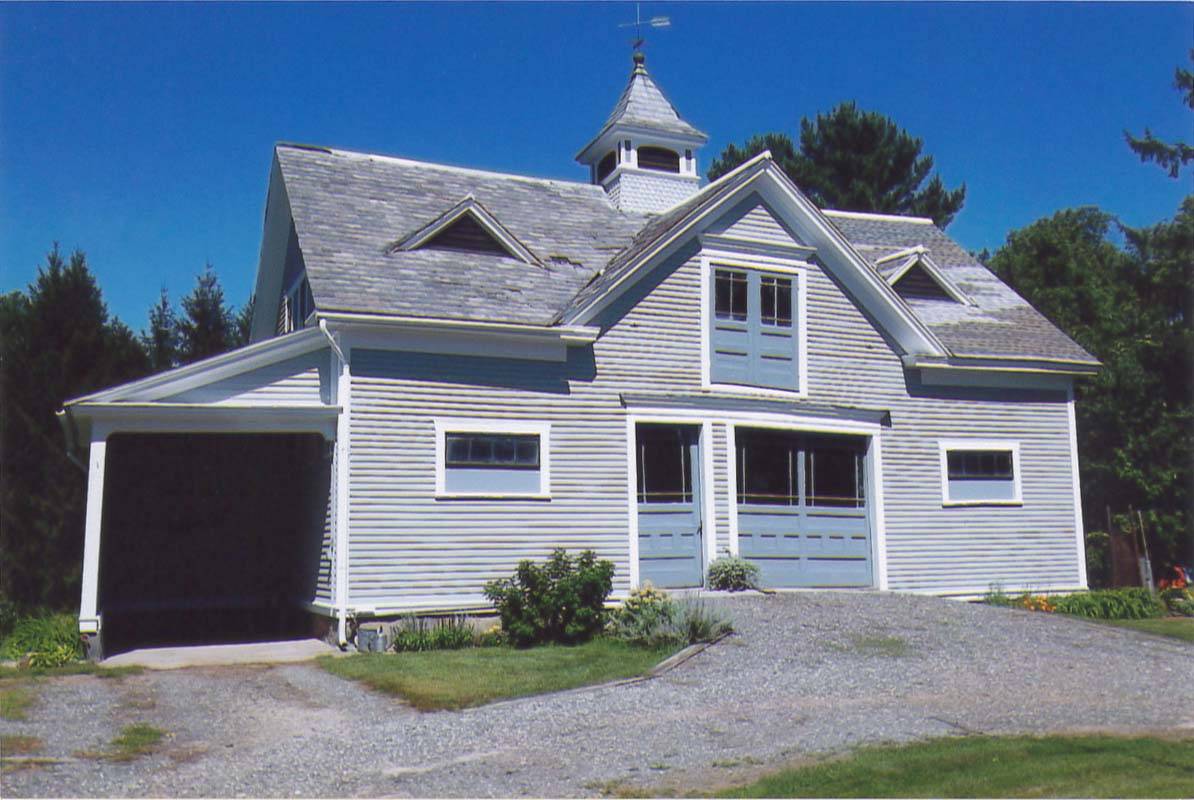
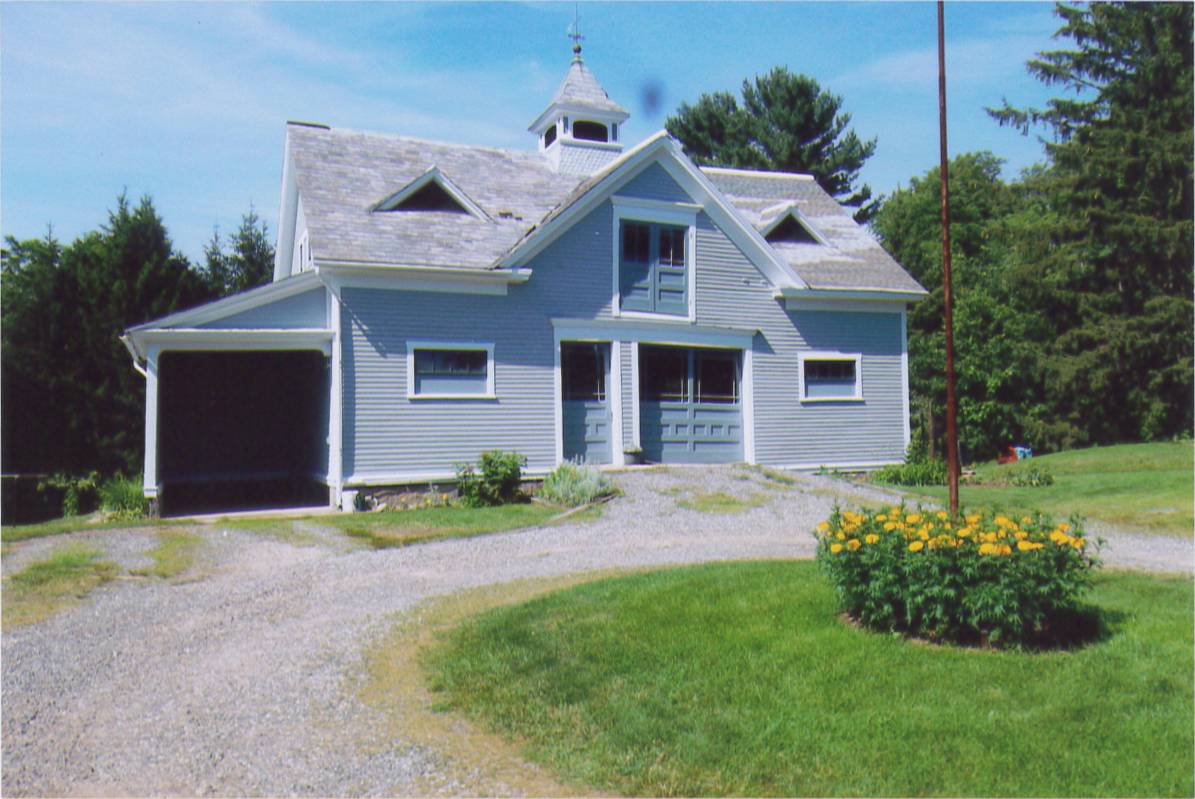
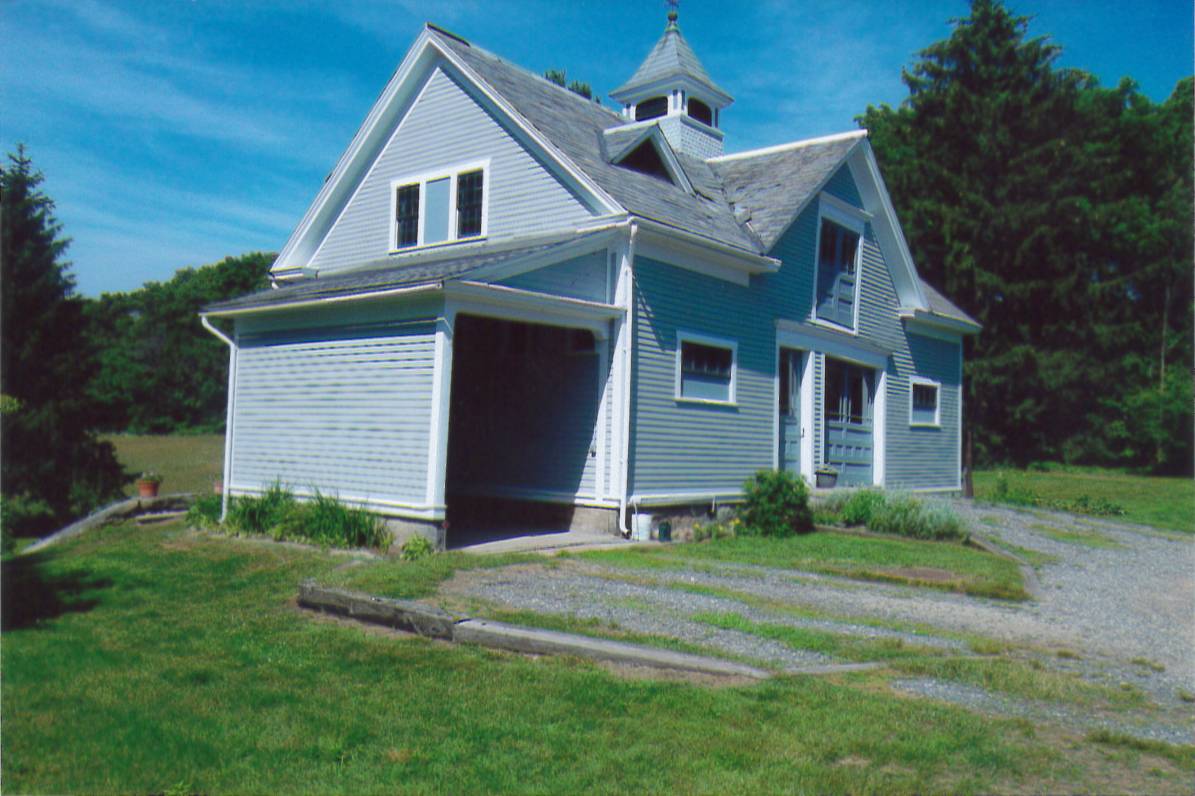
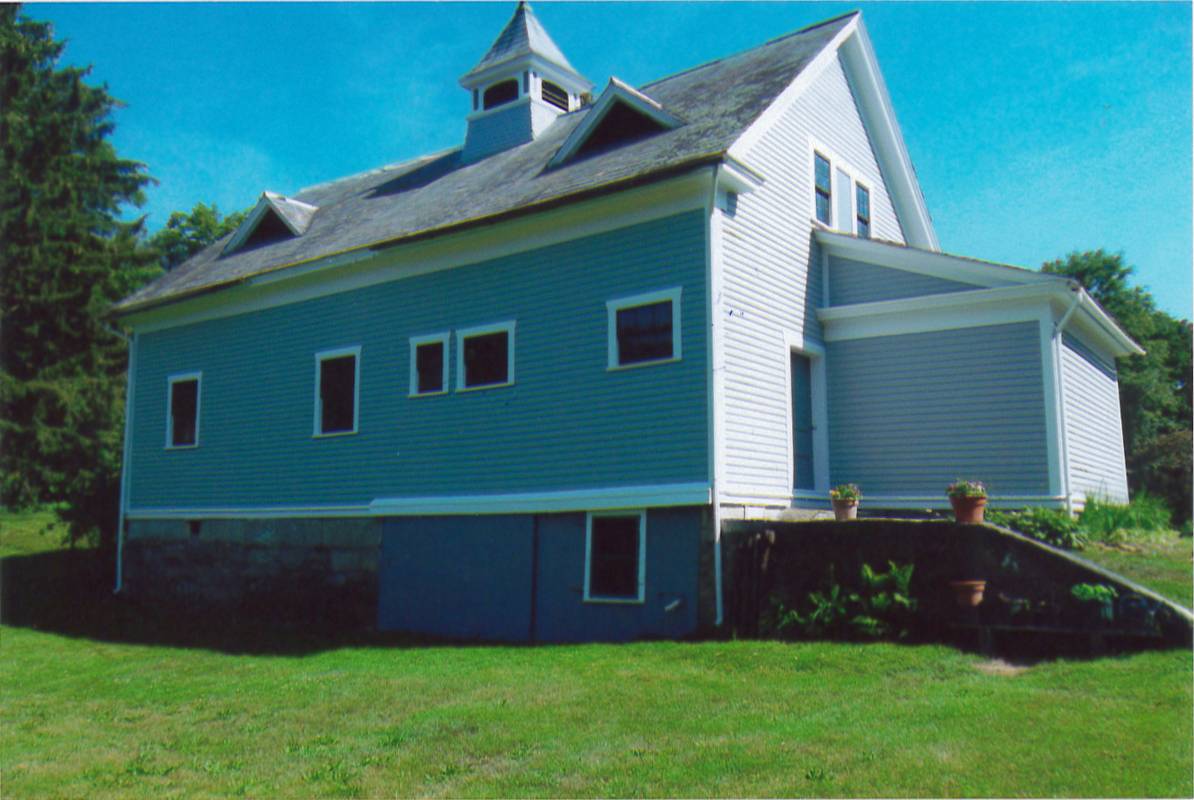
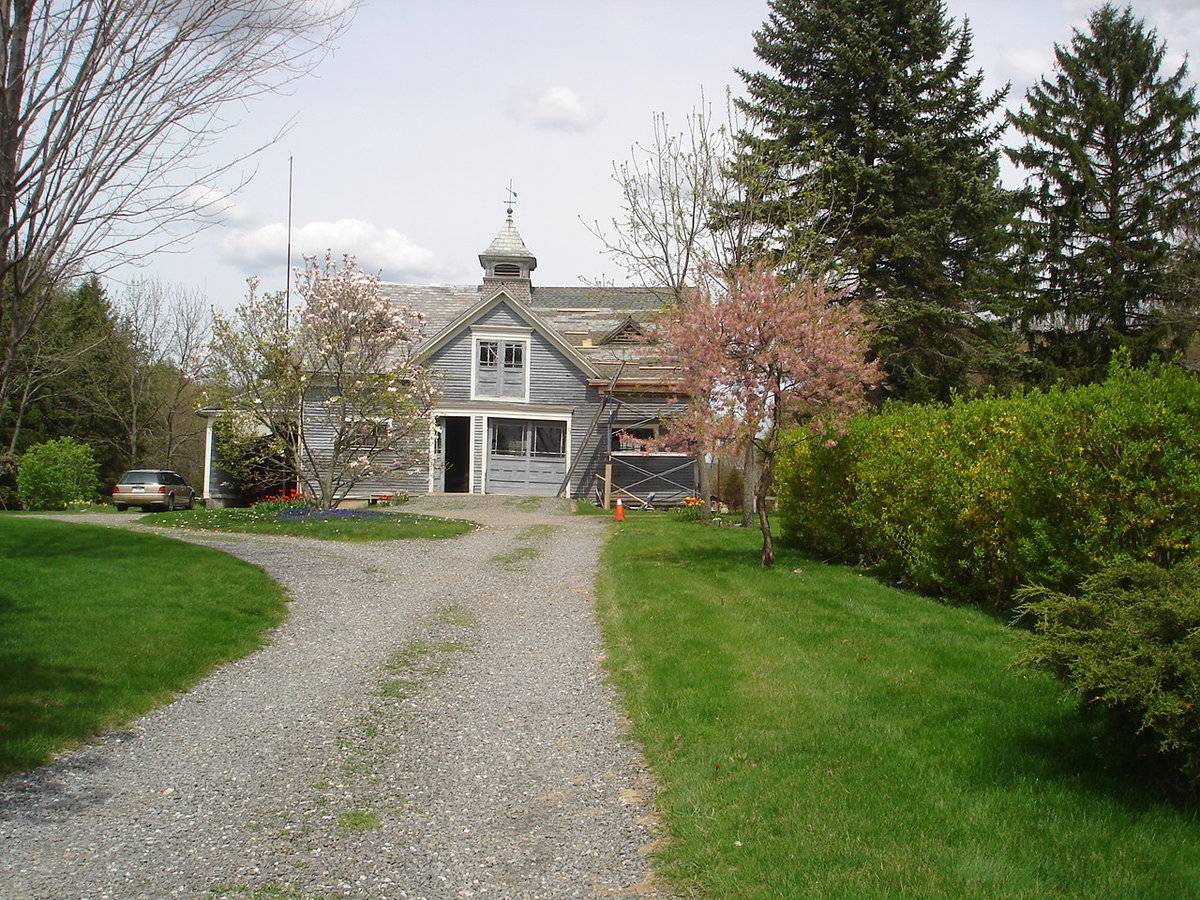
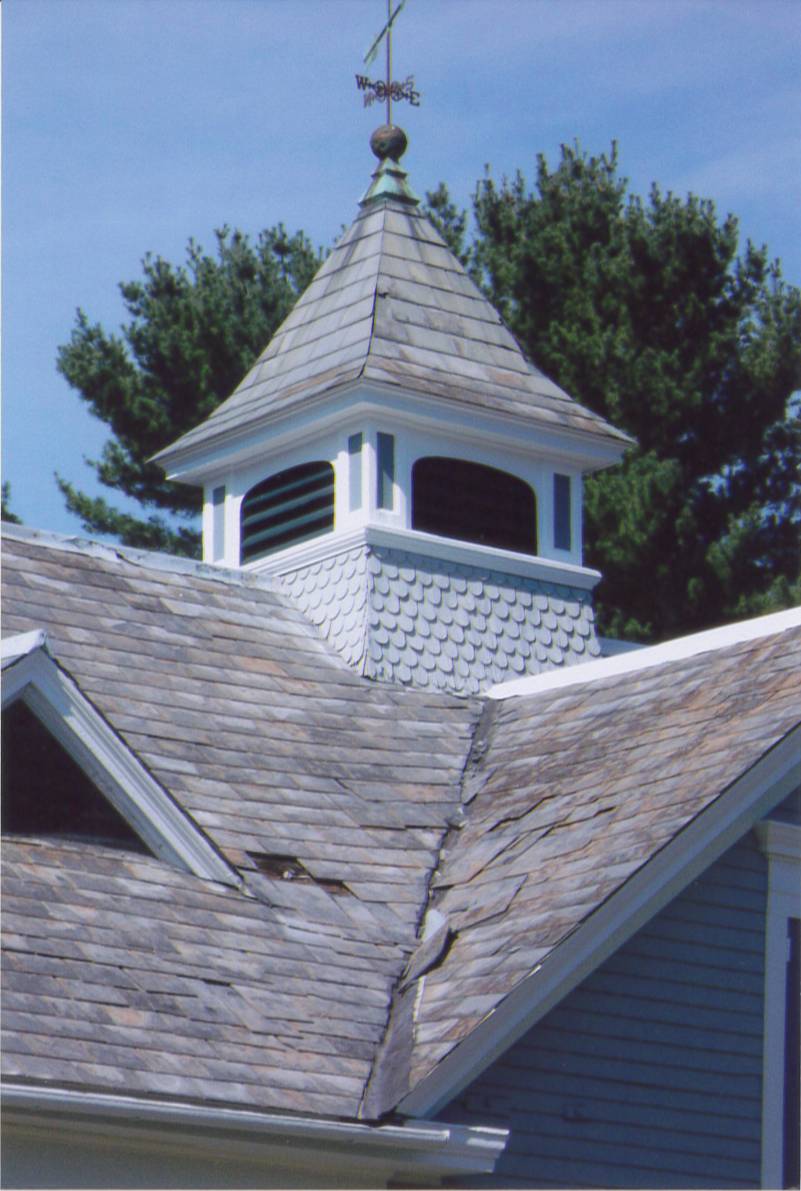
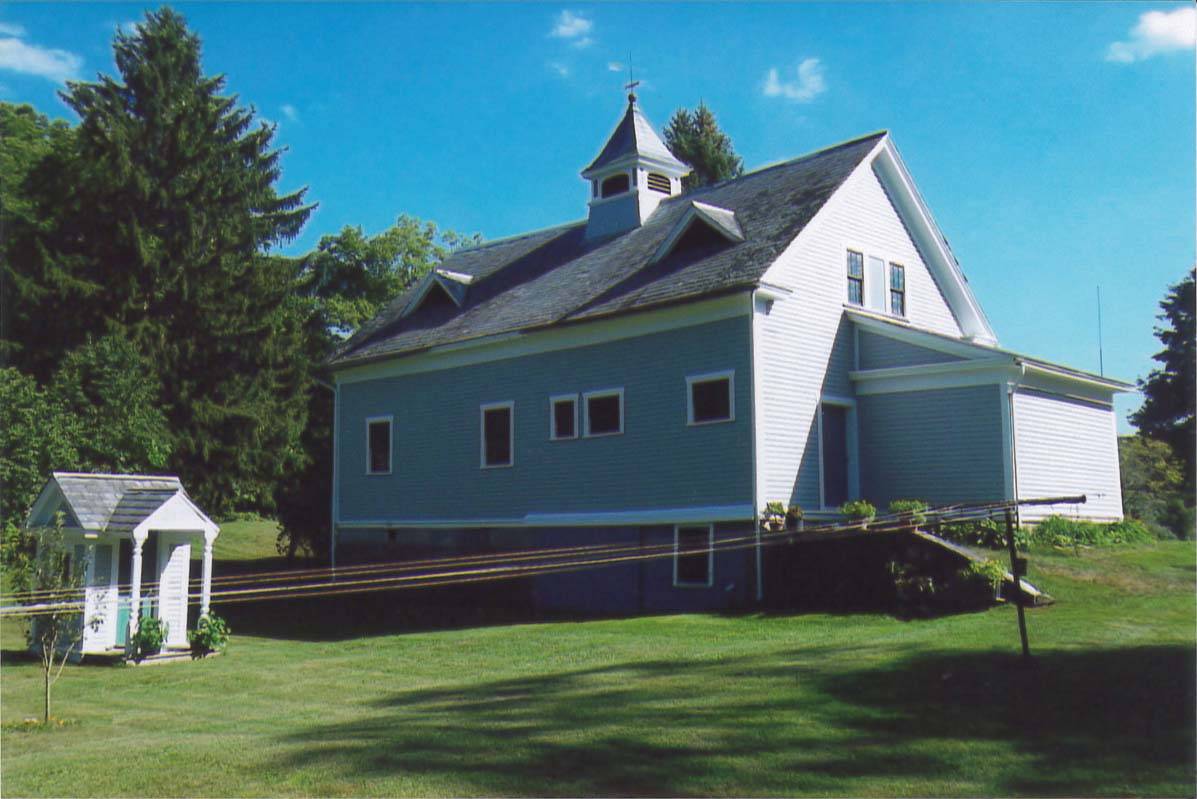
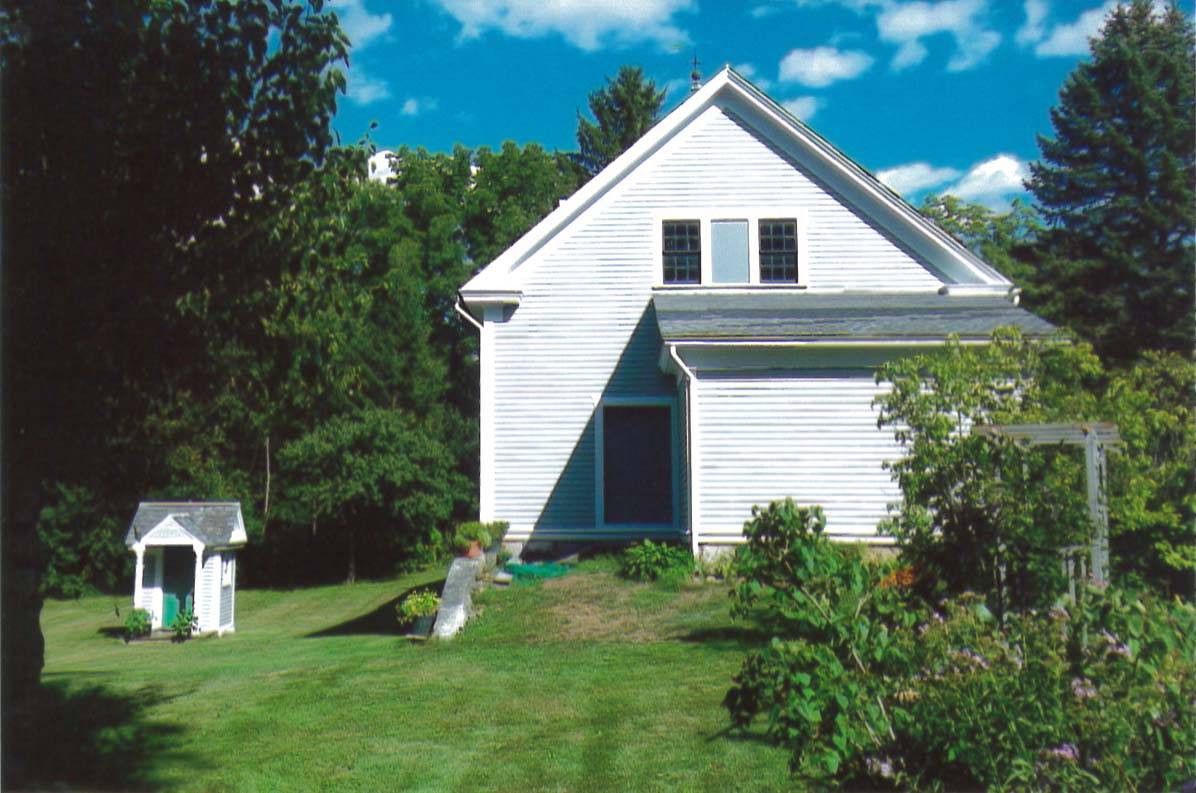
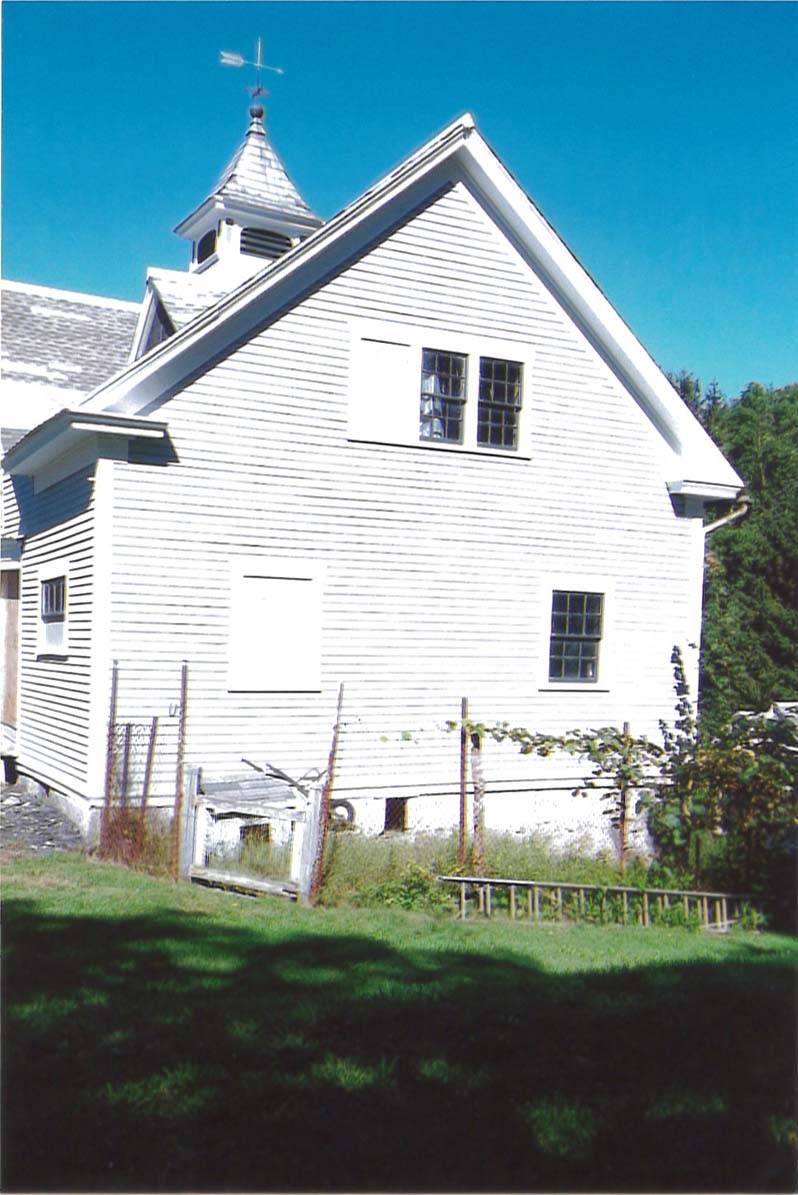
This is a 1 1/2 story, Victorian, three bay, carriage house with a lean-to. The main facade faces roughly south and the ridge-line of the carriage house is parallel to this portion of Main street, which runs approximately east-west. The main entry is a framed sliding door off center to the east in the middle of three bays. Directly to the west of the main entry is a framed pass-through interior sliding door. Both doors have a raised band surrounding them as well as a lintel running across the top. Above the main entry is a gable dormer with its plane flush with the main facade. A framed pair of hay doors with a lintel across the top is centered in the gable dormer. The flanking bays of the main facade each have framed eight-pane window. Above each eight-pane window in the roof is a gable-roofed window dormer. Extending to the west on the west gable-facade is a lean-to, used as a garage port. Above the roof of the lean-to is a set of three windows in the gable attic. A pass-though door appears to be towards the center of the facade. There appears to be a retaining wall running towards the west at the northwest corner of the structure, resulting in a steep grade drop and basement level in the north eave-facade. The north eave-facade five windows along the main level of the structure. In the roof, identical to the south eave-facade, are a pair of gable-roofed window dormers. The carriage house appears to be sheathed in clapboards painted gray with white trim. The roof has an ornate cupola with fish-scale siding and a weather-vane. One third of the roof is covered with slate shingles, and one fourth of the roof is covered with asphalt shingles.
Historical significance:Listed as a contributing resource in the Somers National Register of Historic Places Historic District.
Until the 1830s, the horses used for riding and driving carriages were often kept in the main barn along with the other farm animals. By the 1850s, some New England farmers built separate horse stables and carriage houses. Early carriage houses were built just to shelter a carriage and perhaps a sleigh, but no horses. The pre-cursor to the twentieth-century garage, these outbuildings are distinguished by their large hinged doors, few windows, and proximity to the dooryard.
The combined horse stable and carriage house continued to be a common farm building through the second half of the nineteenth century and the first decade of the twentieth century, until automobiles became common. Elaborate carriage houses were also associated with gentlemen farms and country estates of the late 19th and early 20th centuries. Another form of carriage barn, the urban livery stable, served the needs of tradespeople.Field Notes
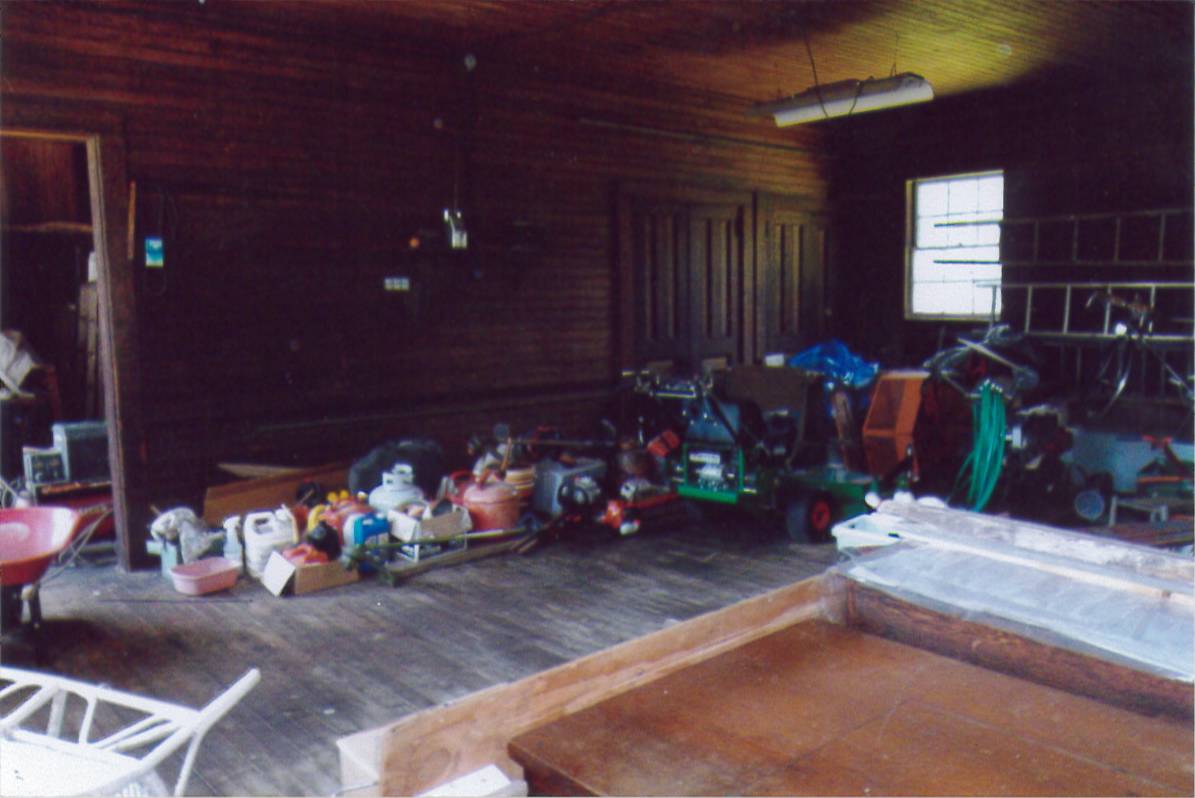
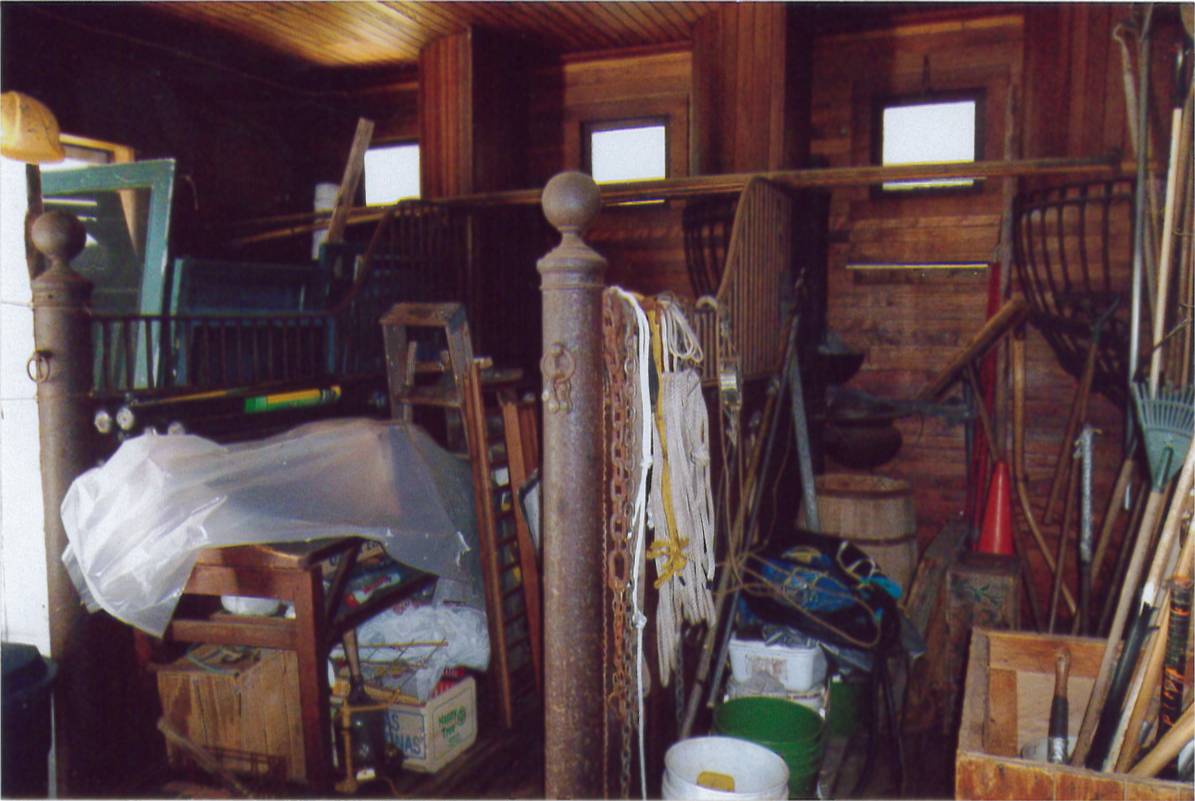
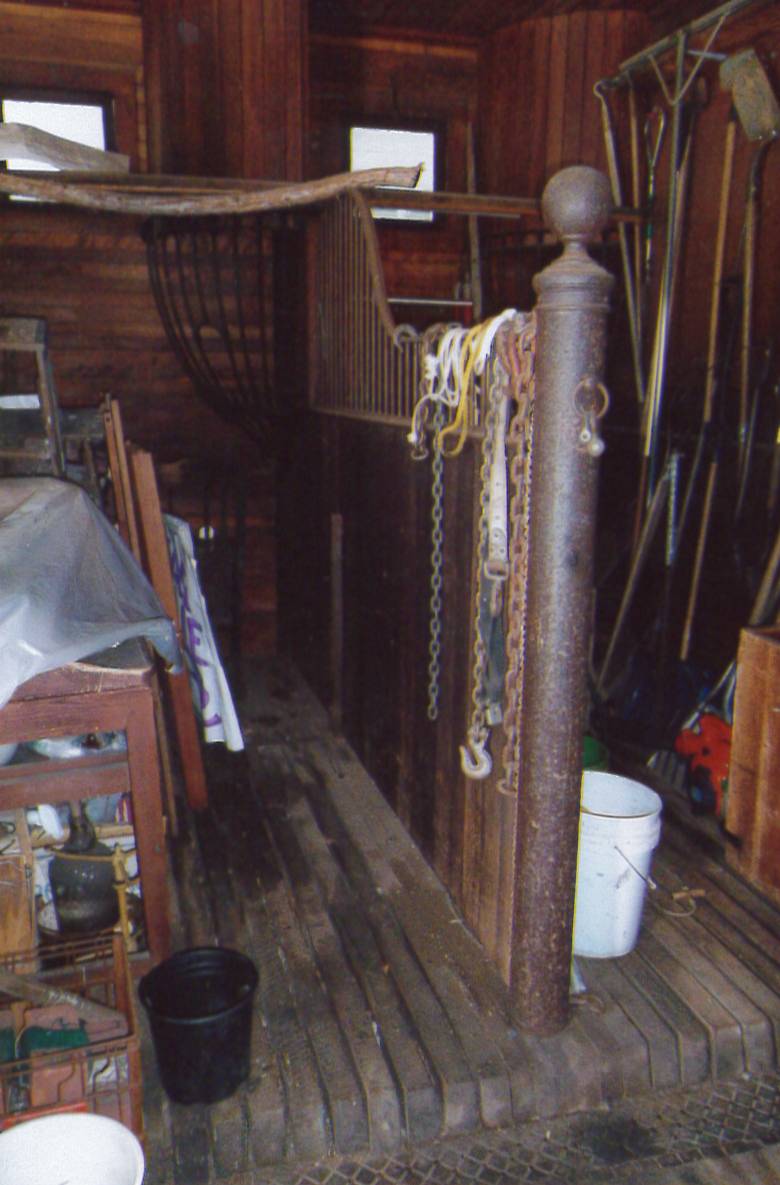
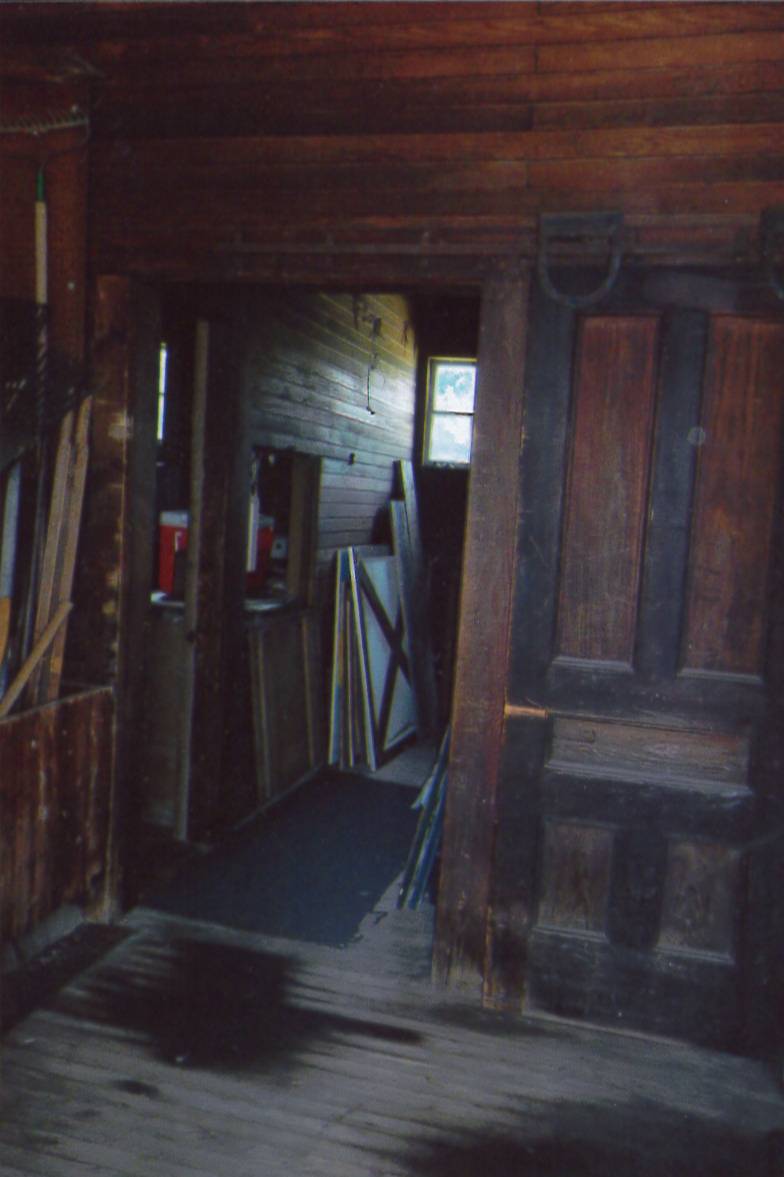
Barn roof in need of repair. Barn faces south. Beautiful, unique barn. From the NR nomination: "687 Main, SHADOW LAWN (Harry Kibbe House.) ,1894; 2h stories, hipped roof, Colonial Revival; dentillated cornice, slate roof, wood-shingle siding; asymmetric 4-bay facade with bay window. Interior has sunk"panelling, Colonial Revival mantels. Large carriage house nearby has peaked dormers, cupola, slate roof; inside, matched-board interior, 3 horse stalls with cast iron hay chutes and mangers. Slate roof well house and privy. Figures 19, 21."
- Use & Accessibility
Use (Historic)
Use (Present)
Exterior Visible from Public Road?
Yes
Demolished
n/a
Location Integrity
Original Site
- Environment
Related features
Environment features
Relationship to surroundings
The carriage house is behind and to the northeast of the house it is associated with. The ridge-line of the house is parallel to the ridge-line of the carriage house. A small shed is to the north of the carriage house. Behind a line of trees to the north of the carriage house is a tract of open space. The total size of the lot is 5 acres. The area is residential, some open space and light woodland.
- Typology & Materials
-
Building Typology
Materials
Structural System
n/a
Roof materials
Roof type
Approximate Dimensions
1260 square feet
- Source
-
Date Compiled
08/16/2010
Compiled By
Todd Levine, reviewed by the Connecticut Trust
Sources
Photographs and field notes by Dianne B. Lenti.
Visser, Thomas D.,Field Guide to New England Barns and Farm Buildings, University Press of New England, 1997.
McAlester, Virginia & Lee, A Field Guide to American Houses, Knopf, New York, 1984, 525 pages.
Vision Appraisal Online Database. www.visionappraisal.com/Somersct.
Map of Somers, CT, retrieved on August 16, 2010 from website www.zillow.com.
Clouette, Bruce, National Register of Historic Places Nomination #389687, 1982. Item No. 82004389 NRIS (National Register Information System)
http://pdfhost.focus.nps.gov/docs/NRHP/Text/82004389.pdf
http://pdfhost.focus.nps.gov/docs/NRHP/Photos/82004389.pdf - PhotosClick on image to view full file
-