Barn Record Farmington
RETURN TO ‘FIND BARNS’- Building Name (Common)
- Dolly Northup Barn
- Building Name (Historic)
- Hubert C. Hart Barn
- Address
- 132 Main Street (Route 4), Farmington
- Typology

- Overview
-
Designations
n/a
Historic Significance
Architectural description:
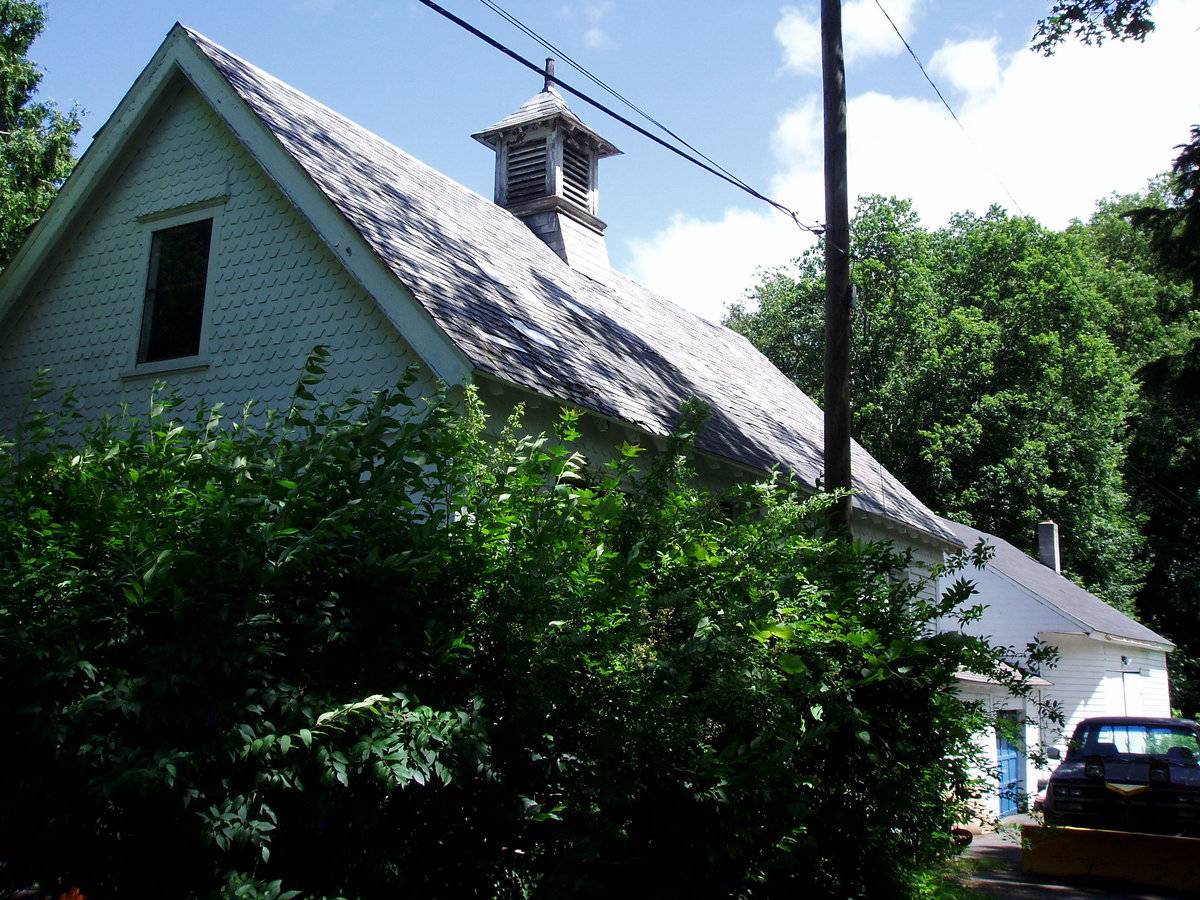
This is a 1 ½-story gable-entry barn with a gable roof. It has two connected lateral additions extending off the back of the structure, attached to the main barn’s northeast gable-end. These will be referred to as Addition I and Addition II.
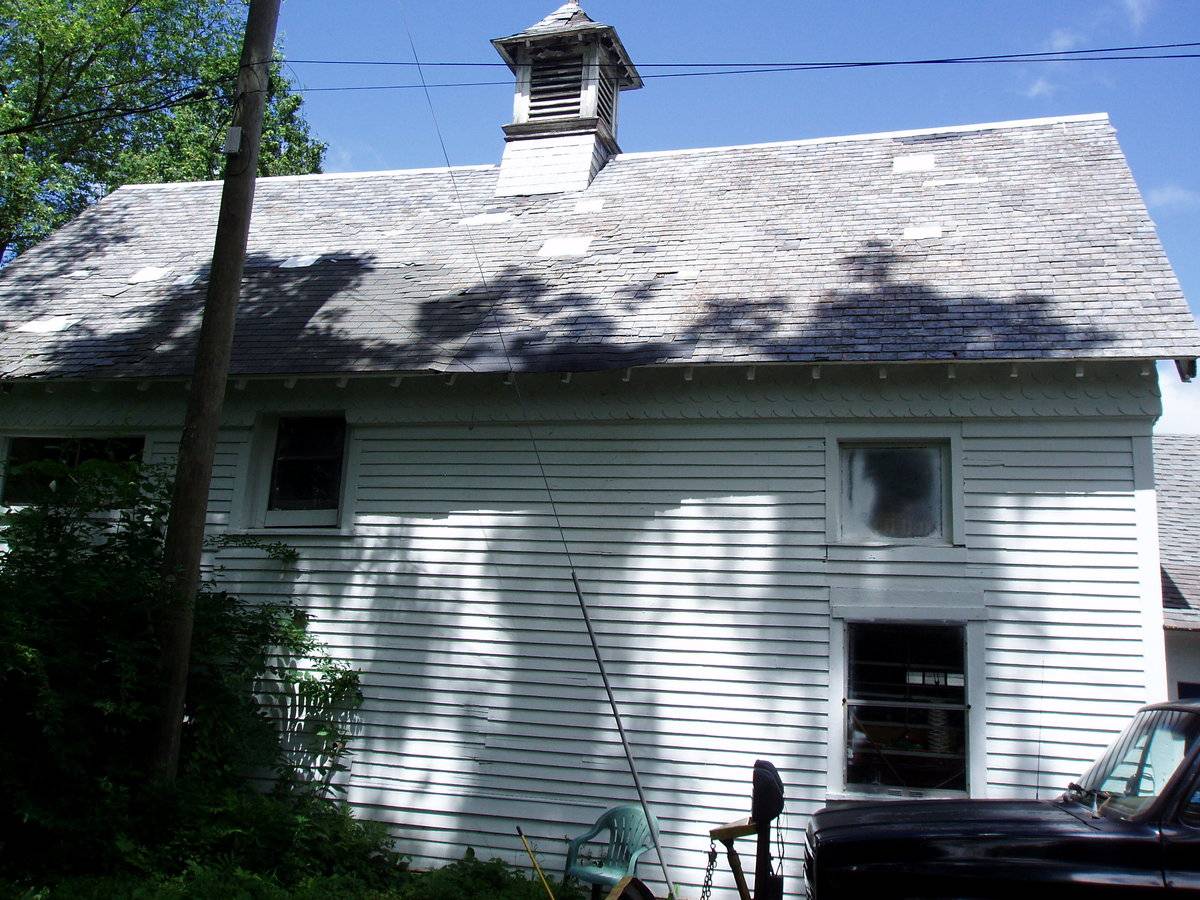
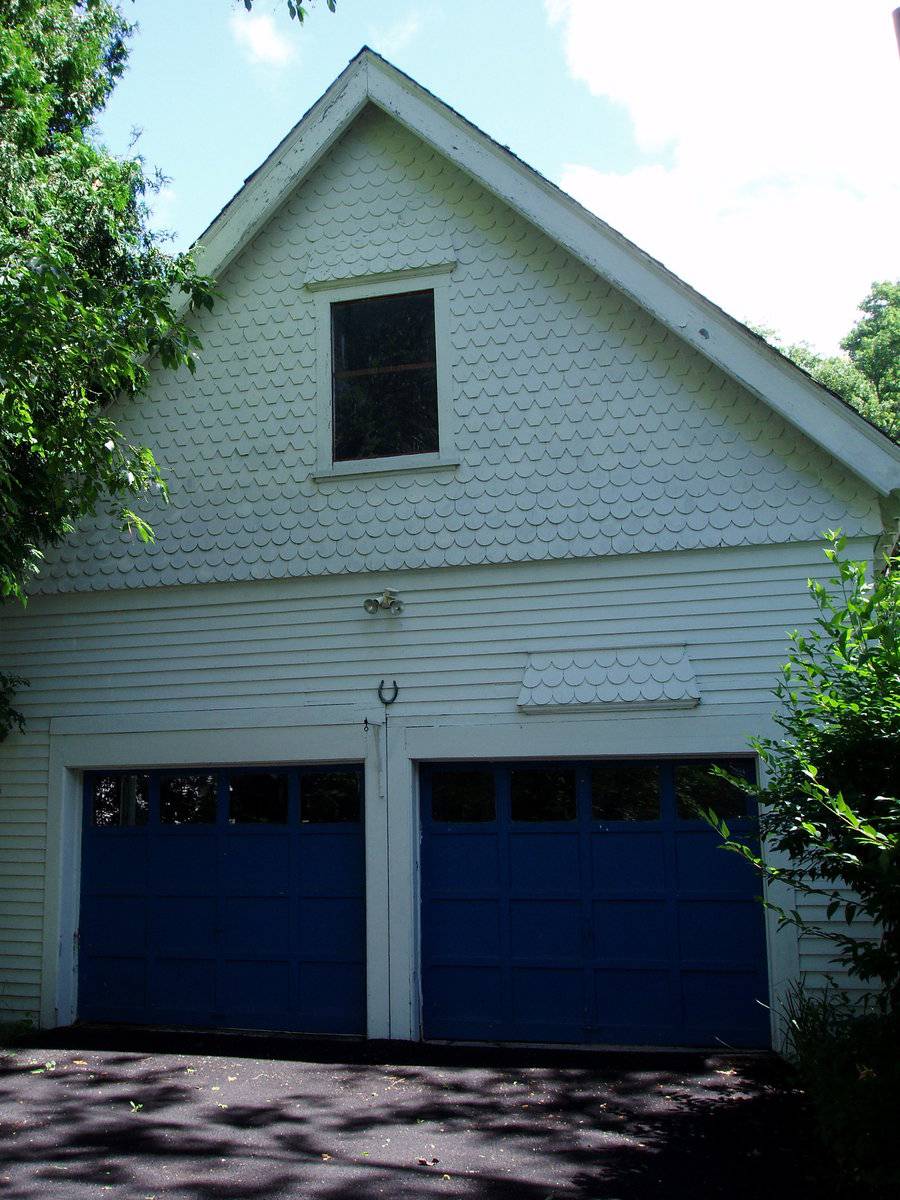
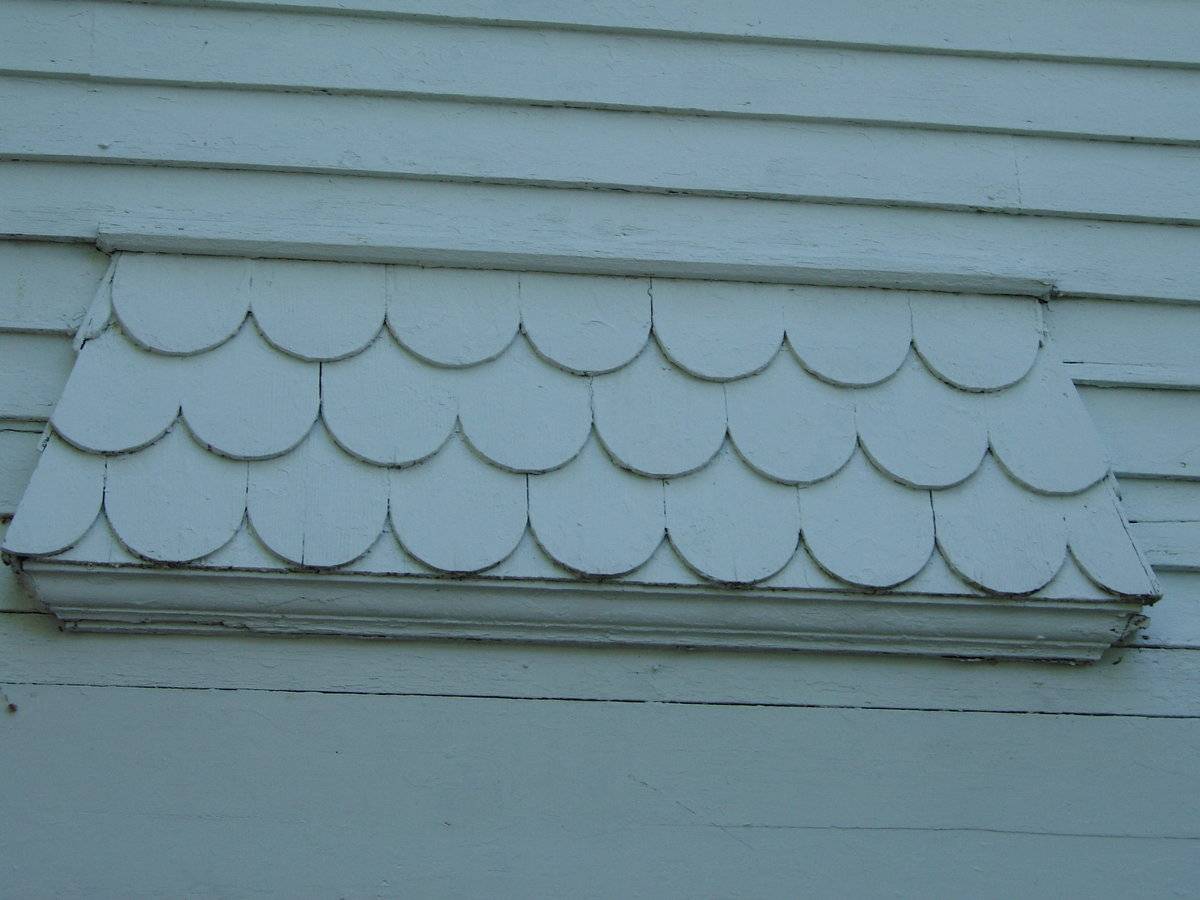
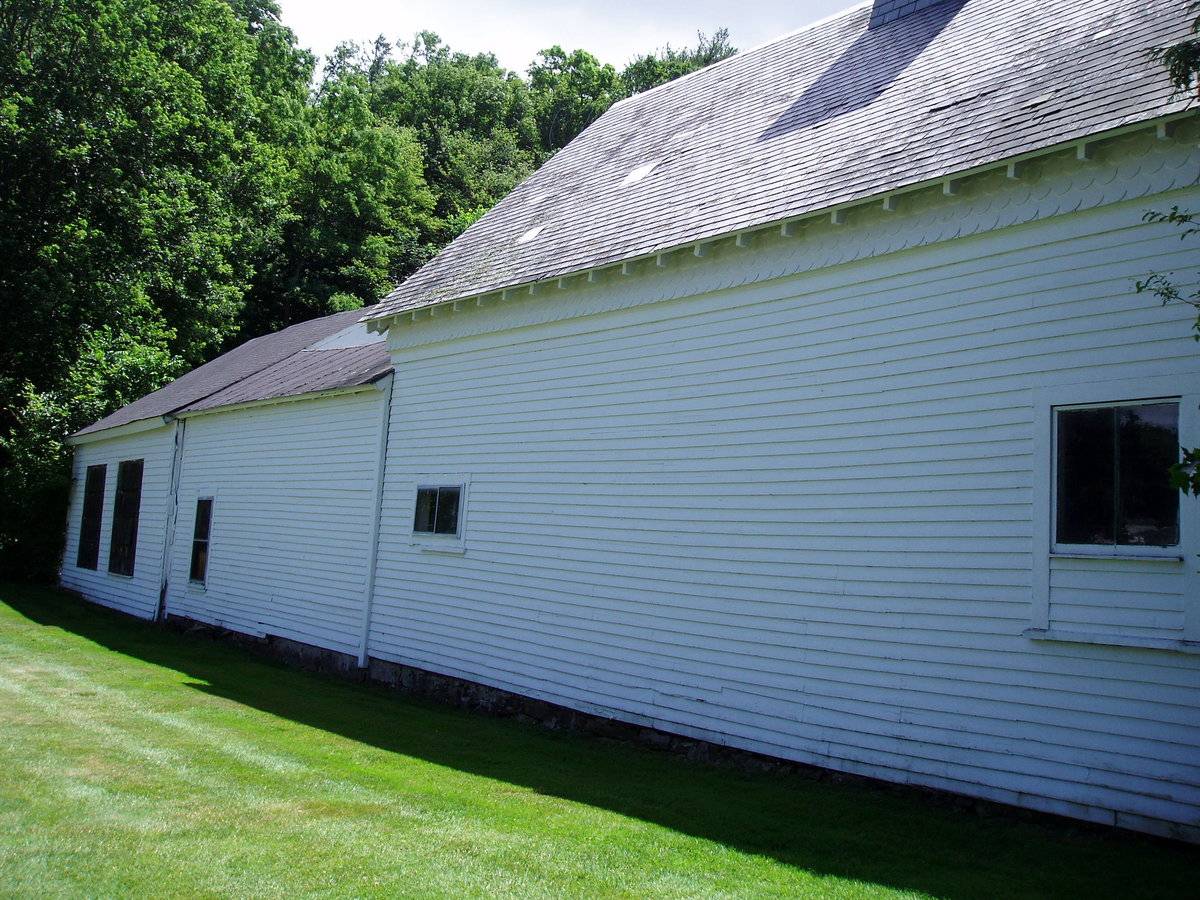
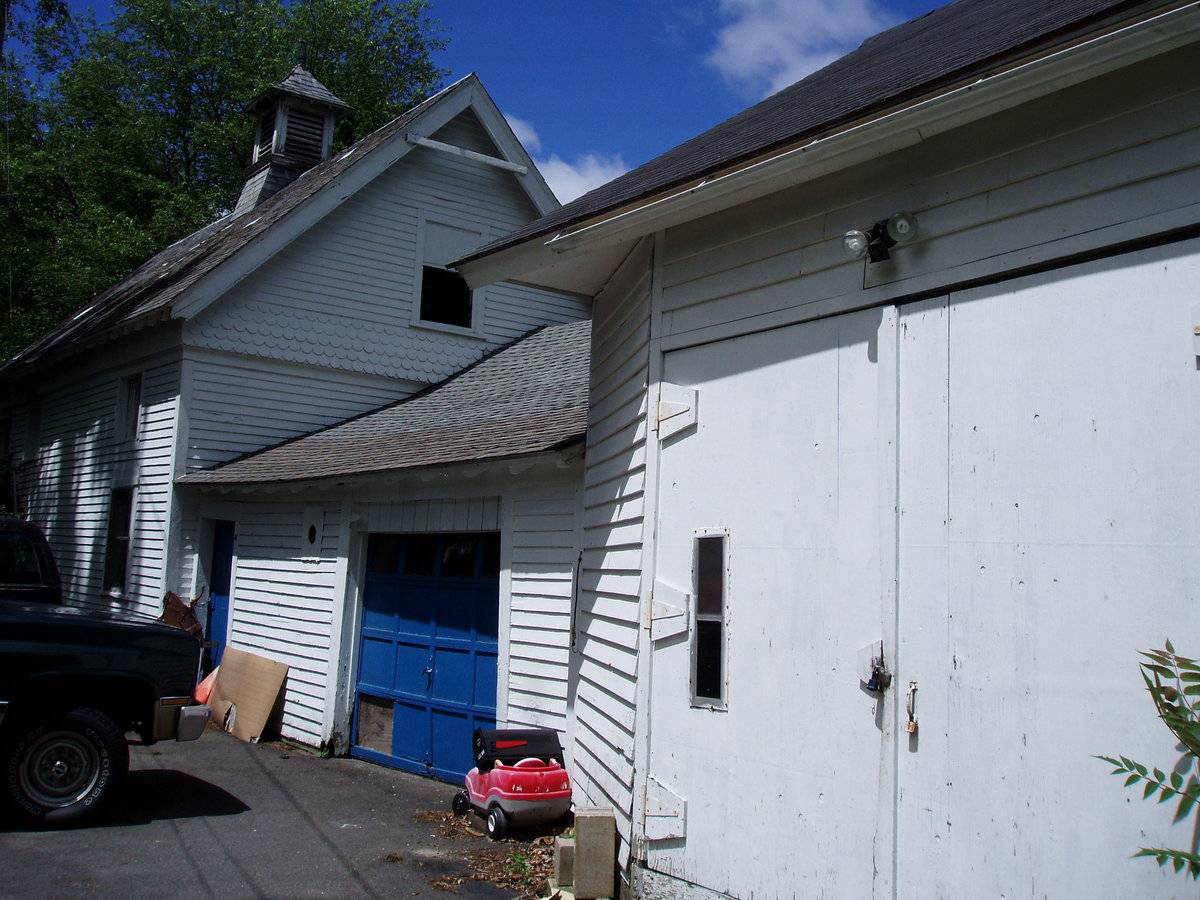
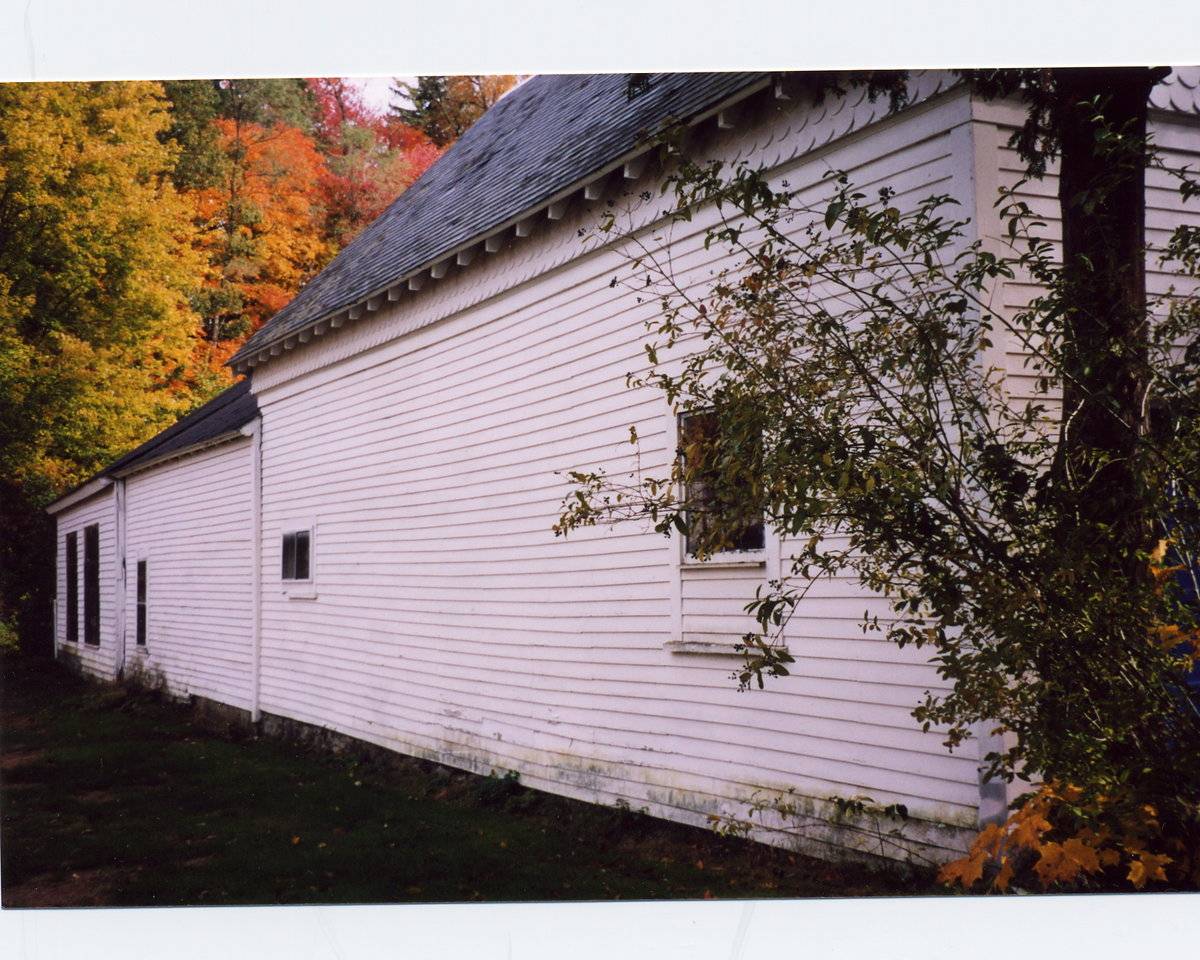
The main barn is a 1 ½-story structure with the southwest gable-end as the primary façade. The main entries on this end consist of two single-door panel overhead garage doors. The doors are four panels in height by four panels in width, and the top row of panels on each has been replaced by glass panes. Above the door near to the south corner is a small, partial-width pent roof. The gable-attic on this façade includes a single centered double-hung window, beneath the ridgeline of the roof. The northwest eave-side has two window openings on the first story. Near to the west corner is framing for a double-hung window, however the lower portion of this frame has been sided in and the upper portion turned into a square window opening. A two-pane horizontal window opening is located near the north corner of the main barn on this northwest eave-side. The southeast eave-side has window openings on both stories. The first story has a single window, a double-hung type, located near the east corner of the main barn. The second story has a smaller square window nearly centered over the window on the first story near the east corner. A double-hung window is located just to the west of the center of this eave-side, cutting up into the friezeboard beneath the eave. A horizontally oriented two-pane window is present between the double-hung window and the south corner of the barn. Most of the northeast gable-end is occupied by the attached lateral Addition I. The attic-gable is visible, and a single double-hung window is located centered beneath the ridgeline.
Addition I is a 1-story gable-roof structure which connects to the main barn and Addition II at the gable ends. The primary façade is the southeast eave-side. Two entries are present on this side: a pass-through door is located in the southern half, and a panel overhead garage door is present in the northern half. The garage door is of the paneled type and identical to those found on the front of the main barn. The northwest eave-side of Addition I has one double-hung window opening, near the north corner. The remainder of this side is blank.
Addition II is a 1-story gable-roof structure which connects to Addition I on its southwest gable-end. The primary façade of Addition II is the southwest eave-side. Addition II is slightly wider than Addition I, and to make up for the difference where the two join, the southeast eave-side wall of Addition II is canted in at the corner to join Addition I so there are no right angles. Addition II features a pair of large entry doors, roughly in the center of this side. The southern-most of the two doors has a small modern aluminum window mounted into it. The northeast gable end of Addition II is blank. The northwest eave-side of Addition II has two window large double-hung windows symmetrically placed into this wall.
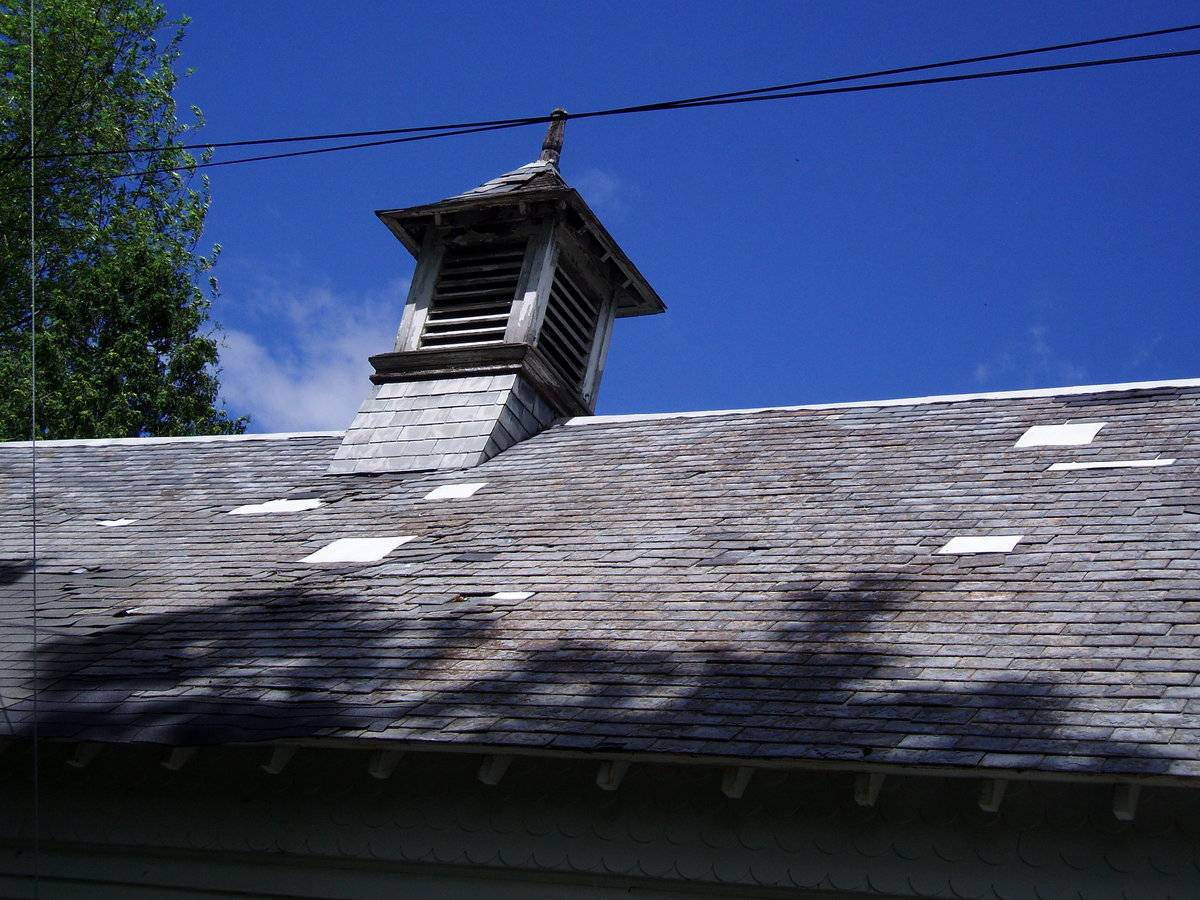
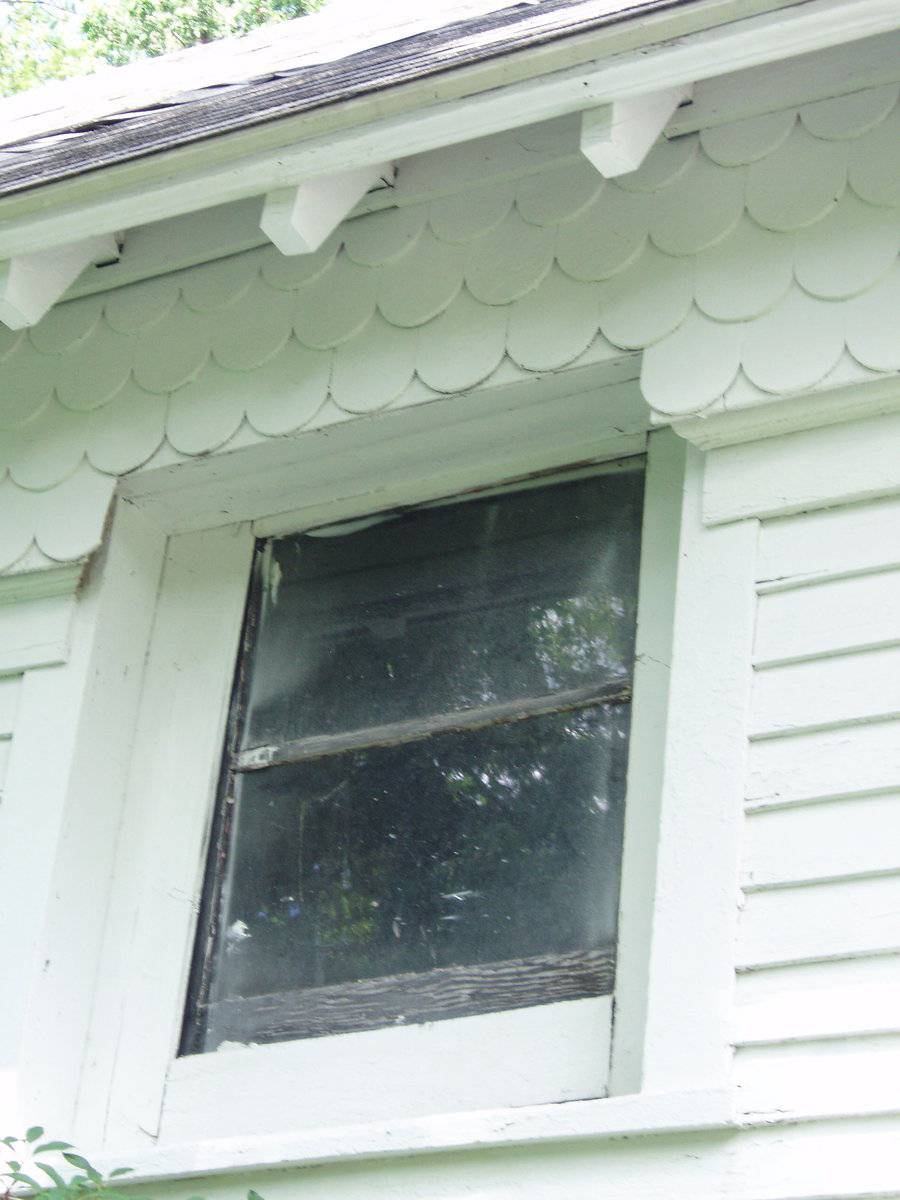
All three structures are clad in horizontal wood clapboard siding. The main barn has a friezeboard of fish-scale shingles wrapping around the eave-sides beneath the exposed rafter tails. This band of fish-scale shingles continues around both gable-ends. On the northeast gable end, the gable-attic is clad in horizontal clapboard siding above this band. On the southwest gable-end façade, octagonal shingles are present in horizontal courses across the vertical distance of the gable-attic window. Fish-scale shingles continue above the octagon shingles up to the ridgeline. The rafter tails on Addition I are also exposed. Portions of the roof are covered in both slate and gray asphalt shingles. A chimney projects from the roof near the east corner of Addition II. A square cupola is centered on the ridgeline of the main barn. Each side of this cupola has louvered vents. It is capped by a pyramidal roof with flared eaves.
Historical significance:
Until the 1830s, the horses used for riding and driving carriages were often kept in the main barn along with the other farm animals. By the 1850s, some New England farmers built separate horse stables and carriage houses. Early carriage houses were built just to shelter a carriage and perhaps a sleigh, but no horses. The pre-cursor to the twentieth-century garage, these outbuildings are distinguished by their large hinged doors, few windows, and proximity to the dooryard. The combined horse stable and carriage house continued to be a common farm building through the second half of the nineteenth century and the first decade of the twentieth century, until
automobiles became common. Elaborate carriage houses were also associated with gentlemen farms and country estates of the late 19th and early 20th centuries.The New England barn or gable front barn was the successor to the English barn and relies on a gable entry rather than an entry under the eaves. The gable front offers many practical advantages. Roofs drain off the side, rather than flooding the dooryard. With the main drive floor running parallel to the ridge, the size of the barn could be increased to accommodate larger herds by adding additional bays to the rear gable end. Although it was seen by many as an improvement over the earlier side-entry English Barn, the New England barn did not replace its predecessor but rather coexisted with it, as both types continued to be built.
Field Notes
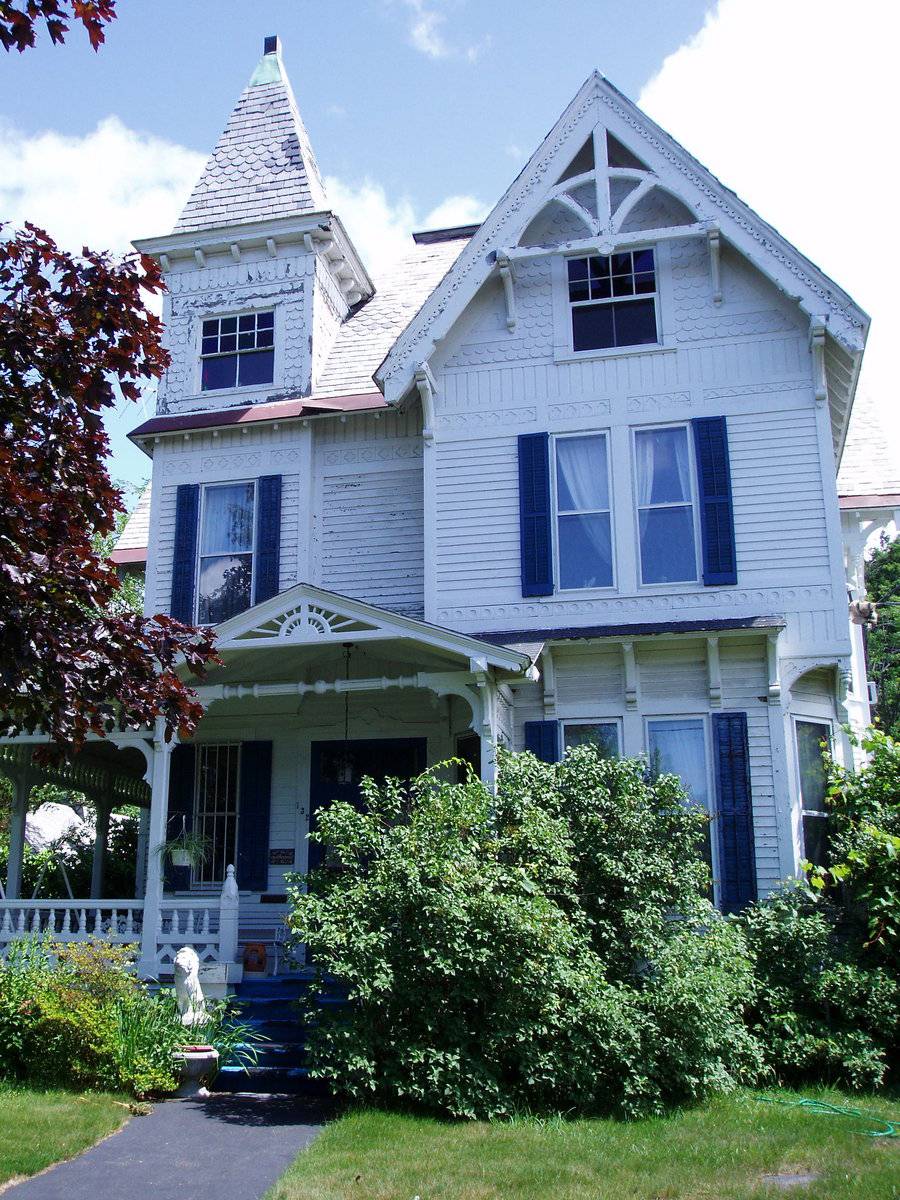
This is a long, added-onto connected barn. It's on the property of a wildly decorative Queen Anne house built c. 1885 by the inventor-manufacturer Hubert C. Hart. Barn(s) are set way back from the house but are clearly visible from the street (Rt.4). It is white clapboard with wood shingles on some upper portions. Decorative scallop shingles and a square, louvered cupola add to the uniqueness. Commercial signs on the side have faded. The roof is part slate and part asphalt shingles. Threat possible to roof as it's pretty patched up. The front barn was converted to a two-car garage in the 1920s. There is a lot of info about Hubert C. Hart. He held over 100 patents and was involved in numerous manufacturing endeavors in Unionville in late 19th - early-20th c.
- Use & Accessibility
Use (Historic)
Use (Present)
Exterior Visible from Public Road?
Yes
Demolished
n/a
Location Integrity
Unknown
- Environment
Related features
n/a
Environment features
Relationship to surroundings
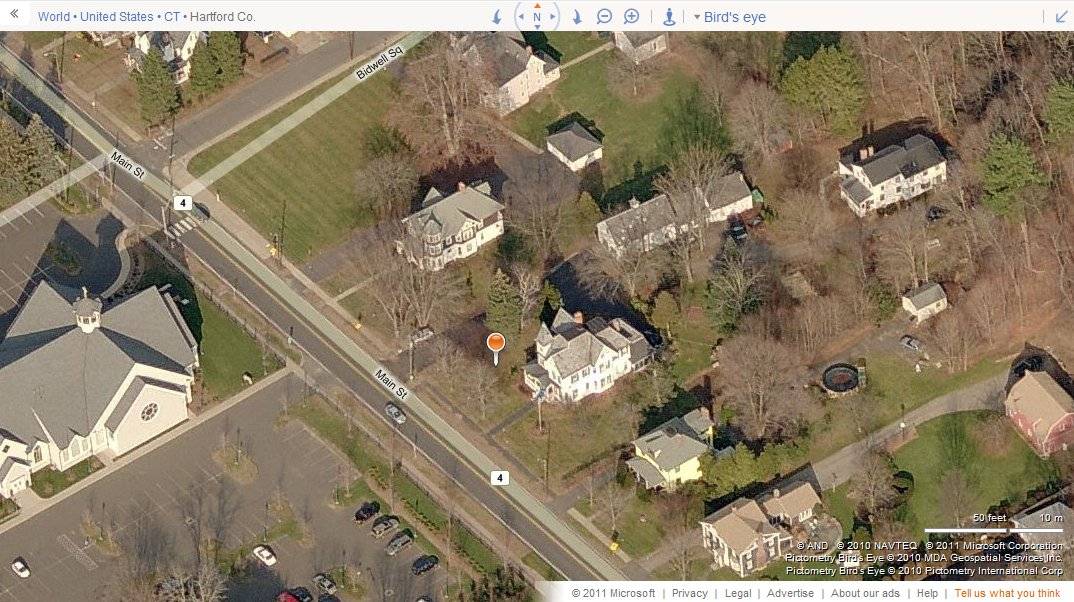
This barn and connected additions face Main Street, which passes the property at a southeast to northwest angle. The house that relates to these connected barns is a large Queen Anne that is located to the southwest of the main barn. An asphalt driveway divides the house from the barns, running to the garage doors in the gable-end, and also along the southeast eave-side, around to another house located to the east of Addition II. Trees and a grassy lawn surround the connected barns. The larger neighborhood is comprised of blocks of dwellings intermixed with small areas of woodland.
- Typology & Materials
-
Building Typology
Materials
Structural System
n/a
Roof materials
Roof type
Approximate Dimensions
BARN: 836 square feet ADDITION I: 480 square feet ADDITION II: 650 square feet
- Source
-
Date Compiled
04/10/2011
Compiled By
N. Nietering & T. Levine, reviewed by CT Trust
Sources
Photographs by Meyer/Macomber and Todd Levine.
Sexton, James, PhD; Survey Narrative of the Connecticut Barn, Connecticut Trust for Historic Preservation, Hamden, CT, 2005, http://www.connecticutbarns.org/history.
Visser, Thomas D.,Field Guide to New England Barns and Farm Buildings, University Press of New England, 1997, 213 pages.
Map of Unionville, CT, retrieved on April 9, 2011 from website www.bing.com.
Farmington Assessor’s Records - online - http://www.farmington-ct.org/landrecords/search.php
- PhotosClick on image to view full file
-