Barn Record East Hartford
RETURN TO ‘FIND BARNS’- Building Name (Common)
- n/a
- Building Name (Historic)
- n/a
- Address
- 690 Forbes Street, East Hartford
- Typology

- Overview
-
Designations
n/a
Historic Significance
Architectural description:
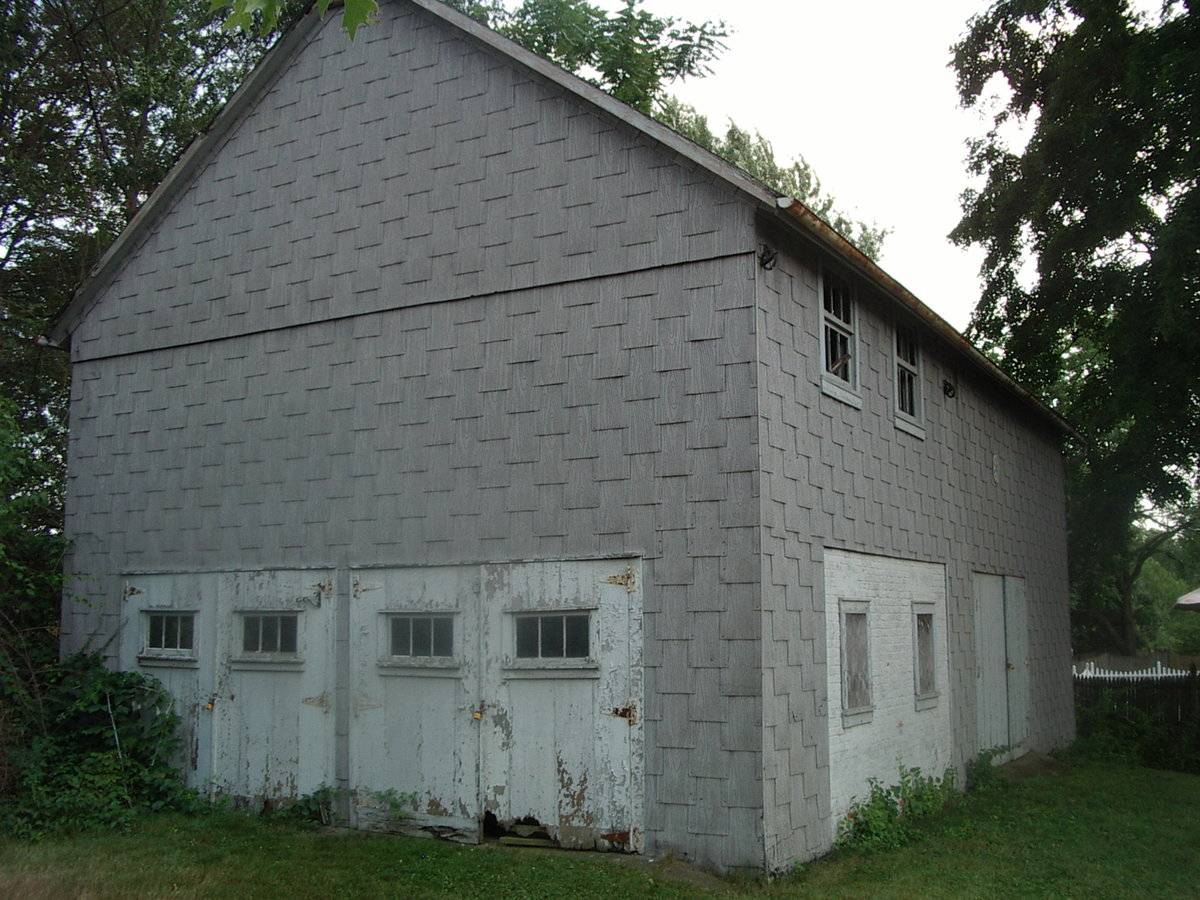
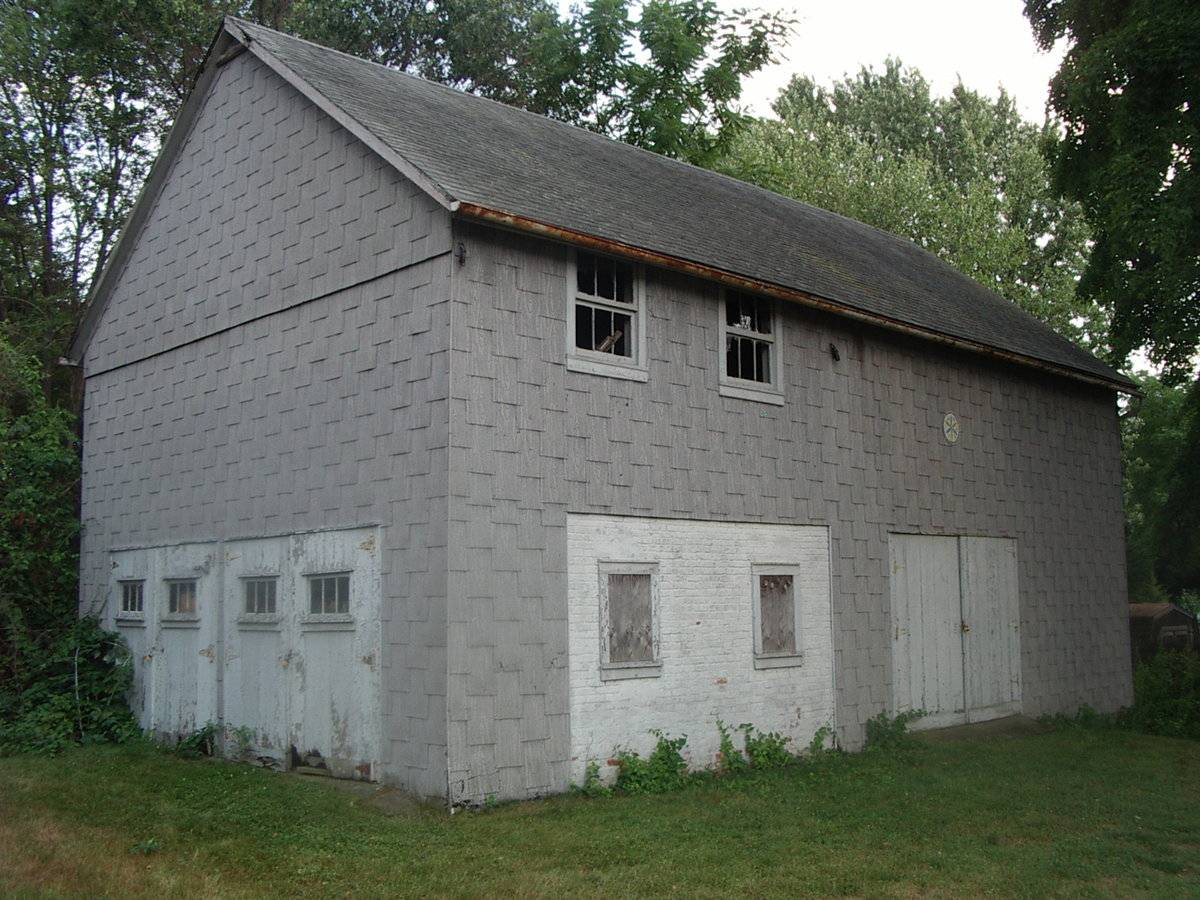
This is a 2 ½ - story barn with entries from both the gable-side and the eave-side. The west eave-side of the barn faces Forbes Street with its ridge line running north-south parallel to the road. The main façade of the barn is the north gable-façade with two main entrances closely spaced at the center through two pairs of hinged wagon doors with lintel trim. Each leaf of the two main entrances has a three-pane stable window insert at the center with trim. The gable attic above is separated from the rest of the façade by a distinct dropped girt siding divide line. The west eave-side of the barn has an entrance off-centered towards the south through a pair of hinged wagon doors. The west eave-side probably had a second wagon door entrance towards the north which is presently enclosed by brick masonry with two window inserts. The second floor level of the west eave-side of the barn as two three-over-three double-hung sash windows towards the north, just below the eave level.
The wooden frame of the barn has asphalt shingle roofing and diagonal asphalt siding on the walls. The west eave-side of the barn has a portion made in un-plastered brick masonry painted white.
Historical significance:The proximity of the barn to the main residence, the wagon door entrance and lesser number of windows suggests the probable usage of the barn as a carriage house.
Until the 1830s, the horses used for riding and driving carriages were often kept in the main barn along with the other farm animals. By the 1850s, some New England farmers built separate horse stables and carriage houses. Early carriage houses were built just to shelter a carriage and perhaps a sleigh, but no horses. The pre-cursor to the twentieth-century garage, these outbuildings are distinguished by their large hinged doors, few windows, and proximity to the dooryard.
The combined horse stable and carriage house continued to be a common farm building through the second half of the nineteenth century and the first decade of the twentieth century, until automobiles became common. Elaborate carriage houses were also associated with gentlemen farms and country estates of the late 19th and early 20th centuries. Another form of carriage barn, the urban livery stable, served the needs of tradespeople.Field Notes
The barn was located behind the farmhouse. It has some characteristics of an English barn and some of a New England style barn. The residents renting the property said it definitely had two distinct sections inside.
- Use & Accessibility
Use (Historic)
Use (Present)
Exterior Visible from Public Road?
Yes
Demolished
n/a
Location Integrity
Unknown
- Environment
Related features
Environment features
Relationship to surroundings
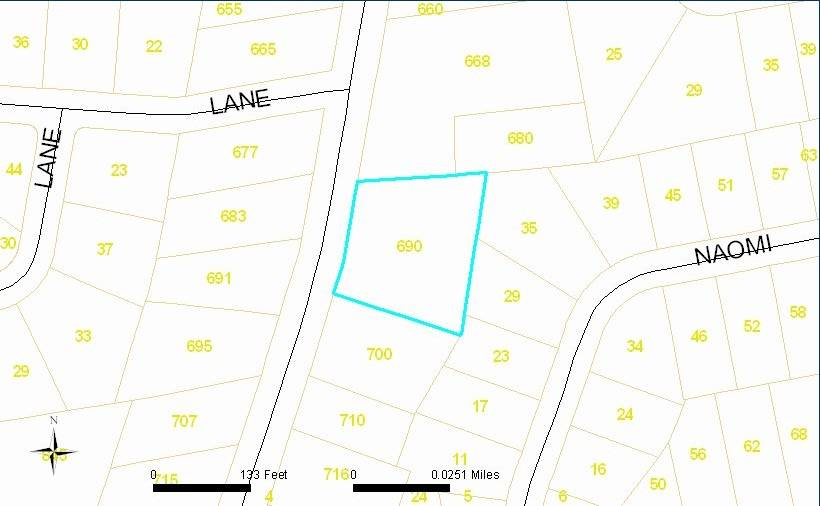
The 0.65 acres property, property number- 4563, is located towards the east of Forbes Street. The property is situated in a residential area with surrounding plots delineated by woodland. Residential plots flank the property towards its north, east, south and the west, across Forbes Street.
The barn is located in the south-east corner of the property with its ridge line running north-south, parallel to Forbes Street. The circa 1870 main residence is located towards the north-west of the barn, nearer to the road. The property is accessed by a driveway from the south-west corner which continues east along the south-side of the main residence to reach the barn. The property includes a patch of open land towards the north while cluster of trees surround the buildings towards the south.
- Typology & Materials
-
Building Typology
Materials
Structural System
Roof materials
Roof type
Approximate Dimensions
Barn: 960 SqFt
- Source
-
Date Compiled
07/20/2010
Compiled By
T. Levine and M. Patnaik, reviewed by CT Trust
Sources
Photographs and field notes provided by Jeffrey Mainville
Assessors’ records and GIS Map retrieved on February 11th , 2011 from website http://www.ci.east-hartford.ct.us/Public_Documents/index and http://ceo.fando.com
GIS information retrieved on February 11th, 2011 from website http://www.crcog.org
Photograph/Information retrieved on February 11th, 2011 from website http://www.google.com
Photograph/Information retrieved on February 11th, 2011 from website http://www.zillow.com
O’Gorman, James F., Connecticut Valley Vernacular: the Vanishing Landscape and Architecture of the New England Tobacco Fields, University of Pennsylvania Press, 2002, 144 pages.
Sexton, James, PhD; Survey Narrative of the Connecticut Barn, Connecticut Trust for Historic Preservation, Hamden, CT, 2005, http://www.connecticutbarns.org/history
Visser, Thomas D.,Field Guide to New England Barns and Farm Buildings, University Press of New England, 1997.
- PhotosClick on image to view full file
-