Barn Record Farmington
RETURN TO ‘FIND BARNS’- Building Name (Common)
- Captain Joseph Hawley Barn
- Building Name (Historic)
- n/a
- Address
- 724 Plainville Avenue (Route 177), Farmington
- Typology
- Overview
-
Designations
n/a
Historic Significance
Architectural description:
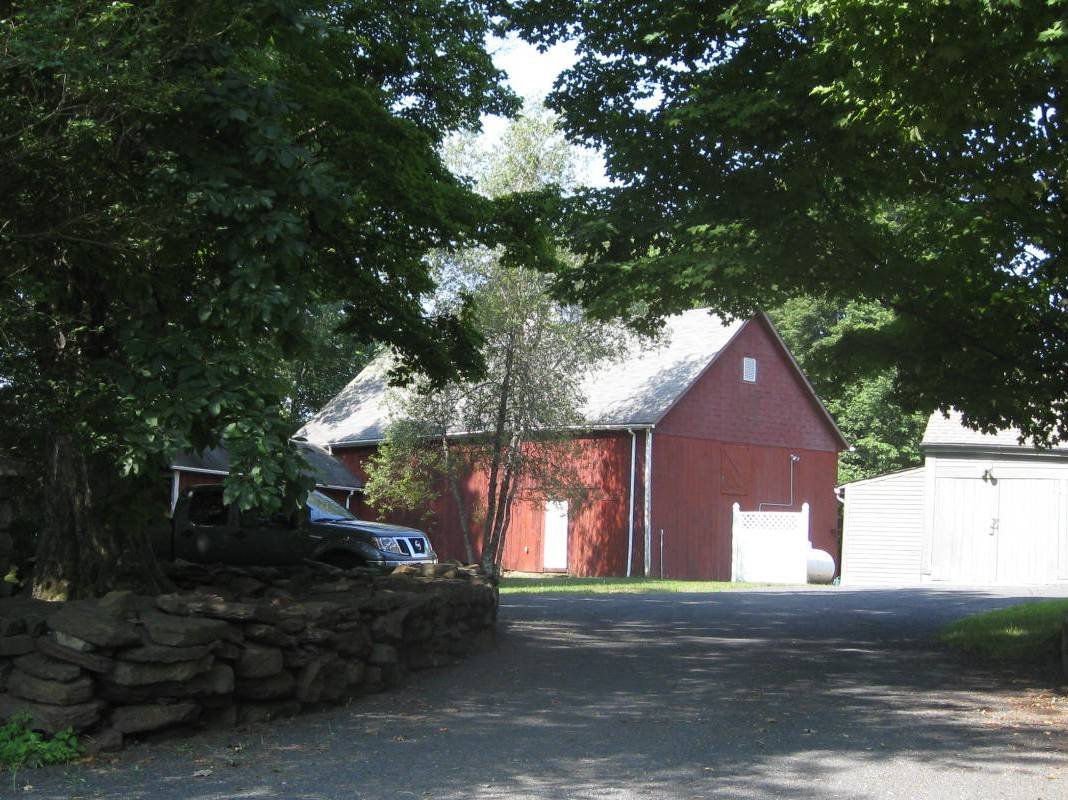
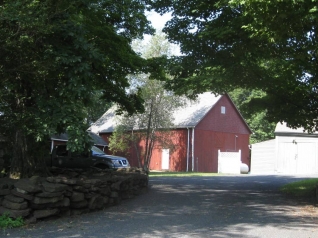
This is a 1 ½-story eave-entry barn with a gable roof. The primary façade faces northwest, and the ridgeline is roughly parallel to Plainville Avenue, which passes this property on a north to south alignment. A small single-story addition extends to the southeast off the southeast eave-side, forming an L shaped footprint.
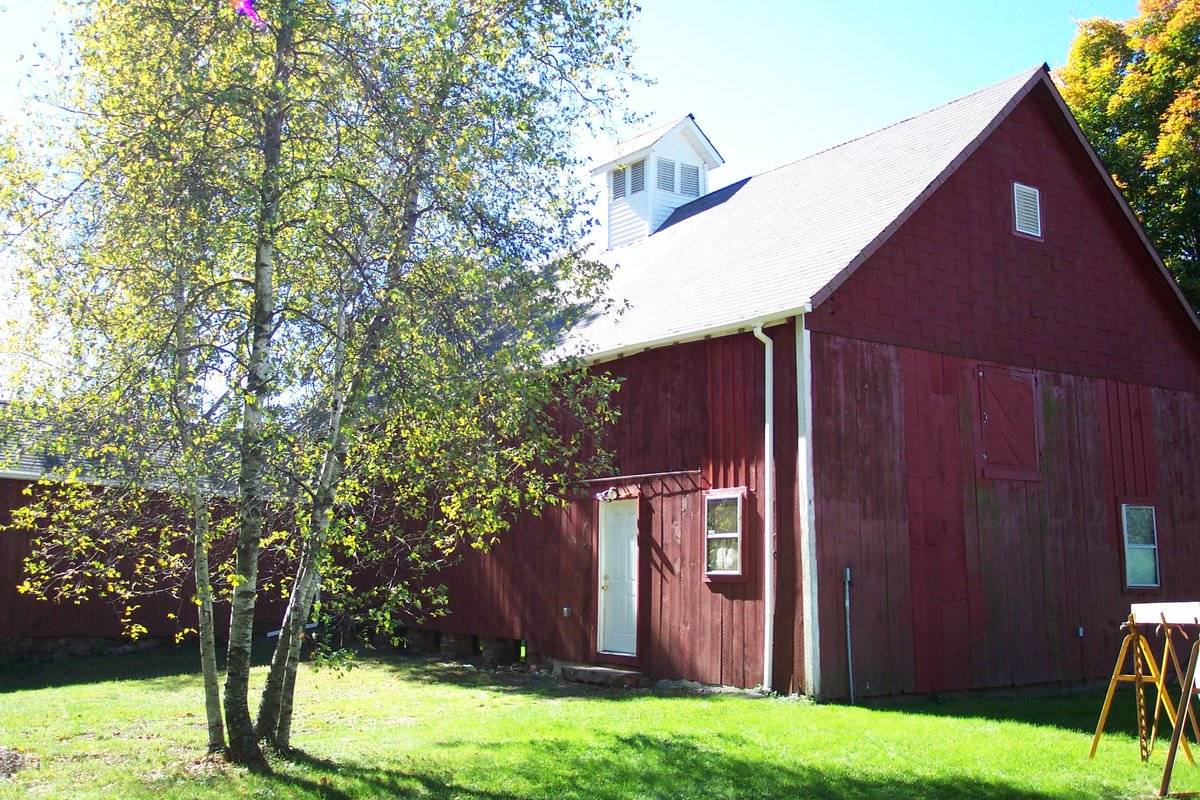
The primary façade of this barn is located on the northwest eave-side and is comprised of two oversize wooden doors located in the center of the façade. No other openings appear to be present in this façade. The northeast gable-end contains one modern double-hung window on the first story, offset to toward the north corner. A small wooden access door is located just below the girt, slightly off-center toward the east corner. A small louvered vent is present in the gable attic, centered. The southeast eave-side features one steel modern pass-through door in the northern half of the barn. Farther toward the east corner from the door is a modern double-hung window. The remainder of this eave-side appears blank. The southwest gable-end appears to contain one small window opening in the western half of the first story; otherwise this gable-end appears blank. The 1-story addition which extends off the southeast corner appears to be blank on all three sides.
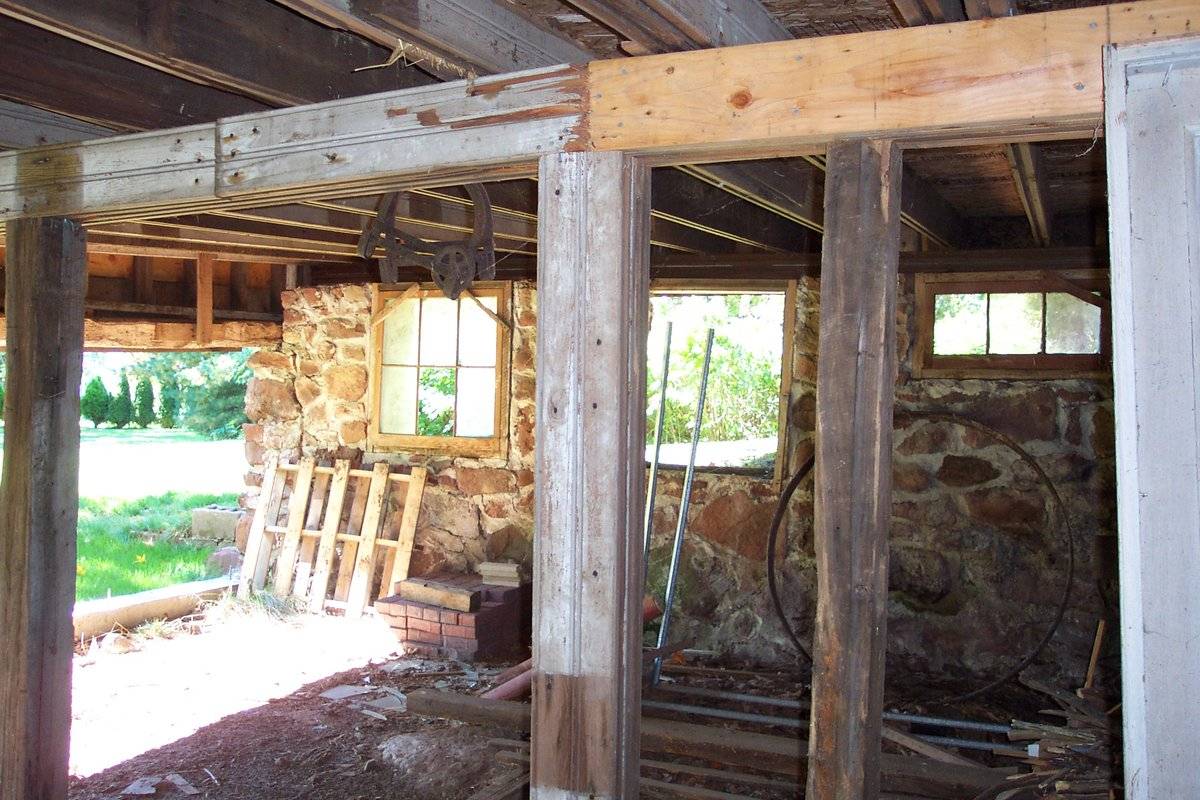
The exterior walls of this barn are covered in medium-width vertical wooden flush-board siding, painted red. In some places, this has been patched with a newer vertical wooden board-and-batten siding. The interior of the gables are clad with rectangular shingles, painted red. The roof is covered in light gray asphalt shingles. The southeast eave-side has a gutter and downspout in place. A square cupola is centered atop the roof ridgeline. It contains small square paired louvers for ventilation on each side, and is topped by a gable roof covered in gray asphalt shingles with fairly large eaves. The cupola is clad in horizontal white clapboard siding. The northern portion of the barn and L addition appear to be constructed on a stone foundation. The southern portion of the barn is constructed on low stone piers.
Historical significance:
The oldest barns still found in the state are called the “English Barn,” “side-entry barn,” “eave entry,” or a 30 x 40. They are simple buildings with rectangular plan, pitched gable roof, and a door or doors located on one or both of the eave sides of the building based on the grain warehouses of the English colonists’ homeland. The name “30 by 40” originates from its size (in feet), which was large enough for 1 family and could service about 100 acres. The multi-purpose use of the English barn is reflected by the building’s construction in three distinct bays - one for each use. The middle bay was used for threshing, which is separating the seed from the stalk in wheat and oat by beating the stalks with a flail. The flanking bays would be for animals and hay storage.
Field Notes
c.1765 The Cope family farm had many barns that were used for cows, hay and machinery until the 1940s, when an ironwork shop was run out of them. Rumor has it a cider brandy still was housed in the barns during Prohibition. All barns but the horse barn attached to the house and the barn in the picture were demolished for the Cope Farms development.
- Use & Accessibility
Use (Historic)
Use (Present)
Exterior Visible from Public Road?
Yes
Demolished
n/a
Location Integrity
Unknown
- Environment
Related features
n/a
Environment features
Relationship to surroundings
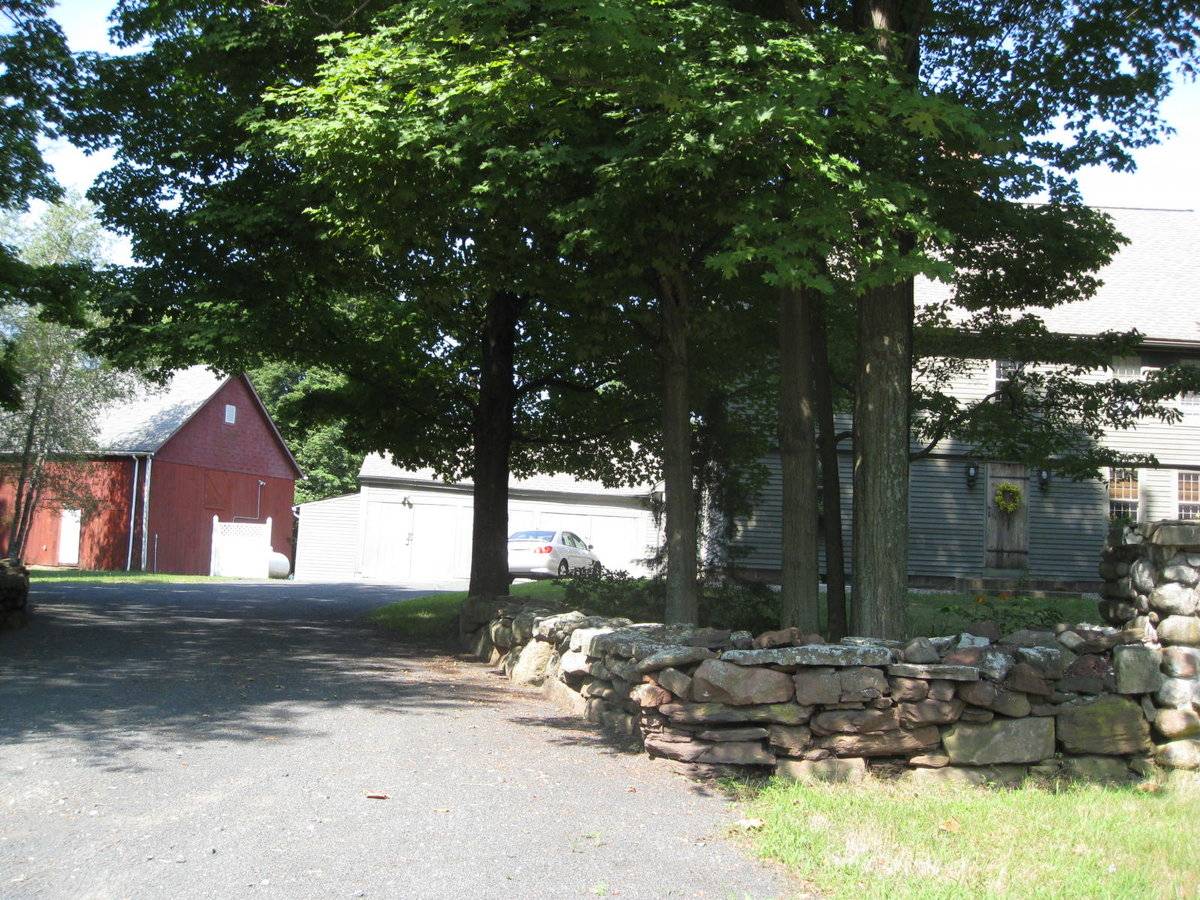
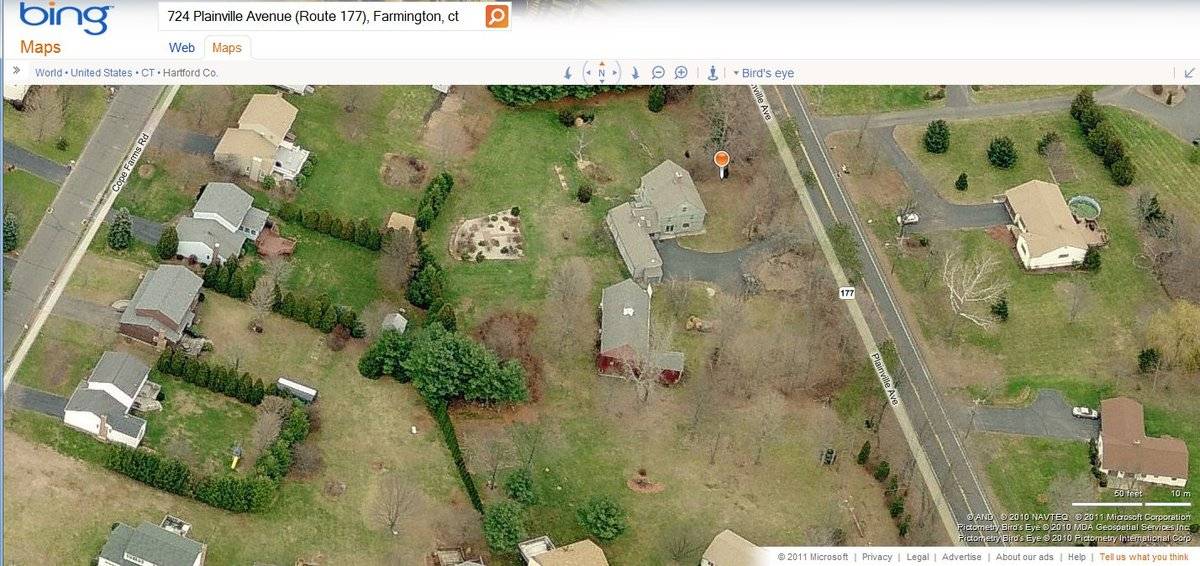
The barn on this property runs nearly parallel Plainville Avenue and the primary entry faces northwest. The farmhouse associated with this barn is located to the north-northeast of the barn and is parallel in orientation to the road. The house is connected to the road by an asphalt driveway. A grassy lawn dotted with trees surrounds the barn and house. The barn and property are surrounded on north, west, and south by the Cope Farms housing subdivisions. Backyards from these new houses abut the barn property on these three sides; some of the boundaries are denoted by screens of privacy trees. Additional widely spread dwellings are present across Plainville Avenue to the east. Active agricultural fields are present to the south of the dwellings on both sides of the road. Woodlands lie to the north beyond the housing.
- Typology & Materials
-
Building Typology
Materials
Structural System
n/a
Roof materials
Roof type
Approximate Dimensions
BARN: 1,680 square feet
- Source
-
Date Compiled
04/11/2011
Compiled By
N. Nietering & T. Levine, reviewed by CT Trust
Sources
Photographs by Linda Guernsey.
Sexton, James, PhD; Survey Narrative of the Connecticut Barn, Connecticut Trust for Historic Preservation, Hamden, CT, 2005, http://www.connecticutbarns.org/history.
Visser, Thomas D.,Field Guide to New England Barns and Farm Buildings, University Press of New England, 1997, 213 pages.
Map of Farmington, CT, retrieved on April 9, 2011 from website www.bing.com.
Farmington Assessor’s Records - online - http://www.farmington-ct.org/landrecords/search.php
- PhotosClick on image to view full file
-