Barn Record Farmington
RETURN TO ‘FIND BARNS’- Building Name (Common)
- Lewis-Walpole Museum Barn
- Building Name (Historic)
- Major General Solomon Cowles House
- Address
- 154 Main Street (Route 10), Farmington
- Typology
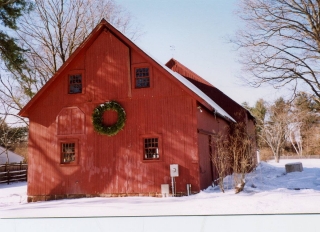
- Overview
-
Designations
Historic Significance
Architectural description:
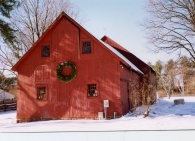
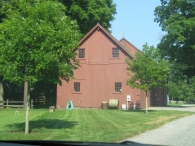
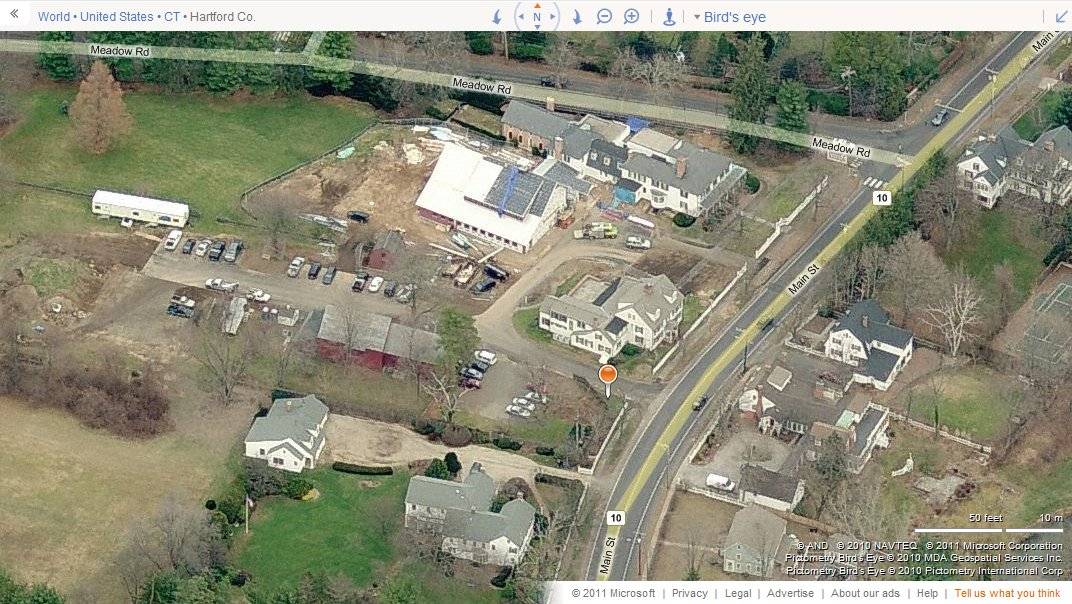
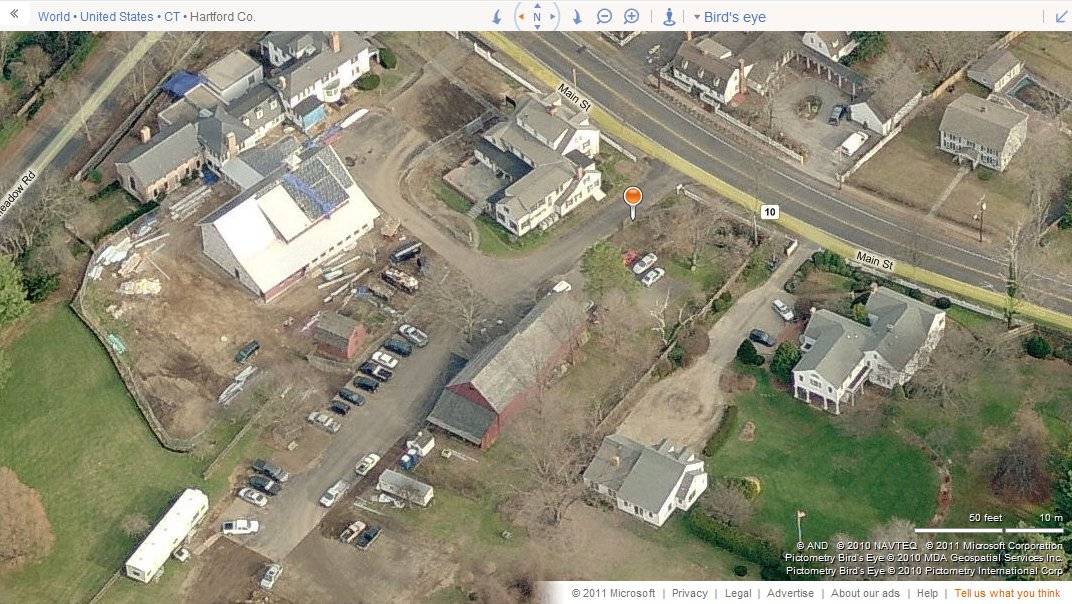
This is a large tripartite gable-roofed eave-entry barn (Barn I), with an east-end laterally-aligned 1 ½-story gable-roofed tripartite barn addition (Barn II), and small 1-story shed roof addition on the west end (Addition I). The barn complex is located perpendicular to Main Street, which follows a southwest to northeast alignment past this property.
Barn I:
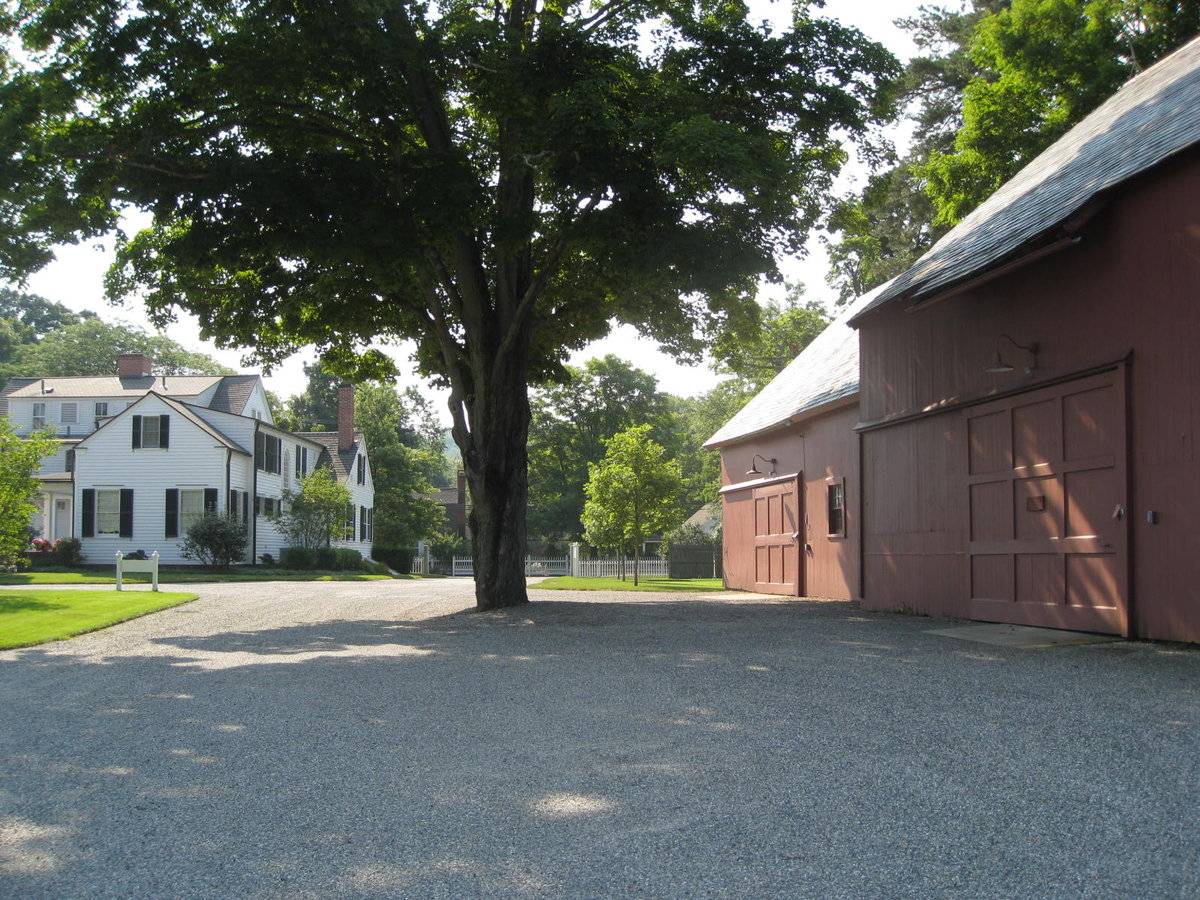
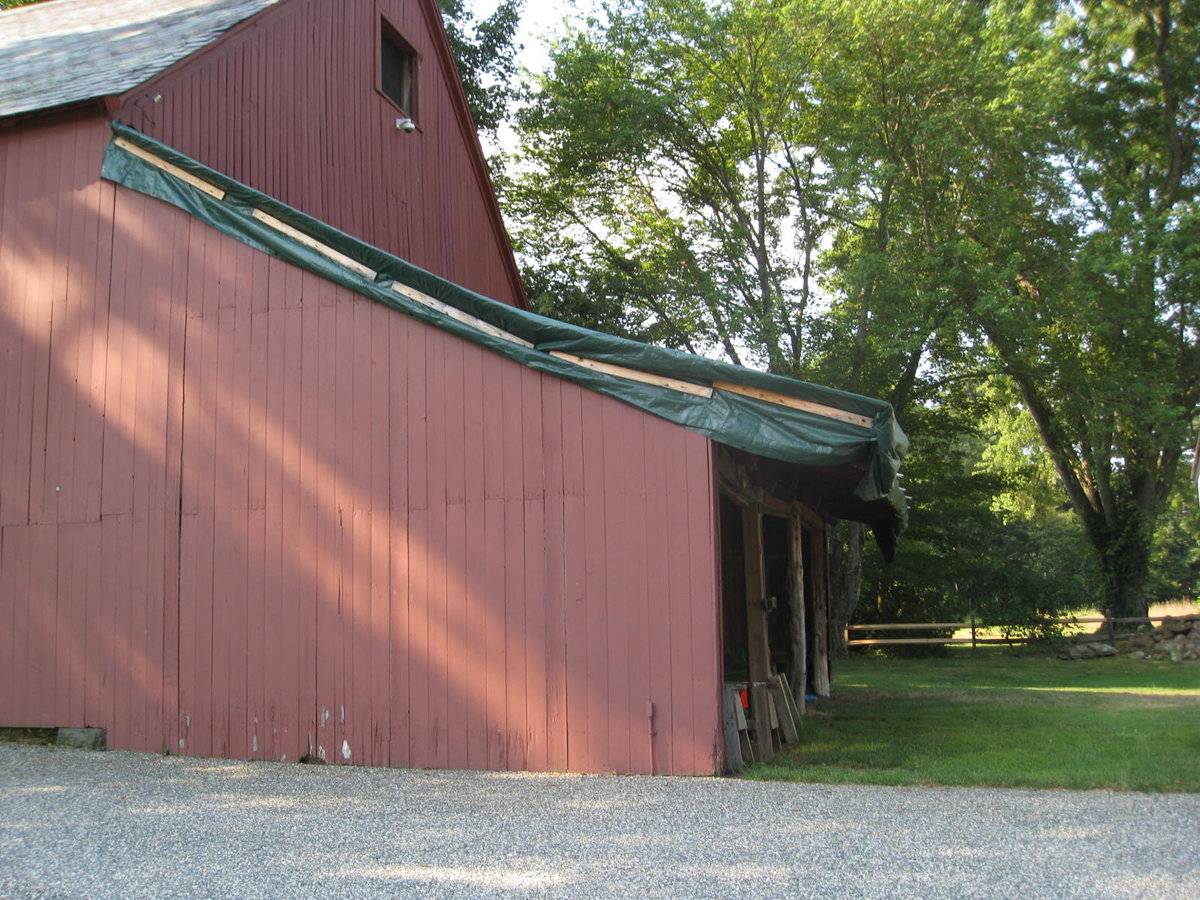
The primary façade of this barn is the northeast eave-side. The central bay is occupied by a large over-width paneled sliding door, which is mounted on a track that extends to the east. A gooseneck exterior lamp is centered over this door. The roof eave extends an extra foot or two over the entry only. The door is accessed by a short concrete ramp. The remainder of this eave-side is blank. The northwest gable-end of Barn I is attached to Addition I on the first story. The gable-attic is exposed, with a centered window opening below the ridgeline of the roof. The southwest eave-side has a large over-width paneled sliding door in the center bay, which appears to be similar to that found on the opposite eave-side. This side also has the extended roof eave over the door. The southeast gable-end is completely covered by the attached wall of Barn II.
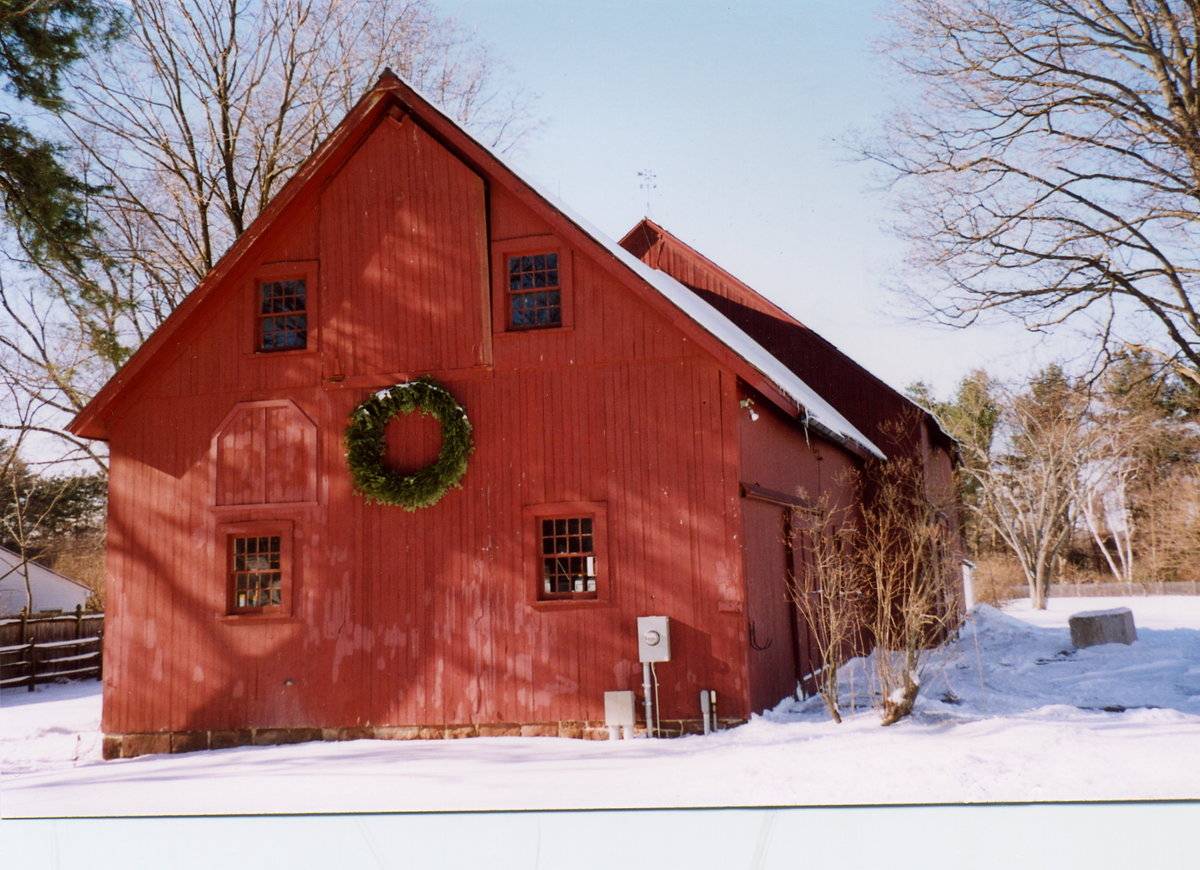
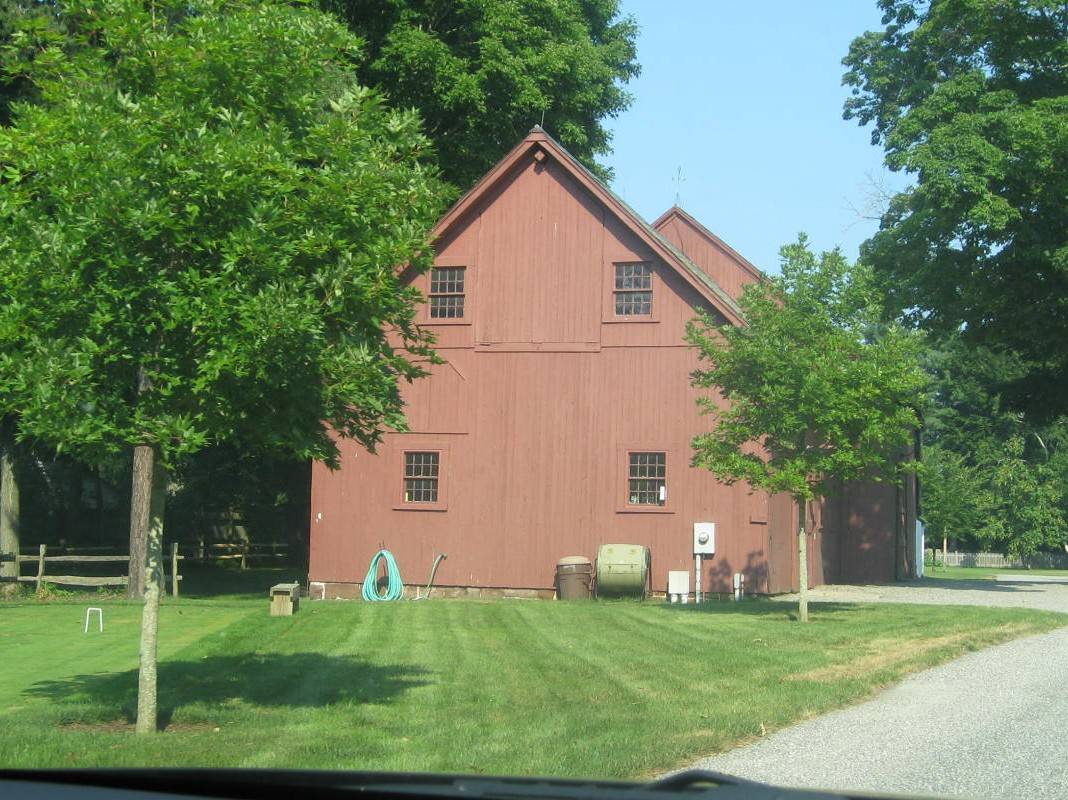
Barn II is a full size 1 ½-story eave-entry gable-roof barn, attached to the southeast gable-end of Barn I. The ridgeline of this barn is just a few feet lower than the taller Barn I. As with Barn I, the primary façade of Barn II is the northeast eave-side. This side has a large over-width sliding panel door in the central bay, with the mounting track extending to the east. A gooseneck exterior lamp is centered over this door. A double-hung window is located in the west bay on this façade. The southeast gable-end has two symmetrically-spaced eight-over-eight double-hung windows with trim located on the first floor. The window nearest the south corner has a double access door opening of wooden plank construction over it, with clipped corners. A modern electrical meter is mounted near the east corner. Centered beneath the ridgeline and extending down to the girt line is a large attic-gable access door, pentagonal in shape, of wooden construction. To each side of this door is an eight-over-eight double-hung window with trim. The southwest eave-side appears to be blank. The northwest gable-end directly abuts Barn I.
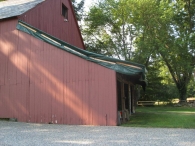
Addition I is a 1-story shed-roof addition stretching the width of Barn I’s northwest gable-end. Both the southwest and northeast ends of this addition are blank. The northwest eave-side is open across its entire length, providing three open bays in wagon-shed fashion.
Barn I, Barn II and Addition I are all clad in vertical wooden flush-board siding, painted red. The roofs of all three parts are covered in gray asphalt shingles. The mortared fieldstone foundation of Barn II is exposed along the southeast gable-end.
Historical significance:
The oldest barns still found in the state are called the “English Barn,” “side-entry barn,” “eave entry,” or a 30 x 40. They are simple buildings with rectangular plan, pitched gable roof, and a door or doors located on one or both of the eave sides of the building based on the grain warehouses of the English colonists’ homeland. The name “30 by 40” originates from its size (in feet), which was large enough for 1 family and could service about 100 acres. The multi-purpose use of the English barn is reflected by the building’s construction in three distinct bays - one for each use. The middle bay was used for threshing, which is separating the seed from the stalk in wheat and oat by beating the stalks with a flail. The flanking bays would be for animals and hay storage.
Field Notes
Contributing resource in Farmington Village National and Local Historic District. Barn situated on property of Lewis-Walpole Museum Barns built c.1909 Horse barns were moved from another site to present location. Stalls converted to workrooms for the Day-Lewis Museum and Wilmarth Lewis' Horace Walpole Library.
- Use & Accessibility
Use (Historic)
Use (Present)
Exterior Visible from Public Road?
Yes
Demolished
n/a
Location Integrity
Moved
- Environment
Related features
n/a
Environment features
Relationship to surroundings
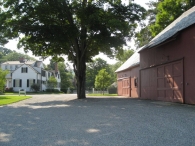
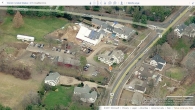
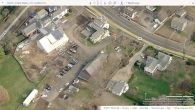
This barn complex is located to the immediate west of the house that is associated with it. A white picket fence runs along the road right-of-way in front of the house, barn plot, and to the north and south. An asphalt driveway runs along the northeast side of the barns and the southwest side of the house, connecting to Main Street. A gravel parking area is also located between the Barn II and the street, and another paved parking area is present to the immediate north of the barns, along the opposite side of the driveway. A large deciduous tree is located in the middle of this driveway, roughly where Barns I & II meet. To the west of the barns is a medium-sized field which may be used for active agriculture. This field is surrounded by a row of trees to the south and east, and woodland followed by a small river to the west. A large new building is being constructed on the next property north from the barn. Main Street is lined by residences to the immediate south and north of this property.
- Typology & Materials
-
Building Typology
Materials
Structural System
n/a
Roof materials
Roof type
Approximate Dimensions
n/a
- Source
-
Date Compiled
04/10/2011
Compiled By
N. Nietering & T. Levine, reviewed by CT Trust
Sources
Photographs by Linda Guernsey and the Unionville Museum.
Butterfield, Richard D., Thompson, James McA., Farmington National Register Historic District Nomination No. 72001331, National Park Service, 1972.
Sexton, James, PhD; Survey Narrative of the Connecticut Barn, Connecticut Trust for Historic Preservation, Hamden, CT, 2005, http://www.connecticutbarns.org/history.
Visser, Thomas D.,Field Guide to New England Barns and Farm Buildings, University Press of New England, 1997, 213 pages.
Map of Farmington, CT, retrieved on April 9, 2011 from website www.bing.com.
Farmington Assessor’s Records - online - http://www.farmington-ct.org/landrecords/search.php
- PhotosClick on image to view full file
-