Barn Record Farmington
RETURN TO ‘FIND BARNS’- Building Name (Common)
- John S. Parsons/ Weber Barn
- Building Name (Historic)
- John S. Parsons Barn
- Address
- 1777 Farmington Avenue (Route 4), Farmington
- Typology

- Overview
-
Designations
n/a
Historic Significance
Architectural description:
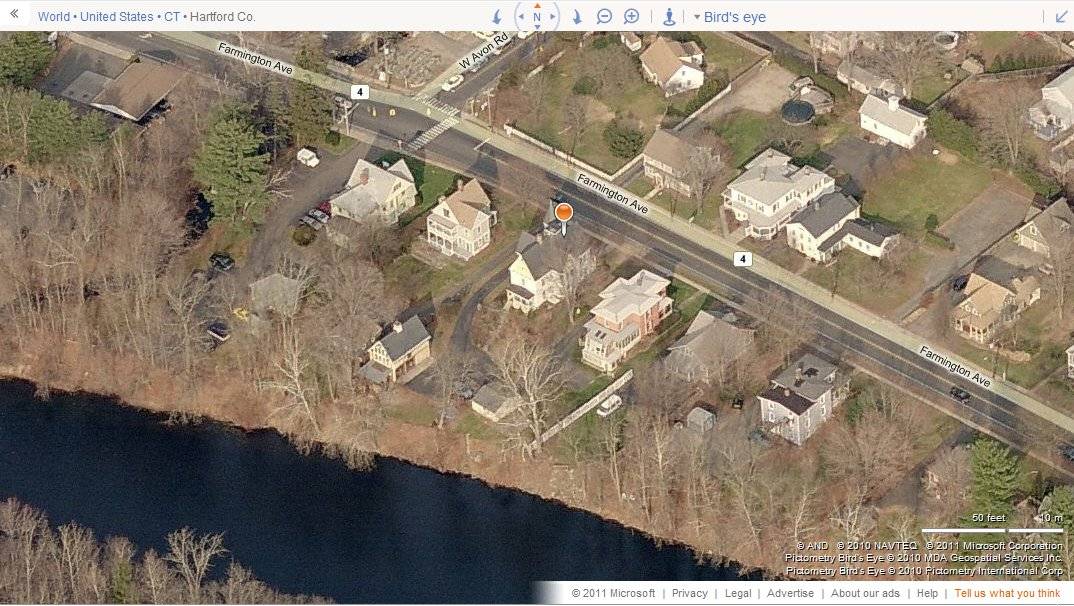
This is a 1 ½-story eave-entry carriage barn with a gable-roof. The carriage barn’s primary façade is the southeast eave-side, which contains the primary entries. This carriage barn is situated perpendicular to Farmington Avenue, which passes this property at a northwest to southeast angle.
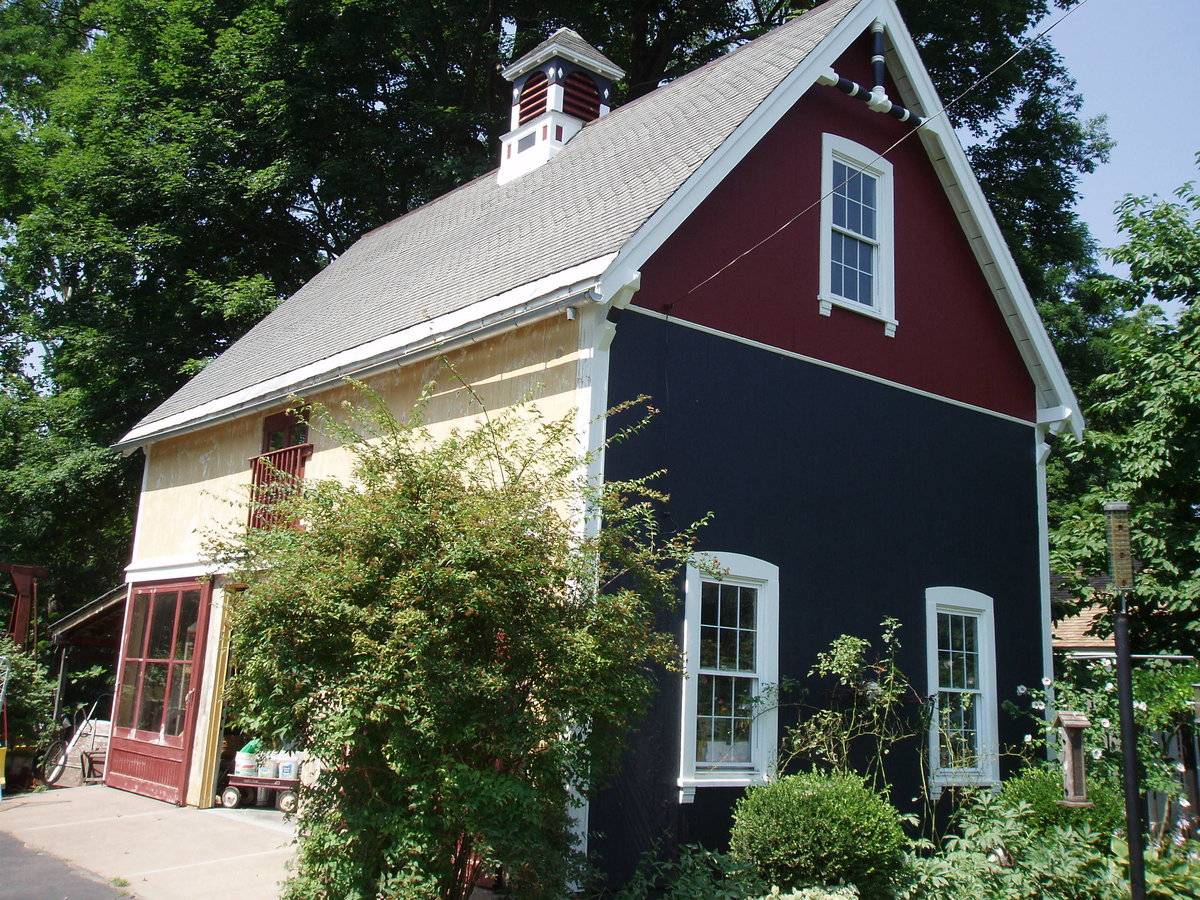
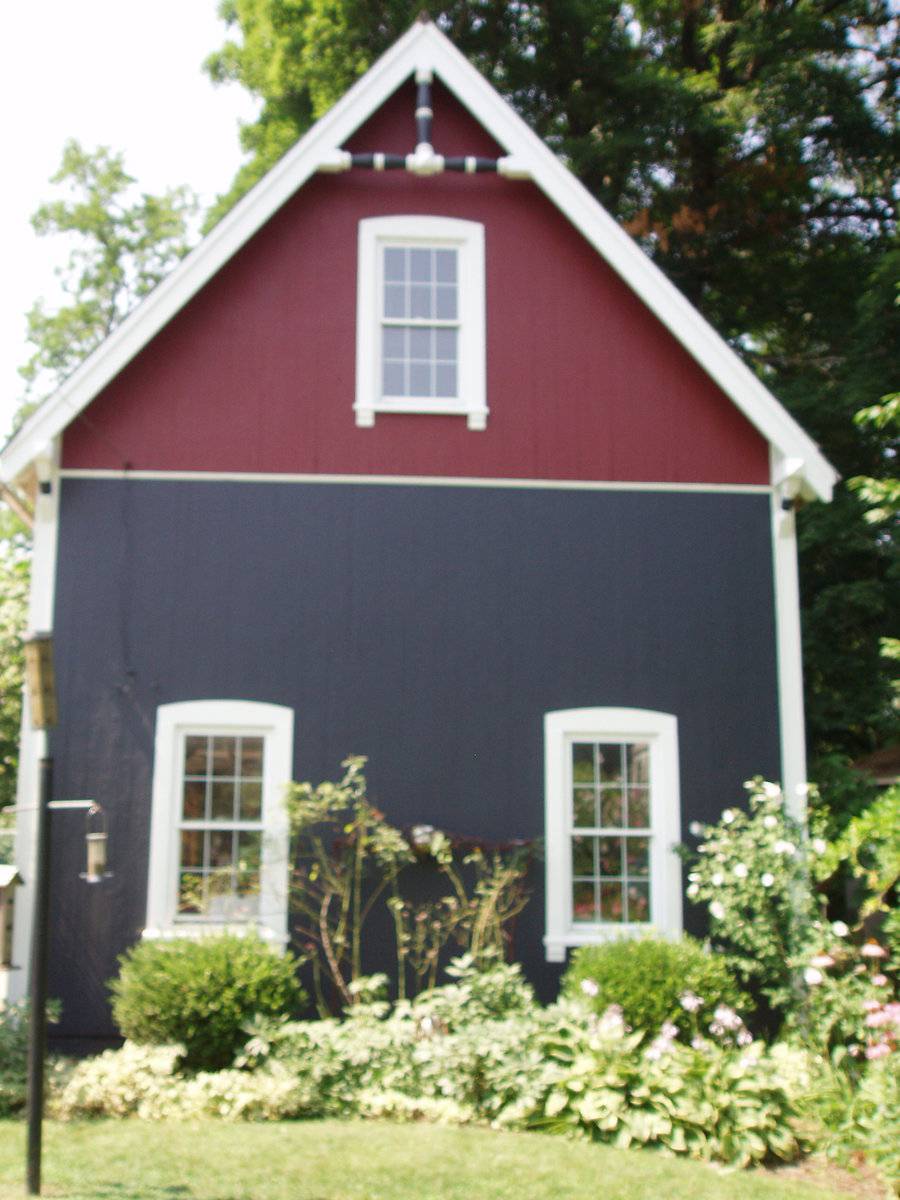
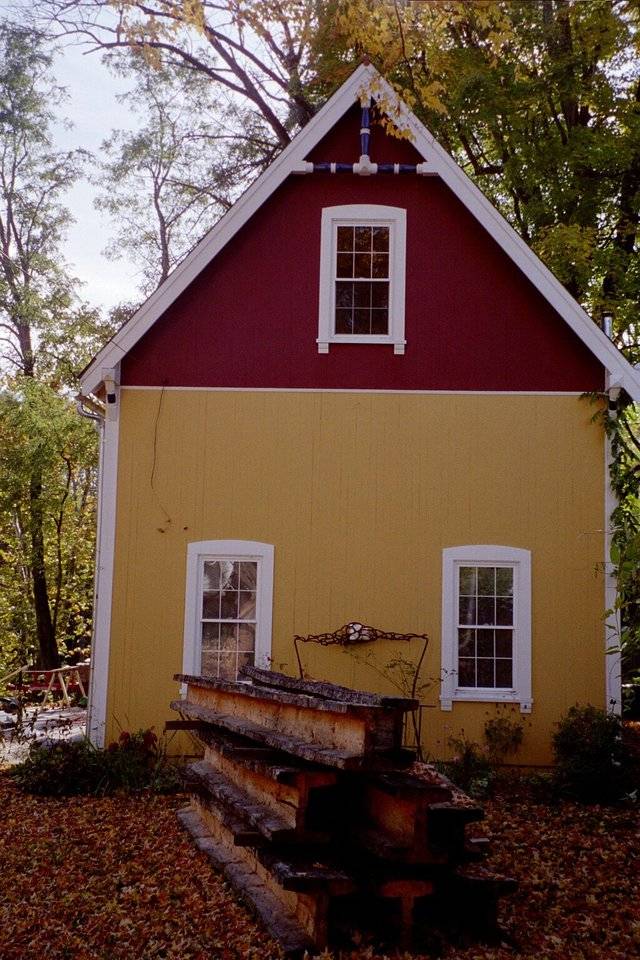
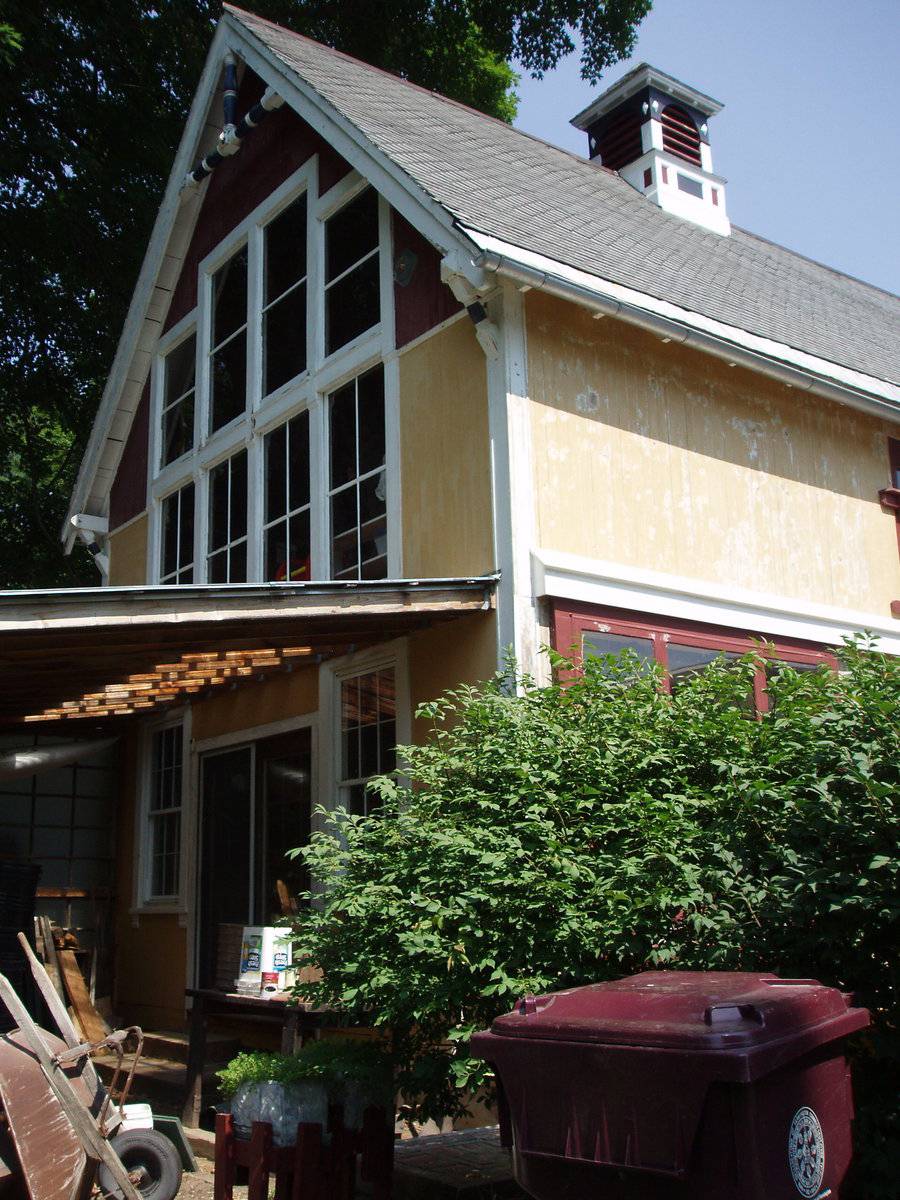
The primary façade of this carriage barn is the southeast eave-side. The central and southern bays are occupied by oversize wooden sliding doors made of wood with six glass window panes in each. The north bay appears to be blank. A pair of stationary pass-through doors with large picture windows are centered in the gable-attic above the center bay door. The northeast gable-end faces Farmington Road. The first floor has a pair of symmetrically-placed six-over-six double-hung windows with trim on the first floor. A single six-over-six double-hung window with trim is present within the attic-gable on this gable-end. The northwest eave-side has a pair of window openings in the southern half, likely identical to the six-over-six double-hung windows found on the northeast gable end. A chimney is also present in the north half of this eave-side. The southwest gable-end has a lean-to style shed roof attached to the first floor. Beneath this roof is a modern sliding glass door set between two six-over-six double-hung windows. Above the shed roof is a large expanse of eight modern windows which occupy most of the remainder of this gable-end.
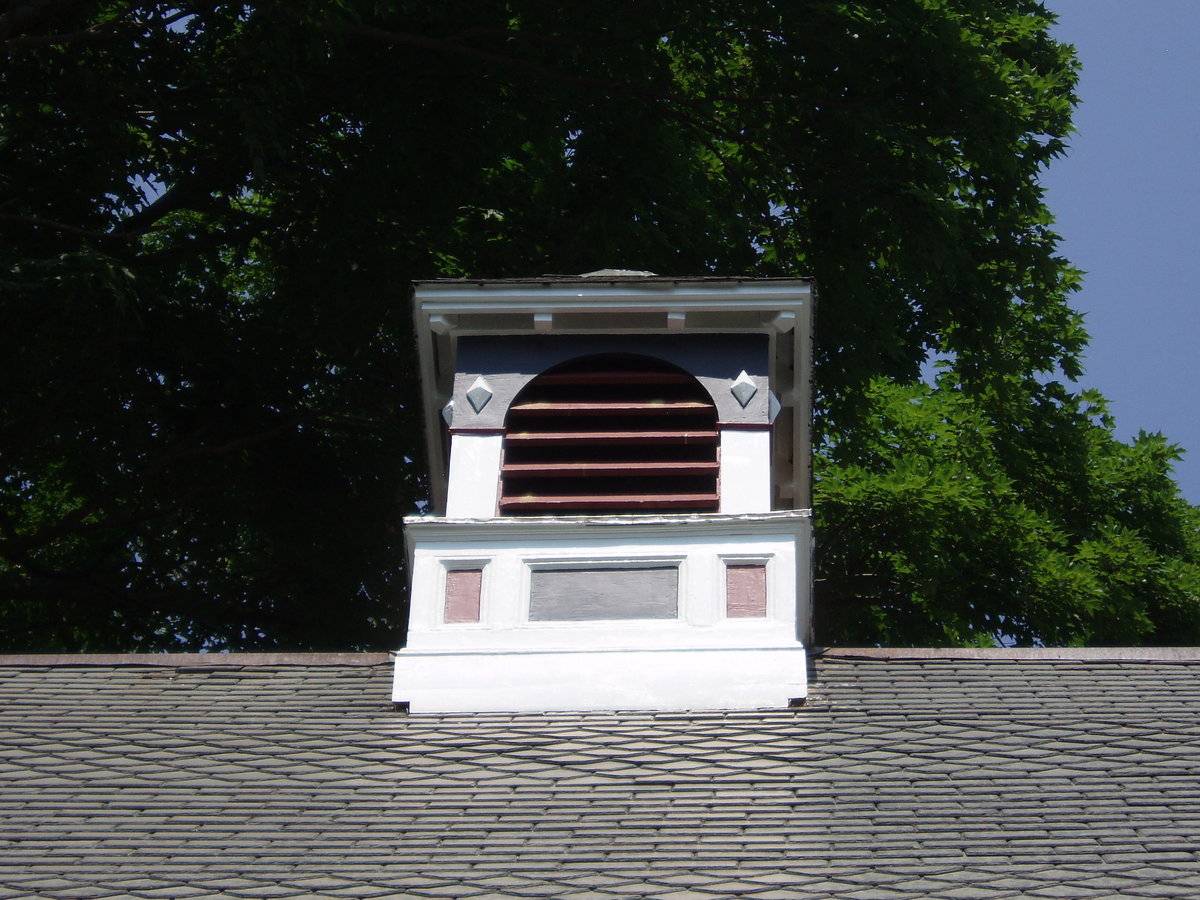
The exterior of this barn is clad in narrow-width vertical wooden flush-board siding, painted light yellow everywhere except within the gables, where it is painted a deep red. Doors are also painted deep red while windows and trim are painted white. Decorative brackets are present in place of cornice returns and decorative vergeboard is present near the ridgeline of both gable-ends. A square ornamented cupola is centered on the ridgeline of this carriage house. Arched louvers are present in each of the four sides. The cupola is capped by a pyramidal shaped roof. The roof is covered in gray slate shingles.
Historical significance:
Until the 1830s, the horses used for riding and driving carriages were often kept in the main barn along with the other farm animals. By the 1850s, some New England farmers built separate horse stables and carriage houses. Early carriage houses were built just to shelter a carriage and perhaps a sleigh, but no horses. The pre-cursor to the twentieth-century garage, these outbuildings are distinguished by their large hinged doors, few windows, and proximity to the dooryard. The combined horse stable and carriage house continued to be a common farm building through the second half of the nineteenth century and the first decade of the twentieth century, until automobiles became common. Elaborate carriage houses were also associated with gentlemen farms and country estates of the late 19th and early 20th centuries.
Field Notes
A detached woodframe carriage barn was built on this property to go with the house, which was constructed in 1896 by prominent Unionville builder, John S. Parsons. Modifications have been made to the barn in the 1930s and recently. (A shed and new doors have been added.) But the vertical wood siding and slate roof are original. Entrance has been moved from the street side to the east side. John S. Parsons was a Unionville contractor & member of the family that established "Parsons Hardware & Lumber Yard" - which is the oldest business in Farmington still operated by the original family. A grandson - Robert Parsons, served as CT Lt. Governor in 1948. This is a high density, residential area bordered on the north by Rt.4 (Farmington Avenue) and on the south by the Farmington River.
- Use & Accessibility
Use (Historic)
Use (Present)
Exterior Visible from Public Road?
Yes
Demolished
n/a
Location Integrity
Unknown
- Environment
Related features
n/a
Environment features
Relationship to surroundings
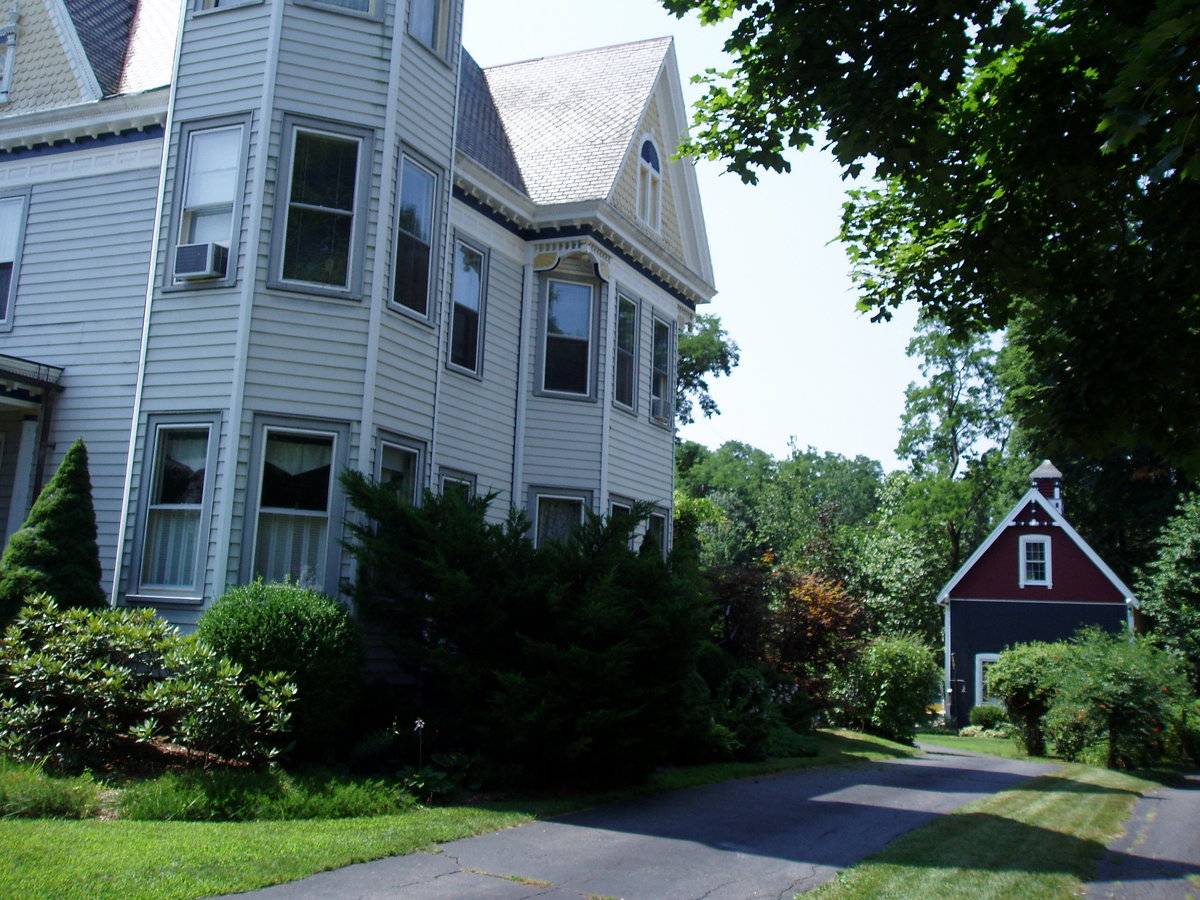
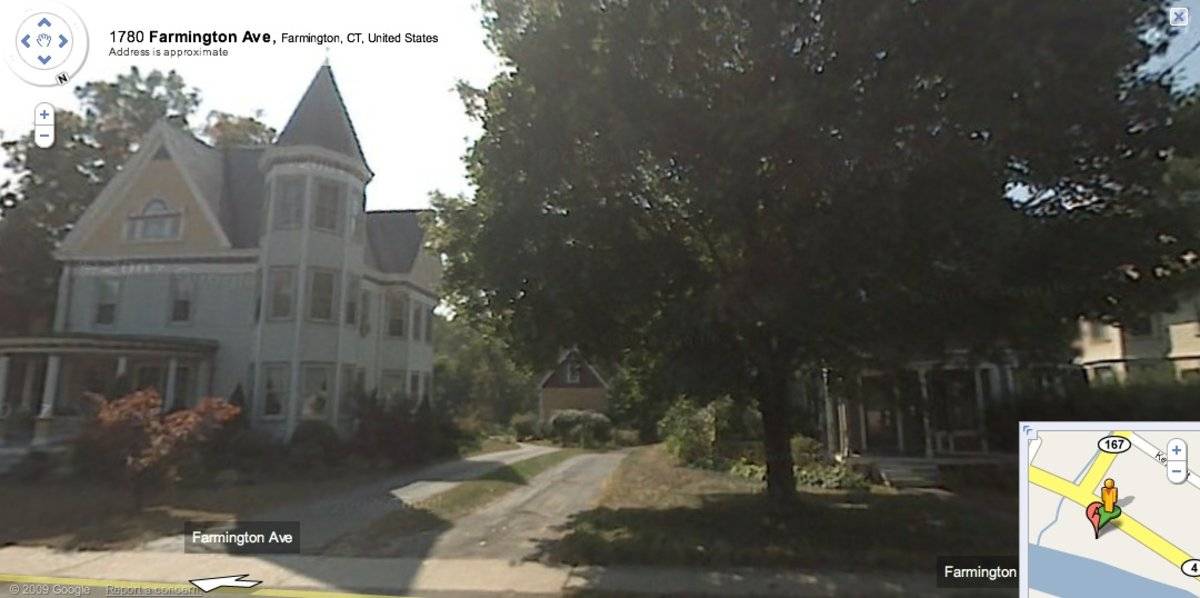
The carriage barn on this property is oriented perpendicular to Farmington Avenue. It is situated almost behind the large house associated with it, making it difficult to see from the street. The house is a large cross-gabled Queen Anne dwelling with corner tower, located to the immediate northeast of the carriage barn. The barn accessed by a gravel driveway which passes from the street along the northwest wall of the house, where it opens up to a small parking area along the façade of the carriage barn. The remainder of the space between the house and barn is grass. Immediately to the southwest of the carriage barn, the ground drops away to the Farmington River, which is lined by trees in the floodplain on both sides. A small creek flows down into the Farmington River a few properties to the northwest of this site. The surroundings streets on both sides of the river are lined with residences. Beyond the stream to the northwest are commercial developments along Farmington Avenue.
- Typology & Materials
-
Building Typology
Materials
Structural System
n/a
Roof materials
Roof type
Approximate Dimensions
BARN: 640 square feet
- Source
-
Date Compiled
04/11/2011
Compiled By
N. Nietering & T. Levine, reviewed by CT Trust
Sources
Photographs by Meyer/Macomber and Todd Levine.
Sexton, James, PhD; Survey Narrative of the Connecticut Barn, Connecticut Trust for Historic Preservation, Hamden, CT, 2005, http://www.connecticutbarns.org/history.
Visser, Thomas D.,Field Guide to New England Barns and Farm Buildings, University Press of New England, 1997, 213 pages.
Map of Unionville, CT, retrieved on April 9, 2011 from website www.bing.com.
Farmington Assessor’s Records - online - http://www.farmington-ct.org/landrecords/search.php
- PhotosClick on image to view full file
-