Barn Record Cheshire
RETURN TO ‘FIND BARNS’- Building Name (Common)
- Arisco Farms
- Building Name (Historic)
- Arisco Farms
- Address
- 1585 Marion Road, Cheshire
- Typology
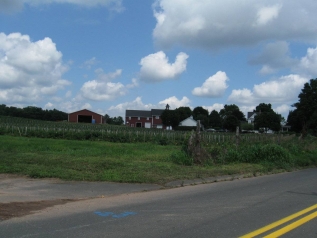
- Overview
-
Designations
n/a
Historic Significance
Architectural description:
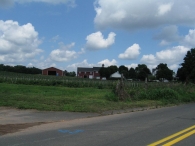
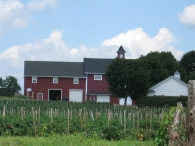
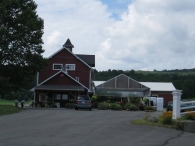
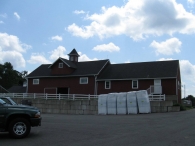
This is a 2 ½ -story gable-roofed bank barn structure with two gable-roofed additions and is oriented with its ridge-line east-west, perpendicular to Marion Road, which runs approximately north-south.
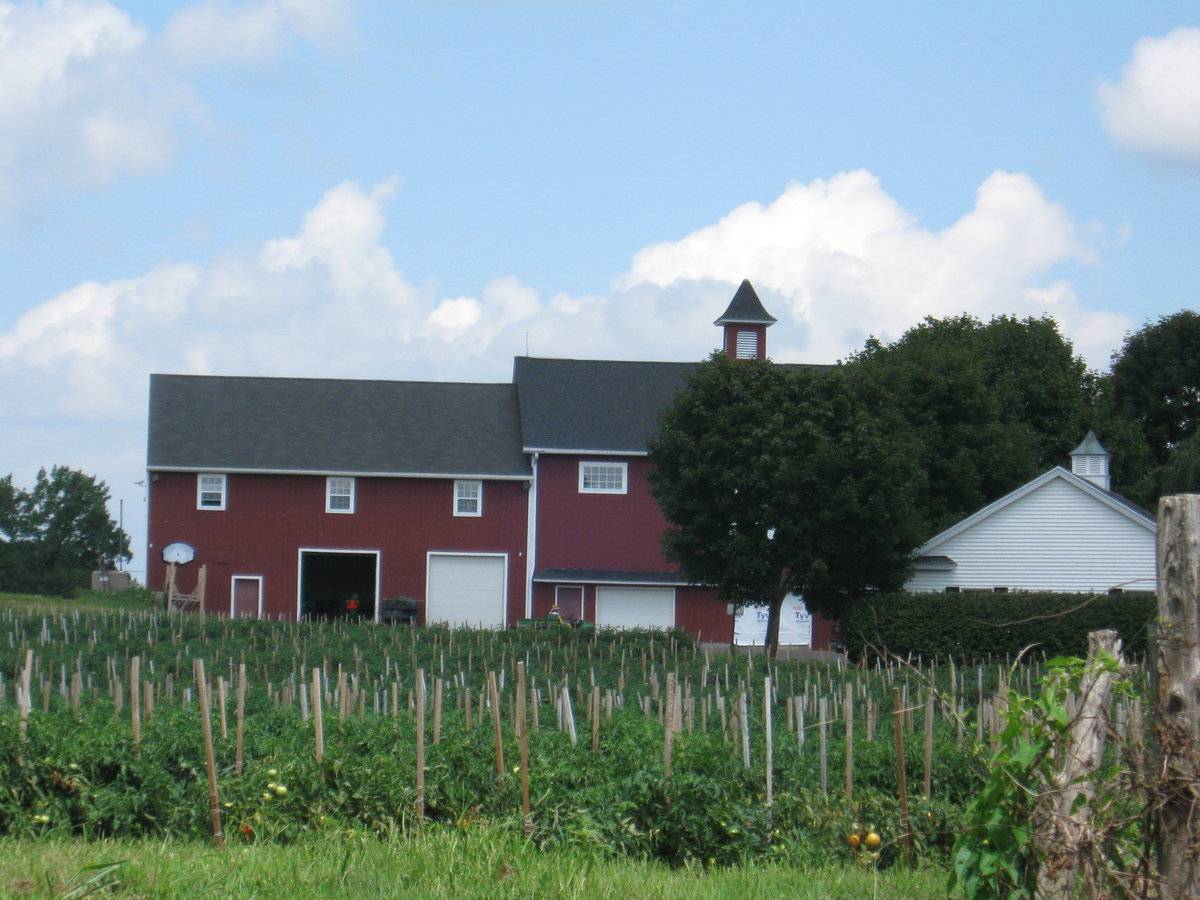
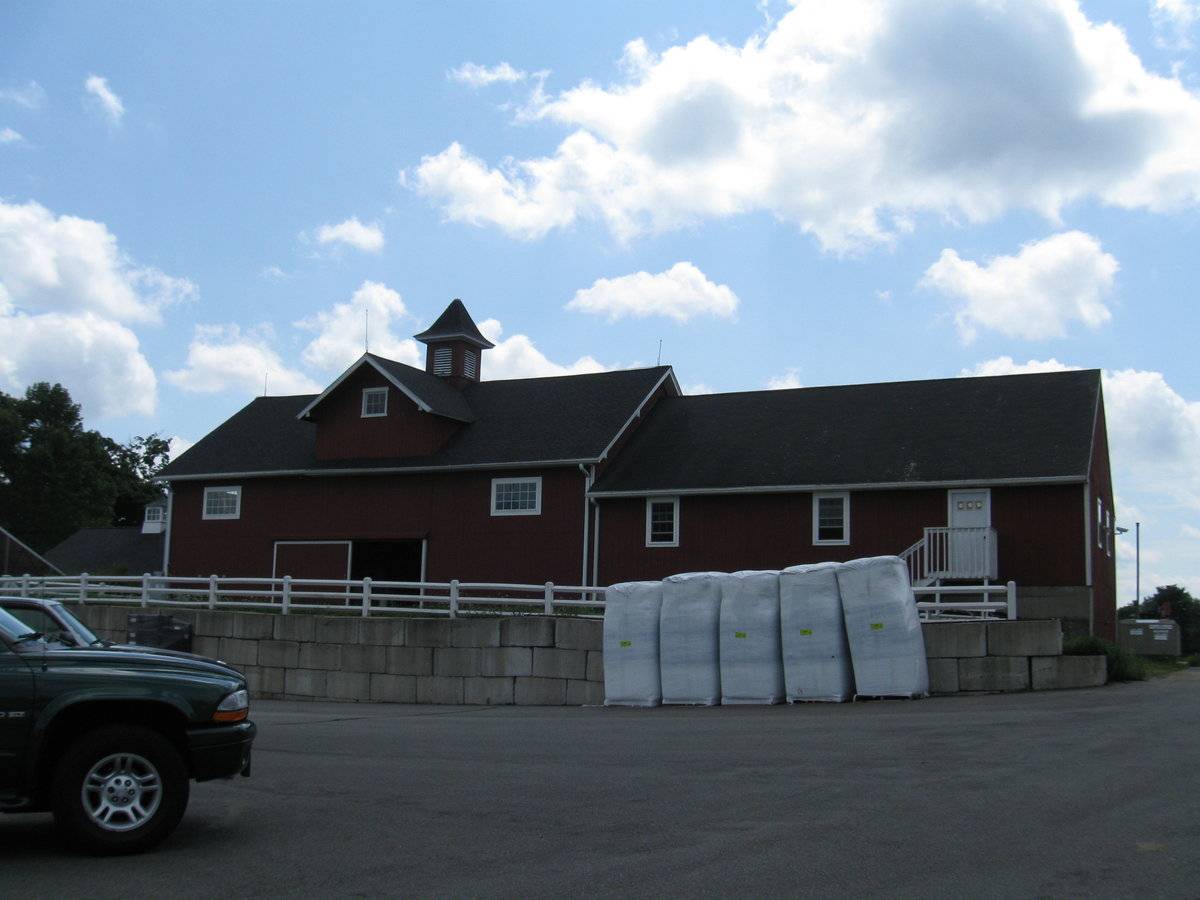
The north eave-façade of the barn has three bays. Located off-center toward the left in the center bay of the north eave-façade on the main level is a sliding barn door hung on an exterior track a with a hood over the track that extends to the east half of the center bay. Located on the second level in both the left and right bays of the north eave-façade is a fifteen-pane window.
Located on the west gable-end of the barn is a 1 ½-story gable-roofed addition with three bays extending westward. A concrete foundation is visible along the north eave-side of the gable-roofed addition where the grade slopes toward the west. The east and center bays of the north eave-side of the gable-roofed addition each have a six-over-six double hung sash window. The west bay of the north eave-side of the gable-roofed addition has a single pass-through door with stair access leading from the east to a porch landing at the door. Located on the west gable-end of the gable-roofed addition are two equidistant windows. Located on the basement level of the west bay of the south eave-side of the gable-roofed addition is a single pass-through door.
The south eave-side has a basement accessed from a lower grade level. The center and east bays on the basement level of the south eave-side of the western gable-roofed addition each have an overhead garage door. Three equidistant six-over-six double hung sash windows are located on the main level of the south eave-side of the gable-roofed addition. The south eave-side of the main barn structure has, at the basement level, from left (west) to right (east) a single pass-through door, and several overhead garage doors. A hood is located above door track. There appears to be a hay door flanked by small windows on the main level of the center bay of the south eave-side of the barn. This same type of configuration also appears to be on the second level of the center bay of the south eave-side of the main barn. The second level of east and west bays of the south eave-side of the barn each have a fifteen-pane fixed window.
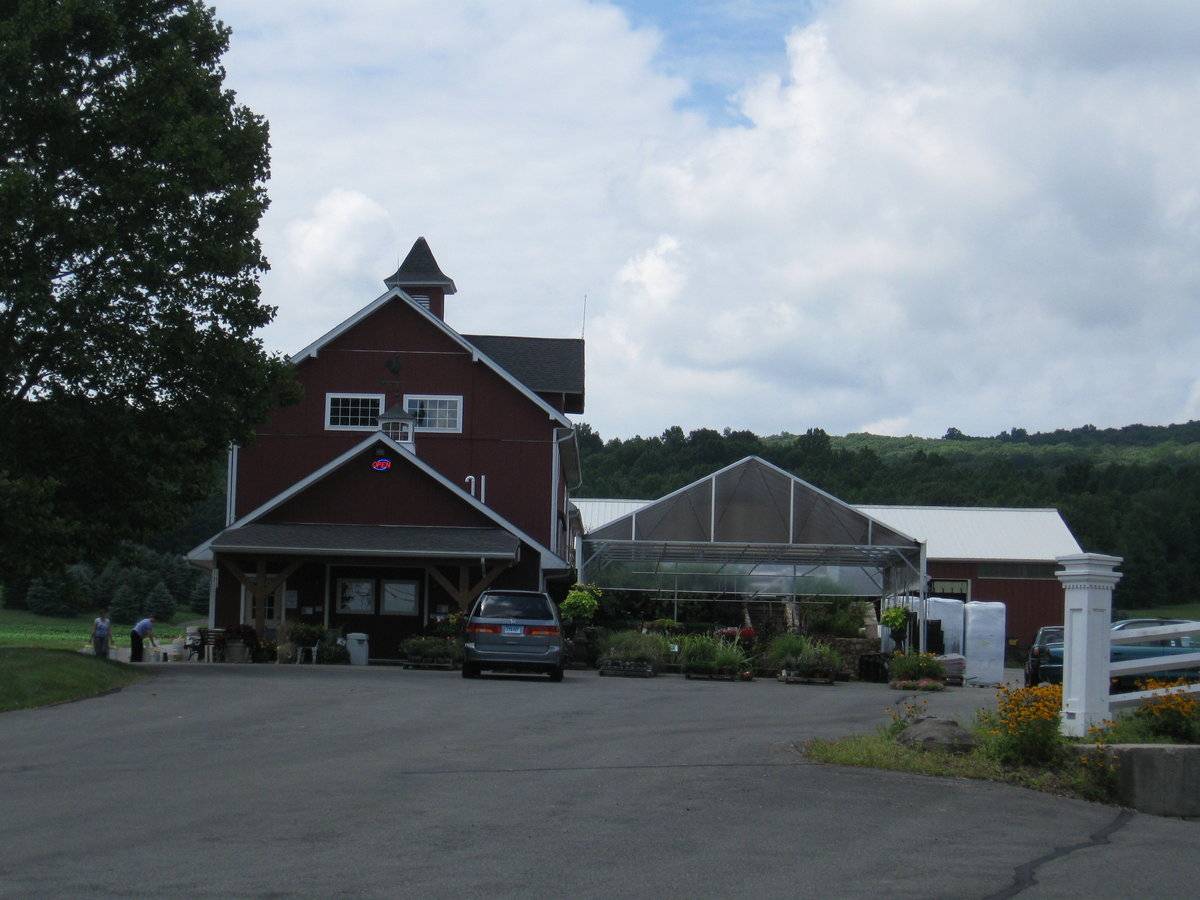
Located on the east gable-end of the barn is a second gable-roofed addition, 1-story and designed as a retail store. The south side of the second gable-roofed addition appears to have a door located on the western half with two sets of windows extending along the rest of the façade. Located in the center of the east gable-end of the second gable-roofed addition is a barn door with a pair of windows located in the upper half of the door. To the left (south) is a single pass-through door with a nine-pane window in the upper half of the door. A shed-roofed overhang is located above the doors and extends the length of the east gable-end of the second gable-roofed addition. Located in the gable attic of the east gable-end of the barn is a pair of fifteen-pane fixed windows. The north side of the second gable-roofed addition appears to have a door located on the western half with two sets of windows extending along the rest of the façade.
The barn and gable-roofed additions have vertical siding painted red with opening trim and painted white. The roofs have projecting overhangs and asphalt shingles. A gable-roofed dormer with a six-paned fixed window is located in the center of the north side of the gable-roof of the barn. Located on the center of the ridge-line on the barn is a hip-roofed cupola with vertical louvered vents. Located on the center of the ridge-line on the second gable-roofed addition is a hip-roofed cupola with six-paned arched windows.
Historical significance:
The oldest barns still found in the state are called the “English Barn,” “side-entry barn,” “eave entry,” or a 30 x 40. They are simple buildings with rectangular plan, pitched roof, and a door or doors located on one or both of the “eave” sides of the building based on the grain warehouses of the English colonists’ homeland. The New England barn or gable front barn was the successor to the English barn and relies on a gable entry rather than an entry under the eaves. The gable front offers many practical advantages. Roofs drain off the side, rather than flooding the dooryard. Although it was seen by many as an improvement over the earlier side entry English Barn, the New England barn did not replace its predecessor but rather coexisted with it. In this case, both an eave entry and a gable entry are used. The 19th century would see the introduction of a basement under the barn to allow for the easy collection and storage of a winter’s worth of manure from the animals sheltered within the building. The bank barn is characterized by the location of its main floor above grade, either through building on a hillside or by raising the building on a foundation. This innovation, aided by the introduction of windows for light and ventilation, would eventually be joined by the introduction of space to shelter more animals under the main floor of the barn.
Historical background:
Arisco Farms was started in 1922 on Jenny Hill Road. The farm was then moved to 1682 Marion Road. It was in 1968 that Alex continued the traditions of his grandparents and parents and began running the farm.
In 1983 Alex and his wife Beverly moved Arisco Farms to its current location at 1583 Marion Road. They took a 70 acre parcel of land and a run down house and transformed it into a working farm with a beautiful farm house, traditional red barn that houses the farm stand and 3 acres of state-of-the-art greenhouses.
Field Notes
Arisco Farms was established in 1922.
- Use & Accessibility
Use (Historic)
Use (Present)
Exterior Visible from Public Road?
Yes
Demolished
n/a
Location Integrity
Original Site
- Environment
Related features
Environment features
Relationship to surroundings
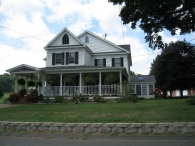
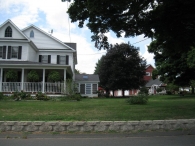
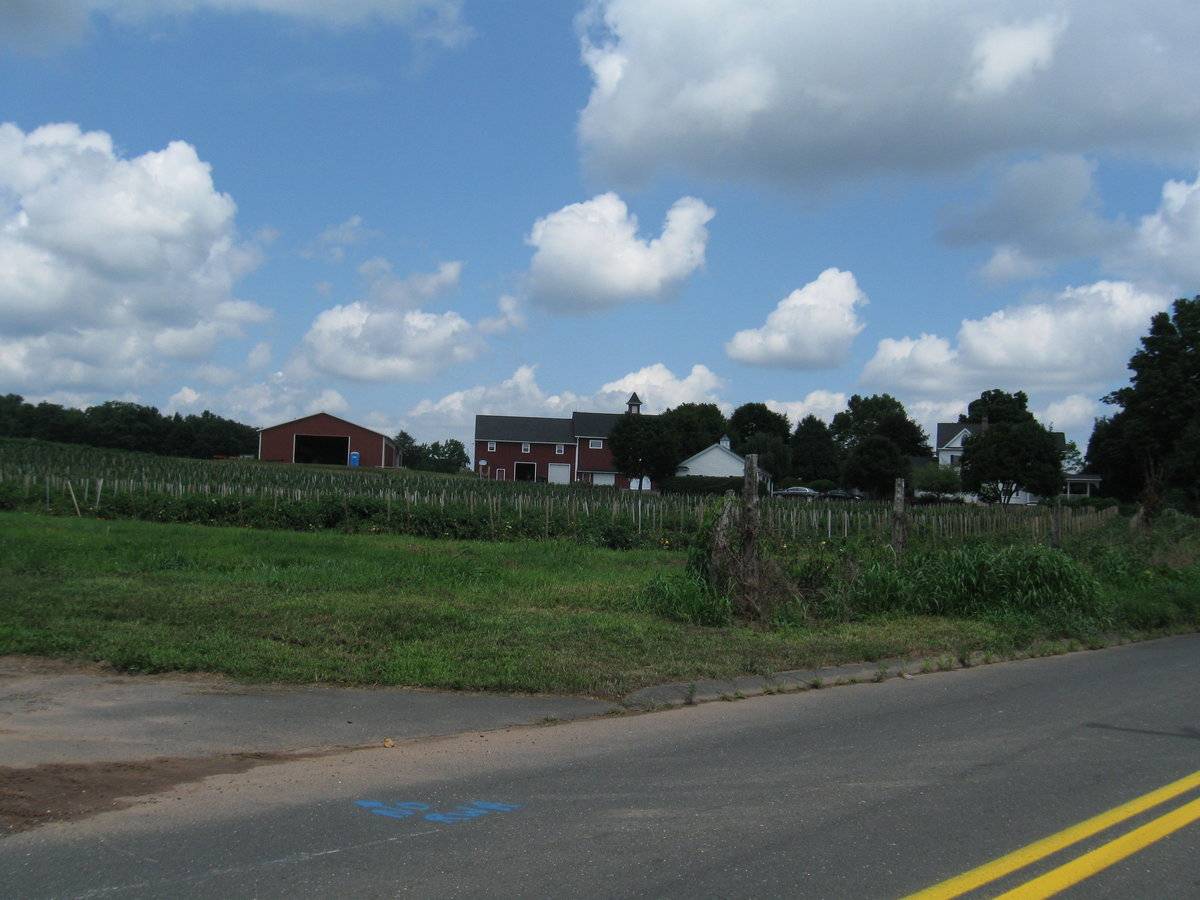
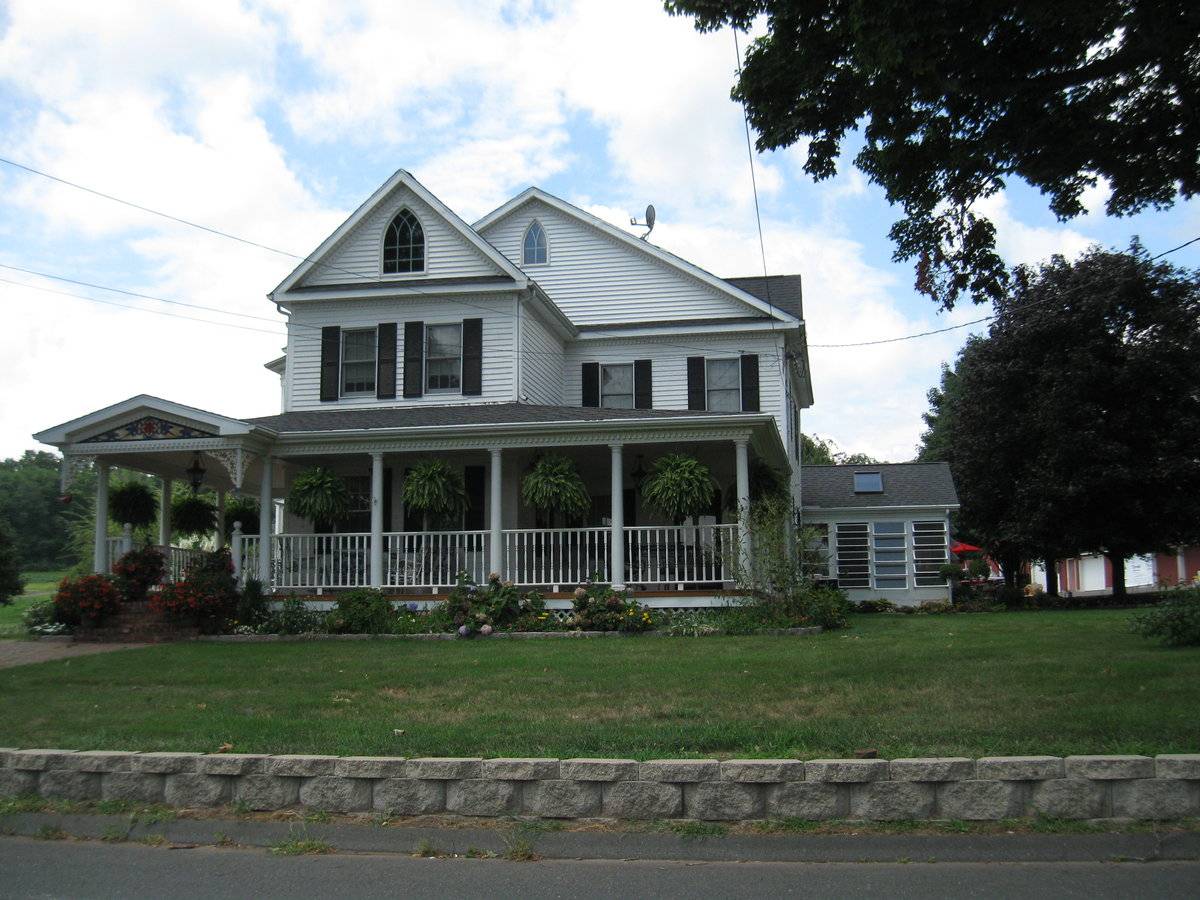
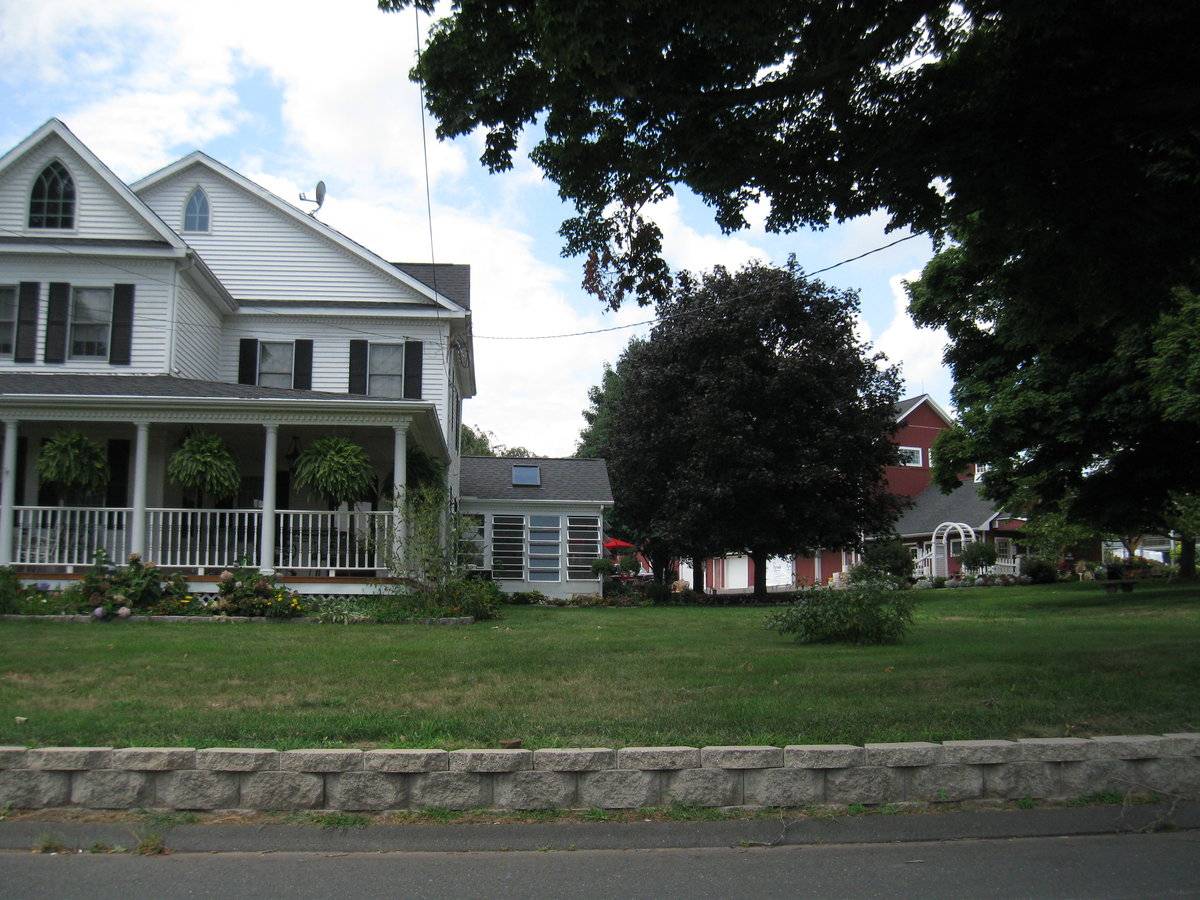
The barn is behind and to the northwest of the c. 1823 vernacular Greek Revival-style house it is associated with. The ridge-line of the house and barn are oriented east-west, perpendicular to the road. A gable-roofed three bay garage is located to the south of the barn and west of the house. A large gable-roofed garage is located to the west of the barn. Located to the north of the barn is a large complex of greenhouses. Located to the south and west of the barn and associated buildings are open fields. Further to the west of the property is woodland and Highway I-84, which runs generally east-west across the state. Located further to the east, across Marion Road, are several industrial complexes in the Cheshire Industrial Park. The total size of the site is 69.31 acres. The area surrounding the site is active agriculture, industrial, residential and woodland. The site is near the northern border of Cheshire where it abuts Southington.
- Typology & Materials
-
Building Typology
Materials
Structural System
Roof materials
Roof type
Approximate Dimensions
34 x 130 feet
- Source
-
Date Compiled
03/27/2011
Compiled By
A. Ehrgott & T. Levine, reviewed by CT Trust
Sources
Field notes and photographs by Kristen Young date 08/11/2010.
Town of Cheshire Assessor’s Record http://www.prophecyone.us/fieldcard.php?property_id=2165573
Parcel ID: 8-11
GIS Viewer http://www.cogcnvgis.com/cheshire/ags_map/Aerial Mapping:
http://www.bing.com/maps accessed 03/27/2011.Arisco Farms website: http://www.ariscofarms.com/about-us.html
Sexton, James, PhD, Survey Narrative of the Connecticut Barn, Connecticut Trust for Historic Preservation, Hamden, CT, 2005, http://www.connecticutbarns.org/history.
Visser, Thomas D., Field Guide to New England Barns and Farm Buildings, University Press of New England, 1997.
- PhotosClick on image to view full file
-