Barn Record Canaan
RETURN TO ‘FIND BARNS’- Building Name (Common)
- Part 1 of 2
- Building Name (Historic)
- n/a
- Address
- 15 Cobble Road, Canaan
- Typology

- Overview
-
Designations
n/a
Historic Significance
Architectural description:
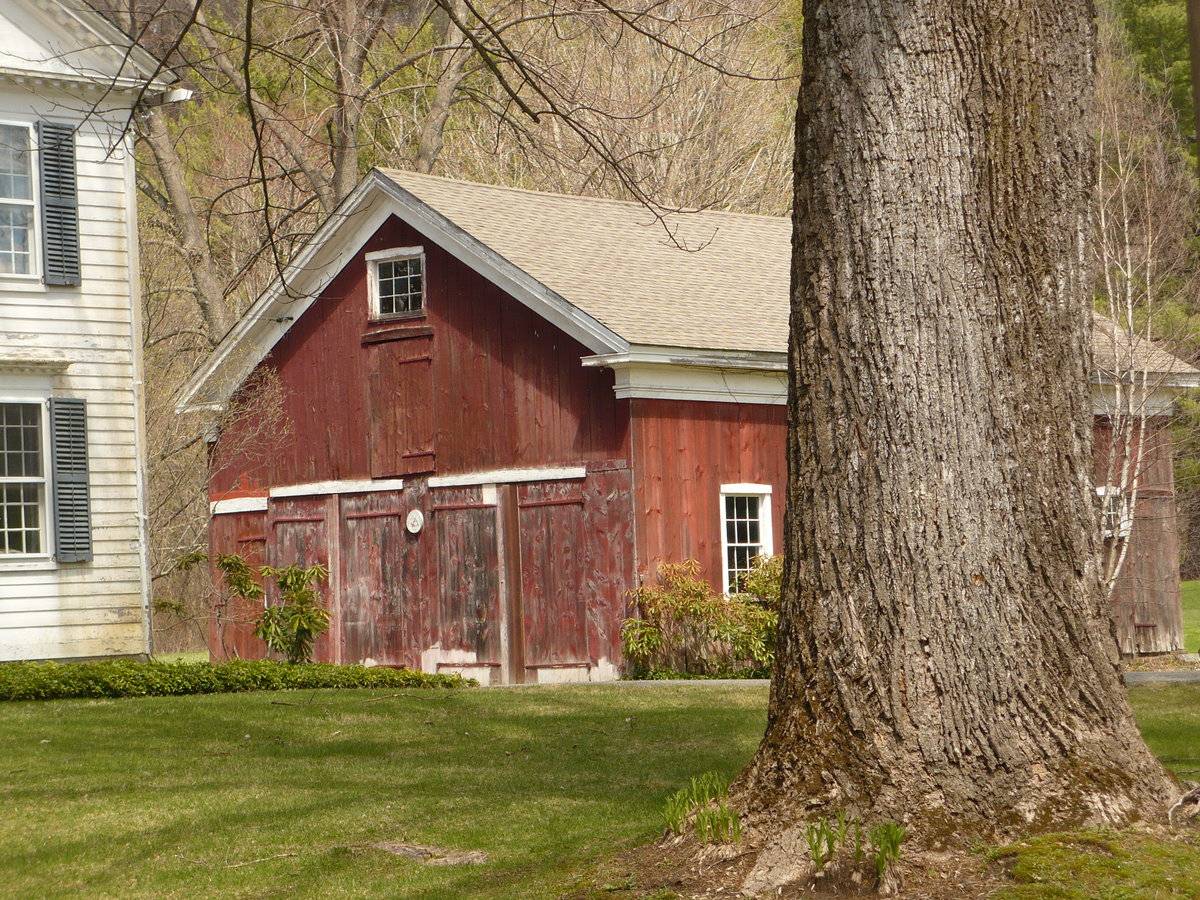
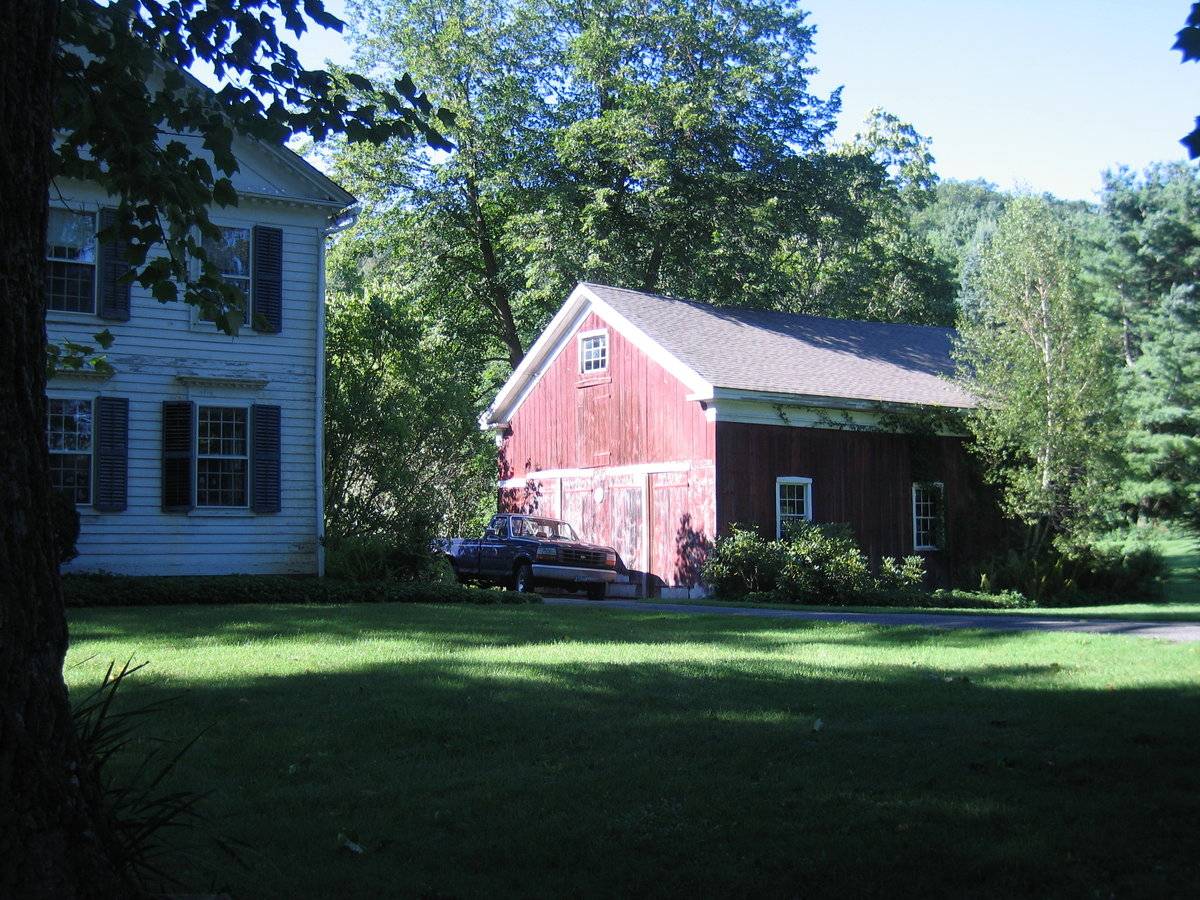
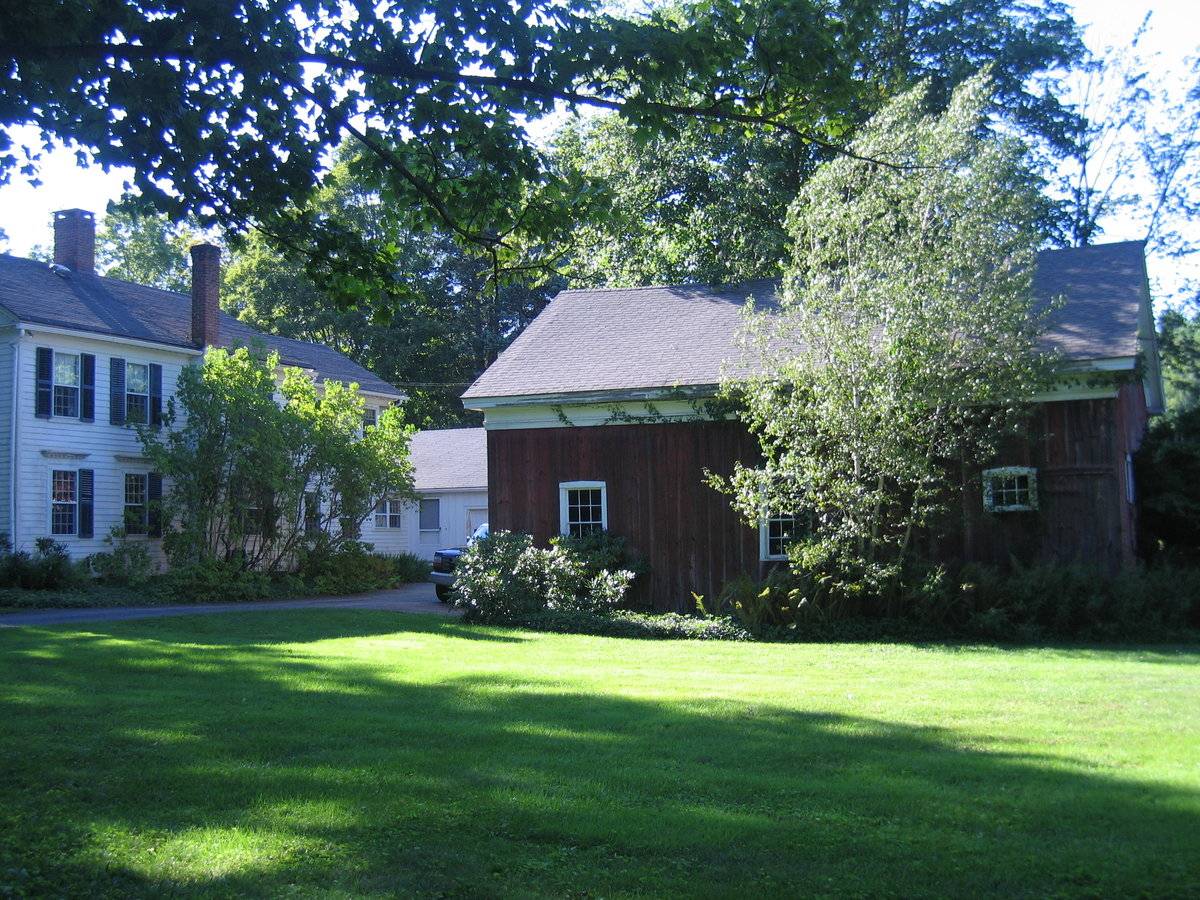
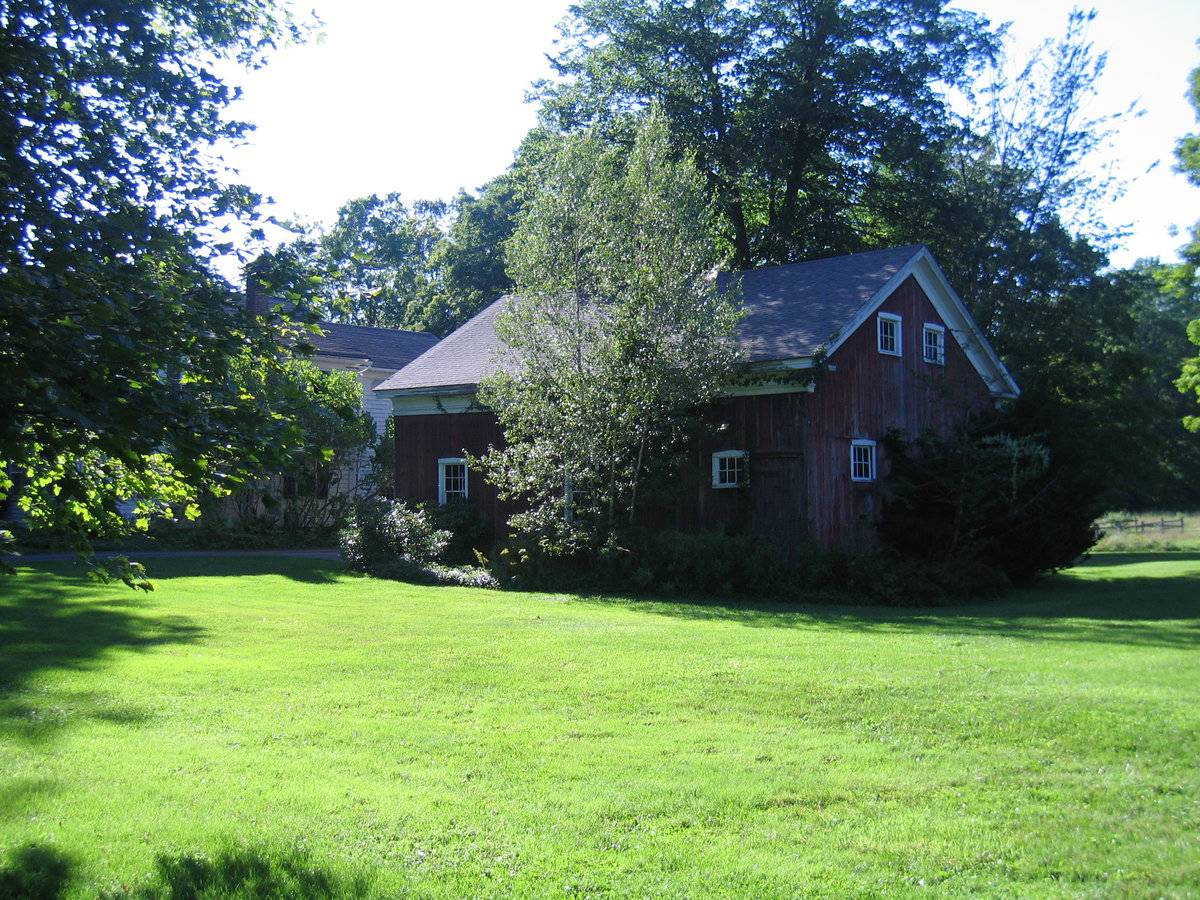
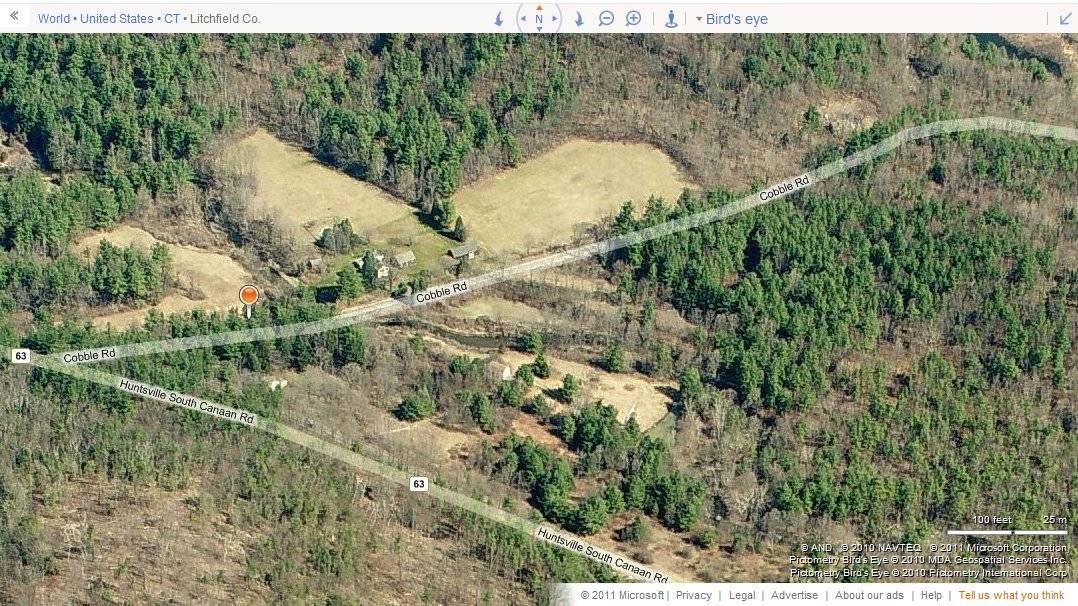
This is a decorative 1 ½-story gable-entry barn with a gable-roof. This carriage house is oriented parallel to Cobble Road, which passes this property at an east to west angle. The primary façade is the west gable-end, which faces the farmhouse associated with this barn.
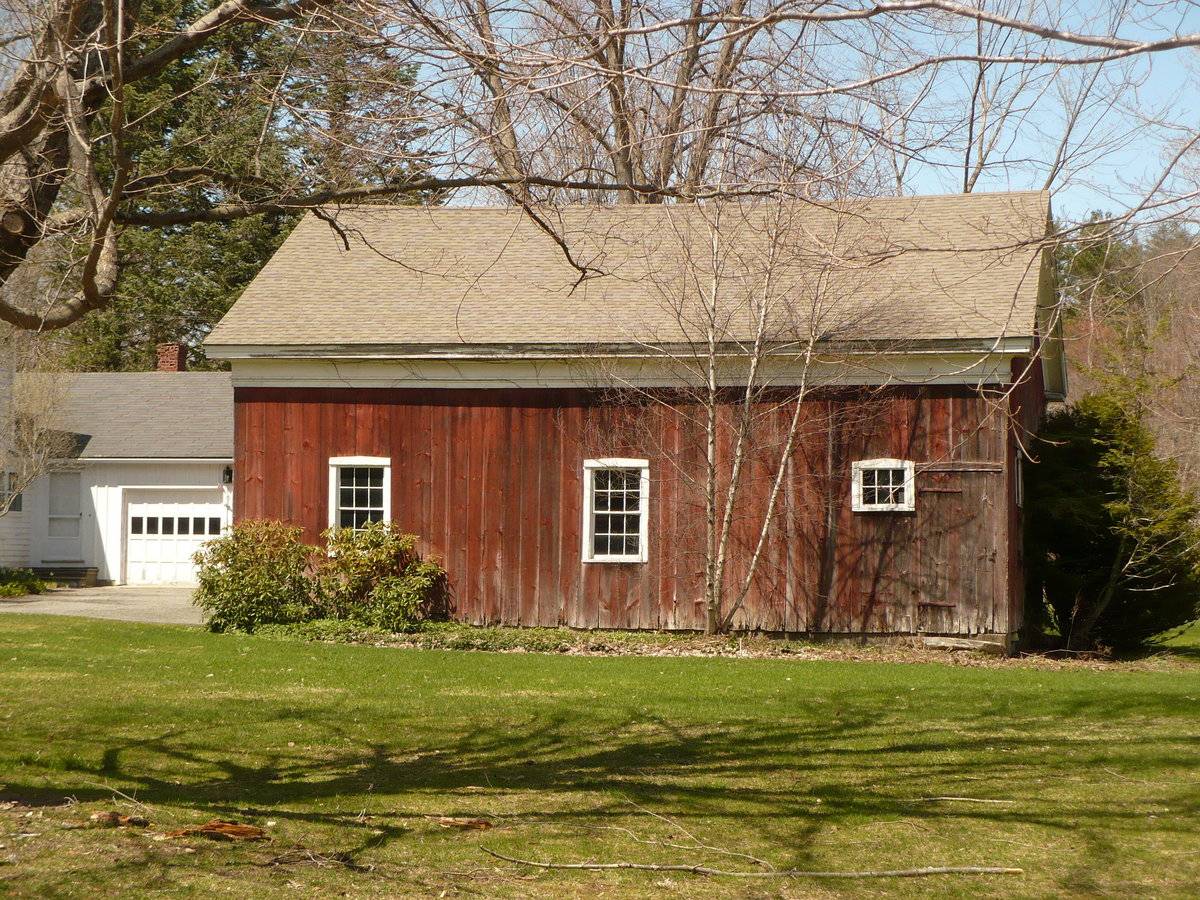
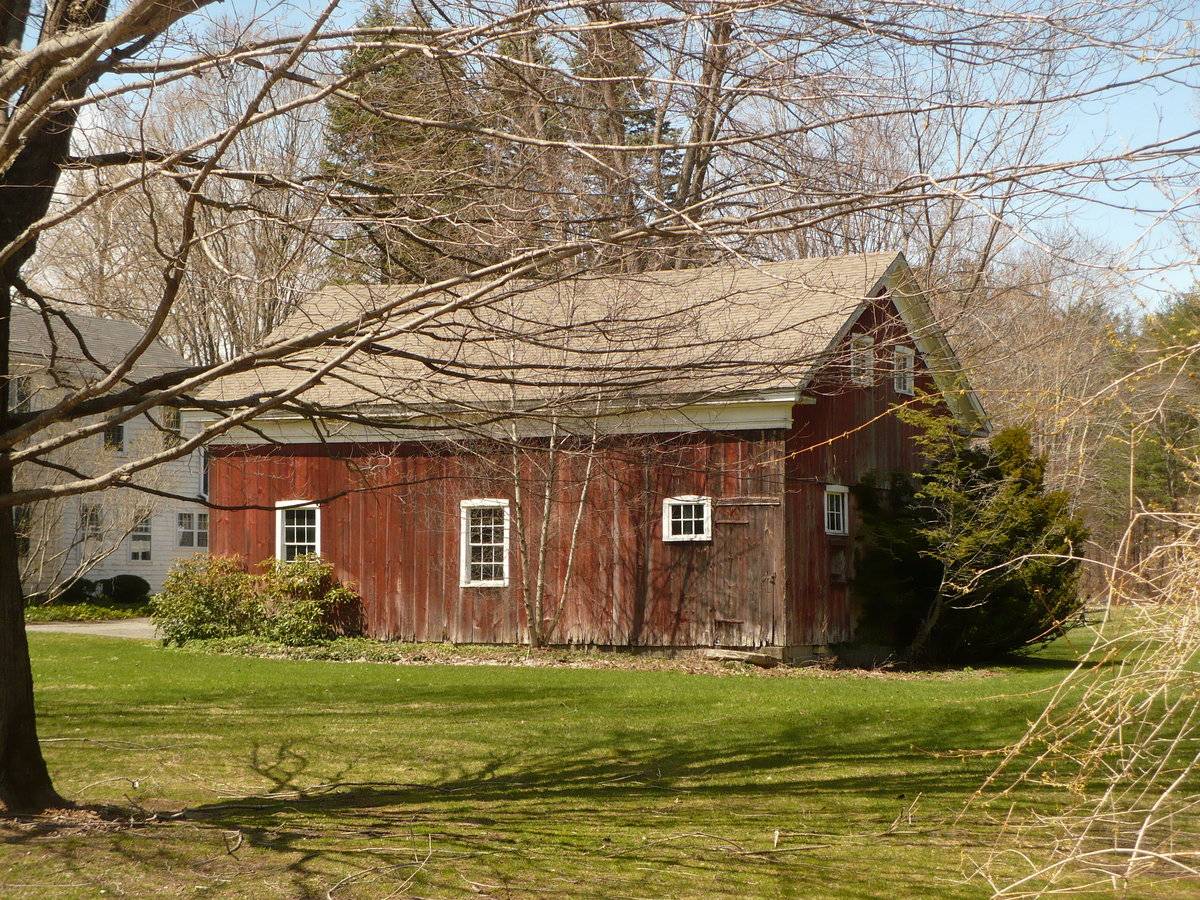
The west gable-end of this barn is the primary façade, which contains the main entries. These entries consist of two pairs of hinged wooden doors on the first story. A shorter wooden pass-through door is located adjacent to the northwest corner. Centered above the double doors is a wooden plank pass-through door which provides access to the attic-loft. Above this door, immediately below the roof ridgeline, is a nine-pane window with trim. Facing Cobble Road is the south eave-side of this barn. Three window openings are evenly spaced along this eave-side. The west and center bays are each occupied by a six-over-six double-hung window with trim. The east bay is occupied by a stationary six-pane window, also with trim. A wooden plank pass-through door is located in the extreme southeast corner on this side. The east gable-end contains several six-pane windows with trim. One is located on the first story, near the southeast corner. Two are located in the gable-attic, symmetrically spaced. A small wooden hinged hatchdoor is located beneath the first-story window near the southeast corner. The north eave-side is not visible for the purposes of an Historic Resource Inventory.
The exterior walls of this barn are clad in vertical wooden flush-board siding, painted red. Window frames and trim are painted white. A large decorative cornice is present along the two eaves of this barn, painted white. Cornice returns are located on both gable-ends. The roof is covered in gray asphalt shingles.
Historical significance:
The New England barn or gable front barn was the successor to the English barn and relied on a gable entry rather than an entry under the eaves. The gable front offered many practical advantages. Roofs drained off the side, rather than flooding the dooryard. With the main drive floor running parallel to the ridge, the size of the barn could be increased to accommodate larger herds by adding additional bays to the rear gable end. Although it was seen by many as an improvement over the earlier side-entry English Barn, the New England barn did not replace its predecessor but rather coexisted with it; both types continued to be constructed.
Until the 1830s, the horses used for riding and driving carriages were often kept in the main barn along with the other farm animals. By the 1850s, some New England farmers built separate horse stables and carriage houses. Early carriage houses were built just to shelter a carriage and perhaps a sleigh, but no horses. The pre-cursor to the twentieth-century garage, these outbuildings are distinguished by their large hinged doors, few windows, and proximity to the dooryard. The combined horse stable and carriage house continued to be a common farm building through the second half of the nineteenth century and the first decade of the twentieth century, until automobiles became common. Elaborate carriage houses were also associated with gentlemen farms and country estates of the late 19th and early 20th centuries.
Field Notes
The house is Federal style circa 1800. The barn is quite close to the house and presumably of the same vintage. The gable end and eve details indicate a degree of architectural sophistication consistent with the house. Painted vertical siding but modern composition roof shingles - did not go inside but I assume timber frame construction. The property is well maintained. Double hung windows on the road side and sliding barn doors on the gable end make it likely that this was a carriage house. There is a more functional barn on the same property, to the east.
- Use & Accessibility
Use (Historic)
Use (Present)
Exterior Visible from Public Road?
Yes
Demolished
n/a
Location Integrity
Unknown
- Environment
Related features
Environment features
Relationship to surroundings
This barn is situated parallel to Cobble Road. The primary west gable-end façade, however, faces the house associated with this barn, a large Federal-style dwelling. The barn is accessed by a gravel driveway which leads out from the west gable-end to Cobble Road. Another more traditional eave-entry barn is located a short distance to the east of this barn. The house and two barns are immediately surrounded by a grassy lawn with scattered large trees. A large creek flows past the house along its west side. A swimming pond is located to the north of the house. Surrounding the farm buildings to the east, west and north are medium sized fields of active agriculture. Woodlands of mixed coniferous and deciduous trees surround the farm and fields on all sides.
- Typology & Materials
-
Building Typology
Materials
Structural System
Roof materials
Roof type
Approximate Dimensions
BARN: 1,092 square feet.
- Source
-
Date Compiled
04/28/2011
Compiled By
N. Nietering & T. Levine, Reviewed by CT Trust
Sources
Photographs by Liddy Baker & Nathan Nietering.
Sexton, James, PhD; Survey Narrative of the Connecticut Barn, Connecticut Trust for Historic Preservation, Hamden, CT, 2005, http://www.connecticutbarns.org/history.
Visser, Thomas D.,Field Guide to New England Barns and Farm Buildings, University Press of New England, 1997, 213 pages.
Map of Canaan, CT, retrieved on April 27, 2011 from website www.bing.com.
Canaan Assessor’s Records - Town of Canaan Assessor’s Office site visit - April 21, 2011.
- PhotosClick on image to view full file
-