Barn Record Farmington
RETURN TO ‘FIND BARNS’- Building Name (Common)
- Cepaniewski Barn
- Building Name (Historic)
- Hart/Murphy Barn
- Address
- 270 Plainville Avenue (Route 177), Farmington
- Typology
- Overview
-
Designations
n/a
Historic Significance
Architectural description:
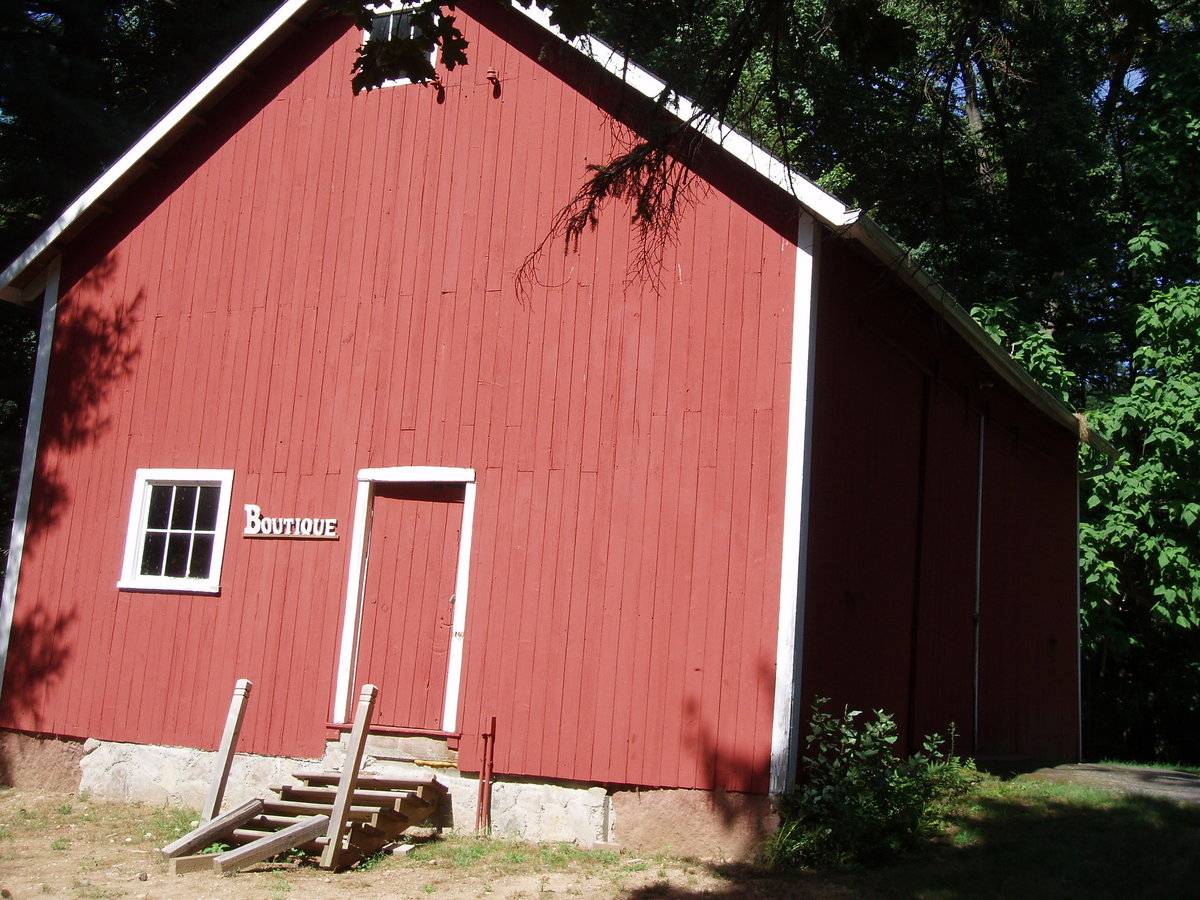
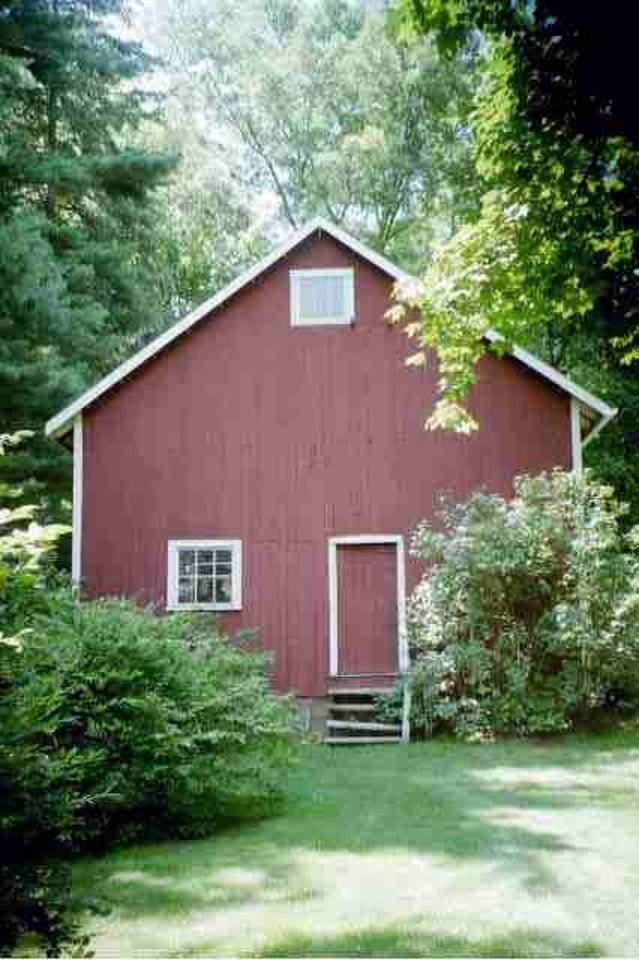
This is a 1 ½-story tripartite eave-entry bank barn with a gable roof. The primary façade of the barn faces north and the barn is perpendicular in orientation to Plainville Avenue, which passes this property at a nearly north to south angle. The first story is partially raised revealing the partially-visible foundation and lower level on all sides.
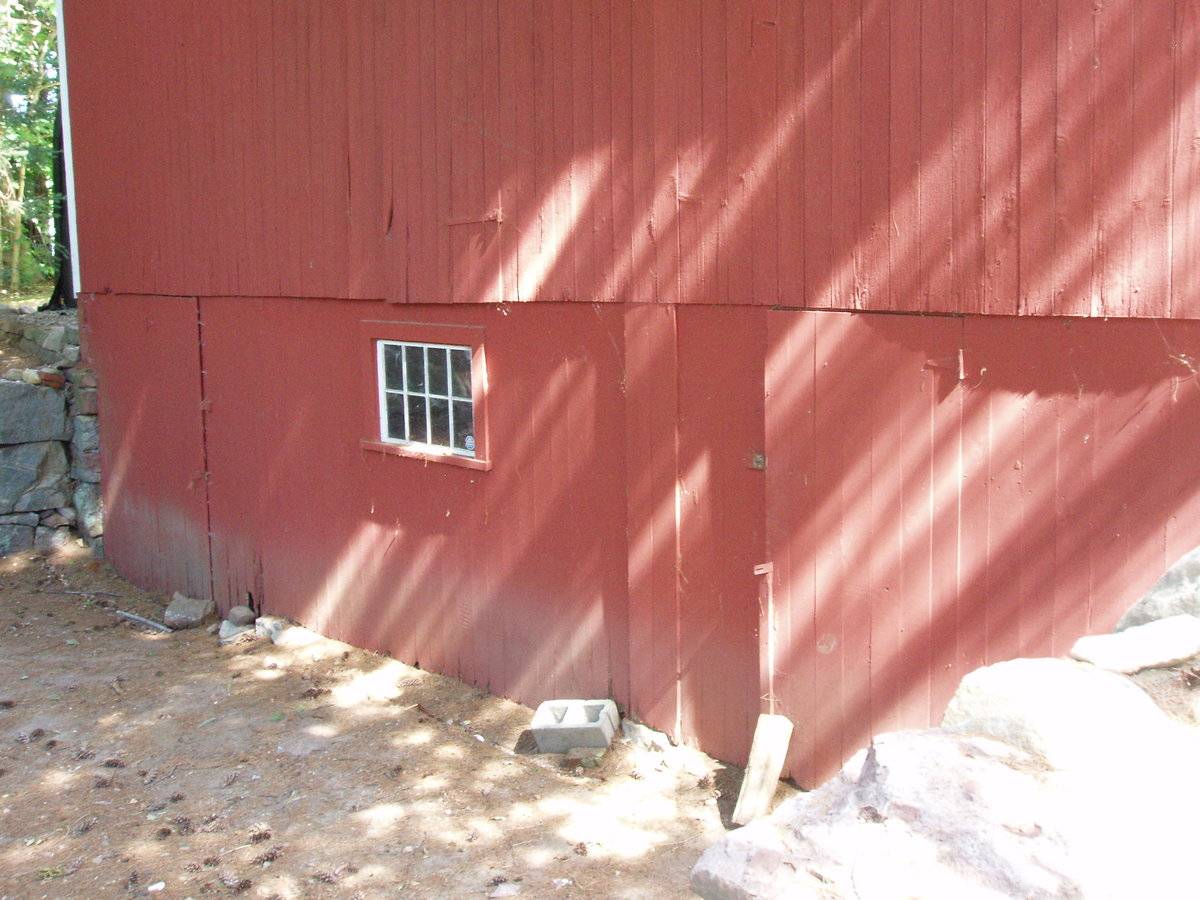
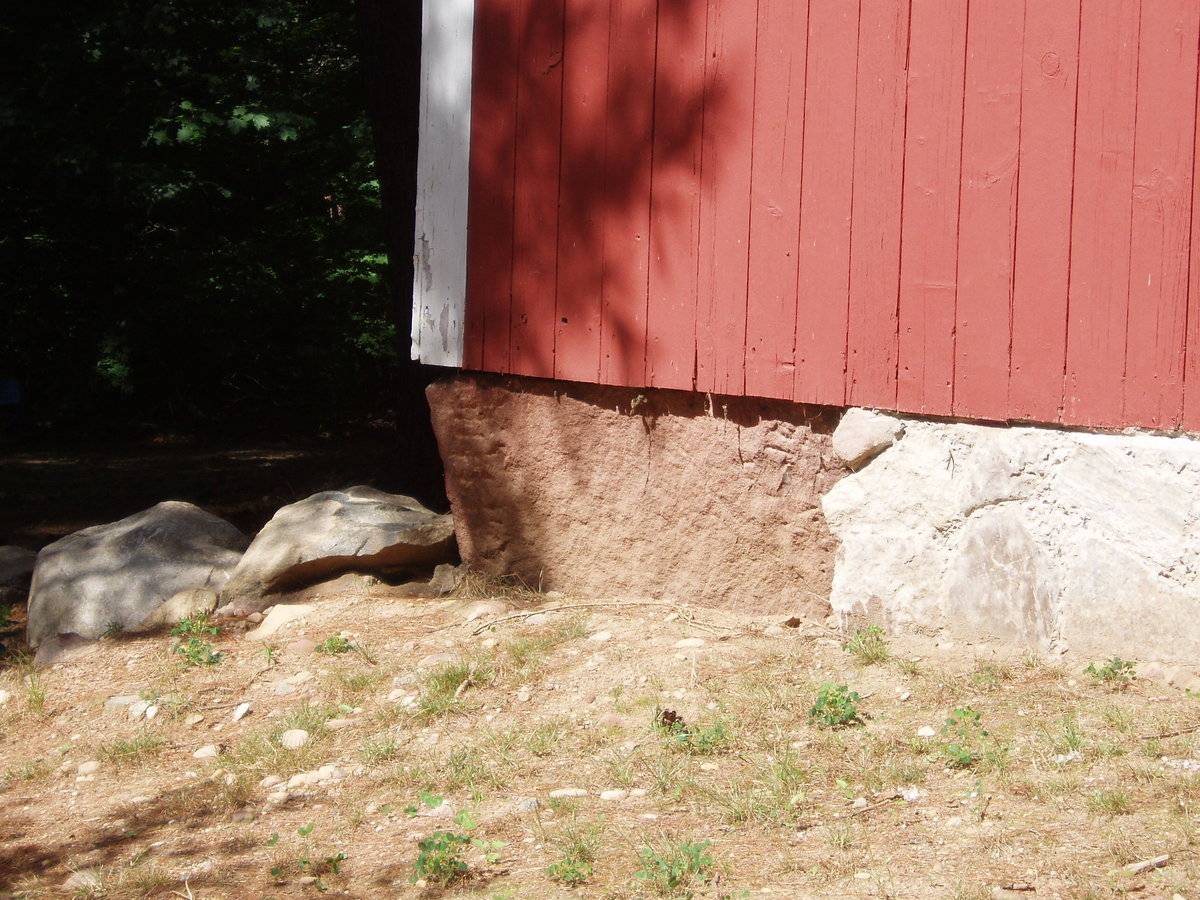
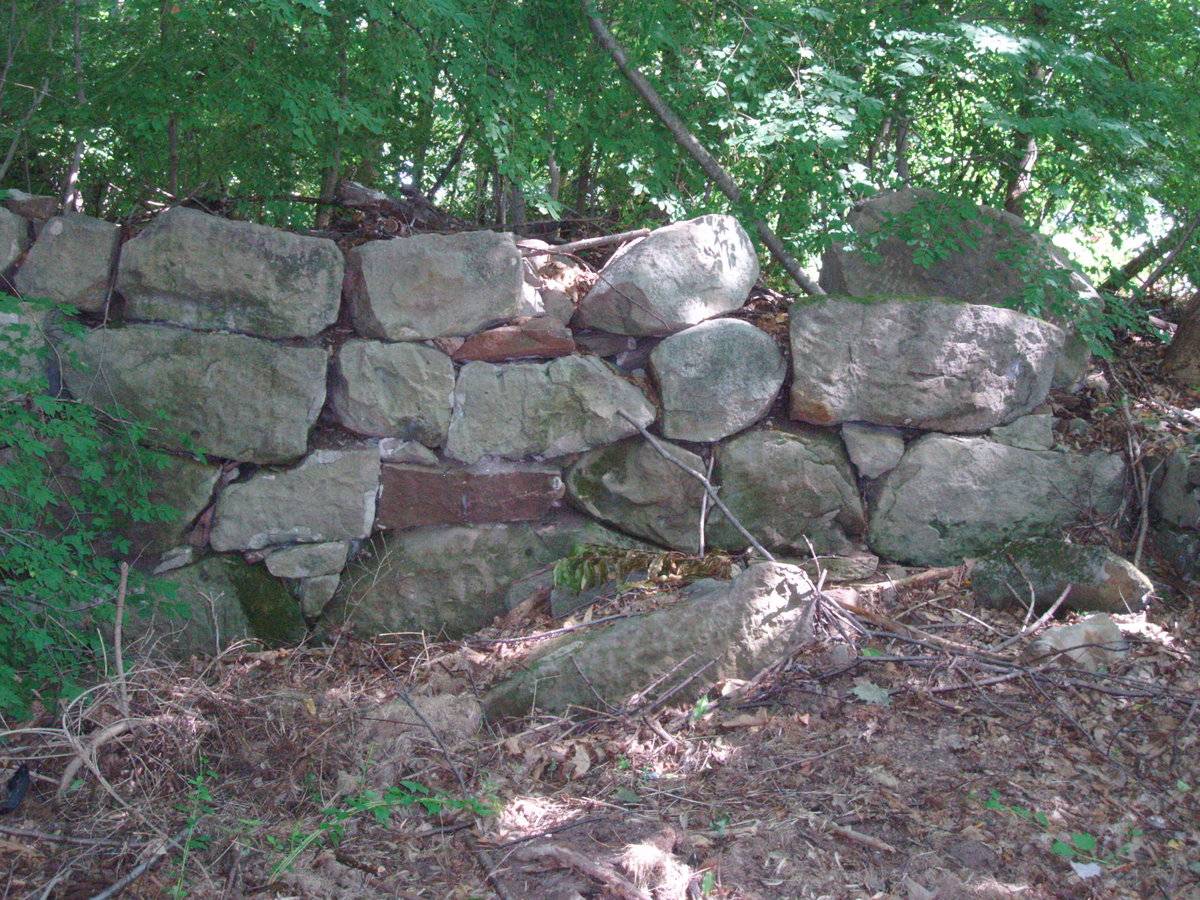
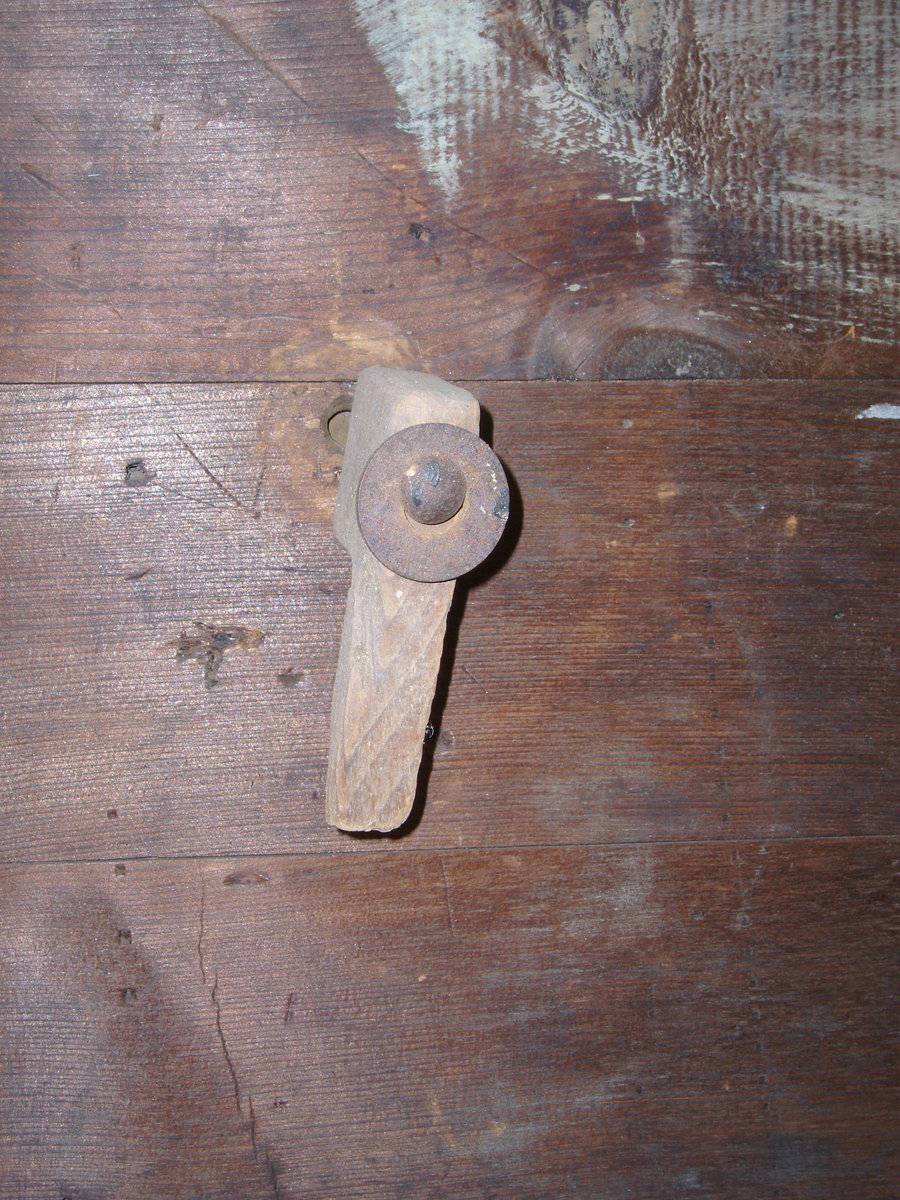
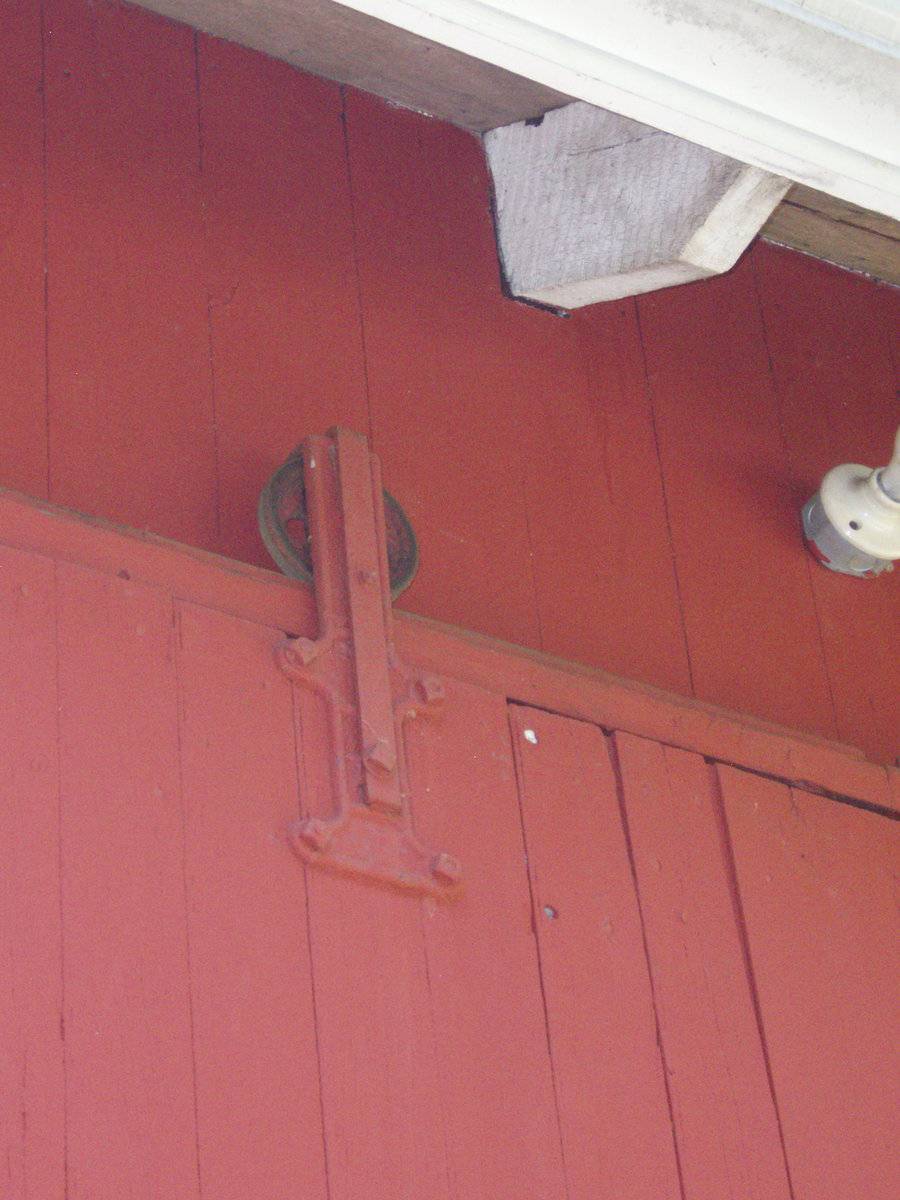
The primary façade of this barn is the north eave-side, which includes the primary entry. This entry consists of a pair of sliding oversize doors in the central bay. These extend from the top of the foundation to the eave, and are accessed via a slightly raised earthen ramp. The remainder of this façade appears to be blank. The east gable-end partially exposes the foundation, which has recently been repaired in some areas. A raised wooden pass-through door is located on the first story slightly off-center to the north, with trim. This door is accessed by a set of wooden steps. A six-pane window with trim is present in the southern half of the first story on this east eave-side. A six-pane window is located in the attic-gable centered just below the roof ridgeline. The south eave-side exposes the full lower level; the bank is held back by two fieldstone retaining walls which follow the trajectory of the barn’s east and west gable-end walls. The lower level on this south eave-side includes a single wooden hinged pass-through door near the southeast corner, and a pair of wooden hinged pass-through doors near the southwest corner. About halfway between these two doors on the lower level is an eight-pane window with trim arranged horizontally. Directly above this window and slightly to the east on the first story is a wooden hinged pass-through door. The exterior siding continues all the way through the basement-level on this side only. The remainder of this eave-side appears to be blank. The west gable-end appears to have two window openings on the first floor, set symmetrically into the wall.
This barn’s exterior walls are clad in vertical wooden flush-board siding, painted red. The roof is covered with gray asphalt shingles. Most trim is painted white.
Historical significance:
The oldest barns still found in the state are called the “English Barn,” side-entry barn,” “eave entry,” or a 30 x 40. They are simple buildings with rectangular plan, pitched gable roof, and a door or doors located on one or both of the eave sides of the building based on the grain warehouses of the English colonists’ homeland. The name “30 by 40” originates from its size (in feet), which was large enough for 1 family and could service about 100 acres. The multi-purpose use of the English barn is reflected by the building’s construction in three distinct bays - one for each use. The middle bay was used for threshing, which is separating the seed from the stalk in wheat and oat by beating the stalks with a flail. The flanking bays would be for animals and hay storage.
The 19th century saw the introduction of a basement under the barn to allow for the easy collection and storage of a winter’s worth of manure from the animals sheltered within the building. The bank barn is characterized by the location of its main floor above grade, either through building into a hillside or by raising the building on a foundation.
This innovation, aided by the introduction of windows for light and ventilation, would eventually be joined by the introduction of space to shelter more animals under the main floor of the barn.
Field Notes
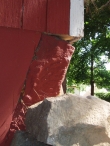
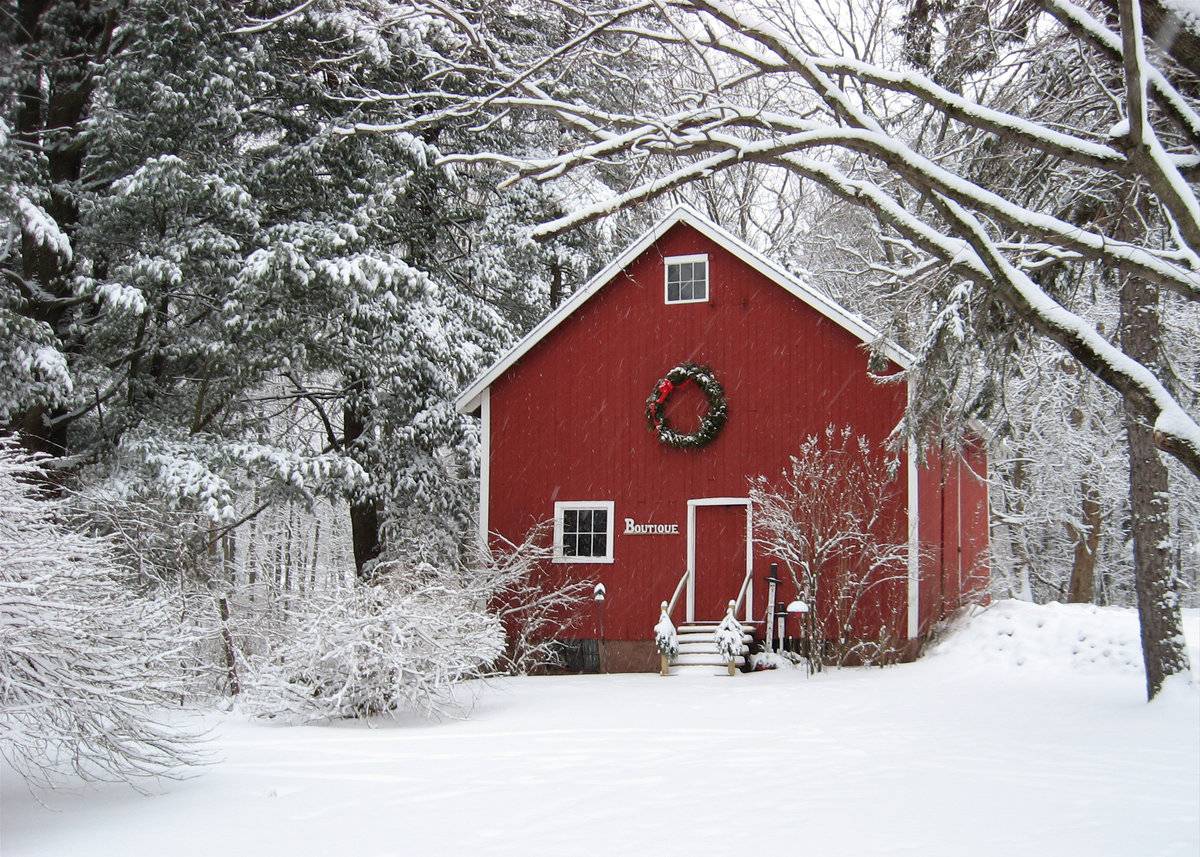
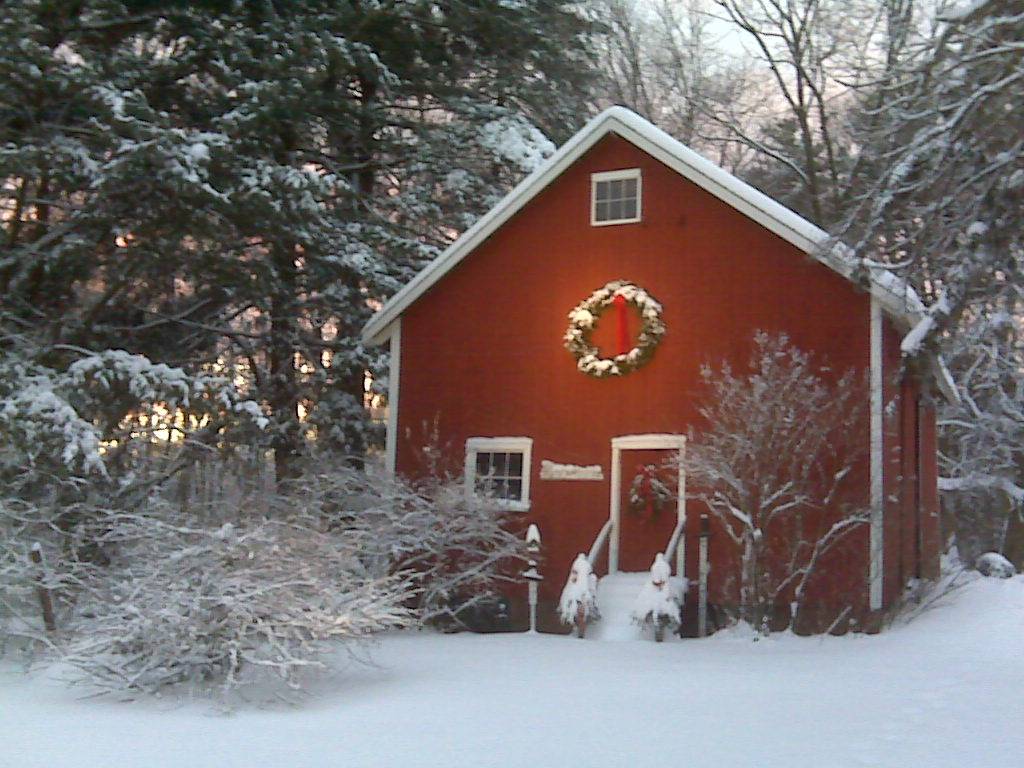
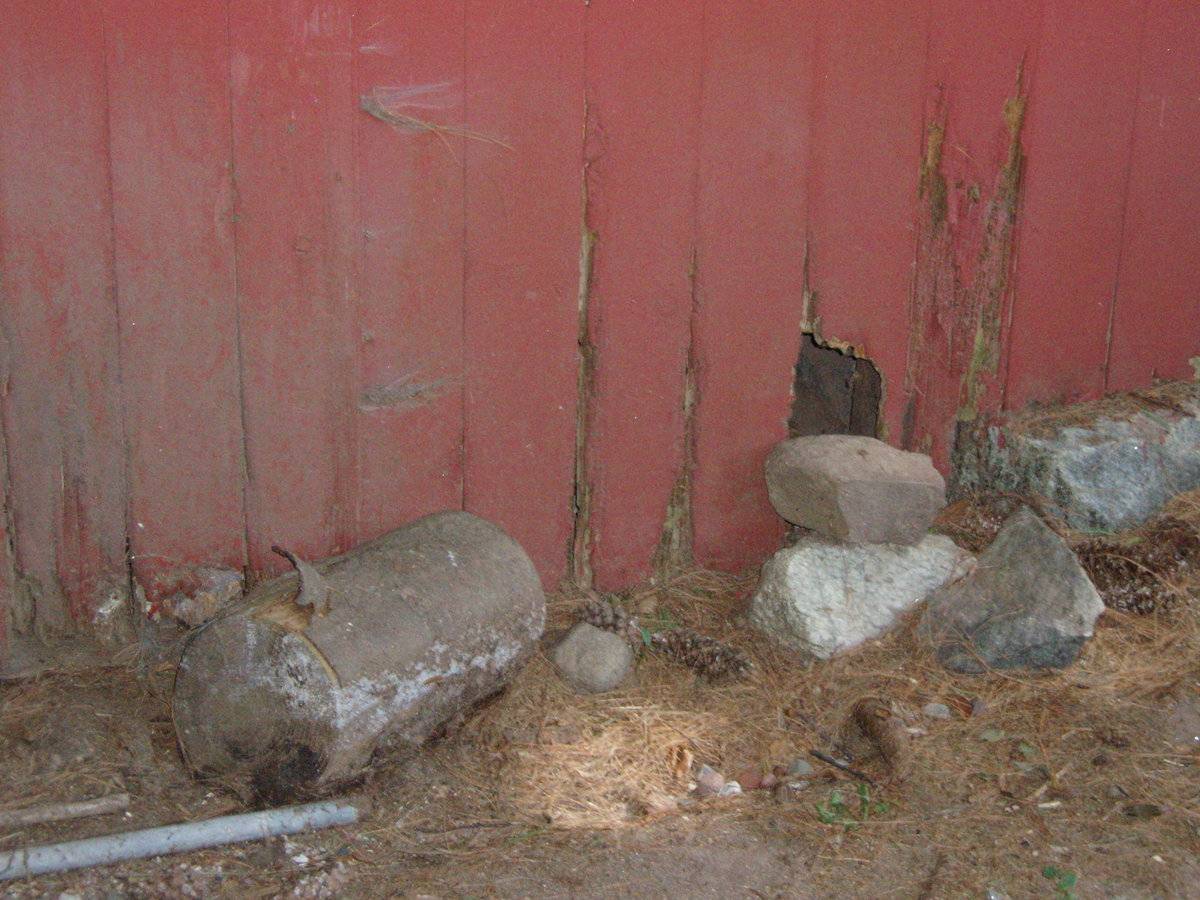
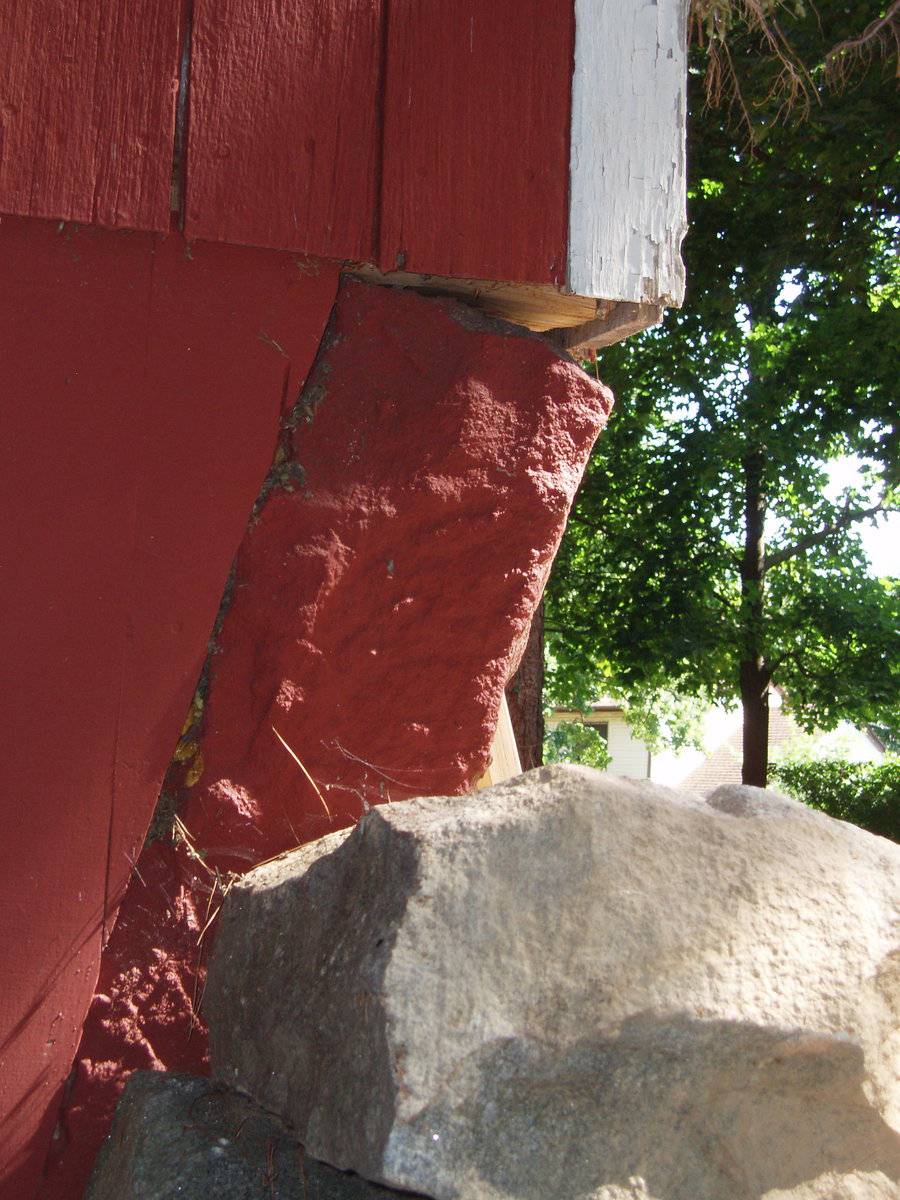
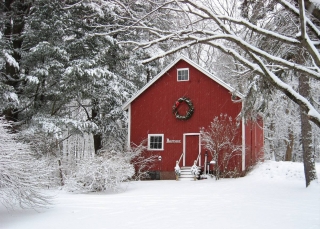
The 2-story 24'W X 32'L English bank barn was probably built around 1866. It retains many of its original features despite roof and floor replacement. Foundation is fieldstone. The vertical siding is wood. Roof is asphalt shingled. Historically used as a 2-stall horse barn with hayloft. Current owner has information there were potatoes grown on the property; the potatoes being stored on the lower, cooler level. There remains a small stone corral attached to the barn's south side. Stone foundation of a second barn ("a slaughterhouse")can be seen a few yards off to the northwest. Barn is visible from the street; interior is accessible. Current use is for recreation (band practice),crafts, storage and a garage. Some concern the barn was "slipping off its foundation to the East" has caused the owner to shore up the foundation in one place. Frederic M. Hart was a stone mason who served with the Union army during the Civil War. In 1893 James Murphy purchased the property and for almost 100 years it remained in the Murphy family. After WWII the barn - always painted "barn red" - was converted into a garage. The current owner is so proud "someone is finally paying attention to his beloved barn" he insisted we forwarded a couple of his "winter shots" to you!
- Use & Accessibility
Use (Historic)
Use (Present)
Exterior Visible from Public Road?
Yes
Demolished
n/a
Location Integrity
Unknown
- Environment
Related features
Environment features
Relationship to surroundings
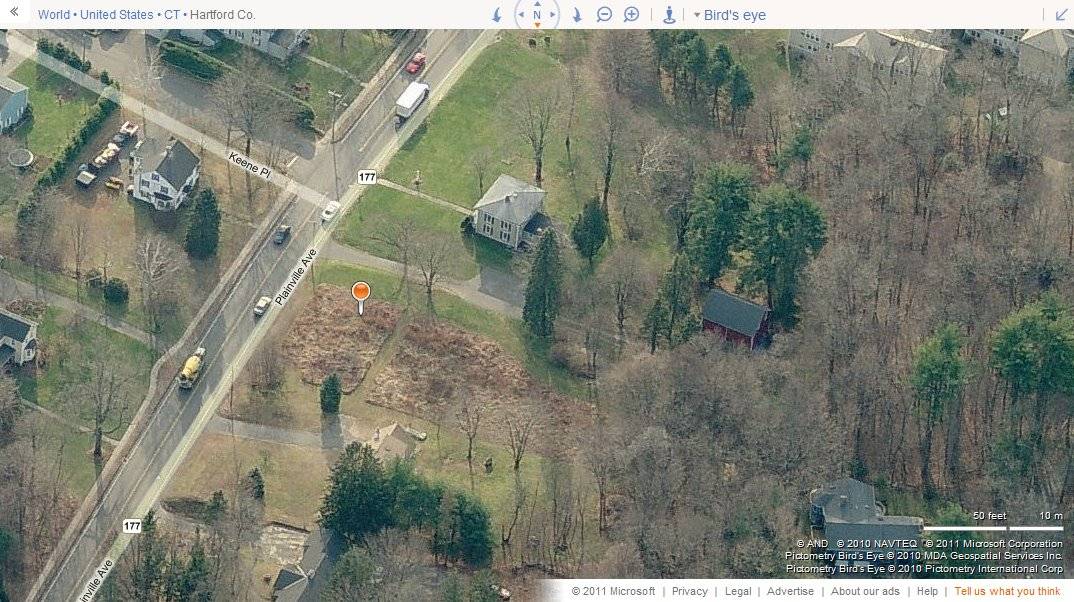
The barn on this property is perpendicular to Plainville Avenue and the primary entry faces north. The farmhouse associated with this barn a four-square style residence and is located to the immediate east of the barn, about halfway between the barn and the road. The barn is connected to the road via a driveway which passes along the north wall of the house. Grass surrounds the house and street-side of the barn, intermixed with several large trees. A small grove of coniferous trees surrounds the barn on the east and south sides, which deciduous trees surround the barn on the remaining sides. Two fieldstone walls are present along the two embankments which allow access to the basement portion of the bank barn. These walls project away from the barn along the trajectory of the barn’s east and west gable-end walls. The land surrounding the primarily the site of numerous residences and residential developments, intermixed with small plots of woodland and occasional areas of open space.
- Typology & Materials
-
Building Typology
Materials
Structural System
n/a
Roof materials
Roof type
Approximate Dimensions
BARN: 768 square feet
- Source
-
Date Compiled
04/11/2011
Compiled By
N. Nietering & T. Levine, reviewed by CT Trust
Sources
Photographs by Meyer/Macomber.
Sexton, James, PhD; Survey Narrative of the Connecticut Barn, Connecticut Trust for Historic Preservation, Hamden, CT, 2005, http://www.connecticutbarns.org/history.
Visser, Thomas D.,Field Guide to New England Barns and Farm Buildings, University Press of New England, 1997, 213 pages.
Map of Unionville, CT, retrieved on April 9, 2011 from website www.bing.com.
Farmington Assessor’s Records - online - http://www.farmington-ct.org/landrecords/search.php
- PhotosClick on image to view full file
-