Barn Record Woodstock
RETURN TO ‘FIND BARNS’- Building Name (Common)
- Roseland Cottage Barns - Part 2 of 3
- Building Name (Historic)
- Roseland / Henry C. Bowen Cottage Barns
- Address
- 556 Norwich Worcester Turnpike (Rte 169), Woodstock
- Typology
- Overview
-
Designations
Historic Significance
Architectural description:
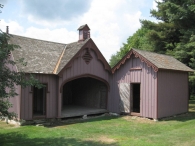
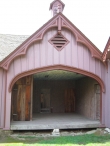
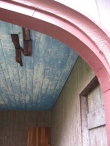
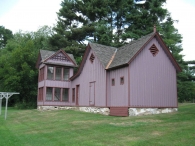
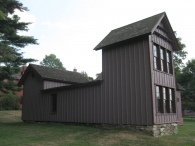
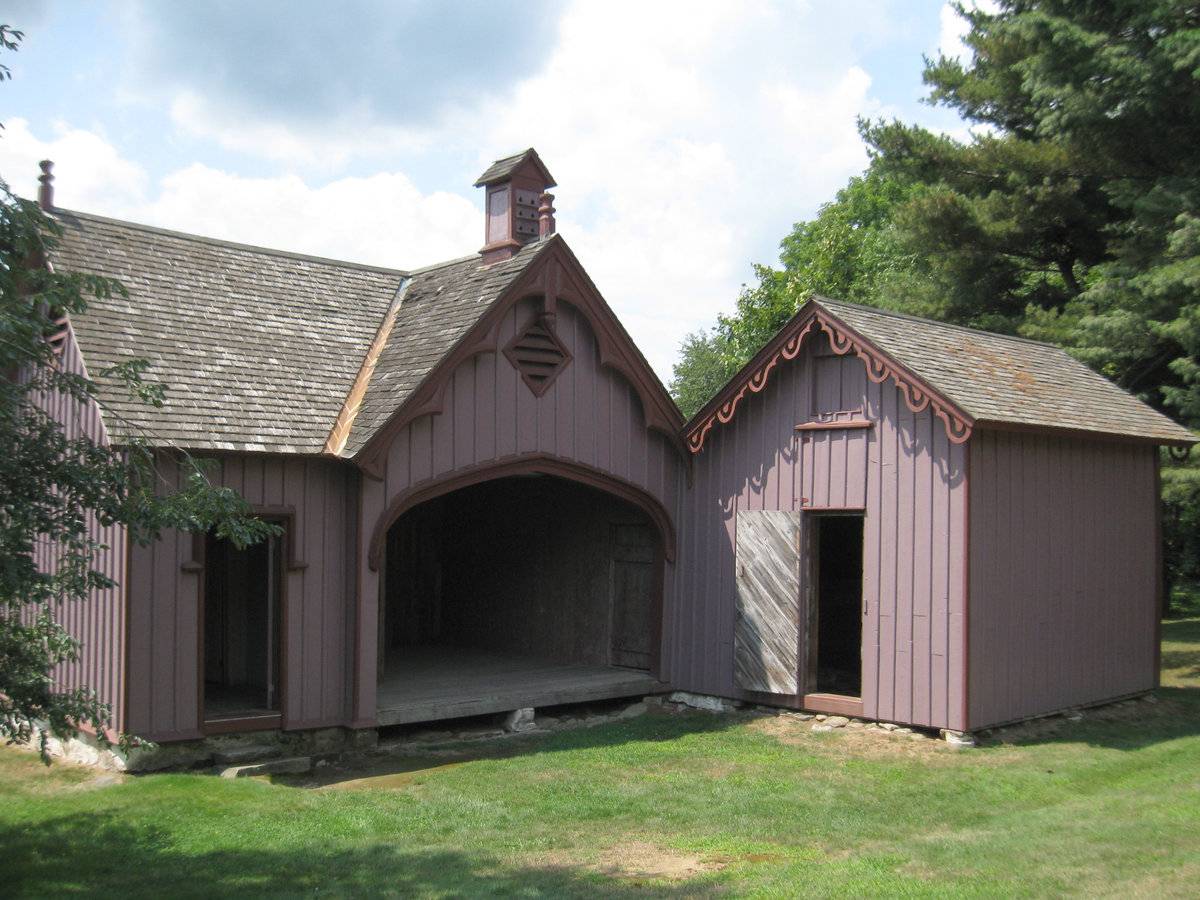
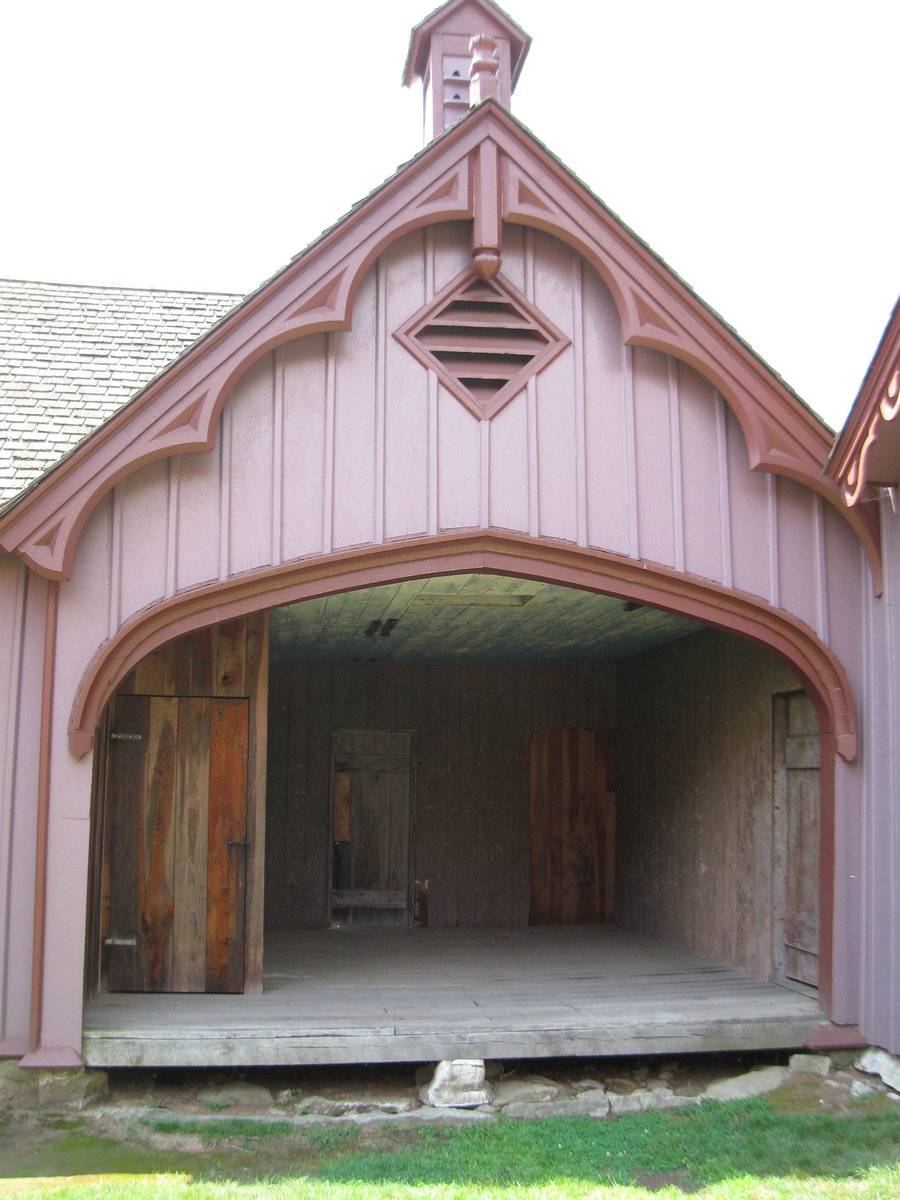
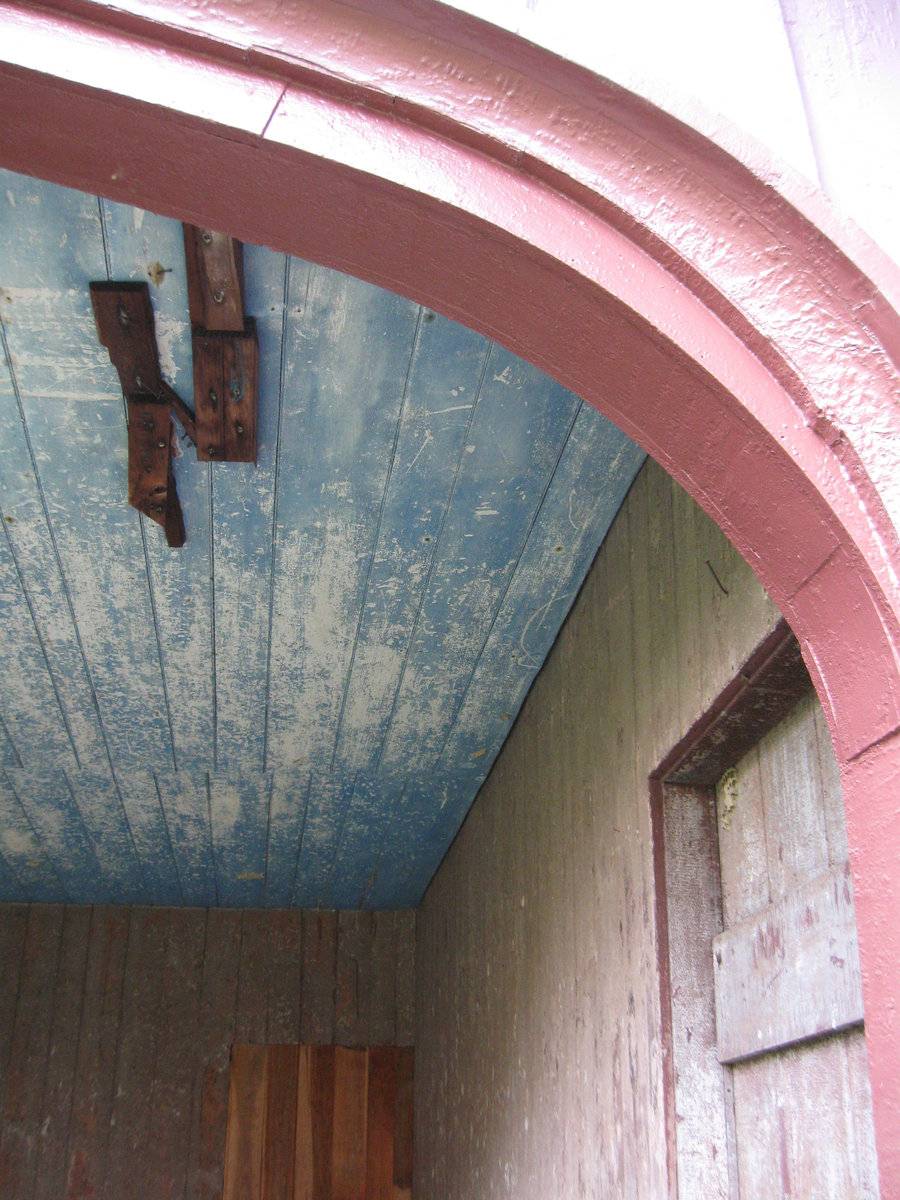
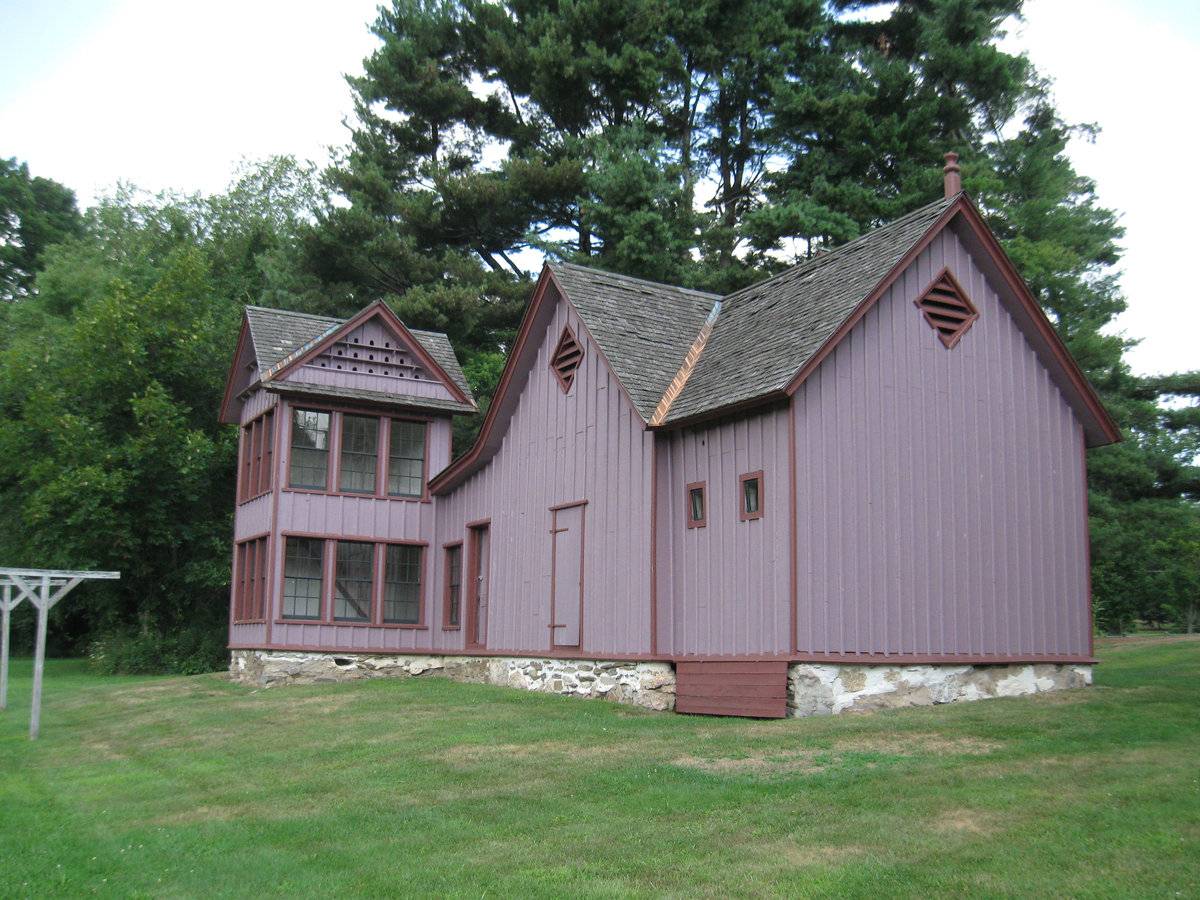
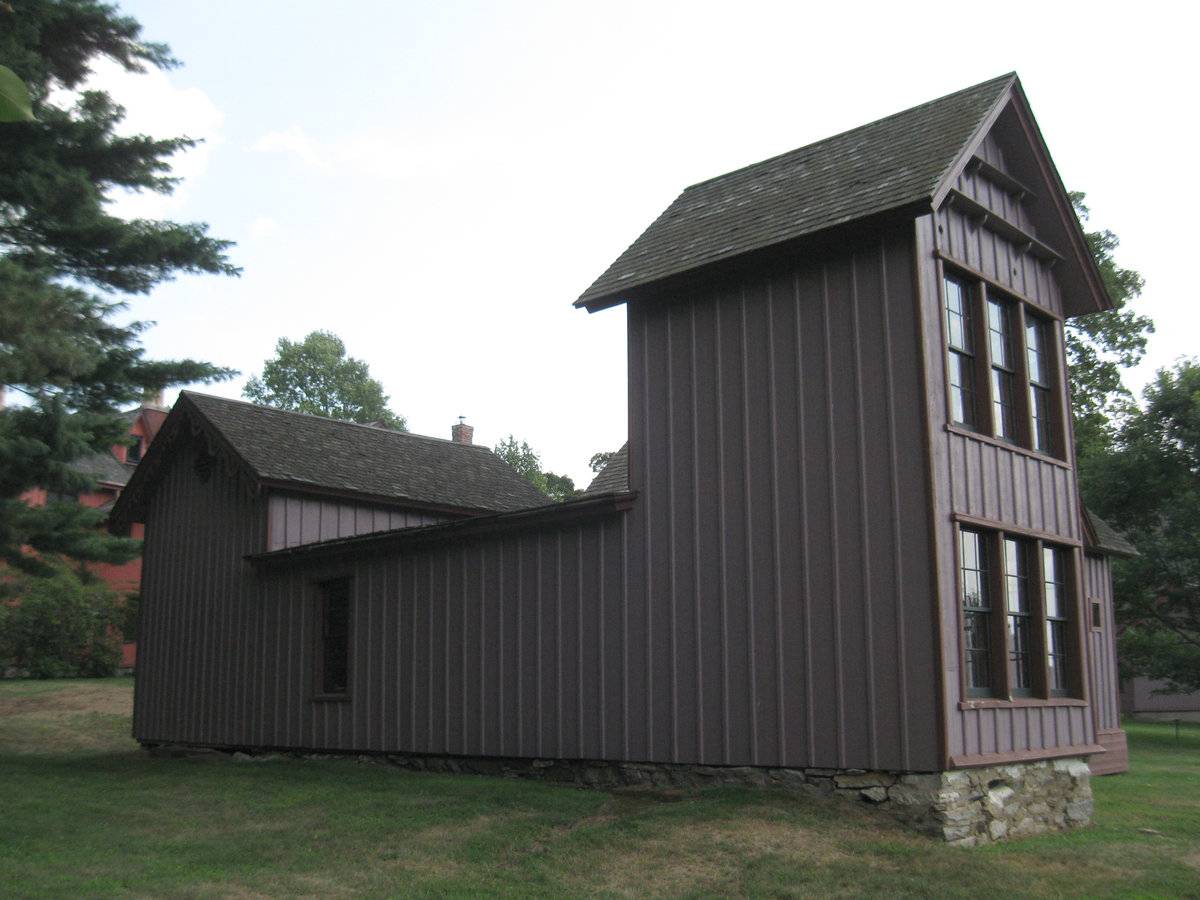
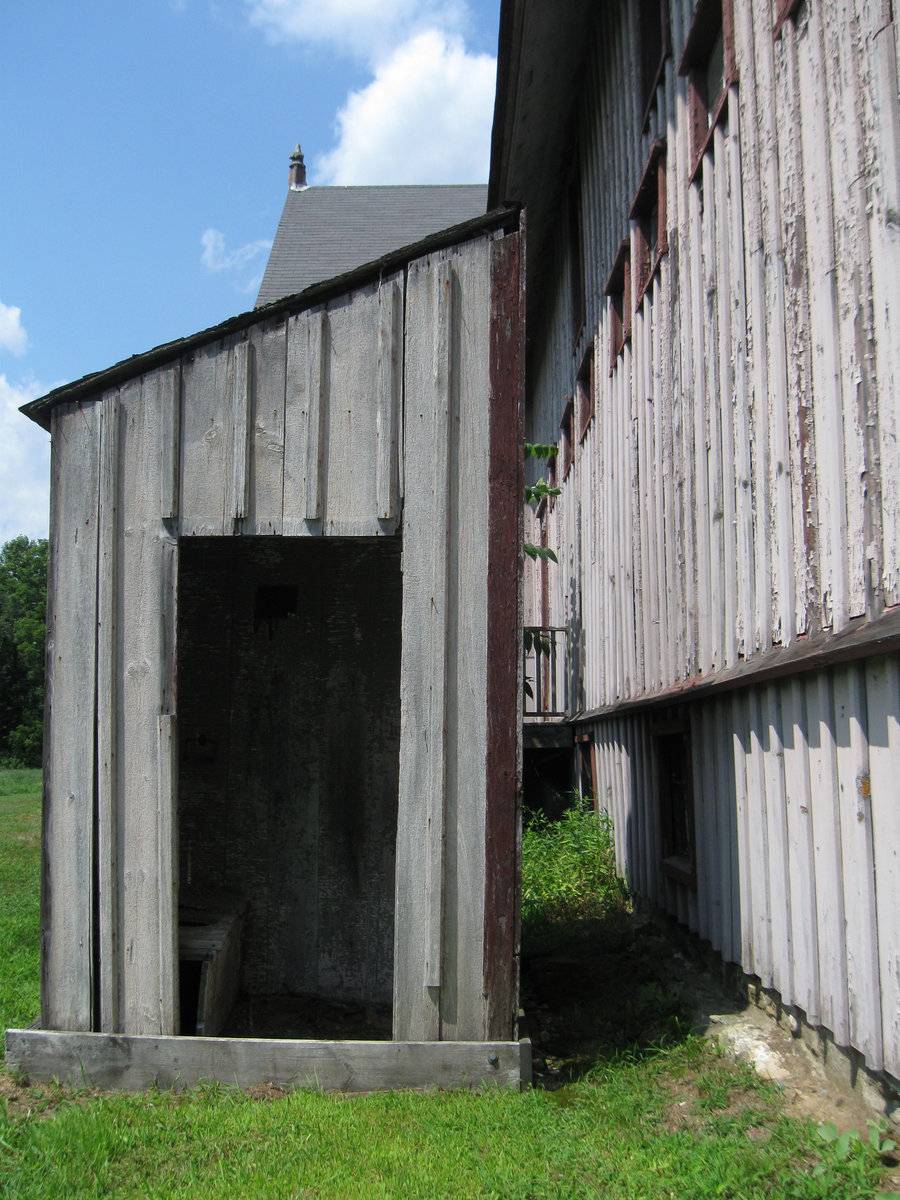
Barn B is an open-sided carriage barn which was built to hold one of the family carriages. The structure is a 1-story gable-roofed building with its ridgeline oriented north-south and a slightly projecting gable occupying the north two-thirds of the structure with an open doorway. Also in the south end is a doorway into a privy known as the “Presidential Privy,” built for use by special guests of the Bowen family during outdoor events. The attached gable-roofed east wing is an icehouse. At the rear is a glass-sided two-story observatory. The open doorway to the carriage bay has a broad arched shape with a slight point at the center. A diamond-shaped vent is located in the peak of the gable and a finial and a gable-roofed martin house sit on the ridge of the gable.
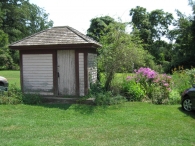
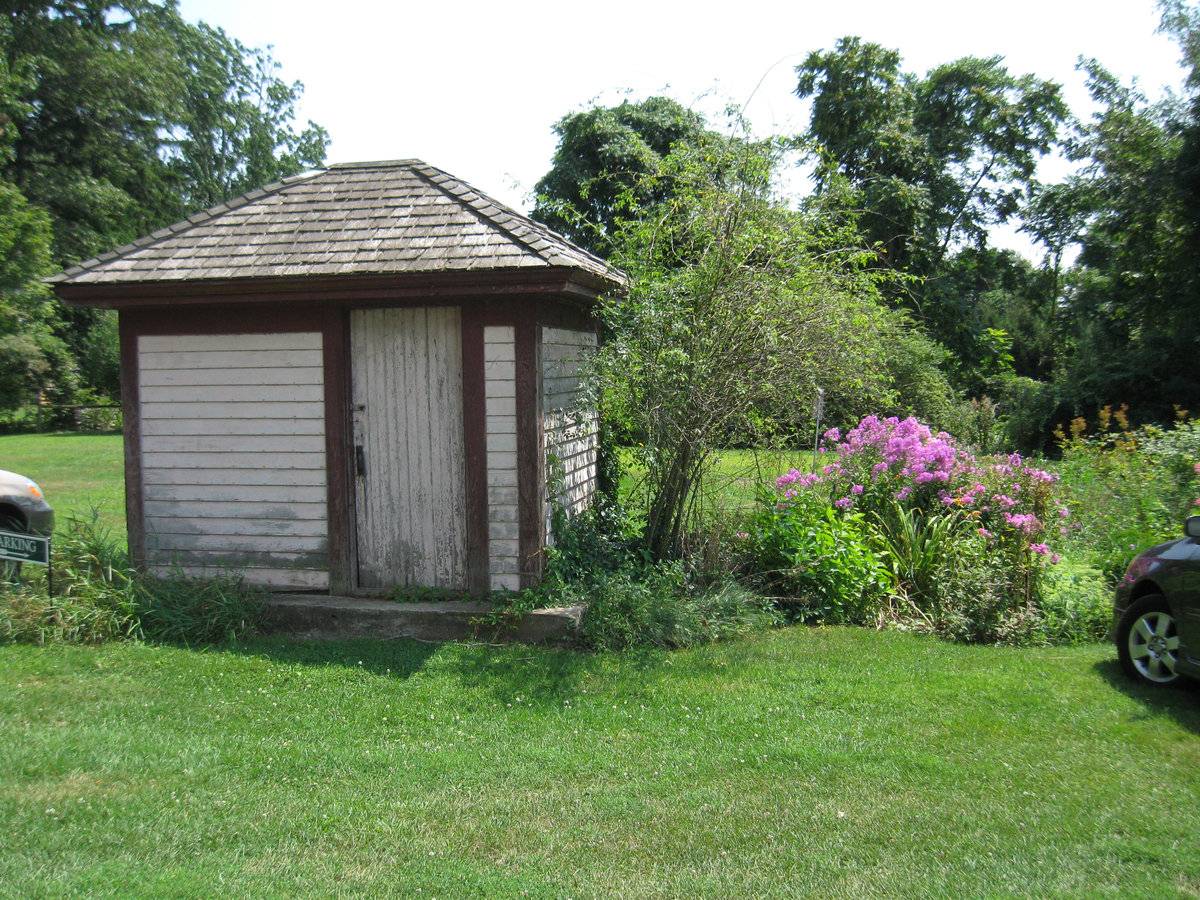
Building C is a hip-roofed outbuilding located south of the main barn.
Building D is a she-roofed two-compartment privy located west of the main barn.
All outbuildings have board-and-batten siding to match the main house and barn. Barn B has wood shingle roofing and elaborate Gothic Revivial rake trim.
Historical significance:Until the 1830s, the horses used for riding and driving carriages were often kept in the main barn along with the other farm animals. By the 1850s, some New England farmers built separate horse stables and carriage houses. Early carriage houses were built just to shelter a carriage and perhaps a sleigh, but no horses. The pre-cursor to the twentieth-century garage, these outbuildings are distinguished by their large hinged doors, few windows, and proximity to the dooryard.
The combined horse stable and carriage house continued to be a common farm building through the second half of the nineteenth century and the first decade of the twentieth century, until automobiles became common. Elaborate carriage houses were also associated with gentlemen farms and country estates of the late 19th and early 20th centuries. Another form of carriage barn, the urban livery stable, served the needs of tradespeople.The use of ice for refrigeration became popular in New England by the middle of the 19th century, especially as farmers shifted to dairy production. The small farm buildings used to store ice through the summer can usually be recognized by their thick insulated walls and few windows. Early examples have low ventilators on the roof. Ice was packed in straw or the walls were built double with an air space of up to 18 inches, as insulation. Icehouses continued to be used until electrical refrigeration was installed during the 1930s and 1940s.
Field Notes
Additional outbuildings on the grounds of Roseland Cottage.
- Use & Accessibility
Use (Historic)
Use (Present)
Exterior Visible from Public Road?
Yes
Demolished
n/a
Location Integrity
Original Site
- Environment
Related features
Environment features
Relationship to surroundings
The carriage barn building is located north of the main barn and west of the house. The barn complex sits to one side of and behind the main house. The semi-circular drive goes to the house and sweeps past the front of the barns. A formal garden occupies the central space formed by the angle of the barn and house.
- Typology & Materials
-
Building Typology
Materials
Structural System
Roof materials
Roof type
Approximate Dimensions
n/a
- Source
-
Date Compiled
08/14/2010
Compiled By
Charlotte Hitchcock, reviewed by CT Trust
Sources
http://www.historicnewengland.org/historic-properties/homes/roseland-cottage/roseland-cottage
Sexton, James, PhD; Survey Narrative of the Connecticut Barn, Connecticut Trust for Historic Preservation, Hamden, CT, 2005, http://www.connecticutbarns.org/history.
Visser, Thomas D.,Field Guide to New England Barns and Farm Buildings, University Press of New England, 1997, 213 pages.
- PhotosClick on image to view full file
-