Barn Record Farmington
RETURN TO ‘FIND BARNS’- Building Name (Common)
- Fisher/Simmons Farm
- Building Name (Historic)
- Walnut Grove/Tillotson Farmstead
- Address
- 199 Town Farm Road, Farmington
- Typology
- Overview
-
Designations
Historic Significance
Architectural description:
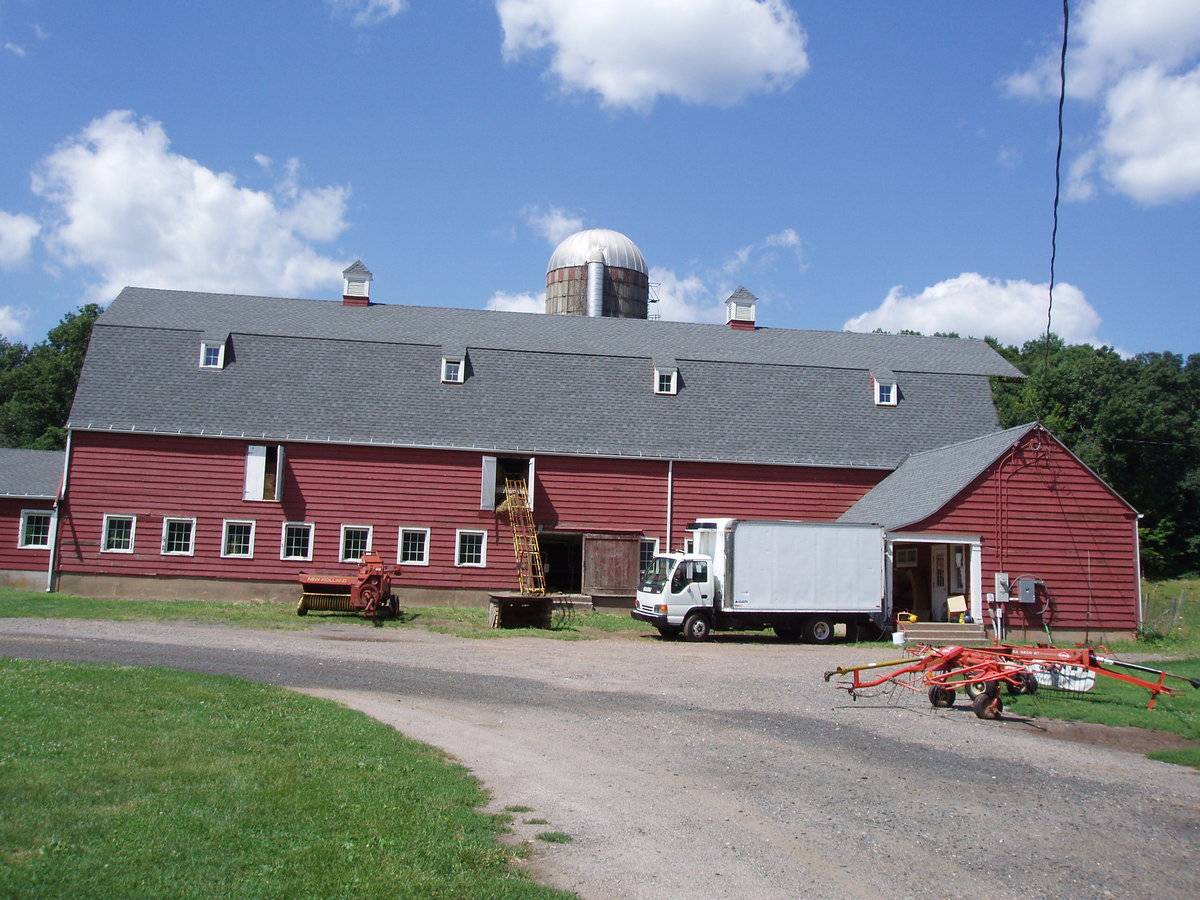
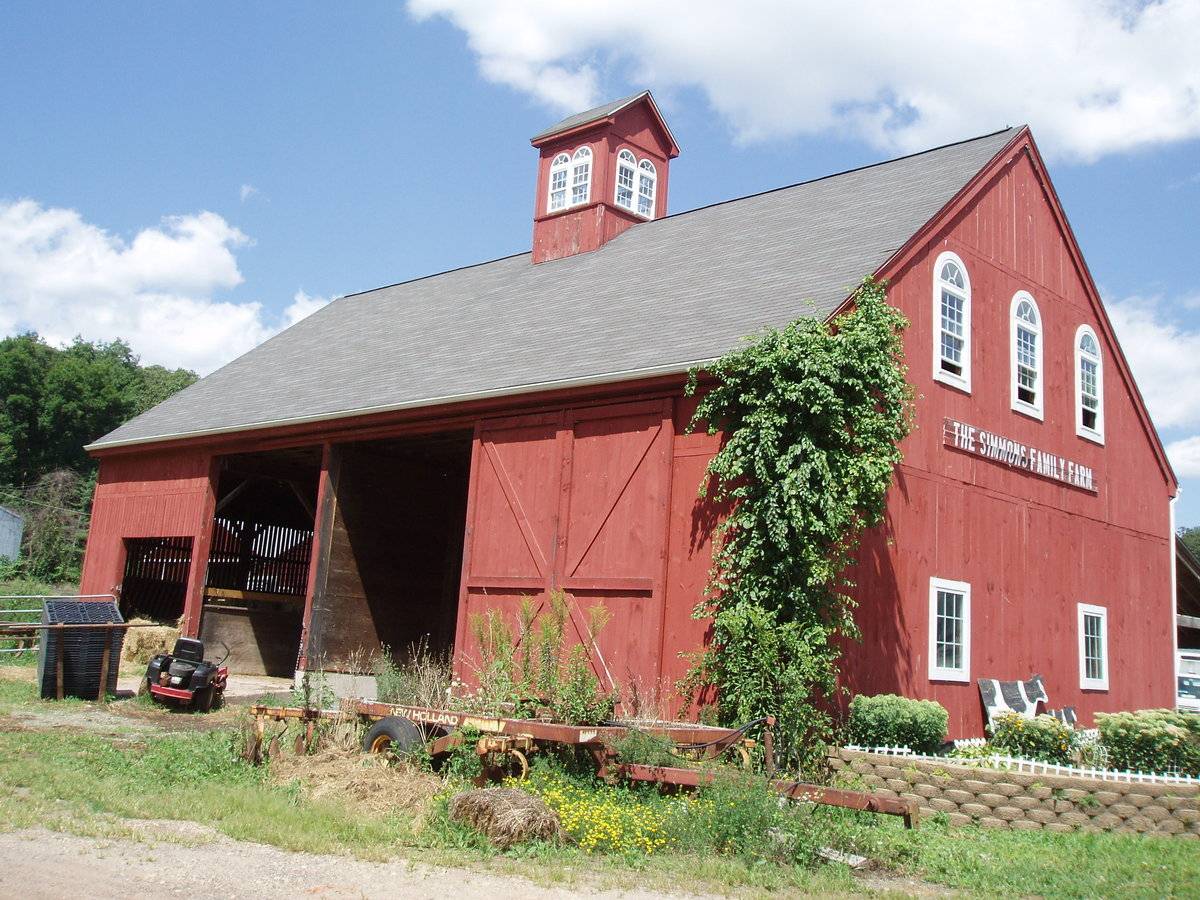
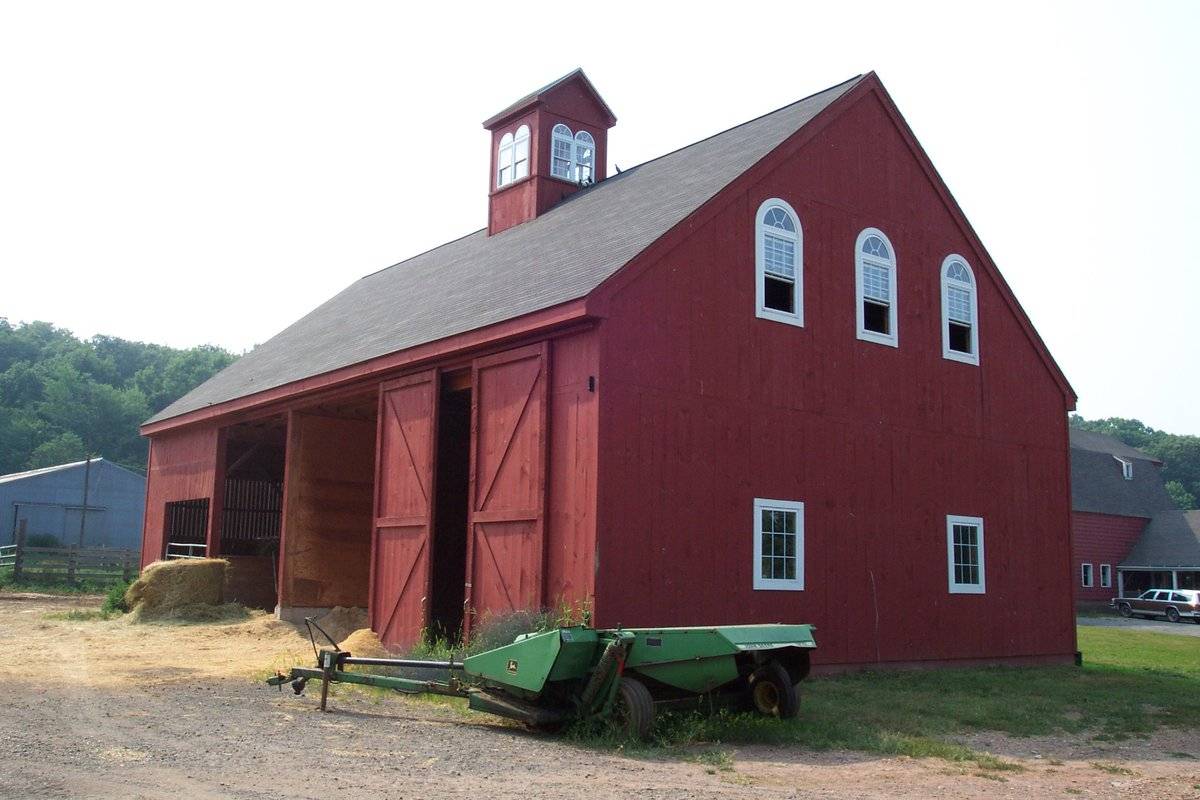
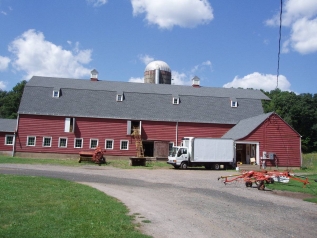
This is a very large 2 ½-story eave-entry barn with a gambrel roof and several additions. The primary façade of this barn faces east, and its ridgeline is parallel to Town Farm Road, which runs south to north along this property.
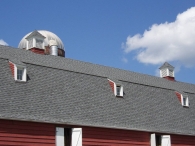
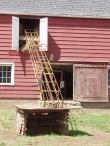
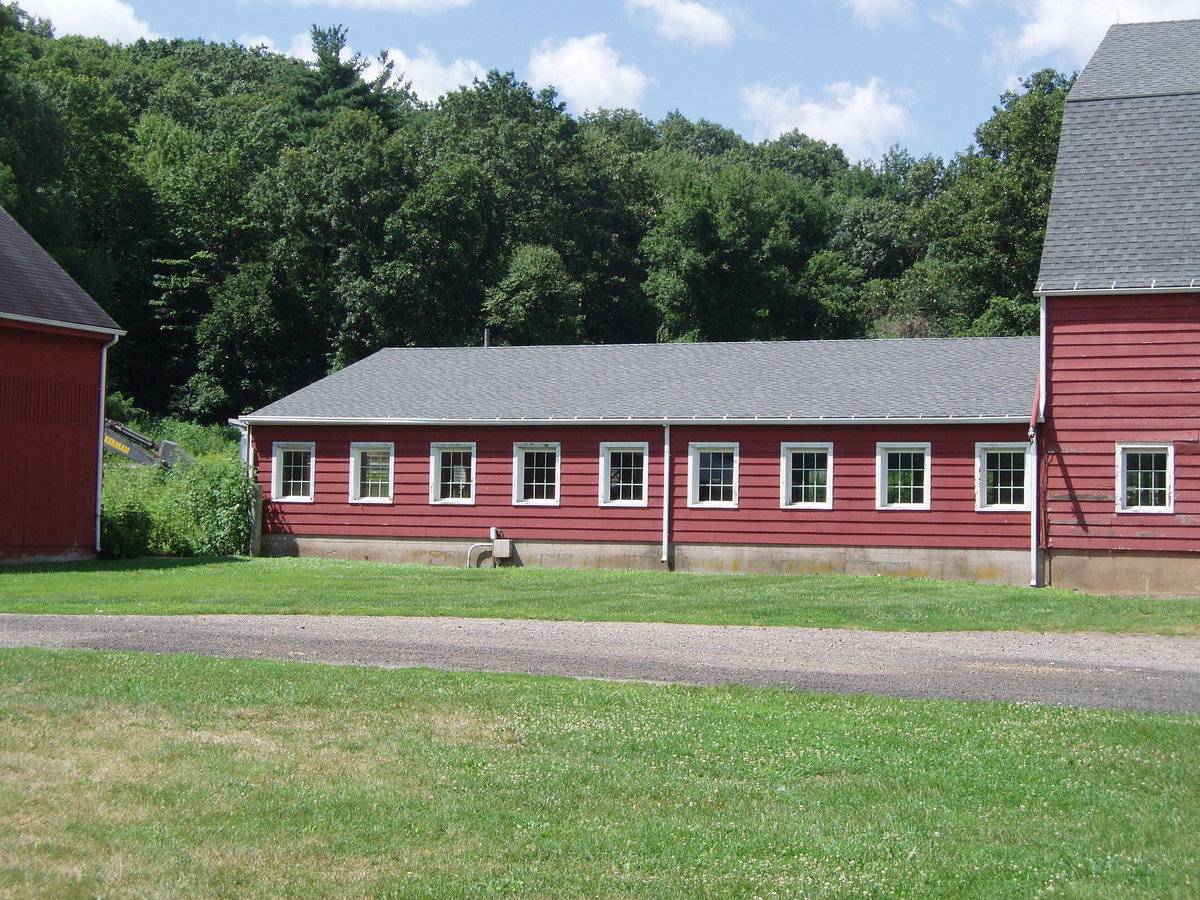
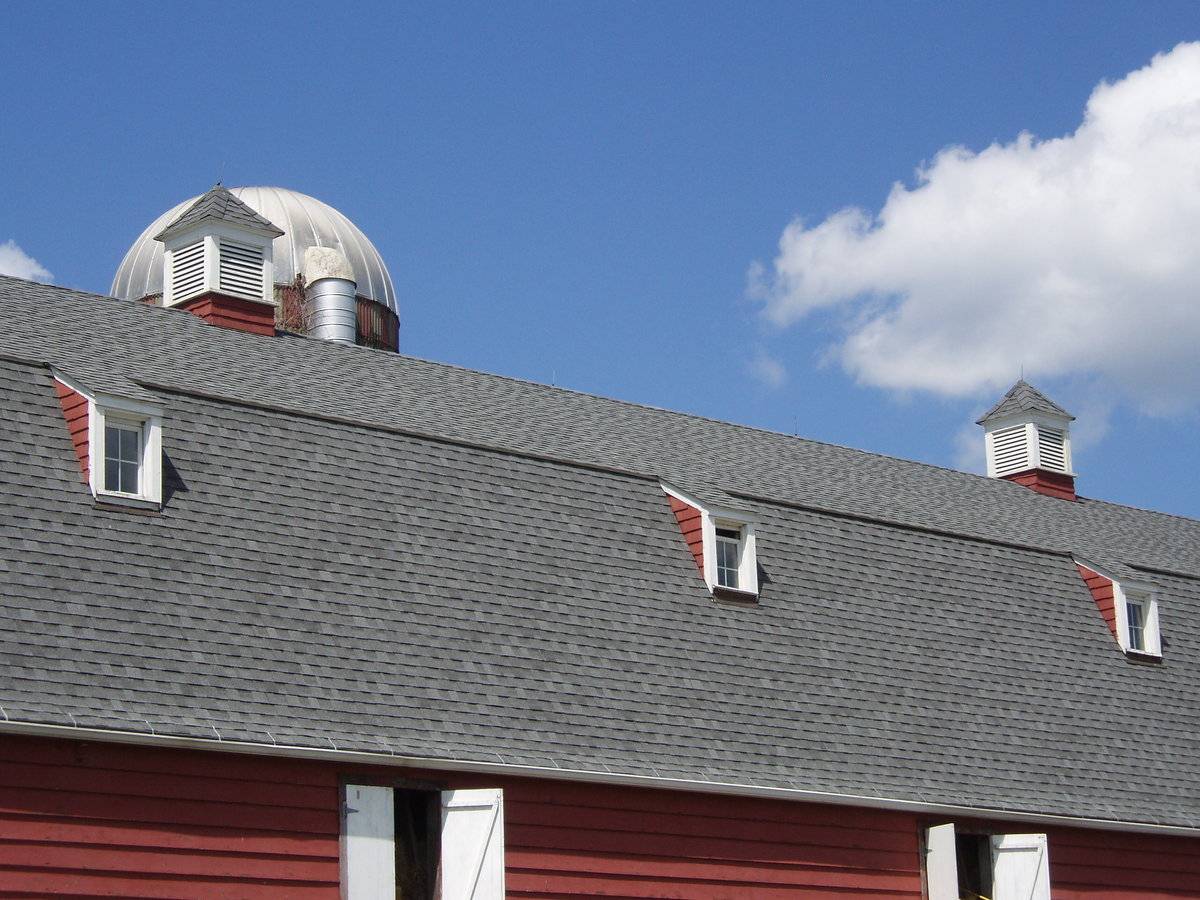
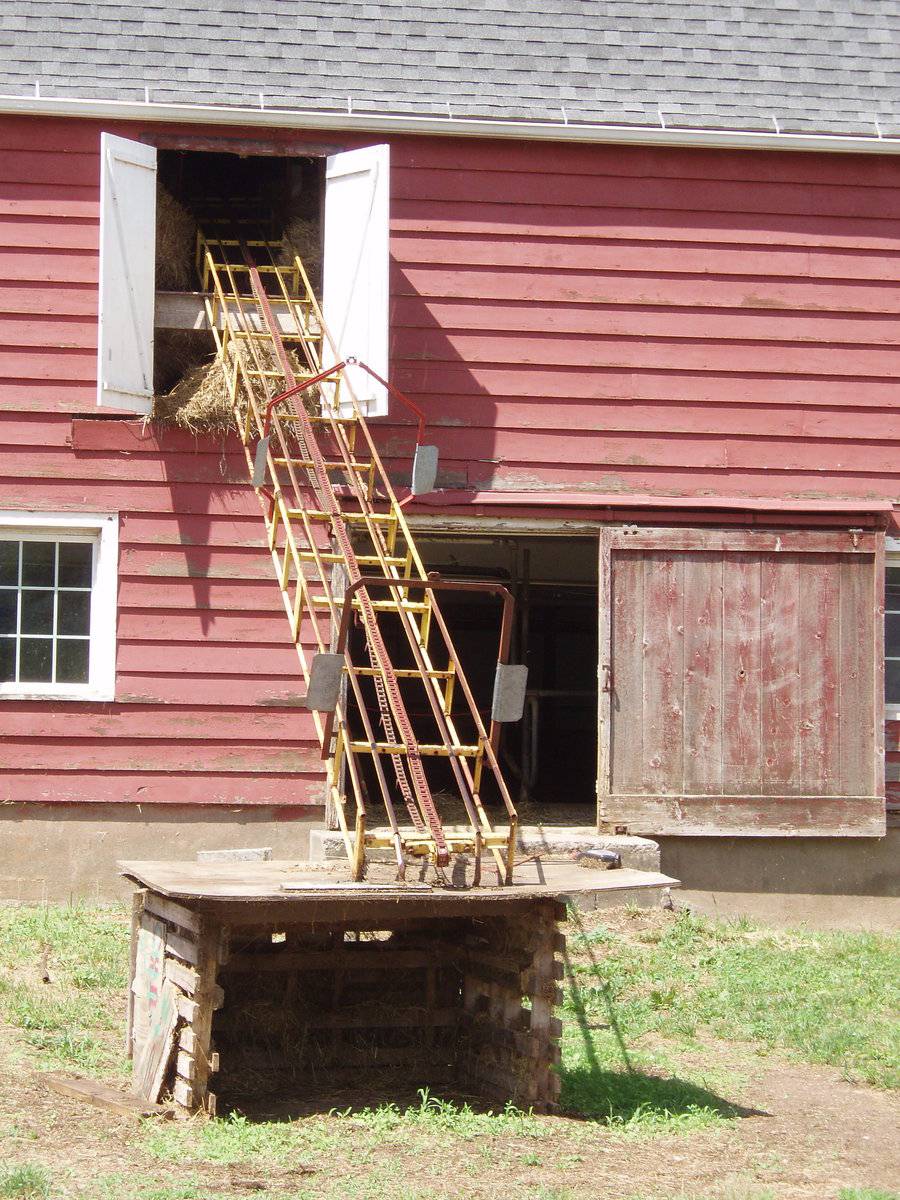
The primary façade of this barn is the east eave-side, which faces Town Farm Road. The main entry on the first story is a single oversized wooden sliding door which is mounted on an upper track and accessed by two concrete steps. This door is centered on the east eave-side’s length. To the south of this door, a series of seven evenly-spaced windows with nine-panes each stretch the length of the southern half of the building. Immediately north of the oversize door, three more nine-pane windows of identical dimensions and spacing are located on the first floor. North of these windows, a single-story gable-roof addition forms an ell projecting off the east eave-side of the barn at the northeast corner. The second story of the east eave-side contains two pairs of hinged wooden doors which provide access to the hay loft. The northern of the two pairs is located just off-center to the south, and the southern pair is roughly halfway between the northern pair and the southeast corner of the barn. Four small shed-roof dormers, each with a four-pane window within, are evenly spaced along the roof just below the gambrel purlin.
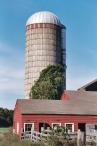
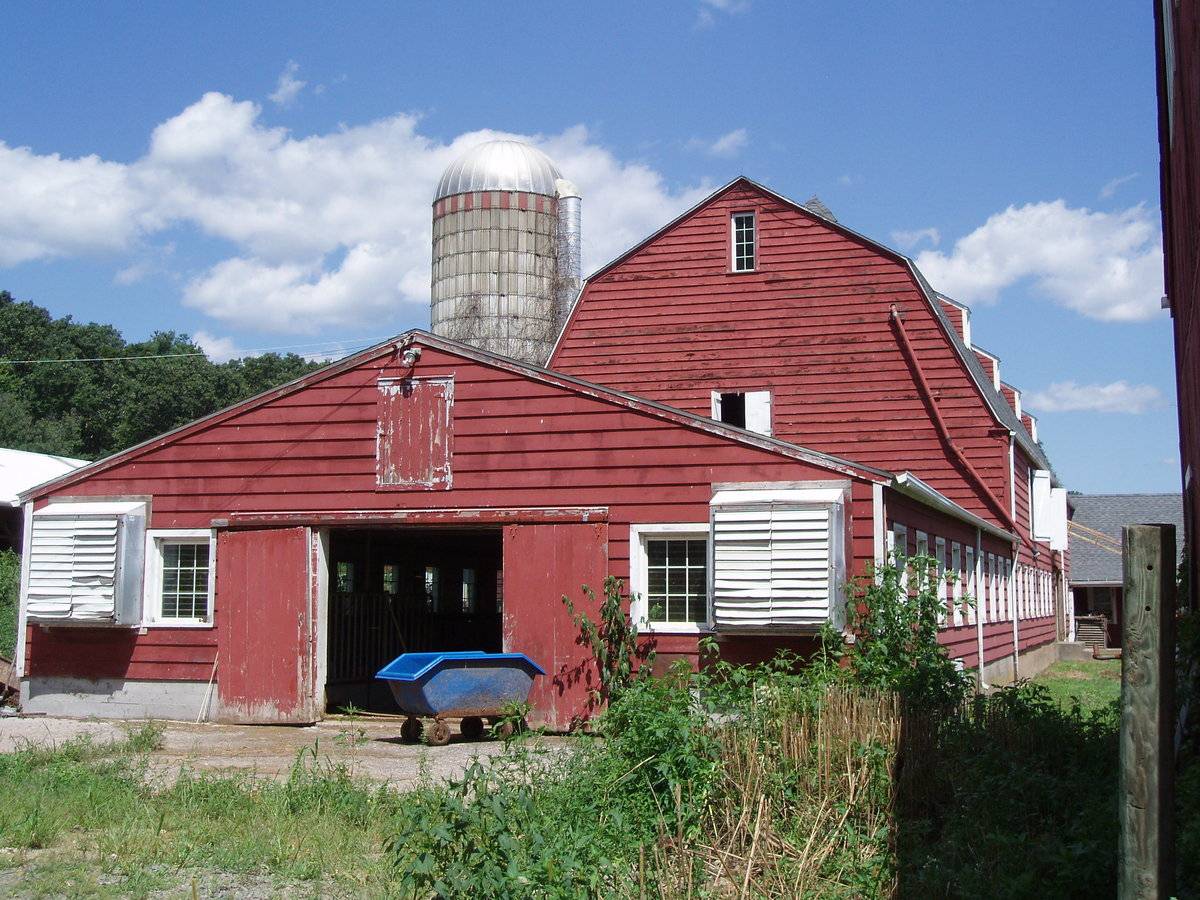
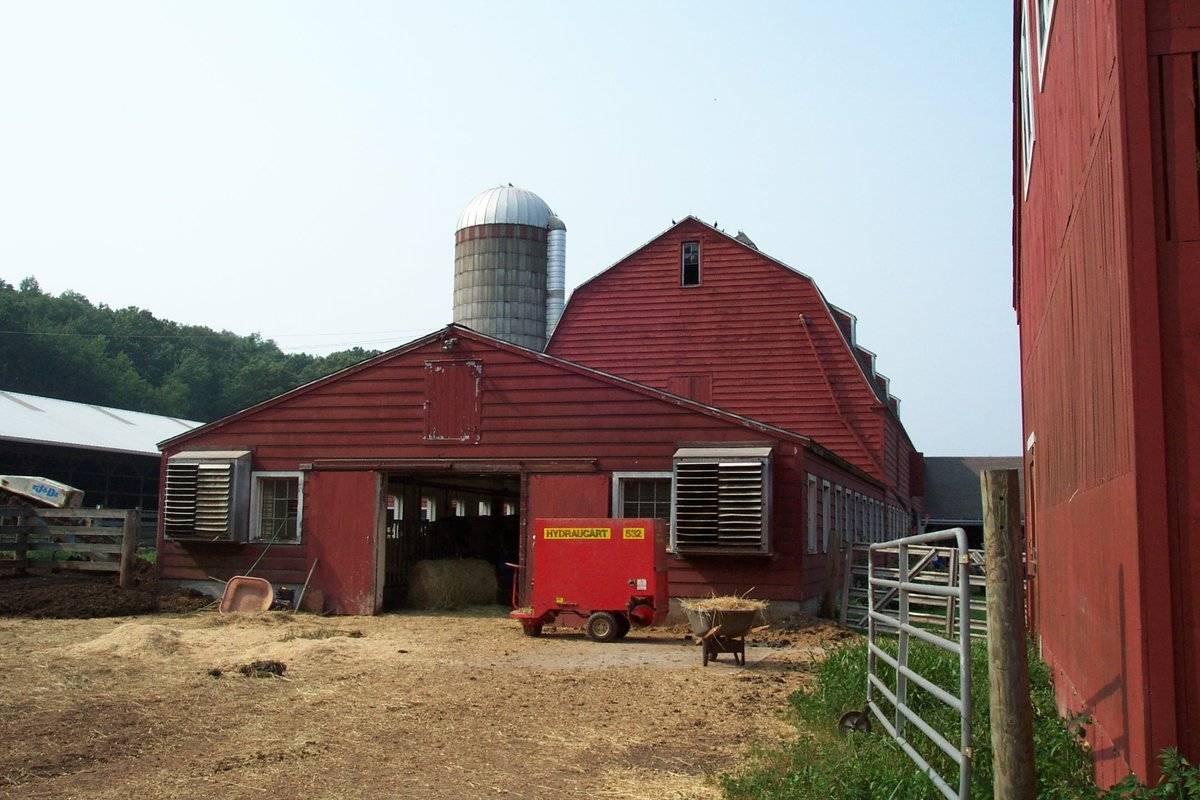
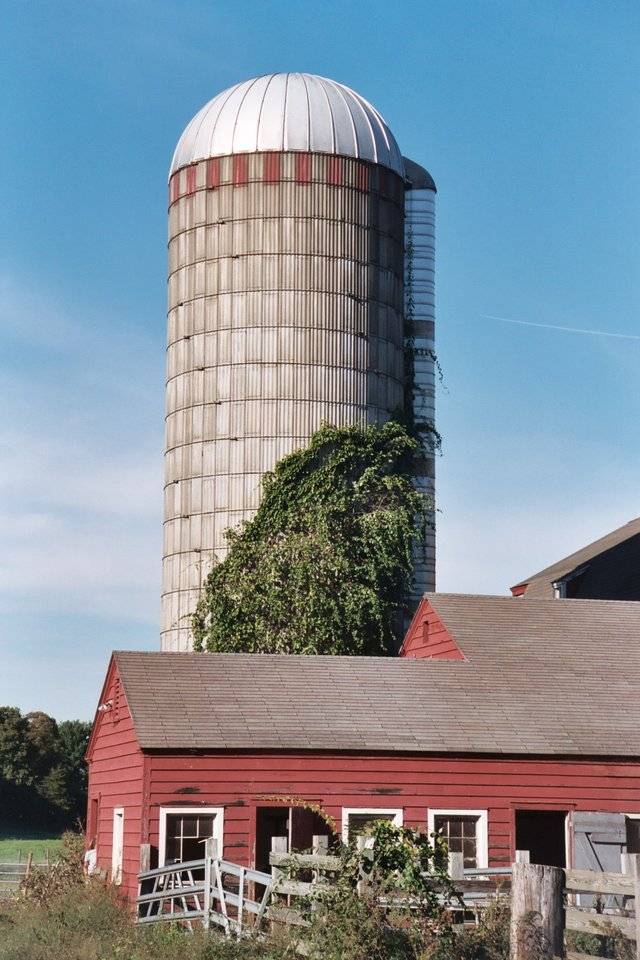
The north gable-end of the barn includes two symmetrical window openings on the first story, which appear to be of the same size as the other windows on the first floor. A large double-width opening is centered beneath the ridgeline of the roof which provides access to the upper attic. The upper portion of the gambrel roof overhangs an extra distance over the end of the barn on this side. The west eave-side of the barn also has an addition: a 1 ½-story perpendicular addition with lower 1-story tier which projects from the center of the west eave-side. This addition is integrated in with a modern concrete block silo topped by an aluminum shell. The first story of the west eave-side of the barn includes four windows between the northwest corner and the projecting addition, which appear to be of the same dimensions as other windows on the first story of this barn. South of the addition, three window openings are present between the addition and the southwest corner, with a blank space where the final window would be nearest the southwest corner. These also appear to be of the same standard dimensions. The second story of the west-eave side appears to have a pair of hinged wooden doors which provides access to the hay loft located near the northwest corner. No other openings appear present on this story. As with the east eave-side, four small shed-roof dormers, each with a four-pane window within, are evenly spaced along the roof just below the gambrel purlin.
The south gable-end is primarily occupied by a long full-width addition which projects south from the south wall of the barn, which is 1-story in height and has a parallel roof ridgeline. A pair of hinged wooden doors provide access to the hay loft, which are centered on the second story of the south gable-end. An eight-pane window is oriented vertically in the gable attic, directly below the roof ridgeline.
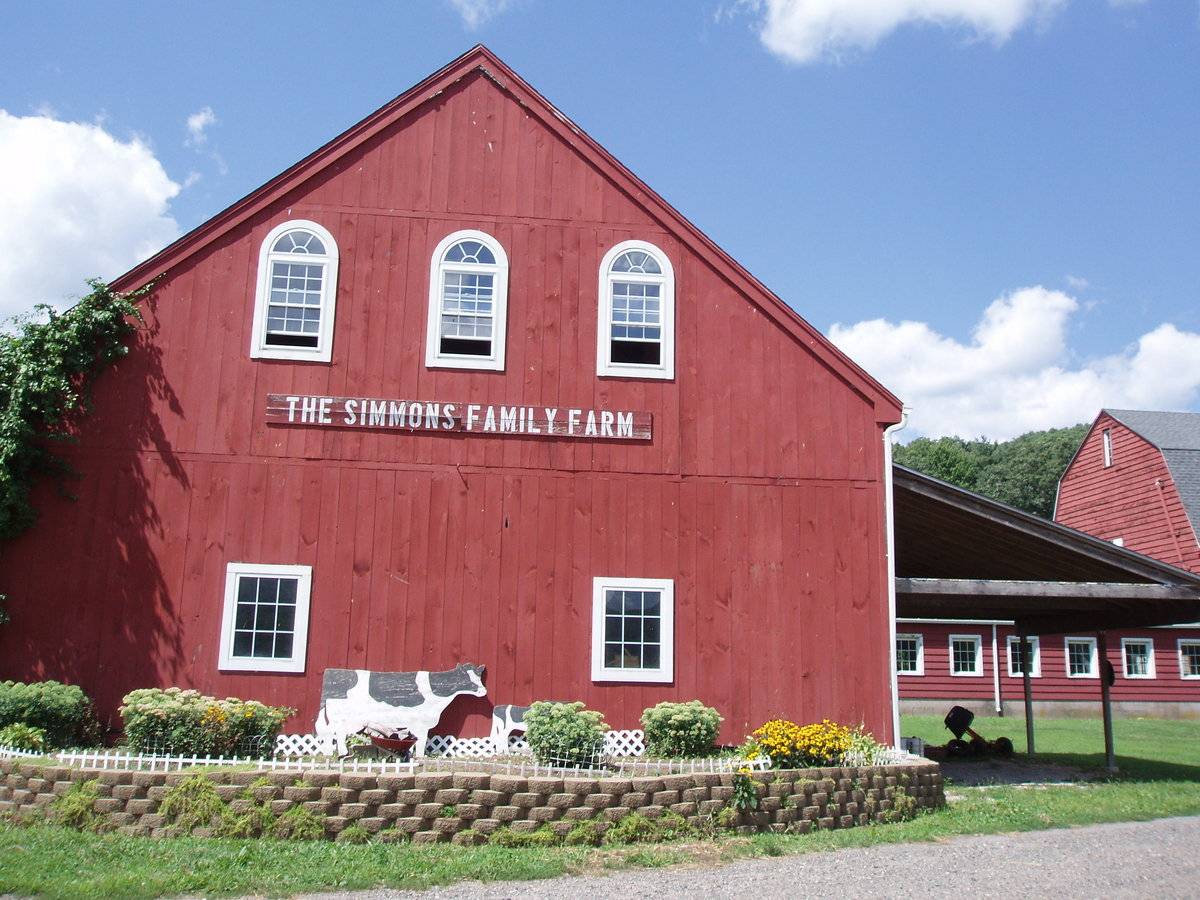
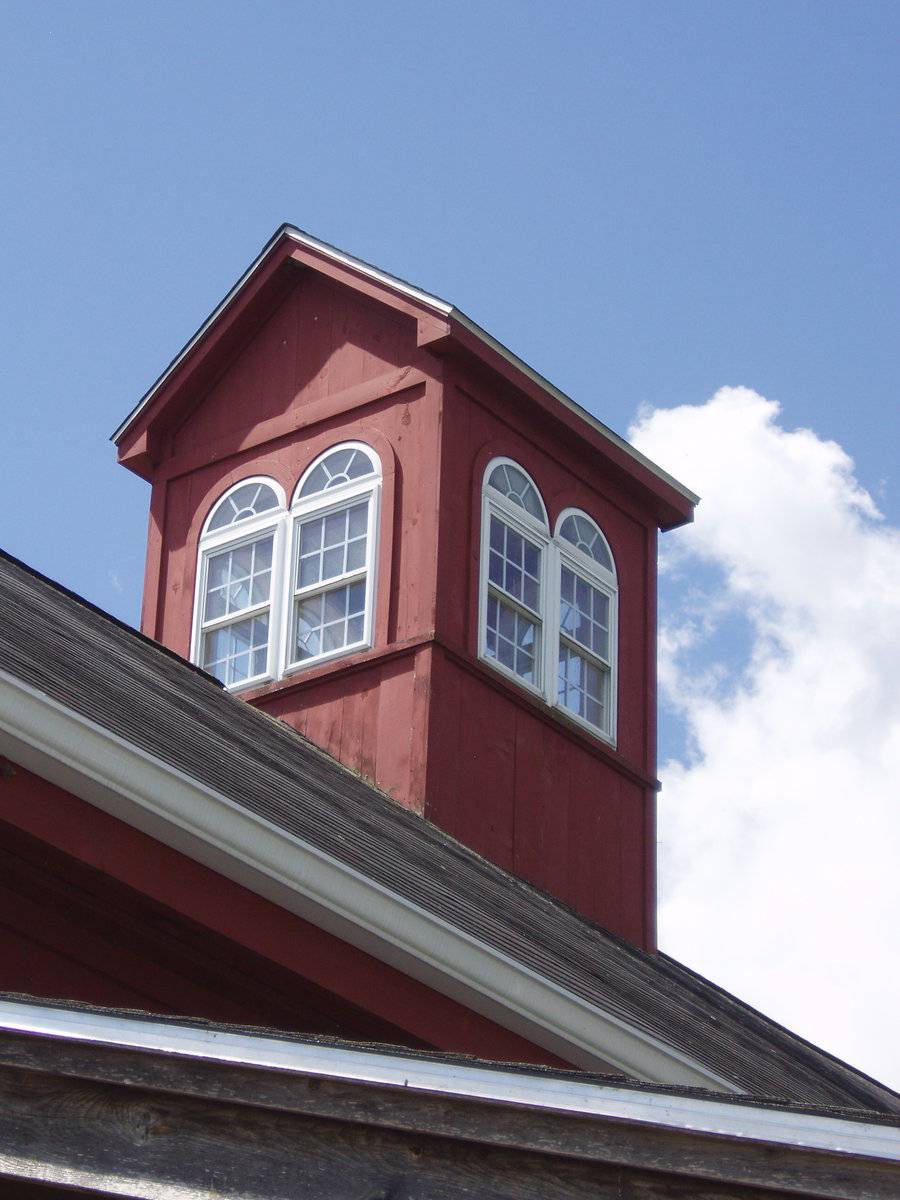
Along its entire perimeter, the concrete foundation is exposed at ground level. The exterior walls of the barn are clad in wide-width horizontal wooden clapboard siding, painted red. Window frames and the second-story hay loft doors are painted white. The roof is of the gambrel style with flared eaves. It is covered with gray asphalt shingles. Two small square ventilation cupolas are symmetrically spaced along the roof ridgeline. Each of these has a ventilation louver on each of the four sides. They are topped by a pyramid roof with flared eaves, also covered with gray asphalt shingles.
Historical significance:
The term dairy barn is used as early as the 18th century (along with “cow house”). Modern dairy barns are characterized by their interior arrangements of stanchions and gutters to facilitate milking and the removal of manure. In some cases this is just a few stalls in the corner of a barn, in others it can be a large barn dedicated to that single purpose.
By the early 20th century agricultural engineers developed a new approach to dairy barn design: the ground-level stable barn, to reduce the spread of tuberculosis bacteria by improving ventilation, lighting, and reducing the airborne dust of manure. A concrete slab typically serves as the floor for the cow stables. Many farmers converted manure basements in older barns into ground-level stables with concrete floors. Some older barns were jacked up and set on new first stories to allow sufficient headroom. With the stables occupying the entire first story, the space above serves a hayloft. By the 1920s most ground-level stable barns were being constructed with lightweight balloon frames using two-by-fours or two-by-sixes for most of the timbers. Novelty or tongue-and-groove beveled siding is common on the walls, although asbestos cement shingles also were a popular sheathing. Some barns have concrete for the first-story walls, either poured in place or built up out of blocks.
The gambrel roof design was universally accepted as it enclosed a much greater volume than a gable roof did, and its shape could be formed with trusses that did not require cross beams, which would interfere with the movement and storage of hay. Also known as the curb roof, the double slopes of the gambrel offer more volume in the hayloft without increasing the height of the side walls.
Field Notes
Listed on the State Register of Historic Places 5/01/2013 This is one of the few farms in Farmington that have survived from the 18th century. By 1906 when Edwin Tillotson and his son, Hezekiah, were the owners, it had been farmed for more than a century by their ancestors, E.W. and N.W. Tillotson. In 1926 Theodate Pope bought the farm and acreage across the road where she pastured her sheep. When the dairy barn at her family's home (Hill-Stead) burned in the 1930s, her prized Guernsey herd was moved to the large barn she had built on the Tillotson property in 1926. It has horizontal wood clapboard siding and a gambrel roof. Extensions have been added since (a calf barn, a birthing barn, manure handling shed etc.) After WWII, when Avon Old Farms was leased to the government as a rehab center for those blinded during the war, rooms in the Tillotson house became hospital rooms for the veterans until they were ambulatory and could then be housed at the school. Stanley Fisher, Avon real estate entrepreneur and philanthropist, purchased the property just before the August 1955 flood. Dick Merritt operated the farm and dairy for 40 years - 1948-1988. His daughter, Diane Fisher, built the new barn in 1998. In 2001 the town of Farmington bought the south (dairy) side of the farm from the Fisher family. The town of Avon bought the north meadows. Both towns now lease to Mr. & Mrs. Ron Simmons who manage 60 cows, grow hay for them, and produce yogurt sold at Stew Leonard's (among other outlets).
- Use & Accessibility
Use (Historic)
Use (Present)
Exterior Visible from Public Road?
1
Demolished
n/a
Location Integrity
Original Site
- Environment
Related features
Environment features
Relationship to surroundings
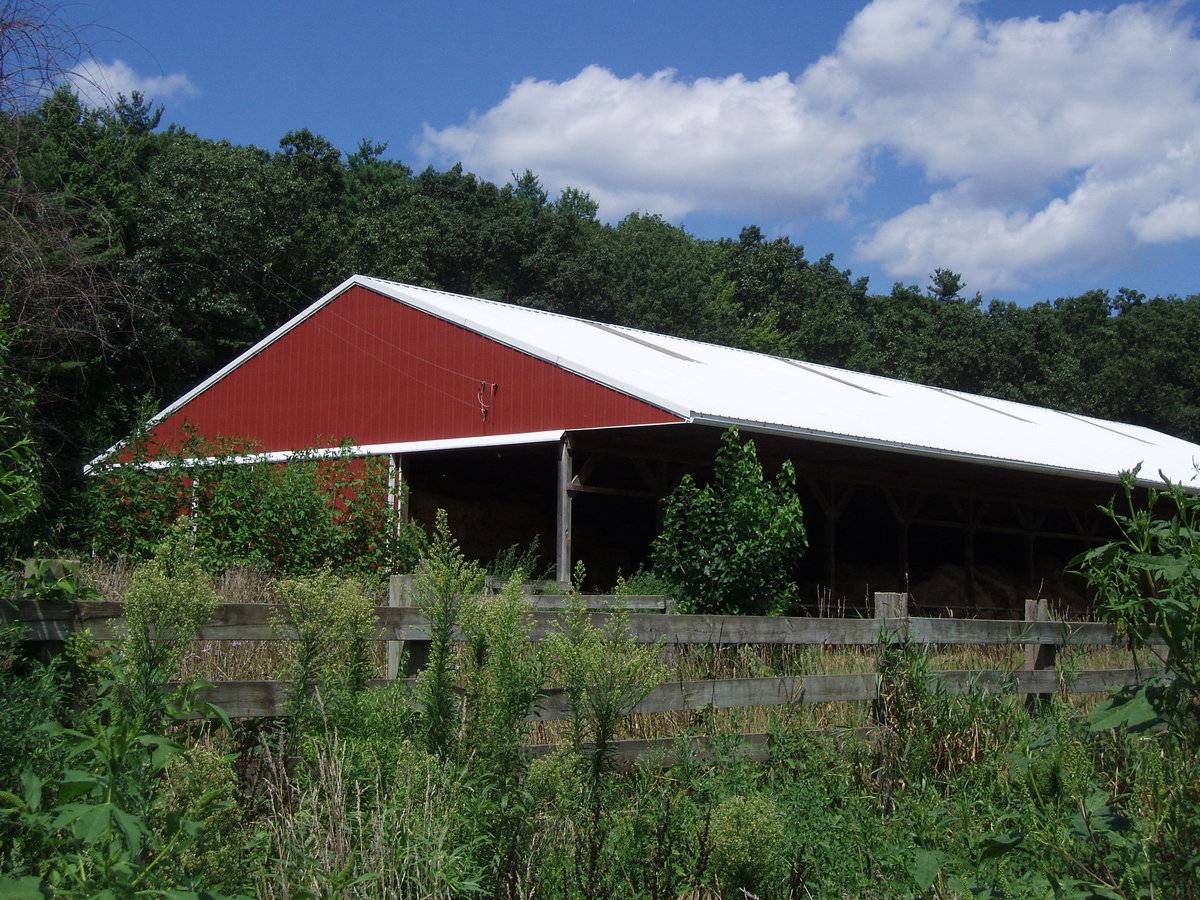
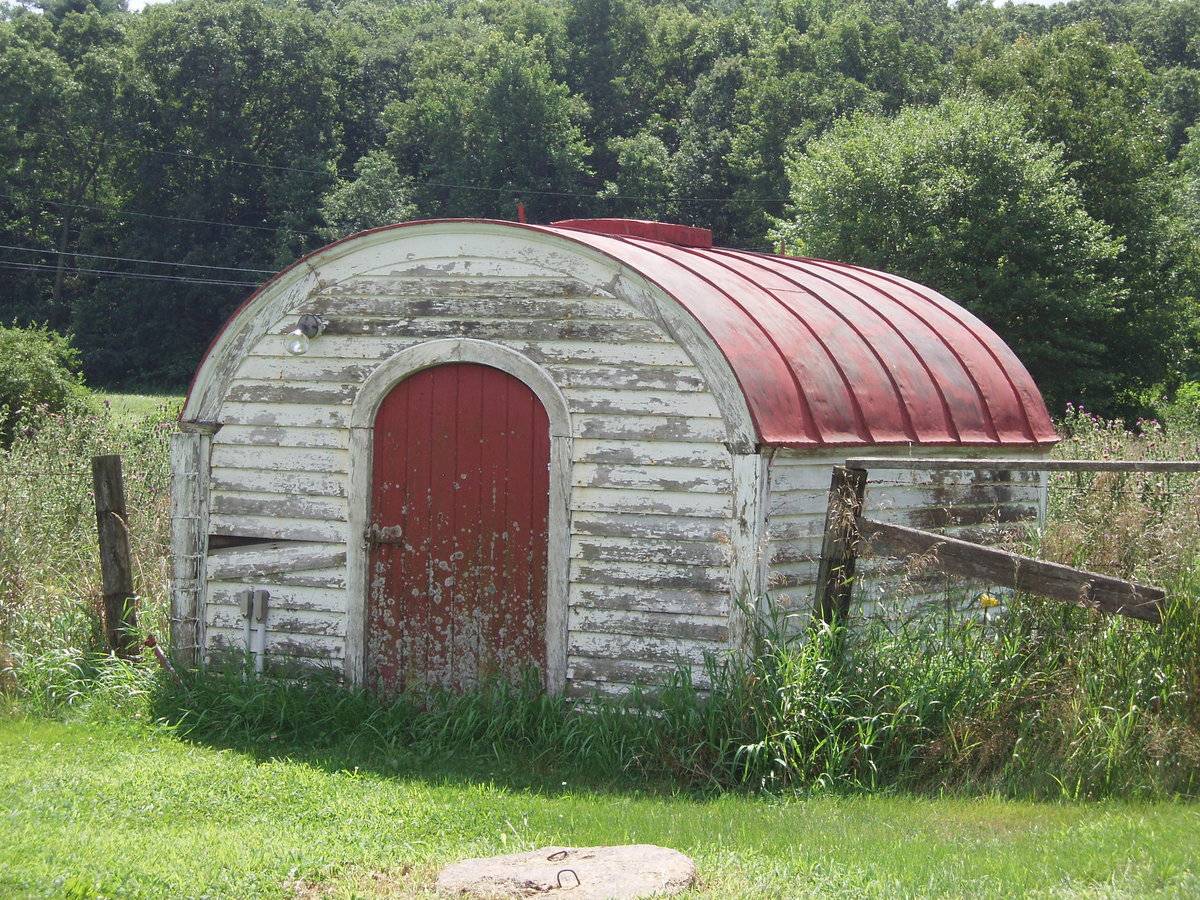
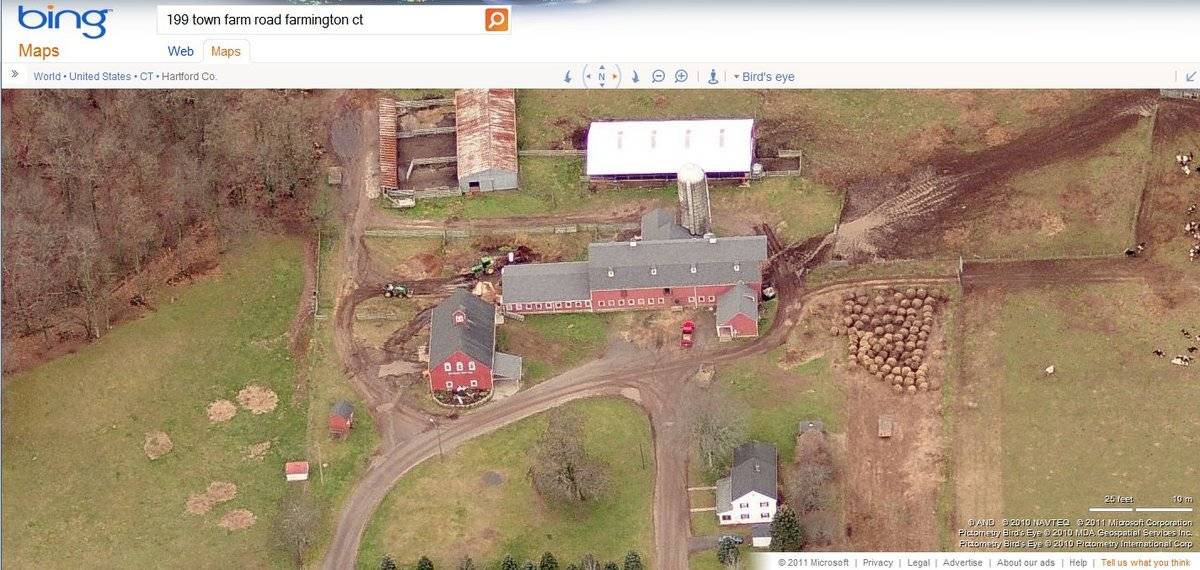
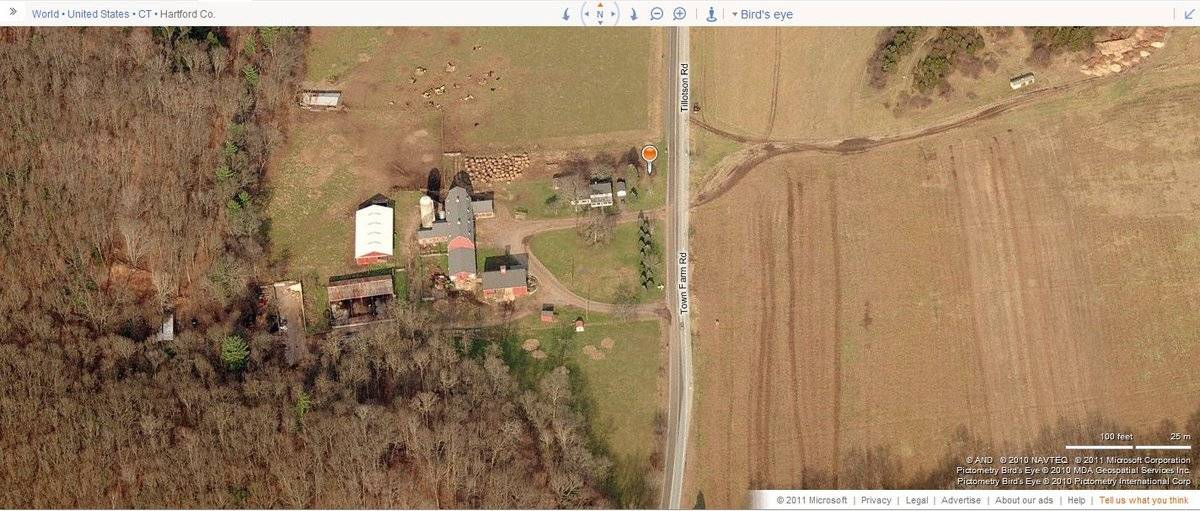
The main barn runs parallel to Town Farm Road with the primary entry facing east. The farmhouse associated with this barn is located to the east of the barn; it is situated perpendicular to the road and the barn. Several other agricultural buildings are scattered around the barn and its additions, including a historic eave-entry gable-roofed barn to the southeast of the barn described here, and two large pole barns to the west and southwest of the main barn. Several small sheds are also present on the land between the main barn and the road. Adjacent to the west side of the main barn are several small pens for farm animals. The barn and other agricultural outbuildings are connected to Town Farm Road by a U-shaped gravel and dirt drive. The area within the U and surrounding the farmhouse is grass, and a row of coniferous trees line the front yard along the road. The land immediately north of the barn is used for grazing, and active agricultural lands are present farther north beyond the grazing lands. To the east, across Town Farm Road from the farm are more agricultural farm lands, which stretch all the way to the Farmington River. To the west of the farm is a woodland beyond which is a subdivision of dwellings. South of the barns is a woodland.
- Typology & Materials
-
Building Typology
Materials
Structural System
n/a
Roof materials
Roof type
Approximate Dimensions
MAIN BARN: 2,160 square feet
- Source
-
Date Compiled
04/10/2011
Compiled By
N. Nietering & T. Levine, reviewed by CT Trust
Sources
Photographs by Meyer/Macomber - 8/24/2010.
Additional photographs by Todd Levine - 6/7/2007.
Sexton, James, PhD; Survey Narrative of the Connecticut Barn, Connecticut Trust for Historic Preservation, Hamden, CT, 2005, http://www.connecticutbarns.org/history.
Visser, Thomas D.,Field Guide to New England Barns and Farm Buildings, University Press of New England, 1997, 213 pages.
Map of Farmington, CT, retrieved on April 9, 2011 from website www.bing.com.
Farmington Assessor’s Records - online - http://www.farmington-ct.org/landrecords/search.php
Activerrain.com - Stealth Tower Proposed for Simmons Family Farm. Online - http://activerain.com/blogsview/754567/stealth-tower-proposed-for-simmons-family-farm
- PhotosClick on image to view full file
-