Barn Record Farmington
RETURN TO ‘FIND BARNS’- Building Name (Common)
- Dr. Dunne's Barn
- Building Name (Historic)
- John E. Knibbs Barn
- Address
- 34 West District Road, Farmington
- Typology
- Overview
-
Designations
Historic Significance
Architectural description:
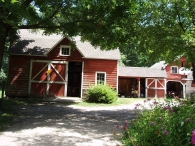
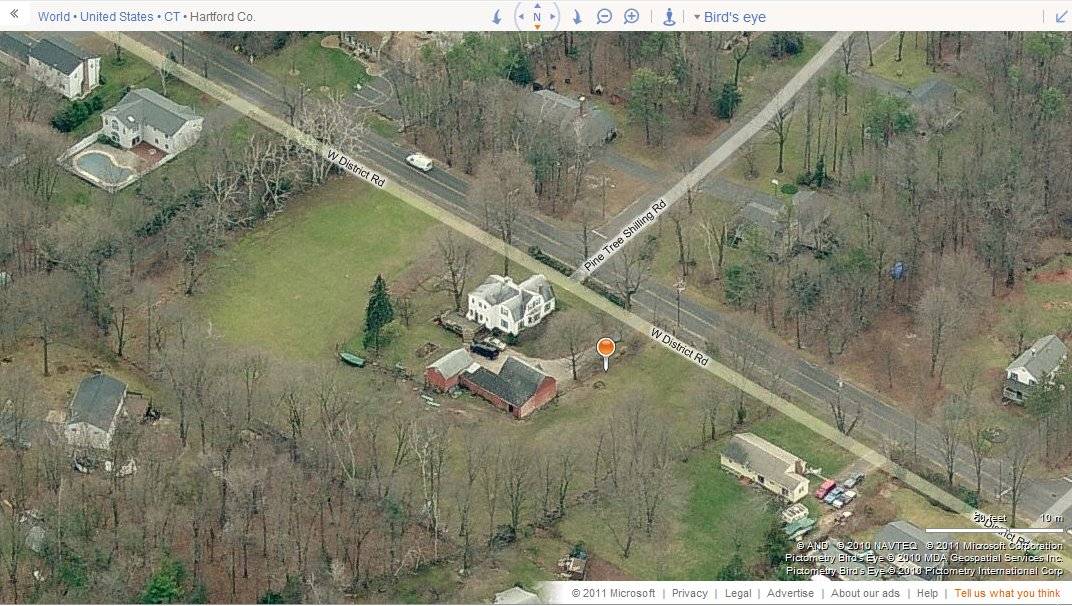
The agricultural structures located at 34 West District Road are actually two separate barns, linked physically by a lengthy shed-roof addition attached to the rear of and extending east of the primary barn (Barn I) to connect to the side of the smaller Barn II. West District Road passes this property at a northwest to southeast angle. Barn I and the addition are aligned parallel to the road, while Barn II is situated perpendicular to the road. Barn I is a 1 ½-story tripartite English barn with a gambrel roof. The addition to this barn extends the entire length of the rear northeast eave-side and continues southeast. The eastern end of this addition attaches to the northwest eave-side of Barn II, which is a 1 ½-story New England bank barn with a gable roof.
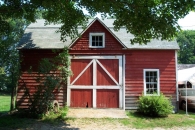
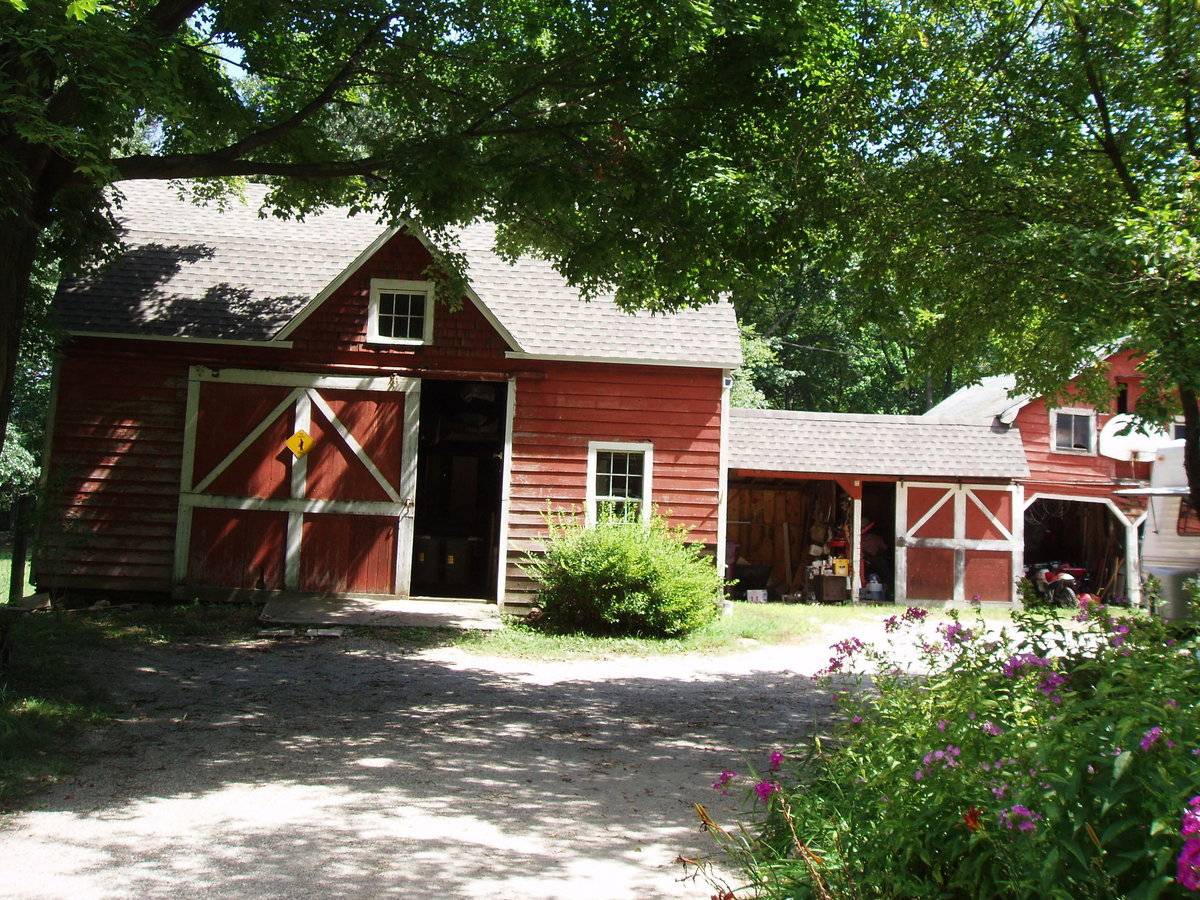
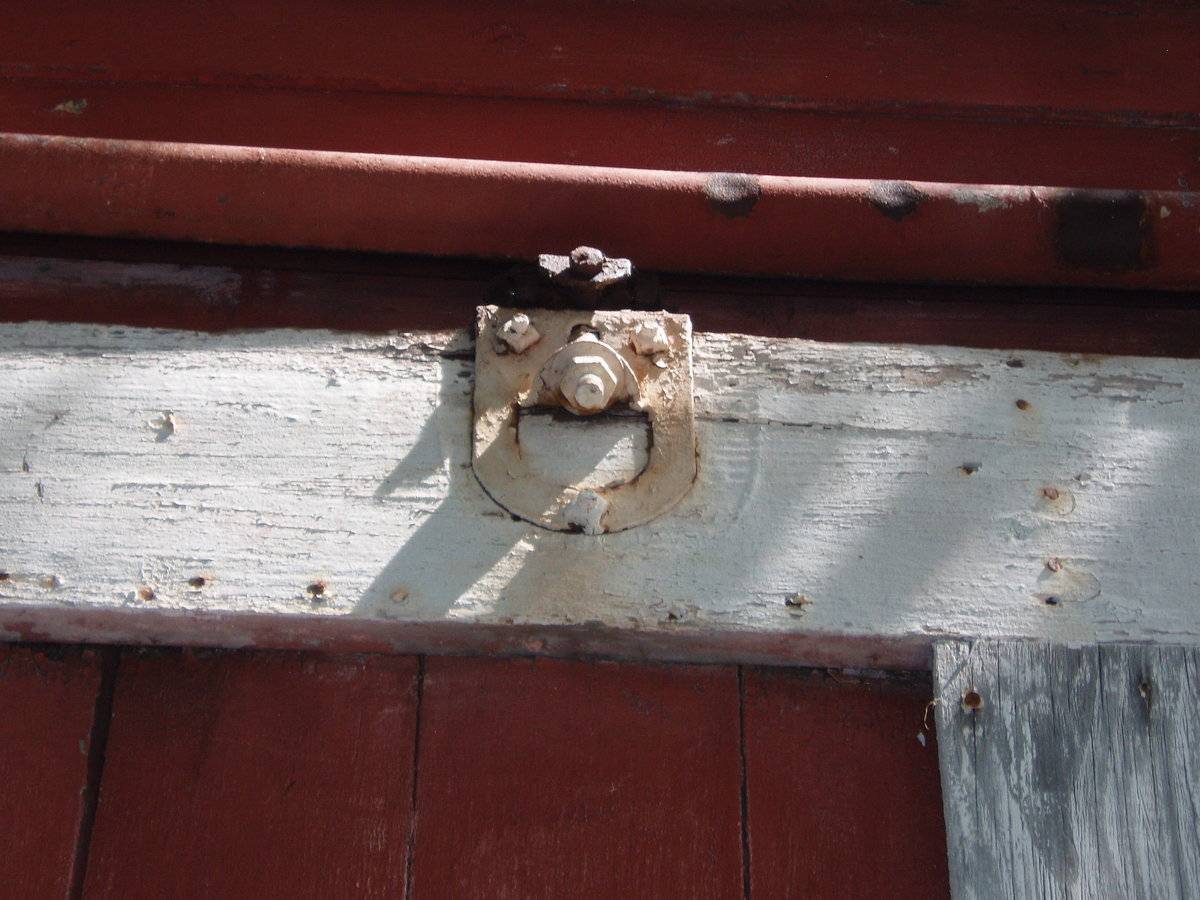
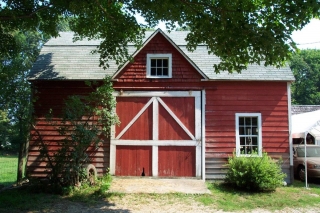
Barn I is a 1 ½-story tripartite English barn with a gambrel roof. The primary façade is the southwest eave-side, which faces West District Road. Prominent and centrally located on this façade is a flush triangular gable-dormer set into the attic-loft. Within this dormer is a centered six-pane window with trim. Below this dormer is an oversize single wooden sliding door, with wooden bracing. The track for the door extends into the western bay of the façade. The eastern bay features a double-hung six-over-six window with trim. The southeast gable end has two equal sized window openings set symmetrically into the gable-attic; the southern window is divided into two horizontal panes and the northern window is a single pane. The first story contains two uneven window openings. The southern window is a double-hung two-over-six window, and the northern window is a double-hung six-over-six type. Between these is an off-center pass-through door. The northwest gable-end appears to be blank.
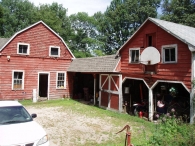
The northeast eave-side of Barn I is completely covered by a full-length shed-roof addition, stretching from the northwest wall of the barn to the southeast extending past the southeast wall of the barn. The northwest end-wall of the addition appears to be blank. The northeast eave-side appears to have an oversize door present near the north corner; otherwise this side appears to be blank. The southwest eave-side, which is only present on the extension of the addition eastward from Barn I, is composed of two oversize entries. The northern of these two entries has no door. The southern entry has a single oversize sliding wooden door with the same wooden bracing pattern as found on the primary entry of Barn I. A steeply angled pent roof is present over these entries coming down from the ridgeline.
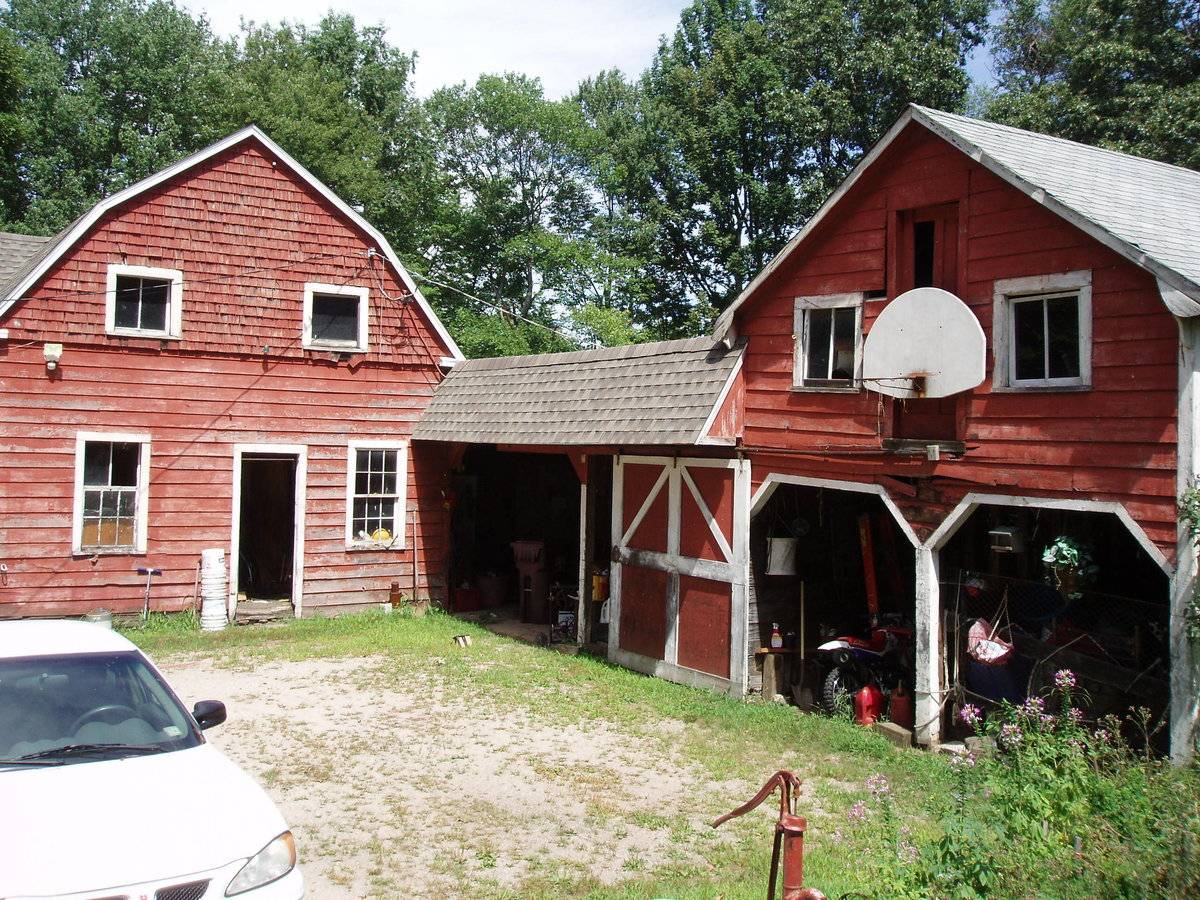
The southeast end-wall of the addition abuts the northwest eave-side of Barn II, and the primary façade of Barn II is flush with the southwest eave-side of the addition. Barn II is a New England bank barn with a gable roof. Barn II’s southwest gable-attic includes two symmetrical windows with trim, each a horizontal two-pane type. Between them, a centered wooden pass-through door is beneath the ridgeline, with no external access. The lower portion of this door is covered by a basketball hoop backboard. The first story of the southwest gable-end is comprised of two oversize entries. Each of these entries has no door, but features clipped upper corners. The southeast eave-side of Barn II appears to be blank, but a portion of the foundation is exposed as the ground slopes down to the northeast. The northeast gable-end appears to have a small window or vent present beneath the ridgeline in the gable-attic. This side exposes the full lower level, but otherwise appears blank. The exposed portion of the northwest eave-side appears blank.
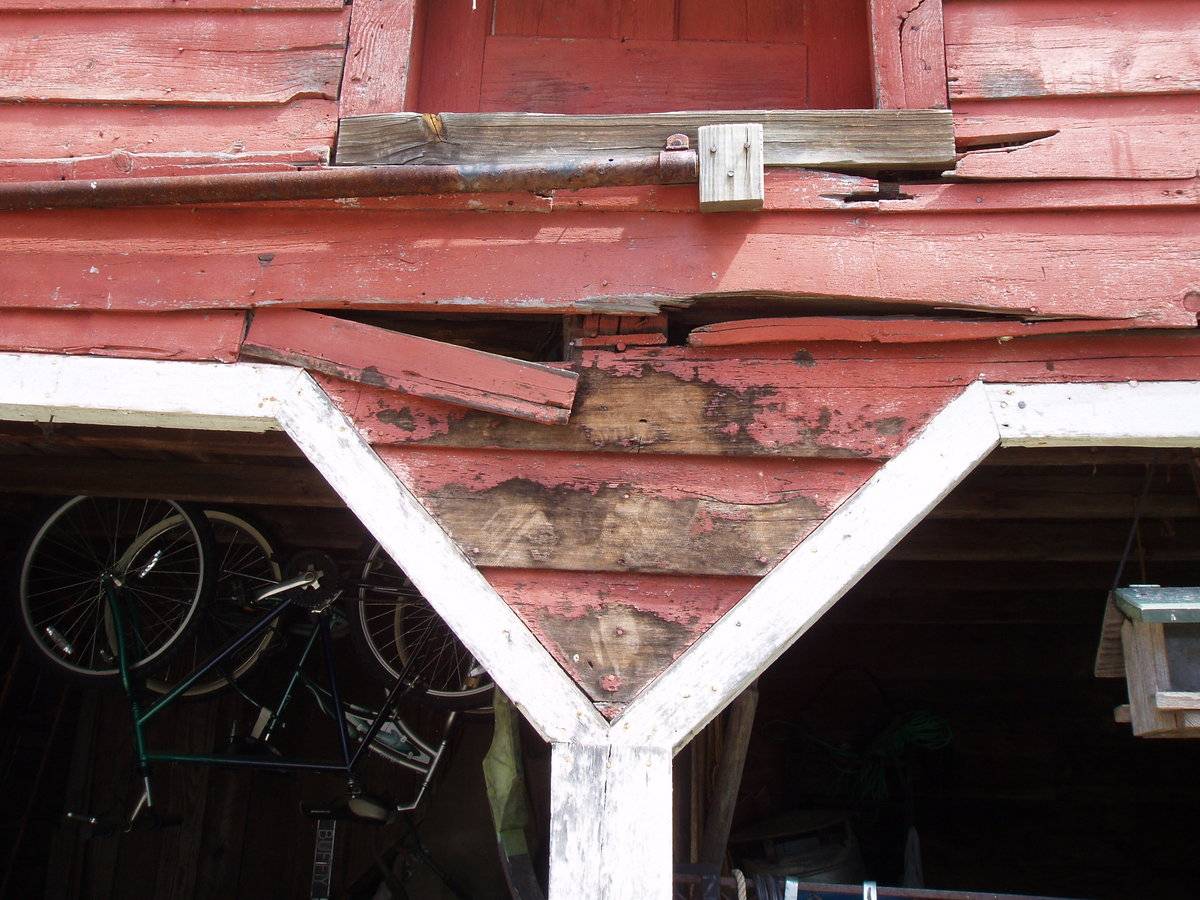
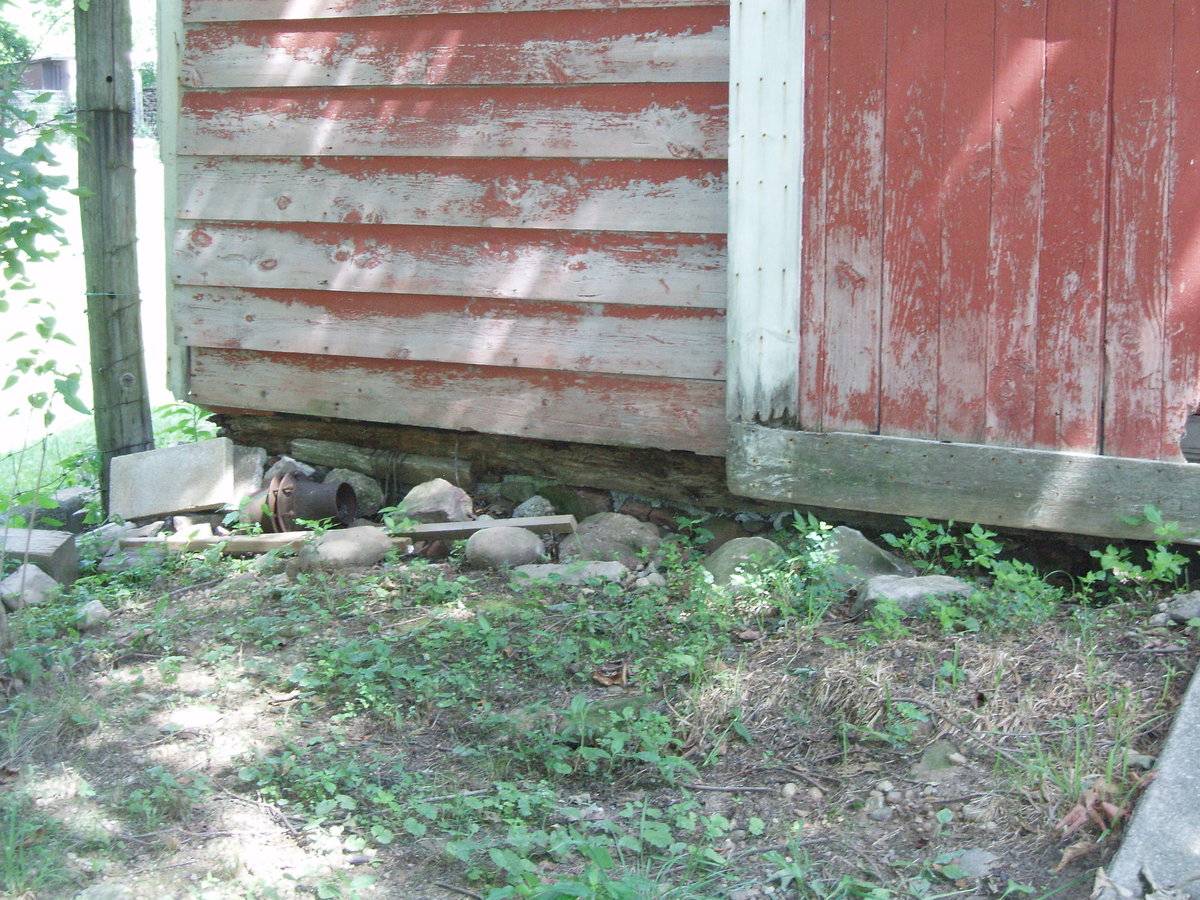
Within the gables and gable-dormer of Barn I are wooden shingles. The remainder of the exterior cladding of Barn I, Barn II and the addition appears to be horizontal wooden clapboard siding. All siding and wall shingles are painted red. Most wooden trim is painted white. Roof surfaces are covered in light gray asphalt shingles. A chimney appears to be present along the roofline between Barn I’s roof and the shed-roof addition, in the southeastern half of the structure.
Historical significance:
Barn I:
The oldest barns still found in the state are called the “English Barn,” “side-entry barn,” “eave entry,” or a 30 x 40. They are simple buildings with rectangular plan, pitched gable roof, and a door or doors located on one or both of the eave sides of the building based on the grain warehouses of
the English colonists’ homeland. The name “30 by 40” originates from its size (in feet), which was large enough for 1 family and could service about 100 acres. The multi-purpose use of the English barn is reflected by the building’s construction in three distinct bays - one for each use. The middle
bay was used for threshing, which is separating the seed from the stalk in wheat and oat by beating the stalks with a flail. The flanking bays would be for animals and hay storage.The gambrel roof design was universally accepted for ground-level stable barns as it enclosed a much greater volume than a gable roof did, and its shape could be formed with trusses that did not require cross beams, which would interfere with the movement and storage of hay. Also known as the curb roof, the double slopes of the gambrel offer more volume in the hayloft without increasing the height of the side walls.
Barn II:
The New England barn or gable front barn was the successor to the English barn and relied on a gable entry rather than an entry under the eaves. The gable front offered many practical advantages. Roofs drained off the side, rather than flooding the dooryard. With the main drive floor running
parallel to the ridge, the size of the barn could be increased to accommodate larger herds by adding additional bays to the rear gable end. Although it was seen by many as an improvement over the earlier side-entry English Barn, the New England barn did not replace its predecessor but rather coexisted with it; both types continued to be constructed.The 19th century also saw the introduction of a basement under the barn to allow for the easy collection and storage of a winter’s worth of manure from the animals sheltered within the building. The bank barn is characterized by the location of its main floor above grade, either through building on a hillside or by raising the building on a foundation.
This innovation, aided by the introduction of windows for light and ventilation, would eventually be joined by the introduction of space to shelter more animals under the main floor of the barn.
Field Notes
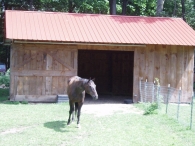
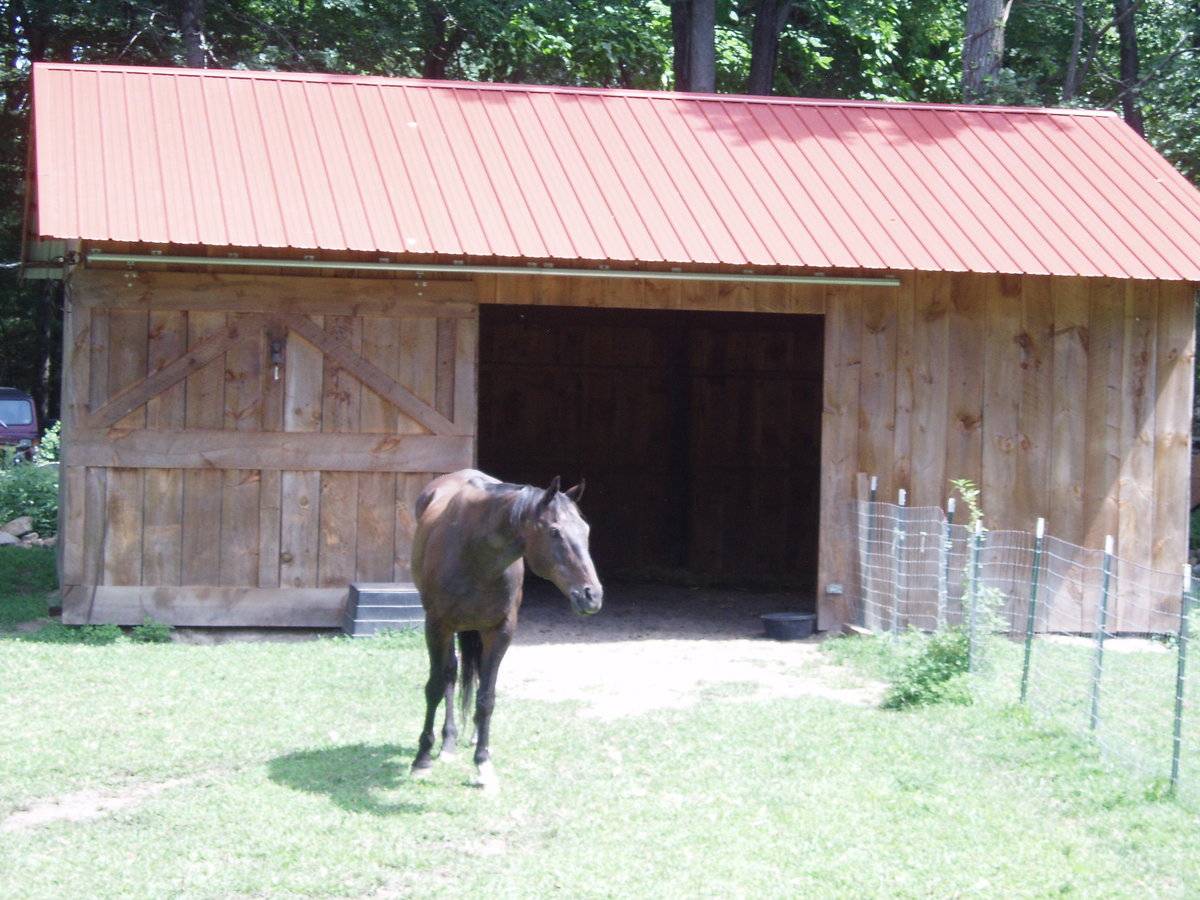
Listed on the State Register of Historic Places 5/01/2013 Built by well-known Unionville builder John E. Knibbs between 1907-1910, this property has always been used as a small family farm - complete with gardens, pastures, barns and sheds. Even today, in a residential neighborhood, there is a horse, sheep, and 2 goat pastured here as well as gardens. There is a 2-story New England barn connected to an equipment shed and another 2-story barn. There is a newer horse barn to the rear of the property. The left side of the main barn housed wagons and cow stalls with the hayloft above. In the early days the part on the right contained an ice house. Dr. Edward P. Dunne (town doctor for many years) purchased the property in 1923. It was enlarged in 1930 so Dr. Dunne could get his car in the barn. His descendants still occupy it. Siding on the main barn upper story is wood shingle; horizontal wood clapboards below.
- Use & Accessibility
Use (Historic)
Use (Present)
Exterior Visible from Public Road?
Yes
Demolished
n/a
Location Integrity
Original Site
- Environment
Related features
n/a
Environment features
Relationship to surroundings
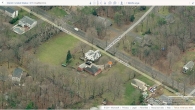
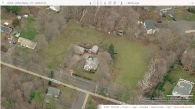
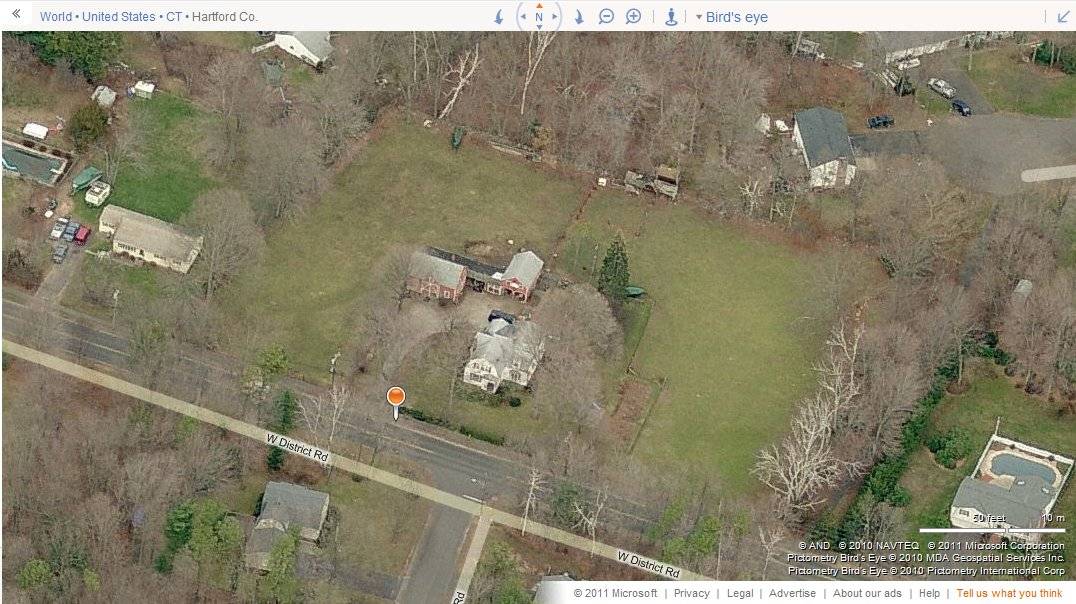
The barns at this site are situated to the immediate north of the farmhouse associated with this property. The farmhouse is roughly half the distance between West District Road and the barn complex. The barns are connected to the road by a dirt and gravel driveway which wraps around the north side of the house and occupies the entire space in front of the shed roof addition and Barn II. Immediately surrounding the barns and farmhouse to the northwest, northeast, and southeast are several small pastures which are still in use. Around the edge of these pastures, marking the property lines, are a non-continuous row of deciduous trees on all sides. The surrounding streets are lines by woods and many residences, with very little open space present.
- Typology & Materials
-
Building Typology
Materials
Structural System
n/a
Roof materials
Roof type
Approximate Dimensions
BARN I: 650 square feet BARN II: 600 square feet ADDITION: 260 square feet
- Source
-
Date Compiled
04/09/2011
Compiled By
N. Nietering & T. Levine, reviewed by CT Trust
Sources
Photographs by Meyer/Macomber.
Sexton, James, PhD; Survey Narrative of the Connecticut Barn, Connecticut Trust for Historic Preservation, Hamden, CT, 2005, http://www.connecticutbarns.org/history.
Visser, Thomas D.,Field Guide to New England Barns and Farm Buildings, University Press of New England, 1997, 213 pages.
Map of Unionville, CT, retrieved on April 9, 2011 from website www.bing.com.
Farmington Assessor’s Records - online - http://www.farmington-ct.org/landrecords/search.php
- PhotosClick on image to view full file
-